
Reviewed · THIRD REICH & WWII TOURS
Nuremberg: WWII Tour, Courtroom 600 and 3rd Reich Sites
Walking through Nuremberg’s Nazi-era sites hits you fast, because these places were built to project power and control. The most striking stop is Courtroom 600 in the Nuremberg Palace of Justice, where the major war criminals were tried, followed by huge, open rally-ground spaces that still show the scale of the regime’s plans.
Two things I really like about this small-group tour are the way it keeps the day moving with hotel pickup and drop-off, and the fact that the guide brings context to what you are seeing, not just directions. Many past groups highlight guide energy, including names like Rob and Sheba, with lots of interactive explanation and clear storytelling.
One drawback to keep in mind: you only have a set amount of time at Courtroom 600 and the Palace of Justice, so if you want to linger, you may wish you had more minutes. Also, the Palace of Justice and Courtroom 600 are closed on Tuesdays, which can force schedule changes.
Key takeaways before you go
- Courtroom 600 inside the Palace of Justice for the Major War Criminals Trial setting
- Small group up to 8 people, so you can actually hear and ask questions
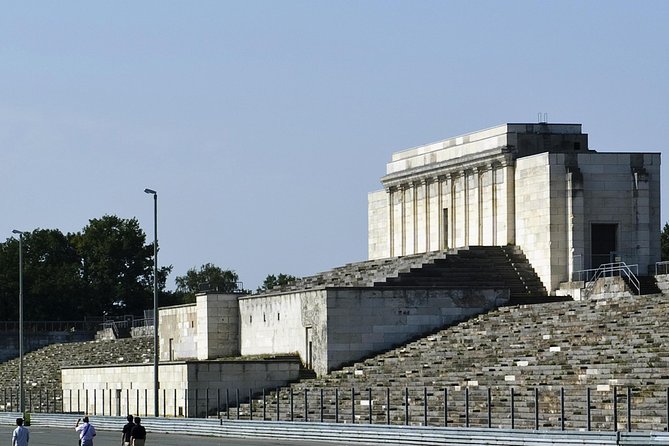
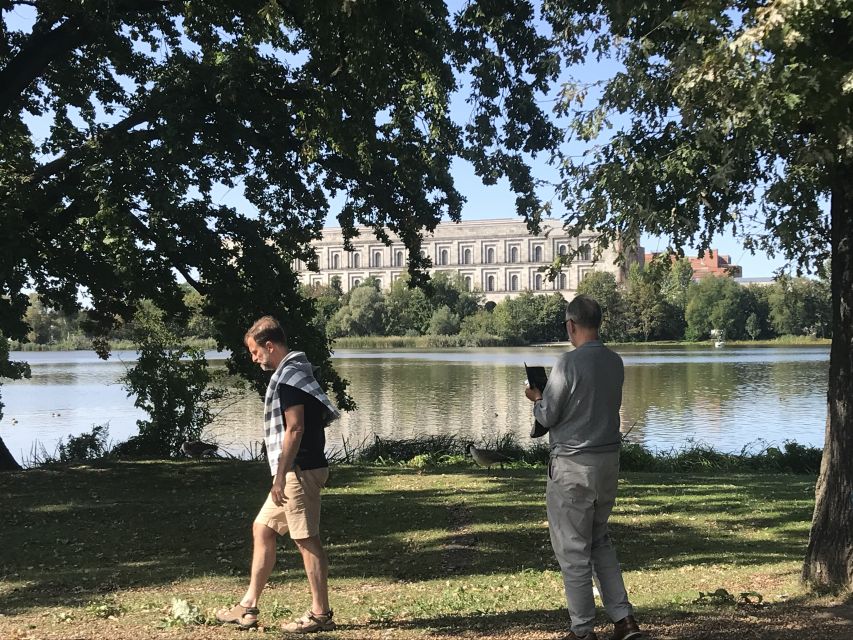
- Nazi rally grounds by Luitpold Arena, Zeppelin field, and Congress Hall for scale and atmosphere
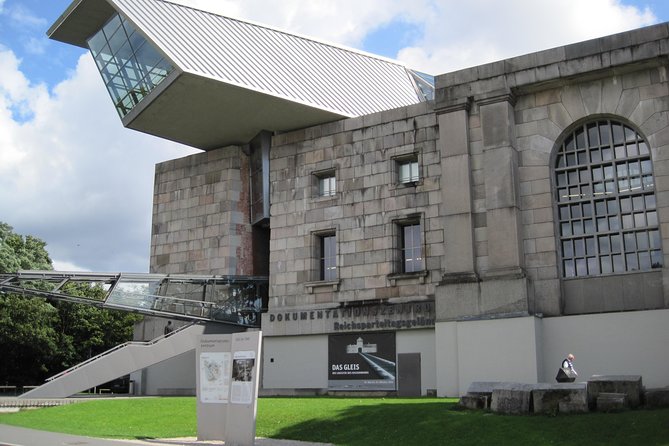
- Documentation Center Nazi Party Rally Grounds Museum for a modern counterpoint to the old architecture
- Short photo stops plus guided walking to balance viewpoints with interpretation
WWII Tour in Nuremberg: What You Really See and Why It Matters
This tour is about more than checking boxes. It is about walking and looking at the physical design of power, then stepping into the courtroom where that power was judged. In Nuremberg, the buildings and spaces are so specific that they help you understand why the Nazi regime loved spectacle, symmetry, and size.
I like that the day mixes two experiences that fit together well. First, you get the courtroom anchor at Courtroom 600 in the Nuremberg Palace of Justice. Then you move to the rally grounds, where your guide explains how the venues worked as a stage for mass politics. Put together, it helps you see the full arc, from planning and performance to accountability.
That said, this is not a slow, museum-only day. You are on the move, doing quick focused visits and viewpoints. If you want hours to wander without structure, you might find the pacing a bit tight.
More Third Reich history tours:
- Nuremberg: Walking Tour of Former Nazi Party Rally Grounds
★ 4.7 · 1,665 reviews - Nuremberg: Historischer Kunstbunker WWII Art Bunker Tour
★ 4.8 · 921 reviews - Nuremberg Old Town and Nazi Party Rally Grounds Walking Tour in English
★ 4.5 · 504 reviews
Hotel Pickup, 8-Person Groups, and a Pace That Works
The practical setup is a big part of why this tour feels manageable. You get hotel pickup and drop-off in Nuremberg, which saves time and hassle, especially when the sites spread across the area.
This is a small group limited to 8 participants, and that matters more than it sounds. With fewer people, the guide can keep a tighter flow between locations, and you are less likely to feel like you are being herded. In the past, people have praised the whole experience for being safe and well run, with comments on a clean vehicle and a steady driver.
The schedule also includes time on a coach between stops. That is not wasted time. It is how you avoid turning the day into a transportation puzzle, especially once you are moving between larger rally-ground areas and the Palace of Justice.
Language options are also clearly set: live guidance in English, Portuguese, Spanish, and Italian. If you have strong preferences about comprehension, this is worth noting, because the guide’s delivery style can make or break a history-heavy day.
Luitpoldhain and Große Straße: Where the Nazi Stage Gets Its Setting
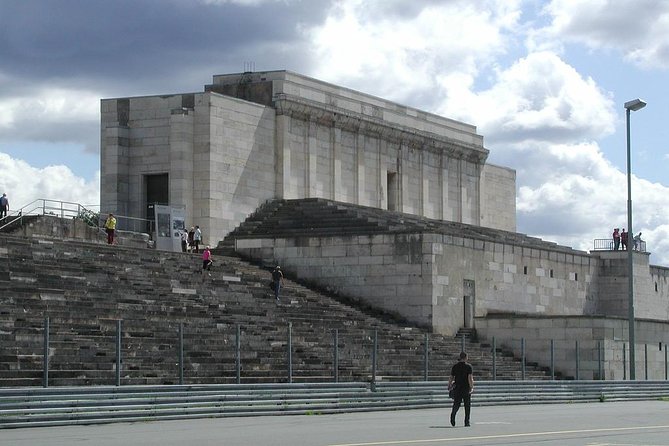
Your day starts with sites that frame the Nazi rally complex. Luitpoldhain is the kind of place where you can feel the intention of the space even if many details are not obvious at first glance. Your guide helps you connect what you see on the ground with how rallies were meant to flow and look.
Then you move on to Große Straße, which is essentially part of the wider rally-ground layout. It is the sort of location where the most important thing is perspective. When you stand in the right spots, you can understand why processions and crowds were designed to look unstoppable.
This is also where I find a good guide matters most. The places are physical, but the meaning is interpretive. You will get context to help you read the space like a plan, not just like an empty outdoor venue.
Kongresshalle Photo Stop: The Scale of the Plan (and Its Warning Sign)
Next comes Kongresshalle (often called the Congress Hall), and you spend time with a guided focus plus a photo stop. Even if you only pause for photos, this stop does something important. It lets you see the enormous ambition built into the architecture.
The tour description makes the point clearly: the Congress Hall is one of the biggest preserved monumental buildings connected to National Socialist ambitions. That alone is a reason to prioritize this part of the day, because many visitors arrive expecting a few remnants, not the sheer footprint of grand design.
Here is the useful way to think about it. Nazi power did not just live in ideology. It lived in concrete decisions about how the city should look, where crowds should gather, and how visitors should feel small. Kongresshalle is where that message becomes visible fast.
Weigh these Nuremberg picks against each other
- Nuremberg: City Tour with the Bimmelbahn Train
★ 4.4 · 2,475 reviews - Nuremberg: Old Town Guided Walking Tour
★ 4.6 · 2,416 reviews - Nuremberg: Tunnels and Secret Passages in the City Wall Tour
★ 4.8 · 2,334 reviews - Nuremberg: Medieval Dungeons Guided Tour
★ 4.8 · 2,214 reviews
Zeppelinfeld and the Luitpold Arena: Feeling the Rally Ground’s Momentum
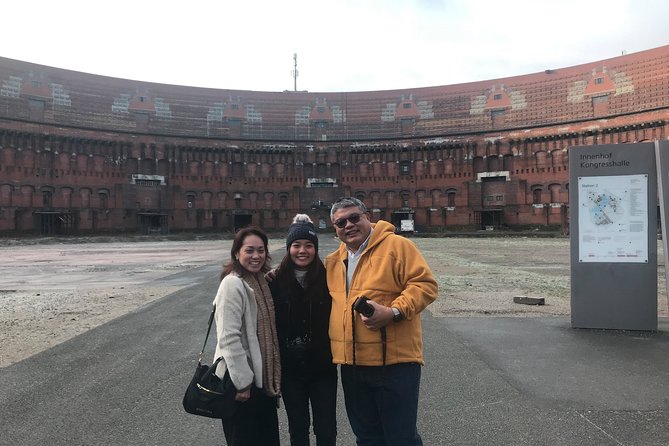
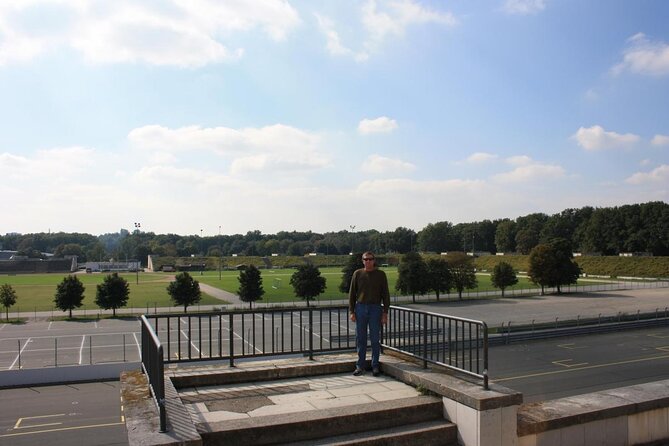
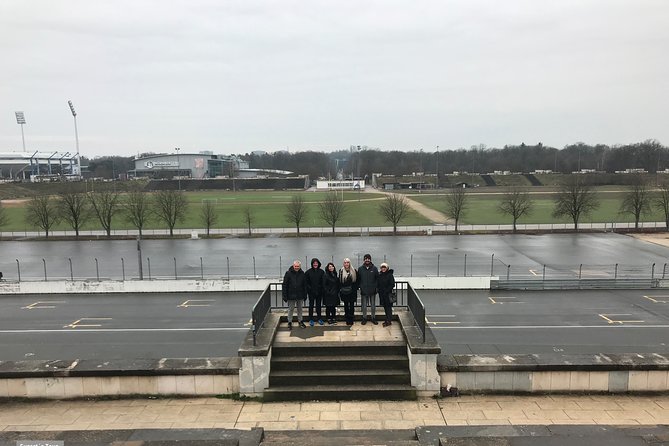
Then you go to Zeppelinfeld for a longer stop, along with the Luitpold Arena area. Together, these places help you understand how the Nazi regime used open space to make gatherings feel total.
Zeppelinfeld is especially valuable because it supports a simple question: what would this have looked like filled with people? When your guide explains how rallies were staged, the open ground stops feeling neutral. It turns into an arena with a purpose.
The Luitpold Arena gets similar attention. Your guide frames it as a backdrop designed to amplify party rallies. The helpful thing is that you are not just hearing about events from a textbook. You are looking at the spaces that were built to host them.
If you care about photos, this is one of the best stretches of the tour. The geometry and scale make your camera feel like it is finally doing something with your time.
Documentation Center Nazi Party Rally Grounds: When Modern Design Plays Off the Past
You also pass the Documentation Center Nazi Party Rally Grounds Museum. This stop is slightly different from the outdoor venues because it adds a layer of interpretation and context, rather than just architecture and space.
The tour description calls out an architectural contrast, and that idea is what you should watch for while you are near it. Museums and documentation centers often act like a translation device. They take what is on the ground and provide structured explanations so you can make sense of it without guessing.
Even if you only pass by the center rather than go deep into it, it still helps your brain connect the bigger picture. You start to understand that these sites are not only about what happened, but also about how the present tries to explain it honestly.
Palace of Justice and Courtroom 600: Where the Trial Becomes Real
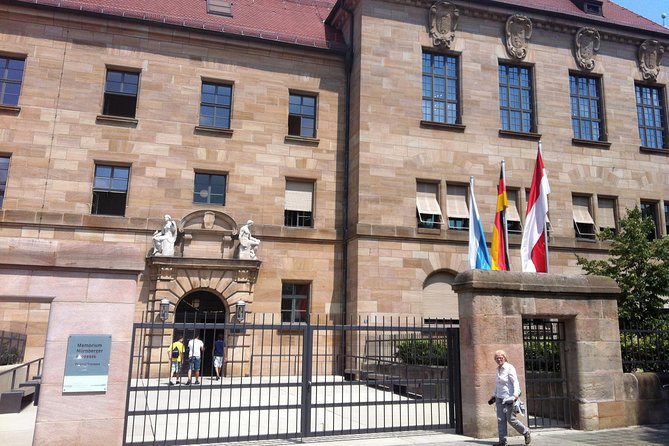
Now for the emotional core of the tour: the Nuremberg Palace of Justice and Courtroom 600. This is where the International Military Tribunal tried Nazi war criminals. That one sentence changes the tone of everything around it.
You do get a self-guided block at the Palace of Justice area and the Courtroom 600 visit. Practically, that means you walk in, you explore at your own speed, and you use the time to read what you find most important. Since the tour includes skip-the-ticket-line, you are not burning minutes just to enter.
The useful tip here is planning your priorities before you walk in. If you are a photo person, focus early. If you prefer reading and absorbing, set aside your attention for the courtroom space itself and the related exhibition elements. Some people have felt that the time at Courtroom 600 felt short, so I would treat the visit as a focused sprint, not a slow stroll.
One more big consideration: the Palace of Justice and Courtroom 600 are closed on Tuesdays. If your trip lands on a Tuesday, you will need an alternate plan, even if you still enjoy the outdoor rally-ground part.
How the Day Fits Together: Transport Time, Walking Time, and Your Best Use of It
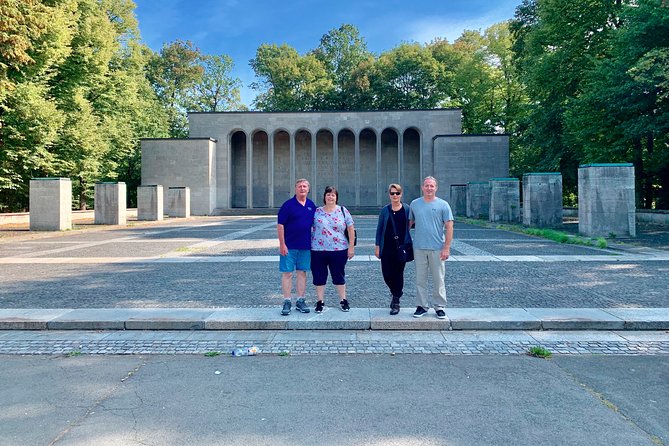
The tour is designed as a half-day loop that balances driving with short, guided visits and viewpoints. You get about four hours total, with breaks that make sense for this kind of geography.
If you are thinking about your comfort and attention span, here is what to expect in plain terms:
- You will do a mix of guided stops and photo opportunities.
- You will spend time moving by coach between the wider rally-ground areas.
- You get a self-guided period at the Palace of Justice, so your use of that time is up to you.
This format works best if you want context without spending an entire day on long museums. It also works if you are visiting with limited time, because it concentrates several major sites into one coordinated outing.
It may not fit you if you are the type who wants deep, quiet reading everywhere. The architecture and outdoors are powerful, but they are not “linger and wander” sites unless you add extra time on your own.
Value for $147: What You Get, What You Pay Extra For
The price is $147 per person for a 4-hour experience that includes hotel pickup and drop-off, a live guide, and a walking tour component. For a day built around multiple major locations, the transportation and guide time matter. You are not just being dropped off at one monument, you are getting a structured route plus interpretation.
There is also an additional cost you should budget: the Nuremberg Palace of Justice entrance fee is €7.50 per person. That is a small add-on compared with the overall cost, and it is tied directly to the main courtroom experience.
In value terms, the biggest question is whether you will use the guide well. If you like your history with explanations that connect architecture, crowds, and trials, this kind of guided structure tends to pay off. If you prefer to go solo and read slowly, you might feel like you are paying for guidance you could do without.
Who This Tour Suits Best (and Who Might Want Something Else)
This is a strong fit if you:
- want major WWII-related sites in Nuremberg in one tidy half-day
- like seeing how political power used design and space
- want a live guide to explain what you are looking at, especially in the rally-ground areas
It is less ideal if:
- you want a lot of time at the Palace of Justice courtroom and exhibition, since the visit is time-boxed
- you are very sensitive to guided delivery style, since some people have mentioned accent or speed issues with certain guides
One thing I will say clearly: this tour is not casual sightseeing. It is serious subject matter in real places. That is exactly why the guide’s tone and structure matter.
Should You Book This Nuremberg WWII Tour with Courtroom 600?
If your goal is to understand Nuremberg’s WWII story through the sites that shaped it and then confronted it, I think this tour is a smart choice. The mix of Courtroom 600 plus the Nazi rally grounds gives you a clearer story than doing these stops scattered across days.
I would book it if you value a small-group experience, want hotel convenience, and plan to treat the Courtroom 600 time as focused rather than leisurely. If you are visiting on a Tuesday, check the closure issue first, because that is the one scheduling snag that can affect the core courtroom visit.
For the right traveler, this is the kind of half-day that changes how you see the city long after you leave.
FAQ
How long is the tour?
The tour duration is 4 hours.
What is the price per person?
The price is $147 per person.
Is hotel pickup and drop-off included?
Yes, hotel pickup and drop-off are included for accommodations in Nuremberg.
Does the tour include an entrance ticket for Courtroom 600?
No. The entrance fee for the Nuremberg Palace of Justice (including Courtroom 600 access) is €7.50 per person, and you purchase your ticket for Courtroom 600.
Can I skip the ticket line?
Yes, the tour includes skip-the-ticket-line for the Palace of Justice/Courtroom 600 visit.
When is the Palace of Justice and Courtroom 600 closed?
The Palace of Justice and Courtroom 600 are closed on Tuesdays.
How big is the group?
The group is small, limited to 8 participants.
What languages are available?
The live guide is available in English, Portuguese, Spanish, and Italian.
Is the tour wheelchair accessible?
Yes, the tour is wheelchair accessible.
Fresh reviews out of Nuremberg
- Tour to Rothenburg ob der Tauber from Nuremberg in Spanish★ 5.0 · 51 reviews
- Nuremberg: World War II Tour with Hotel Pickup★ 4.4 · 51 reviews
- Nürnberg: Mörder, Fälscher, Messerstecher★ 4.8 · 53 reviews
- Nuremberg Ghosts and Gallows Evening Walking Tour in English★ 5.0 · 56 reviews
- Nuremberg’s Mystery Morning: Breakfast & Escape Game★ 4.4 · 57 reviews
- Nuremberg: Private Walking Tour with a Local★ 3.8 · 77 reviews
- Nuremberg World War II★ 4.5 · 89 reviews
- Nuremberg Private Walking Tour: Old Town and Nazi Rally Grounds★ 5.0 · 92 reviews
Third Reich & WWII Tours, compared.

Berlin’s Best: 2 Hour Walking Tour Third Reich and the Cold War
Read our review →
Third Reich Berlin: Hitler and WWII Walking Tour
Read our review →
Walking Tour of Former Nazi Party Rally Grounds
Read our review →
Browse the lists this tour appears in