
Reviewed · NUREMBERG TOURS
Das ehemalige Reichsparteitagsgelände – Geländebegehung
This experience is interesting because it lets you read Nazi power in concrete and stone, and understand how architecture was used to stage a propaganda performance. I especially like the clear, stop-by-stop pacing and the hands-on way the guide explains what the buildings were meant to do. One thing to consider is that this is a heavy topic, and the tour stays focused on the system behind the spectacle, so it may feel emotionally intense.
You’ll do it as a German-language walking tour, with a small maximum group size, and a format that keeps things practical. The route is built around three major sites, so you are not lost wandering on your own. If you prefer lots of time for independent exploring, note the duration is about 2 hours, so plan for a quick, focused visit rather than a slow museum day.
Key highlights before you go
- Zeppelinfeld’s mass-event design and its role as the main gathering space during the party rallies
- Kongresshalle’s huge, unfinished scale, including the well-known comparison to the Colosseum
- Große Straße as a planned parade axis, with real numbers to help you grasp the ambition
- Short, understandable explanations that stick to what you are standing in front of
- A guide who answers questions with energy, including the memorable style of Herr Clemens in the feedback
Walking Nazi architecture in Nuremberg, with a guide who explains the purpose
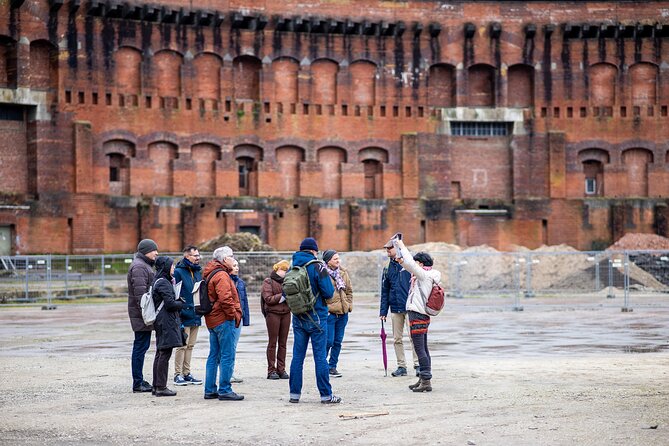
There are places where buildings are just buildings. On the former Reichsparteitagsgelände in Nuremberg, the structures were designed as tools. They were meant to control scale, movement, and attention, so crowds would feel small and the regime would feel huge. A guided walk helps you slow down enough to notice how the spaces are shaped for theater.
What I like about this kind of tour is that it does not treat the site like a set of ruins you can sort of admire from a distance. It ties the architecture to the propaganda machine and also points to the darker “other side” of the system that supported it. That balance matters, because it stops the visit from turning into only spectacle or only shock.
You also benefit from a tight format. About two hours is long enough to understand the logic of the three main sites, and short enough that you can handle it without fatigue turning into fog. The group size stays small, so explanations have a chance to land.
Weigh these Nuremberg picks against each other
- Nuremberg: City Tour with the Bimmelbahn Train
★ 4.4 · 2,475 reviews - Nuremberg: Old Town Guided Walking Tour
★ 4.6 · 2,416 reviews - Nuremberg: Tunnels and Secret Passages in the City Wall Tour
★ 4.8 · 2,334 reviews
Zeppelinfeld: the main stage for rally crowds and choreographed showmanship
The tour begins at the Zeppelinfeld, and that choice makes sense. This place was the most important part of the rally grounds in the Third Reich, and the design reflects that role immediately. It is named after Graf Zeppelin, connected to a famous 1909 airship landing on the field. That detail is more than trivia. It hints at how the regime tried to attach modern prestige to dramatic public events.
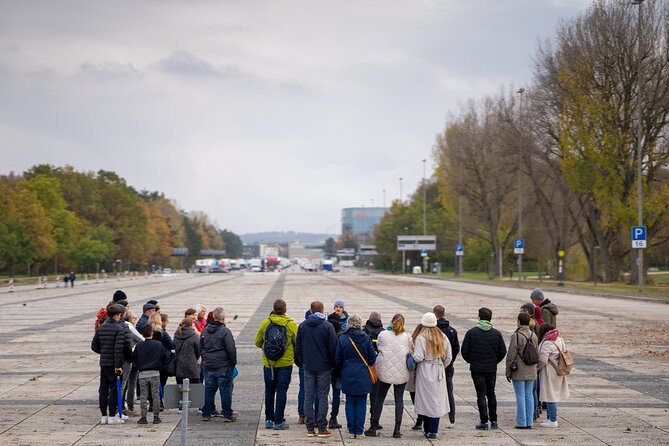
Here, the field and its grand tribune were used for major mass gatherings. The tour helps you picture what the rallies looked like in motion, not just as static monuments. You also hear how the rallies involved staged parades and even things like simulated battles. Standing in the space, it becomes easier to understand why this location could feel like a performance. When you have a broad field built for crowd control and repeatable spectacle, the message travels fast.
What to watch for at Zeppelinfeld
The guide’s explanations make you notice two practical things:
- Scale cues help you understand why crowds were an essential ingredient.
- Built angles and open sightlines are part of the design, so you can imagine people being directed rather than freely roaming.
A possible drawback
Because this is an outdoor, wide-open area, weather matters. If it is cold or rainy, you will feel it. Even if you can handle a quick walk, dress for the conditions, not for the forecast you hope for.
Another way to spend a Nuremberg afternoon:
- Nuremberg: Medieval Dungeons Guided Tour
★ 4.8 · 2,214 reviews - Nuremberg: Walking Tour of Former Nazi Party Rally Grounds
★ 4.7 · 1,665 reviews - Medieval Tour in Nuremberg in Spanish
★ 5.0 · 1,374 reviews - Nuremberg: Historischer Kunstbunker WWII Art Bunker Tour
★ 4.8 · 921 reviews
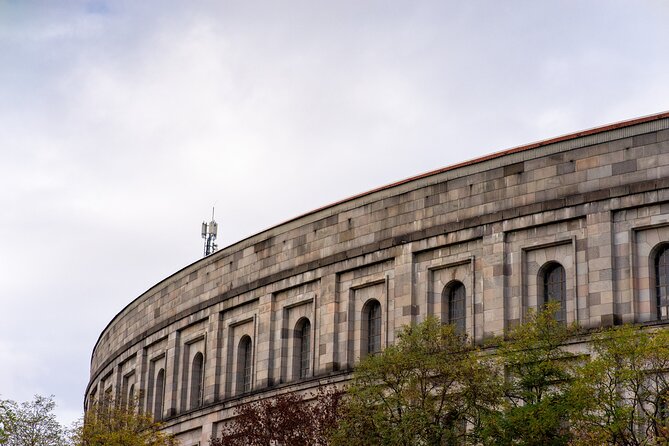
Kongresshalle Nürnberg: unfinished power, built to hold 50,000
Next comes the Kongresshalle, and it is hard to ignore. Even unfinished, it is one of the largest buildings in Nuremberg, and that size is not accidental. The tour frames the building as the intended host for the party congress during the Reichsparteitage, so you understand it as a machine for mass events, not just an imposing structure.
One detail I really appreciate is the way the tour explains its inspiration. The Kongresshalle reminds people of ancient architecture, especially the Colosseum in Rome. That comparison is useful because it gives you a reference point for the building’s ambition: a modern political regime trying to borrow the visual language of antiquity to claim permanence.
The numbers help you grasp the intent. The plan was to hold 50,000 people, which the tour presents as the scale needed to make the regime feel unstoppable. You start to see how the building’s monumentality was meant to impress, and how that impression was part of the propaganda message.
What makes the Kongresshalle stop valuable
You are not just admiring concrete. You are learning how:
- Monumentality becomes messaging
- Mass gatherings require architecture that directs attention
- The “look” of authority was engineered
Also, one of the strongest signals from the feedback is how guides handled understanding. People praised very clear explanations and an engaging delivery, with a guide named Herr Clemens noted for making the stations feel vivid and easy to follow. That matters at a site like this, where the details can otherwise blend together.
A consideration
If you come expecting a traditional museum experience with lots of interior viewing time, keep your expectations grounded. This is a ground-level, architecture-focused walk, and the experience is about what the spaces communicate rather than a long sit-down.
Große Straße: the 60-meter-wide parade backbone of the rally grounds
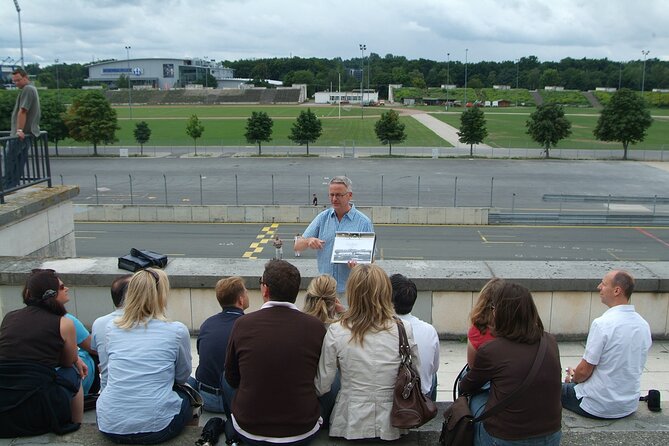
The Große Straße is where the tour really helps you understand the site as a planned system. Construction started in 1935, and the street is described with specific scale: 60 meters wide, planned to stretch 2 kilometers. In the end, about 1.5 kilometers were completed, but what remains still communicates the intended function.
This street was planned as the central Aufmarschstraße for the Wehrmacht, and the tour frames it as a north-south axis tying the grounds together. That is the key idea: the route is not random. Buildings and event areas sit around it so the movement along the axis becomes part of the message.
Standing on or near a space like this, it is easier to imagine how people would have been moved and how the regime could stage a repeatable visual narrative. A wide parade route is not only for walking. It is for arranging how the crowd sees itself and the power structure around it.
Why the numbers matter to you
When a tour shares real dimensions, it prevents the “giant ruins” feeling from turning into vague awe. A 60-meter width is not just a fact. It helps you picture:
- how much space was reserved for mass movement
- how the street would dominate nearby views
- how the axis organizes the rest of the site
A practical note
This stop is shorter in time, so the guide’s pacing is important. Go in ready to listen, because you do not have a long window to wander. If you want photos, decide early where you will stand for the best sense of perspective.
How the tour keeps a hard topic understandable (without turning it into a lecture)
The best tours at difficult historical sites do something subtle: they make comprehension possible while staying respectful. This tour is built around a clear set of big locations, and the guide explains function and effect of the architecture. You also get the sense of the broader historical narrative the regime tried to push, including the connection between the rally stage and the concentration camp system.
That balance is not just morally important. It is practical for your understanding. If you only look at the stone, you miss the intent. If you only hear the horror, you lose how the regime tried to recruit emotions, pride, and fear through spectacle.
The guide matters more than you think
The feedback highlights a few guide strengths worth paying attention to:
- Very understandable explanations that do not get lost in jargon
- An engaging, enthusiastic approach, with Q and A willingness
- A style of presentation where stations feel concrete, not abstract
One review specifically praised a guide’s large knowledge and ability to answer questions, with a lot of engagement and joy in teaching. Another mentioned Herr Clemens for clear, visual presentations. That combination helps a lot here, because the physical spaces can be overwhelming unless someone gives you a framework.
Value and pacing: why this $16.13 tour can feel like a smart time investment
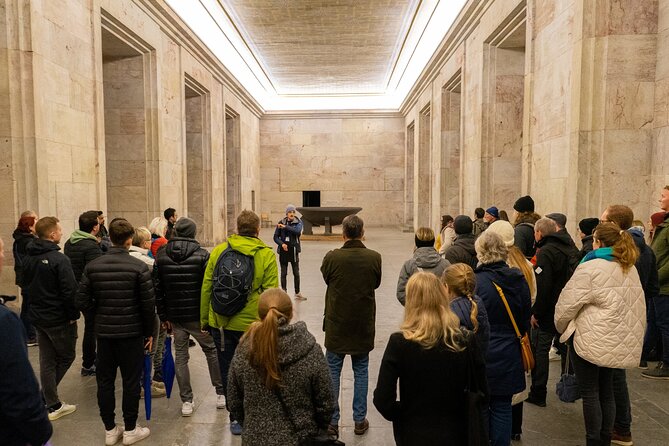
At $16.13 per person, this is not priced like a premium private guide experience. For most people, that matters. You are paying for a structured walk of about two hours that focuses on three of the key sites, rather than spending the whole day piecing things together.
Two hours also gives you a realistic target. You can fit it into a Nuremberg itinerary without sacrificing the rest of your day. And because the tour uses a mobile ticket, it tends to be easy to manage on the day, especially if you are doing multiple stops across the city.
Is it a bargain? It depends on what you want:
- If you want a guided, coherent storyline of the rally grounds, it is strong value.
- If you want lots of independent time at each location, you might feel the pace is brisk.
Still, the rating trend of 4.9 and repeated praise for the clarity and engagement suggest you are paying for comprehension, not just access to sites.
Getting the most out of the walk: simple prep that helps
You will do best if you prepare your expectations and your comfort.
First, wear shoes that work on outdoor paths. This is a geländebegehung, a site-walk format. Second, give yourself a mental “listening mode.” The tour is designed to connect what you see to why it was built that way.
Third, bring questions. The feedback emphasizes that the guides can answer questions and explain with energy. If something feels unclear in your own reading of the architecture, this is exactly when a good guide helps you get unstuck.
Lastly, treat it as a respectful historical visit. This is a place that still carries political trauma. You do not need to put on a serious face, but you should walk carefully, stay mindful, and keep your attention on learning.
Should you book the tour?
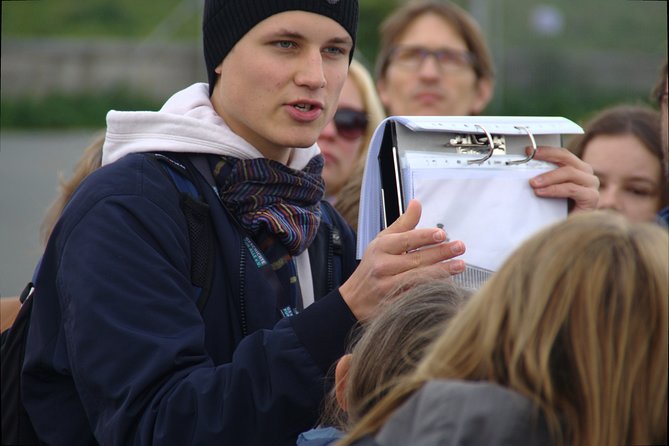
Book it if you want a focused way to understand how the former rally grounds were designed for spectacle, and how the architecture connects to the regime’s story. This is especially good if you value clear explanations and a guide who can make big spaces feel understandable fast, with memorable teaching style like Herrn Clemens described in the feedback.
Skip it or consider alternatives if you want a long, slow visit with lots of unstructured time, or if you dislike walking outdoors for about two hours. Also, if emotionally heavy history is not your thing today, factor in that this tour does not shy away from the connection to the concentration camp system.
If you are visiting Nuremberg and you want this site to make sense, this guided walk is a strong choice. It gives you a framework, a rhythm, and the kind of practical context that helps you see more than just stone.
FAQ
How long is the tour?
It runs for about 2 hours.
What does it cost per person?
The price is $16.13 per person.
Is the tour offered in German?
Yes, it is a German-language tour.
Where does the tour start and end?
It starts at Bayernstraße 110, 90478 Nürnberg, Germany, and it ends at Zeppelinfeld on Zeppelinstraße, 90471 Nürnberg, Germany.
Which stops are included?
You visit Zeppelinfeld, the Kongresshalle Nurnberg, and Große Straße.
Is there a limit on group size?
Yes, the tour has a maximum of 30 travelers.
Fresh reviews out of Nuremberg
- Nuremberg: Private Guided Walking Tour★ 4.5 · 9 reviews
- Nuremberg: Old Town and Christmas Market 1.5-Hour Tour★ 4.6 · 9 reviews
- Nazi Party Rally Grounds & Old Town Private Walking Tour★ 4.5 · 10 reviews
- Fünf Seidla Steig ® Beer Hike Food Experience Private Tour (departs Nuremberg)★ 5.0 · 10 reviews
- Private Scenic Transfer from Nuremberg to Munich with 4h of Sightseeing★ 5.0 · 10 reviews
- Christmas City Nuremberg – Culinary and Tradition★ 4.5 · 10 reviews
- Nuremberg Scavenger Hunt and Sights Self-Guided Tour★ 4.5 · 10 reviews
- Third Reich, Nazi Propaganda, Nuremberg Trials Private Tour★ 5.0 · 10 reviews
Nuremberg Tours, compared.

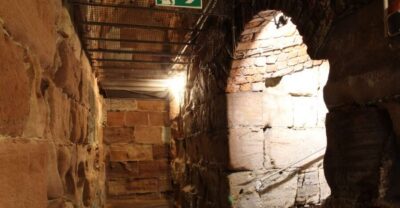
Tunnels and Secret Passages in the City Wall Tour
Read our review →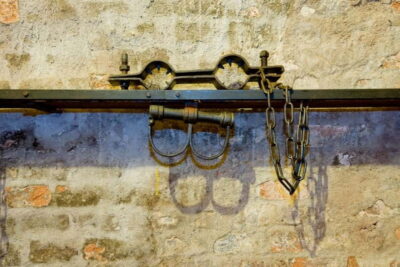
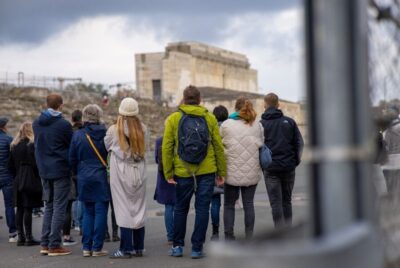
Walking Tour of Former Nazi Party Rally Grounds
Read our review →
Browse the lists this tour appears in