
Reviewed · BERLIN WALL & COLD WAR TOURS
Berlin’s Best: 2 Hour Walking Tour Third Reich and the Cold War
Berlin is one of Europe’s most honest history classrooms, and this walking tour hits the city’s hardest chapters with a clear route and a human guide. I like that you cover major landmarks on foot, not in a bus box, and I like the free access stops that keep your money focused on the guide, not on ticket hassles. One heads-up, this is fast-paced and the topics are heavy, including the Holocaust and Hitler’s final days.
You start at the Brandenburg Gate and end at Checkpoint Charlie, so you get a sense of direction as Berlin’s story moves from Nazi Germany to a divided city and then reunification. Guides are often praised for being engaging, and names like Glen, Ben, Mikey, Georgia, and Maggie show up in the kind of feedback that points to strong storytelling, good humor, and calm answers to tough questions.
If you want to linger for long readings, you may feel slightly rushed. In particular, spots like the Topography of Terror exhibition can reward extra time if you’re the type who reads every panel.
Key highlights in 2 hours
- Brandenburg Gate to Checkpoint Charlie, so you track the story instead of just collecting photos
- Free entry stops at major sites, which makes the value easier to justify
- A small group cap of 30, so questions and follow-ups are more realistic
- Guides balance seriousness with a steady, respectful tone, including light humor that does not disrespect the dead
- Historical context that connects buildings to events, from the Reichstag Fire to Cold War confrontations
- Berlin Wall and escape stories up close, not just in the abstract
Two hours on foot: how this route helps you read Berlin
This tour is built for orientation. In about two hours, you walk a line through Berlin’s most iconic Third Reich and Cold War sites, with a guide translating what you are seeing into what it meant at the time. That matters, because Berlin’s architecture can look static while the past underneath it was anything but.
The walking format is also practical. You get to move between places that are hard to access efficiently by bus routes, and you avoid the time sink of constant transit. You are not stuck waiting while the group shuffles through traffic, either. The pacing is tight, but it is meant to cover the big beats.
The group size stays at a maximum of 30 travelers. That is small enough for a guide to notice who is confused and for you to ask questions without turning it into a lecture hall.
And because the tour is in English only, you can focus on the story instead of rationing your German skills.
More Walking Tours in Berlin
- Discover Berlin Half-Day Walking Tour
★ 5.0 · 9,624 reviews - Berlin: Third Reich and Cold War 2 Hour Walking Tour
★ 4.9 · 6,830 reviews - Berlin: Discover Berlin Walking Tour
★ 4.9 · 5,998 reviews
Meeting at Brandenburg Gate, finding the group fast
The start point is at Brandenburg Gate, specifically Pariser Platz (the Pariser Platz side). Arrive 15 minutes early at the Tourist Information office. Look for the guide with the pink umbrella.
This sounds minor, but it is a big deal on a history tour. Berlin is a city where it is easy to wander off by a block and lose your group. Getting there early reduces stress, which helps you actually pay attention once the commentary starts.
You finish at Checkpoint Charlie at Friedrichstraße 43-45, so you do not need to puzzle out a return plan right after the tour ends. It is also a good spot to continue your own walking loop, grab coffee, or line up a museum visit later.
Brandenburg Gate: the reunification symbol you can actually explain
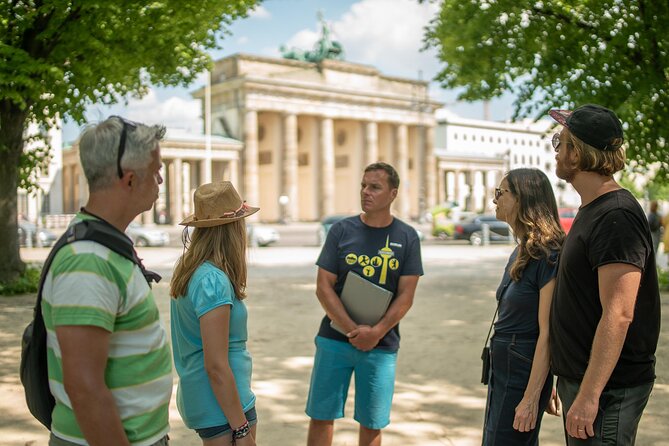
Your first stop is the Brandenburg Gate, with the guide explaining why it became the symbol of reunified Germany. This is more than a photo op. The gate has been used and reinterpreted across different eras, and Berlin residents have lived the consequences of whoever held power.
What you get from starting here is a framing device. Even before you hit the darker sites, you learn to read the gate as a political object, not just a landmark. That helps every next stop click into place, including why the city looked so different under different regimes.
Admission at this stop is free, and the stop time is short, around 15 minutes. So expect the gate to be about meaning, not about a long pause.
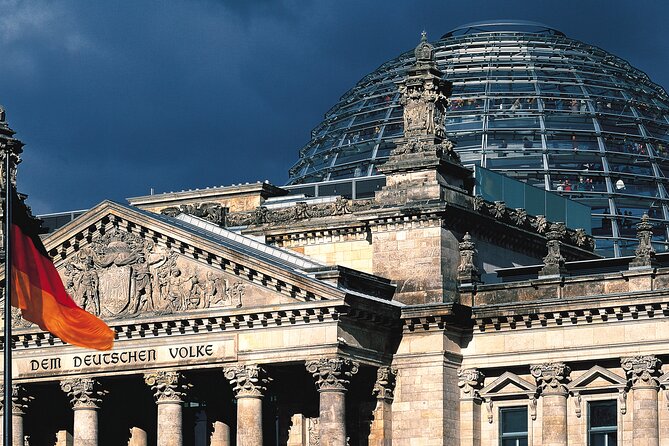
The Reichstag Building and the Reichstag Fire story
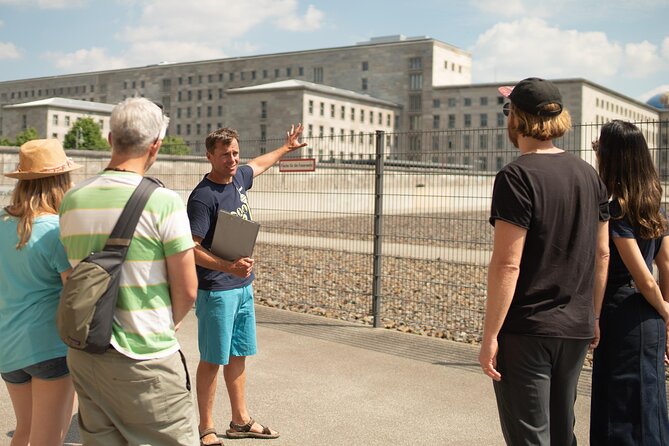
Next is the Reichstag Building, the German house of parliament. The guide connects it to Berlin and German history over roughly the last century, including the story of the Reichstag Fire in 1933.
This is one of the key “how power works” moments of the tour. You are not just learning dates. You are hearing how Hitler used the building during the dictatorship, which is the kind of context that changes how you see government buildings anywhere.
Stop time is about 10 minutes, with free admission noted. In practice, this means you will get a clear narrative and the important context, but you likely will not have time to study every corner of the building yourself. If you want more later, plan a separate longer visit on your own schedule.
More Third Reich history tours:
- Third Reich Berlin: Hitler and WWII Walking Tour
★ 5.0 · 3,301 reviews - Berlin: Third Reich, Hitler, and WWII Walking Tour
★ 4.9 · 1,757 reviews - Berlin Third Reich Sites: Half-Day Walking Tour
★ 5.0 · 835 reviews - Berlin: History of the Third Reich Guided Walking Tour
★ 4.7 · 791 reviews
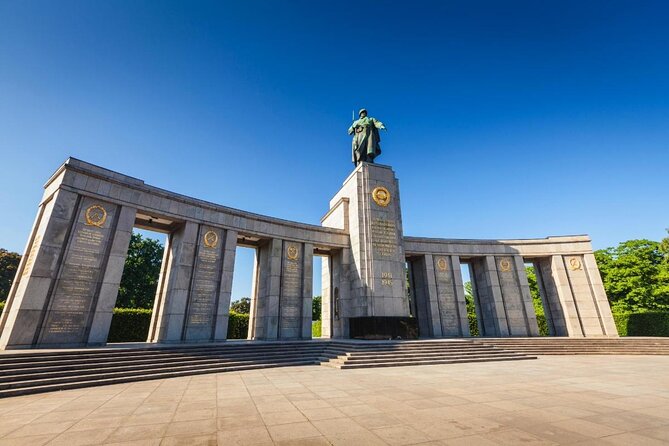
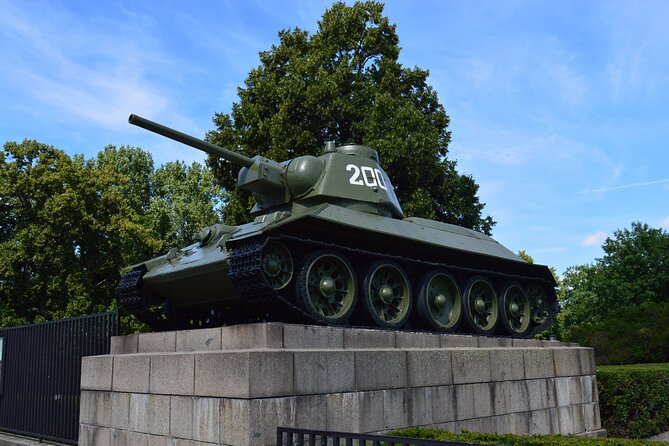
Soviet Memorial in Tiergarten: tanks, artillery, and WWII’s aftermath
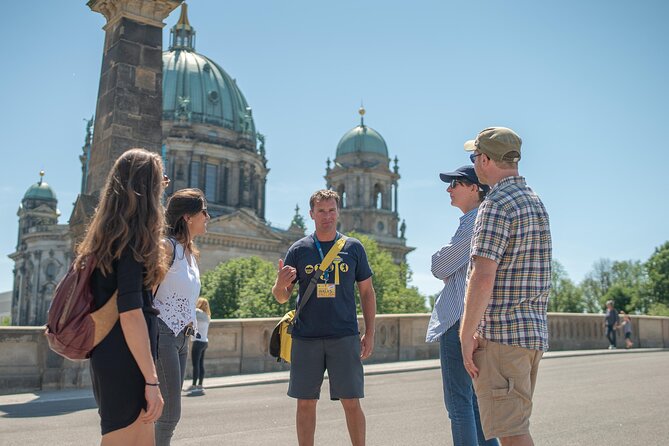
Then you move to the Soviet Memorial in the Tiergarten. Here, the focus is on visible remnants from World War II, including Soviet T34/76 tanks and field artillery.
This stop is valuable because Berlin’s story is not only about Nazi Germany. The city’s fate after the war was shaped just as much by the victors and by what occupation looked like on the ground. Seeing tanks and artillery in a memorial setting makes the end of WWII feel less abstract.
The stop is brief, around 7 minutes. That is enough for the guide to set the scene and connect it to what comes next: the Cold War division of Berlin.
The Victory Column and Speer’s Germania idea
At a nearby stop, you see the Victory Column and learn why Albert Speer moved it from its original location to the newer site. You also hear about Speer’s grand plan for the new capital city of the world, Germania, and that it was meant as the Nazi “next stage” for Berlin if they had won.
This part is fascinating because it explains something many visitors miss. Nazi planning was not only about ideology. It was also about architecture, spectacle, and control of how the future would look.
The tour does not spend a long time here, but it gives you the political logic behind the monument. That is the difference between walking past a column and understanding why it exists in its specific place.
Holocaust Memorial: walking the space with care
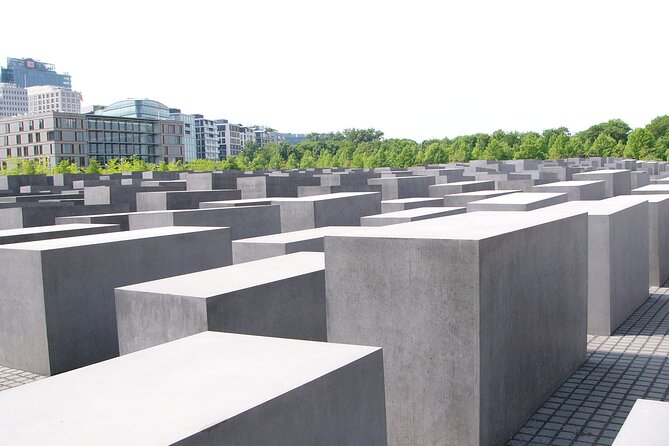
One of the most important stops is the Holocaust Memorial, the Memorial to the Murdered Jews of Europe. You walk through this immense memorial, and the guide sets it in the context of what it commemorates.
Even with a short stop time, around 10 minutes, this is not meant to be a quick stroll. Guides on this tour are repeatedly praised for handling difficult topics with sensitivity, and you can expect the tone to stay respectful here.
If you are the type who needs a moment to process, build in a little quiet time. The memorial itself encourages that. You do not need to rush to “finish” it.
Admission is listed as free at this stop, so there is no extra cost to add meaning to your walk.
Fuhrerbunker: standing above the site of April 30, 1945
Next comes the Fuhrerbunker. You stand above Hitler’s bunker and listen as your guide covers the last days of World War II, including Hitler’s suicide on April 30, 1945. The guide also frames how Germans deal with this destructive past today.
This is one of those places where commentary matters because the physical site is not dramatic in the way people expect from movies. The value here is the guide turning a location into an understood event.
Stop time is about 10 minutes. It is enough for a strong narrative, but you should still know this is not a “light” moment. The guide’s ability to balance seriousness with a human pace is a big reason people rate this tour so highly.
Hermann Goering’s Airforce ministry to the GDR proclaimed in 1949
The tour then walks the length of the Berlin Aviation Ministry area, connected to Hermann Goering’s Airforce ministry. The guide explains how this was also the location where East Germany (GDR) was proclaimed in 1949.
This is a smart pivot. You go from the collapse of the Nazi regime into the new reality of a divided Germany, and you see how the same kind of monumental government space gets repurposed across regimes.
The stop is short, around 5 minutes, so think of it as a quick but meaningful bridge. You are learning how Berlin’s political power kept changing hands, sometimes with little regard for what the buildings had stood for before.
Topography of Terror: the SS, Gestapo, and SD headquarters site
After that, you reach Topography of Terror. This stop focuses on the location of infamous Nazi institutions, including the SS, Gestapo, and SD, which had their headquarters here. Today, the site houses the Topography of Terror exhibition that teaches about the crimes they carried out during World War II.
This is one of the best places on the route for you to slow down mentally. Even if your time is limited, the guide helps you place the museum content in the exact streets and buildings where the system operated.
Stop time is about 15 minutes, with free admission listed. If you want to read everything at your own speed, plan a longer revisit later. But as a guided introduction, this stop gives you the necessary context so the exhibition makes more sense.
Niederkirchnerstraße and the Wall: escape stories in real sightlines
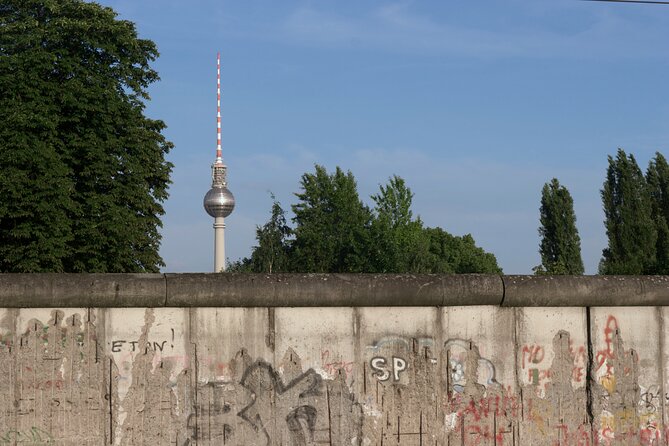
Next is Niederkirchnerstraße, where you see a huge piece of the Berlin Wall. Here, the guide shares stories of people escaping and what happened to those who tried but did not make it. You also learn about life on both sides of the Wall, East Berlin and West Berlin.
This stop is powerful because it turns a wall from an image into a lived barrier. You can literally stand next to where choices were made, where risk was counted in steps, and where the outcome could be tragic.
Stop time is about 7 minutes. Short, yes. But the guide’s storytelling is key, and it is also where a respectful tone really matters. The best guides on this kind of tour manage that mix, serious content with a steady approach that does not numb you.
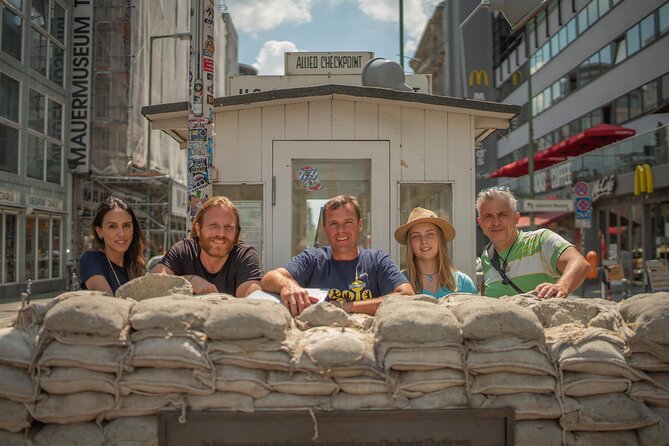
Checkpoint Charlie: the 1961 tank standoff and the wall fall night
The tour ends at Checkpoint Charlie, the most famous checkpoint through the Berlin Wall. Here, the guide explains the Soviet vs USA tank standoff in 1961, and then connects it to how the Berlin Wall came down on the night of November 9, 1989.
Finally, the tour wraps with how successful reunification has been over the past 30-plus years. That ending is more than optimism. It gives the story a conclusion, not just a cliffhanger.
Stop time is about 15 minutes, with free admission listed. Checkpoint Charlie is busy and familiar, so the guide’s role is to cut through the tourist noise and focus on the turning points you came to learn.
Price and value: why $24.07 makes sense here
At $24.07 per person for about two hours, this tour is priced like an introduction, not a premium museum day. The value is strongest because you get a professional English-speaking local guide plus stop-by-stop context at multiple major landmarks.
You are also seeing several “anchor” sites with admission listed as free in the tour outline. That does not mean you are skipping all costs in Berlin, but it does mean you are not stacking add-on ticket fees on top of the tour fee.
The group limit of 30 also supports value. A smaller group helps keep the tour from turning into a herd. And the fact that the tour is commonly booked in advance, an average of 16 days ahead, is a clue that this route fills up when people want a tight, guided history overview.
For a first visit, this is one of those deals that helps you decide what to do next. After it, you will know what topics deserve a longer, independent follow-up.
Who this tour is best for, and who should skip it
Book it if you want a structured way to understand Berlin’s shift from Nazi power to Cold War division and then reunification. This is also a great pick if you like guides who can answer questions and keep the tone respectful while still making the story clear.
It can work well for families too, as long as your kids can handle mature subject matter. One review specifically mentions an experience with an 11- and 16-year-old who felt comfortable asking questions.
Skip it if you want a slow museum-style pace or if you prefer to avoid heavy topics altogether. The route includes the Holocaust Memorial and the Fuhrerbunker area, so this is not a carefree history walk.
Should you book the Berlin Third Reich and Cold War walking tour?
If you are weighing whether to spend two hours with a guide, I think this one is worth booking. The big reasons are simple: you cover major landmarks in a logical sequence, the guides are repeatedly praised for how they handle hard material with sensitivity, and you get a free-entry style of experience at key stops.
One more practical tip: wear good walking shoes and be ready for weather changes. Berlin can turn from fine to cold fast, and you will be on your feet the whole time.
If your goal is to get your bearings fast and understand why Berlin looks the way it does, book this tour early and then plan your deeper dives on your own afterward.
FAQ
How long is the walking tour?
The tour runs for about 2 hours.
How much does the tour cost?
It costs $24.07 per person.
What language is the tour offered in?
The tour is offered in English only.
Where do I meet the guide?
Meet in front of the Tourist Information office at Brandenburg Gate on the Pariser Platz side.
When should I arrive?
Plan to arrive 15 minutes before the tour begins.
Where does the tour end?
The tour ends at Checkpoint Charlie, Friedrichstraße 43-45, 10117 Berlin, Germany.
Is the ticket mobile?
Yes, the tour uses a mobile ticket.
Are there any entry fees for the stops?
The tour outline lists admission tickets as free at the stops mentioned.
How large is the group?
The maximum group size is 30 travelers.
Can I cancel for a refund?
Free cancellation is available up to 24 hours in advance for a full refund. If you cancel less than 24 hours before the start time, the amount paid is not refunded.
More Berlin Wall and Cold War history
- Berlin: DDR Museum Tickets
★ 4.3 · 3,443 reviews - Skip-the-Line: Berlin Wall Museum at Checkpoint Charlie
★ 4.1 · 2,041 reviews - Berlin: East Side Gallery Spree Cruise in a Solar Catamaran
★ 4.1 · 1,086 reviews - Cold War, Berlin Wall, Spies and the East Side Gallery
★ 5.0 · 1,024 reviews
Fresh reviews out of Berlin
- Berlin Uncensored: A History of Sex & Freedom★ 5.0 · 50 reviews
- Berlin Food & Cultural Tour: Must-Try German & Berliner Classics★ 5.0 · 51 reviews
- English Comedy Show with Pizza and Shots in Central Berlin★ 4.5 · 51 reviews
- Rude Bastards Tour of Berlin★ 4.8 · 51 reviews
- Private Taxi Tour of Berlin East and West and Neighbourhood approx. 4-6h★ 5.0 · 55 reviews
- Rickshaw Sightseeing City Tours Berlin – Rikscha Tours★ 4.0 · 55 reviews
- Berlin: City Highlights Express & Panorama Roof Terrace★ 4.9 · 55 reviews
- Berlin during Nazism – Tour in Italian★ 5.0 · 56 reviews
Berlin Wall & Cold War Tours, compared.


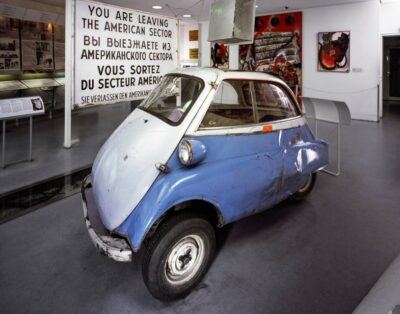
Skip-the-Line: Berlin Wall Museum at Checkpoint Charlie
Read our review →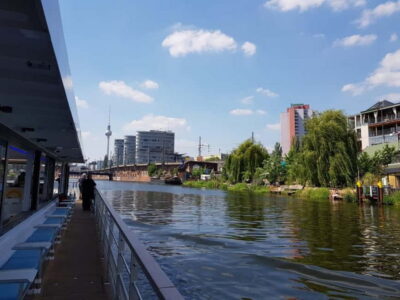
East Side Gallery Spree Cruise in a Solar Catamaran
Read our review →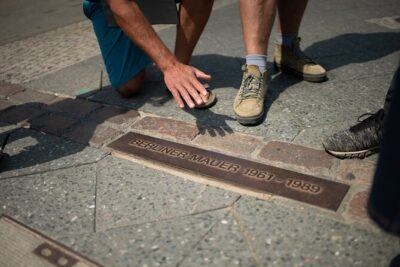
Cold War, Berlin Wall, Spies and the East Side Gallery
Read our review →

Browse the lists this tour appears in