Reviewed · BERLIN TOURS
Wall Tour Berlin – Fates, Heroes & Love Stories
Berlin’s Wall story is one of those topics you think you understand, until you walk the line and realize how a city and a country were cut for 28 years. This 2-hour wall walk uses short stops and real human stories, from escape attempts to the darker machinery of the GDR.
What I really like is the structure. You get a clear explanation of how the border strip was built, then you see how that construction shaped real lives. I also appreciate the pacing, with quick moments at multiple memorial points so you keep moving and the time stays focused, not lecture-like.
One thing to consider: this tour covers heavy material, including deaths and propaganda tactics involving children and young people. If you want a light sightseeing vibe, this is not it. And I’d also come prepared for a small risk, since a couple of past bookings reported problems at the meeting point.
Key takeaways before you go
- Nordbahnhof ghost stations: you’ll hear why some stations were effectively “there but not there” under the GDR.
- Ulbricht’s wall claim to actual sealing: the story runs from propaganda wording to border fortification in under two months.
- A border strip map made human: the Bernauer Strasse viewpoints turn the walls into a real sense of distance and control.
- Church of Reconciliation at Ackerstraße: a rare place where East and West worshipped together, then got swallowed by the border.
- Escapes and Stasi-era pressure: you’ll see tunnel escape history and stories around kidnappings and surveillance methods.
- Ends at Mauerpark: the tour closes with the fall of the Wall feeling closer, not just historical.
Price and time: what you’re really paying for
At about $19.66 per person for roughly 2 hours, this tour sits in the “good value” zone, mainly because you’re not just looking at plaques. You’re being guided through a long, continuous historical corridor where context matters. Even if you know the basic timeline of the Wall, you’ll get the “how” and “why” that most self-guided wandering skips.
The tour also uses a mobile ticket, so you avoid hunting for printouts. The group size is capped at 25, which usually helps keep the experience from feeling crowded or rushed.
The time is tight by design. Many stops are brief, but that works here. The stories stay sharp, and you get the big picture without spending your whole day in solemn mode.
Weigh these Berlin picks against each other
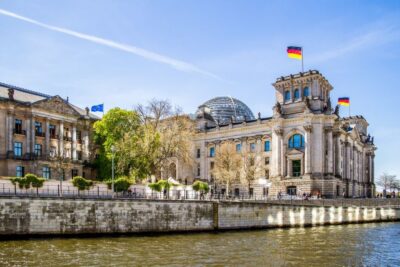
- Berlin: Reichstag, Dome and Government District Guided Tour
★ 4.7 · 18,288 reviews - Berlin: 1-Hour City Tour by Boat with Guaranteed Seating
★ 4.3 · 16,993 reviews - Berlin: TV Tower Standard Entrance Ticket
★ 4.4 · 15,883 reviews
Meeting point to first wall story at Nordbahnhof
You start at Elisabeth-Schwarzhaupt-Platz (10115 Berlin). From there, the first meaningful stop lands at the Nordbahnhof S-Bahn area on Gartenstrasse, where the tour begins with a recreated moment of crossing at the Wall entrance area.
This first segment matters because it frames the Wall as something engineered, not just a barrier. You’ll hear about the so-called ghost stations. During the GDR era, some stations existed on maps and in rail lines, but were functionally off-limits in ways that made daily life feel surreal. It’s the kind of detail that makes the whole Wall system feel real fast.
Practical note: arrive a few minutes early. Berlin transit is easy, but meeting points can get messy if you show up right at the start time.
The Wall Memorial stops: from construction logic to human cost
From Nordbahnhof, you keep returning to Wall memorial points, and the story climbs in intensity.
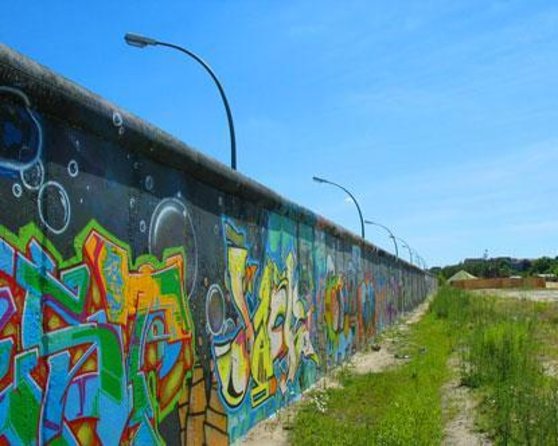
At the early memorial area, the guide lays out how a wall like this could even be built in the first place. That section is important. Without it, the later details about border strip design and behavior control can feel random. With it, you start to understand that the Wall was a system, with rules that shaped movement, fear, and punishment.
Then the narrative hits a key turning point on June 15, 1961. You’ll hear that W. Ulbricht put forward a famous claim that nobody had any intention of building a wall. Less than two months later, the border was sealed and the wall was built. That contrast is one of the most unsettling parts of the tour, because it shows how propaganda and policy can snap into action quickly.
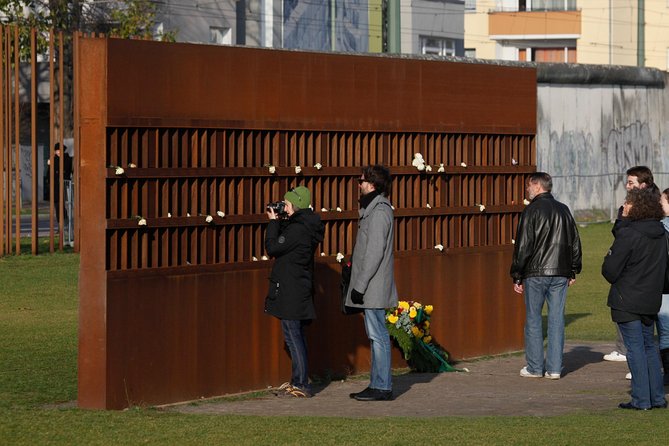
After that, you shift to the costs. The tour highlights that at least 140 people died at the Berlin Wall between 1961 and 1989, and that the exact number of victims is unknown. At the memorial window, the guide shares the fates behind that number. This is where the tour stops being “interesting history” and becomes “this is what power did to individuals.”
You’ll want to steel yourself a bit here. Short stops do not mean shallow emotion.
Bernauer Strasse viewing platform: where you finally get the geography
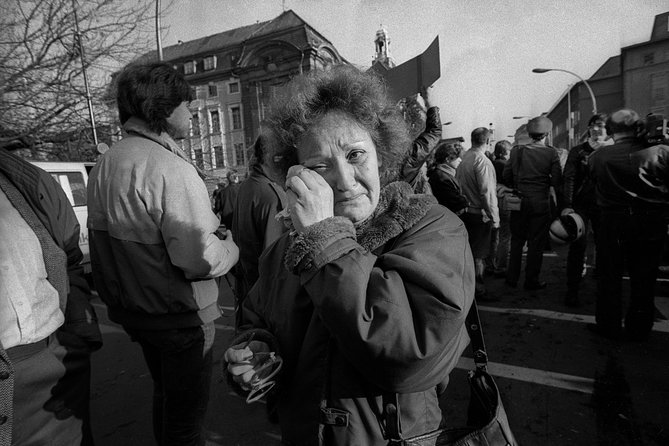
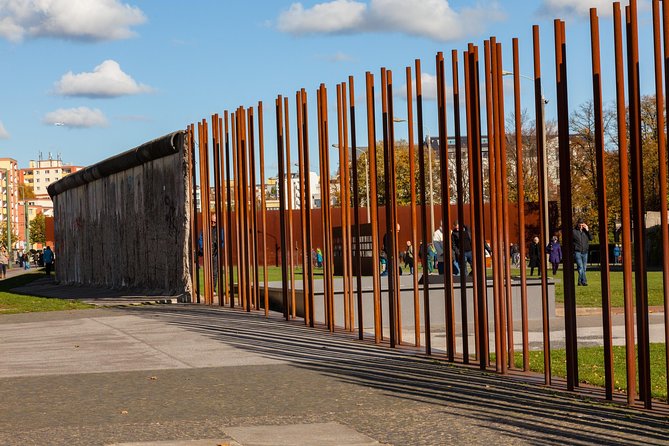
One of the best payoff moments comes when your guide accompanies you to a viewing platform on Bernauer Strasse. From here, you get an overview of the border strip.
Why this stop works: the Berlin Wall wasn’t just one line. It was layers, zones, and visibility. When you look down the corridor from a vantage point like this, the Wall stops being an idea and becomes an environment. You start to understand why escape attempts were so hard, and why even small advantages mattered.
The tour then continues with nearby stops that show how the border cut into neighborhoods, not just “empty” land.
Another way to spend a Berlin afternoon:
- Berlin: Boat Tour Along the River Spree
★ 4.4 · 11,252 reviews - Discover Berlin Half-Day Walking Tour
★ 5.0 · 9,624 reviews - Berlin: Government District around the Reichstag Guided Tour
★ 4.7 · 8,447 reviews - Berlin: Reichstag, Plenary Chamber, Cupola & Government Tour
★ 4.6 · 8,422 reviews
Ackerstraße and the Church of Reconciliation: a rare shared space
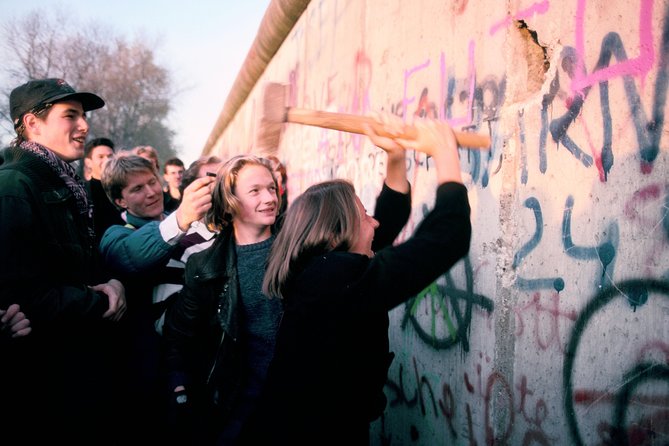
At Ackerstraße, you’ll reach the chapel of the Church of Reconciliation, which marks where the church once stood, in the middle of the border strip.
This is one of the stops where the tour gives you a break from tragedy, without ignoring it. People from East and West Berlin once celebrated services together there. Then the border closed, and the church’s fate changed along with everything else.
If you like history that includes human contradiction, this moment is for you. It shows that division didn’t erase shared life overnight, and it also shows how quickly a system can take even a meeting place and turn it into a victim of politics.
Passenger agreements and propaganda pressure
As you move along the memorial corridor, you’ll learn about passenger agreements between the Senate of Berlin in West Berlin and the GDR. The basic idea is that these agreements made the wall more permeable in certain ways.
But the tour ties permeability to control. You also hear about how brutally and ruthlessly the GDR abused children and young people for its own purposes. This part can be hard to process, because it isn’t just about border violence. It’s about shaping minds, training loyalty, and weaponizing youth.
That’s one reason I think this tour is worth doing with a guide. You leave with a clearer sense of how the Wall operated beyond fences, into schools, media, and everyday habits.
Residential buildings, windows, and the fear that drove people
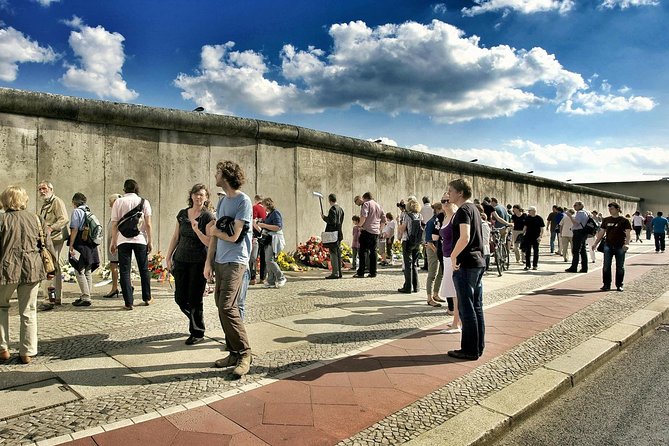
Along Bernauer Strasse, you’ll hear about residential buildings where windows and exits opened toward West Berlin, while the houses themselves sat on GDR territory.
This is where the tour turns raw. The guide describes tragedies and fates that took place here, including hundreds of people jumping out of windows to their deaths out of fear and despair. You’ll also have time to look at pictures and videos at your leisure.
It’s not a “pass by and forget” moment. You’ll feel the weight of why some choices were immediate. The Wall created a countdown in people’s minds, even when they wanted something as simple as safety.
If you’re sensitive, give yourself a moment here. Don’t try to force a strong emotion into a quick box.
Tunnels, propaganda, and legendary escapes
The tour then covers tunnel escapes in the 1960s, including one tunnel that became legendary and is located near a border house.
This segment is fascinating because it highlights the ingenuity behind resistance, but it also shows how the GDR turned events into propaganda material. When you hear how history was adapted for messaging, the tunnel story becomes more than a dare. It becomes a contest over truth.
If you like details, stay mentally present here. The guide’s narrative links the underground escape effort to the political need to control what people believed was happening.
Conrad Schumann: the most famous jump
Another major escape story comes with the jump of border guard Conrad Schumann. Your guide explains that Schumann became wanted and faced consequences until the fall of the GDR.
This stop works because it adds complexity. The story isn’t only about prisoners and civilians. It’s about someone inside the system choosing action, then paying the price. It gives you a human lens on what “defection” meant in practice.
Even if you’ve heard of Schumann before, the way this tour ties his life to the later political outcome gives you a stronger sense of cause and effect.
Kidnappings and coercion from the West back to the GDR
The tour also covers kidnappings as part of the GDR’s core operations. A key detail here is that former employees of the NVA and People’s Police were targeted, often by criminal gangs ordered by the GDR from the West back to the GDR.
You’ll hear that at least one kidnapping even ended in death. Again, this is not a generic “surveillance was bad” explanation. It’s a description of mechanisms and consequences.
This is also where the tour’s theme of love stories and human fates becomes more than decoration. Even during coercion, people tried to choose loyalty to each other and safety outside the system.
Loudspeakers and the daily war nobody could mute
Berlin’s Cold War wasn’t only walls and guards. It also involved a loudspeaker war.
At this stop, the guide explains how West and East made each other’s lives hell through sound. It’s a clever detail to include in a Wall tour because it shows the conflict wasn’t confined to one street. It seeped into daily routines, into nights, and into stress levels.
And it’s also a reminder for modern ears. Today, you can mute notifications. Back then, the noise was part of the strategy.
Ending at Mauerpark: how the Wall story closes
Your tour ends right at Mauerpark. The guide ties the fall of the Wall back into what you saw earlier, so it doesn’t feel like an abrupt jump from 1980s tragedy to 1990s freedom.
Mauerpark is a fitting place to finish because it’s a public space now. That change in use is the quiet “after picture” to everything you walked through. You can look around, shake off the heaviness, and still keep the day anchored in the same corridor of history.
Two-story warning: love stories do show up
The tour includes one or two love stories, because they really happened too. That matters more than it sounds.
When you’ve spent time with tunnel escapes and deaths, a love story gives you a different kind of evidence. It shows that human life kept happening inside the machinery of division. You don’t leave only with dates. You leave with people.
Who should book this tour
This is a strong fit if you want:
- A guided, time-efficient way to understand the Wall’s logic and layout.
- A narrative that covers escapes, coercion, and propaganda methods, not just landmarks.
- A walking route with short stops and a steady pace.
It might feel like too much if:
- You want relaxed sightseeing, photos for social media, and cheerful commentary.
- You get overwhelmed by stories involving death or abuse of children.
And one more practical point. With a course like this, your biggest risk is not the weather. It’s timing and meeting point reliability. There have been reports of groups standing at the meeting place with no guide showing up, and of slow, unhelpful responses after contact attempts. That doesn’t mean it’s common, but it does mean you should arrive early and keep your booking details accessible on your phone.
FAQ
FAQ
How long is the Wall Tour Berlin?
The tour lasts about 2 hours.
What’s the price and ticket type?
The price is about $19.66 per person, and you use a mobile ticket.
Where does the tour start and end?
It starts at Elisabeth-Schwarzhaupt-Platz, 10115 Berlin. It ends at Oderberger Straße corner with Bernauer Str., 10435 Berlin.
What stops will I visit during the tour?
You’ll visit multiple Wall-related memorial points, including Nordbahnhof S-Bahn area on Gartenstrasse, the Berlin Wall Memorial area, Bernauer Strasse viewing areas, Ackerstraße near the Church of Reconciliation, and you end at Mauerpark.
Are there any paid admissions at the stops?
The tour’s stop descriptions list admission ticket as free at each of the memorial points.
How large is the group?
The maximum group size is 25 travelers.
What happens if the weather is bad?
The experience requires good weather. If it is canceled due to poor weather, you are offered a different date or a full refund.
Should you book Wall Tour Berlin?
Yes, if you want a focused, guided way to understand the Wall as a system, not just a wall. I like that you get both the construction logic, the escape stories, and the heavy human consequences, all in a route that stays moving for about 2 hours.
Book it if you can handle difficult subject matter and you’re comfortable with a memorial-style tour. If you’re the type who hates uncertainty, do yourself a favor and arrive early with your confirmation ready on your phone, since a small number of past bookings reported meeting point problems.
Fresh reviews out of Berlin
- Gastro Tour with Klaus though the Wrangelkiez, Kreuzberg★ 5.0 · 9 reviews
- Berlin City Tour with Hotel pick up and Drop off★ 4.0 · 9 reviews
- Berlin Private Street Art Tour – Off The Grid★ 5.0 · 9 reviews
- Romantic Berlin Rickshaw City and Photo Tour – incl. pick-up★ 4.0 · 9 reviews
- Quatsch Comedy Club Berlin: Quatsch Comedy Hot Shot★ 4.8 · 9 reviews
- Berlin Urbex Adventure and History Tour★ 5.0 · 9 reviews
- Stag Party Berlin: Celebration for Your Bachelor Party★ 3.4 · 9 reviews
- Shared Underground Party Tour in Berlin★ 4.5 · 9 reviews
Berlin Tours, compared.
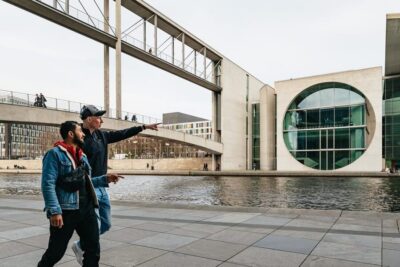
Reichstag, Dome and Government District Guided Tour
Read our review →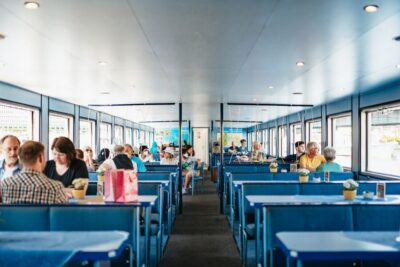
1-Hour City Tour by Boat with Guaranteed Seating
Read our review →
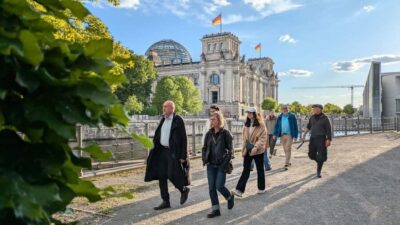
Government District around the Reichstag Guided Tour
Read our review →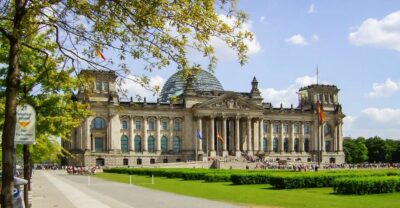
Reichstag, Plenary Chamber, Cupola & Government Tour
Read our review →