
Reviewed · WALKING TOURS
Discover Berlin Half-Day Walking Tour
Berlin is not a single story, it is layers stacked on layers. What makes this half-day walking tour especially interesting is that it threads together the Prussian, Imperial, Nazi, and Cold War eras along the same streets and monuments you would normally see one at a time.
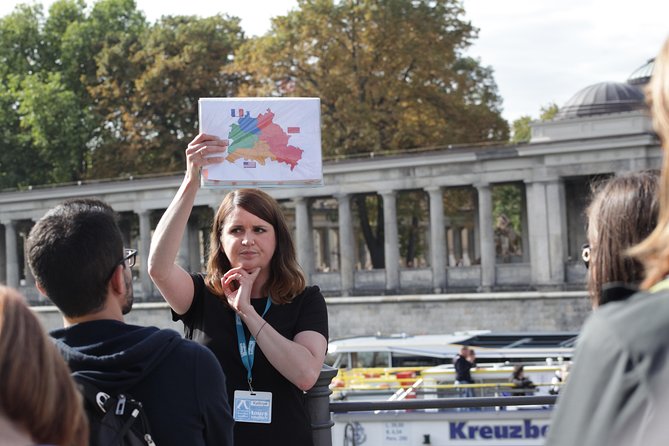
I like that the guide keeps the walk practical, not just scenic, with clear context as you move from Unter den Linden toward Berlin’s most important memory sites. I also like the human touch, you can feel the care in how guides such as Amanda, Emma, and Tobi make the city’s divided past feel real, even in a cold, stop-and-go group.
One consideration: this route includes emotional stops like the Holocaust Memorial and the Topography of Terror area, and it moves at a brisk walking pace. If you want a lighter day, or you get worn out by long memorial sections, you may want to balance this with a calmer afternoon elsewhere.
Key highlights worth your attention
- Unter den Linden and Museum Island in one sweep: you get a street-level view of how Berlin’s center shaped public life.
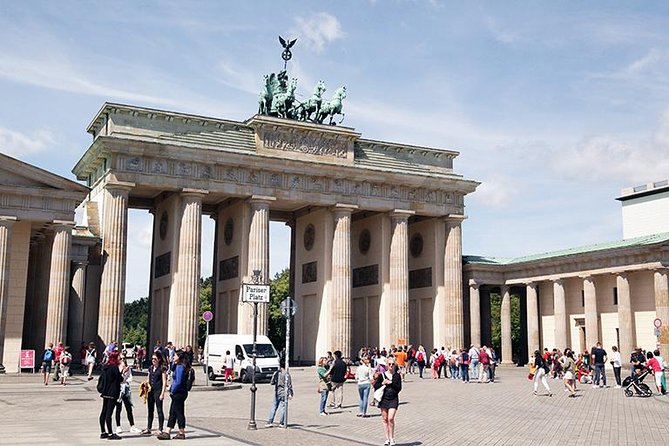
- Big monuments, explained in plain language: Brandenburg Gate, the Reichstag, Pariser Platz, and the Holocaust Memorial are not just photo stops.
- Checkpoint Charlie and the Berlin Wall boundary: you walk the geography of division, then hear what changed in 1989.
- Topography of Terror on its actual site: the story includes the former Gestapo and SS Headquarters location and what was beneath it.
- Small group feel for a 3.5-hour tour: maximum 25 people, guided in English, with a steady flow of pauses.
Meeting at Neue Promenade 3: pace, group size, and what you carry
You start at Neue Promenade 3, 10178 Berlin, and the tour runs about 3 hours 30 minutes. It is offered in English and uses a mobile ticket, which is one less thing to fuss with before you head out.
The group stays capped at 25 travelers, which matters in a walking tour. Smaller groups usually mean you can ask questions without feeling lost in the crowd. This one also runs close to public transportation, so you are not stranded if you decide to extend your day with nearby sights.
The pace is the main thing to plan for. Even with frequent short stops, you are moving most of the time, and you will be on foot through a lot of well-known areas. If you are the type who likes to linger, I’d budget your other plans around this being the “see the most with context” block of your trip.
More Walking Tours in Berlin
- Berlin: Third Reich and Cold War 2 Hour Walking Tour
★ 4.9 · 6,830 reviews - Berlin: Discover Berlin Walking Tour
★ 4.9 · 5,998 reviews - Berlin’s Best: 2 Hour Walking Tour Third Reich and the Cold War
★ 5.0 · 5,486 reviews
Hackescher Markt to Museum Island: Berlin’s center, shot through with context
The tour kicks off around Hackescher Markt and then works through the city core, using quick pauses to explain what you are looking at. You stop at places like James Simon Park, where your guide gives you history so the area makes sense on first glance.
Then comes the Museum Island area, including multiple stops that help you orient yourself fast. You will pause at Museum Island itself, and also at several landmark museum buildings in that cluster, including Neues Museum, Pergamonmuseum, and Altes Museum. You also get a stop connected to Berlin State Library, which is described here as the workplace of Albert Einstein.
A practical benefit: when you visit these buildings later on your own, you will know why they sit where they do and what role this concentrated zone played in Berlin’s public identity. You also get small orientation pauses at religious and civic points along the way, such as Stiftung Neue Synagoge Berlin – Centrum Judaicum, plus a stop at Berliner Fernsehturm. Even if you are not going inside, it helps to understand what kind of city this is, beyond the most famous facades.
As the walk continues, you hit more landmarks that are easy to miss if you are only moving between major sights. Think Berliner Dom, Stadtschloss Berlin, Rotes Rathaus, and Nikolaiviertel. The stops are brief, but your guide is using them like anchors. That matters because Berlin’s streets can feel like they are made of “parts,” and you need a thread.
If you like urban geography, you will appreciate the way the route keeps coming back to the same theme: power and public life, expressed through architecture and institutions. The tour also includes pauses at Lustgarten, Schlossbrucke, and Deutsches Historisches Museum, which gives you multiple angles on the city center without turning the morning into a museum marathon.
Unter den Linden into Neue Wache: why the boulevard is more than a backdrop
Once the tour lines you up along Unter den Linden, you start to understand why this boulevard matters. Your guide ties it to the royal palace side and toward Pariser Platz and Brandenburg Gate, so it becomes a route across changing eras, not just a famous walking street.
A key pause here is at Neue Wache, described as a memorial stop. This is one of those moments where the tour’s structure helps. By the time you reach Neue Wache, you have already seen the city center’s “official” look. Then the guide pivots you toward how Berlin remembers war and loss in public space.
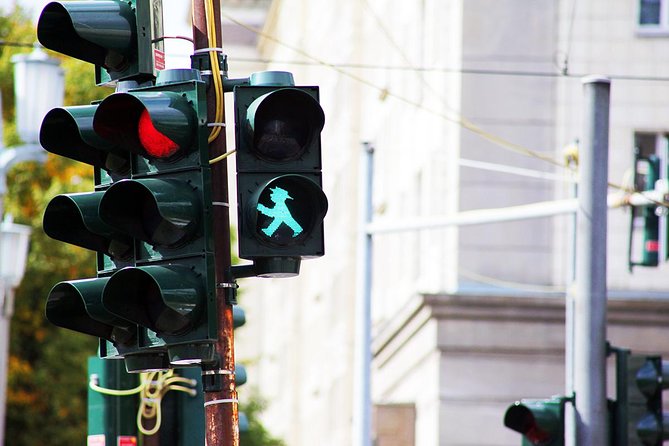
You also pass through more landmark territory along this main axis, including stops at cultural institutions such as Staatsoper Unter Den Linden and educational or civic points like Humboldt University (Humboldt Universitat). There is even a quick stop tied to Ampelmann Shop, which is a small, fun counterweight in the middle of a heavy thematic route. It keeps the day human.
If you are someone who usually skips less-famous side streets, this tour gently teaches you not to. You get repeated micro-stops where the guide explains why each place earned its role in Berlin’s story. That is how the long walk stays meaningful instead of just covering ground.
Brandenburg Gate, Reichstag, and Pariser Platz: the shift from empire to tragedy
The first truly big set-piece is Brandenburg Gate, which the tour treats as both a monument and a transition point. Since it begins Unter den Linden, it works like a visual reset button: you can look at the gate and immediately see why Berlin’s political center became so symbol-heavy.
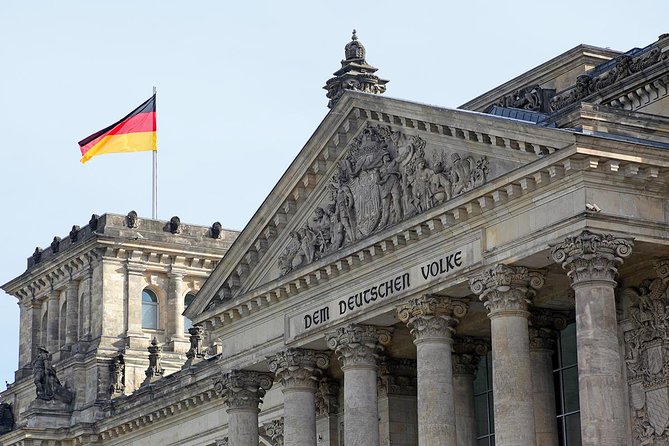
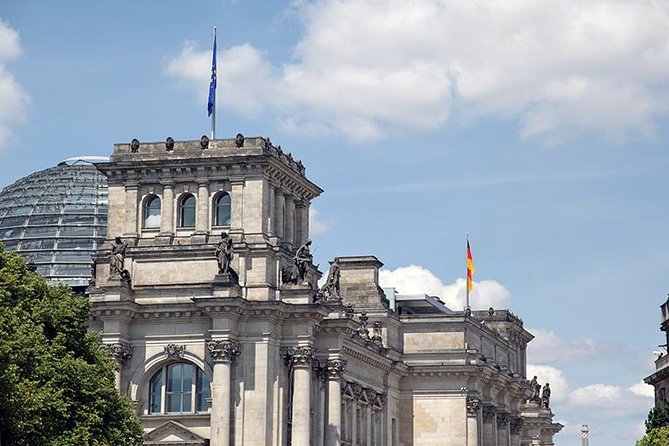
Next you are brought to the Reichstag Building, home of Germany’s parliament. The guide’s job here is not to recite dates like a quiz. It is to connect the parliament space with the reality that German political life changed shape again and again across the 20th century.
Then the route moves into Pariser Platz, described here as the location of Hitler’s bunker and also where the Holocaust Memorial sits. That pairing is hard to absorb, but it is exactly why this walk works. You are not learning about persecution and genocide in isolation. You are learning about it in the city’s physical geography.
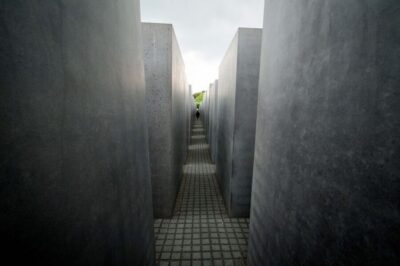
At the Holocaust-related stops, plan for the guide to slow the story down. The Holocaust Memorial is built for reflection, not a quick glance. This is also where you should keep your expectations realistic. This is not a feel-good sightseeing loop.
Another way to spend a Berlin afternoon:
- Berlin: Reichstag, Dome and Government District Guided Tour
★ 4.7 · 18,288 reviews - Berlin: 1-Hour City Tour by Boat with Guaranteed Seating
★ 4.3 · 16,993 reviews - Berlin: TV Tower Standard Entrance Ticket
★ 4.4 · 15,883 reviews - Berlin: Boat Tour Along the River Spree
★ 4.4 · 11,252 reviews
Bebelplatz book burning to memory sites that demand a pause
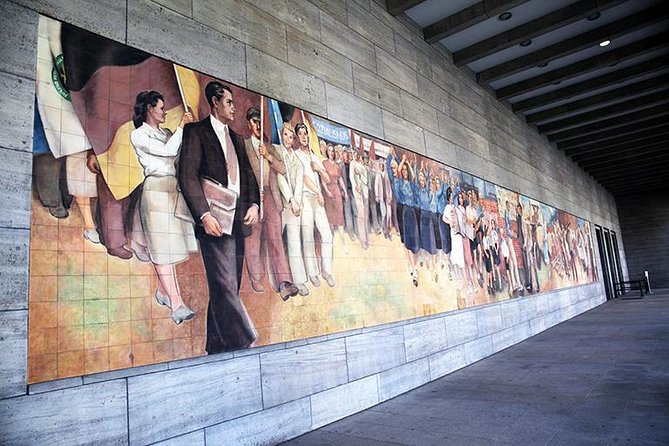
From Pariser Platz, the tour shifts toward Bebelplatz and the Book Burning Memorial. The tour describes Bebelplatz as the site of the Nazis’ 1933 book burning, which is one of those moments where culture and cruelty collide in a very specific way.
You also continue past additional sites tied to Berlin’s darker political geography. The stops include Fuhrerbunker and areas connected to the period after the Nazi era, such as Platz des Volksaufstandes von 1953. You will also have a stop labeled Aviation Ministery of Berlin. The way these are presented is consistent: the guide explains why each location matters, then you move on before the morning becomes overwhelming.
One smart aspect of this design: you get a sequence of short, focused stops rather than one huge lecture at a single spot. That pacing can actually make it easier to process heavy material. If you want to talk to your guide or ask questions, you can also do that during the pauses, and the day does not feel like it is rushing past you without giving you a chance to catch up.
Berlin Wall and Checkpoint Charlie: walking the geography of division
After the memory sites, the tour shifts to the physical border between East and West. You stop at the Memorial of the Berlin Wall, and you also hear details about how the Wall represented the boundary during the Cold War and the significance of its fall in 1989.
A big takeaway here is that the tour is not only about the Wall as an object. It is about the Wall as a lived system. When your guide talks about the “death strip” and then brings you to Checkpoint Charlie, the places start to feel connected rather than random.
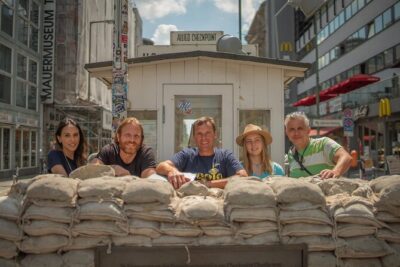
Checkpoint Charlie is described here as an infamous crossing point for travelers between East and West Berlin. That matters because it frames the site as a boundary in everyday motion, not just a dramatic photo backdrop.
The tour also includes a stop at Franzoesischer Dom, which helps end the day with another recognizable Berlin landmark rather than only finishing on the hardest material. Even with that lighter visual note, this is still a morning that leaves a mark.
Topography of Terror: why the location is part of the lesson
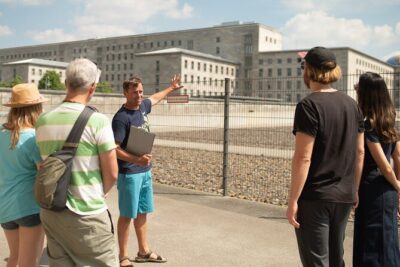
The emotional center of the tour, for many people, is Topography of Terror. The tour places it at the former Gestapo and SS Headquarters, and it explains that the city chose to confront and reconcile with this past by keeping the site meaningful.
This is the part where you do not just look. You also look down, since the tour includes mention of excavated cellars. The story here is described as a haunting place where political prisoners were tortured and killed.
This stop can be intense. That is not a flaw, it is the point. Berlin does not hide its darkest chapters. The value of having a guide is that you get context and care, so the visit feels grounded rather than random.
If you are sensitive to dark history, I’d recommend you mentally plan your own reset after this portion. A quiet break or a later meal will help you digest what you just learned.
What makes the tour work: guides who turn streets into stories
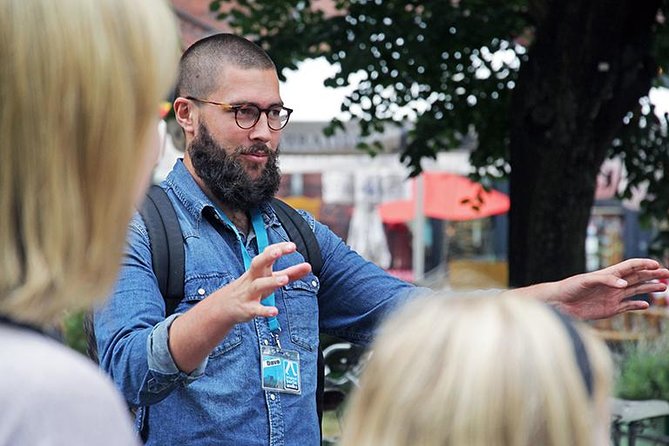
The most praised aspect of this tour is the guide experience itself. Time and time again, the strongest comments focus on guides who are funny, enthusiastic, and truly engaged, while still handling difficult history with respect.
Names that come up in the guide praise include Amanda, Joachim, Emma, Georgia, Rebecca, Tobi, Luisa, and Ruben. People highlight that these guides connect architecture and history so it feels like Berlin is explaining itself, not like you are reciting a textbook.
Another repeated theme: the pacing and group handling. The tour is described as well-laid out, with lots of stops but not a chaotic sprint. You can ask questions, and the day does not feel like it is just marching you from one landmark to the next with no chance to process.
One practical bonus I like: even when the day is cold, the guides keep energy up. If you have ever done an outdoor city tour that felt like watching a slideshow with freezing hands, you will appreciate how this one keeps things lively.
Price and value around $24.19 for a 3.5-hour orientation
At $24.19 per person, this is priced like an affordable, high-impact orientation day. The value comes from how many major stops get connected into one narrative arc, rather than you paying for entry tickets into multiple attractions.
What you get for that price is a professional guide and a structured walking loop. Food and drinks are not included, unless the provider specifies otherwise. So yes, you may want a plan for a snack stop, especially if you are sensitive to long stretches without eating.
The route is loaded with landmarks that usually cost time to research on your own. Here, the guide gives you the why behind the where, which is the difference between seeing Berlin and understanding Berlin enough to plan the rest of your trip.
If you are the kind of traveler who only has one half-day for Berlin and wants a guided backbone, this is good value. If you already know a lot of Berlin history and you prefer deep museum time, you might feel like you are moving too fast.
Who should book, and who should pass (or pair it with something else)
This tour fits best if you:
- want a first-day orientation so the city feels less confusing on later visits
- enjoy history that moves through real places, not just facts on a screen
- like walking but want a plan that keeps every stop purposeful
- want a balanced run from famous landmarks to major memorial sites
You might think twice if:
- you dislike heavy subject matter and long memorial time
- you prefer fewer stops with more time inside buildings
- you have limited mobility and want a calmer pace than a full-on walking loop
If you book this for a first day, you will likely get the fastest benefit. By the end, you can decide what deserves a second look when you are traveling at your own speed.
Should you book this Berlin half-day walking tour?
Yes, I think it is a smart booking for most first-timers, especially if you want your Berlin grounded in the city’s real layers rather than a list of landmarks. The strongest reason to book is the guide-driven storytelling, which repeatedly comes across as engaging, funny, and respectful, even when the material is hard.
Book it early in your trip if you want that orientation boost. Bring comfortable shoes and dress for wind and cold. Then plan a lighter afternoon afterward, because Topography of Terror and the Holocaust Memorial area are not quick emotional stops.
If you want a Berlin day that feels focused, not random, this one earns its place.
FAQ
How long is the Discover Berlin half-day walking tour?
It runs about 3 hours 30 minutes.
Is the tour offered in English, and do I get a ticket on my phone?
Yes, it is offered in English, and you receive a mobile ticket.
What is included in the tour price?
The tour includes a professional guide.
Are food and drinks included?
Food and drinks are not included unless specified.
How many people are in the group?
The tour has a maximum of 25 travelers.
Where does the tour start, and does it end in the same place?
It starts at Neue Promenade 3, 10178 Berlin, Germany. The tour ends in a different location.
Can I cancel for a full refund?
Yes. Cancellation is free up to 24 hours in advance for a full refund. If you cancel less than 24 hours before the start time, the amount you paid will not be refunded.
Fresh reviews out of Berlin
- Berlin Uncensored: A History of Sex & Freedom★ 5.0 · 50 reviews
- Berlin Food & Cultural Tour: Must-Try German & Berliner Classics★ 5.0 · 51 reviews
- English Comedy Show with Pizza and Shots in Central Berlin★ 4.5 · 51 reviews
- Rude Bastards Tour of Berlin★ 4.8 · 51 reviews
- Private Taxi Tour of Berlin East and West and Neighbourhood approx. 4-6h★ 5.0 · 55 reviews
- Rickshaw Sightseeing City Tours Berlin – Rikscha Tours★ 4.0 · 55 reviews
- Berlin: City Highlights Express & Panorama Roof Terrace★ 4.9 · 55 reviews
- Berlin during Nazism – Tour in Italian★ 5.0 · 56 reviews
Walking Tours, compared.

Berlin’s Best: 2 Hour Walking Tour Third Reich and the Cold War
Read our review →
Third Reich Berlin: Hitler and WWII Walking Tour
Read our review →
Browse the lists this tour appears in