
Reviewed · WALKING TOURS
Berlin: Hidden Backyards Guided Walking Tour
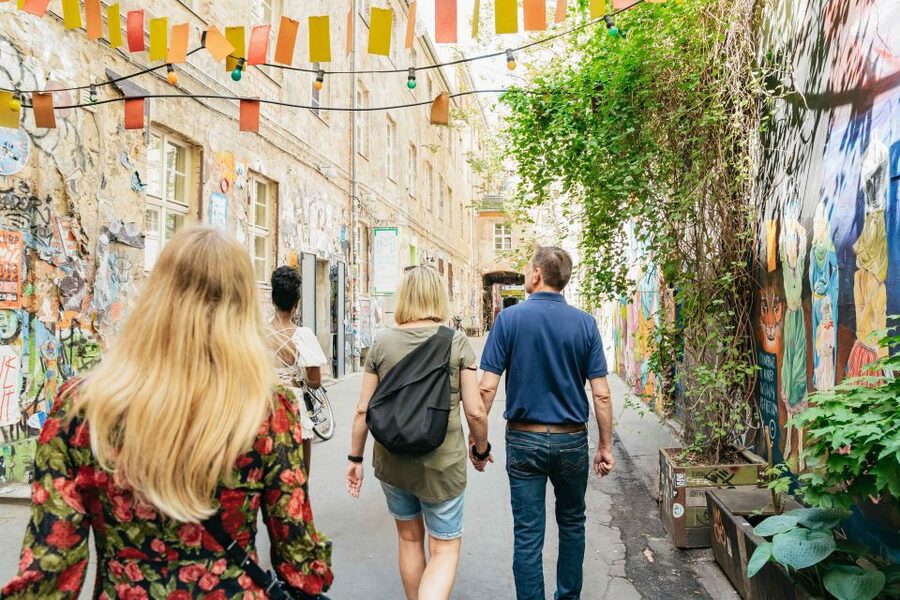
Berlin has a talent for putting real life behind plain doors. This guided walk through back courtyards in Mitte is one of the fastest ways to see that side of the city without needing special access. I like how the route connects architecture to daily routines, and I also like the Jewish-quarter focus around the New Synagogue area and the old Spandauer Vorstadt district.
One caution: language. The tour runs in English or German, but some departures have been reported as German-only for certain guests. If you want English, double-check your specific booking before you go.
You start at Hackescher Markt and move step by step into a chain of passageways and inner yards where studios, neighbors, and local hangouts share space. A few stops are especially memorable, like Haus Schwarzenberg with its street-art courtyard walls and the well-liked Heckmann-Höfe courtyard tucked away from the main streets. This is a 2-hour walk, rain or shine, and it does not include food or drinks, so plan for comfort and bring water.
Key points you’ll care about before you book
- Courtyards in Berlin-Mitte: You’ll spend time where most visitors never look.
- Jewish-quarter storytelling: The route explains how the Spandauer Vorstadt became a center of Jewish life.
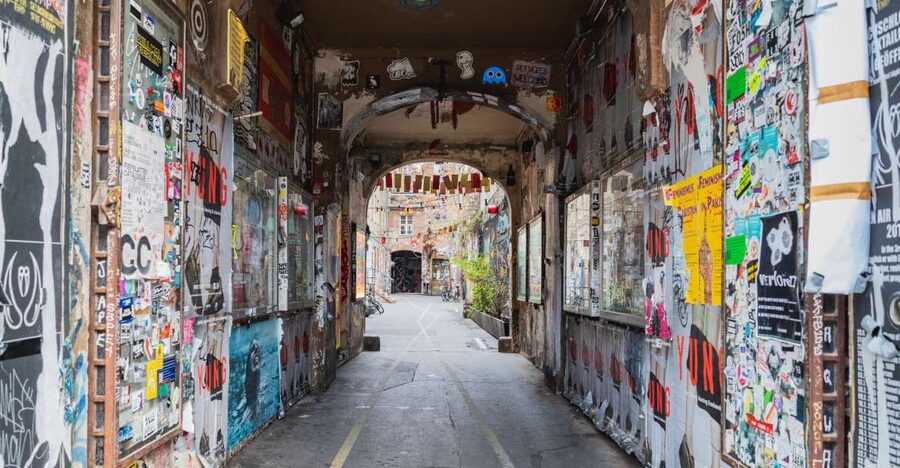
- Haus Schwarzenberg art spaces: Expect an art-studio courtyard vibe, plus street art.
- Hackesche Höfe and Rosenhöfe: Two related courtyard stops that show Berlin’s “in-between” urban design.
- Heckmann-Höfe as a local hangout: A 19th-century courtyard you can actually picture living in.
- Strong guide impact: Many guests praised guides like Nick, Nicolas, Lydia, Alex, Susanne, and Minit for pacing and storytelling.
Why Berlin courtyards are a practical way to understand the city
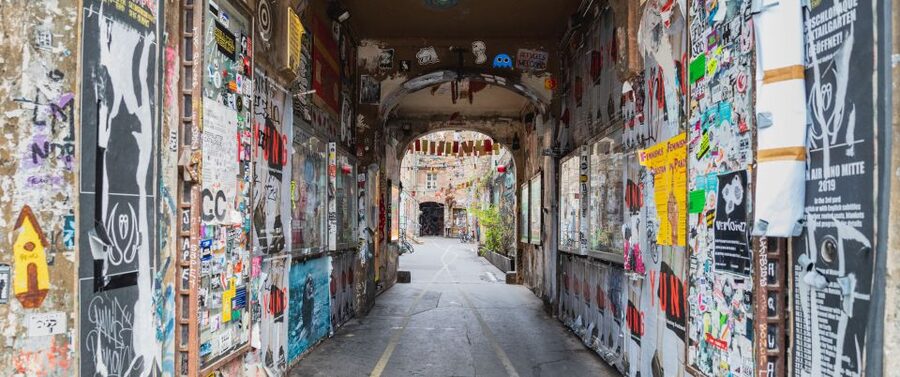
Berlin can look grand from the street, then turn private the moment you step through an archway. Courtyards are where you see how people actually organize their days: where they meet, create, work, and relax. This tour is built around that simple idea. Instead of collecting monuments, you’re collecting doors, yards, and building entries that explain how the city grew and changed.
The real value is the way the guide ties these places to time. You’re not just looking at pretty corners. You learn how this part of Mitte developed and how it shifted into a major Jewish-life area around the New Synagogue. That kind of context makes the courtyards feel less like background scenery and more like living evidence of the neighborhood.
And because you’re walking, you also get the “Berlin mixture” feel, where different eras and uses stack side by side. That’s what keeps the experience from turning into a checklist. You end up with a mental map of how Berlin hides public life inside semi-private spaces.
More Walking Tours in Berlin
- Discover Berlin Half-Day Walking Tour
★ 5.0 · 9,624 reviews - Berlin: Third Reich and Cold War 2 Hour Walking Tour
★ 4.9 · 6,830 reviews - Berlin: Discover Berlin Walking Tour
★ 4.9 · 5,998 reviews
Meeting at Butler’s Berlin Hackescher Markt, then getting oriented fast
The tour starts in front of Butler’s Berlin at Hackescher Markt 4. It’s a smart starting point because Hackescher Markt is easy to reach and it helps you get oriented before you vanish into the courtyard network.
From there, the walk becomes about rhythm. You’re moving from one inner space to the next, usually with a clear reason why each stop matters. The group stays together, and the guide keeps you from getting lost or missing the story behind what you’re seeing.
What I like about this setup is how it saves you time. If you try to DIY this route, you can certainly find courtyards, but you’ll miss the “why.” Here, the guide gives you the neighborhood storyline as you go, so every new yard feels connected instead of random.
Practical note: plan for shoes you can walk in for 2 hours. Courtyards can involve uneven ground or steps, especially when you’re moving between passageways.
Haus Schwarzenberg: the courtyard with art studios and street-art walls
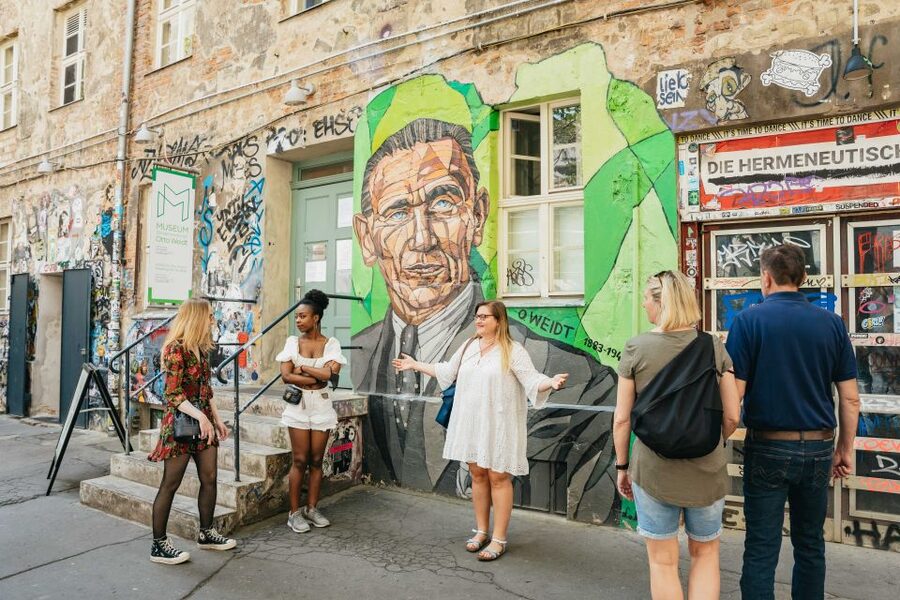
One of the first big “wow” moments is Haus Schwarzenberg. This stop is the kind of place you’d easily pass unless you know where to look. The courtyard is a relic of an earlier era, but it functions now as a creative working space with art studios.
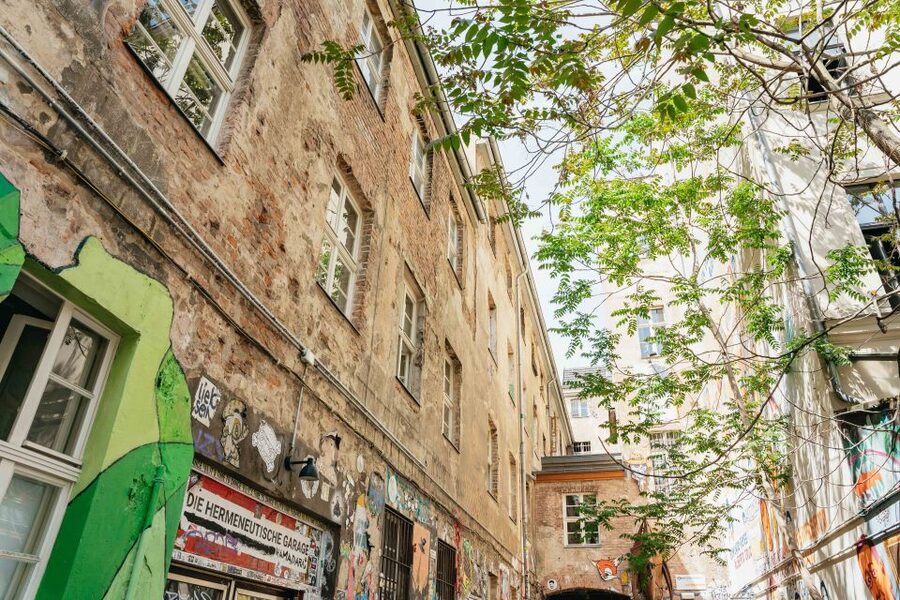
The courtyard walls are decorated with street art, and that matters more than it sounds. Street art here is not just decoration, it’s part of the neighborhood’s layered identity, where older building stock has been repurposed for modern creative life. When you hear the backstory from your guide while you’re standing in the yard, the buildings feel less frozen in time and more like ongoing projects.
There’s also a clear architectural lesson in this courtyard. You see how older structures can hold different functions over time, and you get a sense of how courtyards create a buffer between street noise and work or community life. That makes the whole tour feel more human, less museum-like.
Potential drawback: if you dislike walking in and out of passageways, this stop can feel like a lot of transitions. The fix is simple, breathe, slow your pace during the courtyard parts, and let the guide do the navigation.
Hackesche Höfe and Rosenhöfe: Berlin’s courtyard city within a city
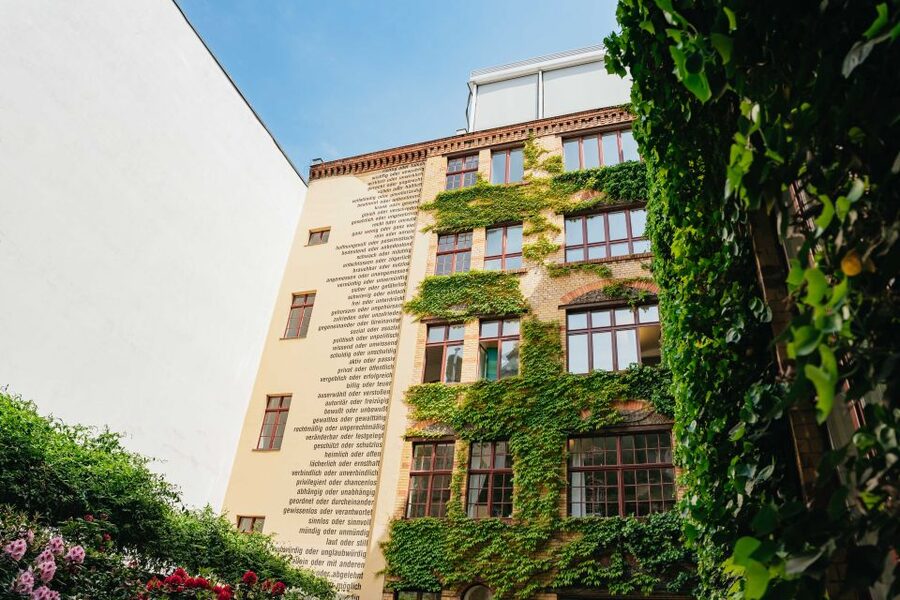
After Haus Schwarzenberg, you move into Hackesche Höfe and then Rosenhöfe. These are courtyard spaces that show a very Berlin pattern: large blocks that look ordinary on the street but open into multiple indoor-outdoor worlds.
What makes these stops valuable is the variety. Hackesche Höfe is known for the layered feel of courtyards, and Rosenhöfe continues that theme with its own character. You’ll likely notice changes in light, scale, and how people use the space. Some corners feel like a quiet pause, others feel like a place to linger.
This is also where the tour starts to feel like a guided lesson in urban design. Courtyards are not leftovers. They are functional spaces that shape everyday movement and social life. You’ll learn why these areas developed, and how the “in-between” architecture supports neighborhoods that evolve rather than freeze.
From the guide feedback, one theme pops up again and again: people love the way the tour turns architecture into story. With the right guide, the talk feels informal and personal, the pace stays comfortable, and you don’t feel like you’re being lectured while walking.
Another way to spend a Berlin afternoon:
- Berlin: Reichstag, Dome and Government District Guided Tour
★ 4.7 · 18,288 reviews - Berlin: 1-Hour City Tour by Boat with Guaranteed Seating
★ 4.3 · 16,993 reviews - Berlin: TV Tower Standard Entrance Ticket
★ 4.4 · 15,883 reviews - Berlin: Boat Tour Along the River Spree
★ 4.4 · 11,252 reviews
Sophienkirche and Auguststraße: where neighborhood change shows up in the streets

The route continues toward Sophienkirche and follows along Auguststraße. These stops shift the focus from inner yards to the street context, which is important. Courtyards make sense as private spaces, but street churches and major thoroughfares show you how the neighborhood functioned in public.
Sophienkirche anchors the religious and community thread, which ties back to the tour’s big focus on the Jewish-life transformation in this part of Berlin-Mitte around the New Synagogue area. Even if you never get a detailed lecture inside the church itself, you’re still walking with the story in mind, so the stop becomes a reference point.
Auguststraße helps with continuity. It’s a corridor where you can sense the city’s movement and direction, and where the guide can connect how buildings and uses shifted over time. I like this part of the tour because it prevents the experience from becoming only “courtyard wow.” You’re learning how the courtyards connect to the streets that bring people in and out.
If it’s raining, this section can feel slower, but that’s also when the guide’s pacing matters. Good guides keep you moving and give you enough context so the wet-day stroll still feels purposeful.
Heckmann-Höfe: a 19th-century courtyard that feels like a break from the city
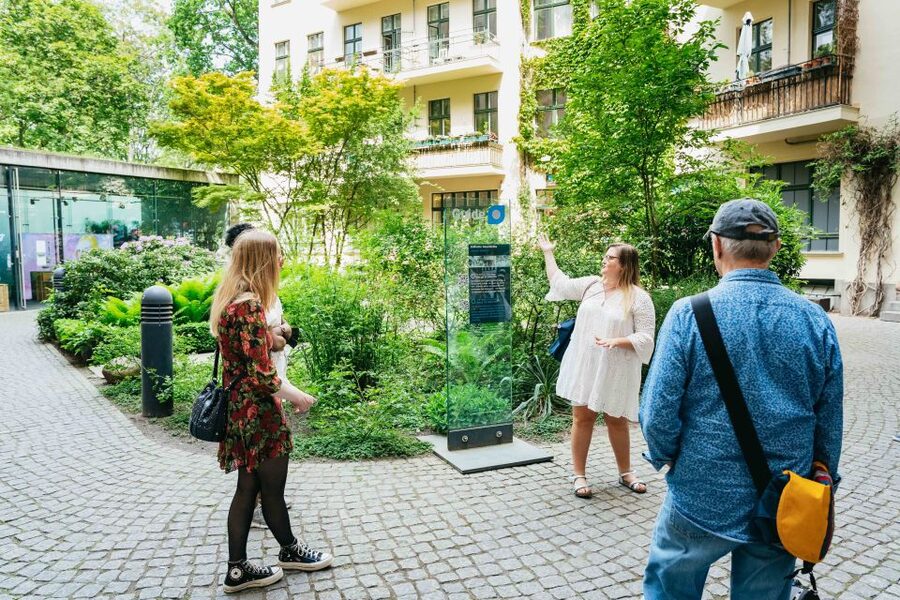
The tour ends (in the sense of its courtyard finale) at Heckmann Höfe, a popular local hangout. This is one of the most praised parts of the route because the space feels sheltered and lived-in, like a hidden oasis from the main streets.
You’ll notice the courtyard setting right away: trees, ivy-lined building edges, and those famous colorful walls that make the yard feel like its own small world. Heckmann-Höfe is described as a 19th-century courtyard, and that age shows up in the feel of the architecture and the way the space is organized for people to gather.
This is exactly the kind of place where context changes your experience. If you step into a courtyard like this without a guide, you might just think, neat. With the guide, you can start connecting the design to why neighborhoods like this become socially important over time. That’s the real payoff of the whole tour: the courtyard is not random, it’s part of a story.
Possible drawback: because it’s a hangout, it can feel more active than the earlier courtyard stops. If you prefer very quiet spaces, arrive with the right mindset, and let the guide guide you to the calmer corners for the explanation.
What 2 hours on your feet feels like, and how to plan for rain or shine
This is a 2-hour walking tour, and it runs rain or shine. That single line changes how you prepare. Wear shoes you trust for wet pavement, and bring a light layer you can stand in.
Also, the tour does not include food or drinks. I’d treat this like a pre-dinner activity, then plan your meal after. If you get thirsty easily, bring water, because the tour structure is about walking and stopping for explanations, not refueling.
Wheelchair accessibility is listed, so the route is designed to be doable with assistance. Still, with courtyards and passageways, surfaces can vary, so if you use a mobility device, you’ll be glad to confirm your practical needs with the operator when you book.
Group experience note: guides often earn praise for keeping a good pace and making choices that keep the tour flowing. That shows up when you hear how people describe the walk as easy and well structured, even when it’s cold or pouring rain.
Price and value: why $23 can be a smart deal for the kind of access you get
At $23 per person for a 2-hour guided walk, this is priced in the range where you have to ask one question: what am I buying?
You’re buying time with a guide who can do two things at once. First, they help you find and read the architecture. Second, they give the neighborhood story behind the courtyards, especially the Jewish-life transformation around the New Synagogue and the origins and transformation of the Spandauer Vorstadt.
That matters because courtyards can be hard to interpret on your own. You can stumble on them, but you might not understand why the place is significant or how the neighborhood evolved into what you see today. A guide makes that click happen in a short window.
It also helps that the tour includes multiple key stops, not just one courtyard. You get a sequence that builds meaning, from Haus Schwarzenberg to Hackesche Höfe and Rosenhöfe, then Sophienkirche and Auguststraße, and finally Heckmann Höfe.
If you’re already planning to spend time around Hackescher Markt and Mitte, this tour is a strong use of time because it adds an off-the-main-path layer without eating your whole day.
Should you book this Berlin Hidden Backyards tour?
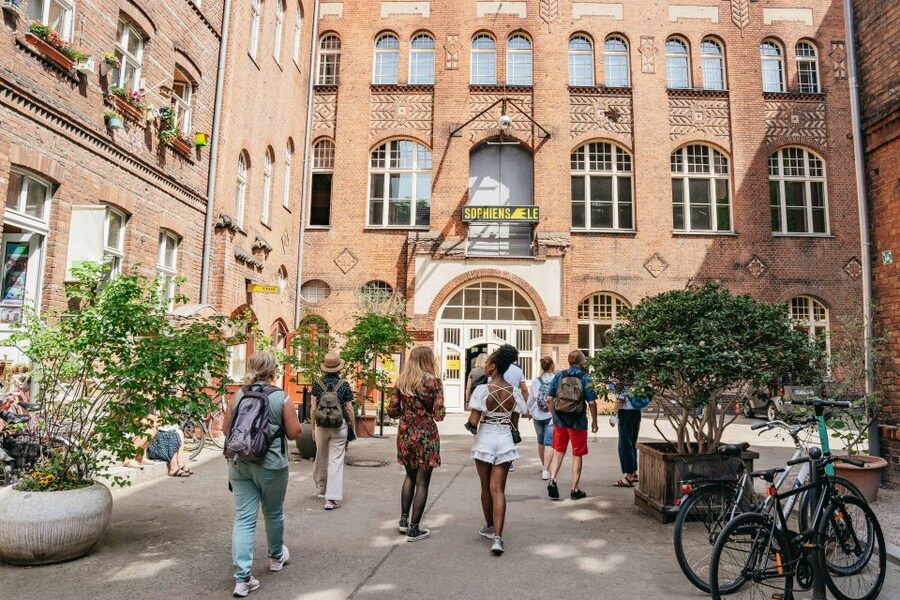
Book it if you want Berlin that feels real, not staged. You’re the right match if you like architecture, neighborhoods, and the way courtyards reveal how people use a city. It also works well if you’re curious about the Jewish-quarter story around the New Synagogue and the Spandauer Vorstadt transformation into today’s colorful, international area.
Skip it if you want a strictly mainstream highlights tour, or if you dislike walking and weather changes. Also, if language matters, check that your departure matches what you need, because some guests have reported German-only experiences even though the tour offers English and German.
Overall, for $23 and 2 hours, this is a very efficient way to learn how Berlin organizes community life inside its inner yards. You’ll come away with more than photos, you’ll have a clear mental map of Mitte’s hidden spaces and the stories that shaped them.
FAQ
How long is the Berlin Hidden Backyards guided walking tour?
The tour lasts 2 hours.
How much does it cost?
It costs $23 per person.
Where do we meet the guide?
Meet your guide in front of the Butler’s shop at Hackescher Markt 4.
What are the main stops on the walk?
You’ll visit Haus Schwarzenberg, Hackesche Höfe, Rosenhöfe, Sophienkirche, Auguststraße, and Heckmann Höfe.
Where do we end the tour?
You end with drop-off at Oranienburger Straße.
Is the tour offered in English or German?
Yes, the live guide offers English and German.
Does the tour include food or drinks?
No, food or drinks are not included.
Will the tour run in bad weather?
Yes, the tour runs rain or shine.
Is the tour wheelchair accessible?
Yes, it is listed as wheelchair accessible.
Is there free cancellation?
Yes, you can cancel up to 24 hours in advance for a full refund.
Fresh reviews out of Berlin
- Berlin Uncensored: A History of Sex & Freedom★ 5.0 · 50 reviews
- Berlin Food & Cultural Tour: Must-Try German & Berliner Classics★ 5.0 · 51 reviews
- English Comedy Show with Pizza and Shots in Central Berlin★ 4.5 · 51 reviews
- Rude Bastards Tour of Berlin★ 4.8 · 51 reviews
- Private Taxi Tour of Berlin East and West and Neighbourhood approx. 4-6h★ 5.0 · 55 reviews
- Rickshaw Sightseeing City Tours Berlin – Rikscha Tours★ 4.0 · 55 reviews
- Berlin: City Highlights Express & Panorama Roof Terrace★ 4.9 · 55 reviews
- Berlin during Nazism – Tour in Italian★ 5.0 · 56 reviews
Walking Tours, compared.
Berlin’s Best: 2 Hour Walking Tour Third Reich and the Cold War
Read our review →
Third Reich Berlin: Hitler and WWII Walking Tour
Read our review →
Browse the lists this tour appears in