
Reviewed · THIRD REICH & WWII TOURS
Berlin: History of the Third Reich Guided Walking Tour
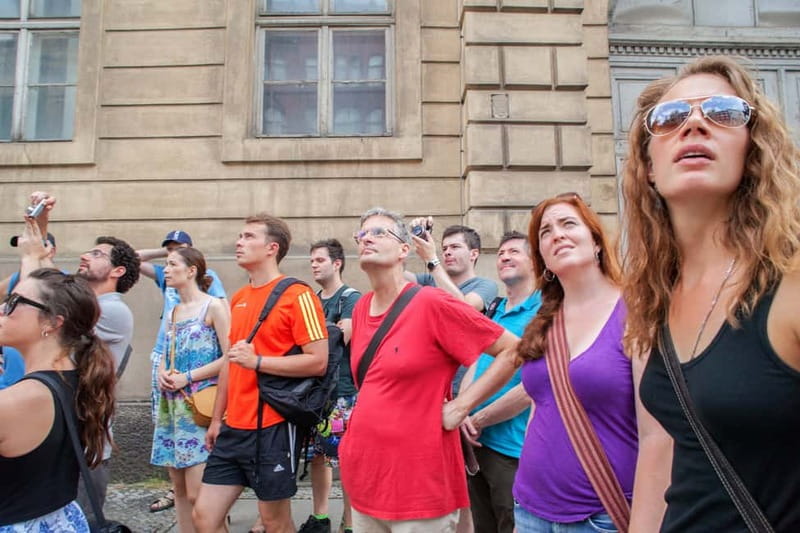
Berlin is layered, but this tour zeroes in on one of the darkest chapters: how Nazi power took hold, then collapsed. You’ll move through places tied to Third Reich authority, from surviving government buildings to the former Führer bunker area.
Two things I really like about it are the way the route turns the city into a timeline, and how the tour doesn’t stop at Nazi history alone. You also visit a Soviet memorial for the soldiers who died liberating Berlin, which puts the end of the regime into human terms, not just dates and names. The one drawback to consider is that the subject matter is heavy, and part of the experience is emotionally intense.
Key Highlights You’ll Care About
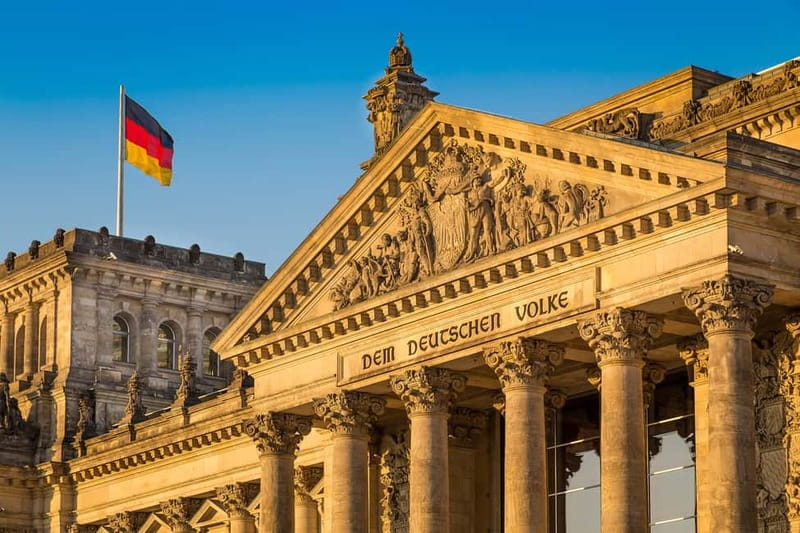
- Surviving Nazi-era architecture you can actually see and walk past
- A clear story arc, from propaganda and terror to the final collapse
- SS and Gestapo headquarters area, with basement exhibition remains
- Soviet memorial stop connected to the Battle of Berlin and 80,000 deaths
- A break built into the middle so you can reset during a long, serious walk
- Strong guide performance often praised for storytelling and Q&A
Why This Berlin Walk Feels Different Than Usual Sightseeing
Most Berlin walking tours give you neat facts. This one gives you cause and effect. You’ll see how Nazi Germany built power through institutions, messaging, and fear, and you’ll end at the place tied to the regime’s final days.
The route also respects the balance of the story. You look at what the Nazis built, then you stand at memorials connected to liberation and loss. That shift matters, because WWII is not only about what one group did, it’s also about what other people endured and how Berlin was paid for in blood.
One more practical point: the tour is only about 2 hours, so it’s focused without pretending you can cover the entire war in a short walk. You get the main city sites linked to Nazi control, without the tour turning into a long history lecture that burns the day.
More Historical Tours in Berlin
- Berlin: Natural History Museum Entrance Ticket
★ 4.6 · 3,382 reviews - Berlin: 3-Hour World Heritage Cruise to Potsdam
★ 4.5 · 1,569 reviews - Berlin Historical Highlights Walking Tour
★ 4.9 · 657 reviews
Meeting Point Near Brandenburg Gate, and What to Look For
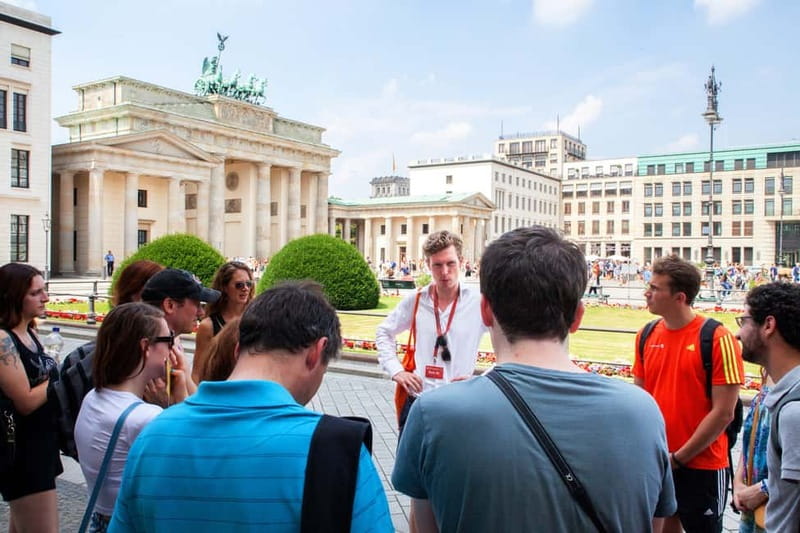
You meet in front of Starbucks Café, near Brandenburg Gate. The operator’s team wears red t-shirts and typically uses red umbrellas, which makes the meet-up easier when you’re arriving in busy central Berlin.
This is also the kind of tour where timing matters. If you roll in late, you risk disrupting the group’s pace because you’re about to walk between several sites tied to a tight story line. I’d arrive a little early so you can settle in, find the umbrella team, and get comfortable before you start.
Comfort matters here. You’re on your feet for most of the tour, so plan on good walking shoes. If the weather is cold or wet, treat this as a reason to bundle up, not an excuse to rush. You’ll want to stay steady on your feet when the tour gets more emotionally heavy.
Luftwaffe Air Force Headquarters: Surviving Third Reich Architecture
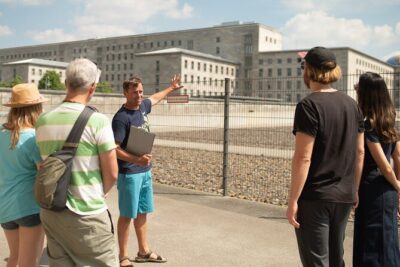
The tour starts with the Luftwaffe Air Force headquarters area. This is where you get a rare thing in Berlin: a major building tied to Nazi rule that survived allied bombing. Even if you’re not an architecture person, it helps you understand how the regime projected strength.
The big idea your guide is aiming for here is visual. Nazi Germany didn’t only control newspapers and courts. It also built spaces meant to impress, intimidate, and coordinate power. When you see a massive complex that still looks like authority, the story starts to feel real instead of abstract.
This stop is valuable because it’s a tangible link between ideology and systems. You can point at the building and say, this is where state power lived and operated. It’s also a good opener because it gives you a framework for the rest of the walk.
Goebbels Propaganda Ministry: How Control of the Message Worked
Next comes the Goebbels Propaganda Ministry. You’ll hear how the address shifted from a pre-war press office into the nerve center of Nazi messaging. The key is that propaganda wasn’t an optional side project. It became infrastructure for ruling.
What I like about this stop is that it teaches you to recognize techniques, not just memorize facts. Your guide will connect propaganda to how the Nazis kept people aligned once they had power. That makes the information more useful after the tour ends, because it trains your eye for how manipulation works in any era.
You’ll also walk away with a clearer sense of why propaganda mattered so much during the Nazi years. It shaped what people heard, what they were told to fear, and what they were encouraged to believe. And once you grasp that, the later terror sites hit harder, because you understand the machine behind the violence.
More Walking Tours in Berlin
- Discover Berlin Half-Day Walking Tour
★ 5.0 · 9,624 reviews - Berlin: Third Reich and Cold War 2 Hour Walking Tour
★ 4.9 · 6,830 reviews - Berlin: Discover Berlin Walking Tour
★ 4.9 · 5,998 reviews - Berlin’s Best: 2 Hour Walking Tour Third Reich and the Cold War
★ 5.0 · 5,486 reviews
SS and Gestapo Headquarters at Prinz-Albrecht-Straße, Plus a Berlin Wall Trace
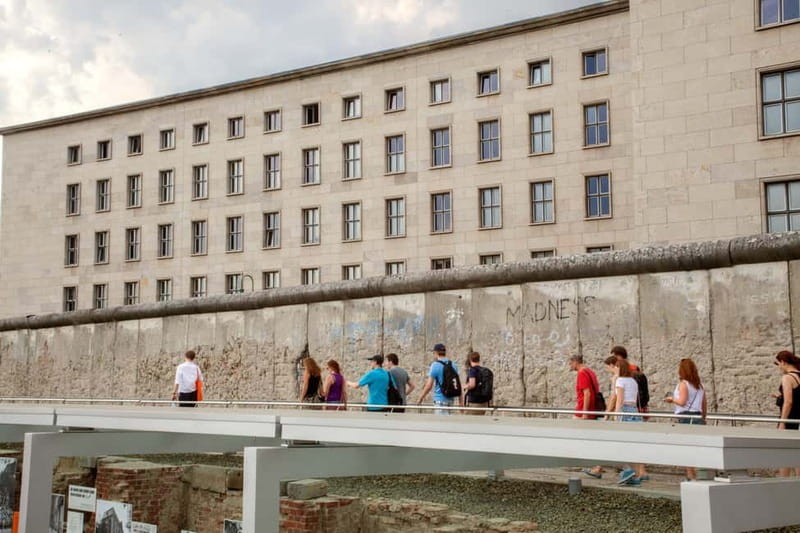
Then you’re in the zone many people find most unsettling: the area of the SS and Gestapo headquarters, on Prinz-Albrecht-Straße. It’s tied to the machinery of repression, and your guide will explain why this location was so feared.
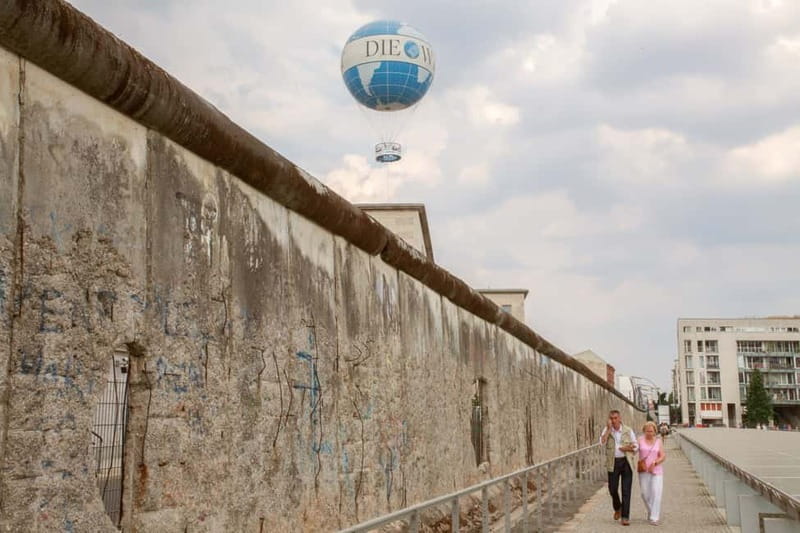
This is also where the tour adds a sharp Berlin detail: you can see an old stretch of the Berlin Wall nearby. That’s a reminder that Berlin’s 20th-century story isn’t a straight line from one regime to another. The city kept carrying political conflict forward in new forms, even as the names changed.
A key part of this stop is time spent in basement remains now converted into an exhibition documenting the Nazis’ rise to power. Basements tend to change your mood fast, and that effect is part of why this stop lands. You’re not just looking at the city’s surface, you’re getting a sense of how the regime used hidden spaces and controlled systems.
Practically, this is a good place to listen carefully and ask questions if your guide invites them. Some guides, including people who have led groups like Dani and Theo in past seasons, are especially good at keeping a clear timeline while still letting the emotional weight of the sites come through.
Soviet Memorials and the Battle of Berlin Losses
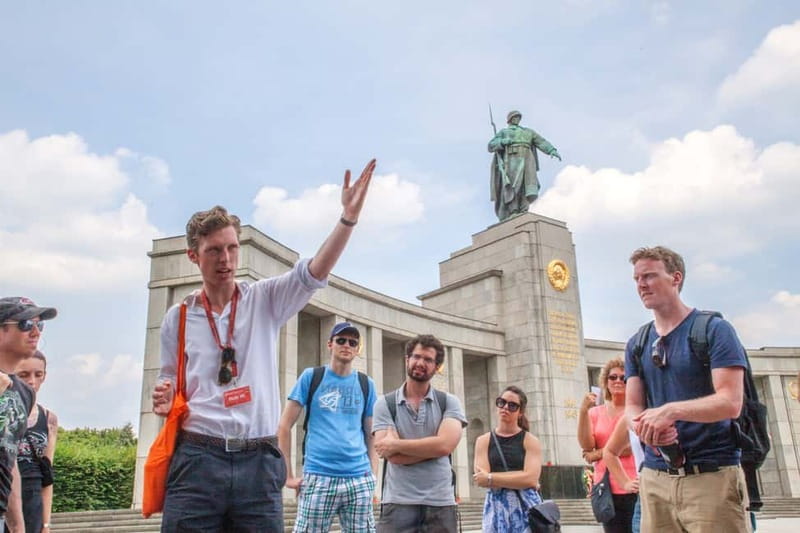
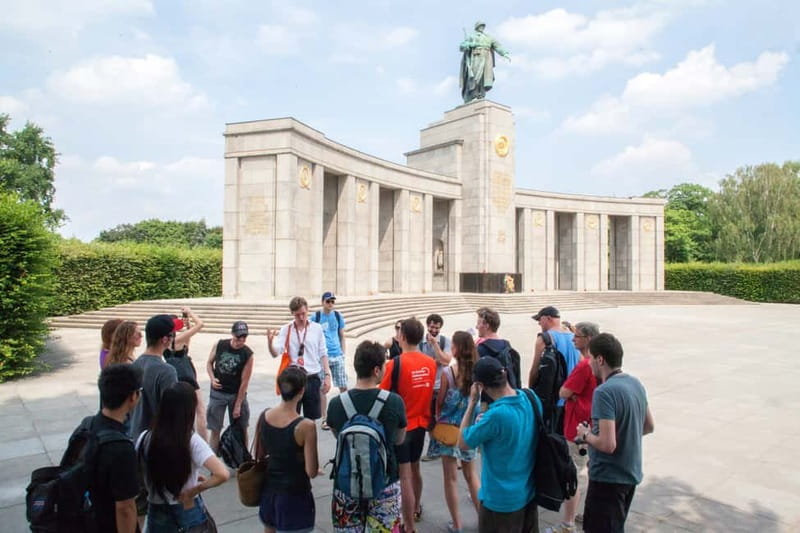
After the terror and propaganda stops, the tour shifts toward remembrance. You’ll stand at a Soviet Memorial tied to the Battle of Berlin, when more than 80,000 Soviet soldiers lost their lives liberating the city.
Two artillery pieces and two tanks sit silently as part of the memorial. The point isn’t spectacle. It’s scale and mourning. It helps you understand that the end of the Nazi regime came at a terrible cost, paid by real soldiers who did not get to choose the war’s outcome.
I appreciate that this stop pulls the story out of a strictly Nazi-centered narrative. It forces you to see WWII as a conflict that consumed entire lives, not just a sequence of policies and power grabs. If you care about making sense of history, this is the moment when the tour’s moral weight becomes unavoidable.
The Former Führer Bunker Site: Where the Nazi Regime Ended
The final stop is at the site of the former so-called Führer bunker, the place linked to where Nazi Germany ended as the Russian army closed in. This is where your guide ties the timeline together.
You don’t leave with a neat feeling. You leave with closure, but it’s the hard kind. The tour makes the end of the regime feel less like a movie scene and more like a consequence of years of violence, manipulation, and political collapse.
If you’ve been thinking about the Nazis as an abstract evil, this stop often resets that. By the end, you’ve seen how power worked on the ground in Berlin, not just in textbooks. And you’ve been reminded of the scale of what it cost.
The Tour Value: Price, What You Get, and What You Pay Extra
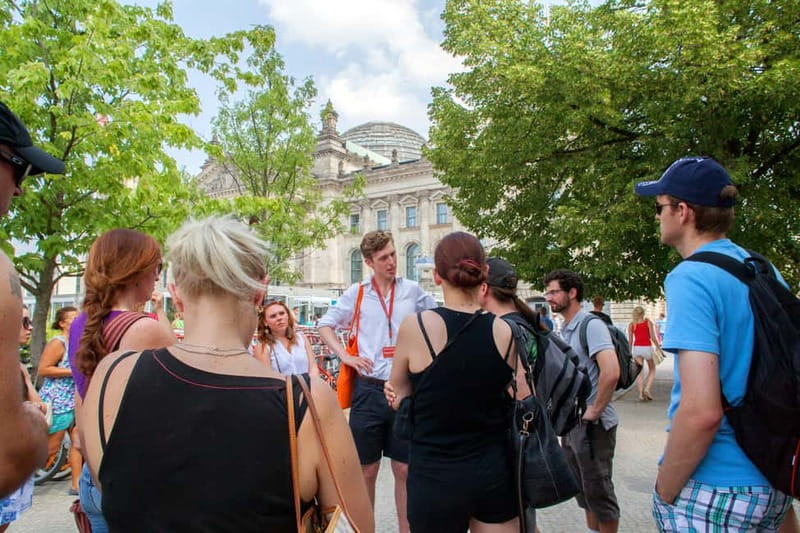
At $30 per person for about 2 hours, the value comes from density. You’re not paying for one museum and a general city chat. You’re paying for a live guide to connect multiple specific sites into one guided story, including architecture that still exists.
It also helps that the tour includes walking time across central Berlin landmarks tied to the Nazi period. That reduces your need to piece together visits on your own, especially if you want an interpretation layer rather than random browsing.
Two costs to plan for: entrance fees and transportation tickets are not included. You’ll also need an AB transport ticket for this tour, so don’t show up assuming Berlin transit is covered. And since food and drinks are not included, use the built-in break to buy what you need if you want it.
How the Guide Makes or Breaks This Kind of Tour
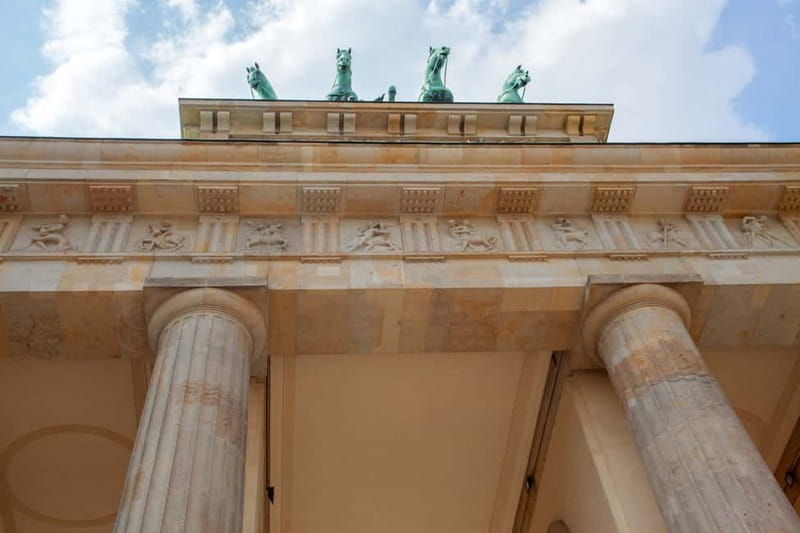
This is one of those experiences where the guide matters as much as the stops. The strongest parts of the tour are the explanations that turn locations into meaning.
In past groups, guides like Marcel, Dani, Hannah, India, Elizabeth (often called Lizzie), Maria, and Theo have been praised for patient delivery, strong storytelling, and the ability to keep a difficult topic clear without making it feel cold. If you care about understanding how the Nazi rise worked step by step, this kind of guide performance is exactly what you’re hunting for.
You’ll also likely appreciate the pacing. There’s a break partway through, and groups may vary in size. When groups are larger, the operator may split into separate walks so the guide can keep control of tempo and questions. That’s good, because this is not the kind of tour where you want to feel lost in a crowd.
Who Should Book This Tour, and Who Might Want a Different Option
This tour fits you if you want a focused walk that connects propaganda, terror institutions, and Berlin’s final WWII collapse through real places. It’s also a strong choice if you like guided context more than self-guided wandering.
You might want to think twice if emotionally heavy topics could overwhelm you. The tour includes memorials for mass death and visits to places tied to repression. It’s handled as part of learning and remembrance, but the subject matter is not light.
For couples, history-minded solo travelers, and anyone trying to understand how Nazi power took hold, this is an efficient and meaningful way to spend half a day. And if you’re short on time in Berlin, this gives you major stops without turning into an all-day grind.
Should You Book This Nazi Germany Walking Tour?
If you want a guided Berlin story that goes beyond surface sightseeing, I’d book it. The best part is the combination of surviving sites, basement exhibition remains, and memorial stops, all stitched into a narrative you can follow in a 2-hour walk.
Just go in with the right mindset. Wear comfortable shoes, plan for a transit ticket you must buy, and accept that part of the experience will be difficult. If that sounds like the kind of learning you’re here for, this tour is a strong use of your time in Berlin.
FAQ
Where is the meeting point for the tour?
Meet your guide in front of a Starbucks Café near Berlin’s historic Brandenburg Gate. Look for the operator team wearing red t-shirts and using red umbrellas.
How long is the Berlin History of the Third Reich Guided Walking Tour?
The tour lasts about 2 hours.
What language is the live guide?
The live guide is available in English.
Do I need public transport tickets for this tour?
Yes. You need to purchase an AB transport ticket for the tour. Transportation tickets are not included in the price.
Is entrance fees included, and is food provided?
Food and drinks are not included, and entrance fees are not included either. Plan to buy anything you need during the break if you want.
Are kids allowed on this tour?
Children up to 13 years old can join for free, and the local partner may ask for valid ID for children joining.
More Third Reich history tours
- Third Reich Berlin: Hitler and WWII Walking Tour
★ 5.0 · 3,301 reviews - Berlin: Third Reich, Hitler, and WWII Walking Tour
★ 4.9 · 1,757 reviews - Berlin Third Reich Sites: Half-Day Walking Tour
★ 5.0 · 835 reviews - Berlin: Guided Bike Tour of The Wall and Third Reich
★ 4.8 · 511 reviews
Fresh reviews out of Berlin
- Berlin Uncensored: A History of Sex & Freedom★ 5.0 · 50 reviews
- Berlin Food & Cultural Tour: Must-Try German & Berliner Classics★ 5.0 · 51 reviews
- English Comedy Show with Pizza and Shots in Central Berlin★ 4.5 · 51 reviews
- Rude Bastards Tour of Berlin★ 4.8 · 51 reviews
- Private Taxi Tour of Berlin East and West and Neighbourhood approx. 4-6h★ 5.0 · 55 reviews
- Rickshaw Sightseeing City Tours Berlin – Rikscha Tours★ 4.0 · 55 reviews
- Berlin: City Highlights Express & Panorama Roof Terrace★ 4.9 · 55 reviews
- Berlin during Nazism – Tour in Italian★ 5.0 · 56 reviews
Third Reich & WWII Tours, compared.
Berlin’s Best: 2 Hour Walking Tour Third Reich and the Cold War
Read our review →
Third Reich Berlin: Hitler and WWII Walking Tour
Read our review →
Walking Tour of Former Nazi Party Rally Grounds
Read our review →
Browse the lists this tour appears in