
Reviewed · THIRD REICH & WWII TOURS
Berlin: Third Reich, Hitler, and WWII Walking Tour
Berlin in wartime is not the kind of history you read once and forget. This Third Reich and WWII walking tour takes you to the very spots where Nazi power was planned, advertised, and finally broken, then ties it to Berlin’s postwar reckoning. It is sobering, but it is also clear and well organized, which makes a heavy subject easier to follow.
I especially like how the tour connects ideas to locations, from the planned Germania axis to the former centers of Nazi propaganda and terror. Second, I like that guides such as Maggie, Campbell, and Nikolai are praised for keeping things respectful and engaging, even when the topic is grim. One drawback to consider is that this is not a “pretty sights” walk, and you should expect a serious tone at most stops.
Key highlights at a glance
- Hitler’s suicide location and what the Führer Bunker area meant in the final days
- Topography of Terror as the story hub, with guided context that helps you connect the dots
- Reichstag battle path viewpoint, showing how Berlin’s fighting unfolded
- Brandenburg Gate as a symbol that shifts from Nazi power to Cold War division
- Soviet War Memorial views with T-34 tanks and Red Army Howitzers nearby
- Strong guide performance, with many tours mentioning how questions are welcomed and timing stays smooth
Why this Berlin WWII walk is worth your limited sightseeing time
If you have only a few hours in Berlin and want more than a museum ticket, this tour is a smart use of time. For $19, you get a guided walk through key WWII-era locations tied to the rise and fall of Nazi Germany. The route also threads in the Soviet assault and the postwar message built into the city.
What makes it especially useful is that you are not just collecting names. You are learning how power worked on the ground: who planned the war, who controlled information, and where the regime’s decision-making culminated. Standing outside (and near) the areas tied to the Third Reich’s inner core makes the history feel physical, not abstract.
More Walking Tours in Berlin
- Discover Berlin Half-Day Walking Tour
★ 5.0 · 9,624 reviews - Berlin: Third Reich and Cold War 2 Hour Walking Tour
★ 4.9 · 6,830 reviews - Berlin: Discover Berlin Walking Tour
★ 4.9 · 5,998 reviews
Getting there: Friedrichstraße, the meeting point, and how the tour stays easy to find
The tour meets outside Friedrichstraße train station, on the square between the Tränenpalast (Palace of Tears) and the station. Your guide will wear a blue lanyard and a yellow name tag with a yellow umbrella, which makes it easier to spot the group quickly.
This matters because a WWII-focused tour lives and dies by pacing. The better the first five minutes are, the smoother the rest of the walk feels. Here, the meeting setup is simple, visible, and designed to reduce delays.
Duration is about 3 hours, and the tour runs rain or shine. So do yourself a favor: wear layers, plan for wind, and bring shoes you trust on sidewalks that can be slippery.
Friedrichstraße and Reichstag area: learning the “power geography” of Nazi Berlin
The walk starts with photo-stop time at Friedrichstraße. You will get a guided orientation that frames what you are about to see next, especially how Berlin functioned as a political stage. Even a quick photo stop can work well here because the guide uses it as a mental bookmark.
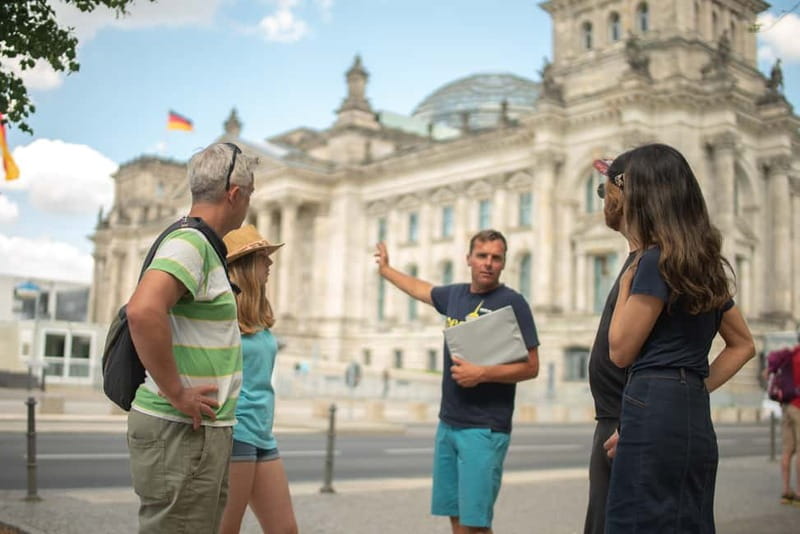
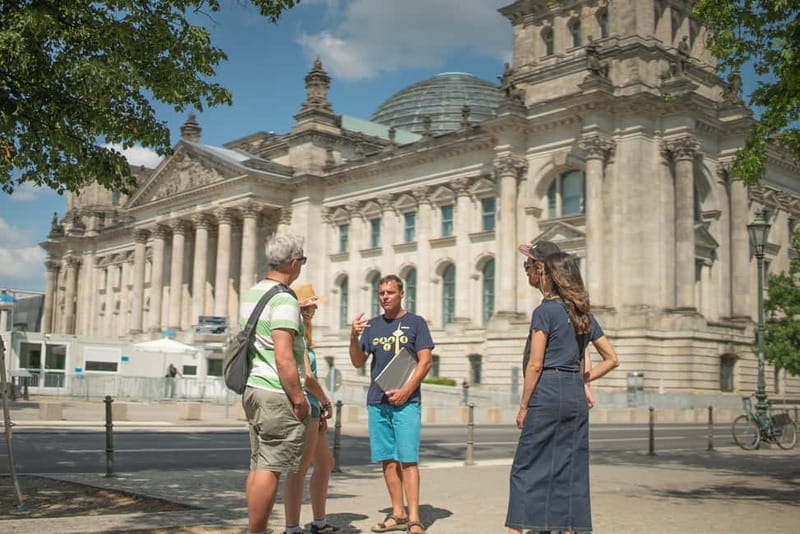
Next comes the Reichstag area, again as a photo stop with guided context. The tour’s focus is not the building as a postcard. It’s the idea of the Reichstag as a late-war target, part of the Soviet push and the final battlefield dynamics. When the guide follows the Soviet assault line from this area, it helps you visualize what changed in the city street by street.
A practical tip: if you care about WWII details, keep your questions for these earlier stops. Many guides on this tour are praised for encouraging questions and answering them clearly, which is easiest when you are fresh and still early in the route.
Tiergarten Soviet War Memorial: seeing the war’s end represented in metal and concrete
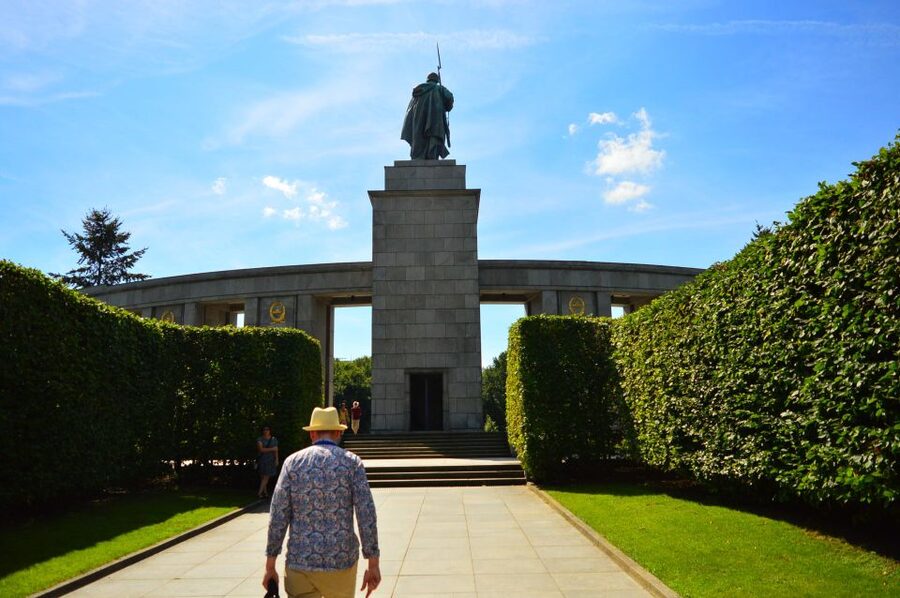
One of the most memorable parts of the tour is the stop at the Soviet War Memorial in Tiergarten. This is not a generic memorial moment. The site is visually dramatic, flanked by T-34 tanks and Red Army Howitzers, so the message is hard to miss.
Why it works on this tour: it provides balance. You are not only hearing about Nazi leadership, planning, and collapse. You are also seeing how Berlin marks liberation, victory, and the cost of invasion. The guide’s framing helps you read the memorial as a deliberate statement, not just a background landmark.
Also, this stop pairs well with what comes later at the Holocaust Memorial. Together, they widen the story beyond one bunker and one regime. You start seeing the war as a system that affected many groups, many fronts, and many futures.
More Third Reich history tours:
- Berlin’s Best: 2 Hour Walking Tour Third Reich and the Cold War
★ 5.0 · 5,486 reviews - Third Reich Berlin: Hitler and WWII Walking Tour
★ 5.0 · 3,301 reviews - Berlin Third Reich Sites: Half-Day Walking Tour
★ 5.0 · 835 reviews - Berlin: History of the Third Reich Guided Walking Tour
★ 4.7 · 791 reviews
Holocaust Memorial: staying grounded while the story stays factual
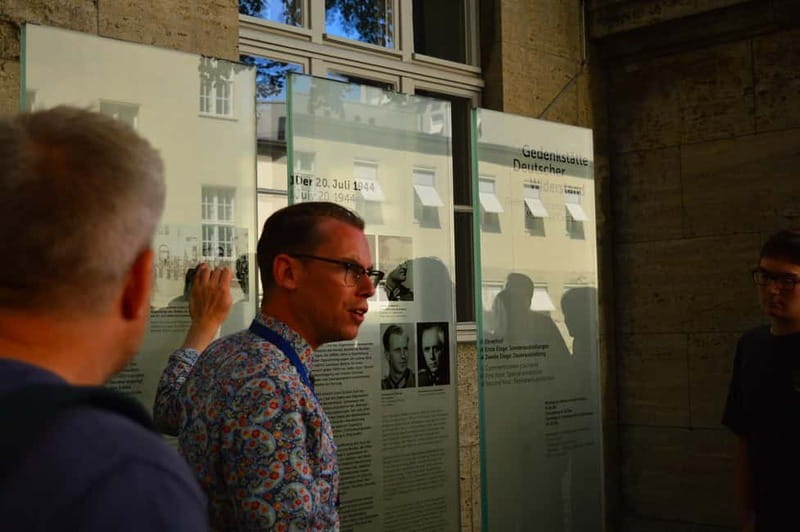
The tour includes a stop at the Holocaust Memorial, with guided time to orient you properly. This is one of those places where the details matter, but so does the tone. The guides for this tour are repeatedly praised for being sensitive and keeping the discussion appropriate.
If you are visiting with teenagers, this stop can be a turning point. It is a strong example of how a city can hold memory in public space, and a good place to ask questions about how memorials communicate without showing every single fact in a dramatic way.
Practical advice: take a few slow minutes here. If you rush, you will miss what the guide is trying to help you notice.
Hitler’s bunker area: the “Germania” planning and the regime’s final collapse
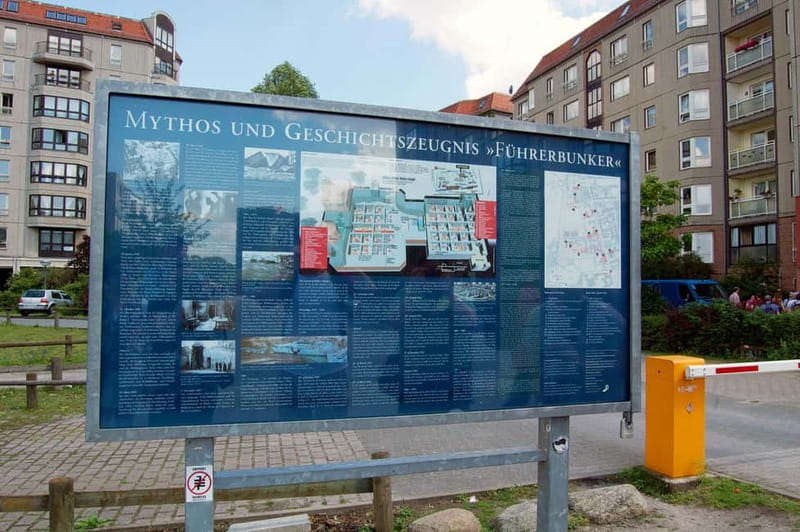
This is the centerpiece stop for many people: Hitler’s Bunker area. The tour guides you through what the Führer Bunker represented and what it meant when the regime met its end. You will also learn about Hitler’s planned “Germania” axis, connected to Albert Speer’s city ideas, and how that fantasy of power ran straight into reality.
The tour description promises a step-by-step account of Hitler’s final days and the fate of his remains, including the location of Hitler’s suicide. That is a heavy topic, and it is handled as such. More than once, guide performance is praised for being both emotionally respectful and clear, which is exactly what you want here.
A reality check before you go: if you are looking for a fun walk or casual sightseeing, this section may feel intense. But if you want to understand the mechanics of defeat in a way that is grounded in location, this is where the tour earns its reputation.
Goering, Goebbels, Himmler sites: how propaganda, policing, and war planning connected
As you move through central areas, you will hear about former locations tied to major Nazi institutions. The tour includes sites connected to:
- Goering’s Air Defence Ministry, where the Luftwaffe planned the Blitz
- former Goebbels’ Propaganda Ministry
- Himmler’s SS and Gestapo headquarters
You are not walking into buildings or viewing museum rooms tied to these offices. Instead, you are standing in the city where influence once operated. The value here is that the guide explains the system: propaganda shapes perception, policing enforces control, and military planning drives violence. When you connect these roles to actual addresses and city spaces, the Third Reich stops being a single villain story. It becomes a machine.
If you like history that explains cause and effect, you will probably enjoy this portion a lot. It also helps when you later reach Topography of Terror, because the museum can feel like a documentary after this foundation is laid.
Detlev-Rohwedder-Haus stop: a quiet pause that gives the bigger picture
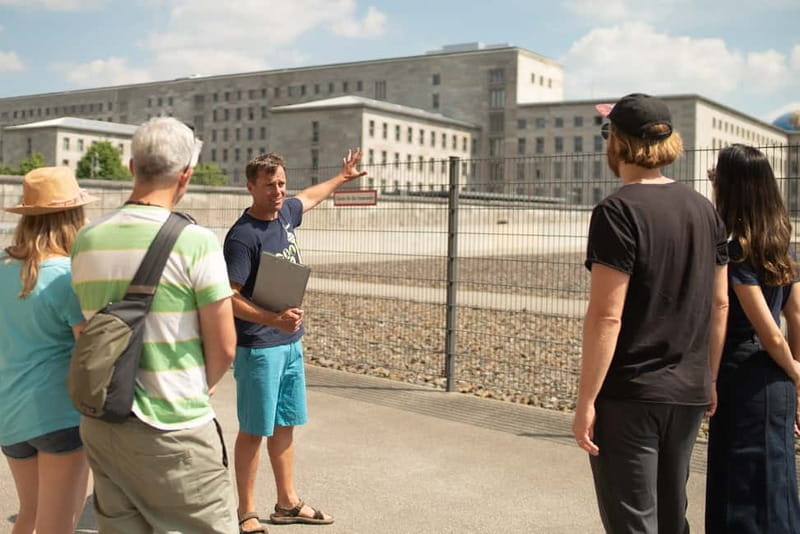
The tour itinerary includes a photo stop at Detlev-Rohwedder-Haus. On its own, this might look like yet another Berlin office building. On this tour, it is a bridge moment, giving you time to let earlier details settle and to connect what you have heard about Nazi power to what Berlin later chose to build, maintain, or repurpose.
This kind of stop matters more than it sounds. A WWII walk is dense, and if every minute is maximum intensity, you will burn out. These built-in pauses help you keep your footing, both literally and mentally.
Brandenburg Gate: a symbol that changes meaning from one era to the next
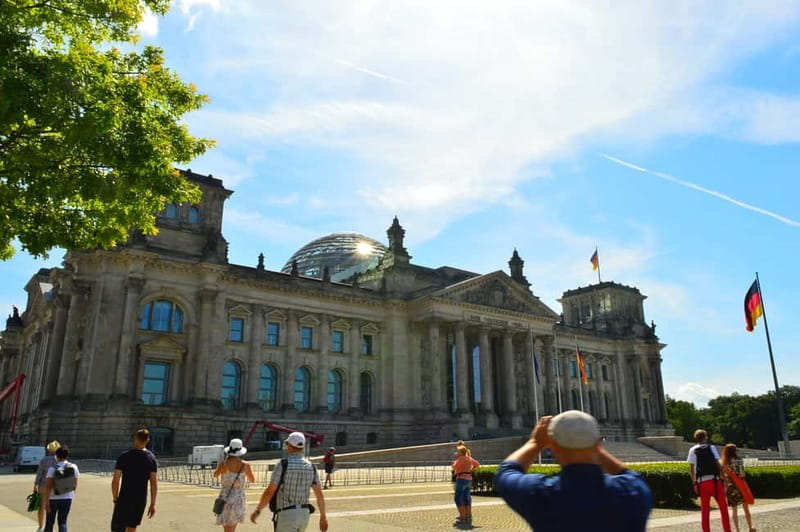
The tour passes through the Brandenburg Gate area, described as a symbol of Nazi power and later a Cold War divide. This is one of Berlin’s best examples of how a single location can carry multiple political meanings over time.
I like this moment because it reminds you that WWII did not end with 1945 in one clean line. The city remained a stage for new tensions and different narratives. When your guide ties the gate to that shift, it adds a layer beyond “Nazi history.” You start seeing the whole European story as a chain reaction of competing ideologies.
Topography of Terror: where the timeline gets concrete
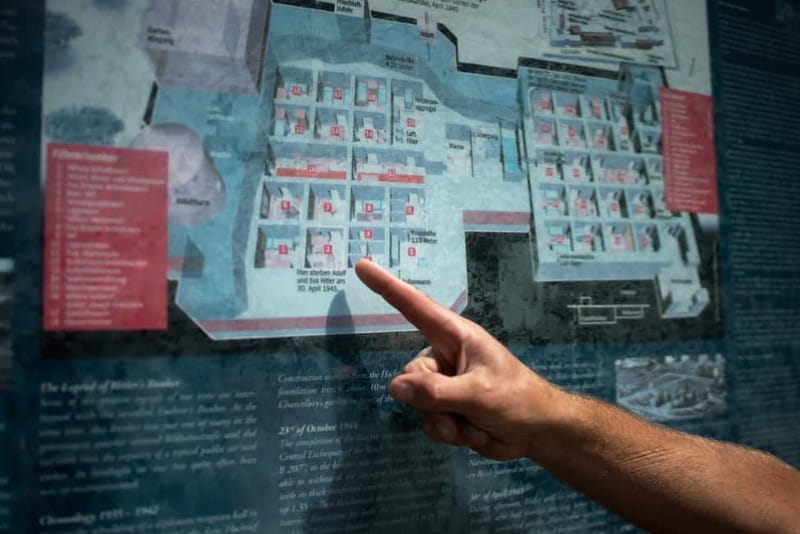
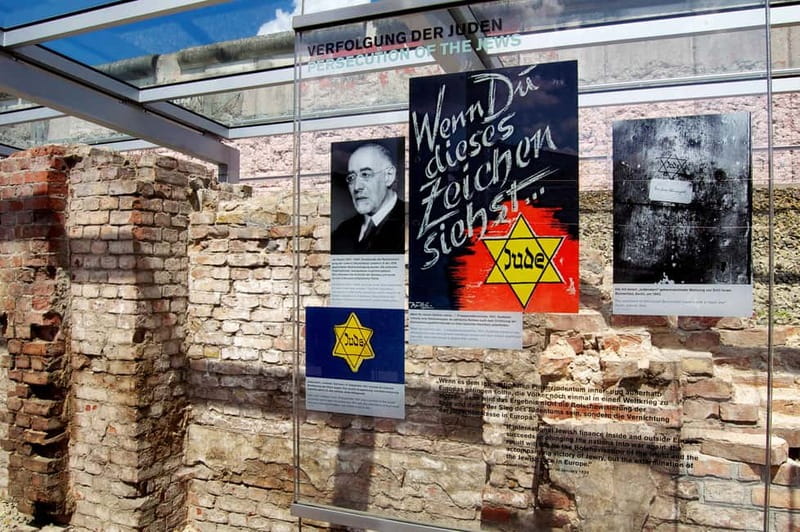
The final major stop is Topography of Terror, with guided time that leads into the Dokumentationszentrum Topographie des Terrors area. This is where the tour’s storyline sharpens. You move from street-level context to a focused presentation that helps you remember the who, what, and why.
The tour includes guided time here, with the pacing set to help you absorb the material without racing through it. You will also get context for the former nerve centers of Nazi terror, and the exhibit supports the earlier walk by giving you a timeline structure to hold in your head.
If you want to get the most out of this stop, do two things:
- Watch for how the guide connects institutions, not just dates
- Ask one question you genuinely want answered, then listen for the way the guide uses the exhibit to support it
This is also where you will feel the difference between a “good tour” and a “great guide.” Many guides on this walk are praised for organization and for keeping groups engaged without making the tone flippant.
The pacing, group size, and guide style that make it work
The tour runs for about 3 hours and is designed as a walking experience with short photo-stop moments along the way. That structure helps because it avoids long, uninterrupted lecture mode. Instead, you get frequent location changes and guided interpretations that keep your brain from glazing over.
You can also choose private or small-group options, which can be ideal if you want a quieter pace or more time to ask questions.
Guide quality is a major theme in the feedback. Names that keep showing up in positive accounts include Maggie, Campbell, Hannah, Emma, Jimmy, Nikolai, Klaus, and JR. The praise pattern is consistent: guides are friendly, organized, and willing to answer questions, and they often use humor lightly without disrespecting the subject.
One extra practical note: a guide-led refreshment break after about two hours is mentioned in experiences tied to this route. So plan for that kind of rhythm, even if you cannot assume every tour day will feel identical.
Is the $19 price a good deal for what you get?
For many Berlin tours, $19 would be hard to justify for a single museum entrance. Here, that amount buys you a guided walk through multiple WWII sites, plus guided time at Topography of Terror, and coverage of both Nazi leadership sites and Soviet commemorative spaces.
The real value is not only the number of stops. It is the ordering and explanation. Guides help you connect:
- Nazi institutional locations to the way terror was organized
- the symbolism of places like Brandenburg Gate across time
- Berlin’s late-war collapse to the postwar messages built into memorials
If you are the type who wants context rather than a scavenger hunt of photo locations, this price-to-content ratio is strong.
Who should book, and who might prefer something else
This tour is a strong match for you if you:
- care about WWII history beyond dates
- want to connect public sites to political systems
- like asking questions and getting direct answers from your guide
- are comfortable with a serious, often emotional topic
It may not be the best fit if you:
- want a lighthearted, casual city walk
- prefer only upbeat or scenic stops
- need a very “soft” approach to dark history
Should you book the Berlin Third Reich, Hitler, and WWII walking tour?
If your goal is to understand Berlin’s WWII story in a way that feels anchored to places, I think you should book this. For $19 and 3 hours, you get expert guidance at high-impact sites: the Führer Bunker area, Topography of Terror, the Holocaust Memorial, and the Soviet War Memorial with its tanks and howitzers. That is a lot of meaning for one morning or afternoon.
Just go prepared. Wear comfortable shoes, dress for rain or shine, and give yourself permission to take the emotional weight seriously. If you do that, this walk can turn a list of Berlin landmarks into a story you actually remember.
FAQ
How long is the walking tour?
The tour lasts about 3 hours.
How much does the Berlin Third Reich, Hitler, and WWII walking tour cost?
It costs $19 per person.
Where do we meet for the tour?
Meet outside Friedrichstraße train station on the square between the Tränenpalast (Palace of Tears) and the station. Guides wear a blue lanyard and a yellow name tag holding yellow umbrellas.
What sites are included during the tour?
The tour includes stops connected to the Holocaust Memorial, Hitler’s Bunker area (including the location of Hitler’s suicide), Topography of Terror, the Soviet War Memorial in Tiergarten, and guided coverage around the Reichstag and other central WWII sites.
Is the tour guided, and what languages are offered?
Yes, it includes a live tour guide. Languages listed are English, German, and Spanish.
Does the tour run in bad weather?
Yes, it operates rain or shine.
What should I bring?
Wear comfortable shoes and dress in comfortable, weather-appropriate clothing.
Is pickup available?
Pickup is optional only for private options. You would wait in the hotel lobby 5 minutes before the scheduled pickup time, and the guide will be wearing a yellow name tag for recognition.
Fresh reviews out of Berlin
- Berlin Uncensored: A History of Sex & Freedom★ 5.0 · 50 reviews
- Berlin Food & Cultural Tour: Must-Try German & Berliner Classics★ 5.0 · 51 reviews
- English Comedy Show with Pizza and Shots in Central Berlin★ 4.5 · 51 reviews
- Rude Bastards Tour of Berlin★ 4.8 · 51 reviews
- Private Taxi Tour of Berlin East and West and Neighbourhood approx. 4-6h★ 5.0 · 55 reviews
- Rickshaw Sightseeing City Tours Berlin – Rikscha Tours★ 4.0 · 55 reviews
- Berlin: City Highlights Express & Panorama Roof Terrace★ 4.9 · 55 reviews
- Berlin during Nazism – Tour in Italian★ 5.0 · 56 reviews
Third Reich & WWII Tours, compared.
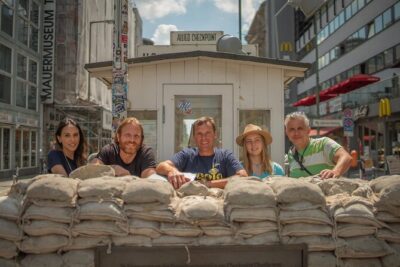
Berlin’s Best: 2 Hour Walking Tour Third Reich and the Cold War
Read our review →
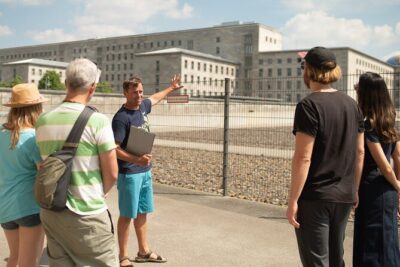
Third Reich Berlin: Hitler and WWII Walking Tour
Read our review →
Walking Tour of Former Nazi Party Rally Grounds
Read our review →

Berlin Third Reich Sites: Half-Day Walking Tour
Read our review →Browse the lists this tour appears in