
Reviewed · THIRD REICH & WWII TOURS
Nuremberg Third Reich Tour in Spanish
Nuremberg has a way of forcing history to the surface, and this Third Reich tour in Spanish does it with clear stops and a tight walking route. It connects medieval intolerance, Nazi propaganda, and the Nuremberg trials in a way that you can actually track while you’re on your feet.
I really like that the guide, Federico, keeps the pace lively without turning heavy topics into noise. I also love that each stop is paired with a specific story, from the pogroms to the destruction of the main synagogue, so you leave with a map in your head, not just names on a page.
One drawback to plan for: this is emotionally heavy content, and the tour length is about 3 hours. If you’re sensitive to anti-Semitism, war damage, and Nazi crimes, take breaks and bring water, especially if you’re doing the afternoon slot in warm weather.
Key takeaways in 5 minutes
- En español y con guía real: you get a Spanish-speaking guide (and the group stays small, up to 30 people).
- 3 horas, 9 paradas clave: you walk a concentrated route that links propaganda, persecution, destruction, and justice.
- Contexto antes de los símbolos: medieval and modern anti-Semitism are shown as a line, not isolated events.
- Momentos en lugares de memoria: the main synagogue memorial, the trial gate, and the Street of Human Rights bring the story home.
- Entradas incluidas para los puntos: admission tickets at the stops are included, so you’re not juggling paperwork.
- Caminata con lógica urbana: it ends near the main train area, so you can smoothly continue your day.
Why this Nuremberg Third Reich tour works in real life
Nuremberg is famous for medieval architecture, but it’s also famous for what people did with that architecture and that pride. The smart move here is that you do not get stuck in one era. You move from older intolerance to Nazi ideology, then to the aftermath, including the trials.
At $19.70 per person for a ~3-hour guided experience with admissions handled, the value feels strong. You’re paying for interpretation and time, not just a route. In practice, that matters because the difference between seeing a church or a gate and understanding why it matters is huge.
The tour also has a practical rhythm: it’s structured around major sites, and it ends in a logical place for onward travel. If you like city walks where the story makes sense at each corner, this fits your style.
More Third Reich history tours:
- Nuremberg: Walking Tour of Former Nazi Party Rally Grounds
★ 4.7 · 1,665 reviews - Nuremberg: Historischer Kunstbunker WWII Art Bunker Tour
★ 4.8 · 921 reviews - Nuremberg Old Town and Nazi Party Rally Grounds Walking Tour in English
★ 4.5 · 504 reviews
Starting point: Hauptmarkt at 3:30 pm (and why the timing helps)
You start at Hauptmarkt 14 in Nuremberg, at 3:30 pm, and the tour finishes near the Street of Human Rights (Kartäusergasse 1) by the central station area. That timing and end point are helpful because you’re not trying to squeeze this into the first morning scramble.
An afternoon tour also gives you a better chance to see the city in daylight while you cover heavier themes. The tradeoff is obvious: it can be warm. I’d treat this like any city walking tour in summer, bring water and plan your pace.
Good to know: the tour uses a mobile ticket, so you’re not worrying about printing anything. And because the group maximum is 30 people, the guide can keep control of attention without it feeling like a huge bus situation.
Frauenkirche: the pogrom of 1349 and the Jewish quarter’s relationship with the city
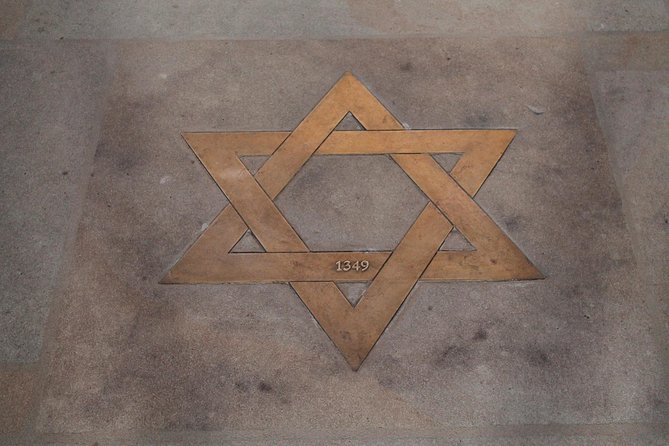
The first stop sets the tone. At Frauenkirche, the focus is the pogrom of 1349, the Jewish quarter, and how intolerance was woven into the city’s life long before the Third Reich.
This is one of the most important parts of the whole tour because it answers a question you might not ask on your own: how does a society allow persecution to become normal? By starting here, the tour makes it clear that Nazi anti-Semitism didn’t appear from nowhere. It built on earlier patterns.
Practical note: even though the admission is free for this stop, you’ll want to give yourself a few minutes to orient. Churches and old city spaces can feel visually similar until the guide pins down the story.
St. Sebaldus Church: a timeline of anti-Semitism from the Middle Ages to National Socialism
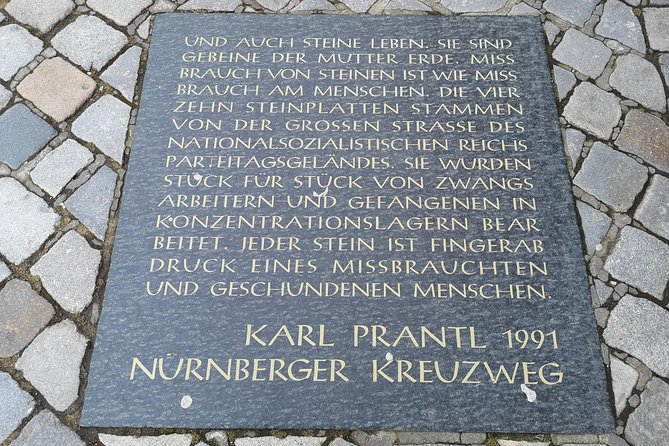
Next up is St. Sebaldus Church, where the guide links anti-Semitism from the Middle Ages to National Socialism. I like this approach because it prevents the common trap of treating each era as a separate movie.
Instead, you start noticing that ideology can be reinforced through institutions, public life, and everyday messages. You’ll come away with a stronger sense of continuity, which helps when you reach the Nazi-era sites later.
This stop is also a reminder that cultural heritage sites can carry dark layers. You’ll likely look at familiar buildings differently once someone explains how power and prejudice can share the same address.
Weigh these Nuremberg picks against each other
- Nuremberg: City Tour with the Bimmelbahn Train
★ 4.4 · 2,475 reviews - Nuremberg: Old Town Guided Walking Tour
★ 4.6 · 2,416 reviews - Nuremberg: Tunnels and Secret Passages in the City Wall Tour
★ 4.8 · 2,334 reviews - Nuremberg: Medieval Dungeons Guided Tour
★ 4.8 · 2,214 reviews
Nuremberg Rathaus: Hitler, the city, and the propaganda mindset
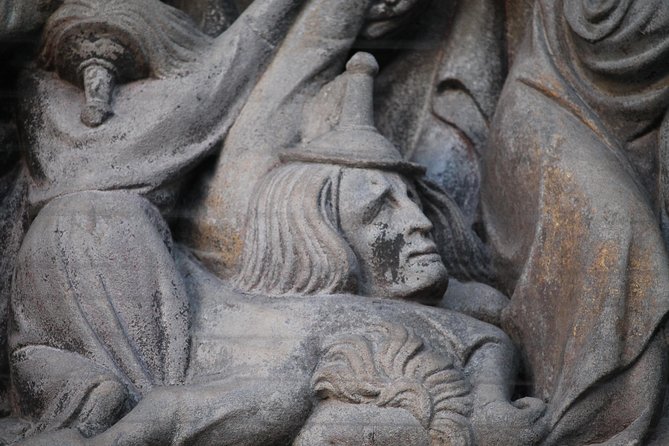
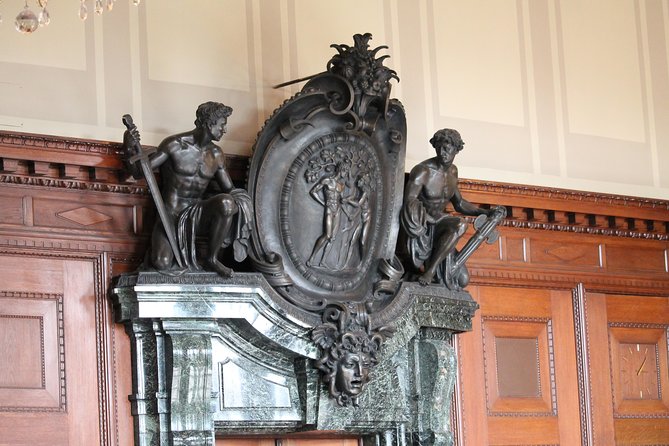
At the Nuremberg Rathaus, you move into the question of how the city got used. The tour frames it as a connection between Hitler’s history and Nuremberg’s role, emphasizing that Nuremberg was not just a background location. It was part of a plan.
I find this section valuable because it turns Nuremberg from a set of sights into a system of messaging. You start to understand why leaders invest in certain cities and monuments. When a place is presented as symbolic, people align themselves with that symbolism, even when the content is ugly.
You should expect to hear this in a way that’s interpretive, not just chronological. If you enjoy learning the logic behind propaganda, this is a highlight.
Gedenkstatte at the main synagogue: destruction and Kristallnacht
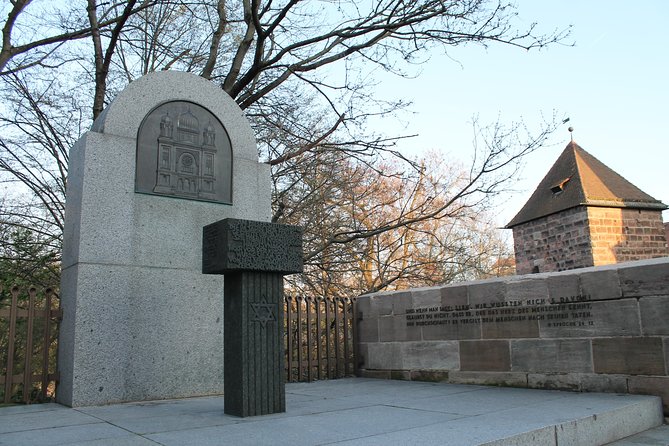
The tour then reaches Gedenkstatte an der Nürnberger Hauptsynagoge, the memorial tied to the main synagogue and its destruction, including the Night of the Broken Crystals.
This is where the tour becomes much more direct. Memorias and ruins do not require translation the way documents do. Still, the guide’s framing matters because it tells you what to look for and what to remember.
One thing I appreciate is that you are not left only with general horror. You get a specific event and a specific place, which helps the weight of history become concrete without turning it into spectacle.
Katharinenkirche: ruins, battle, liberation, and the city’s reconstruction
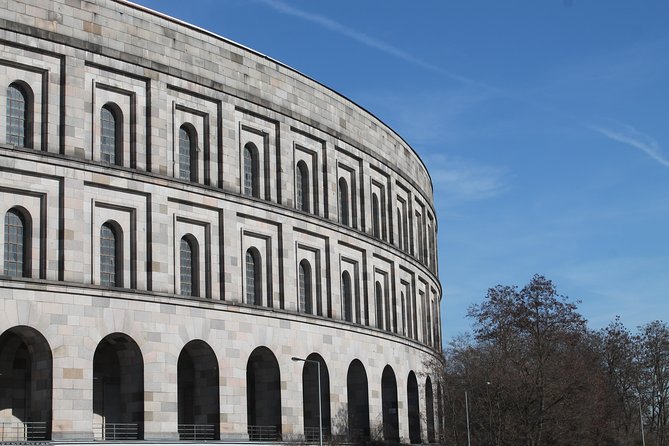
At Katharinenkirche, the focus shifts to the physical impact of war: the ruins of the church of Santa Catalina, the battle and liberation of Nuremberg, and the reconstruction of the city.
This stop is important because it balances the narrative. You’re not only hearing about persecution. You’re also seeing how a city rebuilds after catastrophe, and how memory and rebuilding can coexist.
In your head, connect this with earlier stops. The guide basically shows you the same place across different moral climates, from intolerance to destruction to rebuilding.
If you’re the type who likes to photograph, this is a spot where visuals help. Just keep your attention on the explanation first, then capture images after you understand what they represent.
St. Lorenz: Via Crucis and the link to the Nuremberg concentration camp
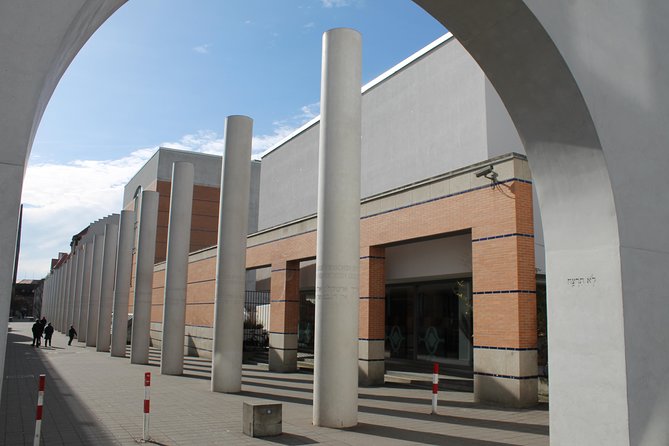
Next is St. Lorenz, with a discussion of the Via Crucis and how it relates to the Nuremberg concentration camp.
This can be a difficult connection to process, because it shows how religious or historical forms can be used alongside crimes. The guide’s job here is to help you understand the relationship without losing your sense of what is appropriate and what is being misused.
I also like that this stop pushes you beyond surface history. It’s easy to treat churches as untouched and purely artistic. Here, the story insists that meaning is not fixed. People give places meaning, and then they weaponize it.
Take a breath at this stage. Your brain has been moving fast through painful topics, and the link here is heavy.
Nuremberg State Theater: opera, architecture, and National Socialism
At the Nuremberg State Theater, you get the cultural angle: the opera house and its connection to National Socialism.
This is one of those stops that makes you rethink the word normal. When regimes want legitimacy, they often lean on culture, public spectacle, and institutions people associate with refinement.
If you like learning how ideology can dress itself up, this section will click. You’ll leave with a clearer sense of how propaganda is not only marches and slogans, but also stages, programs, and cultural prestige.
Charterhouse Gate: the Nuremberg trials and the turning point
Then you reach Charterhouse Gate, where the tour connects the city to the Nuremberg trials.
This is the emotional shift many people look for: after describing persecution and destruction, you move toward accountability. The trials represent a different kind of power, the power of law applied after mass crimes.
I find this stop especially useful because it restores agency to the story. History here is not only victim and perpetrator, it’s also evidence, testimony, and a global attempt to draw lines where lines had been erased.
Even if you already know the broad facts, hearing them tied to a physical place is one of the best ways to turn general knowledge into something you can remember.
Street of Human Rights: rebirth after ashes, with memory intact
Finally, the tour ends at the Street of Human Rights, near the central station area. The framing is the rebirth of the city from ashes, but with memory still attached.
This ending works because it’s not a reset button. You finish with a concept: human rights as the counterweight to what the earlier stops showed. You leave with a sense of closure, but not denial.
In practical terms, finishing near the train hub is smart. You can keep moving through Nuremberg without needing a taxi or a long return walk.
What you’ll actually experience during the 3-hour walk
This is about 3 hours total and you cover 9 stops. That means you are not touring museums room by room. You are doing something more like an interpretive city walk, where each location gets a tight explanation tied to the theme.
The good part of this format is speed with clarity. You won’t spend your whole day in one building, and you’ll still leave with specifics: pogrom of 1349, main synagogue destruction, Kristallnacht, battle and liberation, the Via Crucis link, the opera house connection, and the trials.
The tradeoff is that it’s not designed for lingering. If you want to sit quietly and read every plaque, plan some extra time on your own after the tour.
The Spanish guide experience: who it’s best for
Because it’s guided in Spanish, it’s ideal if you want to understand the nuance and the connections without translating in your head. The tour also has a strong reputation for being engaging, including feedback about it being enjoyable even in warm weather and the guide being well documented.
It’s also a good match if you like structured storytelling. You’re not left guessing why each stop matters. The sequence is intentional.
Who might want to choose something else? If you prefer very light content or you know you want purely architectural sightseeing with minimal subject matter, this is probably more than you’re looking for. It deals directly with anti-Semitism and Nazi crimes, and that is the center of gravity.
Value, group size, and practical comfort
With a maximum group size of 30 travelers, you should feel like you’re in a real guided walk rather than an uncontrolled crowd. And because key sites have admission included, you spend less time managing tickets and more time learning.
The tour requires good weather. If conditions are poor, you’ll be offered a different date or a full refund. That matters because the route is outdoors and walking is part of the experience.
Also, you can bring service animals, and it notes that most travelers can participate. If you have mobility constraints, you might want to consider how comfortable you are with a 3-hour walking route before booking.
Should you book the Nuremberg Third Reich tour en español?
If you want a story-driven walk through Nuremberg that connects medieval intolerance to Nazi propaganda, then to destruction and the trials, this is an excellent way to get oriented fast. The Spanish guide and the fact that admissions are handled at stops add practical value, especially if you’re traveling with limited time.
I’d book it if:
- you want a clear sequence of sites and themes
- you appreciate context, not just facts
- you want a group experience that still feels guided
I’d think twice if:
- you are not ready for anti-Semitism and Nazi violence topics
- you prefer museum-style pacing with lots of independent reading
If you’re aiming to understand Nuremberg beyond postcards, this tour gives you a real framework. Walk it, absorb it, then use the rest of your day to explore what stays with you.
FAQ
What language is the tour offered in?
The tour includes a guide in Spanish.
How long is the Nuremberg Third Reich tour?
The duration is approximately 3 hours.
Where does the tour start and what time does it begin?
It starts at Hauptmarkt 14, 90403 Nürnberg, Germany at 3:30 pm.
Where does the tour end?
It ends at the Street of Human Rights, near Kartäusergasse 1, 90402 Nürnberg, Germany, close to the central train station and about ten minutes’ walk from the start.
What is included in the price?
The price includes a Spanish guide and admission tickets for the tour stops listed.
What is the group size limit?
The tour has a maximum of 30 travelers.
Is the tour refundable if weather is bad or plans change?
You can cancel for a full refund up to 24 hours before the experience’s start time. The tour also requires good weather and, if it is canceled due to poor weather, you’ll be offered a different date or a full refund.
Fresh reviews out of Nuremberg
- Tour to Rothenburg ob der Tauber from Nuremberg in Spanish★ 5.0 · 51 reviews
- Nuremberg: World War II Tour with Hotel Pickup★ 4.4 · 51 reviews
- Nürnberg: Mörder, Fälscher, Messerstecher★ 4.8 · 53 reviews
- Nuremberg Ghosts and Gallows Evening Walking Tour in English★ 5.0 · 56 reviews
- Nuremberg’s Mystery Morning: Breakfast & Escape Game★ 4.4 · 57 reviews
- Nuremberg: Private Walking Tour with a Local★ 3.8 · 77 reviews
- Nuremberg World War II★ 4.5 · 89 reviews
- Nuremberg Private Walking Tour: Old Town and Nazi Rally Grounds★ 5.0 · 92 reviews
Third Reich & WWII Tours, compared.
Berlin’s Best: 2 Hour Walking Tour Third Reich and the Cold War
Read our review →
Third Reich Berlin: Hitler and WWII Walking Tour
Read our review →
Walking Tour of Former Nazi Party Rally Grounds
Read our review →
Browse the lists this tour appears in