
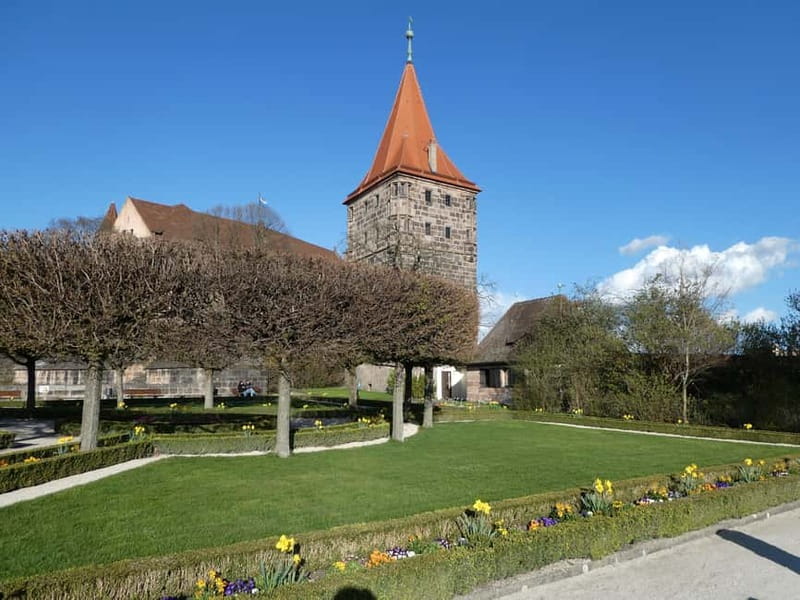
Reviewed · WALKING TOURS
Nuremberg: Free Walking Tour
What makes this Nuremberg free walking tour interesting is how it turns the Old Town into a timeline you can walk through, from the medieval golden age to the 3rd Reich era and then to the city’s post-WWII rebuilding.
I love Andreas’s storytelling, including his family connection to the city through his grandfather, who lived in Nuremberg for 86 years. I also like the mix of big sights and everyday culture, from St. Sebaldus Church to Albrecht Dürer’s house, plus local tips for food and beer.
One consideration: the guide covers heavy topics tied to the Nazi era and how Nuremberg dealt with that heritage, so it is history with weight, not only pretty facades.
Key things I’d make sure you notice
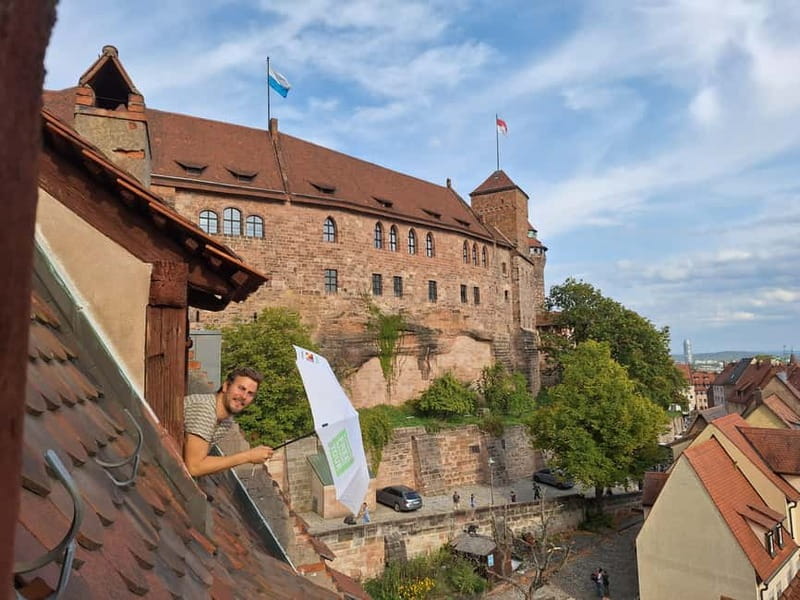
- Schöner Brunnen start point: the tour begins at the fountain, and you look for a white umbrella with a green symbol.
- Golden age to 3rd Reich, in one loop: the route connects medieval prosperity, later political darkness, and post-war rebuilding.
- Architecture that explains itself: you’ll see churches, half-timbered streets, the castle, and civic buildings, all tied to what the city was doing at the time.
- A guide who speaks like a local: Andreas is born and raised in Nuremberg, with a style that makes the stories feel personal.
- Humor plus sensitivity: the tour aims to be engaging, while still handling difficult history carefully.
Start at Schöner Brunnen, then follow the story in easy steps
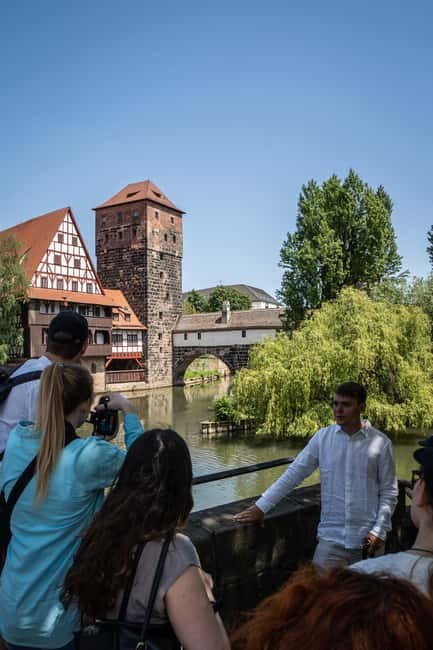
If you like walking tours that give you a mental map fast, this one works. You meet at Schöner Brunnen, and the guide is easy to spot by the white umbrella with a green symbol. Plan on about 2 to 2.5 hours on your feet, with enough stopping time that you will not feel rushed.
This is also a small-group format. That matters because you can ask questions, and the guide can tailor answers instead of performing to a crowd that cannot hear you. From the languages offered (German, Spanish, English), you can usually find a departure that fits your schedule.
I’d wear comfortable shoes and bring water. The tour is built around streets and historic steps, including areas where you may be standing while the guide explains what you are looking at. A camera helps too, because you will keep seeing details you might miss if you are just strolling.
More Walking Tours in Nuremberg
- Nuremberg: Old Town Guided Walking Tour
★ 4.6 · 2,416 reviews - Nuremberg: Walking Tour of Former Nazi Party Rally Grounds
★ 4.7 · 1,665 reviews - Nuremberg Old Town and Nazi Party Rally Grounds Walking Tour in English
★ 4.5 · 504 reviews
Hauptmarkt Nürnberg: the market square that explains power
Your first big stop is Hauptmarkt Nürnberg, the classic market heart of the old city. This is where you start to see why Nuremberg mattered again and again. In medieval Europe, trade and craft could make a city wealthy, and wealthy cities tended to build in stone and brag with architecture.
The guide’s approach is not only dates and names. You get the sense of what the city felt like when it was at its height, then how that momentum later collided with darker political forces. As you stand in the square, it becomes easier to understand why the next buildings in the story are not random stops, but proof of how Nuremberg presented itself.
If you are the kind of traveler who wants the “why” behind the sights, Hauptmarkt sets that up. If you only want postcard views and zero context, you may wish for more time purely on photos. But the tradeoff is that you leave with a story you can tell yourself later.
St. Sebaldus Church: how religion, art, and civic life overlap
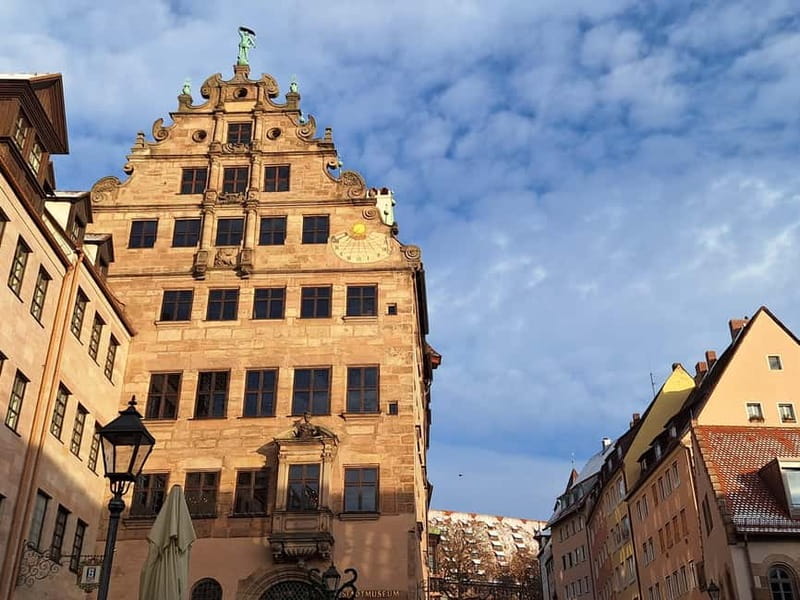
Next comes St. Sebaldus Church, and this is where the tour’s focus on architecture really pays off. Churches in Nuremberg are not just places to peek inside and move on. The guide connects what you see in the church with the city’s ambitions, beliefs, and the way communities organized life around major institutions.
You’ll learn to “read” the building better. Things like scale, design choices, and the church’s presence in the city center start to feel less like random stone, and more like a statement. That is a huge upgrade for first-timers, because you stop treating the old town like a museum backdrop.
A practical tip: if your day is warm, these stops can still require standing while the guide talks. I like that the tour keeps moving between points, but you should still be ready to pause and listen.
Old City Hall: civic pride in stone and function
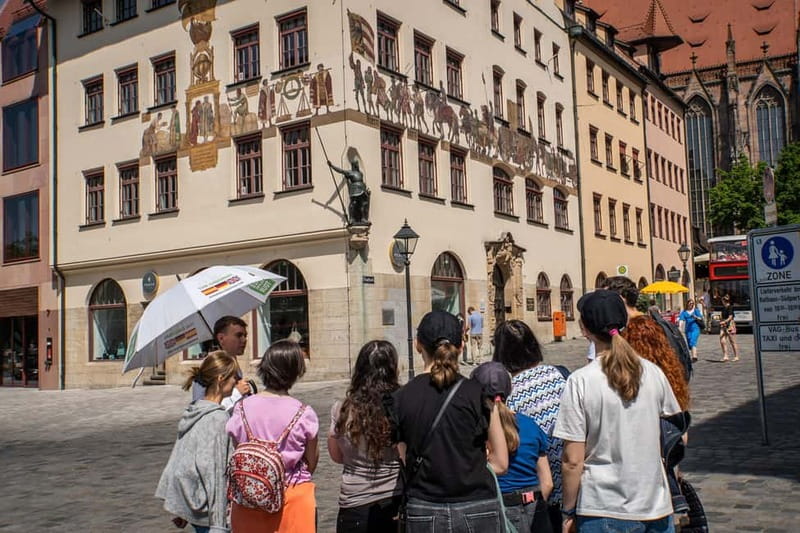
Then you reach the Old City Hall of Nuremberg. This stop shifts the story from sacred to civic. City halls are where rules happened, where trade was shaped, and where a city’s identity got formalized. When a tour talks about power, I want to see at least one building that shows how government worked day to day, and this is that.
You’ll also get help understanding how Nuremberg went through “golden” moments and then brutal breaks in the 20th century. The key is that the guide does not treat history like sealed compartments. You can feel continuity in the city’s identity, even as the political reality changes dramatically.
This is a great stop if you like architecture but also like context. You’ll understand what you are looking at, instead of just being told it is important.
Another way to spend a Nuremberg afternoon:
- Nuremberg: City Tour with the Bimmelbahn Train
★ 4.4 · 2,475 reviews - Nuremberg: Tunnels and Secret Passages in the City Wall Tour
★ 4.8 · 2,334 reviews - Nuremberg: Medieval Dungeons Guided Tour
★ 4.8 · 2,214 reviews - Medieval Tour in Nuremberg in Spanish
★ 5.0 · 1,374 reviews
Imperial Castle: the city’s big backdrop, tied to the big chapters
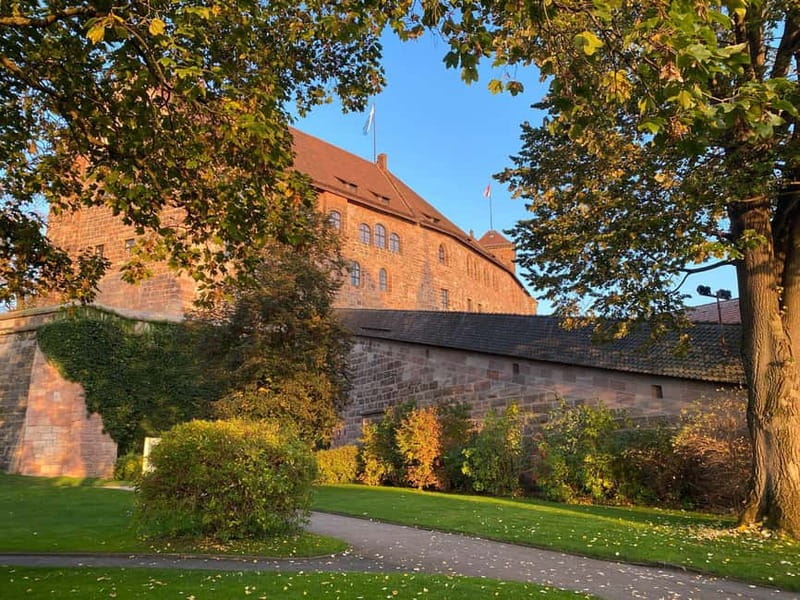
The route heads to the Imperial Castle of Nuremberg, and yes, it is a wow moment. Castle viewpoints do more than offer great photos. They put you at the edge of how the city controlled territory, defended itself, and signaled authority.
What I like about this tour is that the castle stop feels like a hinge. You often get a clearer sense of how the Middle Ages shaped the city’s trajectory, and how later eras tried to use that same legacy. Even when you are not thinking about politics, you start noticing how geography and built form influence power.
If you get tired easily, keep an eye on pace. The walk between points is generally unhurried, and the group stays small, but you still want to save enough energy to enjoy the explanation at the castle.
Albrecht Dürer’s House: art history that feels human
A standout stop is Albrecht Dürer’s House. Dürer is one of those names that can feel distant until you connect him to the city that shaped him. Here, art becomes a clue to how Nuremberg functioned culturally, not just economically.
The guide ties the stop into the larger story, so the house does not become an isolated “look at this famous artist” moment. Instead, you see why places like this mattered in different time periods, including the contrasts between prosperity, later turmoil, and what survived.
If you enjoy museum-like context but prefer to be outside, this is a sweet balance. You are still walking, still seeing street-level details, but your brain gets a payoff.
Weissgerbergasse and Hangman’s Bridge: half-timbered charm with story bite
Next is Weissgerbergasse, a narrow, historic lane known for the older street feel of Nuremberg. The tour uses it to bring out the city’s long-running identity through buildings, not just monuments. Expect half-timbered charm and the kind of architecture detail you miss when you speed through.
Then you cross Hangman’s Bridge, and here the tour gets especially memorable. The guide tells stories about Franz Schmidt, including why he was portrayed in a more friendly way than you might expect. It is the kind of humanizing detail that keeps history from turning into cardboard.
This section also helps you understand the practical side of old cities. Bridges, alleys, and connecting routes are where people moved, worked, and lived, so the stories feel grounded. You end up seeing Nuremberg less as a set of landmarks and more like a functioning community that changed over time.
Food and beer tips you can actually use the same day
What I value in this tour is that it does not stop at architecture and dark chapters. You get pointers to typical Nuremberg specialities and where to find them, plus recommendations tied to the regional vibe. Some departures also include talk about regional cuisine, including the beer.
That is not just fun. It helps you turn your first hours in the city into immediate decisions for lunch, coffee, or an evening drink. When a guide can point you to good local spots, you save time later, and you avoid the common trap of eating in places that only cater to passing crowds.
I’d treat this as part of the tour’s value, not an add-on. It is how you take the story you just learned and enjoy it on your own schedule.
WWII, Nazi heritage, and the hard part: how rebuilding gets explained
The tour spends time on the city’s darker chapters, including what happened during the 3rd Reich era, then the doom and reconstruction after WWII. This is the part that can feel heavier, because it asks you to look at how a place handles responsibility, memory, and rebuilding.
I appreciate that the guide’s goal is not to shock you with names, but to explain the path Nuremberg took dealing with the heritage of the Nazi era. You are not left with a vague “this was bad” feeling. You come away with a sense that post-war society had to decide what to keep, what to change, and how to talk about the past.
If you prefer history that stays light, this might not be your cup of tea. But if you want the real Nuremberg experience, this is where the tour earns its place.
Also, a clear heads-up: this route does not include the Courthouse of the Nuremberg trials or the former Nazi rally grounds. If those are your must-dos, you will need other visits on top of this walking loop.
The guide style is part of the product, and it shows
Andreas leads with a local grounding, born and raised in Nuremberg, with that family story of learning the city from his grandfather. That kind of continuity usually means the guide teaches with pride, not just textbook facts.
In practice, the tour tends to land as engaging and well-paced. Many people highlight the guide’s energy, the sense of humor, and the way the information is delivered in bite-sized chunks at each stop. You will also have time for questions after, which is where you often get the best city-specific advice.
You might tour with different guides depending on the departure, and names mentioned include Alexandra and Tom as well. What seems consistent across them is an approach that mixes architecture, everyday culture, and big historical context, without turning difficult topics into something you rush past.
One more practical note: the weather affects any outdoor walking tour. The route includes shade at several points on many days, but you should still dress for conditions and keep moving comfortably.
Price and value: why a few dollars can buy real orientation
Even though it is labeled a free walking tour style, the stated price is $3.54 per person. In my view, the value is not the dollar amount. It is that you get a guided structure for your first introduction to Nuremberg, with stops that span centuries and a local guide who ties it together.
Also, a tip matters. Tip for the guide is not included, and one review detail that sticks with me is the advice to carry some cash if you want to tip at the end. That is worth planning for, especially if you want to reward clear effort and thoughtful handling of sensitive history.
If you are on a short visit, paying for orientation can be cheaper than guessing your way around. You get a coherent route, a vocabulary for what you are seeing, and practical recommendations you can use immediately.
If you have plenty of time and already know Nuremberg’s timeline, you might not need a guide. But for most first-timers, this is one of the most cost-effective ways to turn buildings into understanding.
Should you book this Nuremberg walking tour?
Book it if you want a first pass through Nuremberg that balances medieval highlights, major architecture, and the city’s WWII and Nazi-era reckoning in a single 2 to 2.5 hour walk. It is also a good fit if you like talking with a guide, asking questions, and leaving with food and drink ideas you can use the same day.
Skip or add alternatives if your top priority is only the trial courthouse or the former rally grounds, because this route does not cover those. Also, if you only want cheerful history, plan for heavier content and decide if you are ready for it.
My take: for the price point, the small-group feel, and the way the guide connects streets to story, this is a strong way to get your bearings fast and understand why Nuremberg looks the way it does.
FAQ
Where do I meet for the tour?
You meet at Schöner Brunnen. Look for the white umbrella with the green symbol.
How long is the walking tour?
It runs about 2 to 2.5 hours (listed as around 2:15 for the guided portion).
How much does it cost?
The price shown is $3.54 per person.
What languages are available?
The live guide offers tours in German, Spanish, and English.
Is tipping included?
No. A tip for the guide is not included.
What is included in the experience?
You get a 2:15-hour guided walking tour.
What is not included?
The tour does not include the Courthouse of the Nuremberg trials or the former Nazi rally grounds.
What should I bring or wear?
Wear comfortable walking shoes, check the weather and dress appropriately, bring a camera, and carry water to stay hydrated.
Fresh reviews out of Nuremberg
- Tour to Rothenburg ob der Tauber from Nuremberg in Spanish★ 5.0 · 51 reviews
- Nuremberg: World War II Tour with Hotel Pickup★ 4.4 · 51 reviews
- Nürnberg: Mörder, Fälscher, Messerstecher★ 4.8 · 53 reviews
- Nuremberg Ghosts and Gallows Evening Walking Tour in English★ 5.0 · 56 reviews
- Nuremberg’s Mystery Morning: Breakfast & Escape Game★ 4.4 · 57 reviews
- Nuremberg: Private Walking Tour with a Local★ 3.8 · 77 reviews
- Nuremberg World War II★ 4.5 · 89 reviews
- Nuremberg Private Walking Tour: Old Town and Nazi Rally Grounds★ 5.0 · 92 reviews
Walking Tours, compared.

Berlin’s Best: 2 Hour Walking Tour Third Reich and the Cold War
Read our review →
Third Reich Berlin: Hitler and WWII Walking Tour
Read our review →Browse the lists this tour appears in