
Reviewed · BERLIN WALL & COLD WAR TOURS
Berlin: Third Reich and Cold War 2 Hour Walking Tour
Berlin’s between-the-wars and between-the-blocks story is not stuck in a museum here. This 2 hour walk strings together the symbols you see every day with the grim choices that made them matter. You start at the Brandenburg Gate, then you follow the lines of Nazi power and Soviet and American standoffs right up to the Wall.
Two things I really like: you get a small dose of major sites (about 2 kilometers total), and the guide turns landmark names into a clear story you can hold in your head. A possible drawback is that the subject matter is heavy, especially the Holocaust memorial and the Nazi terror sites, so this is not a light first day activity if you want comedy and shopping.
Key takeaways before you go
- A tight 2 hour route that packs major stops without turning into a full day of museums
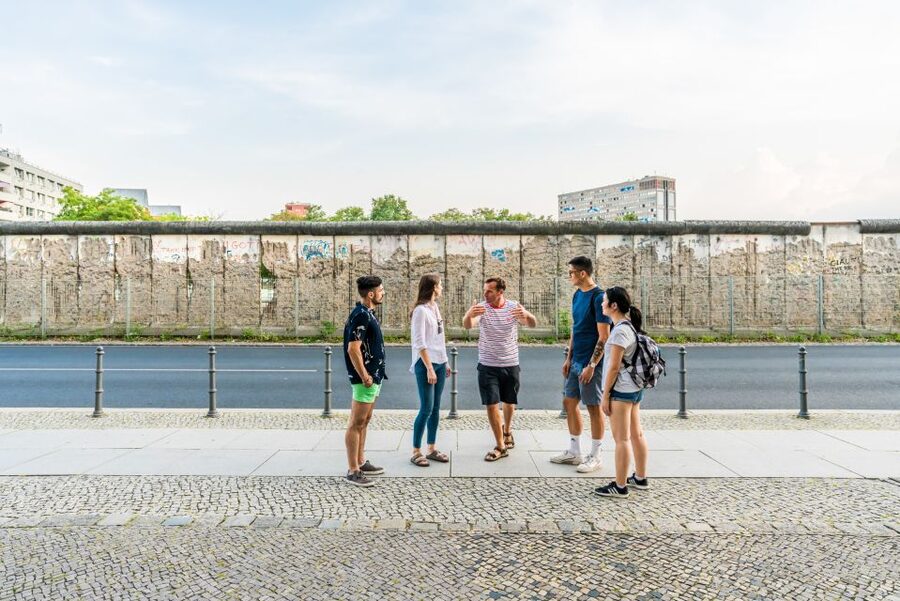
- 200 meters of Berlin Wall so you are not just hearing about division, you are walking it
- Checkpoint Charlie as a Cold War climax, where the Americans and Soviets were literally staring each other down
- Honest, on-foot context at the Reichstag area, the Soviet War Memorial, and Holocaust remembrance
- Guides with strong pacing (names you may see include Hannah, Jimmy, Mikhail, and Klaus), which matters because the facts get dense fast
Start at Brandenburg Gate, then follow the fault lines of Berlin
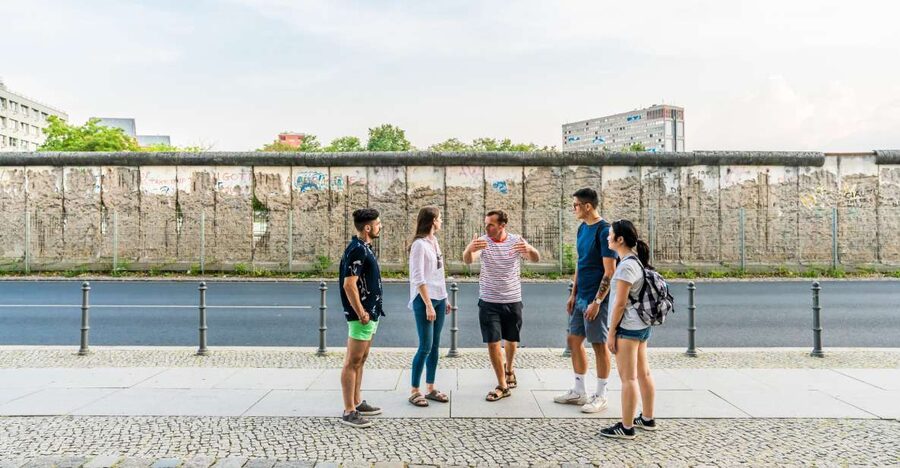
You meet at the tourist information point at Brandenburg Gate, Pariser Platz 1, and yes, look for the guide with the pink umbrella. This is a smart start point because the Gate is not just a postcard. It has been wrapped into ceremonies, propaganda, division, and reunification, and you feel that layered meaning as soon as you stand there.
I like that this walk is built like a timeline you can physically follow. You begin with the public face of Berlin, then you move into the machinery and hiding places of the Third Reich, and finally you end at the place that distilled the Cold War into a tense, global standoff.
One practical note: this tour runs in all weather conditions, and it includes outdoor walking. Bring your comfortable shoes and a real umbrella, not a sad pocket one, because you will be out there for the full story arc.
For getting there, the closest public transit is Brandenburger Tor (S1, S2, S25, S26, U5) on the S-Bahn and U-Bahn, plus buses 100 and 245.
Reichstag stop and the 1933 Reichstag Fire that helped Hitler win

The Reichstag is your first major pivot from general symbols into political power. You will hear the story around the 1933 Reichstag Fire, a turning point tied to how Hitler’s rise accelerated.
What makes this stop work on a walking tour is that it gives you the why, not just the what. A building like this can feel like architecture until someone explains how events around it were used to grab control. You will also learn how the Reichstag survived war, destruction, and later division, which helps explain why the building matters even if you never go inside.
There is a lot of political language in this era, so pay attention to how the guide frames cause and effect. If you have seen the phrases Third Reich, Nazi Germany, and propaganda thrown around in a textbook, the Reichstag stop is where they start to connect.
More Walking Tours in Berlin
- Discover Berlin Half-Day Walking Tour
★ 5.0 · 9,624 reviews - Berlin: Discover Berlin Walking Tour
★ 4.9 · 5,998 reviews - Berlin’s Best: 2 Hour Walking Tour Third Reich and the Cold War
★ 5.0 · 5,486 reviews
Tiergarten Soviet War Memorial: tanks, sacrifice, and the Battle of Berlin
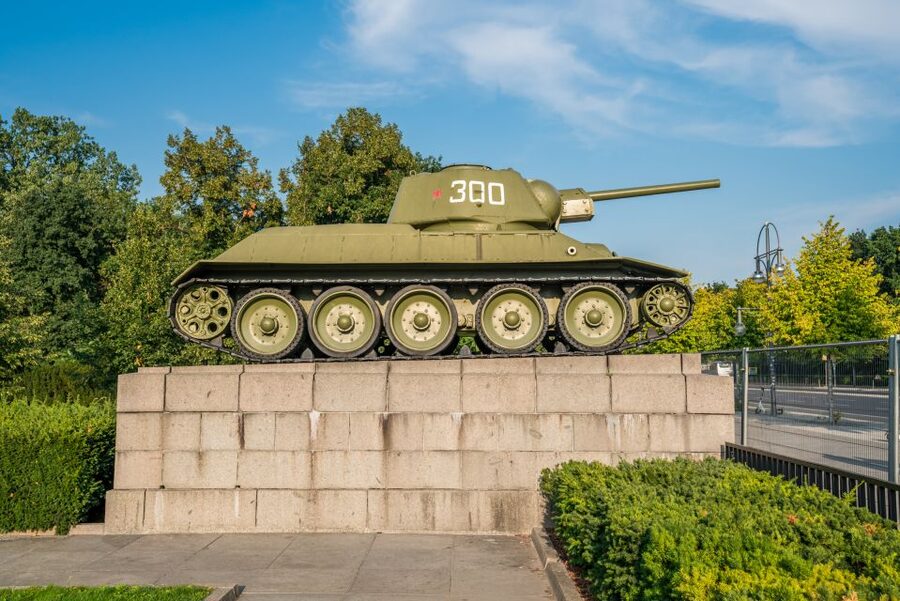
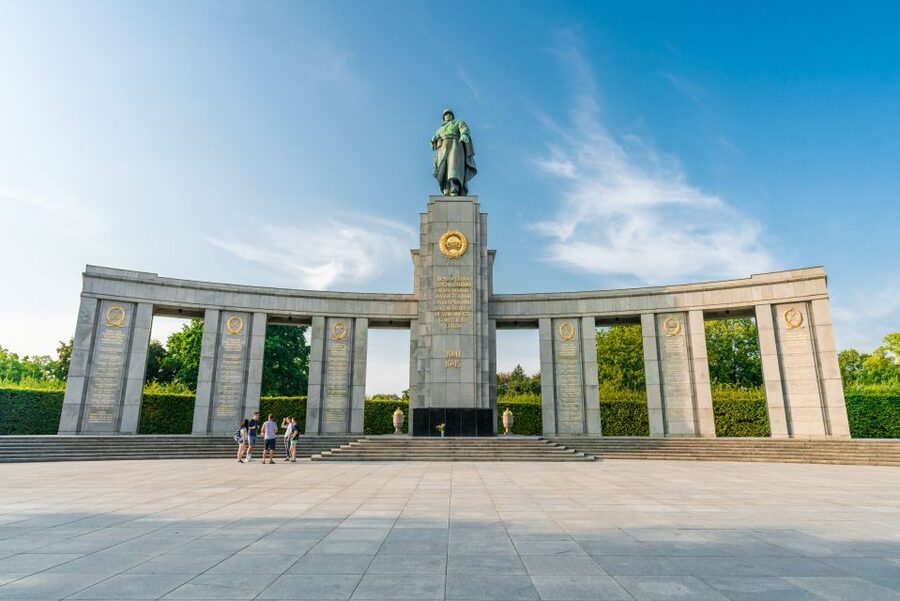
Then you shift from Nazi context to Soviet impact at the Soviet War Memorial in Tiergarten. Expect preserved Red Army tanks, which is one of those details that makes history stop being abstract. You are not just hearing a number, you are looking at physical remnants that represent a specific kind of warfare.
The memorial is tied to the 80,000 Soviet soldiers who fell during the Battle of Berlin. That matters because Berlin’s story is not only about one regime or one tragedy, it is also about the brutal end stage of the war and the costs paid by multiple sides.
This is also one of the spots where I recommend you slow down. The guide will provide facts, but let yourself take in the atmosphere of a memorial space inside a city park. You will feel the contrast between a modern walking path and the violence it commemorates.
If you are hoping the tour will be only about German decision making, this stop corrects that. You get the full geographic and military picture, which makes the next parts of Cold War Berlin make more sense.
The Holocaust Memorial and Hitler’s final hideout in the same arc
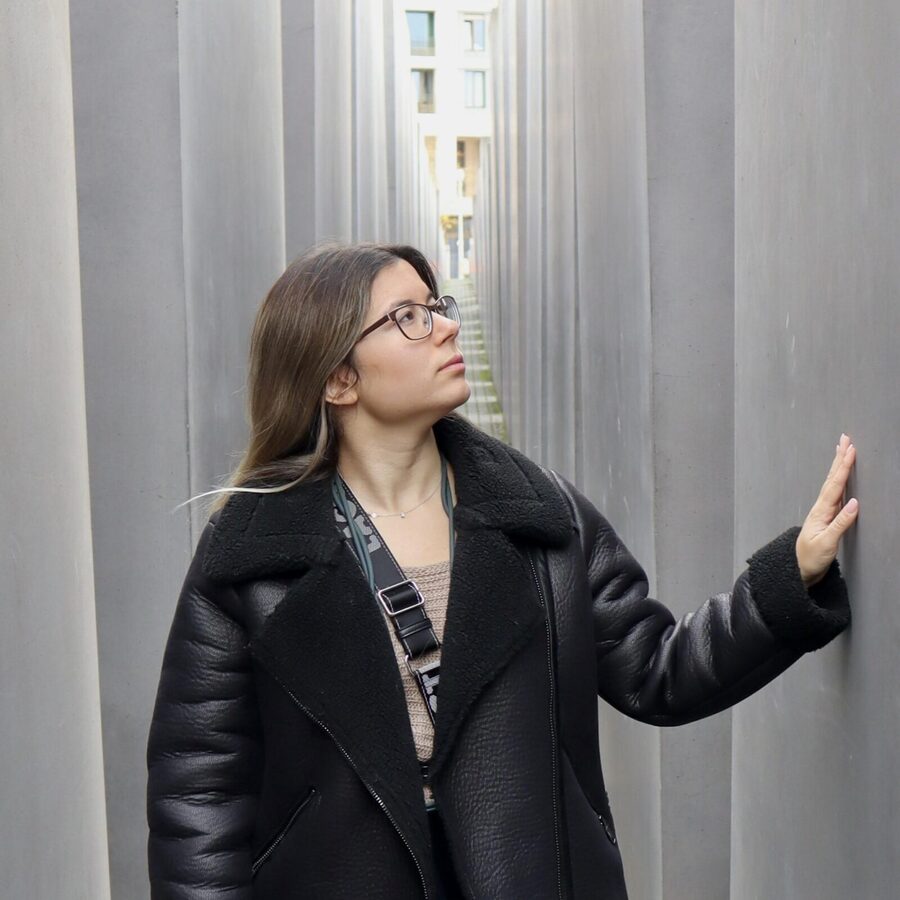
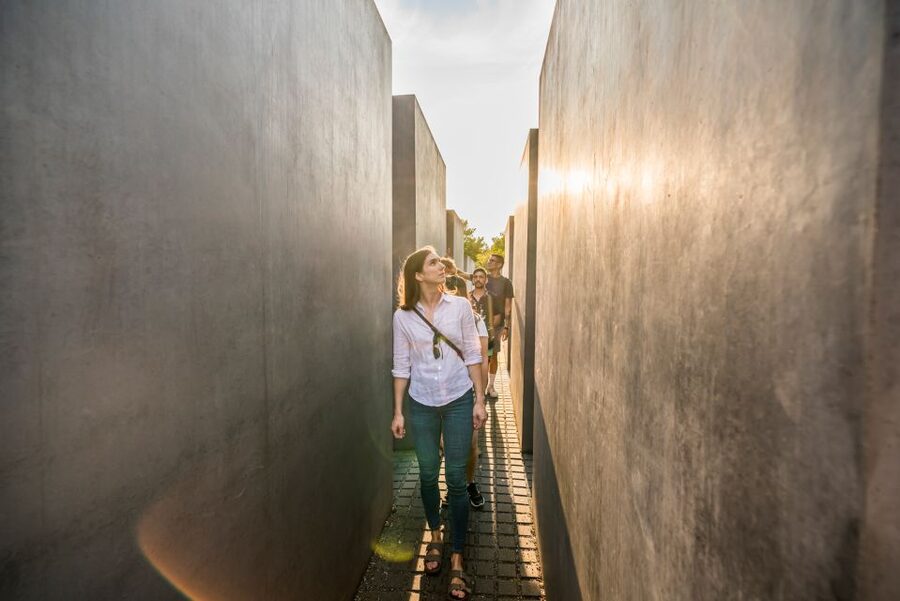
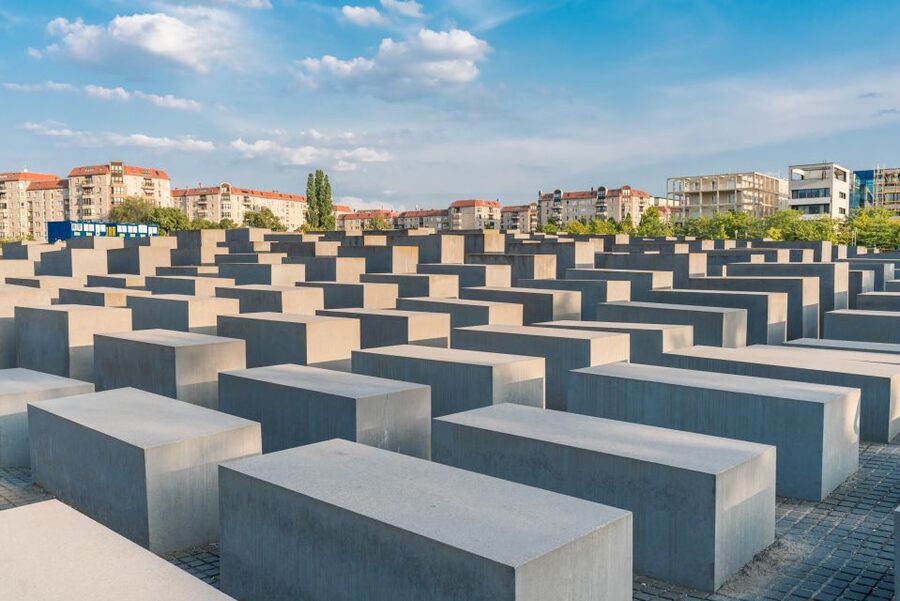
After Tiergarten, you pause at the Memorial to the Murdered Jews of Europe. This is handled as a remembrance stop in the tour, and you should treat it that way. Do not rush through it for photos, even if your camera is hungry.
Next comes a shift from remembrance into the ending days of the Third Reich at the site of Hitler’s Bunker. The tour connects this location with what happened in the final days before the fall, which is sobering but important context. This is where the story stops being history class and becomes personal decision making at the edge of collapse.
Nearby, you also cover Hermann Göring’s former Ministry of Aviation, later associated with the birthplace of East Germany in 1949. That link helps you see how Berlin’s new power structures grew out of the old ones, sometimes through survival, sometimes through repurposing, sometimes through forced reorganization.
And you do not stop at names. The tour also points to the former headquarters of the SS and Gestapo, the part of the Nazi regime where terror was orchestrated. This is not a cheerful walk. But it is a necessary one if you want Cold War Berlin to feel real, not just geopolitical trivia.
Topography of Terror and the power of seeing the sites in order
You then reach Topography of Terror, which ties together what you have been learning about Nazi terror. Even if you do not go inside any museum or exhibition spaces, the stop works because it is part of the sequence you just walked.
The best walking tours are not collections of landmarks. They are controlled momentum. Here, the momentum is built so you do not jump from Hitler to the Wall without understanding the regime that created the fear, policing, and propaganda environment that reshaped Germany.
If you like your history with structure, you will appreciate how the guide moves you from bunker and terror headquarters toward the mechanisms of division that came later. It helps you understand why the Cold War was not just about ideology, it was also about institutions and the scars left behind.
Also, because this is a two hour experience, you will likely spend less time at each stop than you would on your own. That is not a flaw, it is how you avoid information overload. If you want to read every panel or sit longer at memorial spaces, plan extra time before or after the tour on a day when you can slow down.
More Third Reich history tours:
- Third Reich Berlin: Hitler and WWII Walking Tour
★ 5.0 · 3,301 reviews - Berlin: Third Reich, Hitler, and WWII Walking Tour
★ 4.9 · 1,757 reviews - Berlin Third Reich Sites: Half-Day Walking Tour
★ 5.0 · 835 reviews - Berlin: History of the Third Reich Guided Walking Tour
★ 4.7 · 791 reviews
A 200-meter walk along the Berlin Wall, where escape stories land
Then you do the part that many people remember most, the 200 meter section of the Berlin Wall. It is short in distance, but huge in meaning. Walking it gives you a physical scale for decades of separation between East and West.
This is where the tour shifts from buildings and dates to people and risk. You will hear stories about those who tried to escape and what the wall’s fall changed after so many years of confinement. The guide frames those escape attempts in a way that connects to what you saw earlier: regimes and borders are not only lines on maps, they are lived pressure.
One small piece of practical advice: dress for the weather and keep your phone power bank ready if you like photos. You will be outside for these critical visual moments, and you do not want dead battery anxiety during your best stop.
If you are the type who likes to look carefully and then ask questions, this part of the tour gives you permission to do that. The Wall is the anchor, and the guide will often give extra context if you ask.
Checkpoint Charlie, the tense standoff, and the week Berlin changed
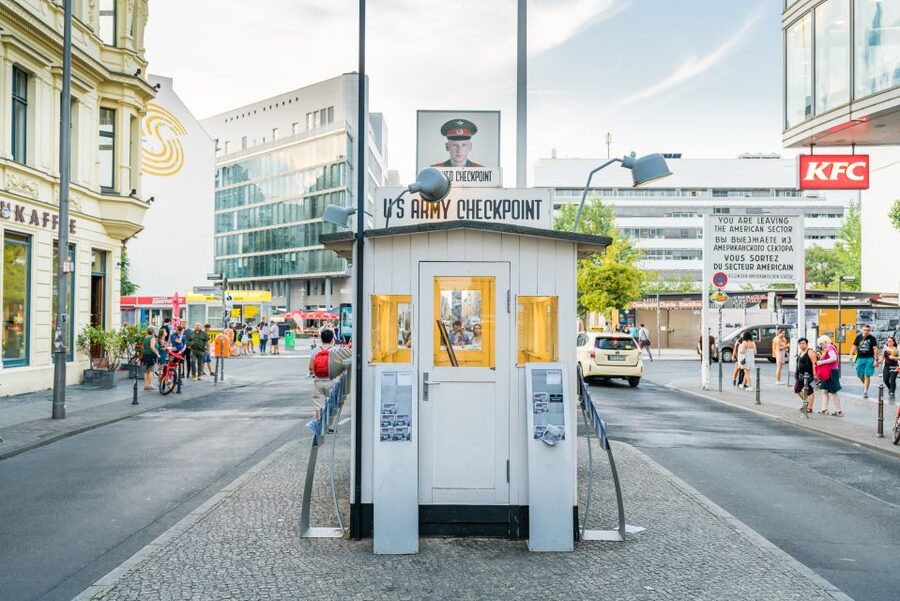
You finish at Checkpoint Charlie, the famous Cold War crossing point where American and Soviet tanks once faced off. The tour uses that moment as the emotional climax of the Cold War storyline.
What I like about ending here is that it gives you a clear image of tension. You can picture soldiers and vehicles staged at a border while diplomats argued somewhere else. Then the guide brings it forward to the pivotal final hours before the wall came down, and the reunification that followed.
Checkpoint Charlie is a site that people often treat like a photo stop. On this tour, it becomes a lesson in how quickly geopolitical games can flip once the pressure breaks. You will get dramatic escape attempts mentioned in context, but tied to the larger reality that the system itself started cracking.
If you want to keep the momentum after the tour, you will still be in the right zone of central Berlin for wandering. But do not try to cram museum time right after. Give yourself a little breathing room to process what you just walked.
Price and pacing: why $23 for 2 hours can actually feel fair
At $23 per person for a 2 hour guided walking tour, the value depends on your priorities. If you want a guided story that connects multiple sites in the core Berlin narrative, this price is reasonable for how much ground you cover and how many major stops you hit.
You also walk about 2 kilometers, which is not a lot in physical terms, especially since the tour is built to fit a short time window. It is more like a brisk city stroll with big content than a long hike.
Pacing is a big deal on tours that include the Reichstag area, Soviet memorials, Holocaust remembrance, Nazi terror sites, and the Berlin Wall. The high ratings you will see for this tour often point to the same thing: guides manage the group pace so you do not feel rushed, and they answer questions while you are in transit between stops.
You should still plan with realism. The route is compact, but the topics are intense. If you expect a casual chat version of Berlin history, you might leave feeling overloaded. If you want focus and clarity, the tight format is a strength.
Practical tips so the tour feels easy, not chaotic
Here is how to make your 2 hours smoother.
Wear comfortable shoes. You will be on foot through central Berlin stops, and the route includes memorial spaces and a Wall section.
Bring a camera if you like photos, but also bring water. The tour is short, yet you can still get thirsty on a bright day, and the stops include outdoor time.
Bring an umbrella. Weather can change fast, and the tour runs in all weather conditions and on public holidays.
If you are deciding between a shared group and a private option, check languages. English and German are offered, but the shared versus private setup does not always guarantee the same language availability.
Wheelchair accessible is listed, which is good news if you use mobility aids. Still, because it is a walking tour, you will want to consider how you handle short distances and uneven streets.
Who should book this tour, and who might prefer something else
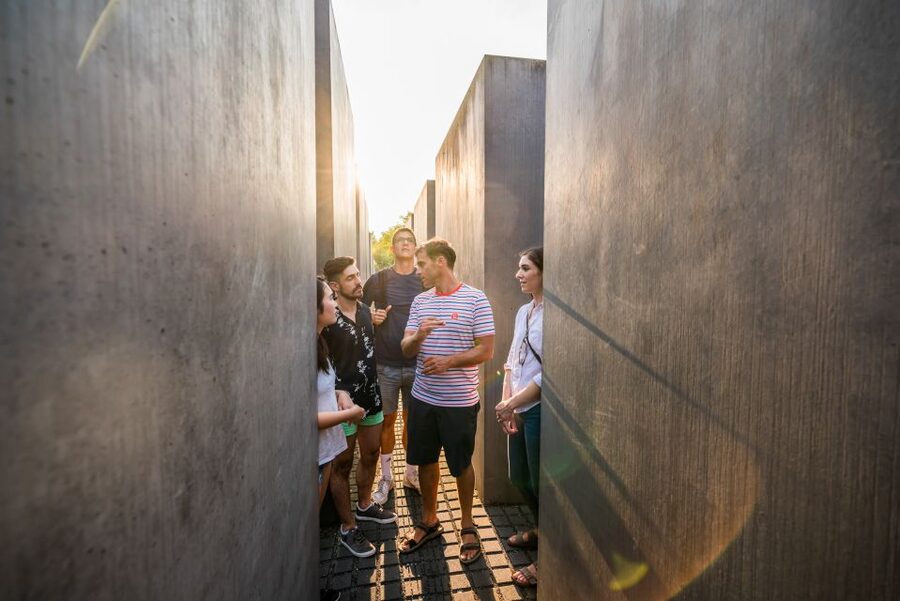
This is a strong fit if you are visiting Berlin for the first time and you want the big story thread. The combination of Brandenburg Gate, Reichstag area context, Soviet War Memorial, Holocaust remembrance, Hitler Bunker site area, the SS and Gestapo headquarters region, a section of the Wall, and Checkpoint Charlie gives you the right map of meaning.
It is also a good fit if you like expert storytelling over self-guided wandering. The tour leans on an on-foot guide to connect events and locations into a single narrative you can follow without getting lost in dates.
If you are sensitive to Holocaust-related content or prefer lighter tours, consider whether you need a different first-day plan. This walk covers both Nazi terror and the end of the war, and it includes a memorial focused on the murdered Jewish population of Europe.
If you love deep museum time, this might feel too short. It is built for a 2 hour arc, so you get key points and context, not extended reading at every stop.
Should you book this Berlin Third Reich and Cold War walking tour?
Yes, if you want a structured, compact way to understand how Berlin went from Nazi power to Cold War division, and then to reunification. The route makes the Cold War feel tangible because you do not only hear about borders, you walk part of the Wall and you end at Checkpoint Charlie.
Book it if you value clear pacing and a guide who turns landmarks into a story you can repeat later. The very high rating track suggests the tour usually lands well for people who want facts with human context, not just plaques.
Skip or pair it carefully if you are emotionally overloaded by heavy topics or you need more time at memorial spaces. In that case, you might still book, but plan an easier day afterward so your brain can catch up.
If you want a single, strong history anchor in Berlin, this is a good one.
FAQ
How long is the Berlin Third Reich and Cold War walking tour?
The tour lasts 2 hours.
Where does the tour start?
Meet in front of the tourist information point at Brandenburg Gate, Pariser Platz 1. Look for a guide with the pink umbrella.
Where is the nearest public transportation?
The closest stations are S-Bahn and U-Bahn station Brandenburger Tor (S1, S2, S25, S26 and U5), plus buses 100 and 245.
What stops are included on the tour?
Stops include the Reichstag, the Soviet War Memorial in Tiergarten, the Holocaust Memorial, Hitler’s Bunker site area, Detlev-Rohwedder-Haus, Topography of Terror, and the tour finishes at Checkpoint Charlie.
Is the tour wheelchair accessible?
Yes, wheelchair accessibility is listed.
How much walking should I expect?
You should expect to walk approximately 2 kilometers.
What languages are available?
Live tours are available in English and German.
What should I bring?
Bring comfortable shoes, an umbrella, a camera, and water.
Does the tour run in bad weather?
Yes, the tours run in all weather conditions and on public holidays.
More Berlin Wall and Cold War history
- Berlin: DDR Museum Tickets
★ 4.3 · 3,443 reviews - Skip-the-Line: Berlin Wall Museum at Checkpoint Charlie
★ 4.1 · 2,041 reviews - Berlin: East Side Gallery Spree Cruise in a Solar Catamaran
★ 4.1 · 1,086 reviews - Cold War, Berlin Wall, Spies and the East Side Gallery
★ 5.0 · 1,024 reviews
Fresh reviews out of Berlin
- Berlin Uncensored: A History of Sex & Freedom★ 5.0 · 50 reviews
- Berlin Food & Cultural Tour: Must-Try German & Berliner Classics★ 5.0 · 51 reviews
- English Comedy Show with Pizza and Shots in Central Berlin★ 4.5 · 51 reviews
- Rude Bastards Tour of Berlin★ 4.8 · 51 reviews
- Private Taxi Tour of Berlin East and West and Neighbourhood approx. 4-6h★ 5.0 · 55 reviews
- Rickshaw Sightseeing City Tours Berlin – Rikscha Tours★ 4.0 · 55 reviews
- Berlin: City Highlights Express & Panorama Roof Terrace★ 4.9 · 55 reviews
- Berlin during Nazism – Tour in Italian★ 5.0 · 56 reviews
Berlin Wall & Cold War Tours, compared.
Berlin’s Best: 2 Hour Walking Tour Third Reich and the Cold War
Read our review →
Skip-the-Line: Berlin Wall Museum at Checkpoint Charlie
Read our review →
East Side Gallery Spree Cruise in a Solar Catamaran
Read our review →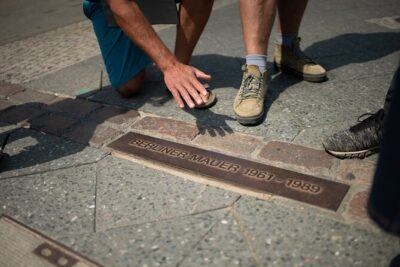
Cold War, Berlin Wall, Spies and the East Side Gallery
Read our review →

Browse the lists this tour appears in