
Reviewed · BERLIN WALL & COLD WAR TOURS
Private Walking Tour: World War 2 and Cold War Sites in Berlin
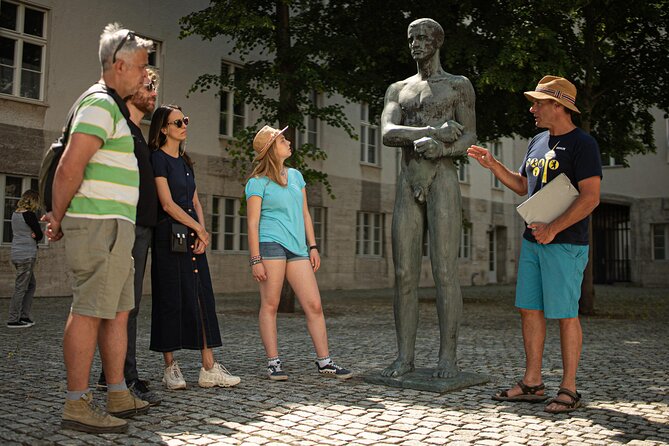
Berlin is one of the few cities where World War II and Cold War history show up in everyday streets, not just museums. This private half-day walk strings those moments together, so you can see the big landmarks and still understand what they meant. I also love the personalized, customizable pacing, because the guide can steer the story toward what you care about most.
The main tradeoff is the format: it is 3 to 4 hours of walking, with short time at each stop, and food and drinks are not included. If you get tired easily or want lots of long indoor time, plan smart and bring what you need.
Key Things That Make This Tour Worth Your Time
- Private guide, real flexibility: you can focus on WWII, Cold War, or a mix.
- A tight route through the most meaningful markers: Reichstag area, Holocaust Memorial, Checkpoint Charlie, and Berlin Wall memorials.
- Hotel pickup and drop-off included: you start and end with less hassle.
- Guides who adjust to your questions and energy: people keep mentioning pacing that fits.
- Most stops list admission as free: you are paying mainly for the guided storytelling and logistics.
- Both sides of Berlin are covered: from Nazi-era sites to East-West division places like Tränenpalast and Bernauer Strasse.
Walking Berlin from Reichstag to the Berlin Wall in One Half-Day
If you want a fast way to get your bearings in Berlin, this tour works because it follows a clear logic: government and war, then persecution and resistance, then division and escape, then the wall’s lingering presence. The result is not just seeing places, it is learning how the story of 20th-century Berlin changed from one era to the next.
Because it is a private tour, you are not stuck with a rigid group script. You meet your guide in a central hotel lobby, pick an afternoon or morning departure, and then steer the route in real time. Many people come to Berlin with documentaries and movie scenes in their head, and a guide turns those scenes into something you can map onto streets and buildings.
More Walking Tours in Berlin
- Discover Berlin Half-Day Walking Tour
★ 5.0 · 9,624 reviews - Berlin: Third Reich and Cold War 2 Hour Walking Tour
★ 4.9 · 6,830 reviews - Berlin: Discover Berlin Walking Tour
★ 4.9 · 5,998 reviews
What I like about starting with the “stage” of politics
The tour begins near the Reichstag building and the Brandenburg Gate area, which is a smart move. Those locations give you context for how power was presented, contested, and rebuilt. You are not waiting until the end to understand why the city looks the way it does today.
The Private Format: Choose WWII, Cold War, or a Mix
Here is the biggest advantage of a private walking tour with an experienced guide: you can choose your emphasis. The plan explicitly gives you options, from World War II history to Cold War history, or a combination of the two.
In practice, this matters because Berlin’s 20th-century story is huge. If you start with a guide, you can ask what matters to you, then let them decide how much time to spend at each site. Many guides are praised for listening first, then tailoring the stops, and that is exactly what you want when you only have half a day.
You also have a built-in “conversation” benefit. Reviews repeatedly highlight that guides stayed engaged, answered questions, and kept the pace right for the group. Names that show up in feedback include Jeff, Hannah, Emma, Glen, Daniel, Ariel, Klaus, Maria, Jim, and Joerg, and the common thread is that the guide adjusts to your pace and interests.
Reichstag Building and Brandenburg Gate: Nazi Resistance to a City’s New Meaning
The first walking segment centers on the Reichstag building area. If you are interested in WWII, this is where the tour frames the city’s political story in a human way. You hear about people who opposed the regime, including Claus von Stauffenberg, and about those who lost their lives during those cruel times.
You also get a guided sweep that connects major WWII events to Berlin’s role, including talk that runs from Stalingrad through the fall of the Third Reich’s capital. The goal is not to cram dates, it is to make the geography feel relevant. The stop is short, around 10 minutes, but it is designed to set up everything that follows.
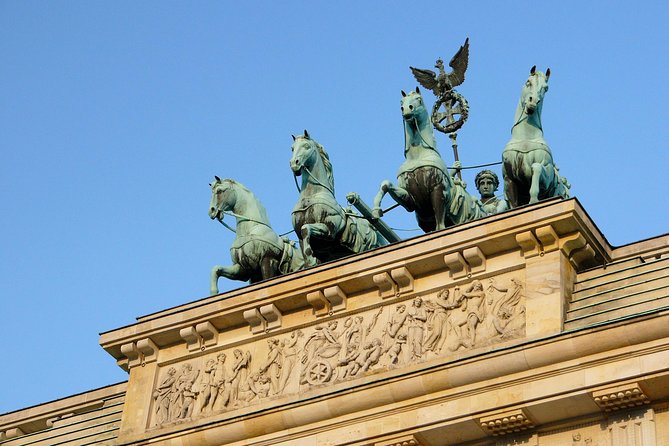
Then you move to the Brandenburg Gate, one of Berlin’s best-known monuments. The tour explains how it functioned as a symbol of division between Berlin and Germany during the Cold War, and how it is now framed as a national symbol of peace and unity. It is a powerful contrast, and it works even if you only remember a few images from history films.
More Third Reich history tours:
- Berlin’s Best: 2 Hour Walking Tour Third Reich and the Cold War
★ 5.0 · 5,486 reviews - Third Reich Berlin: Hitler and WWII Walking Tour
★ 5.0 · 3,301 reviews - Berlin: Third Reich, Hitler, and WWII Walking Tour
★ 4.9 · 1,757 reviews - Berlin Third Reich Sites: Half-Day Walking Tour
★ 5.0 · 835 reviews
How to get more from these quick stops
Because these are brief stops, your best move is to decide what you want to ask your guide right away. If WWII is your focus, ask about how opposition and resistance show up in Berlin’s story. If Cold War is your focus, ask how a monument like the Brandenburg Gate got repurposed in the public memory.
The Holocaust Memorial: Why This Place Changes the Tone of the Tour
A few minutes’ walk brings you to the Memorial to the Murdered Jews of Europe. This stop is built for seriousness, not quick sightseeing. The memorial is made up of 2,711 concrete slabs arranged in a grid, and the varying heights create a deliberately disorienting landscape.
What makes it more than a photo stop is the underground information center beneath the field of stelae. The guide uses that space to provide historical context and personal accounts of the atrocities committed during World War II. It is one of those moments where the tour shifts from timeline to impact.
You typically spend about 15 minutes here, and it is long enough for the guide’s framing to land. If you are the type who needs time to absorb quietly, this is where you can pause and let the place do its work.
A practical tip for this stop
Wear shoes you can stand in comfortably. The memorial is mostly open space, and because you are walking a lot during the whole tour, you will be grateful for the right footwear here.
Fuhrerbunker, Reich Air Ministry, and Topography of Terror: Where Nazi Power Leaves Physical Traces
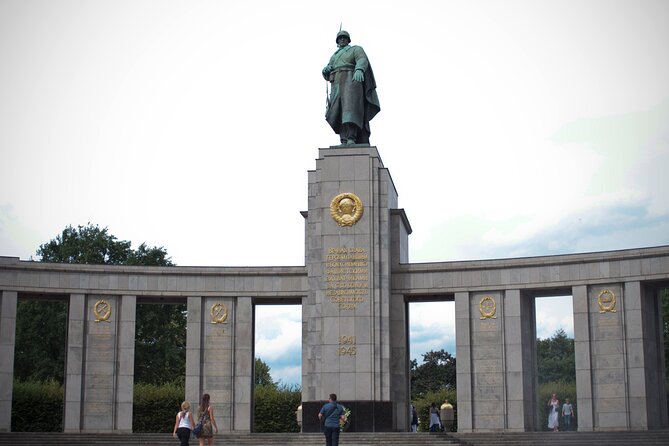
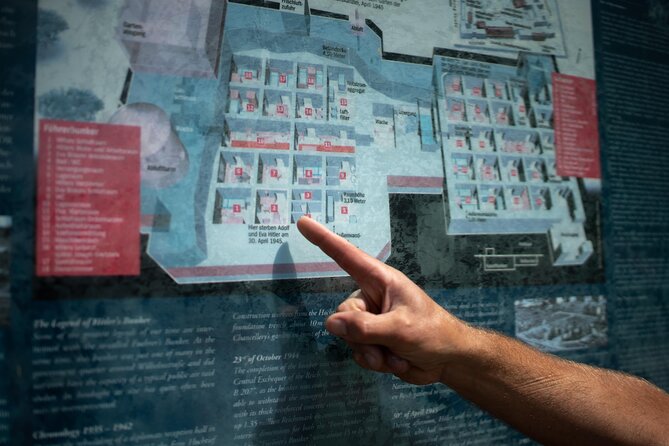
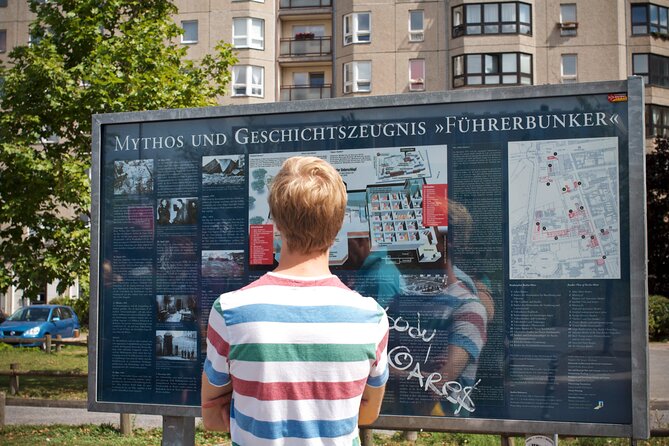
After the memorial, the tour moves deeper into WWII-era Berlin. One stop is at Fuhrerbunker, where you get insight into the history that made Berlin what it became. The guide frames it as the epicenter of the Nazi regime.
Next comes the Aviation Ministry of Berlin, also described as the Reich Air Ministry. This is a major architectural reminder of how the Nazi regime tried to project power. It was completed in 1936 and linked to Hermann Göring and the Luftwaffe. The building housed Luftwaffe headquarters during WWII, and it survived damage well enough to be repurposed later.
The tour then points you to Topography of Terror. This location is tied to the HQ of the SS, Gestapo, and the SD during the Nazi period. Today, it is an exhibition space that focuses on perpetrators during that dark chapter of German history.
Why these stops matter even if you have museum experience
Not everyone in Berlin is a museum person, and that is where this itinerary helps. You are not only looking at objects inside; you are standing near places where power systems operated. Even the short visit times, about 10 to 15 minutes each, are designed to connect the dots between ideology, bureaucracy, and terror.
Also, this is where pacing and guide style become extra important. In the feedback, people repeatedly praise guides for staying patient with questions and keeping the tour organized. If you like back-and-forth discussion, this is a great section of the walk to use that time.
Checkpoint Charlie and Tränenpalast: The Cold War as a Story of Separation
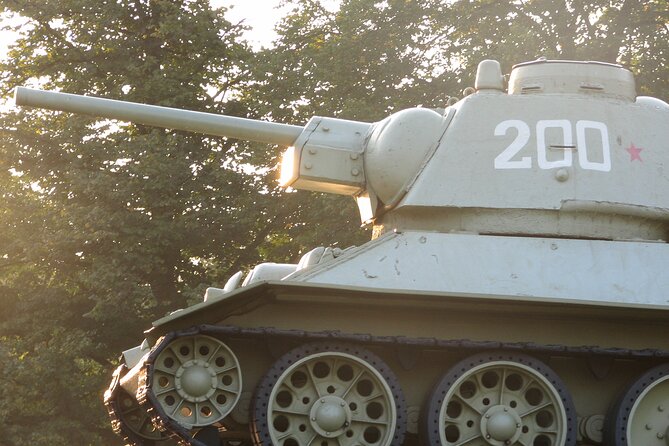
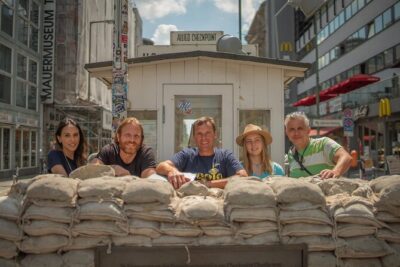
Then the tour shifts to the Cold War spine of Berlin. Checkpoint Charlie is next, and it is one of the most iconic symbols of East-West division. The tour explains its role as the most famous border crossing between East and West Berlin during the Cold War.
You get a specific Cold War moment, too: the 1961 standoff involving American and Soviet tanks, a confrontation that brought the world close to war. The guide also connects that drama to human stories like espionage, daring escape attempts, and the human cost of division that separated families and friends.
From there, you walk to Tränenpalast, the Palace of Tears, at Friedrichstrasse Station. Between 1961 and 1989, it served as a departure hall for East Germans crossing into West Berlin. The name comes from the sorrowful goodbyes forced by strict travel restrictions under the Berlin Wall, with many people never seeing each other again.
Today, the Palace of Tears houses a museum focused on the history of the Berlin Wall and personal stories from those who lived through the division. You spend about 20 minutes here, which gives the guide time to connect the emotional reality to the larger political structure.
How to prepare your mind for this section
This is emotionally heavy history. If you find it hard to absorb intense topics back-to-back, tell your guide early. A good guide will adjust pacing, and the tour’s private nature makes that easier.
Tempelhofer Feld and Bernauer Strasse: From WWII to the Berlin Airlift, then to the Wall’s Traps
Next is Tempelhofer Feld, an old Nazi airport that was used by the Allies during the Berlin airlift in 1948 and 1949. The tour notes that it is no longer functioning as an airport, and today it is used as a huge open space and playground.
This stop is about contrast. You go from WWII sites into a place tied to the airlift, then into a public space where Berliners can simply be outside. Time here is around 20 minutes, and the scale of Tempelhofer Feld helps it feel like more than another quick waypoint.
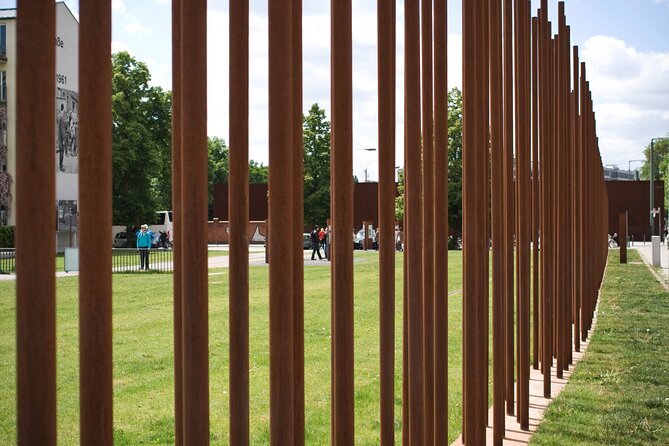
Then the tour reaches Bernauer Strasse and the Memorial of the Berlin Wall. This is one of the most moving “Wall” sections because the tour explains how the street was split when the Wall was erected in 1961. East Berlin residents were trapped while neighbors in the West could look on.
You also hear about escape attempts that happened from this area, including Tunnel 29 and Tunnel 57. Tunnel 29, built in 1962, allowed 29 people to flee to West Berlin. Tunnel 57, constructed in 1970, helped 57 people escape via a narrow tunnel beneath the Wall.
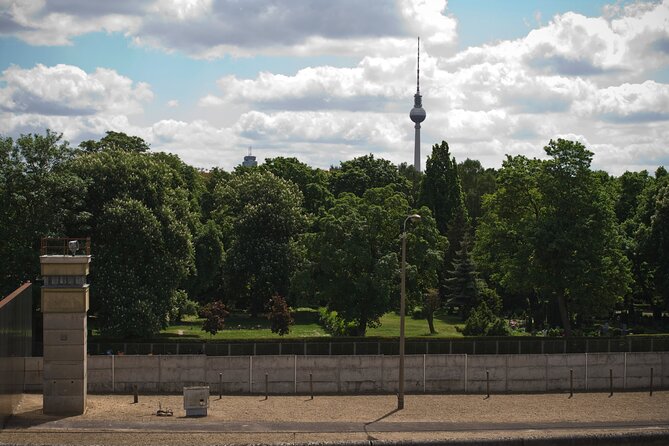
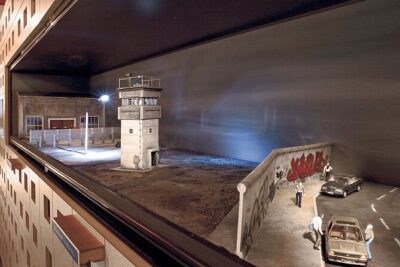
At the Berlin Wall Memorial, you see sections of the Wall, a watchtower, and a documentation center. This stop typically runs about 25 minutes, which is enough time to let the guide’s stories turn into something you can picture clearly.
The best way to make Tunnel stories stick
Ask your guide to explain how the entrances and timing worked in general terms. You do not need technical detail to understand the risk, but you do want to grasp the basic idea of how people tried to escape and what that meant for their families and communities.
Prenzlauer Berg to East Side Gallery: Stasi Prison Memory to the Wall’s Art Afterlife
After Bernauer Strasse, the tour moves toward Prenzlauer Berg. Here you visit a former NKVD prison, described as a precursor to the KGB, which was later used by the East German secret police, the Stasi. The guide explains methods used to extract information, and you also get a look at how the site is used today and how Germany comes to terms with its destructive past.
This stop is about 10 minutes, but it carries weight because it shifts the conversation from physical barriers to what happened behind closed walls. It is also a good moment for questions, since it is the kind of topic where people naturally want clarity on terms and roles.
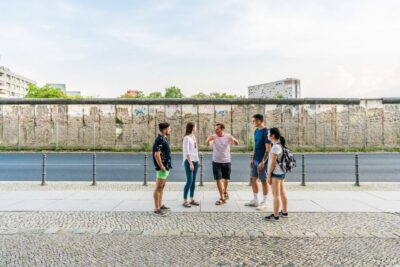
Finally, the tour ends with East Side Gallery. This is described as the longest permanent open air graffiti wall in the world, and it is also the longest piece of the Berlin Wall still standing. You walk along the murals and hear about themes like justice and freedom.
This is usually about 15 minutes. It also acts like a release valve at the end of a tour that has been heavy since the Holocaust Memorial.
Why ending with the East Side Gallery helps
A lot of people end up thinking of the Wall only as a barrier. Ending here helps you see how Berlin kept moving forward, even while remembering what happened.
Price and Logistics: Does It Really Offer Value at About $192.97 Per Person?
At $192.97 per person for 3 to 4 hours, this is not a budget activity. You are paying for a private walking experience that includes a professional guide plus hotel pickup and drop-off.
What makes it feel more reasonable is that the itinerary is packed with major sites. You also have an important cost detail: the stops are listed with admission ticket free. That means you are mostly paying for interpretation, not entry fees to multiple paid attractions.
Still, it is worth being honest about the tradeoffs. It is a walking tour, so you will be on your feet for a long stretch. Food and drinks are not included, so you should plan a snack if you expect to feel hungry. And because it is a history-heavy route, you will get the most out of it if you actually want that WWII and Cold War framing.
Who this tour suits best
This is ideal for you if:
- you want a clear, guided path through Berlin’s biggest WWII and Cold War sites
- you like asking questions and having a guide adjust pace
- you are visiting your first full day and want a framework for the rest of your trip
It may feel less ideal if:
- you prefer relaxed, slow sightseeing without intense context
- you want more time sitting in indoor exhibits than walking between stops
Who Your Guide Might Be, and Why That Changes Everything
One reason people rate this tour so highly is the human side. Feedback repeatedly praises guides for being friendly, professional, and enthusiastic. People also mention that guides listen first, then tailor the route so it fits the questions the group actually has.
Names that show up in the feedback include Hannah, Emma, Glen, Daniel, Ariel, Jamie G, Klaus, Maria, Jim, Peter, Rohan, and Joerg. Joerg is specifically mentioned for bringing a picture book that helped make the history easier to understand, and several people mention that guides adjusted pacing when needed.
That is the practical point for you: on a topic-heavy tour, the guide is the difference between seeing locations and understanding them.
Should You Book This WWII and Cold War Berlin Walking Tour?
If you want Berlin history that connects the dots quickly, this is a strong choice. The route hits the essentials, and the private format lets you shift from Nazi-era storylines to Cold War division storylines based on your interests. I would especially recommend it for first-time visitors who want a guided framework for the rest of their trip.
I would not book it if you are hunting for light sightseeing with minimal walking. Also, if you are not interested in WWII and Cold War history, the memorial and security-era stops will feel heavy rather than rewarding.
Overall, this tour offers good value for what you get: hotel pickup and drop-off, a guide who adapts, and a concentrated half-day route through Berlin’s most meaningful places.
FAQ
How long is the private walking tour?
It runs about 3 to 4 hours.
How much does the tour cost?
The price is $192.97 per person.
Is it offered in English?
Yes, it is offered in English.
Is this tour private?
Yes. It is private, so only your group participates.
Where do you meet, and do you get hotel pickup?
You meet your guide with a hotel lobby meet and greet, and hotel pickup and drop-off are included.
Are meals included?
No. Food and drinks are not included.
Can I customize the tour between WWII and Cold War sites?
Yes. You can choose to focus on World War II or Cold War history, or request a combination.
Are there admission tickets to pay for the stops?
The itinerary lists admission ticket free at the listed stops.
Can I cancel for a full refund?
Yes. You can cancel up to 24 hours in advance for a full refund.
More Berlin Wall and Cold War history
- Berlin: DDR Museum Tickets
★ 4.3 · 3,443 reviews - Skip-the-Line: Berlin Wall Museum at Checkpoint Charlie
★ 4.1 · 2,041 reviews - Berlin: East Side Gallery Spree Cruise in a Solar Catamaran
★ 4.1 · 1,086 reviews - Cold War, Berlin Wall, Spies and the East Side Gallery
★ 5.0 · 1,024 reviews
Fresh reviews out of Berlin
- Berlin Uncensored: A History of Sex & Freedom★ 5.0 · 50 reviews
- Berlin Food & Cultural Tour: Must-Try German & Berliner Classics★ 5.0 · 51 reviews
- English Comedy Show with Pizza and Shots in Central Berlin★ 4.5 · 51 reviews
- Rude Bastards Tour of Berlin★ 4.8 · 51 reviews
- Private Taxi Tour of Berlin East and West and Neighbourhood approx. 4-6h★ 5.0 · 55 reviews
- Rickshaw Sightseeing City Tours Berlin – Rikscha Tours★ 4.0 · 55 reviews
- Berlin: City Highlights Express & Panorama Roof Terrace★ 4.9 · 55 reviews
- Berlin during Nazism – Tour in Italian★ 5.0 · 56 reviews
Berlin Wall & Cold War Tours, compared.
Berlin’s Best: 2 Hour Walking Tour Third Reich and the Cold War
Read our review →
Skip-the-Line: Berlin Wall Museum at Checkpoint Charlie
Read our review →
East Side Gallery Spree Cruise in a Solar Catamaran
Read our review →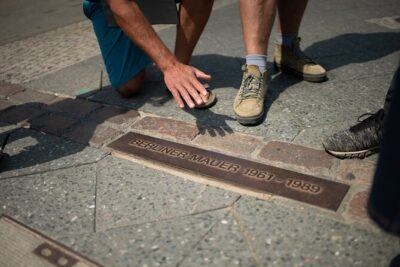
Cold War, Berlin Wall, Spies and the East Side Gallery
Read our review →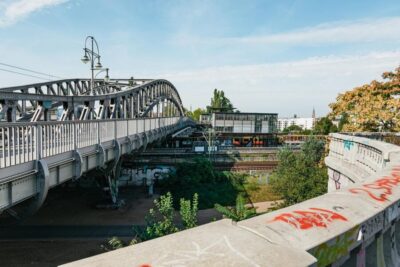
Browse the lists this tour appears in