
Reviewed · BERLIN WALL & COLD WAR TOURS
Berlin Wall History Small Group Cycling Tour
Following the Berlin Wall by bicycle is interesting because you ride the same kind of route the border divided, and you still catch real traces in the city fabric. It is one of those Berlin experiences where the stories feel close, from the last watchtowers to parts of the so-called Death Strip.
I love that this is a small group ride, limited to 8 people, so you can hear the guide without noise taking over your head. I also love the focused route that starts at Bornholmer Straße and strings together major memorial areas with practical bike segments.
One consideration: very little of the wall is still standing, so you will be reading the city with the help of context and physical traces. Also, the tour guide speaks German only, so you’ll want basic German comfort or just be ready for a lot of visual learning.
Key highlights you will care about
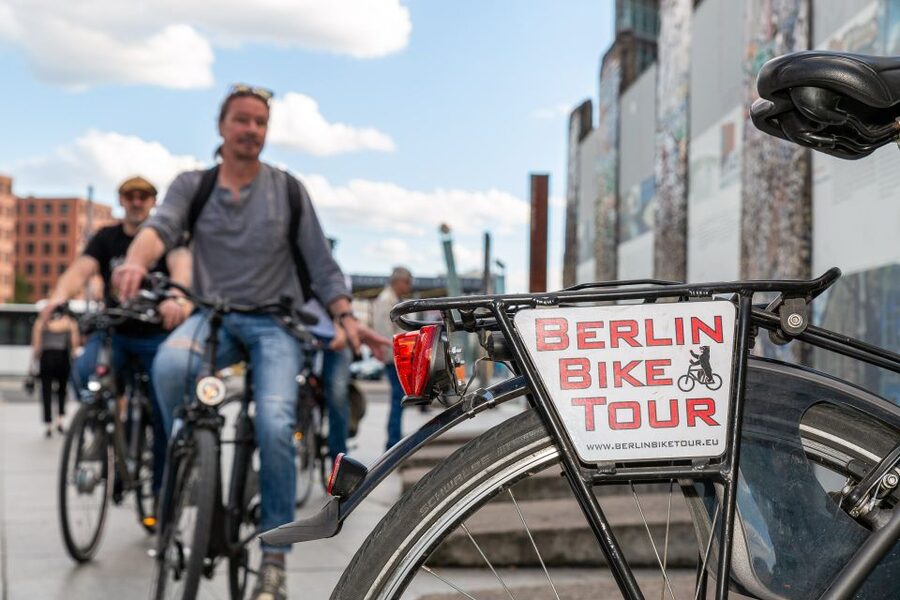
- Small group pace with a max of 8 people, built for questions and real listening
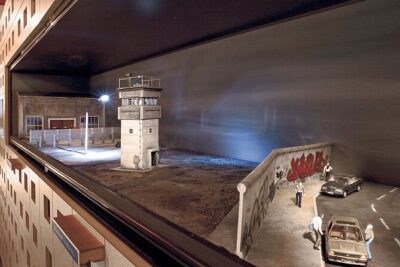
- Bornholmer Straße border crossing plus the original watchtower and Death Strip traces
- Bernauer Straße Wall Memorials where the tragedy is explained in street-level detail
- Chausseestraße ghost-station and border-crossing area for a chilling Cold War snapshot
- Invaliden Graveyard and Invalidenstraße crossing to see how the border marked lives and space
- Brandenburg Gate, Checkpoint Charlie, and Friedrichstraße including the Tränenpalast (Palace of Tears)
A 4-hour Berlin Wall ride you can actually feel
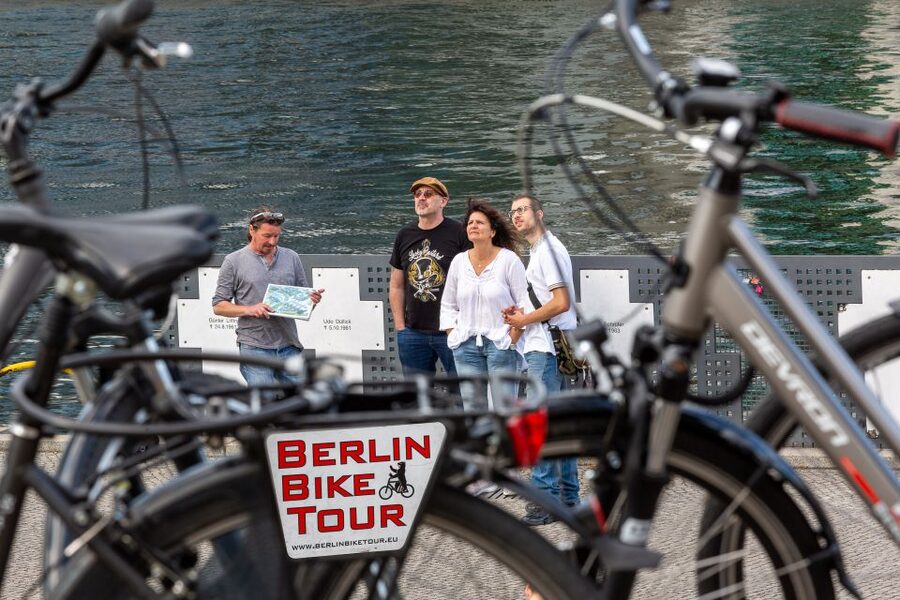
Berlin has plenty of monuments. This tour adds something different: motion. When you cycle along the old border line, the city stops being a postcard and starts being a story you move through. Even when the wall itself is mostly gone, the guide points out the surviving clues, so you can understand where the separation was tightest, and where it shaped everyday life.
I like that the tour keeps a clear structure. You start where the border finally opened, then work outward to the memorial points that show what the wall meant day to day. And because it is a short 4 hours, you are not stuck doing museum-only fatigue. You get the key emotional beats with enough energy left for wandering afterward.
This is also a practical way to learn Berlin. The route covers a lot of central sights in one loop, without you having to stitch together trams, tickets, and guesswork. You just show up, get a bike, and ride with a guide.
More Bike Tours in Berlin
- Berlin: Sights and Highlights Bike Tour with a Local Guide
★ 4.8 · 2,698 reviews - Berlin Highlights 3-Hour Bike Tour
★ 5.0 · 948 reviews - Berlin City Bike Tour with Beer Garden Stop
★ 5.0 · 917 reviews
Getting to 75 Bornholmer Straße and what to bring
The meeting point is easy to find: 75 Bornholmer Straße, Berlin 10439. The tour ends back at the same spot, so you are not dealing with a one-way travel headache.
If you are coming by public transport, you are close to several stops. It’s about 1 minute on foot from tram-stop Björnsonstraße (lines M1, M13, M50), around 2 minutes from S-Bahn station Bornholmer Straße (lines S1, S2, S8, S25, S85), and roughly 10 minutes on foot from the S-Bahn/U-Bahn station Schönhauser Allee (lines S8, S41, S42, S85, U2). That flexibility matters in Berlin, where plans can change fast.
Bring what you need for cycling outdoors. The tour asks for your passport or ID card, plus sunglasses and a sun hat if the weather is bright. A camera helps too, since you will be looking for details in walls, signage, and street-level traces.
Two small rules can affect your comfort. No luggage or large bags are allowed, so travel light. And the tour runs in all weather, with a rain poncho provided if needed, so pack for wet or cool conditions even if the forecast looks friendly.
The ride starts at the Square of 9th November 1989
Right away, you are placed at the moment when the story flips from locked to open. The tour begins at the Square of the 9th November 1989, where the first East German citizens crossed the border. That sets the emotional tone in a way that a museum plaque never can. You can stand there and feel how sudden the change was, before you bike into the hard edges of what came before.
From there, you move into the Bornholmer Straße area, which the route uses as a launching point into the border system. You do not just see a spot on a map. You learn why this location mattered, and you also get the kind of street-level observations that make Berlin stick in your mind. For example, the tour includes the story of how cherry trees came to be grown on Bornholmer Straße. It sounds simple, but it is exactly the point: the city reuses space that once enforced separation.
You will also see the original watchtower and the death-strip traces. This is one of those parts where the guide’s pace matters. If you rush, you miss the tiny cues. If you slow down, you start to understand how the border was designed for control.
You are cycling in a small group, so you can ask questions and hear explanations without a wall of sound. Guides on this tour, including names you may hear like Marcus or Kathrin, are known for turning the factual stuff into something you can picture. That is the difference between reading history and understanding it.
Bornholmer Straße to Mauerpark: from border control to city life
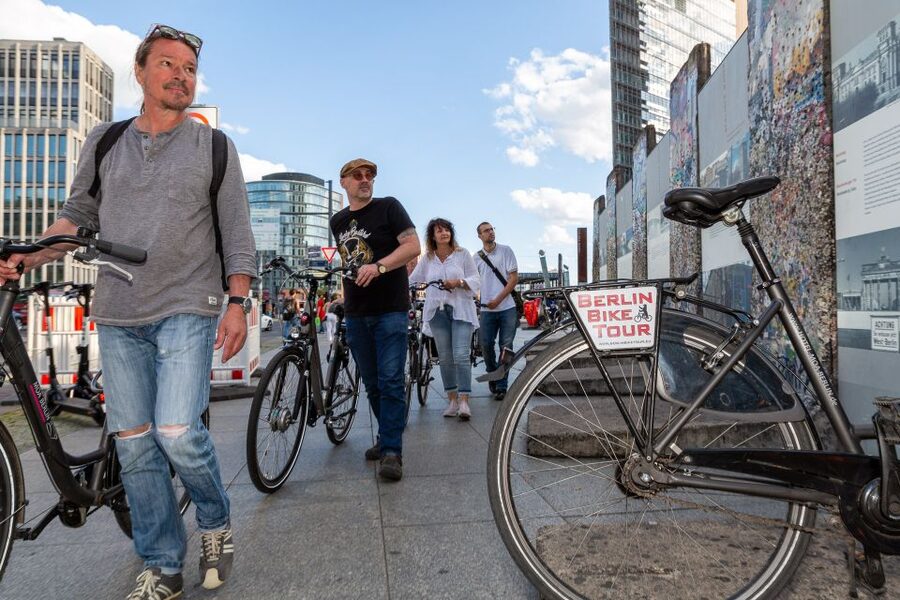
After the initial border story, you cross at the former border-control point at Bornholmer Straße and cycle through Mauerpark. This section is a reality check. Berlin does not keep the past behind fences forever. It repurposes space, and people live on top of layers of meaning.
Mauerpark works well after the more intense memorial details because it shows what replaces a border. You get distance, not denial. The guide’s job here is to keep the connection clear, so the change from Death Strip traces to everyday city movement still makes emotional sense.
Also, do not ignore the guide’s little visual cues. You will follow pictures of rabbits on the ground along the route. That kind of detail sounds playful, but it’s practical too. It helps you keep your attention on the route line, so you do not lose the thread while biking through central streets.
More Historical Tours in Berlin
- Berlin: Natural History Museum Entrance Ticket
★ 4.6 · 3,382 reviews - Berlin: 3-Hour World Heritage Cruise to Potsdam
★ 4.5 · 1,569 reviews - Berlin: History of the Third Reich Guided Walking Tour
★ 4.7 · 791 reviews - Berlin Historical Highlights Walking Tour
★ 4.9 · 657 reviews
Bernauer Straße Wall Memorials: seeing the wall in fragments
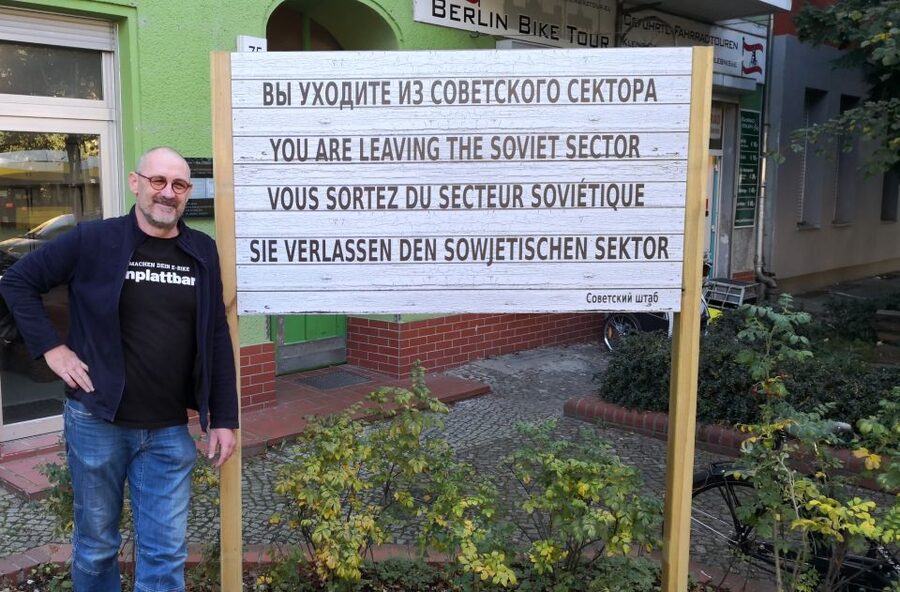
Next comes Bernauer Straße, one of the most important memorial stretches linked to the Berlin Wall. The guide focuses on the Wall Memorials here, and this is where you see how the wall’s story is told when most of the structure is gone.
You’ll learn what was happening in the area and why people tried to escape. The guide also brings the human side, since this is where tragedy is part of the physical layout. In a place like this, the bike helps because you can cover ground quickly, but the guide will still slow you down at key points where details matter.
One reason this stop is so effective is that you are not just seeing a single viewpoint. You are learning how the wall, buildings, and street configuration worked together. The memorial pieces help you understand why this area became so symbolic, even after so much reconstruction and change.
If you like learning through imagery and physical traces, this is a strong segment. If you need to see the actual wall standing tall to feel moved, be ready for a different style here. The emotional weight still lands, but you experience it through what remains and what the guide reconstructs with explanation.
Chausseestraße ghost station and the border-crossing area
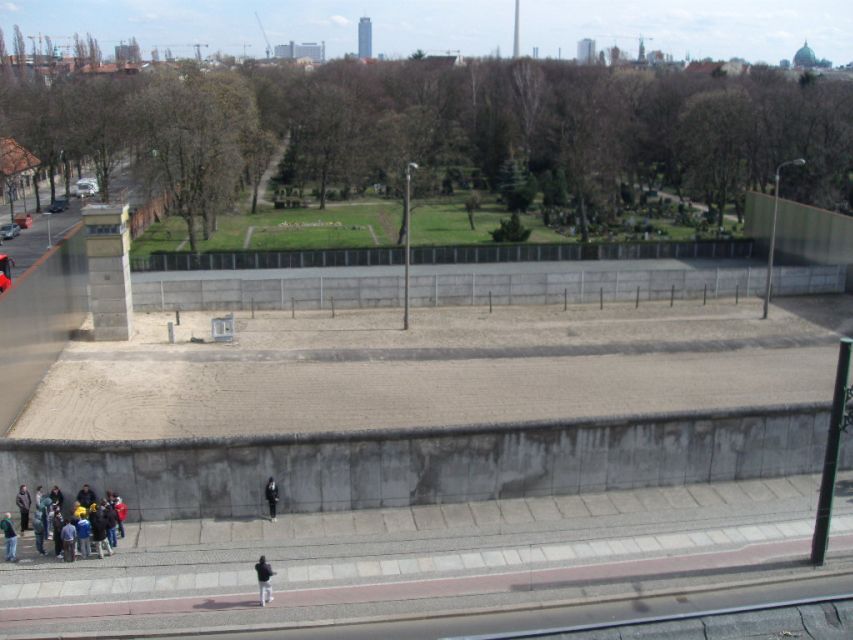
Then you shift to Chausseestraße, which includes the ghost-station and the border-crossing area. This is the Cold War side of Berlin that feels haunting, because you are looking at systems, not just symbols.
The term ghost-station fits the mood. You can see how a transit space can become part of a control mechanism. With the guide pointing things out, the station area stops being just architecture and starts reading like a message the state sent every day.
This stop also does something valuable for pacing. After Bernauer Straße, you get another strong emotional hit, and then the ride keeps moving. That avoids the all-day overload problem. You get the big ideas in a human timeframe.
A helpful tip: take a moment to look up and around, not only at the ground-level clues. The border story includes buildings, lines of sight, and street angles. When you scan the wider scene, the guide’s explanations connect more easily.
Invaliden Graveyard and Invalidenstraße crossing: where space carries loss
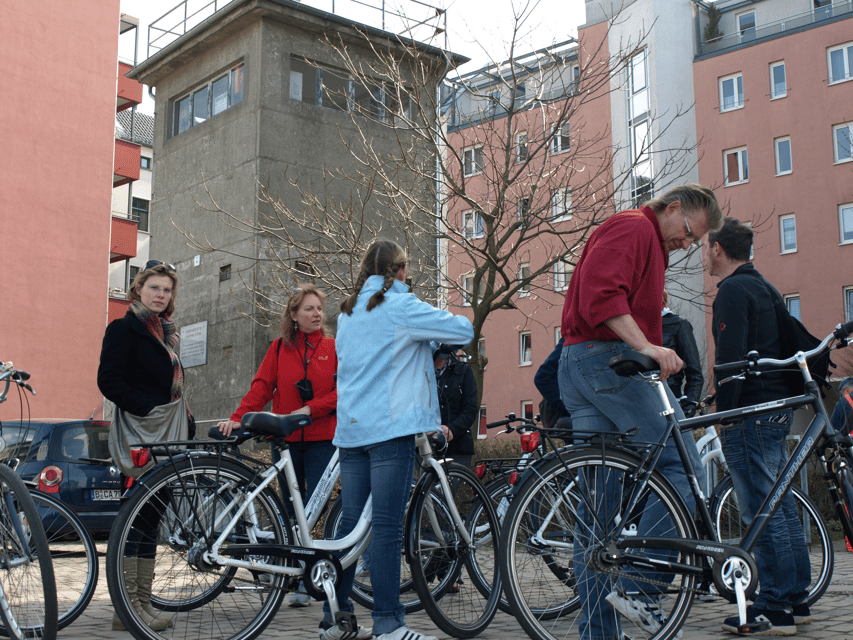
The tour then moves into the area of the Invaliden Graveyard, plus you see the former border-crossing at Invalidenstraße. This section is heavy in tone, and that is exactly why it belongs in a cycle route. You are not stuck in one spot. The ride gives you tiny breaks while keeping you inside the same historical storyline.
What I like here is that the guide connects geography to consequence. The border did not just control movement. It shaped how people were remembered and how space was used after the fact.
Invaliden Graveyard helps you understand that the border was not only a political line. It was also something that touched bodies, families, and dates on graves. In a city that has moved forward fast, the memorial nature of places like this is a reminder to slow down, even for a moment.
If you are sensitive to tragic stories, tell yourself up front that this part is part of the deal. This tour includes tragic and fateful stories. You’ll be guided, but you may still feel the weight.
Government Bank, the Parliament of Trees, and the politics of planning
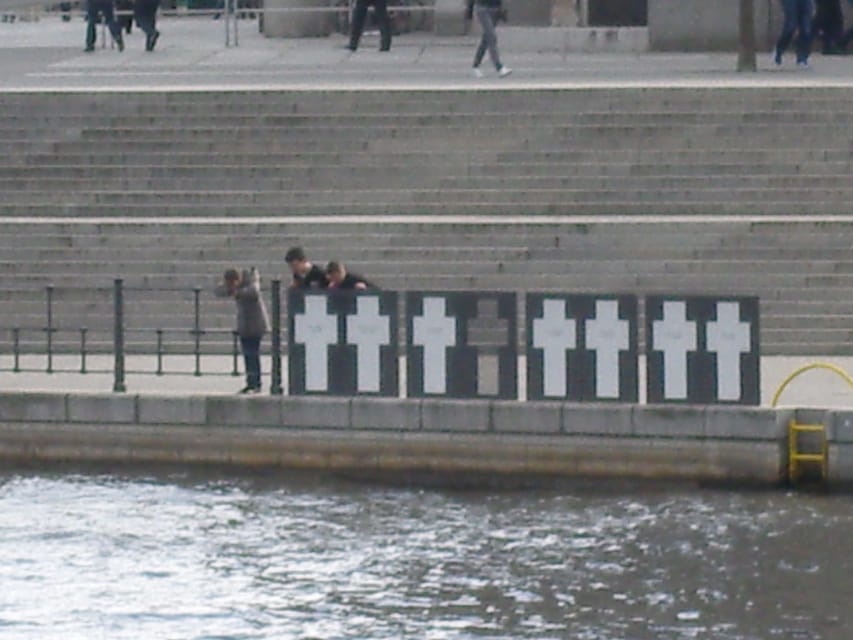
After the more solemn sites, you ride along the Government Bank to the Parliament of Trees. This segment shifts the emotional register without losing the thread. It is about how governments shape space, and how Berlin’s border era still influences what is built and preserved.
The Parliament of Trees area works like a breather that still keeps meaning. You get movement, open sightlines, and a calmer setting after memorial intensity. It also helps you understand that Berlin is not frozen in the Cold War. It is a living city where ideas about power, representation, and public space changed as the wall disappeared.
This portion is also a useful time for practical thinking. If you need to adjust what you pack, refill water, or just take a breath, this is where you can do it mentally while still staying on route.
Brandenburg Gate, Potsdamer Platz, Checkpoint Charlie, and Tränenpalast
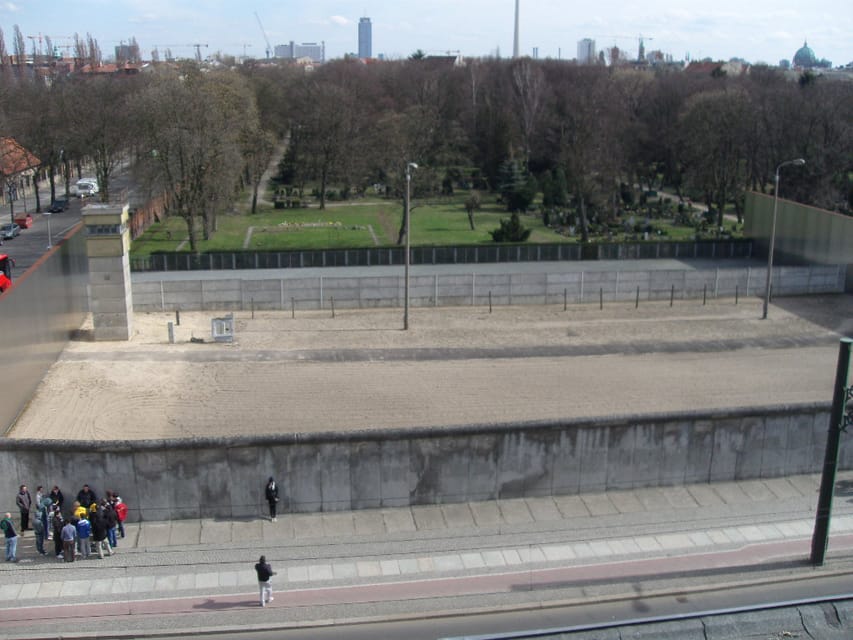
Now you bring the story into the most recognizable center of Berlin. You bike through the route that links the Brandenburg Gate, Potsdamer Platz, and Checkpoint Charlie. This is where many first-time visitors want to be, and the tour makes it feel connected instead of random sightseeing.
You also reach the Tränenpalast on Friedrichstraße, known as the Palace of Tears. This stop is powerful because it puts emotion into an actual place name. A border is not only checkpoints and fences. It is waiting, separation, and sometimes failure. The guide’s job is to help you see why this building type and this location became symbolic for the pain of leaving and not knowing what comes next.
Along the way on Friedrichstraße, you ride past several key sights, including the Friedrichstadt Palace, Museum Island, the New Synagogue, and the Old Berlin Post Office. The ride timing matters here. You get glimpses of major landmarks while still holding the historical narrative in your mind.
If you plan to keep exploring afterward, this is the part that sets up your evening. You’ll know where things are, and you’ll understand how the border line influenced movement through the city.
Price and value: what $36 buys you in real time
The price is $36 per person, and that is the part where value matters. You are not just paying for a guide talking at you. The tour includes a bicycle, fees, and a city guide, plus a rain poncho if the weather turns.
In 4 hours, you cover a lot of ground across multiple high-signal stops tied to the Berlin Wall story, from Bornholmer Straße to Bernauer Straße, Chausseestraße, Invalidenstraße, and then central icons like Checkpoint Charlie and the Brandenburg Gate. For many visitors, the hard part of this kind of itinerary is logistics. You’d spend time figuring out how to get between sites and where to park your focus. Here, the route is already solved.
The only obvious trade-off is that food and drink are not included, so you’ll want to think about a snack before or after. Also, because it is guided in German, your understanding depends on your comfort level. The bike and the route help a lot, but language still matters.
Overall, $36 feels fair for a structured 4-hour guided ride that handles both the historic storytelling and the city navigation.
Who this tour fits best
This tour is ideal if you want Berlin Wall context without turning your day into a museum marathon. It also fits you if you like learning by moving, since cycling makes the route feel logical and keeps your brain engaged.
It is especially good if you care about the border system beyond just one famous spot. You get a chain of locations, not a single photo stop. The memorials and former crossings are connected, so the story builds instead of repeating.
If you are traveling with family, keep in mind the tour is 4 hours and includes memorial areas and tragic stories. For people who prefer low-impact walking only, cycling might be a downside. For most adults who can ride a bike comfortably, the format is a smart match for Berlin.
If you read better in visuals than in language, lean into the guide’s pointed observations. And if your German is limited, choose a mindset of learning with your eyes as much as your ears.
Should you book this Berlin Wall cycling tour?
Yes, if you want a short, efficient, and emotionally guided way to understand the Berlin Wall’s path and impact. The small group size, the practical bicycle format, and the set of high-importance stops make it a strong value.
Book it if you like guides who keep things relaxed while still delivering sharp facts and personal insights, which is exactly the style you’ll often associate with guides such as Marcus and Kathrin. Skip it if German-only narration is a dealbreaker for you, or if you need the wall to be physically visible everywhere to feel satisfied. Here, you’re learning from traces, memorials, and the way streets remember what happened.
If you want Berlin Wall history that you can ride, not just read, this is a solid choice.
FAQ
How long is the Berlin Wall history small group cycling tour?
It lasts 4 hours.
What is the group size for this cycling tour?
The group is small, with a minimum of 3 participants and a maximum of 8 participants.
What does the tour price include?
The tour includes a bicycle, fees, a city guide, and a rain poncho if necessary.
Where do I meet the guide?
Meet your guide at 75 Bornholmer Straße, Berlin 10439. The tour ends back at the same meeting point.
Is food or drink included?
No, food and drink are not included.
Is the tour guide available in English?
The live tour guide is German.
More Berlin Wall and Cold War history
- Berlin: Third Reich and Cold War 2 Hour Walking Tour
★ 4.9 · 6,830 reviews - Berlin’s Best: 2 Hour Walking Tour Third Reich and the Cold War
★ 5.0 · 5,486 reviews - Berlin: DDR Museum Tickets
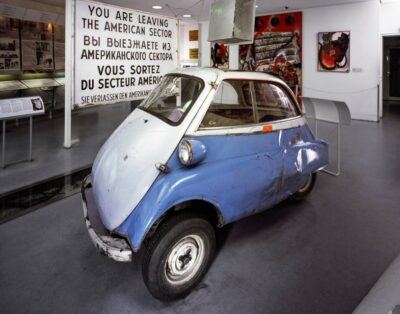
★ 4.3 · 3,443 reviews - Skip-the-Line: Berlin Wall Museum at Checkpoint Charlie
★ 4.1 · 2,041 reviews
Fresh reviews out of Berlin
- Berlin Uncensored: A History of Sex & Freedom★ 5.0 · 50 reviews
- Berlin Food & Cultural Tour: Must-Try German & Berliner Classics★ 5.0 · 51 reviews
- English Comedy Show with Pizza and Shots in Central Berlin★ 4.5 · 51 reviews
- Rude Bastards Tour of Berlin★ 4.8 · 51 reviews
- Private Taxi Tour of Berlin East and West and Neighbourhood approx. 4-6h★ 5.0 · 55 reviews
- Rickshaw Sightseeing City Tours Berlin – Rikscha Tours★ 4.0 · 55 reviews
- Berlin: City Highlights Express & Panorama Roof Terrace★ 4.9 · 55 reviews
- Berlin during Nazism – Tour in Italian★ 5.0 · 56 reviews
Berlin Wall & Cold War Tours, compared.
Berlin’s Best: 2 Hour Walking Tour Third Reich and the Cold War
Read our review →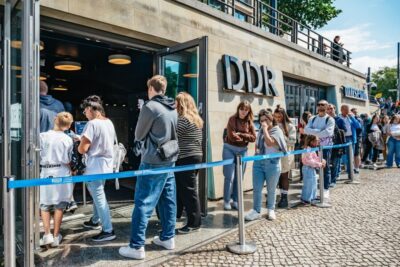
Skip-the-Line: Berlin Wall Museum at Checkpoint Charlie
Read our review →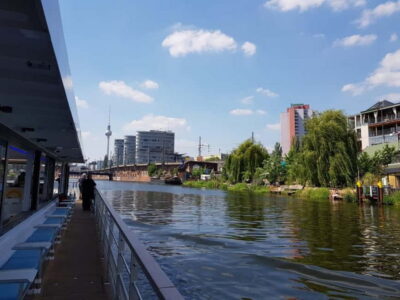
East Side Gallery Spree Cruise in a Solar Catamaran
Read our review →
Cold War, Berlin Wall, Spies and the East Side Gallery
Read our review →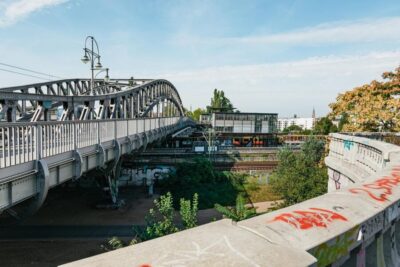
Browse the lists this tour appears in