
Reviewed · THIRD REICH & WWII TOURS
Berlin: Jewish Walking Tour including World War II
Berlin’s Jewish story is told in streets you can actually stand on, with synagogues, cemeteries, and memorials turning history into something you can picture. This walking tour connects the community’s golden days to what happened in World War II, without turning the whole subject into a museum lecture.
I especially love how the tour uses Mitte to explain why Jewish life in Berlin clustered where it did, and how that geography changed over time. I also like that your guide, Tal, is a certified Berlin guide with both a Berlin expert’s instincts and serious academic perspective, including work related to the Charité Hospital’s role in the 1930s and 1940s. The one drawback to plan for is that this is a heavy theme in multiple places, so come ready to absorb difficult material, and expect a solid walk for about 3.5 to 4 hours.
Key highlights that make this tour worth your time
- Hackescher Markt storytelling that explains why this area mattered for Jewish institutions and arrivals from the east
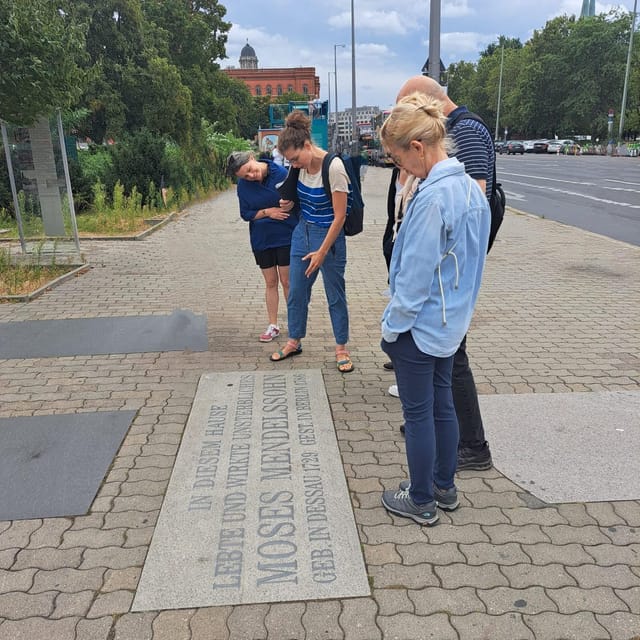
- Moses Mendelssohn context tied to real places, including the Old Jewish Cemetery where he is buried
- Otto Weidt Workshop for the Blind plus the human courage story behind it
- A 1943 women’s protest memorial (Rosentalstraße) that adds depth to the WWII portion
- Synagogues on the map including the New Synagogue area and the site connections to earlier community worship
- You can steer the focus, with customization based on what you most want to see
Walking where Berlin’s Jewish community actually lived and worshipped
If you’ve been to Berlin before, you know the city has a talent for looking like it swallowed its own past. It’s brick and modern glass today, but underneath, there are layers, and this tour helps you read them.
You start in Mitte, around Hackescher Markt, which makes sense. Jewish community life in Berlin was tightly linked to urban planning, where institutions could be built, and where people could live, pray, work, and study. Your guide does not treat that as trivia. You’ll see how the community’s choices and restrictions shaped the map, and how the map shaped everyday life.
And this is where Tal’s style really helps. The tour is structured, but not robotic. It has personal stories and clear explanations, which is exactly what you need when the subject matter spans centuries and includes both major achievements and unspeakable tragedy.
More Walking Tours in Berlin
- Discover Berlin Half-Day Walking Tour
★ 5.0 · 9,624 reviews - Berlin: Third Reich and Cold War 2 Hour Walking Tour
★ 4.9 · 6,830 reviews - Berlin: Discover Berlin Walking Tour
★ 4.9 · 5,998 reviews
Hackescher Markt: the neighborhood that ties the early re establishment to later arrivals
The tour begins at Starbucks in Mitte, which is an easy meeting point and a practical way to start your bearings. From there, you head straight to Hackescher Markt, and the guide frames it as a focal point for community institutions.
You’ll learn about the re-establishment of Jewish life in Berlin in the second half of the 17th century, and the role of major figures such as Moses Mendelssohn. The point is not just who he was, but what kind of momentum he represented. When the community rebuilt itself, it wasn’t only spiritual. It was social, educational, and cultural too.
Then the narrative widens to how Berlin changed as Jewish people came in from Eastern Europe. You’ll hear about the move to the west of the city and the arrival of the Ostjuden. That shift matters because it affected community dynamics, not just demographics. If you’ve wondered why different groups within a community sometimes clashed or felt tension, this is where the tour gives you language for it. You’ll also understand why the arrival of new groups could create embarrassment or discomfort among some German Jews, while others saw it as renewal and solidarity.
You’ll cover this area at a walking pace that makes sense for absorbing context. If you’re sensitive to long stretches of walking, plan for comfortable shoes and frequent hydration, because you are moving for most of the full half day.
The 1943 women’s protest memorial and the meaning of resistance
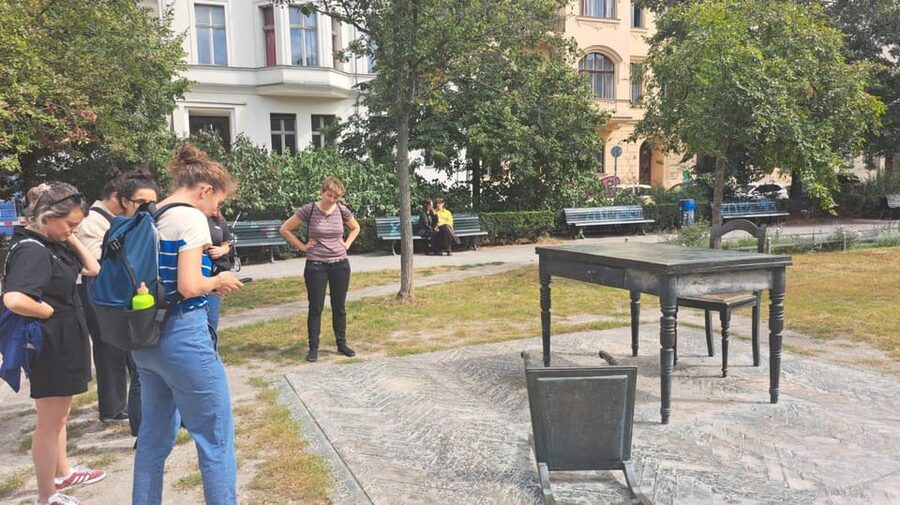
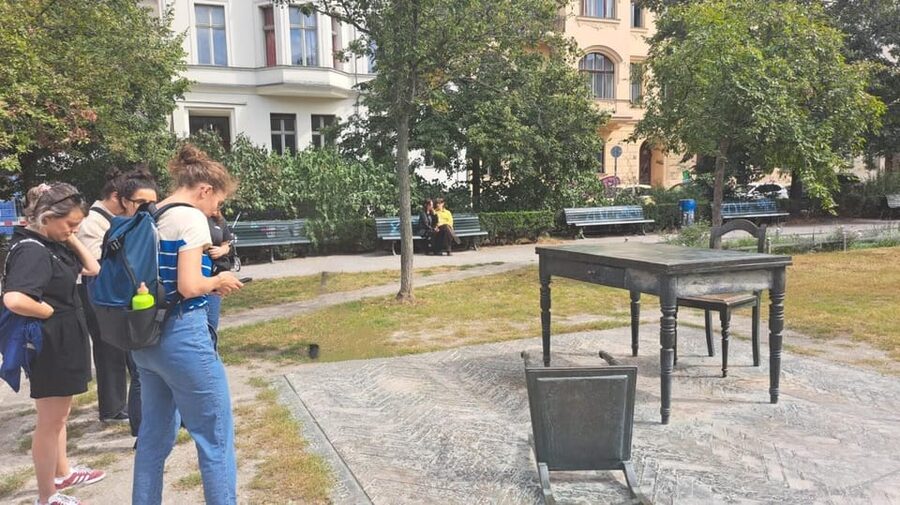
One of the most powerful parts of the walk is the stop connected to the Rosentalstraße memorial, tied to a women’s protest in 1943. This is not a generic commemoration. You’re taught what it represents and why it fits into the wider WWII story.
This part of the tour adds something important: it shows Jewish history in Berlin as more than dates and deportation routes. It includes agency, refusal, and the reality that people were not passive in the face of terror. Even if you already know the broad facts of the Holocaust, that shift in focus gives the story a different shape.
You also get emotional grounding through the way Tal explains transitions. The tour doesn’t just jump from one fact to the next. It prepares you for what you’re seeing, then interprets why it matters, and that helps the heavy moments land with clarity rather than confusion.
Otto Weidt Workshop for the Blind: a courage story with real details
After you leave the 1943 memorial stop, you head to the Otto Weidt Workshop for the Blind. This is one of the major highlights because it connects the Holocaust period to something intensely human, work, protection, and everyday survival choices.
The tour includes an entry ticket to the Otto Weidt museum, with the one exception that it is not included on days the museum is closed. So you should treat it as a paid, structured stop, not a quick street photo moment. Plan to spend time inside and read carefully, since this kind of story deserves more than a glance.
Tal’s approach here is worth calling out. You’ll hear the inspiring story behind Weidt’s efforts to save lives during the Holocaust, but you’ll also get the Berlin context that makes those efforts understandable. The workshop is not presented as a miracle bubble. It’s presented as a real place with real constraints, and that realism helps you feel the stakes.
If you like history that connects big events to specific people, you’ll appreciate this stop. If you prefer only grand landmarks, you might find this one more intense than expected, but it’s still framed in a way that keeps meaning clear.
More Third Reich history tours:
- Berlin’s Best: 2 Hour Walking Tour Third Reich and the Cold War
★ 5.0 · 5,486 reviews - Third Reich Berlin: Hitler and WWII Walking Tour
★ 5.0 · 3,301 reviews - Berlin: Third Reich, Hitler, and WWII Walking Tour
★ 4.9 · 1,757 reviews - Berlin Third Reich Sites: Half-Day Walking Tour
★ 5.0 · 835 reviews
Synagogues and cemetery stops: how Berlin’s Jewish past stays visible
The tour spends time on religious landmarks and burial grounds, and that is not random. Synagogues and cemeteries tell you how a community marked time. They also reveal continuity, interruption, and what survived.
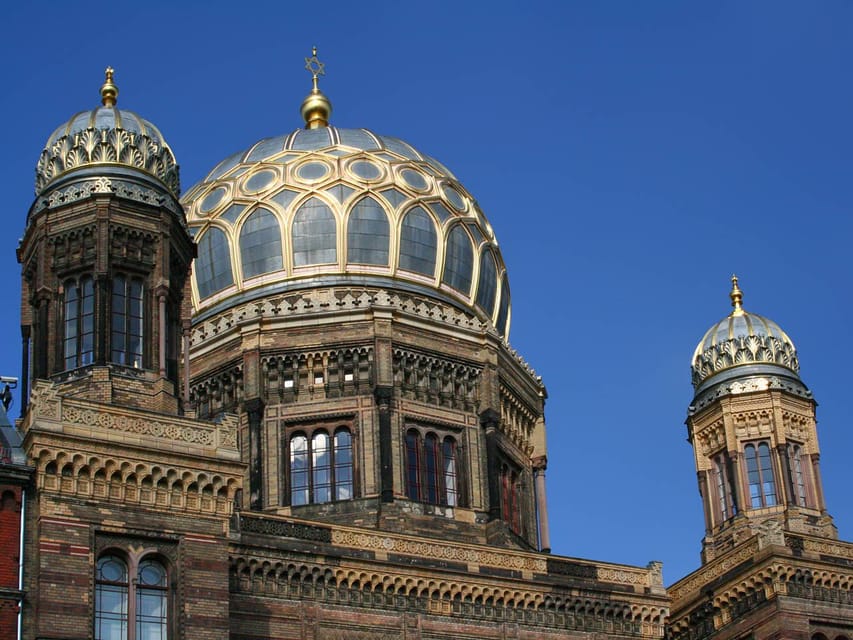
You’ll see the New Synagogue Berlin, Jewish Centre from the outside. That outside view matters because it’s a way to appreciate architecture and public presence without pretending the building alone contains the whole story. Tal ties this stop back to what came before and what changed, especially as the community’s fortunes rose and then collapsed.
You’ll also encounter references to earlier places, including the site connections for the community’s first synagogue and the early cemetery. The highlights explicitly point to the Great Synagogue and the first cemetery, and the itinerary includes the old burial ground as a core stop.
The Old Jewish Cemetery and Moses Mendelssohn’s grave
One of the most moving moments comes at the Old Jewish Cemetery, which is described as the community’s first cemetery. This stop includes a ticket to the old cemetery, with the exception that entry may not be available on certain Jewish holidays and Saturdays.
Here you’ll learn about the cemetery’s importance and you’ll have the direct connection to Moses Mendelssohn, who is buried there. That is the kind of detail that makes the long timeline feel grounded. Mendelssohn can be an abstract name from a book. In a cemetery, he becomes a person tied to Berlin’s streets and institutions.
You also get a sense of how the community marked generations and identity through burial practices. And because this is placed after the WWII memorial content in the tour flow, it gives you a painful contrast. Continuity exists, but it also carries the weight of what was interrupted.
This is also where your guide’s background helps. Tal isn’t only presenting facts. The explanations feel structured and human, which makes the cemetery stop less like standing silently and more like understanding what you are looking at and why the site was preserved as memory.
The Jewish institutions of Mitte: schools and community networks
Between synagogue and cemetery stops, you’ll cover additional institutions in Mitte, including education. The tour highlights and the itinerary details mention places such as the Mendelssohn School and a girls’ school, along with other community institutions.
This is where the tour becomes more than WWII. You see how the community invested in schooling and institutions that shaped youth and culture. When you understand education, you understand how a community prepares its future and protects its values.
Even if you only know Berlin from modern neighborhoods and museums, this part changes your perception. You start to notice that Jewish history in Berlin was not only about landmarks. It was about networks, classrooms, and daily institutions that created a normal life until the world was forcibly torn apart.
There’s also an interesting thread that comes up around community divisions. The guide discusses splits in the community, including issues around changes like the introduction of the organ, plus the embarrassment some German Jews felt when Eastern European Jews arrived. If you’ve ever wondered how a community can be united by faith and still split by culture and custom, this tour gives you examples you can actually connect to place.
Customization options if you want more memorials or more cemeteries
If you want to go deeper, there are optional extensions you can add. The tour can be tailored to include additional sites based on your interests.
Possible add-ons include:
- Schönhauser Allee Cemetery, described as the final resting place of famous members from the community’s golden era
- Kindertransport Memorial at Friedrichstraße Station
- Grunewald Deportation Memorial, commemorating the deportation of Berlin’s Jews
These extensions matter because they let you choose your emphasis. If you want more pre-war prominence, Schönhauser Allee Cemetery fits. If you want the child refugee story, Kindertransport speaks to that directly. If you want the deportation focus, Grunewald is where that memory is centered.
If you’re planning your time in Berlin, I’d suggest thinking about what will stick with you most after the tour. Then pick the add-on that reinforces it.
Price and value: what you get for $318 per person
At $318 per person, this tour sits at the higher end of walking tours. The value is in the structure and the specific paid stops.
You’re paying for:
- A guided walk that lasts about 3.5 to 4 hours
- A certified guide, Tal, with both local expertise and academic work connected to Berlin institutional history
- Included entry to the Otto Weidt Museum (when open)
- Included entry to the Old Jewish Cemetery (with holiday and Saturday restrictions)
That combination matters. A lot of tours stay outside and call it a day. Here, you get inside time at two major stops. You also get context tying those stops to wider centuries of community life, including the Mendelssohn era, the move west, and WWII events.
So the real question is less whether the price is “cheap,” and more whether you want a thoughtful, guided route through the places where the story actually happened. If you do, this is likely to feel worth it. If you’re looking for a lighter, more casual overview, there are other options in Berlin that cost less.
What to bring, how to pace yourself, and what to expect on the street
You’ll be on foot through central Berlin, so come ready for the practical side of history.
Bring:
- Comfortable shoes
- A hat and a head covering or kippah if you want one
- Sunscreen
- Water
Rules to note:
- No smoking
- No flash photography
Expect a short break during the tour. That helps, especially because some stops are emotionally intense and you’ll want a moment to reset. If you’re planning other museum visits the same day, don’t overpack your schedule right after. Give yourself time to let the story settle.
Also, the tour is described as a private group and offered in English and Hebrew. That private-group format usually means the guide can slow down, answer questions, and tailor pacing to your questions, which is a big deal for a topic this complex.
Accessibility check before you go
The information you have includes conflicting notes. The tour is listed as wheelchair accessible, but it is also flagged as not suitable for wheelchair users and people with mobility impairments.
If you need step-free routing or extra consideration, I’d treat this as a must-verify item before booking. Ask Tal or the provider directly whether the route and stops can work for your specific needs.
Should you book this Berlin Jewish Walking Tour?
Book it if you want a guided walk that connects Jewish life in Berlin across centuries, not just WWII. You’ll get strong landmark coverage, including Hackescher Markt, the Otto Weidt Workshop for the Blind, memorial sites like the women’s protest commemoration, and the Old Jewish Cemetery with Moses Mendelssohn.
You should also book it if you appreciate a guide who can connect place to meaning, and who brings both Berlin expertise and serious historical perspective. Tal’s delivery is described as passionate and highly informative, with personal stories that make the timeline feel more human.
Skip it or consider alternatives if you want a light overview, or if long walking time and emotionally heavy content are not your style. This is not a “happy monuments only” route.
If you’re planning a first serious pass at Jewish Berlin history, this is a strong choice. It gives you a coherent storyline, real places, and an ending that leaves you thinking in a good way, even when the subject is hard.
FAQ
How long is the Berlin Jewish walking tour including World War II?
It runs about 3.5 to 4 hours.
Where do I meet the guide, and where does the tour end?
The meeting point is in front of Starbucks in Mitte, and the tour finishes at the Memorial Jewish Cemetery area.
What languages is the tour offered in?
The live tour guide speaks English and Hebrew.
What is included in the price?
The price includes a guided walking tour, the guide, entry ticket to the Otto Weidt Museum (except days it is closed), and entry ticket to the old cemetery (except Jewish holidays and Saturday).
Are there any museum tickets I might need to buy separately?
Yes. The information provided says Centrum Judaicum is not included and has a separate ticket to the museum in the new synagogue.
What should I bring and wear?
Wear comfortable shoes. Bring a hat, head covering or kippah, sunscreen, and water.
Is the tour wheelchair accessible?
The details include both wheelchair accessible and also not suitable for wheelchair users or for people with mobility impairments. You should check directly before booking to confirm the route and stop access for your needs.
Fresh reviews out of Berlin
- Berlin Uncensored: A History of Sex & Freedom★ 5.0 · 50 reviews
- Berlin Food & Cultural Tour: Must-Try German & Berliner Classics★ 5.0 · 51 reviews
- English Comedy Show with Pizza and Shots in Central Berlin★ 4.5 · 51 reviews
- Rude Bastards Tour of Berlin★ 4.8 · 51 reviews
- Private Taxi Tour of Berlin East and West and Neighbourhood approx. 4-6h★ 5.0 · 55 reviews
- Rickshaw Sightseeing City Tours Berlin – Rikscha Tours★ 4.0 · 55 reviews
- Berlin: City Highlights Express & Panorama Roof Terrace★ 4.9 · 55 reviews
- Berlin during Nazism – Tour in Italian★ 5.0 · 56 reviews
Third Reich & WWII Tours, compared.
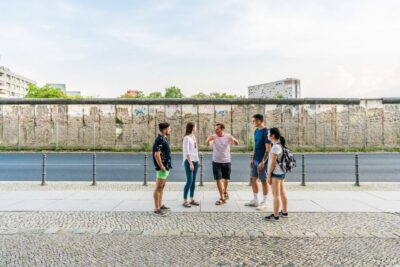
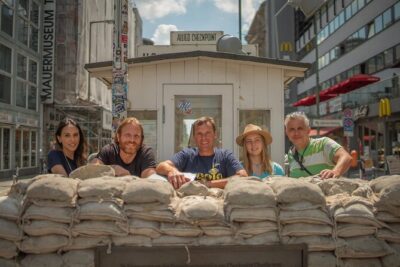
Berlin’s Best: 2 Hour Walking Tour Third Reich and the Cold War
Read our review →
Third Reich Berlin: Hitler and WWII Walking Tour
Read our review →
Walking Tour of Former Nazi Party Rally Grounds
Read our review →
Browse the lists this tour appears in