
Reviewed · THIRD REICH & WWII TOURS
Berlin Half-Day World War II Walking Tour
Berlin’s World War II sites are spread out, and that is what makes this half-day walking tour interesting. It is a focused route that links major landmarks you recognize fast, like Checkpoint Charlie, the Berlin Wall Memorial, and the East Side Gallery, with the human stories behind them. I like the way a guide keeps the pace practical, and I like that you get a set route so you can skip the map stress.
The one thing to keep in mind is reliability at the meeting point. There is at least one negative report about a paid tour not appearing as expected, so double-check your booking details and confirm you are joining the right group when you arrive.
Key highlights at a glance
- Time-saver route that packs big WWII and Cold War landmarks into about 4 hours
- A guided walk with stories, including local legends and well-known landmarks
- Checkpoint Charlie, Berlin Wall Memorial, and East Side Gallery on one afternoon circuit
- No map required, the guide leads you from stop to stop
- Max group size up to 100 travelers, so expect a more social crowd than a private tour
Why this WWII walk works when you have only half a day
If your Berlin time is tight, this is the kind of tour I actually like. Instead of choosing a few random stops, you follow a guided loop that connects the dots between the Nazi era, the end of the war, and the Cold War showdown that came after. You are not just looking at buildings. You are learning why these locations matter, and you do it at walking speed, not at research speed.
The price, $35 for about 4 hours, is what stands out for value. Walking tours in big cities can swing wildly, but here the pitch is simple: pay for a guide so you stop spending your limited time figuring things out. You get a local voice for the whole stretch, plus a structured plan that takes you to a lot of recognizable sights.
One more practical win is the tour style. It is not marketed as a museum marathon. It is built around seeing key places outdoors and in nearby areas, with your guide filling in the context as you go. That matters because Berlin can be tiring. Even if you are motivated, half a day disappears fast when you are constantly checking your phone.
More Walking Tours in Berlin
- Discover Berlin Half-Day Walking Tour
★ 5.0 · 9,624 reviews - Berlin: Third Reich and Cold War 2 Hour Walking Tour
★ 4.9 · 6,830 reviews - Berlin: Discover Berlin Walking Tour
★ 4.9 · 5,998 reviews
Price and logistics: what you should plan for before you go
Let’s talk logistics in a way that helps you show up ready.
First, the tour starts at Generator Berlin Alexanderplatz, Otto-Braun-Straße 65, 10178 Berlin, and finishes at Brandenburger Tor, 10117 Berlin. It begins at 12:00 pm and runs for approximately 4 hours. That end point is a big deal. Finishing at Brandenburg Gate makes it easier to roll into your evening plans without backtracking.
Second, you get a mobile ticket. Bring your phone with the ticket ready, plus a backup screenshot in case your signal or battery decides to take a day off.
Third, public transportation is not included. The route is described as a walking tour, but it also lists many sites across different parts of the city. Translation: you might walk most of the way, and you might also use transit for certain stretches. Budget for that yourself.
Finally, the group size has a limit of 100 travelers. That does not automatically mean bad. It just means you should expect a louder, more mixed crowd than a small group tour. If you hate crowds, plan to do your best listening in the moments when the group compresses near a stop.
From Alexanderplatz to Brandenburg Gate, how the walk feels
The route is built like a guided storyline, not like a checklist. You meet at Alexanderplatz, then the guide leads you through a set of WWII-focused stops and related landmarks, finishing at Brandenburg Gate.
That matters because Berlin is full of layers. Nazi-era power, wartime destruction, postwar division, and the eventual shift toward a united Germany are all visible if you know what you are looking at. A guide helps you read those layers without you turning the afternoon into homework.
You will see a mix of landmark-level sights and city-area stops. The plan includes places tied to the Battle of Berlin, the Reichstag area, and the site of Hitler’s bunker. It also includes neighborhood context like Prenzlauer Berg. Those elements work well together because they keep the history grounded in geography, not just dates.
One note on pace: the outline includes a short first segment marked around 4 minutes and marked admission ticket free. That hints that you are moving quickly early on and then settling into longer explanatory stops. If you prefer slow, linger-at-each-place tourism, you might need to manage your expectations and let the guide set the tempo.
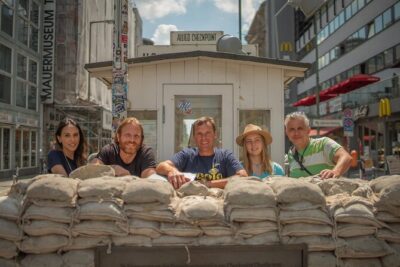
Checkpoint Charlie: where Cold War power feels real
Checkpoint Charlie is one of those places where you already know the name, even if you have not read much. On this tour, you are not expected to just stand there and guess. The point is to learn what the area represented in the Cold War reality of divided Berlin.
Why it works on foot is simple: the checkpoint is not just an object. It is a concept made physical. You can connect the dots faster when you also hear how the checkpoint fit into the broader Berlin standoff and how daily life was shaped by that tension.
What you can do to make the stop better: take a slow moment at the site and look for the surrounding urban layout. Your guide will likely help you see how the street patterns and borders made movement political. Even if you have seen photos, walking the area helps you understand why people built their routines around control points.
More Third Reich history tours:
- Berlin’s Best: 2 Hour Walking Tour Third Reich and the Cold War
★ 5.0 · 5,486 reviews - Third Reich Berlin: Hitler and WWII Walking Tour
★ 5.0 · 3,301 reviews - Berlin: Third Reich, Hitler, and WWII Walking Tour
★ 4.9 · 1,757 reviews - Berlin Third Reich Sites: Half-Day Walking Tour
★ 5.0 · 835 reviews
Berlin Wall Memorial: seeing the divide, not just the dates
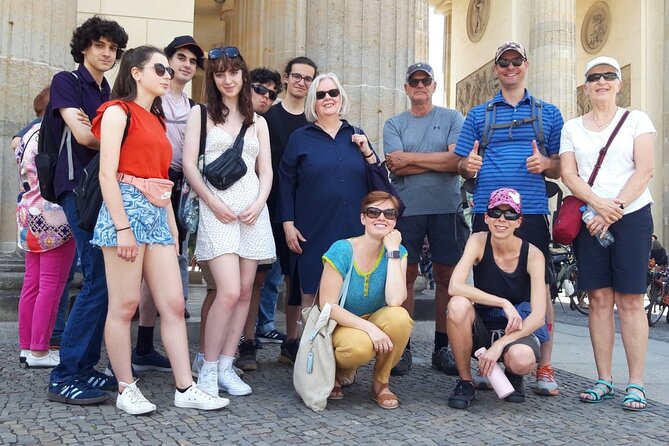
Next up is the Berlin Wall Memorial. This stop is important because the wall is often treated like a symbol in guidebooks. Here, you are pushed to think about it as infrastructure. It affected movement, safety, and the basic idea of crossing from one world into another.
A wall memorial stop is one of the strongest uses of a guided walk because you get a narrative threaded through what you see. Without that, it is easy to turn the experience into a quick photo and then move on. With a guide, you get help understanding what to notice, why it was placed where it was, and how the wall shaped choices.
Since this is a half-day, you may not have time to sit and reflect for long. That is where your listening matters. Aim to catch the main takeaway your guide gives you early in the stop, then use the remaining minutes to look at the details your guide pointed out.
East Side Gallery: street art that came out of confrontation
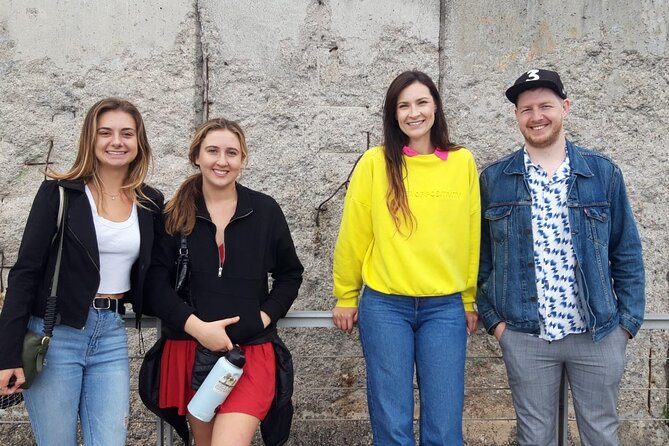
The tour also includes the East Side Gallery. This is a very Berlin way to look at history. Instead of only thinking about division as loss, you get an angle that shows how creativity can grow from political rupture.
What makes it work on a walking tour is that you are building a timeline in your head. You move from a checkpoint and the wall memorial into a stretch of visible, public art. Your guide can help you understand that the East Side Gallery is not just aesthetic. It is part of how Berlin reclaims space and meaning after the division.
If you like photography, this is a great stop to slow down. Look for the contrast between the art and the surrounding buildings. It is one of the most effective ways to understand how the city keeps transforming while still holding on to what happened.
Reichstag and the Battle of Berlin: the story behind the headlines
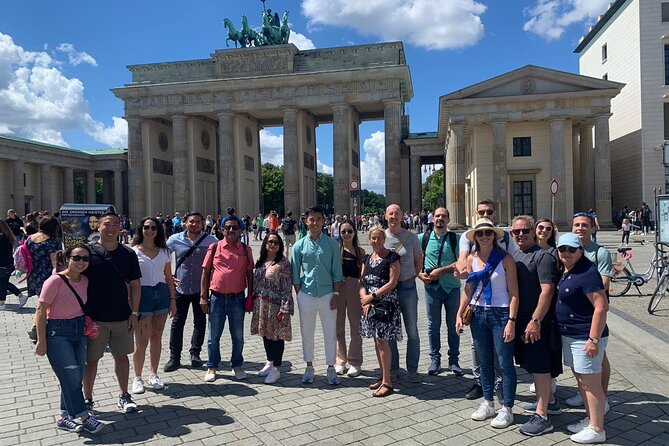
The itinerary highlights include the Reichstag and references the Battle of Berlin. These are big themes, and it can be tempting to treat them as history facts. A guide adds what you actually need on the ground: the human and spatial connection.
Here is why this stop is valuable. The Battle of Berlin is not an abstract event. It is tied to buildings, neighborhoods, and the way the city was fought over. When you walk through areas connected to these events, you start to understand why destruction and occupation left such strong marks.
The Reichstag is also a useful anchor point. It is one of the most famous civic symbols connected to Germany’s political story. Even if you cannot spend hours inside, you can still connect it to the tour’s bigger theme: how power shifts and how war reshapes institutions.
Drawback to watch for: you may get only a limited window at these larger, more famous stops. This is a half-day tour. If your goal is deep museum time or long interior visits, you might want to pair this with separate, longer plans later.
Russian-German War Museum and Flak Tower: war tech and the city itself
The tour outline includes the Russian-German War Museum and a Flak Tower stop. I like this pairing because it broadens the story beyond politics and battles. It puts focus on the machinery of war and on how the city endured it.
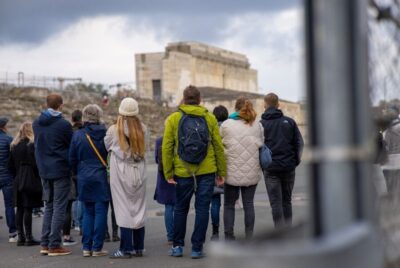
A flak tower is the kind of object that makes history feel physical. It is hard to treat that sort of structure as a distant idea when you are standing near it. Even a short guided explanation can help you understand what it was designed to do, and why that mattered to Berlin residents.
With the Russian-German War Museum included, you likely get a more grounded perspective on what happened after fighting, and how different sides interpret the same period. Even when you are not going deep into documents, museums and memorials tend to give you a frame for questions. You leave with better instincts for what to look up later.
If you are sensitive to heavy wartime visuals, this section can feel intense. It is still a walking tour with time constraints, so you probably will not be stuck for long in one emotionally heavy moment. Just be mentally ready for the topic.
Prenzlauer Berg and the site of Hitler’s bunker
One of the most direct, in-your-face stops listed is the site of Hitler’s bunker, plus a neighborhood context stop at Prenzlauer Berg. This is where the tour becomes less about famous icons and more about the geography of decisions.
Why I think this matters: the bunker site forces you to confront the personal scale of historical events. It is not just armies and leaders in textbooks. It is where leadership operated, hid, and ultimately collapsed into the endgame of war. When your guide places that story inside Berlin’s street geography, you understand why Berlin still carries these reminders.
Prenzlauer Berg adds a different angle. It helps you see how Berlin moved from wartime damage and totalitarian control into different phases of rebuilding and everyday life. Your guide’s narration can help you notice how neighborhoods change while still retaining traces of what came before.
Possible consideration: this sort of tour can be intense if you prefer a lighter city break. If your Berlin trip is also about music, food, and nightlife, I suggest doing this tour early or mid-trip, not on a day when you need to keep your head clear for something upbeat.
Brandenburg Gate finish: making sense of symbols and change
The tour ends at Brandenburger Tor, which is a smart closing point. Brandenburg Gate is not tied only to one era. It has lived through monarchy references, division-era symbolism, and modern Berlin identity. That makes it a perfect “wrap the loop” destination.
As you reach the gate, you will likely feel the contrast between what the tour has focused on, destruction and control, and what you see around you now. A guide’s final narration is often where the tour clicks into place. You stop treating WWII landmarks like museum exhibits and start seeing them as part of a longer Berlin story.
If you want to keep the momentum, plan a simple next step after the tour. Stay in the area and let yourself re-orient visually. Look back at the route you covered. That is when the walking format pays off. Your brain maps the past onto the city, and Berlin starts making more sense.
Who should book this half-day WWII walk, and who should skip it
Book it if you want a fast, guided overview and you like learning history on the move. It is ideal for limited time, for first-timers who want to cover major WWII and Cold War landmarks, and for anyone who prefers a guide’s explanations over assembling an itinerary from scratch.
I would skip it if you want a deep dive into museum exhibits or extended time inside major sites. This tour is designed to hit many stops in one afternoon, which means time at any single place can be brief.
It also helps to match your expectations to the group size. With up to 100 travelers, it is best for people who can listen even when the group is lively.
One more “should you book” note: check your booking confirmation carefully and arrive early enough to confirm the group at Generator Berlin Alexanderplatz. One negative report raises a concern about a mismatch between paid tour expectations and what was offered at the meeting point. That is not enough to dismiss the tour outright, but it is enough to justify being alert.
FAQ
FAQ
How long is the Berlin Half-Day World War II Walking Tour?
It runs for approximately 4 hours.
How much does the tour cost?
The price is $35.
Where do I meet for the tour?
The start point is Generator Berlin Alexanderplatz, Otto-Braun-Straße 65, 10178 Berlin, Germany.
Where does the tour end?
The tour ends at Brandenburger Tor, 10117 Berlin, Germany.
What time does the tour start?
The start time is 12:00 pm.
What ticket format do I get?
You get a mobile ticket.
What is included in the tour price?
An enthusiastic local guide is included.
What is not included?
Public transportation where applicable is not included.
How large is the group?
The tour has a maximum of 100 travelers.
Is free cancellation available?
Yes. Free cancellation is available up to 24 hours in advance for a full refund.
What are some of the main stops?
The highlights include Checkpoint Charlie, the Berlin Wall Memorial, the East Side Gallery, and Brandenburg Gate.
Fresh reviews out of Berlin
- Gastro Tour with Klaus though the Wrangelkiez, Kreuzberg★ 5.0 · 9 reviews
- Wall Tour Berlin – Fates, Heroes & Love Stories★ 4.0 · 9 reviews
- Berlin City Tour with Hotel pick up and Drop off★ 4.0 · 9 reviews
- Berlin Private Street Art Tour – Off The Grid★ 5.0 · 9 reviews
- Romantic Berlin Rickshaw City and Photo Tour – incl. pick-up★ 4.0 · 9 reviews
- Quatsch Comedy Club Berlin: Quatsch Comedy Hot Shot★ 4.8 · 9 reviews
- Berlin Urbex Adventure and History Tour★ 5.0 · 9 reviews
- Stag Party Berlin: Celebration for Your Bachelor Party★ 3.4 · 9 reviews
Third Reich & WWII Tours, compared.

Berlin’s Best: 2 Hour Walking Tour Third Reich and the Cold War
Read our review →
Third Reich Berlin: Hitler and WWII Walking Tour
Read our review →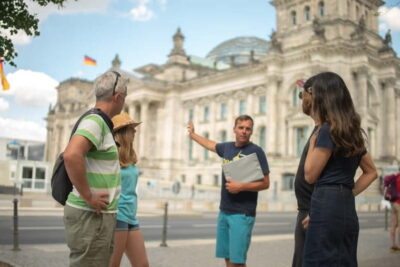
Walking Tour of Former Nazi Party Rally Grounds
Read our review →
Browse the lists this tour appears in