
Reviewed · BERLIN WALL & COLD WAR TOURS
Berlin: Guided Bike tour of the Berlin Wall and Third Reich
Berlin’s history is heavy, but this bike tour makes it easier to grasp because you’re moving through the city in real time. I love the historical guidance that keeps you oriented while you ride, and I also love the city bike and helmet setup that keeps things comfortable. One thing to consider: the stops are intentionally brief, so you’ll get an overview rather than a long, slow visit at every memorial.
I especially appreciate how the tour leans on local storytelling. Guides like Paul, Theo, Juliette, Yonis, Simon, Constantine, and Jacob are repeatedly praised for making details feel grounded, not just recited. If you want to compare East and West Berlin, connect streets to what happened there, and still cover a lot in one afternoon, this format works.
Finally, it’s family-friendly. Kids are welcome, and infant seats can be provided on request, which is a real help if you’re juggling naps and history at the same time.
Quick takeaways before you go
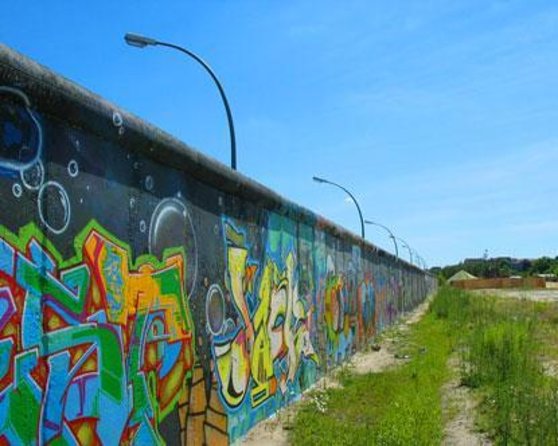
- Real Wall remnants you can see and understand without only relying on photos
- Multiple memorial stops, including a major focus on the Holocaust
- Nazi-era architecture viewed from the outside, plus panoramic moments
- Mauerpark as the freedom contrast, where the city reclaims public space
- Bikes with practical add-ons, and guides help keep you safe on busy streets
Why this Wall and Third Reich bike tour makes sense
This tour hits a sweet spot: it’s short enough to fit into a busy Berlin schedule, but it’s long enough to connect themes. In about three hours, you’ll ride past layers of Berlin that many people only see separately, if they see them at all.
The big value is the combination of pacing and meaning. Riding on a bike forces you to pay attention to street layout, distance, and direction, which helps your brain build a map of how the Wall shaped everyday movement. Then the guide fills in what those streets meant for people living there.
Also, you’re not just doing a checklist of famous landmarks. You’re getting the quieter, more revealing stops that explain the mechanics of separation, fear, and resistance.
More Bike Tours in Berlin
- Berlin: Sights and Highlights Bike Tour with a Local Guide
★ 4.8 · 2,698 reviews - Berlin Highlights 3-Hour Bike Tour
★ 5.0 · 948 reviews - Berlin City Bike Tour with Beer Garden Stop
★ 5.0 · 917 reviews
Bikes, helmets, and what the ride feels like
You’ll start and end at Free Berlin Bike Tours and Rental at Poststraße 11 in Berlin, and you ride the whole route with a provided bike plus helmet. That “provided” part matters more than you might think, since Berlin can be surprisingly intense on two wheels even though the city is flat.
Plan on normal city biking. You will share roads at times, and you might use cycle lanes, so it helps if you’re comfortable keeping your line and stopping when the group stops. If you are not, the guide’s job is to give clear instructions and keep the group together.
One practical detail I like: a number of guides make it easier to manage your stuff during the ride by using bikes that have a basket for bags or small items. That means you do not have to balance a backpack while also paying attention to traffic.
Because the tour operates in all weather conditions, bring the right clothing. A light drizzle can be fine, but if you dress for it, the ride stays enjoyable instead of stressful.
Stop 1: Nikolaiviertel, Berlin’s “old town” question in 10 minutes
You begin in Nikolaiviertel, which is described as Berlin’s only “real” old town. It’s a great first stop because it quickly sets up a core Berlin theme: the city looks layered, and not every layer survived intact.
Here’s the useful angle for you. This isn’t just a cute historic neighborhood. It’s a way to talk about how Berlin’s past was interrupted, including by the war and the bombing that reshaped the city. Ten minutes is short, but it gives your eyes a baseline before the tour moves into more direct Cold War territory.
Possible drawback: if you love architecture and could happily spend an hour somewhere pretty, you might wish this opening stop had more time. The tradeoff is that you get the bigger total story across many sites.
Stop 2: Stiftung Neue Synagoge and the courage story
Next you’ll visit Stiftung Neue Synagoge Berlin in the Centrum Judaicum complex. The stop centers on a powerful moment of civil courage, including the story of a police officer protecting the building during the night of broken glass.
This is a smart choice early in the tour, because it immediately anchors the Holocaust and persecution story in real places, not abstract dates. You also get a reminder that even when violence spreads, individuals and institutions can choose to protect.
Since the time here is brief, focus on the guide’s framing. Ask yourself what kind of society allows a church or synagogue to become a target, and what it means that someone tried to stop the destruction.
More Third Reich history tours:
- Berlin: Third Reich and Cold War 2 Hour Walking Tour
★ 4.9 · 6,830 reviews - Berlin’s Best: 2 Hour Walking Tour Third Reich and the Cold War
★ 5.0 · 5,486 reviews - Third Reich Berlin: Hitler and WWII Walking Tour
★ 5.0 · 3,301 reviews - Berlin: Third Reich, Hitler, and WWII Walking Tour
★ 4.9 · 1,757 reviews
The GDR-era deportation and Holocaust memorial contrast
After that, you’ll pause at a memorial for victims of deportation and the Holocaust. The tour notes that this memorial was designed during the GDR era and creates a stark contrast with a more widely known memorial closer to Brandenburg Gate.
This kind of contrast matters because Berlin does not present its past in only one voice. Different eras of governance handled memory differently, and that shapes how memorials look and how visitors interpret them.
If you’re the type who likes to compare interpretations, this stop gives you a useful lens. You can look at the same tragedy, and see how politics and time changed the way it was presented.
Stop 3: The Berlin Wall memorial section that you can really experience
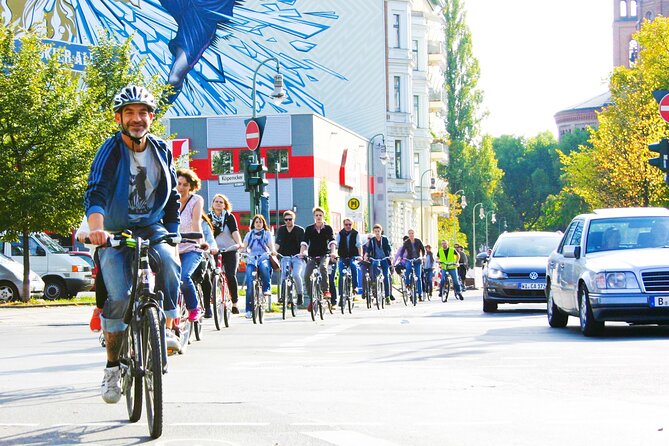
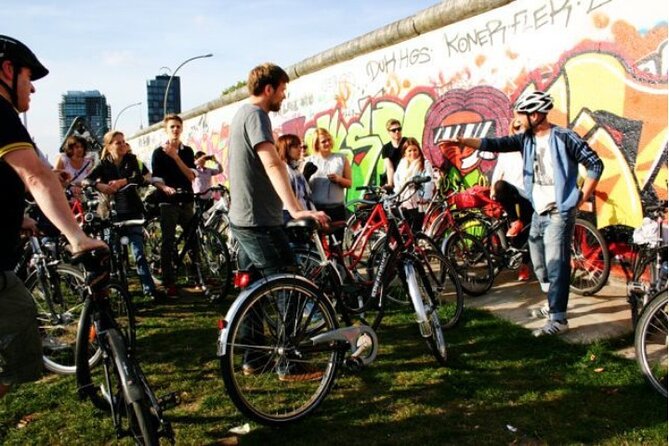
Then you hit one of the best parts of the route: the Memorial of the Berlin Wall. The tour explains that there are three spots where the Wall feels alive, and this is the only one where you can genuinely understand and experience what it meant and did to Berlin.
What you’ll feel here is not just sadness. It’s clarity about the physical design of control. Seeing how the Wall sits in a real urban setting, along with guided explanation, makes it easier to picture how normal life was squeezed and redirected.
And yes, it’s also described as an edutainment moment, meaning it’s built to be both meaningful and understandable for real humans with short attention spans. That’s a compliment.
Stop 4: Mauerpark, from confinement to free expression
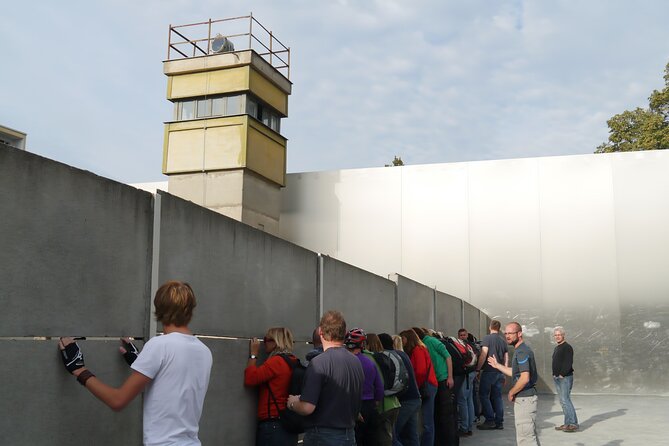
Mauerpark is today known for its Sunday flea market, but on this tour it plays a different role. It’s used as the freedom contrast to highlight how Berlin, tortured by the Wall for 28 years, transformed public space into an oasis of free expression.
This is one of the stops where the bike format shines. You’re riding into a place that looks like a lively day out, and the guide folds in what the area represented during division. The shift from repression to community makes the story more believable.
If your kids are listening, this stop tends to land well, since it’s easier to connect to normal life. You’re not just hearing about a tragedy, you’re seeing how the city remade itself.
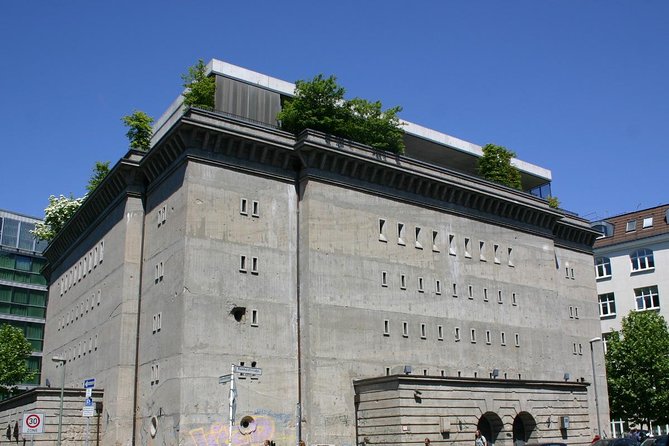
Stop 5: Humboldthain Flak Tower, Nazi architecture plus big views
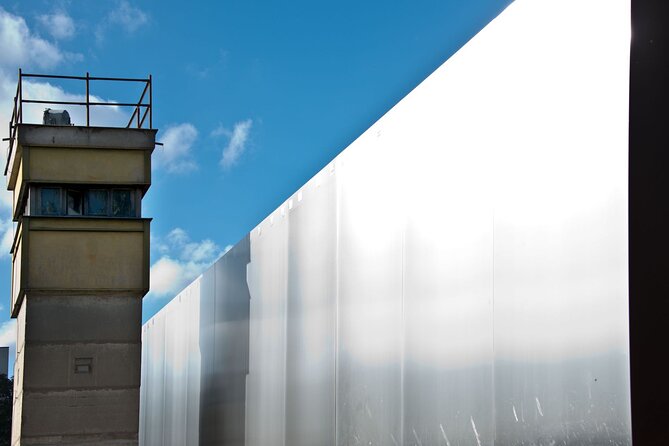
Next is Humboldthain Flak Tower, which is once described as a giant fortress and air-raid shelter. The tour adds two appealing elements: a panoramic view and insights into Nazi architecture.
This is a practical stop and a visual one. Panoramas help you understand distance, direction, and why some locations mattered strategically. And architecture helps you understand ideology in physical form, meaning how brutal ideas got built into the city.
Try to look beyond the view. Ask yourself how a structure designed for air defense could also act as a symbol of power and fear.
Stop 6: Günter Litfin Memorial, the first shot at the Wall
You’ll stop at the Gunter Litfin Memorial, which centers on an original watchtower preserved to remember Günter Litfin, described as the first person shot at the Wall.
This is the kind of detail that makes the Wall story feel personal rather than general. The Wall wasn’t only about policies and maps, it produced lethal outcomes at specific places and moments.
Because the stop is brief, you’ll benefit if you let the guide’s framing guide your attention. Let the name and the location do their job.
Stop 7: Invalidenfriedhof, escape stories carved into the burial ground
Invalidenfriedhof is a cemetery cut by the Wall, and the tour explains how it was made for Prussian heroes tied to German military history. It also emphasizes escape stories because it’s near former checkpoints and a canal that acted as a natural border between East and West Berlin.
This stop can be emotionally intense, even when time is short. That’s the risk with rapid tours, but it’s also why the guide’s tone matters. With the right pacing, this cemetery stop becomes a quiet, focused moment rather than a rushed photo stop.
If you prefer lighter content, this will feel heavy. If you want accuracy, it belongs on your Berlin map.
Stop 8: Spreebogenpark and Albert Speer’s Great Hall vision
At Spreebogenpark, you get an overview view over Germany’s governing district area. The guide also discusses plans attributed to Hitler’s architect Albert Speer, including the vision for a Great Hall that could have fit 180,000 people.
Even if you never study architecture, this kind of discussion helps you understand scale. Nazi planning was not only about control through weapons, it was also about reshaping space and public life through monumental projects.
If you like political history, you’ll appreciate how the tour uses geography as a teaching tool. You look out, you see the layout, then you hear what it was meant to become.
Stop 9: Reichstag Building from the outside
You’ll stop at the Reichstag Building to discuss Hitler’s grab of power and Germany’s democratic history. You won’t go inside, but you will get the best of it from the outside.
This works because the Reichstag is one of those places where the building itself anchors the narrative. From the street, you can still understand why it was symbolically valuable and how political conflict played out in the nation’s public spaces.
Tradeoff: if you want interior exhibits or deeper time inside, you’ll need another visit. On this tour, it’s about connecting themes and keeping momentum.
The Holocaust memorial area: multiple victim-group moments
The route includes a stop described as one of three memorials for the three biggest victim groups during the Holocaust. After that, you’ll also visit the Holocaust Memorial, officially known as the Memorial to the Murdered Jews of Europe.
The key idea here is confrontation through design and scale. This is described as the biggest genocide memorial in the world and it’s presented as created by the ones responsible for the killing. Even if you come in with questions, the stop is built to push you into thinking, not just looking.
I recommend that you slow down mentally here, even if the official stop time is limited. Let the guide’s context give you a starting point, then take a breath and absorb what’s around you.
Stop 10: Fuhrerbunker, what remains and what that says
You’ll then reach Fuhrerbunker, described as the place where Hitler hid during the last weeks of war and committed suicide. Today, what you can see is described as a parking lot, and the guide explains why.
This is one of Berlin’s strangest teaching moments: history isn’t always preserved as a museum. Sometimes it disappears under normal life, and that fact is part of the lesson.
If you’re the type who likes to think about memory and responsibility, this stop gives you plenty to work with even in a few minutes.
Stop 11: Checkpoint Charlie, only on the English version
Checkpoint Charlie is included only in the English version of the tour. This is described as the most famous border station of the Cold War and as a point where the USA and USSR had a shared border presence, with a tense moment when a third world war almost started there.
This stop is valuable for a very simple reason: it turns an idea of the Cold War into a recognizable physical location. If you’re booking in English, this is one of the big “must see” names of Berlin division, and it earns its spot.
If you booked in another language option, you should not expect this exact stop. The tour notes it explicitly, so check your booking details.
Price and whether it feels like value
The price is $42.34 per person for about three hours. What makes that feel fair is that you’re not paying just for walking or sightseeing. You’re paying for a bike, a helmet, and a professional guide doing active navigation through complex historical territory.
You also get a lot of stops packed into a short window, from Wall remnants to Nazi-era structures to major memorial sites. That kind of spread would cost more in time alone, because you’d either hire multiple guides or spend hours hopping between locations on your own.
Food and drinks are not included unless specified, so plan a light snack or plan to eat before or after. If you’re biking and learning, you’ll appreciate simple fuel later.
The one potential downside on value is stop length. If you want to sit for a long time, write notes, and linger at each site, a short “overview stop” format may feel incomplete. You’ll likely want to return to at least one or two places afterward.
Route flexibility: why you may not see every listed stop
This tour uses the Free Berlin concept where each guide designs their own route, ensuring every tour is unique. That can be a strength, because it means your guide can adapt to what’s possible on the day, and you might get different angles on the same themes.
The possible drawback is expectation mismatch. If you have a very specific “must visit” list in your head, plan for some variation. If that matters a lot to you, ask your guide if you want to prioritize a few specific stops, and see what fits.
How to choose this tour: who it suits best
This is a great fit if you:
- want to understand how the Wall shaped Berlin’s geography and daily life
- want a short, guided route rather than a slow museum day
- like asking questions and getting stories tied to real streets
- need an active format that still works for families, including kids
It might not be perfect if you:
- want long quiet time at memorials
- need a super slow pace with minimal biking
- get easily overwhelmed by emotionally intense sites packed into a few hours
If you’re unsure, think of this as the “map-building” tour. It helps you build a mental layout of Berlin’s divided past so your later independent visits make more sense.
Should you book this Berlin Wall and Third Reich bike tour?
Book it if you want a moving, guided storyline that connects the Wall, Nazi-era planning, and Holocaust memory through real locations. The bikes and helmet reduce hassle, the guides are consistently praised for making history feel clear and human, and the route format helps you see more of Berlin than you could easily do on foot.
Skip it or plan differently if you need long stays at memorial sites or you are only interested in one tiny slice of the story. This tour is designed for an overview with strong context, and it works best when you treat it as the start of your deeper Berlin exploration.
FAQ
How long is the Berlin bike tour?
The tour lasts about 3 hours.
How much does the tour cost?
The price is $42.34 per person.
Is the tour offered in English?
Yes, the tour is offered in English. It also indicates that it can be offered in German depending on the option selected.
Is a bike and helmet included?
Yes. The tour includes the use of a bicycle and a helmet.
Where does the tour start and end?
It starts at Free Berlin Bike Tours & Rental, Poststraße 11, 10178 Berlin, and it ends back at the meeting point.
Are there admission tickets or entry fees for the stops?
The tour data lists admission tickets as free for the stops shown.
Is the tour family-friendly?
Yes. Children are welcome, and infant seats can be provided on request.
Does the tour operate in bad weather?
It operates in all weather conditions, so dress appropriately.
Is Checkpoint Charlie included?
Checkpoint Charlie is included in the English version of the tour.
Can I get a full refund if I cancel?
You can cancel up to 24 hours in advance for a full refund. If you cancel less than 24 hours before the start time, the amount paid is not refunded.
More Berlin Wall and Cold War history
- Berlin: DDR Museum Tickets
★ 4.3 · 3,443 reviews - Skip-the-Line: Berlin Wall Museum at Checkpoint Charlie
★ 4.1 · 2,041 reviews - Berlin: East Side Gallery Spree Cruise in a Solar Catamaran
★ 4.1 · 1,086 reviews - Cold War, Berlin Wall, Spies and the East Side Gallery
★ 5.0 · 1,024 reviews
Fresh reviews out of Berlin
- Berlin Uncensored: A History of Sex & Freedom★ 5.0 · 50 reviews
- Berlin Food & Cultural Tour: Must-Try German & Berliner Classics★ 5.0 · 51 reviews
- English Comedy Show with Pizza and Shots in Central Berlin★ 4.5 · 51 reviews
- Rude Bastards Tour of Berlin★ 4.8 · 51 reviews
- Private Taxi Tour of Berlin East and West and Neighbourhood approx. 4-6h★ 5.0 · 55 reviews
- Rickshaw Sightseeing City Tours Berlin – Rikscha Tours★ 4.0 · 55 reviews
- Berlin: City Highlights Express & Panorama Roof Terrace★ 4.9 · 55 reviews
- Berlin during Nazism – Tour in Italian★ 5.0 · 56 reviews
Berlin Wall & Cold War Tours, compared.
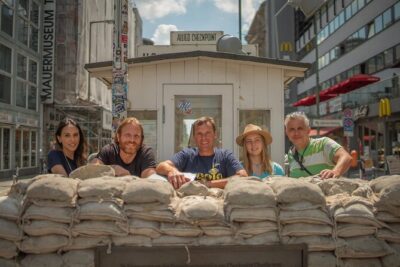
Berlin’s Best: 2 Hour Walking Tour Third Reich and the Cold War
Read our review →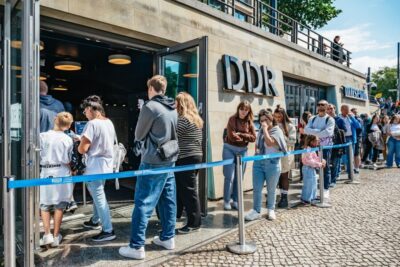
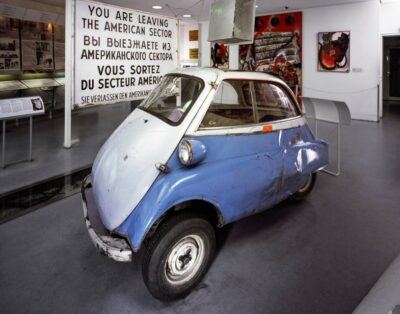
Skip-the-Line: Berlin Wall Museum at Checkpoint Charlie
Read our review →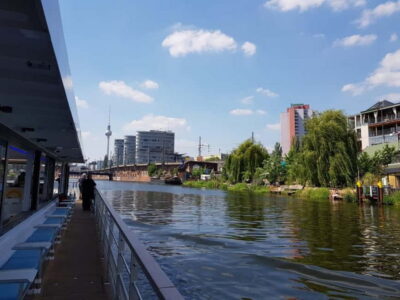
East Side Gallery Spree Cruise in a Solar Catamaran
Read our review →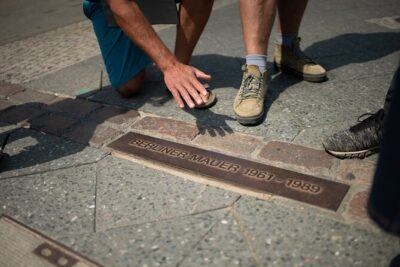
Cold War, Berlin Wall, Spies and the East Side Gallery
Read our review →
Browse the lists this tour appears in