
Reviewed · THIRD REICH & WWII TOURS
Munich: Nazi History 2-Hour Small Group Walking Tour
Munich has a way of keeping layers. This tour is interesting because it connects Nazi-era events to street corners and buildings you can still see today, in the middle of the city.
Two things I really like: the tour keeps it small, and you can actually talk and ask questions, and the guide, Alun Evans, brings the story to life with a calm, respectful approach that feels serious without being sensational. It also stays focused on the places you’d otherwise gloss over on your own.
One possible drawback to consider is time. Two hours is short for a heavy topic and a lot of stops, so you might leave wanting just a bit more breathing room.
Key things to know before you go
- Small-group feel with a low cap, listed at 10, often described as up to 15, which makes questions easier
- English guide who explains what you’re seeing in plain language and sticks to the important moments
- Real rally-site locations tied to the Nazi Party and SS, not just general history
- Beer Hall Putsch context around Hofbräuhaus, where the story shifts from politics to spectacle
- Central Munich logistics start around Marienplatz, so you’re not fighting transit
What a 2-hour Nazi History walk is really like in Munich
This isn’t a lecture hall tour. It’s a walking route that treats the city itself like the source material, using key locations to explain how Munich became central to Nazi growth after Hitler’s arrival in 1913, when he was 24 and looking for a future. The pace is brisk, but it’s not rushed in the sense of skipping meaning. You get a sequence of events that makes the bigger picture easier to hold in your head.
I also like that the guide’s tone in the group reviews comes across as respectful and humane. One of the strongest comments you’ll see about Alun Evans is how he treats people with respect and handles the topic carefully, including on tough weather days. And that matters here, because you’re dealing with propaganda, intimidation, and violence. You want someone who can explain without turning the topic into theatre.
Just know who this is for. If you want a museum-level deep study with long pauses, this short walk may feel like a fast sampler. But if you want orientation, context, and a clear sense of the places where these movements gathered and performed power, it works well.
More Historical Tours in Munich
- Munich: Guided Tour of the historic Town Hall on Marienplatz
★ 4.8 · 63 reviews - Munich Craft Beer & Cultural Tour With Snack
★ 5.0 · 46 reviews - Munich History Tour: Private & Personalized with a Local Guide
★ 4.5 · 33 reviews
Marienplatz start point, timing, and how the route keeps you oriented
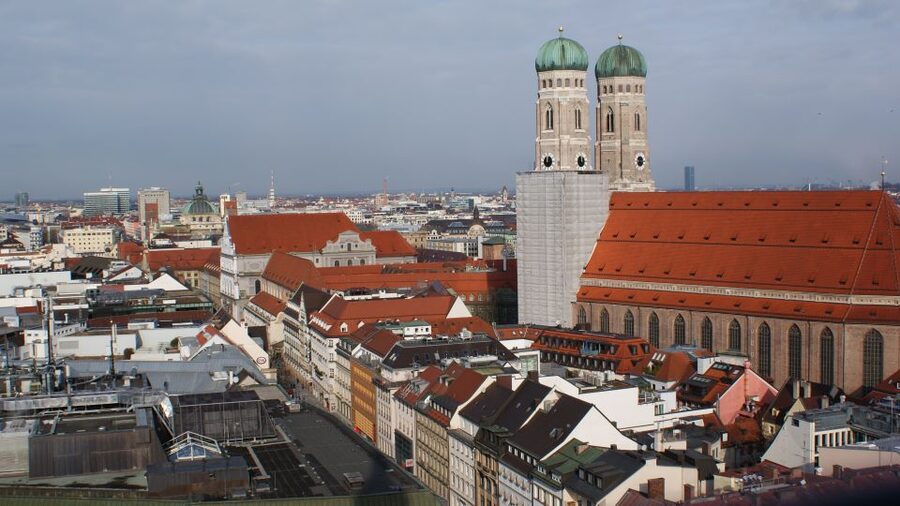
The tour starts and finishes in the Marienplatz area, with the meeting point in front of the Tourist information Center. Your guide holds a sign with the local operator’s name, which makes it simple to find even if you’re new to central Munich.
Marienplatz is a smart place to begin because it’s easy to orient yourself. You can arrive on foot from nearby hotels, and if you get turned around earlier in the day, you have a familiar anchor. The meeting includes a guided walk segment, about 30 minutes, where the story starts to connect to the city’s layout.
This is also where you’ll likely understand the tour’s method. Instead of trying to cover every decade of the Nazi regime, the guide focuses on origin points, major rally moments, and the physical cues that made Munich a stage. That gives the rest of the stops more weight. You start to see how buildings, squares, and crowd spaces were used to create momentum and public attention.
Practical tip: because it runs in all weather, dress for cold rain or snow. One review described heavy snow and cold that made the start miserable, but the guide kept everyone engaged, which is exactly what you want when the weather is fighting you.
Hofbräuhaus München and the Beer Hall Putsch angle
Hofbräuhaus München is one of the most recognizable stops on this kind of itinerary, and that’s precisely why it’s powerful. The tour includes a guided visit here, around 10 minutes, and it uses the beer-hall setting to explain how Nazi politics gained visibility and how speeches worked on crowds.
You also get the Beer Hall Putsch of 1923 in context. The tour frames it as a failed attempt to seize power, and it positions the moment as a turning point that helped the movement reshape itself. Standing in a place associated with political meetings and famous speeches makes the propaganda feel less abstract. It’s still horrifying, but it’s no longer distant history.
Now, one gentle caution. Hofbräuhaus is a popular tourist spot, so you may feel the contrast between today’s lively atmosphere and the topic of the tour. The guide’s job is to keep you anchored to what happened and why it matters. You’ll want to listen closely, especially when you’re surrounded by people who are there for the beer hall experience rather than the historical meaning.
Value-wise, this stop is a good use of time. Ten minutes sounds short until you realize how easy it is to waste time on your own here without a clear storyline. With the guide, you’re not just seeing a famous building. You’re learning what to look for and what the place represents.
Odeonsplatz, the Bavarian State Opera, and Residenz context
Next comes Odeonsplatz, another key stage in the central city. The tour includes a guided segment here, roughly 15 minutes. What I like about this stop is that it situates Nazi-era events in the broader context of Munich and Bavaria, rather than treating everything as if it happened in a vacuum.
Along the way, you also see the home of the Bavarian State Opera and the Residenz building. These aren’t Nazi buildings, which is the point. The architecture and prominence of the area help you understand the environment the Nazis worked to borrow legitimacy from, and the way public spaces signal authority. Even if you’re not an architecture person, you’ll notice how big ceremonial spaces can make political messages feel larger than life.
If you’re the type who worries you might miss nuance, this part helps. It connects the movement’s rise to the social and political theater already present in the city. You start to grasp that propaganda doesn’t appear out of nowhere. It exploits existing power structures and public attention.
One more practical detail: Odeonsplatz and this general area can involve busy foot traffic. With a small group, you can usually keep up without turning the walk into a constant sprint. That small group factor is part of why the tour feels almost private, even when it’s officially a group tour.
More Walking Tours in Munich
- Munich: Third Reich & WWII Walking Tour
★ 4.6 · 6,181 reviews - Third Reich Walking Tour Munich
★ 4.5 · 4,291 reviews - Munich: Old Town & Viktualienmarkt City Walk in German
★ 4.7 · 2,304 reviews - Munich: Night Watchman Walking Tour
★ 4.7 · 2,092 reviews
Königsplatz rally-site finish and why the square layout hits
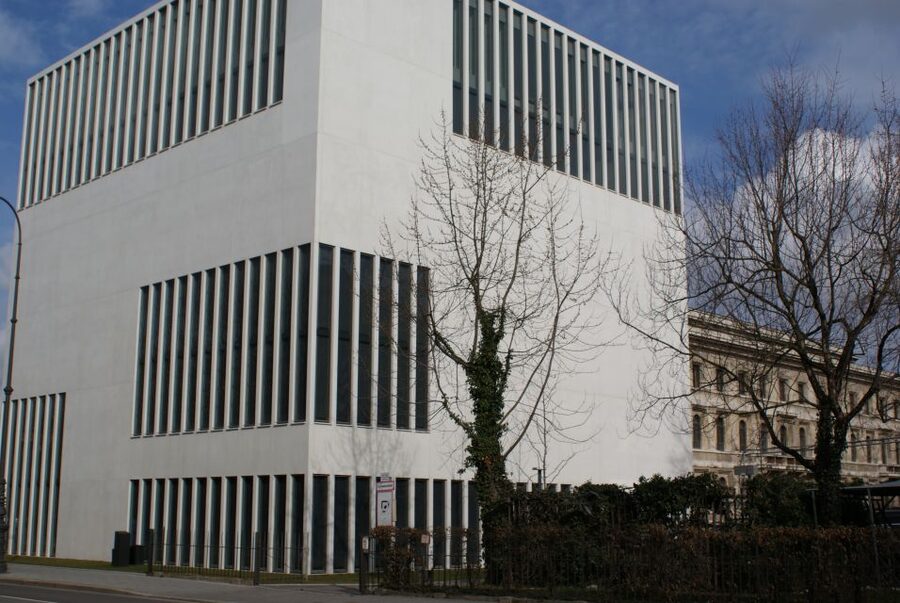
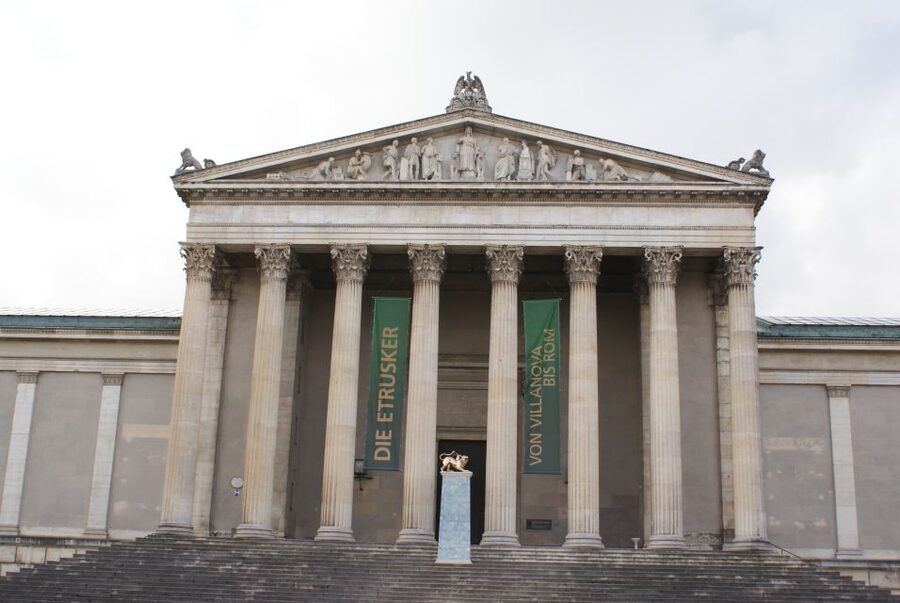
The route ends at Königsplatz, where the Nazis held rallies. This is likely the emotional peak of the tour because it shifts from individual buildings and speech locations to the open space logic of mass gatherings.
Rally squares are designed for visibility. From the right angles, a crowd becomes a statement. A speaker becomes the center of gravity. And the surrounding civic or monumental environment can make that performance feel like it belongs to the state itself. Königsplatz is the kind of place where those ideas become painfully obvious just by standing there and looking around.
The tour plan keeps the ending flexible in a useful way. You’ll finish near Königsplatz, and there’s an option to return to Marienplatz with your guide if you want help getting back to your base. That’s handy if you’re cold, tired, or simply want the last part of your day to feel low-stress.
Also, because this tour is only two hours, the ending at Königsplatz is timed for impact. You’re not walking across town all afternoon. You’re using the city’s most relevant spaces while your attention is still sharp.
Guide Alun Evans: what the reviews reveal about the experience
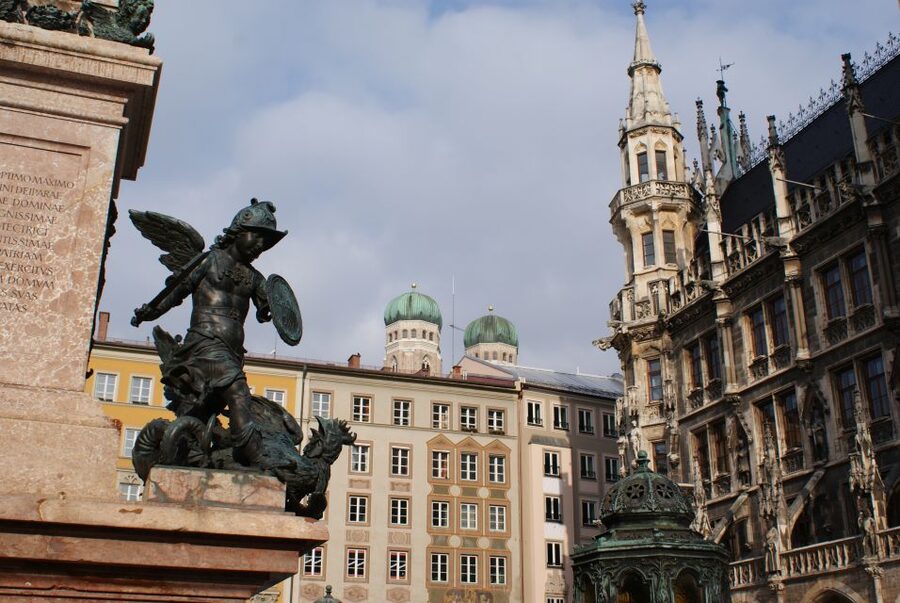
The strongest praise across the reviews is about how the guide handles the subject matter and how easy it is to connect with him. Several reviews describe Alun Evans as caring, humble, respectful, engaging, and patient. That combination matters for a tour like this, because the material is dark and the details can be emotionally heavy.
A good historical guide does two things. First, he explains what you’re looking at in plain terms. Second, he sets the tone so you feel safe asking questions or reacting to the information. In the feedback you’re given, you can see that he treats people with respect and keeps the group comfortable enough to engage, not just listen.
One review also points out that on a day when it was snowing heavily and very cold, the guide stayed engaged with the group. That tells you something important: the tour isn’t dependent on perfect weather to work. The guide adapts, so the experience still lands.
If you’re hoping for a long sit-down discussion over a beer afterward, you might not get that built in. But the reviews suggest the guide is friendly and personable, so you can likely ask a few follow-up questions during the walk if time allows.
Price and value: is $58 for 2 hours worth it?
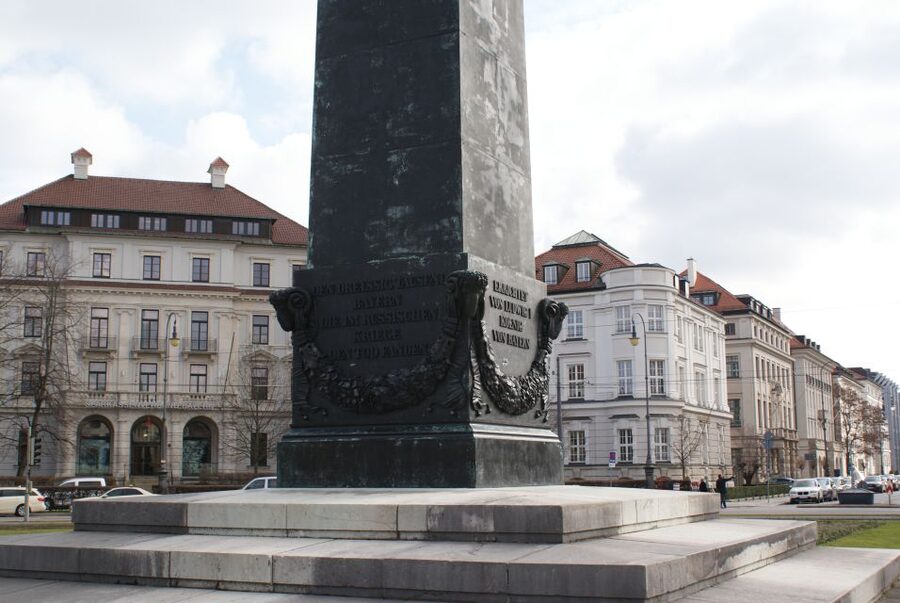
At $58 per person for a 2-hour small-group walking tour, you’re paying for more than directions. You’re paying for a guided interpretation of specific locations tied to the Nazi Party and SS rally activity, including the Beer Hall Putsch connection and the Munich origins story after 1913.
Here’s where the value really shows:
- A two-hour route in central Munich can be easy to DIY, but it’s also easy to miss the meaning without a storyline.
- The guide compresses the key points into a sequence you can remember, so you don’t spend the time googling on the sidewalk.
- The small group size, capped low, makes it easier to ask questions and get clarification when something feels confusing.
You also avoid the usual downsides of paid tours. There’s no hotel pickup included, which keeps things straightforward, and the tour does not include refreshments. That means you’re free to choose your own drink stop before or after, instead of being boxed into a schedule.
For your money, what you get is a focused orientation: which buildings and squares matter, what happened there, and why it matters. If that is your goal, the price makes sense.
Small group size, interaction, and who this fits best
The tour is built to feel intimate. One part of the information describes a maximum group size of 15 and another part lists a small group cap at 10. Either way, it’s not the kind of tour where you’re stuck at the back of a crowd.
In practice, that small size is what makes the experience better for most people. You can hear the guide. You can ask a question without shouting. And you’re less likely to lose the thread when you’re standing in a busy square.
Who it suits:
- You like history but want it anchored to real places you can see
- You prefer a guided narrative over reading plaques alone
- You’re visiting Munich for a short time and want high-impact context
Who might want to skip or adjust:
- You’re uncomfortable with Nazi-related topics and want a lighter historical walk
- You need long breaks, museum-style detail, or lots of time for Q and A
- You were planning to do everything at a relaxed pace, because this is a short, structured route
Practical tips so you get the most out of the walk
Here are a few things that help the experience click, especially with a subject this serious:
- Wear layers and shoes you trust. The tour runs in all weather, and you’ll be outside in central squares.
- Don’t overpack your day. Two hours sounds short, but it’s mentally heavy.
- Arrive a little early to find the guide holding the sign at the Marienplatz Tourist information Center.
- Think of this as context, not a full textbook. You’ll likely want to pair it with reading later, or follow up with another stop in Munich when you have time to process.
Also, be ready for contrasts. Munich can feel graceful and grand in daylight, and that’s exactly what makes the Nazi story feel so disturbing when you realize how easily public spaces can be used for propaganda and mass control.
Should you book this Munich Nazi History walking tour?
I’d book it if you want a guided, place-based way to understand how the Nazi movement took shape in Munich, and how public rally spaces supported the message. With Alun Evans leading, the tour sounds built around respectful storytelling, clear explanations, and enough interaction to keep you engaged.
I would not book it as your only source of history if you’re looking for a long, detailed education with lots of time to pause. The two-hour length means you get the essential route, not every detail.
If you want a serious history walk that stays grounded in the city you’re standing in, this is a strong choice. Just go prepared for the topic, and give yourself a moment after the tour to decompress before you jump into the next happy-hour plan.
FAQ
Where does the tour start and end?
The tour starts at Marienplatz, with the meeting point in front of the Tourist information Center. It also ends at Marienplatz.
How long is the walking tour?
The duration is 2 hours.
How much does it cost?
The price is $58 per person.
Is the guide English-speaking?
Yes, the live tour guide speaks English.
How big is the group?
It is a small group. The information provided lists a maximum of 10 participants, and another detail describes a maximum group size of 15.
Does the tour include hotel pickup or refreshments?
Hotel pickup is not included, and refreshments are not included.
What should I wear since the tour is outdoors?
The tour operates in all weather conditions, so you should dress accordingly.
More Third Reich history tours
- Munich: Birthplace of the Third Reich Guided Walking Tour
★ 4.6 · 771 reviews - Munich World War II Sites Including Dachau Concentration Camp
★ 4.5 · 570 reviews - Munich City Walking Tour, includes Third Reich & Viktualienmarkt
★ 5.0 · 458 reviews - Third Reich & WWII Walking Tour
★ 4.5 · 417 reviews
Fresh reviews out of Munich
- Munich: Bulli Tour★ 5.0 · 9 reviews
- Neuschwanstein Castle Small-Group Guided Day Trip from Munich★ 5.0 · 9 reviews
- Private Day Trip from Munich to Eagle’s Nest and Hallstatt★ 4.5 · 9 reviews
- Munich: Highlights Walking Tour with a Guide★ 4.4 · 9 reviews
- From Munich: Private Guided Tour to Rothenburg ob der Tauber★ 5.0 · 9 reviews
- Private and full rickshaw tour in the English Garden★ 4.5 · 10 reviews
- Exploring Munich by Pedicab: Premium Two Hour Tour★ 5.0 · 10 reviews
- Segway Tour Munich Old Town 3 hours★ 4.5 · 10 reviews
Third Reich & WWII Tours, compared.
Berlin’s Best: 2 Hour Walking Tour Third Reich and the Cold War
Read our review →
Third Reich Berlin: Hitler and WWII Walking Tour
Read our review →
Walking Tour of Former Nazi Party Rally Grounds
Read our review →
Browse the lists this tour appears in