
Reviewed · THIRD REICH & WWII TOURS
Third Reich & WWII Walking Tour
Munich has a special, uncomfortable power for history lovers. Nazi ideology took root here, and this 2.5-hour walking tour strings the key sites together so the story reads like a timeline in real space. I like the small-group feel (limited to 10) because you can ask questions and keep up with the pace.
Second, I like how the guides handle heavy material with care. Names that came up in real guide feedback include Michael, Alex, Josh, and Ulrich, and the best versions of this tour create space for quiet reflection, not just dates and slogans. One drawback to plan around: it’s a lot of walking and standing with limited breaks, and on cold days it can get hard to hear if you’re near the back.
Key things I’d prioritize before you go
- Small-group format (up to 10) helps you actually follow the narrative
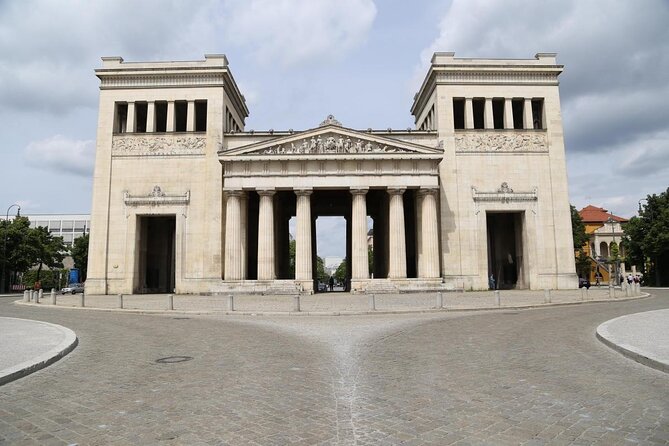
- Big Munich landmarks, placed in context: Königsplatz, Feldherrnhalle, Hofbräuhaus
- White Rose resistance is included, not only Nazi leadership and rallies
- A full timeline across locations connects the movement’s rise to what came next
- Ends at a major Hitler-era site area, with an option to look inside exhibits nearby
- Bring a drink and a snack, because there’s little downtime to reset
Where this Third Reich walk starts in Munich, and how it ends
The tour starts at Marienplatz, 80331 München, and finishes at Königsplatz 1, 80333 München, in the area tied to Hitler-era headquarters. The duration is about 2 hours 45 minutes, so you should budget roughly 3 hours total once you factor in getting oriented and moving between stops.
You’ll receive a mobile ticket, and the tour is offered in English. It runs in a small-group style (limited to 10), though the overall activity can involve a larger maximum headcount. Either way, you’ll be moving as a group and doing plenty of standing, so good walking shoes matter.
One practical note: since the start is at a high-traffic spot like Marienplatz, arrive a few minutes early and double-check your meeting point details so you don’t waste time scanning faces in a crowd. A couple of guide-direction comments point to the same theme: the meeting point info can be easy to miss if it’s buried, so make it visible on your phone before you leave your hotel.
More Walking Tours in Munich
- Munich: Third Reich & WWII Walking Tour
★ 4.6 · 6,181 reviews - Third Reich Walking Tour Munich
★ 4.5 · 4,291 reviews - Munich: Old Town & Viktualienmarkt City Walk in German
★ 4.7 · 2,304 reviews
Königsplatz: the Nazi movement’s stage in the city’s civic heart
Königsplatz is where the tour sets its tone. This is not just a “look at the buildings” stop. You’ll be walked through the post-World War I mood in Germany, including the humiliation after defeat, political violence in Munich, and the economic chaos that shaped public anger and desperation.
Why this stop matters for you: it explains how a movement grows when people are looking for certainty. Instead of treating Nazism like a distant, abstract evil, this tour frames it as something that took advantage of specific local conditions. That makes the later stops hit harder, because you understand the momentum.
Königsplatz also connects to mass events tied to the Nazi party. You’ll be pointed toward the idea of public spectacle, how it pulled crowds in, and how architecture and open space helped political messaging scale up fast. The tour doesn’t skip the unsettling parts. It also tries to keep the facts clear, so you can follow the logic without getting lost in details.
Feldherrnhalle: the failed power grab that still changed Munich
From the first rise of the movement, the tour moves to the next major turning point tied to Feldherrnhalle. This is where the story shifts from organizing and rallying into an attempt to seize power.
For you, the value here is the cause and effect. The tour ties together propaganda, public performances, and the moment when the movement tried to force change rather than win it slowly through politics. Even if you’ve read about the period before, walking these streets makes it easier to see how the plan aimed to convert crowd energy into political control.
This stop is also a reminder that historical change is messy. Plans fail, regimes fall, and yet the consequences can still be huge. That contrast is important for anyone who wants more than a “Nazi leaders did X” story and wants to understand the mechanics.
Hofbräuhaus: how the first mass momentum started in Munich
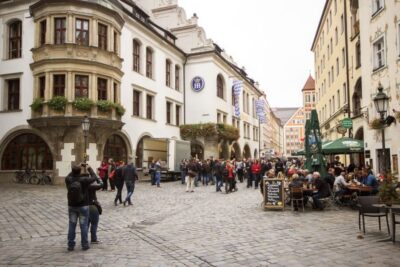
Hofbräuhaus shows up for a reason. The tour’s narrative includes the early mass meeting moment tied to the Nazi rise, and it uses Hofbräuhaus as a symbol of how public life in Munich was leveraged.
Beer halls were not just places for drinking. In periods of political stress, they became gathering points where arguments and ideology could spread quickly through conversation, applause, and repeat messaging. This is where you start seeing why the tour description emphasizes learning about life in the city during WWII. The Nazi story is not only about leaders and uniforms. It’s about social channels, crowd psychology, and public persuasion.
If you’re new to WWII history, this stop helps you anchor the big picture. If you already know the major events, it still helps because it ties the early stage of the movement to a specific Munich setting you can point to on a map.
More Third Reich history tours:
- Munich: Birthplace of the Third Reich Guided Walking Tour
★ 4.6 · 771 reviews - Munich World War II Sites Including Dachau Concentration Camp
★ 4.5 · 570 reviews - Munich City Walking Tour, includes Third Reich & Viktualienmarkt
★ 5.0 · 458 reviews - Munich 3-Hour Segway Tour: Nazi Munich & Royal Architecture
★ 4.9 · 194 reviews
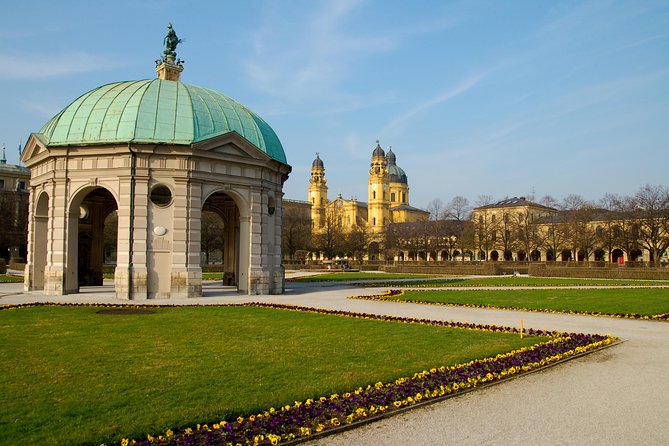
Hofgarten and the White Rose: resistance gets real space
A key part of what makes this tour work is that it includes the White Rose resistance movement in the Hofgarten area. This matters, because it counters the common trap of telling the story as if only one side existed.
You get the sense that not everyone accepted the Nazi worldview. The tour frames resistance as something brave and costly, not just a footnote. It also helps balance the heavy focus on rallies and political theater with the quieter moral choice to oppose the regime.
This is one of those segments where the guide’s delivery style matters. In the feedback I’m drawing from, guides used moments for processing and kept the tone respectful. That’s the difference between learning facts and actually understanding what those facts meant for people.
What the guides do that makes this tour worth the money
The biggest compliment repeatedly tied to this tour is the guide’s storytelling skill and professionalism on a difficult subject. Names that came up include Alex and Michael, plus Josh, who showed up in multiple accounts. Ulrich also stands out for pacing and for adding practical suggestions after the tour.
A few patterns show up in the feedback that should matter to you:
- The narration is factual and detailed, not vague.
- The pace is usually described as well managed, with moments to pause mentally.
- Guides are willing to engage, ask questions, and respond in real time.
- The tone is sensitive, treating the material with seriousness rather than entertainment value.
Still, there’s one thing to watch for. Some participants mentioned difficulty hearing the guide, and a few pointed to cold weather as a factor. So if you’re sensitive to sound, try to stay closer to the front and bring a scarf, gloves, and layers.
Timing, walking comfort, and museum time at the finish
Expect a tour that feels like it’s packed with stops, because it covers multiple landmark sites and major story beats in a short window. Even with a small break or short indoor moment mentioned in feedback (around 15 minutes at the mid point), you should still come prepared for a long stretch of moving and standing.
My practical advice:
- Bring water and a snack. One comment suggests that better rest planning would help, and you can solve it yourself with a small bottle and something easy to eat.
- Dress for cold. Multiple guide comments mention freezing conditions and keeping warm while still walking.
- If you’re finishing near the museum area, consider building in time afterward to go inside exhibits at your own pace, since the tour ends at the Hitler-era headquarters site area and the surrounding museum context can be very powerful.
You’re not just “seeing places.” You’re reading the city like evidence, and that takes attention. If you show up tired, the timeline can feel overwhelming.
Price and value: what $35.09 buys you in Munich
At $35.09 per person, this is priced like a serious guided walking tour, not a casual overview. Here’s why it can feel like a good deal if history is your thing:
- You’re getting a professional guide with a focused theme across multiple major sites.
- The duration is close to three hours, which is long enough to build context and not just point-and-walk sightseeing.
- The group size limit (10) improves the odds that questions and interaction are actually possible.
But it’s also not a bargain if you’re expecting everything to be low-effort. You’re walking a lot, the topic is heavy, and the tour says admission ticket is not included. So if you want museum time at the finish area, plan for the possibility of a separate entry cost depending on what you choose to do after the tour.
Who this tour fits best (and who might want a different style)
This is a strong pick if you want the Nazi rise explained through Munich’s actual places. It’s also a good fit if you like guided structure: a start at Marienplatz, a clear route through key landmarks, and an end at the Hitler-era headquarters area. The inclusion of the White Rose resistance storyline helps keep it from being one-note.
It’s not ideal for young kids. The tour explicitly says it’s not recommended for children under 12, which makes sense given the theme.
If you’re someone who needs light, casual sightseeing, this probably won’t match your mood. This is a serious topic about Nazism and WWII-era life, and even with sensitive delivery, you should expect it to land emotionally.
Should you book this Third Reich walking tour in Munich?
Yes, if you want a structured, small-group way to understand how Munich became central to the Nazi story, and you want the tour to connect locations like Königsplatz, Feldherrnhalle, and Hofbräuhaus into one coherent timeline. The guide quality is a big part of the value, and the fact that the White Rose resistance gets real attention is a deciding factor for me.
Book it with two expectations set right upfront: bring comfort gear because you’ll be standing and walking for close to three hours, and be ready for a heavy, respectful history lesson rather than casual sightseeing.
If you’re okay with that, this is one of the most practical ways to turn Munich’s street-level landmarks into real understanding.
FAQ
How long is the Third Reich and WWII walking tour?
It runs for about 2 hours 45 minutes (approx.).
Where does the tour start and end?
It starts at Marienplatz, 80331 München, Germany, and ends at Königsplatz 1, 80333 München, Germany, at the area tied to Hitler’s former headquarter.
What language is the tour offered in?
The tour is offered in English.
Is food included?
No. Food and drinks are not included.
Is the tour suitable for children?
The tour is not recommended for children under 12 years old.
Can I cancel for a full refund?
Yes, free cancellation is available. You can cancel up to 24 hours in advance for a full refund.
Fresh reviews out of Munich
- Munich: Christmas Markets Food & Drink Tour★ 4.6 · 50 reviews
- Munich: Walking tour of the old town with all your senses★ 4.5 · 51 reviews
- Munich: Scavenger Hunt Self-Guided Tour★ 4.1 · 51 reviews
- Hidden Architectural Gems of Munich (Max. 16 guests)★ 4.9 · 52 reviews
- Shared Departure Transfer: Munich Central Station to Munich Airport★ 3.5 · 54 reviews
- Hard Rock Cafe Munich with Set Lunch or Dinner★ 3.5 · 54 reviews
- Quatsch Comedy Club München: Die Live Show★ 4.6 · 56 reviews
- From Munich: Royal Fairytale Tour★ 4.9 · 56 reviews
Third Reich & WWII Tours, compared.
Berlin’s Best: 2 Hour Walking Tour Third Reich and the Cold War
Read our review →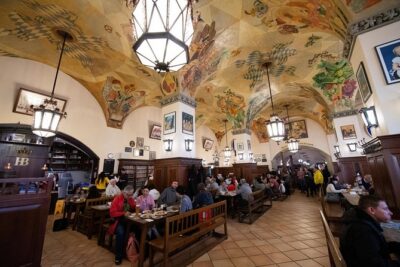
Third Reich Berlin: Hitler and WWII Walking Tour
Read our review →
Walking Tour of Former Nazi Party Rally Grounds
Read our review →
Browse the lists this tour appears in