
Reviewed · THIRD REICH & WWII TOURS
Munich City Walking Tour, includes Third Reich & Viktualienmarkt
Munich can feel like a postcard, until someone shows you how locals actually move through the city. This walking tour mixes major landmarks with a clear, human-scale story of Munich life, plus a guided stop at Viktualienmarkt for Bavarian beer and food culture. I like that the guide also gives practical navigation tips so you can plan the rest of your trip with less guessing.
Two things I really like: the guide’s city-how-to advice (where to go, when to go, and how to save time later), and the way the tour connects famous sights to the darker parts of Munich’s past, including Third Reich context. One drawback to keep in mind is that it is a lot of outdoor walking, so cold or rainy days can make the standing-around moments feel long.
What You’ll Actually Do on This Munich Walk
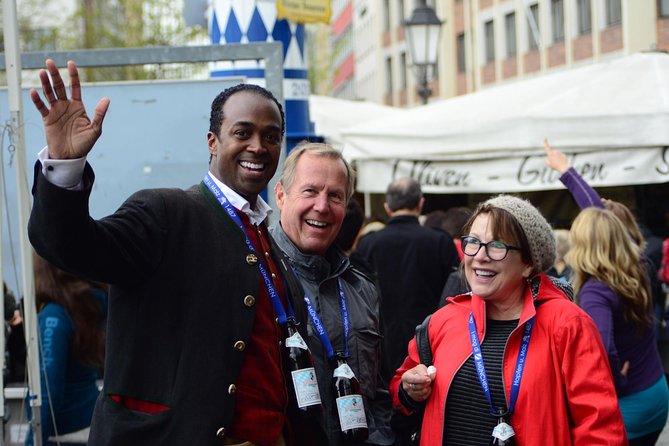
This is a guided, English-language small-group tour (max 20 people) that lasts about 3 hours 15 minutes. The route fans through central Munich, starting at Schützenstr 11 and ending at Odeonsplatz, so you finish in a great location for hopping onto trams and buses without a big detour.
You are not just collecting photos. You are getting the “why” behind the places you see, then leaving with a mental map of the city. The most repeated praise I saw centers on the guide doing exactly that, lots of context, a lively delivery, and tips for getting around like a short-term local.
Key Highlights to Look Forward To
- A guide who helps you navigate Munich, not just recite dates
- Third Reich context woven into the city’s main squares
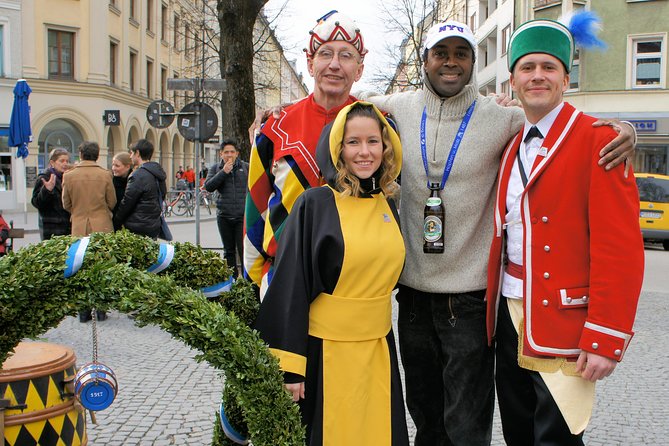
- Viktualienmarkt lunch break with Bavarian bites and beer
- A stop at the German Hunting and Fishing Museum for something unusual
- Ticket-free sightseeing at most major landmarks
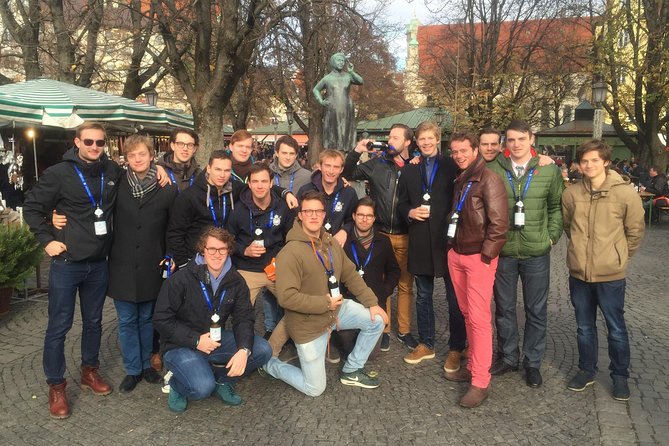
- A small group size that keeps it interactive
More City Tours in Munich
- Munich: Old Town & Viktualienmarkt City Walk in German
★ 4.7 · 2,304 reviews - Munich: City Bus Tour & FC Bayern Munich Allianz Arena Tour
★ 4.5 · 2,071 reviews - Munich City Hop-on Hop-off Tour
★ 3.5 · 1,233 reviews
A 3-Hour Walk That Gives You Munich Momentum
If you only do one guided thing in Munich, I’d make it this. The value is not in one single “wow” monument. It is in how the tour turns a first-time city visit into something you can build on. In one afternoon you learn the basic structure of central Munich, which streets matter, and how the city’s history shows up in everyday space.
At a price just under $32, you are paying for guided interpretation plus local logistics. The landmark entries listed on the route are free, so your spending focus stays mostly on food during the market stop. In other words, you get a lot of guided time without turning it into a paid-admission marathon.
The pacing is generally calm, with frequent stops. That said, you should expect periods where the group pauses outdoors for explanations. If you hate standing in the cold, dress like you mean it.
Third Reich Context Without Turning It Into a Lecture
The tour theme includes Third Reich content, and the way it is handled matters. A few people specifically praised how the subject was covered sensitively and with real context, not sensationalism. That helps you connect what you see on the street to why those places became symbolically charged.
What I like about this approach for a visitor is simple: Munich is gorgeous, and that can trick you into skipping the uncomfortable chapters. When your guide ties the history to the city’s layout and public spaces, you end up understanding the “layering,” not just the postcard surface.
Practical tip: if you want to absorb more and rush less, bring one small notebook or use your phone notes. The stories come fast at multiple stops, and a few quick reminders make it easier to connect the dots afterward.
Frauenkirche: The Twin Towers and the Devil’s Footstep Story
You start at Frauenkirche, Munich’s best-known church image: the twin-towered Gothic landmark on the city skyline. The tour frames it as a major 15th-century masterpiece, including its role as the seat of the Archbishop of Munich and Freising.
Inside, you get more than architecture. You hear about the historic crypt and the famous Devil’s Footstep legend. That detail is one of those street-level Munich stories that makes a building feel like part of a living culture, not just a monument.
Time is tight here, around 10 minutes. So I’d treat this stop as orientation plus a quick “feel” for the place. If you want a longer, slower visit, you can use the tour to decide whether to come back for a deeper look later.
More Walking Tours in Munich
- Munich: Third Reich & WWII Walking Tour
★ 4.6 · 6,181 reviews - Third Reich Walking Tour Munich
★ 4.5 · 4,291 reviews - Munich: Night Watchman Walking Tour
★ 4.7 · 2,092 reviews - Munich Ghosts and Spirits Evening Walking Tour
★ 5.0 · 1,900 reviews
A Wildcard Stop: German Hunting and Fishing Museum

One reason this tour stands out is that it breaks from the usual “church, square, repeat” pattern. The German Hunting and Fishing Museum is housed in a former Augustinian church, and it covers 3,000 square meters of exhibits.
Expect stuffed wildlife, antique weapons, and the legendary Bavarian Wolpertinger creatures. If you’re the type of visitor who loves oddball museum collections and regional folklore, this is a great mid-tour reset.
Downside to consider: museum stops are often short on walking tours. So if you are hoping for a thorough read of every exhibit, you might leave hungry for more. Use this as the spark, then return on a day when you can slow down.
Hofbräuhaus: Beer Hall History You Can Hear in the Halls
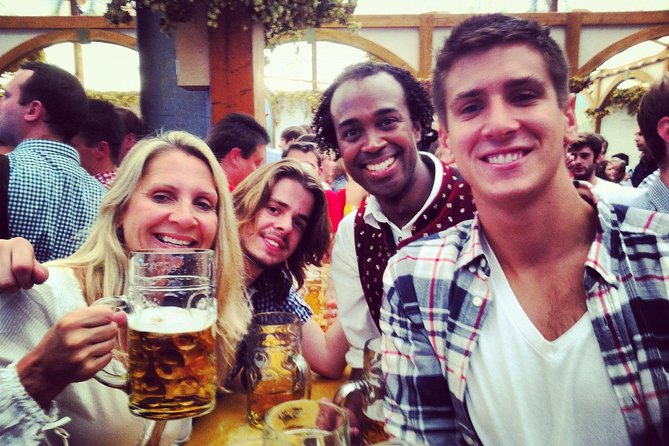
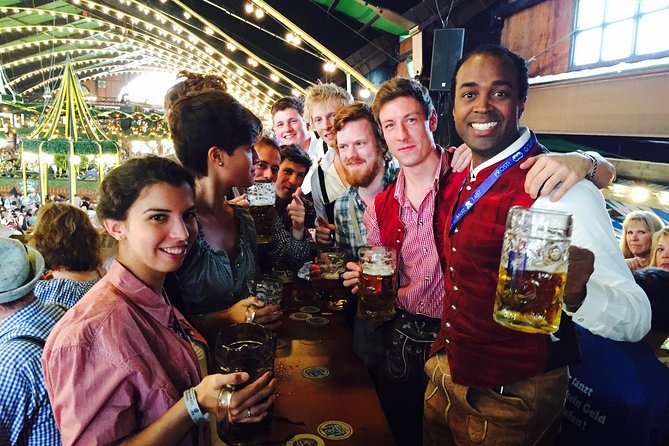
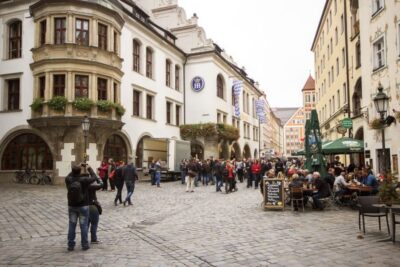
Next comes Staatliches Hofbräuhaus, Munich’s legendary beer hall. It dates back to 1589, originally a royal brewery. The tour uses it to introduce Bavarian beer and food culture in a way that feels grounded, not staged.
Even if you do not go deep into a full meal, the location itself is part of the story. You can sense how the hall became a gathering point, with home-brewed Bavarian beer and hearty cuisine linked to live traditional music.
Reality check: the hall is famous, which means it can be crowded. If you love beer hall atmosphere, it is worth soaking in. If you prefer quiet, focus on the history discussion and plan your social time at Viktualienmarkt later.
Isartor and Karlsplatz: Munich’s Old-Gate Spine
The route moves through older city defenses, starting with Isartor, one of Munich’s last medieval gates built in 1337. You also hear about fresco details and a nearby cultural connection to Bavarian comedian Karl Valentin through the Valentin-Karlstadt Museum.
Then you reach Karlsplatz, locally called Stachus. It sits on a square that became important after the medieval city walls were demolished. The Karlstor gate connection adds another “you are standing where the city used to end” feeling.
These stops matter because they show Munich evolving. You see how fortification becomes public space, and how that shift shaped what grew around it. Even if you only spend a few minutes at each, you leave with a clearer picture of Munich’s old-to-new timeline.
Marienplatz and Glockenspiel Territory
Marienplatz is Munich’s central square since 1158, and it is one of the easiest places to understand the city’s public life. You look at the New Town Hall and learn about the famous Glockenspiel. You can also spot Mariensäule and the shopping streets that radiate outward.
This is one of those stops where time can feel like it disappears, because the square pulls your attention. I like using a guide here because you get a quick sense of what to notice, then you can return later on your own without losing time.
If you are sensitive to crowds, pick a calmer moment for your own re-visit. During the tour it is typically just enough to orient you, not to make you stuck in a long wait.
Max-Joseph-Platz and Odeonsplatz: Where Power Shows Up in Architecture
Max-Joseph-Platz is another anchor. The tour connects it to the National Theatre and the Munich Residenz, and it notes the neoclassical feel and the presence of a statue honoring King Maximilian Joseph.
Then you move to Odeonsplatz, designed in the early 19th century by Leo von Klenze. Here you see Italian-influenced architecture signals in key buildings like the Theatine Church and the Feldherrnhalle, plus the Residenz. It also marks the start of Ludwigstraße, which helps you understand why this area feels like a ceremonial spine rather than just a shopping stop.
For me, the value at these plazas is interpretive. Without context, you might see “pretty buildings.” With context, you see how rulers used the built environment to claim space, influence, and identity.
Kirchen That Feel Different: St. Michael and St. Peter
This route treats churches like living history, not just sightseeing backdrops.
St. Michael’s Church is Munich’s largest Renaissance church, built in the late 16th century as a Jesuit center. You can see the striking facade and a vast barrel-vaulted ceiling, plus the royal crypt inside.
Then comes St. Peter’s Church, Munich’s oldest parish church dating back to the 12th century, known as Alter Peter. The highlight is the 91-meter tower for city views, and the interior blends Gothic, Baroque, and Rococo elements, including the high altar.
If you like architecture, these stops help you notice style changes without needing to be an art history student. If you are less into churches, treat them as a quick cultural “taste test” and watch for the details your guide points out.
Art Nouveau Snack Break Energy at Wolfsbrunnen
Wolfsbrunnen is an Art Nouveau fountain built in 1904 by sculptors Heinrich Düll and Georg Pezold. It features a bronze Little Red Riding Hood scene paired with a wolf, commissioned by the Wolf family.
This is a fun palate cleanser after heavier history and grand architecture. The story behind it makes Munich feel more playful, not only solemn.
It’s also a good moment to check your footing and timing, because after a fountain stop you are usually heading toward the market area and the food break.
Viktualienmarkt Lunch: Bavarian Bites You Can Follow Up With Later
This is the stop that many people remember most clearly, because it mixes culture with something you can actually taste.
Viktualienmarkt is Munich’s historic open-air market, active since the early 19th century. It started as a farmers’ market and now is known for fresh produce, Bavarian delicacies, artisanal goods, and a beer garden atmosphere plus the iconic Maypole.
The tour includes a mid-tour lunch break here. The tour details emphasize food made without artificial flavors, colors, preservatives, additives, fillers, or GMOs among their market selections. That matters if you’re picky about what you eat while traveling, because it signals they are trying to keep choices straightforward and real.
The sample menu focuses on a market-place snack style:
- Bavarian bratwurst (spicy, cheese, or regular) OR Bavarian potato salad with a pretzel
- Bavarian beer
- A reusable beer bottle holder
One practical note: lunch and snacks are not included in the tour price. You pause so you can buy a freshly made Bavarian lunch. I like this setup because you can choose what sounds best, not what a packaged tour decides for you.
How the Route Ends at Odeonsplatz (And Why That’s Convenient)
The walk ends at Odeonsplatz, which is a smart finish point. You are back near major central streets and public transportation. From there, you can connect easily to other sights without trekking back to where you started.
This ending also lines up well with a next step. If you want to keep going, you are positioned near areas that are easy to explore by foot for the rest of the evening.
Value for Money: Paying for a Guide, Not Just Landmarks
At $31.78 for a roughly 3 hours 15 minutes guided walk, the value is strong because:
- You get interpretation at multiple major sites, not just a single museum ticket.
- Most listed entry points are ticket-free on the route, which keeps costs predictable.
- The guide’s navigation tips help you plan the rest of your trip, which can save money on unnecessary detours.
What to budget separately:
- Your Viktualienmarkt lunch and snacks
- Any museum time you choose to add on your own after the tour whets your curiosity
For many first-timers, that is a fair trade. You spend a modest amount for structured context, then you pay only for the meals and extra visits you want.
Who This Tour Is Best For
This tour suits you if:
- You are in Munich for the first time and want quick city bearings with context.
- You like history that connects to real places and public squares.
- You want a small-group experience (max 20) where questions are easier to handle.
- You enjoy Bavarian food and beer culture, especially in a real market setting.
It may not be ideal if:
- You want lots of long interior time at every site, because the pace includes short stops.
- You dislike cold-weather outdoor pauses. Dress for it.
- You need a low-walking day. This is still a walking tour.
A Quick Word on Group Management and Staying Found
Most of the feedback is very positive about organization. Still, because a tour includes short waits for the group at food stops, your safest move is simple: stay with the group during transitions and make a mental note of where you last stopped. If you have kids in the group, this matters even more.
Should You Book This Munich Walking Tour?
I think you should book it if you want a high-value first-day orientation that goes beyond surface sightseeing. The blend of central landmarks, Third Reich context, and the Viktualienmarkt food break makes it feel practical, not just historical. Add in the small group size and the guide style described as engaging and fun, and you have a strong recipe for a memorable introduction to Munich.
Skip it only if you are chasing a mostly indoor, slow-paced tour, or if you know you will be miserable standing outside in winter weather. If walking is fine and you like learning while you move, this is a solid choice.
FAQ
How long is the Munich City Walking Tour?
The tour lasts about 3 hours 15 minutes.
Is the tour in English?
Yes, the tour is offered in English.
How many people are in the group?
The tour has a maximum group size of 20 travelers.
Where do I start and end the tour?
It starts at Schützenstr 11, 80335 München, Germany and ends at Odeonsplatz (Odeonspl. 3, 80539 München, Germany).
What is included in the price, and what should I pay for separately?
The guided tour is included. The mid-tour food stop at Viktualienmarkt is not included, so you will purchase your lunch and snacks during the pause.
Is there free cancellation?
Yes. You can cancel for a full refund up to 24 hours in advance of the experience start time.
More Third Reich history tours
- Munich: Birthplace of the Third Reich Guided Walking Tour
★ 4.6 · 771 reviews - Munich World War II Sites Including Dachau Concentration Camp
★ 4.5 · 570 reviews - Third Reich & WWII Walking Tour
★ 4.5 · 417 reviews - Munich 3-Hour Segway Tour: Nazi Munich & Royal Architecture
★ 4.9 · 194 reviews
Fresh reviews out of Munich
- Munich: Christmas Markets Food & Drink Tour★ 4.6 · 50 reviews
- Munich: Walking tour of the old town with all your senses★ 4.5 · 51 reviews
- Munich: Scavenger Hunt Self-Guided Tour★ 4.1 · 51 reviews
- Hidden Architectural Gems of Munich (Max. 16 guests)★ 4.9 · 52 reviews
- Shared Departure Transfer: Munich Central Station to Munich Airport★ 3.5 · 54 reviews
- Hard Rock Cafe Munich with Set Lunch or Dinner★ 3.5 · 54 reviews
- Quatsch Comedy Club München: Die Live Show★ 4.6 · 56 reviews
- From Munich: Royal Fairytale Tour★ 4.9 · 56 reviews
Third Reich & WWII Tours, compared.

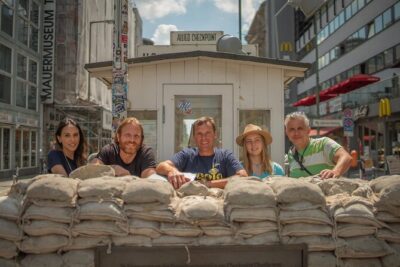
Berlin’s Best: 2 Hour Walking Tour Third Reich and the Cold War
Read our review →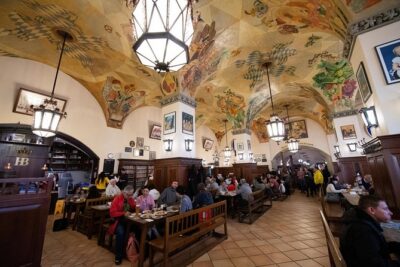
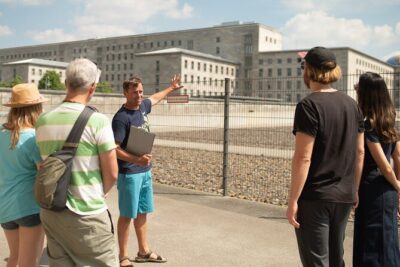
Third Reich Berlin: Hitler and WWII Walking Tour
Read our review →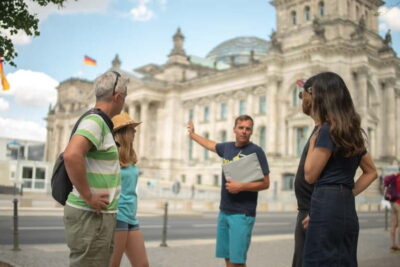
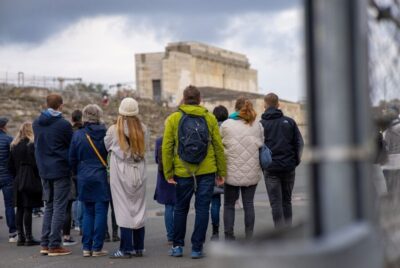
Walking Tour of Former Nazi Party Rally Grounds
Read our review →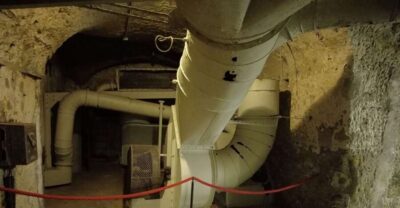
Browse the lists this tour appears in