
Reviewed · WALKING TOURS
Weimar: Old Town Guided Walking Tour
Weimar has one of those rare “history in real streets” feel, where big ideas like Weimar Classicism and the Bauhaus show up in architecture and place names. I love how this walk keeps the focus tight on the key sights, and I like that the guide mixes facts with amusing, human-scale stories rather than turning it into a lecture.
The one thing to plan around is that it is a true walking tour, rain or shine, and it is not built for wheelchair users or people with mobility or vision needs.
Key highlights worth knowing before you go
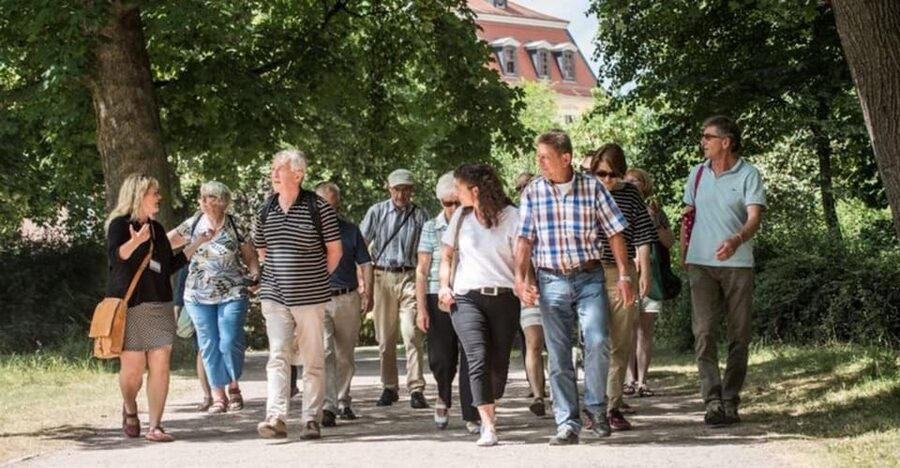
- Old Town route with clear waypoints, starting at Neptun Brunnen and ending at Theaterplatz
- Weimar Classicism on foot, with stops that connect ideas to buildings you can actually see
- Bauhaus origin story in context, so it does not feel like a random art-history detour
- Weimar Republic facts that fit the street map, especially around the Democracy Square area
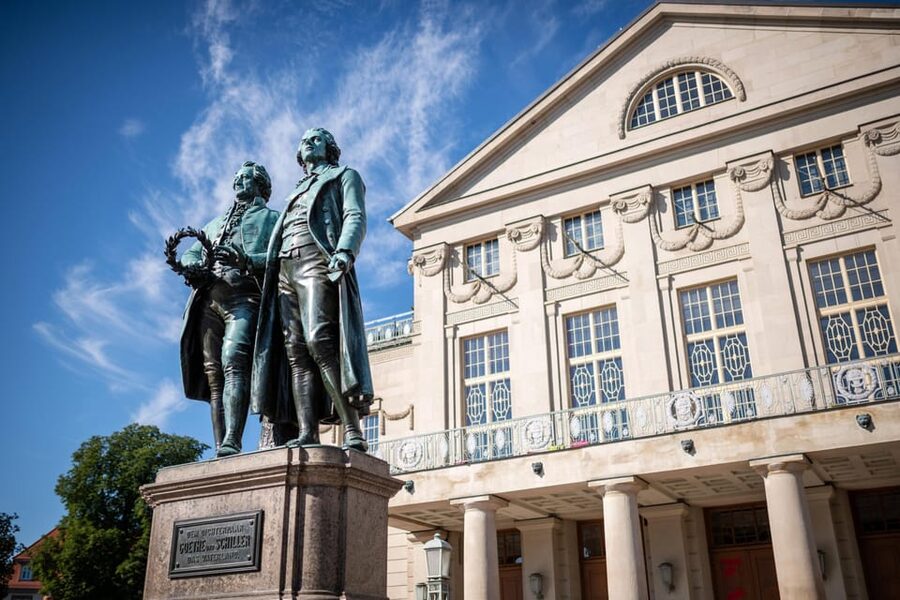
- Goethe and Schiller-related scenes, including Goethe’s residence and the famous poet-duo monument at Theaterplatz
- Tight timing that works, 1 to 2 hours for a satisfying overview without eating your whole day
Weimar Classicism, Bauhaus, and the Weimar Republic, all in one walk
This tour works because it treats Weimar like a living timeline. You are not just “seeing buildings.” You are connecting movements in art and politics to the exact places they happened or were represented. Even if you only know the names in passing, the walk helps you understand why Weimar mattered, and how the city’s identity was shaped by thinkers, artists, and events that still echo today.
Two things make it especially appealing. First, the Weimar Classicism thread runs through the route, so the architecture and literary references feel coherent instead of scattered. Second, the guide’s style tends to keep you entertained while still landing solid facts. It is the kind of combination that makes history feel light on your feet.
If you want a “quick but meaningful” introduction to Weimar, this is a strong choice. If you are craving long museum time, you will likely want to add that separately. This is a walking overview first.
More Walking Tours in Weimar:
- Discover Berlin Half-Day Walking Tour
★ 5.0 · 9,624 reviews - Berlin: Third Reich and Cold War 2 Hour Walking Tour
★ 4.9 · 6,830 reviews - Munich: Third Reich & WWII Walking Tour
★ 4.6 · 6,181 reviews
Neptun Brunnen to Market Square Weimar, the walk’s first big anchor
You start at Neptun Brunnen, then head into the heart of the old town at Market Square Weimar. This is a smart opener because a market square is where city life gathers, and it is also where stories about civic identity tend to start making sense. You get a photo stop, guided tour commentary, and time for the basics: get your bearings, learn what to notice, and figure out the pace.
At Market Square, I would pay attention to how the guide frames the idea of “Weimar as a stage.” Classicism in this part of Germany is not only in textbooks. It shows up in the way the city organizes space and public life. If you came for atmosphere, this is where it begins. If you came for context, the guide is usually able to set the political and cultural background fast from here.
Practical tip: this first stretch is a good moment to ask a question if you have one. The group is still fresh, and the guide can often tailor explanations while you are near the main square.
Democracy Square, then Weimar Republic context you can actually picture
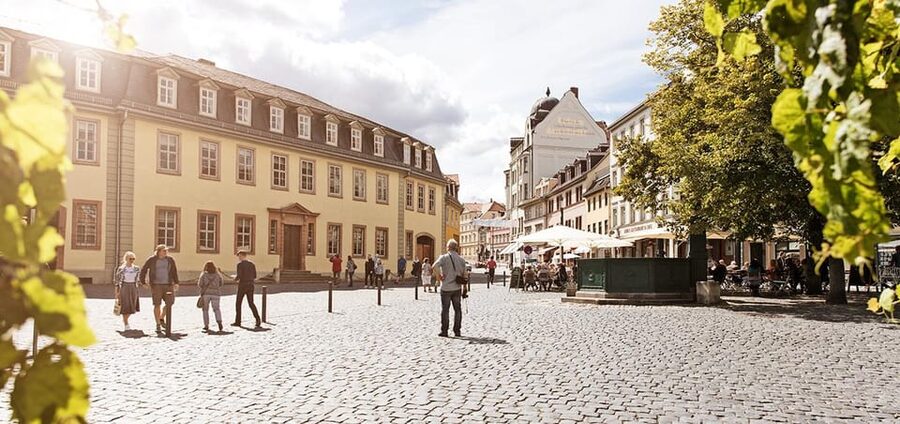
Next up is the Square of Democracy. This is one of the stops where the tour’s “street-level history” approach really pays off. When you talk about the Weimar Republic, it can sound distant or abstract. But when you are standing in the civic center area and hearing how the city’s identity played into that era, the topic becomes easier to grasp.
Expect a photo stop plus guided sightseeing as the guide connects themes: governance, public life, and how Weimar became a place linked to political change. I like this stop because it shifts you from art and literature into the political atmosphere that shaped the city’s reputation.
One consideration: this is still a small-group street walk, not a deep classroom. If you want every detail about the Weimar Republic, you will likely use this as orientation and then follow up later on your own. Think of it as “a clear storyline,” not “the full textbook.”
Schillerstraße and a park pause, how the route keeps you moving and thinking
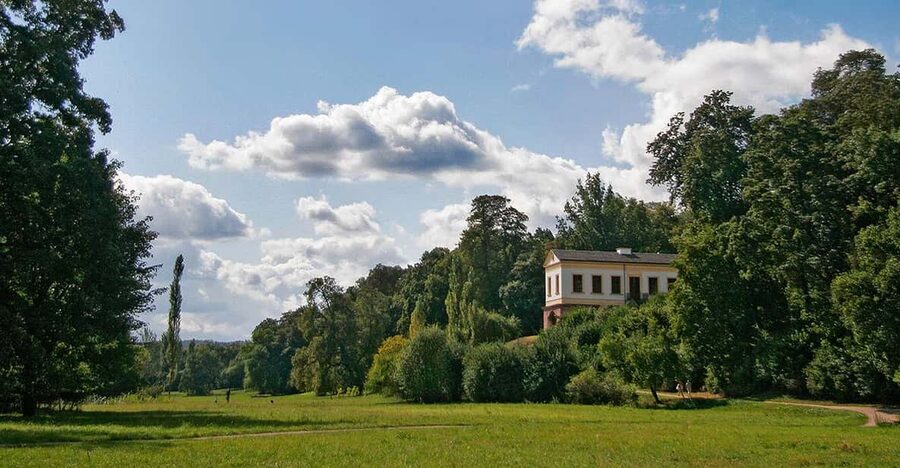
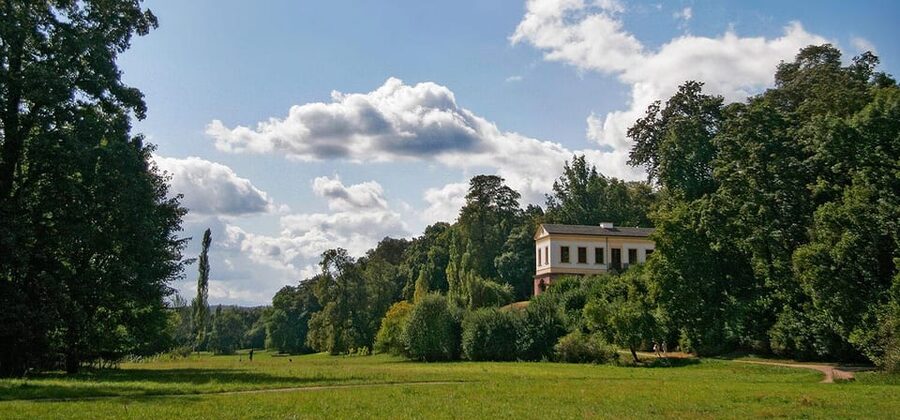
After Square of Democracy, you move past a park and continue toward Goethe’s residence. That park segment matters more than you might think. It breaks up the walking rhythm and gives you a brief reset before the more focused literary and architectural moments.
Then you reach Schillerstraße, another key street stop with photo time and guided commentary. Streets like this are where you start to feel the idea of Weimar Classicism as a real neighborhood identity. The guide’s job here is usually to connect what you see to who shaped it, so you start recognizing “patterns” rather than only single landmarks.
If you are the type who likes to collect mental maps, Schillerstraße is a good area to slow down for one minute. Look at street alignments and building scale, then listen to the explanation. You will understand more quickly because your eyes and ears are working together.
Goethe’s residence and ending at Theaterplatz, the emotional finish line
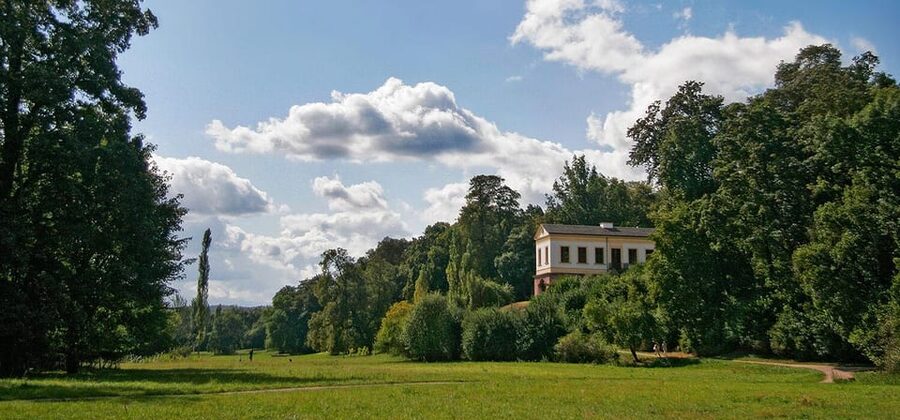
The tour continues down toward Goethe’s residence, one of the most concrete “this person was here” stops on the walk. When you see a residence tied to a major literary figure, it turns biography into place. The guide’s commentary here tends to connect Goethe to the city’s broader cultural reputation, so it does not feel like a random stop on a long itinerary.
Finally, the walk culminates at Theaterplatz, home to a renowned monument of the poet duo. This is a satisfying end point for two reasons. One, Theaterplatz is naturally dramatic, so the monument lands emotionally. Two, after the earlier stops on civic life and streets tied to key writers, you end with a symbol that summarizes the Weimar Classicism vibe.
What I like about this finishing choice is that it gives you closure. You are walking from civic identity into the literary-cultural heart of the city, and by the time you reach the poet-duo monument, your brain usually clicks into place. The guide’s route planning makes that happen.
If you still have energy after the tour, Theaterplatz is also a convenient base point for continuing on your own. You can stay in the same area rather than trekking across town right after your guided overview ends.
What you actually get from 1 to 2 hours, and why it feels like good value
This walk costs about $11 per person, and the value comes from how quickly it builds coherence. For that price and time window, you are buying an organizer’s brain: someone turns several major parts of Weimar into a single understandable route.
The duration is listed as 1 to 2 hours, and that matters. Long tours can wear you down. Short tours can feel too light. This one aims for the sweet spot: enough time to cover multiple landmarks, plus guided commentary that gives you context at each stop.
The guide also plays a big role. It is a live German tour guide, and one detail that stands out from the style of past guides is the mix of needed facts with amusing anecdotes. That combination is what keeps the time from dragging, and it is why so many people rate it very highly. The tour is sitting at a 4.7 average rating with 1,080 reviews, which is a pretty strong signal for consistency.
One more practical thing: the walk is rain or shine. That means you are not gambling on weather ruining your day. Bring the right clothing and you are set.
Walking details that can make or break the day
This is a walking tour with comfort shoes as your best friend. You should also dress for the weather because it runs rain or shine. If you are traveling in cold seasons, you will want shoes with grip, since old-town pavements can be slick when wet.
The tour takes place without hotel pickup and drop-off. That is good if you like control, and it is also a heads-up if you prefer a door-to-door service. You will be meeting at Neptun Brunnen and finishing at Theaterplatz, so plan a simple on-your-own start and end.
Language note: the tour guide speaks German. If you are comfortable with basic German, you will get a lot. If not, you can still enjoy the visual story, but your understanding of the finer facts will depend on your comfort level.
Group pace is another reason to keep your expectations realistic. You are seeing key sights with photo stops, not slow wandering. If you like to linger, you will probably do your “extra gazing” right before or right after the guided portion.
Who should book this, and who might want another option
This walk is a great fit for:
- You want an efficient introduction to Weimar
- You like your history connected to real places
- You want to connect Classicism, Bauhaus roots, and civic history without hopping between far-away stops
It is less ideal if:
- You use a wheelchair or need mobility support, because it is not suitable for wheelchair users
- You have significant visual impairment, because it is not suitable for visually impaired people
Because the tour is not designed for accessibility needs, it is smart to choose a different format if you require step-free routes or adapted guidance.
My practical take: how to decide before you go
Before you book, ask yourself what you want from the day. If you want a guided “Weimar orientation” that ties art movements and political context into one readable story, this tour checks the boxes.
If your ideal travel day is museum-heavy or you want deep, self-paced study at one site, you might feel shortchanged by 1 to 2 hours. In that case, consider using this tour as your morning primer, then spend the afternoon doing longer independent time around the stops that interest you most.
Also, since the guide is German-speaking, decide if you can follow along comfortably. If language is a concern, you might still enjoy the walk, but it will work best when you can understand the main points.
Should you book the Weimar Old Town Guided Walking Tour?
Book it if you want a well-timed, guided overview that turns Weimar into a clear story. The route from Neptun Brunnen to Theaterplatz is compact, logical, and built around the big threads of Weimar Classicism, the cradle-of-the-Bauhaus narrative, and the Weimar Republic topic. At roughly $11 per person for a 1 to 2 hour guided walk, it is good value if you like city walking tours with meaningful commentary.
Skip or switch plans if you need accessibility support or if you want a museum-like, slow deep-dive experience.
FAQ
Where does the tour start?
The tour starts at Neptun Brunnen.
Where does the tour end?
The tour ends at Theaterplatz.
How long is the guided walking tour?
The duration is 1 to 2 hours.
How much does it cost?
The price is $11 per person.
Is hotel pickup or drop-off included?
No, hotel pickup and drop-off are not included.
What language is the live tour guide?
The live tour guide speaks German.
Is the tour canceled if it rains?
No. The tour takes place rain or shine.
Is the tour suitable for wheelchair users or people with mobility impairments?
No, it is not suitable for people with mobility impairments or wheelchair users.
What should I bring?
Wear comfortable shoes and bring weather-appropriate clothing.
Fresh reviews out of Weimar
- Weimar: Die Highlights auf eigene Faust entdecken★ 4.3 · 125 reviews
- Weimar: DunkelWeimar, true crime citytour and game★ 4.0 · 64 reviews
- Weimar: Old Town Tour Classical Weimar★ 4.5 · 33 reviews
Walking Tours, compared.


Berlin’s Best: 2 Hour Walking Tour Third Reich and the Cold War
Read our review →
Third Reich Berlin: Hitler and WWII Walking Tour
Read our review →Browse the lists this tour appears in