
Reviewed · WALKING TOURS
Walking Through Dresden’s Past with Dr. Fraser Macdonald
Dresden can look like one big museum from the outside, but this tour gives you the map for reading it. Dr. Fraser Macdonald guides a focused walk through the city’s major turning points, using churches, monasteries, and royal power as your timeline.
What I like most is the tight, two-hour route that still covers both Neustadt and Altstadt, so you get oriented fast. I also love the storytelling style that connects architecture and belief, not just dates and names. The downside to plan for is simple: it’s a walking tour, and some of the most famous stops are discussed from the outside, with inside visits left to you.
Key takeaways before you go
- Small-group feel with a maximum of 30 people, which makes questions easier.
- English-guided with an enthusiastic, narrative approach that helps history stick.
- Outside-first touring at several churches and buildings, with optional entry if you want to linger.
- A smart route switch at Augustus Bridge, so you cover both sides of Dresden without feeling scattered.
- Real chances for viewpoints and photos as the walk moves through skyline moments and historic streets.
- Good “get your bearings” value if your time in Dresden is limited.
Why This 2-Hour Dresden Walk Works for First Timers
If you’re seeing Dresden for the first time, you need two things quickly: orientation and context. This tour is built for that. It keeps moving, but it doesn’t feel like a race, and you end in a prime spot to continue on your own.
The big win is how the walk teaches you to look. Dresden is famous for impressive buildings, but the deeper story is how different eras shaped what you see now, including religious shifts, royal ambitions, and the city’s dramatic 20th century experience. Dr. Fraser Macdonald’s approach helps you make sense of what would otherwise feel like separate landmarks.
Another plus is the time-saving structure. You spend about 2 hours on the guided route, then you’re free to do the fun part, exploring at your own pace. If you’re the type who wants highlights plus “how did we get here,” this is a strong fit.
More Walking Tours in Dresden
- Dresden: City & Semperoper Guided Walking Tour
★ 4.8 · 2,307 reviews - Dresden: Guided City Walk
★ 4.6 · 2,075 reviews - Dresden: Complete Walking Tour with Frauenkirche Visit
★ 4.8 · 700 reviews
Meeting at the Golden Rider, Then Getting Oriented Fast
The tour starts at the Golden Rider statue on Neustädter Markt, 01097 Dresden. It’s an easy anchor point, near public transport, and it sets the tone for the day: a walk that begins in the Neustadt area and moves toward the Altstadt center.
From the first moments, you get a sense of how Dresden is laid out. The route is designed so you’re not just visiting famous names, you’re also learning how the neighborhoods connect. By the time you reach the end point at Theaterplatz, you’ll be positioned for several top sights nearby, including the Zwinger and Semperoper area.
This also matters for planning your day. If you schedule this early, you’ll know what you want to revisit. If you schedule it mid-trip, you’ll understand where to spend extra time.
Köpckestraße on the Elbe: Start Where Dresden Began
Stop 1 is Köpckestraße, on the banks of the Elbe. This is a clever starting point because it reminds you that cities do not begin with big monuments. They start with settlement, land, safety, and life that grows slowly.
At this stop, the guide pauses long enough to focus on the human side of the story: the early permanent settlers, the local culture and language context, and how the people living there faced displacement over time. Even if you’ve heard Dresden’s name for other reasons, this section reframes the city as lived history, not just architecture.
Practical tip: the area is outdoors and on the move. If the weather is cool or damp, bring a light layer. You’ll appreciate it during the pauses.
Museum für Sächsische Volkskunst: When a Monastery Becomes Royal Hunting Lodge
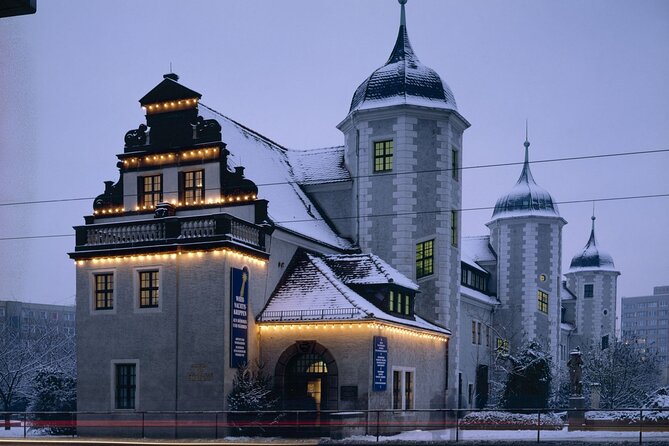
Next you reach Museum für Sächsische Volkskunst mit Puppentheatersammlung. The guided talk happens outside, and you won’t be entering the museum with the group. Still, it’s a fascinating stop because you learn how the same site can shift identity across centuries.
Here’s the core storyline: the place began in the 15th century as a wealthy Augustinian monastery. After the Reformation period and changing power structures, it was demolished and repurposed as a royal hunting lodge in the 16th century. That kind of transformation is exactly what you want to understand in Dresden, because the city’s visible form is tied to whoever held influence.
If you want more than the exterior talk, you can visit on your own. Entry for the museum is extra, and prices are listed on the museum’s visit page. For many people, doing just the guided stop is enough, and you’ll choose based on interest and time.
Another way to spend a Dresden afternoon:
- Dresden: Semperoper Tickets and Guided Tour
★ 4.7 · 12,102 reviews - Dresden: The Original Night Watchman Tour in Lantern Light
★ 4.6 · 6,653 reviews - Dresden: Semperoper and Old Town Tour
★ 4.8 · 5,735 reviews - Dresden: River Sightseeing Boat Cruise
★ 4.3 · 5,323 reviews
Dreikoenigskirche and the Haus der Kirche: Baroque Beauty With Older Roots
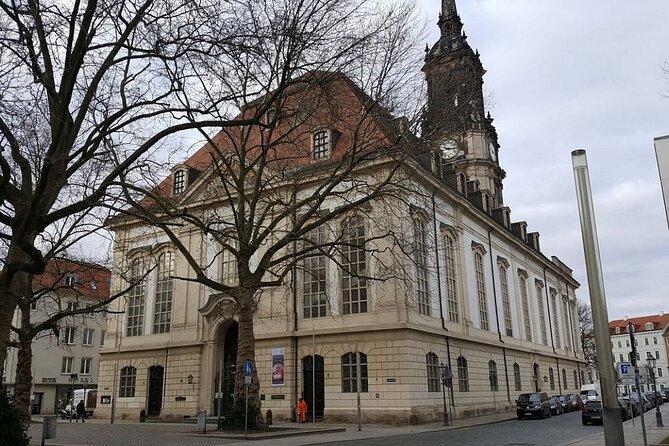
Stop 3 is at Haus der Kirche – Dreikoenigskirche. This is another “listen closely” moment. The building you see today is Baroque in style, but the guide connects it to earlier history in the former Altendresden.
The key point here is how religious sites act like time capsules. You’re not just looking at a church facade, you’re seeing layers of early 15th century presence and later transformation. The tour does not include entering the church or climbing the tower with the group, but you can do both at your own pace.
If you’d like a higher view, plan for the optional tower climb fee (listed as 5 euros). This is one of those choices that can make your photos pop, especially if the sky is clear.
Augustus Bridge: The Moment the Route Turns Toward Altstadt
After the Dreikoenigskirche area, the walk crosses the Augustus Bridge. This is more than a crossing. It’s a natural shift in your understanding of Dresden.
Crossing bridges in historic cities often feels like a photo break. Here, it also serves as a mental boundary between Neustadt and Altstadt. Once you cross, you’re in the part of Dresden where the landmarks stack up, and you’ll start seeing how medieval and early modern priorities shaped the skyline.
This is also the point where pacing matters. The route is laid out so you don’t feel rushed at the big stops, but it keeps you moving steadily enough that you still have time to explore afterward.
Frauenkirche Dresden: Why the Story Goes Back Far Before the Baroque Era
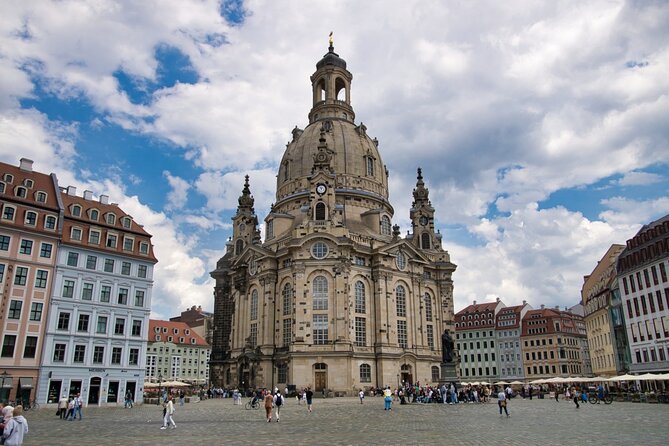
Stop 4 is Frauenkirche Dresden. The tour focuses on how long the site’s story runs, even before the Baroque period construction that many people associate with the building today. You’ll learn about how the church experienced structural and religious changes across that long timeline.
One important note: the tour does not enter the church or its museum areas. Entry is free if you want to add time on your own, but the guided portion keeps the attention on interpretation, not lining up or rushing inside.
This stop is a high-interest one, and it tends to land well for first-timers because the building is instantly recognizable. But the bigger value is hearing how the past keeps echoing in the present, through changes in architecture and purpose.
Holy Cross Church: 13th Century Origins and Reformation Witness
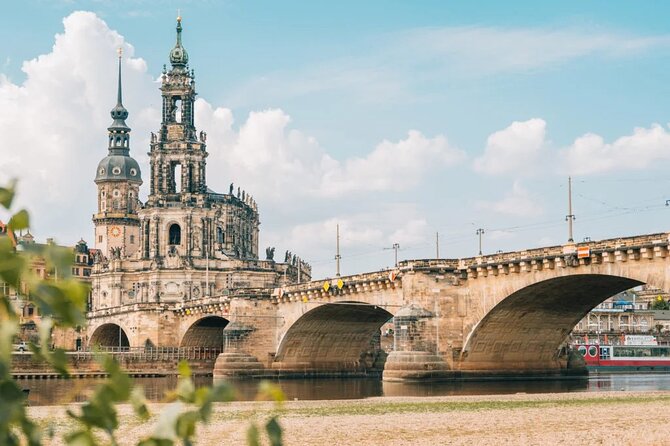
Next is Holy Cross Church. The guide tells the story of how it was originally built in the 13th century, then destroyed multiple times, and how it also witnessed crucial moments during the Reformation.
This is where you’ll start noticing patterns. Dresden’s churches are not just places of worship. They are documents of power, conflict, rebuilding, and changing rules. Even if you’re not a religious-history specialist, the way the narrative connects the physical building to political moments helps you read the city without effort.
Like other major stops on the route, the church is free to enter if you choose, but the guided talk happens without going inside as part of the group plan.
Denkraum Sophienkirche: The Lost Sophienkirche Story in Franciscan Form
Stop 6 is Denkraum Sophienkirche. This is one of those places where your understanding deepens because the story is about return and loss, not just construction.
The tour covers the Franciscan monastery origins in the 13th century, the later demise, and then the later “resurrection” as the iconic Sophienkirche. Even if you don’t know the building already, you’ll come away with a clearer idea of how political and religious currents kept rewriting Dresden’s map.
The guided stop lasts long enough to connect the dots, then you’re back on the route. This is a good pace for people who get tired in long museum-style tours but still want meaningful history.
As with several other stops, admission for the site is free during the guided portion, and you can spend extra time if you’re interested.
Dresden Castle and the Residenzschloss Ending: Power, Elevation, and Transformation
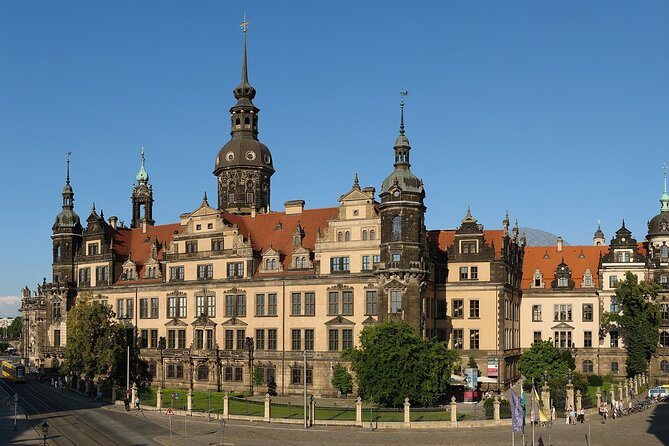
The final stop is Dresden Castle, also known as the Residenzschloss. The tour frames it as the evidence of Dresden’s rise, from a smaller, less important city to one of the key players in the Holy Roman Empire.
The guide explains how this royal residence was built to house the Electors and Kings of Saxony, and how the palace represents transformation over time. Even though you do not enter the building as part of the guided segment, you’ll understand what you’re looking at when you see the palace structure from outside.
If you want to go inside, that’s optional and costs extra, with prices listed on the official palace visit information. Many people like to end the guided story and then decide whether they want the interior layers too, based on energy and interest.
The tour ends at Theaterplatz, where you can step directly into the sights around the Zwinger and Semperoper area.
What You Pay for $60.34, and How It Adds Up
The price is $60.34 per person for about 2 hours of guided walking. What’s included is straightforward: a professional guided tour.
Where value shows up is in what you get without extra hassle. You get a carefully planned route, a guide who explains the why behind the buildings, and a schedule that leaves plenty of time to explore after the walking part ends.
What is not included is also clear. Several stops have optional paid entries if you want to go deeper on your own. That includes:
- Tower climb at Dreikoenigskirche (listed as 5 euros)
- Entry to Residenzschloss (listed as 14 euros)
- Entry fees for the Museum für Sächsische Volkskunst mit Puppentheatersammlung (listed as 5 euros)
- Entry fees for Haus der Kirche – Dreikoenigskirche (listed as 5 euros per person)
If you only follow the guided interpretation and choose not to enter optional buildings, you’ll likely spend close to the base price. If you add one or two extra entries, the overall cost rises, but you’ll also get more “inside perspective” on the same story the guide has been telling.
Pace, Group Size, and the Practical Stuff That Makes a Tour Feel Good
This is a walking tour, and while it’s described as manageable for most travelers, you should plan for steady movement. One reviewer noted it feels like about a mile of walking, and that matches the tour length and number of stops.
A small detail with big impact: the group maximum is 30 travelers. That makes it easier to ask questions and for the guide to adjust pacing.
Dr. Fraser Macdonald brings an anthropology background, and you can feel it in the way he talks about people, not just monuments. That also shows up in the Q and A style, including questions about major events in Dresden’s 20th century history. If that topic interests you, this tour gives you a good starting lens, even if it doesn’t replace museum time.
Also, the tour requires good weather. On rainy days, you won’t want to be underdressed, because the experience depends on walking between stops.
Tips for Your Best Day in Dresden After the Tour
Because the tour ends at Theaterplatz, you have a useful launch point for the rest of your day. If you want to keep going, the Zwinger and Semperoper area are right there.
If you want to extend the story rather than just add more sights, use the tour as a filter. Ask yourself which buildings grabbed you most on the outside. Then spend your extra time where the guided talk gave you the best reasons to care.
Photo-wise, this route is designed for views, especially around skyline moments and major bridges. If you’re traveling with a camera, you’ll likely want to keep a phone ready too, because the stops are frequent and time is tight.
Finally, wear comfortable shoes. This tour is short, but it’s still a lot of walking in historic streets.
Should You Book This Tour With Dr. Fraser Macdonald?
Book it if you want:
- A fast, high-quality introduction to Dresden’s history and culture
- A route that mixes famous landmarks with less-obvious story stops
- A guide who explains the “why” behind architecture and religion, not just what you’re seeing
- A way to get oriented and then make smarter choices about what to revisit
Skip it or pair it differently if you only want museum-style time inside buildings with long entry visits. Since the guided portion stays outside at several major sites, you’ll need to choose extra entries on your own if that’s your priority.
If Dresden is on your list but you also have limited time, this is one of the cleaner ways to use it well.
FAQ
How long is the walking tour?
It lasts about 2 hours.
What language is the tour offered in?
The tour is offered in English.
Is the tour mostly inside buildings or outside?
The guided portion focuses on exterior viewing and storytelling at several stops, and you will not enter some buildings or museums with the group. You are free to enter some sites on your own during your free time.
Are entrance fees included?
The professional guided tour is included, but entrance fees for optional sites are not. Extra costs are listed for items like the Dreikoenigskirche tower climb, Residenzschloss entry, and the Volkskunst museum entry.
Where does the tour start and end?
It starts at the Golden Rider on Neustädter Markt 14, 01097 Dresden, and ends at Theaterplatz, 01067 Dresden.
Is the tour dependent on weather?
Yes. It requires good weather, and if it cannot run due to poor weather, you will be offered a different date or a full refund.
Fresh reviews out of Dresden
- Dresden: 2 day ticket for museums of the Dresden State Art Collections★ 4.7 · 54 reviews
- Big Sightseeing Tour in Dresden with Liveguide★ 4.5 · 55 reviews
- Dresden Sightseeing Treasure Hunt★ 5.0 · 57 reviews
- Public guided tour of the old town including a tour of the Frauenkirche★ 5.0 · 59 reviews
- Dresden: Walking Tour with Virtual Reality elements★ 4.5 · 63 reviews
- Dresden: Bootstour im Schlauchboot durch die Altstadt★ 4.9 · 64 reviews
- From Dresden: Bohemian & Saxon Switzerland Day Trip★ 4.8 · 64 reviews
- 1.5 hours Segway Elbe Mini Tour★ 5.0 · 66 reviews
Walking Tours, compared.

Berlin’s Best: 2 Hour Walking Tour Third Reich and the Cold War
Read our review →
Third Reich Berlin: Hitler and WWII Walking Tour
Read our review →Browse the lists this tour appears in