

Reviewed · WALKING TOURS
Queer Berlin Walking Tour
Queer Berlin is interesting because Berlin’s story of gay, lesbian, trans, and queer life is written right into the streets, the parks, and the nightlife blocks, not just in books. I like how this walk ties everyday places in Schöneberg to real legal and political shifts, and I like how stops like the former Eldorado site turn big history into something you can point at and remember.
The one thing to consider is that it’s a proper city walk. The tour runs in all weathers and lasts three and a half hours, so you’ll want comfortable shoes and a bit of stamina for repeated stops and street crossings.
Key highlights you should care about
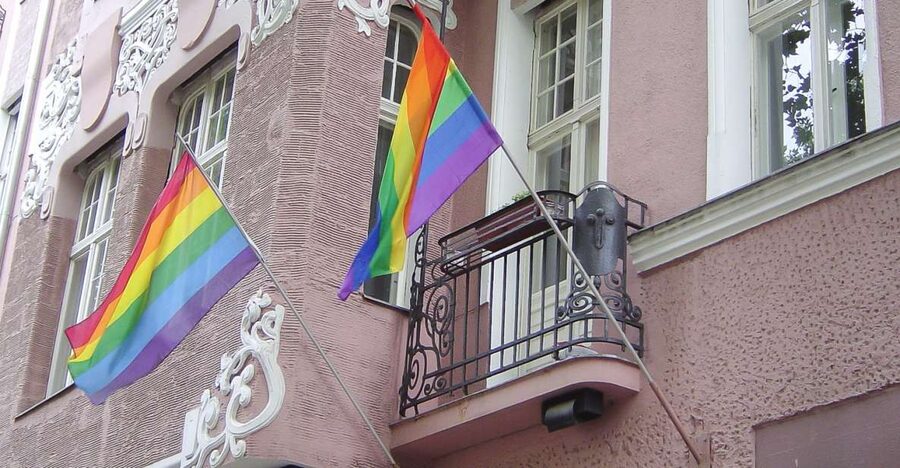
- Schöneberg, the iconic gay neighborhood and a living chapter of Berlin’s modern history
- The former Eldorado bar site connected to some of the oldest queer and trans nightlife in the city
- Magnus Hirschfeld’s work and the Institute for Sexual Science, including how it was destroyed
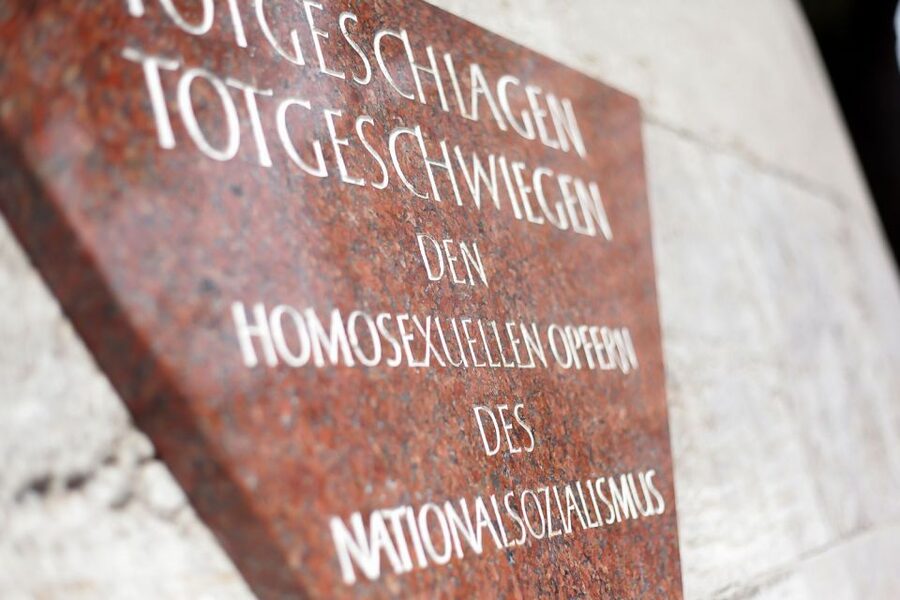
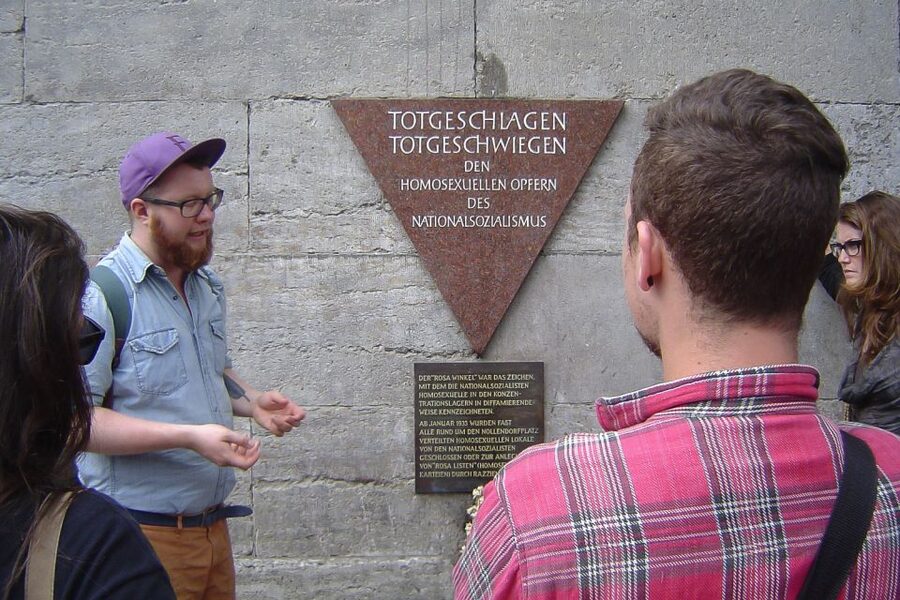
- A memorial to homosexuals persecuted by the Nazis and the long shadow of Nazi policy
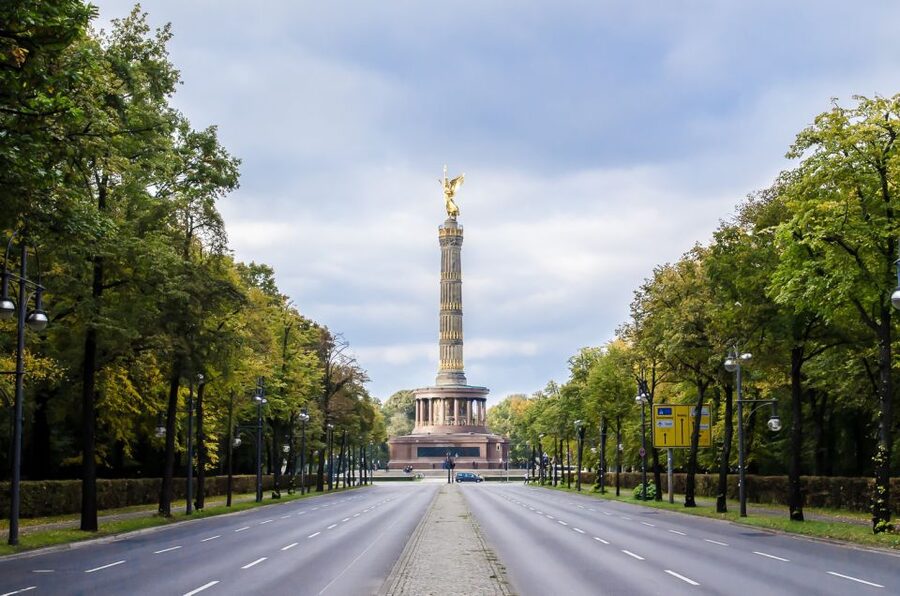
- Tiergarten and the Berlin Wall area where queer meeting life has had a changing, complicated backdrop
Schöneberg and the Tiergarten: the queer map you actually want
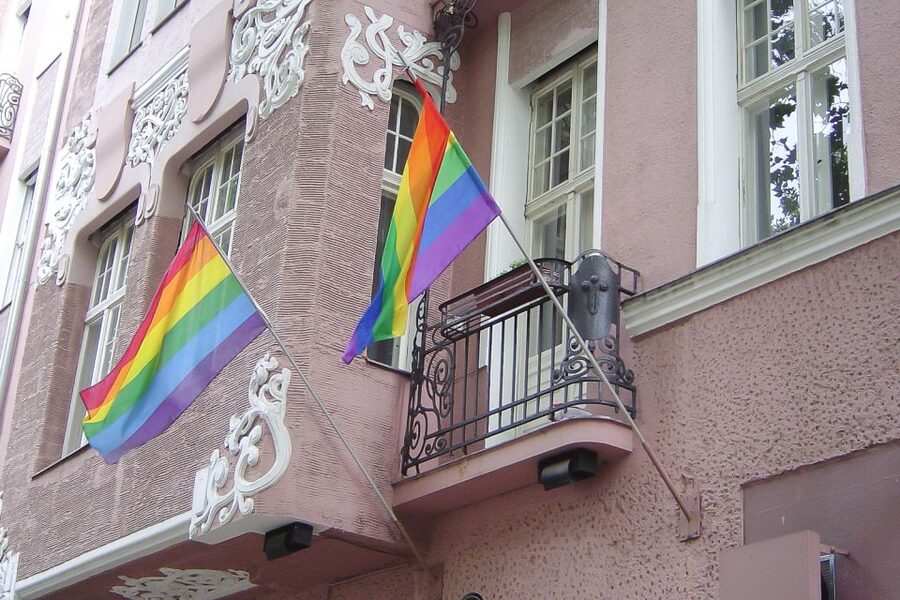
This tour gives you a practical way to understand why Berlin gets called the queer capital of Europe. You start where queer life clustered and built community, then you move toward the famous meeting grounds in the Tiergarten, including the park’s connection to the Berlin Wall era.
The best part is how the tour keeps switching scales. One minute you’re hearing a story tied to a specific bar or street, and the next minute you’re learning how laws and political power shaped what was safe, what was punished, and what people still built anyway.
And while the theme is LGBTQIA+ history, the tour doesn’t forget Berlin as a whole city. You get context for how the city’s rights culture grew in fits and starts, even under major pressure from German law, including the “Section 175” era that criminalized male homosexuality for decades after World War II.
More Walking Tours in Berlin
- Discover Berlin Half-Day Walking Tour
★ 5.0 · 9,624 reviews - Berlin: Third Reich and Cold War 2 Hour Walking Tour
★ 4.9 · 6,830 reviews - Berlin: Discover Berlin Walking Tour
★ 4.9 · 5,998 reviews
The Eldorado stop: Berlin nightlife with real roots
Eldorado is the kind of word that sounds like a movie scene, but the point here is history with addresses. You’ll see the site of the former Eldorado, one of Berlin’s oldest queer and trans bars, and that matters because it shows how long community spaces have existed in the city.
What makes this stop more than a photo moment is the contrast. Berlin’s queer nightlife wasn’t just happening in a vacuum. It was adapting around restrictions, policing, stigma, and later, Nazi persecution, then reshaping itself again afterward.
This also helps you understand why older queer spaces carried more than entertainment value. In eras when public identity could be dangerous, bars and meeting places acted like informal safety networks and community infrastructure.
Walking the layers of persecution and resistance
Berlin’s LGBTQ story includes periods of progress and periods of brutal repression. The tour directly addresses that push and pull, including how Section 175 criminalized male homosexuality and how that law’s long reach affected lives.
You’ll also stop at a poignant memorial honoring homosexuals persecuted by the Nazis and sent to concentration camps. The emotional weight is real, and the tour frames it as part of a broader pattern: persecution didn’t just happen once, it was systematized, normalized, and then enforced.
You also learn how people responded with resistance and survival strategies. One review specifically praised how the politics of inclusion and the history of resistance stayed front and center, and that’s a good clue that the tour does not treat this as simple trivia.
Magnus Hirschfeld and the Institute for Sexual Science story
If you only remember one “named person” from this walk, make it Magnus Hirschfeld. The tour explains his unique work and the impact of the Institute for Sexual Science, which was shut down in 1933, and how its library was destroyed during the notorious Nazi book burnings.
This is one of those moments where the tour turns a historical figure into a human idea: scientific research, advocacy, and public understanding built in real institutions. And then you see how quickly that kind of knowledge can be attacked when a regime decides certain identities must be erased.
It’s also a strong lesson about fragility. Progress can feel permanent until political power flips, and Hirschfeld’s story is a clear reminder of what happens when tolerance becomes conditional.
Another way to spend a Berlin afternoon:
- Berlin: Reichstag, Dome and Government District Guided Tour
★ 4.7 · 18,288 reviews - Berlin: 1-Hour City Tour by Boat with Guaranteed Seating
★ 4.3 · 16,993 reviews - Berlin: TV Tower Standard Entrance Ticket
★ 4.4 · 15,883 reviews - Berlin: Boat Tour Along the River Spree
★ 4.4 · 11,252 reviews
Marlene Dietrich, cabaret nights, and the culture trail
Berlin’s queer history is not only about policy and persecution. It’s also about art, nightlife, and the people who documented the city’s attitude changes over time.
On the walk you’ll hear about Marlene Dietrich, including where she lived and worked. You’ll also connect the dots to Christopher Isherwood and Otto Dix, who chronicled Berlin’s cabaret and nightlife scene. The point isn’t just who they were. It’s how cultural scenes gave people language, visibility, and documentation.
One review liked the way the walk balanced LGBTQ history with broader Berlin history. That balance helps here, because you can see how “culture” and “politics” moved together, especially in a city where nightlife and art were major social forces.
Tiergarten: a meeting spot shaped by the Berlin Wall
The Tiergarten stop is where the tour’s geography really clicks. The park is described as Berlin’s best-known gay meeting spot, and the walk places it in the shadow of the Berlin Wall, which changes the meaning of a place you might otherwise think of as just a park.
In other cities, parks feel like neutral space. Here, the tour frames how queer people used public areas for gathering and connection, often while living under pressure and surveillance depending on the era.
This part works especially well if you like “place-based” history. Instead of reading about divisions, you’re walking through the actual urban context that made those divisions real.
A timeline on foot, from Friedrich the Great to Klaus Wowereit
One of the tour’s smartest moves is its wide timeline. You’ll hear about queer figures starting with Prussian King Friedrich the Great, then shifting toward modern openly gay politics, including Berlin’s mayor Klaus Wowereit.
That span can feel big, but it serves a clear purpose. It helps you see continuity in how queer lives shaped Berlin, not only as isolated episodes, but as part of the city’s long development.
And it helps explain why Berlin can produce both progress stories and tragedy stories at different points in time. People kept shaping the city even when the city was trying to limit them.
What the guide actually does (and why it lands)
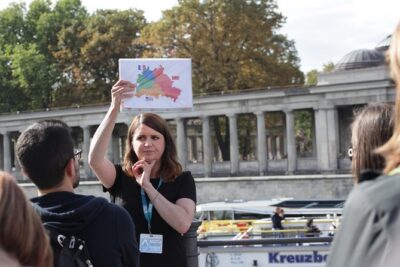
The guide is the engine of this tour. You’re promised an English-speaking guide, and the style described in reviews is practical, funny at times, and focused on answering questions.
Several past bookings singled out guides by name, including Tom, Tobi, Kyle, Finn, and Beth. The consistent thread is that guides don’t just recite facts. They explain why those facts matter to how you experience Berlin today.
One review also mentioned the guide being helpful with a late-arriving group member, which hints at a tour that can stay flexible in real life. Another review praised how the guide navigated logistics smoothly even when the day did not cooperate.
Group pace, walking reality, and how to prepare
This is a three and a half hour walking tour. That’s not “light stroll” time, and it’s not just distance. You’ll stop often, listen often, and process emotionally heavy material at memorials and persecution-related sites.
Because it runs in all weathers, plan like you live in a place where weather changes its mind. Bring layers, a small umbrella if you rely on one, and clothing you don’t mind getting a bit dusty around busy streets.
Pack smart. One review advised packing light and bringing snacks and a cool drink, which is exactly the kind of advice that makes a historical walk feel enjoyable instead of draining.
Is it worth $23? Yes, if you want street-level history
At about $23 per person for roughly three and a half hours, this is strong value for Berlin. You’re paying for an English-speaking guide and a carefully designed walk connecting sites that aren’t just tourist targets, they’re anchors of queer history.
You also get something money can’t buy easily on your own: a guided narrative that connects places like Eldorado and the Institute for Sexual Science to larger laws and Nazi persecution. Without that glue, you can still visit these locations, but you might miss how they fit together.
Entrance fees are not included, so your cost stays predictable. In Berlin, that can matter because some “attractions” get pricey fast, and this walk mostly focuses on outdoor sites and meaningful stops that don’t require you to line up and pay again.
Who this tour suits best
This tour is ideal if you want queer history that is specific to neighborhoods and street locations. If you like timelines, public space, and learning how social change plays out in real geography, you’ll probably love it.
It also suits people who want a respectful, inclusive approach. One review said women’s history was not missing, and inclusion politics and resistance were treated as part of the story, not an afterthought.
If you only want nightlife recommendations, this isn’t built as a party crawl. If you want history with emotion, humor, and real context, it fits very well.
Should you book the Queer Berlin Walking Tour?
Yes, you should book it if you want Berlin’s queer story in a guided, site-by-site format. This is the kind of tour that helps you stop seeing queer history as a separate topic and start seeing it as part of how Berlin became Berlin.
Book it soon if you can, because a three and a half hour slot in a popular walking tour category is the easiest thing to lose once you build a sightseeing schedule. If you’re traveling with limited mobility or you hate being outside for long stretches, consider that walking time and all-weather schedule are part of the deal.
If your goal is authentic context, not generic landmarks, this one delivers. You’ll leave with a sharper map of Schöneberg and the Tiergarten, and a clearer sense of the people and institutions, like Hirschfeld’s, that shaped queer life for generations.
FAQ
How long is the Queer Berlin Walking Tour?
The tour lasts three and a half hours.
How much does it cost?
The price is $23 per person.
Where does the tour start?
The meeting point may vary depending on the option booked.
What language is the tour offered in?
It is offered in English and German, with an English-speaking guide.
What sites will we see during the walk?
You will explore Schöneberg, visit the site of the former Eldorado, learn about Magnus Hirschfeld and the Institute for Sexual Science, stop at a memorial to homosexuals persecuted by the Nazis, and walk through the Tiergarten area.
Is the tour outdoors?
Yes, the tour runs in all weathers. Entrance fees are not included.
Fresh reviews out of Berlin
- Berlin Uncensored: A History of Sex & Freedom★ 5.0 · 50 reviews
- Berlin Food & Cultural Tour: Must-Try German & Berliner Classics★ 5.0 · 51 reviews
- English Comedy Show with Pizza and Shots in Central Berlin★ 4.5 · 51 reviews
- Rude Bastards Tour of Berlin★ 4.8 · 51 reviews
- Private Taxi Tour of Berlin East and West and Neighbourhood approx. 4-6h★ 5.0 · 55 reviews
- Rickshaw Sightseeing City Tours Berlin – Rikscha Tours★ 4.0 · 55 reviews
- Berlin: City Highlights Express & Panorama Roof Terrace★ 4.9 · 55 reviews
- Berlin during Nazism – Tour in Italian★ 5.0 · 56 reviews
Walking Tours, compared.


Berlin’s Best: 2 Hour Walking Tour Third Reich and the Cold War
Read our review →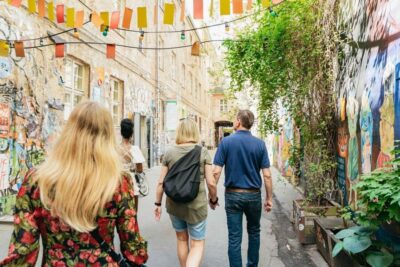
Third Reich Berlin: Hitler and WWII Walking Tour
Read our review →Browse the lists this tour appears in