
Reviewed · WALKING TOURS
Private Berlin: Iconic Sights and Hidden Gems Walking Tour
Berlin can feel like a museum you walk through, except the streets are real and the stories are raw. This private walking tour is interesting because it strings together the city’s biggest turning points in a logical route, from the Cold War to World War II and back to postwar rebuilding. I like that you get hotel pickup and drop-off, so you spend less time hunting down meeting points and more time looking up at the buildings. I also like the customizable format, so your guide can steer the day toward what you care about. One possible drawback: it’s still a walking tour, and the content gets heavy in places, so plan comfortable shoes and a calm pace.
You can choose a 3-hour overview or a 4-hour version that gives more room for questions and extra stops. If you’re the type who wants context, the guides in the reviews stand out for being able to explain things in a clear, relatable way, with examples like Ariel, Tina, Ronja, and Ruben getting called out for tailoring the day, good English, and pacing you can handle. The tour also leans into “big sights plus meaning,” so expect fewer random photo stops and more stops where the guide connects what you’re seeing to what Berlin has been through.
Here’s the key consideration: you’ll be covering major central areas, including memorials and former border sites. That’s exactly why this works as a first-day introduction, but it also means you should be ready for solemn moments, not just sightseeing candy.
Key points to know before you go
- Private guide, your pace: Ask questions and steer the route to your interests, including WWII-focused angles.
- Two tour lengths: 3 hours to get oriented, 4 hours for deeper explanations and extra time.
- Hotel transfer included: Meet in your hotel lobby, then get dropped off at the end.
- Heavy history, placed thoughtfully: You’ll see major reminders like the Berlin Wall memorial and Nazi-era sites.
- Free-entry stops listed on the route: Many stops show admission as free, so you’re paying mainly for the guide and routing.
- Pro pacing from real guides: Reviews highlight arrival on time, good energy, and the ability to adjust if walking is limited.
Hotel lobby meeting, then a route that actually makes sense
The tour starts in a central-Berlin hotel lobby with a guide who meets you and keeps things organized from the first minute. That matters in Berlin because landmark clusters are spread out, and without a plan you can waste time zigzagging across neighborhoods. Here, you pick a departure time, you pick 3 or 4 hours, and then your guide handles the walking logic.
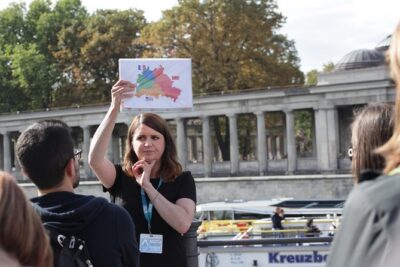
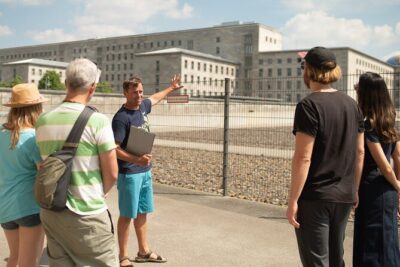
The private format is also practical. Only your group joins you, so you’re not stuck in the “follow the crowd” rhythm. In reviews, I saw repeated praise for guides who tuned the day to the group, including Ronja adjusting the walking for limited mobility and guides using pictures to help you “see” what they were describing. If you like history that clicks, that visual support can make a big difference.
One more plus: the tour includes hotel pickup and drop-off, and it offers a mobile ticket. You’re not stuck trying to decode meeting points with tired feet and a phone battery that’s already halfway dead.
More Walking Tours in Berlin
- Discover Berlin Half-Day Walking Tour
★ 5.0 · 9,624 reviews - Berlin: Third Reich and Cold War 2 Hour Walking Tour
★ 4.9 · 6,830 reviews - Berlin: Discover Berlin Walking Tour
★ 4.9 · 5,998 reviews
Brandenburg Gate and Pariser Platz, where Cold War symbolism turns into a national photo stop
The day often kicks off at Brandenburg Gate, one of Berlin’s most recognizable monuments. The guide will point out its setting at Pariser Platz, and you’ll spend time on the ground where the building lives inside city life, not behind a rope and a lecture hall.
Why this stop is worth your time:
- The Quadriga on top, a chariot pulled by four horses, is a visual hook that’s easy to remember later when you compare Berlin before and after reunification.
- The gate’s story is about division first, unity later. Your guide connects that shift to the Cold War era and the change that followed.
Practical tip: go for photos, yes, but also take a few minutes to look around. Pariser Platz has cafés and street activity, so the guide can help you notice how Berlin’s past sits inside a lively present. If you’re doing this as a first-day orientation, Brandenburg Gate gives you a “north star” for the rest of the walk.
Bernauer Strasse to the Berlin Wall Memorial, where you slow down on purpose
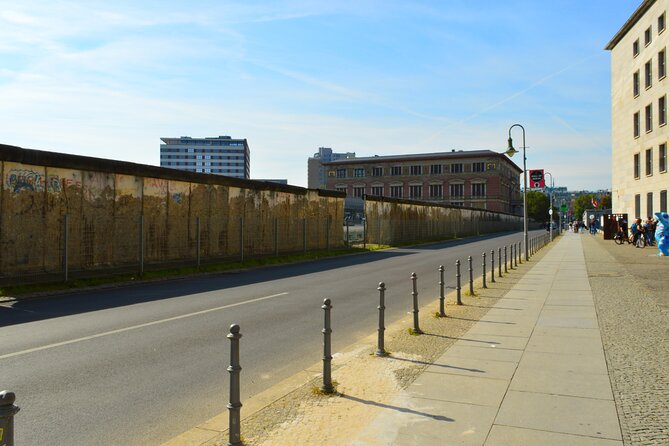
Next comes the Berlin Wall Memorial along Bernauer Strasse. This is the kind of stop that benefits most from a guide, because it’s not just one wall segment. You’ll see preserved remnants along with a visitor center that explains how the wall was built and what it meant for daily life, including stories about people trying to escape.
This stop works because it’s grounded:
- You’re walking alongside what’s left of the wall, not just reading about it.
- The site uses exhibits and personal accounts, so the history feels specific, not generic.
A caution, in a helpful way: this is where your brain will want space. If you tend to rush in museums, let your guide know. In private touring, you can actually do that. The better guide will build pauses, not just keep moving.
Checkpoint Charlie, the border post that became a global shorthand
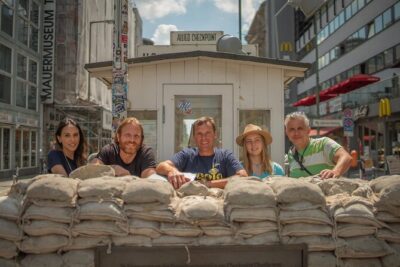
Checkpoint Charlie is one of the best-known crossings between East and West Berlin during the Cold War. Here, you learn how the border operated in 1961 and how tension shaped life in a city split by politics. Today, the area functions as a historic site and museum.
What you’ll notice:
- The iconic wooden booth, described as a replica of the original guardhouse, gives you something concrete to anchor the story.
- Displays cover the attempts to escape and the political climate behind the wall.
Yes, it can get touristy, but with a guide you still get value. The point is not the Instagram factor. The point is understanding why a single checkpoint could symbolize a whole era. Your guide can also explain what’s real versus what became legend over time, so you don’t just memorize a single image.
Another way to spend a Berlin afternoon:
- Berlin: Reichstag, Dome and Government District Guided Tour
★ 4.7 · 18,288 reviews - Berlin: 1-Hour City Tour by Boat with Guaranteed Seating
★ 4.3 · 16,993 reviews - Berlin: TV Tower Standard Entrance Ticket
★ 4.4 · 15,883 reviews - Berlin: Boat Tour Along the River Spree
★ 4.4 · 11,252 reviews
Gendarmenmarkt, cathedrals on both sides, and Berlin’s elegant calm
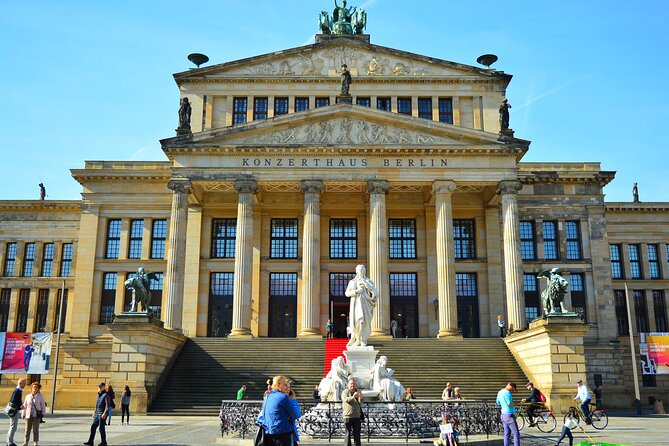
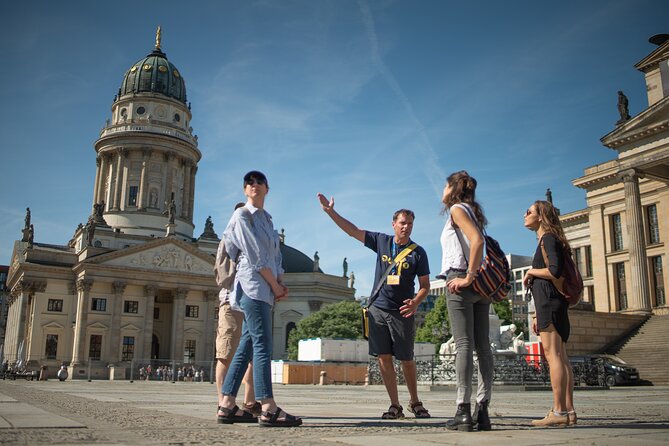
After the weightier sites, the route can turn toward Gendarmenmarkt. This square is framed by the French Cathedral (Französischer Dom) and German Cathedral (Deutscher Dom), with the Concert Hall (Konzerthaus) at the center. It feels like Berlin puts on its formal outfit here.
Why it’s a smart inclusion:
- It balances the day. You get architectural grandeur and a slower street-level scene.
- Outdoor cafés and cobbled streets make it a good reset point before you move back into the political and memorial sites.
Even if you’re not an architecture fan, Gendarmenmarkt is a good “breather stop.” It helps your brain digest what you just walked through.
Führerbunker, the Reich Chancellery gardens, and the chilling final-days context
Then the tour shifts again to one of the most sobering stops: the Führerbunker. It’s located beneath the gardens of the Reich Chancellery in Berlin. Your guide explains that it was constructed in 1944 and served as Adolf Hitler’s last refuge, where he directed events as the Allies closed in.
What to expect here:
- The site is largely unmarked, with a small plaque indicating its historical significance.
- Guided tours around it focus on context, meaning you won’t just stare at a marker and guess the story.
This is one of those moments where your guide’s tone matters. In reviews, guides like Will and Daniel got praise for relating complex history in a friendly, readable way. That does not mean lightening the mood. It means making the story understandable, so you don’t walk away confused and numb.
Reichstag Building and the glass dome, where government becomes a view
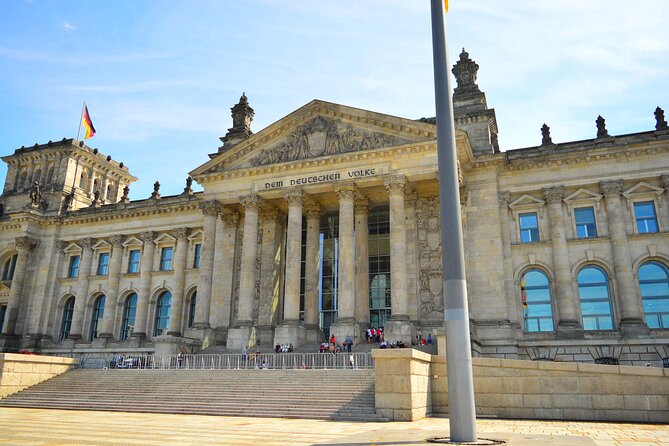
Next is the Reichstag Building, Germany’s historic parliament structure. You’ll learn that it was completed in 1894 and has seen major events, including the 1933 fire tied to the rise of the Nazi regime. After World War II, restoration transformed the building into the seat of the Bundestag in 1999.
The star feature for many people is the glass dome. The tour notes it was designed by Norman Foster and is intended to symbolize transparency in government. Your guide connects that modern design idea to what the building has endured, so it’s not just a skyline photo.
If you’re doing this in the 3-hour option, this stop can be a highlight because it ties together architecture and politics in one place. If you’re doing the 4-hour option, you’ll usually have more time for questions about what that symbolism means in practice.
Memorials and censorship at Bebelplatz, a Nazi book burning site with an Empty Library memorial
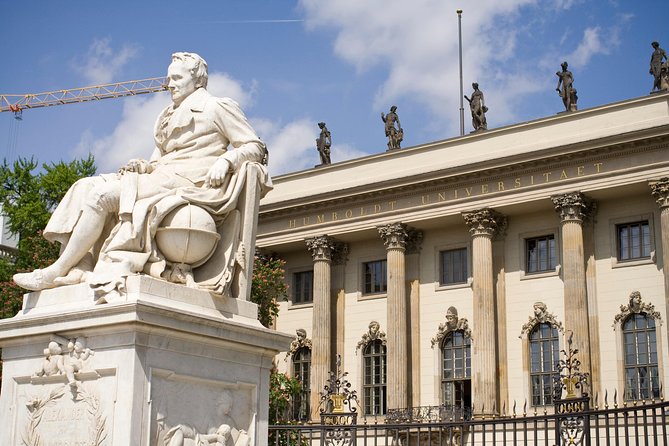
Bebelplatz is an important cultural stop with a darker anchor. It’s framed by the State Opera House, St. Hedwig’s Cathedral, and Humboldt University, but it’s also the site of the Nazi book burnings on May 10, 1933.
Your guide will describe the scale and names involved. The account includes more than 20,000 books deemed un-German, including works by Einstein, Freud, and Marx. Around that, today’s memorial design matters: at the center is the Empty Library memorial by Micha Ullman, an underground room of empty bookshelves visible through a glass panel.
Why I think this stop belongs on a first-time Berlin walk:
- It shows how dictatorship attacks ideas, not just people.
- It turns a textbook topic into something physical you can stand next to.
Also, because the square is surrounded by academic institutions, the location itself reinforces the message. Even without a guide, the setting would push you to think. With a guide, you get the context so the memorial lands where it should.
East Side Gallery and the Wall’s transformation into art
At the East Side Gallery, Berlin pivots to creativity and survival. This is an open-air gallery along a remaining stretch of the Berlin Wall, spanning about 1.3 kilometers, with over 100 murals painted after the fall of the Berlin Wall in 1989.
Expect to see major pieces and learn what the artists meant. The tour notes the famous Fraternal Kiss mural, showing a kiss between Soviet leader Leonid Brezhnev and East German leader Erich Honecker.
This stop is valuable because it’s not just “pretty wall art.” It’s a reminder that a symbol of division can be reworked into a message about freedom and change. In reviews, guides like Artie and Emma got credit for being attentive to comfort and able to explain context clearly, which really helps at a site where you might otherwise just scan murals quickly.
Practical tip: this is a stretch where you can benefit from a steady pace. If you rush, you miss the stories embedded in individual panels.
Museum Island for photos, and Berlin’s art and institutions in one sweep
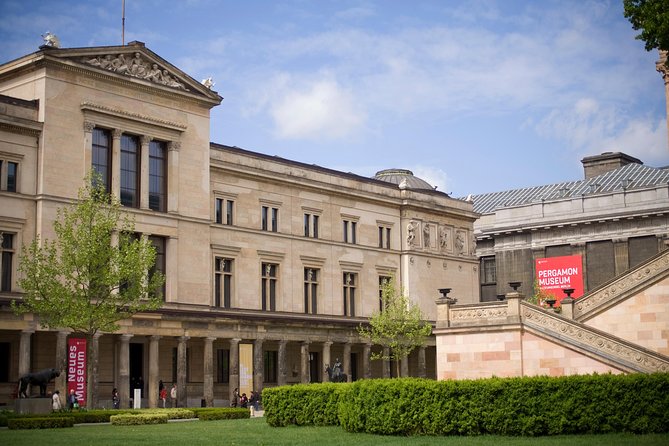
Museum Island is both a photography spot and a cultural landmark. The tour frames it around views of grand museum facades, the Spree River, and the gardens around the island. If you like to capture wide shots and you want the city’s visual style in one place, this stop helps.
Why it’s useful in a walking tour:
- It gives you a “reward” visual break after memorial moments.
- It positions you near major cultural institutions, so you can decide later what to visit on your own.
You probably will not plan your entire museum day from a walking tour stop, but you can get inspired. I like that this stop offers a quick taste without forcing you into ticketed museum time you might not want.
Berliner Dom if you want a skyline view with real inside details
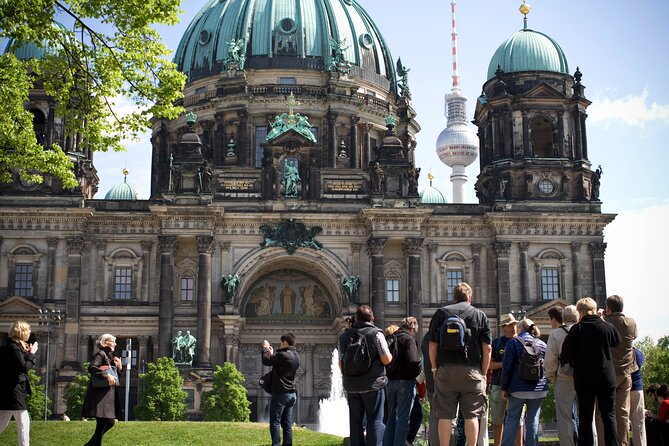
The Berliner Dom (Berlin Cathedral) is a skyline anchor. The tour notes it was completed in 1905 and features a Baroque design with a dome about 98 meters high. If you climb it, the promised reward is panoramic views.
Your guide will also point out inside highlights, including mosaics, altar pieces, and the organ, noted as one of the largest in Germany. Even if you skip any optional climb due to time, the exterior dome alone makes the stop feel worth the walk.
One note: this stop can turn the day more “sightseeing” than “storytelling.” That’s not a bad thing. It’s a chance to see how Berlin’s official religious and civic architecture looks when it’s in the frame with the earlier political sites.
Hackescher Höfe for courtyards, art nouveau details, and a more human Berlin scale
Die Hackeschen Höfe is where the city feels handcrafted. This complex dates to 1906 and includes eight interconnected courtyards with art nouveau architecture, ornate facades, and wrought iron details. It’s a mixed-use area that now hosts independent shops, restaurants, galleries, and theaters.
What makes it a good fit for this tour:
- It changes the tempo after the large monuments.
- You get to see Berlin at the block and courtyard level, not just the headline landmarks.
The tour also calls out Kino Central as one of the oldest cinemas in Berlin and the Chamäleon Theater. Even if you do not go inside, looking at the courtyards gives you a better sense of how Berlin’s creative life operates.
What makes the customization matter (and how to use it well)
The customization feature is the difference between a standard highlights walk and a truly useful private tour. You can request specific interests at booking, and on the day your guide can adjust based on what you ask.
A few smart ways to use that:
- If you’re a WWII history fan, ask your guide to spend more time on the Nazi-era stops and the transitions between the war and the Cold War.
- If you want East and West Berlin explained clearly, ask for a stronger emphasis on border sites like Checkpoint Charlie and the Berlin Wall Memorial.
- If your walking is slower, tell the guide at the start. Reviews include examples of guides tailoring for limited walking ability.
I also like that guides in the reviews are praised for friendliness and for taking questions seriously. In a private format, you’re not punished for stopping to clarify something.
Duration and pacing: when 3 hours is enough, and when 4 hours pays off
You get two options: about 3 hours or about 4 hours. The 3-hour version is the better choice if you want the main landmarks and a solid orientation without turning your whole day into history class. Reviews mention that 3 hours can fly by when the guide keeps a good pace and covers the big sites efficiently.
Pick the 4-hour version if:
- You want more time for questions.
- You like deeper context at memorial sites.
- You’re the type who stops for details and photos and doesn’t want to feel rushed.
Either way, you’ll be walking through central Berlin, and the route is designed so most stops are close enough that the day feels manageable. Reviews also mention easy walking with minimal congestion, which is exactly what you want in a big-city tour.
Price and value: why $192.97 can make sense for the right traveler
At $192.97 per person, this is not a budget walking tour. But you are paying for private guiding, plus hotel pickup and drop-off, and you’re getting a route that connects major sites without you having to map it yourself.
Here’s where the value typically shows up:
- Your guide’s time is the product. That includes pacing, explanations, and customization to your interests.
- The tour lists stops with free admission, so you’re not stacking costs on top of the guided service.
- Private format reduces wasted time. Meeting in the lobby and ending at your hotel cuts down on friction, especially if you’re only in Berlin for a short window.
If you’re traveling with family, or you want a first-day plan that feels clear and personalized, the price can feel fair compared with buying separate tickets to multiple sites plus hiring a guide piecemeal.
Should you book this private Berlin sights walk?
Book it if you want a guided first introduction to Berlin’s biggest turning points, with the flexibility to ask questions and tailor the focus. It’s especially worth it if you care about the connection between architecture and politics, and you want your day to flow logically from Brandenburg Gate to Wall-era sites and onward through memorials and major institutions like the Reichstag.
Skip it or consider a different format if you hate walking, you want only light, casual sightseeing, or you prefer to handle the history on your own pace with no guide. This tour is built for meaning, not just scenery. If that sounds like your kind of Berlin, it’s a strong choice.
FAQ
How long is the Private Berlin walking tour?
The tour is offered in two lengths, about 3 hours or about 4 hours.
Is this a private tour?
Yes. It’s a private tour, and only your group will participate.
Do you offer hotel pickup and drop-off?
Yes. Hotel pickup and hotel drop-off are included.
What language is the tour offered in?
The tour is offered in English.
Are food and drinks included?
No. Food and drinks are not included.
Can I cancel for a full refund?
Yes. Free cancellation is available if you cancel up to 24 hours in advance of the experience start time for a full refund.
Fresh reviews out of Berlin
- Berlin Uncensored: A History of Sex & Freedom★ 5.0 · 50 reviews
- Berlin Food & Cultural Tour: Must-Try German & Berliner Classics★ 5.0 · 51 reviews
- English Comedy Show with Pizza and Shots in Central Berlin★ 4.5 · 51 reviews
- Rude Bastards Tour of Berlin★ 4.8 · 51 reviews
- Private Taxi Tour of Berlin East and West and Neighbourhood approx. 4-6h★ 5.0 · 55 reviews
- Rickshaw Sightseeing City Tours Berlin – Rikscha Tours★ 4.0 · 55 reviews
- Berlin: City Highlights Express & Panorama Roof Terrace★ 4.9 · 55 reviews
- Berlin during Nazism – Tour in Italian★ 5.0 · 56 reviews
Walking Tours, compared.

Berlin’s Best: 2 Hour Walking Tour Third Reich and the Cold War
Read our review →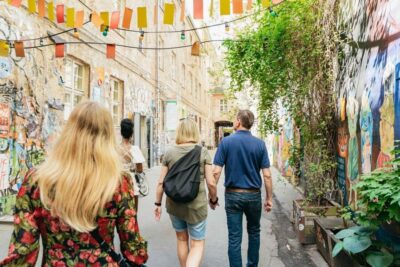
Third Reich Berlin: Hitler and WWII Walking Tour
Read our review →Browse the lists this tour appears in