
Reviewed · WALKING TOURS
Jewish Berlin: Walking tour The Old Jewish Quarter (private 3 Hours tour)
Jewish Berlin has a way of grabbing you fast, because the story is told in the street level sites you can actually see. This walking tour focuses on one compact area, so the history feels less like a chapter in a book and more like something living in the city. Old Jewish Quarter is the thread that keeps it all connected.
What I like most is the way it’s set up for real questions, especially in a small private group where names and moments matter. Another big plus is the convenience factor, since you get hotel pickup and you do not waste the first 30 minutes figuring out where to meet.
One thing to consider is that this is still a walking tour. You’ll want moderate fitness, and men should bring a head covering for the optional cemetery entrance.
Key things to know before you go
- Hotel pickup from your hotel lobby makes the start easy
- Private group up to 8 keeps the pace human and question friendly
- Morning or afternoon departures let you match your day
- Free entry sites and memorials mean less hassle with payments
- A thoughtful chronological route helps you follow the long timeline without getting lost
- Reflective stops like the cemetery memorial and Boltanski’s Missing House add emotional weight
Jewish Berlin in order: why this walk makes sense
This tour works because it tells Berlin’s Jewish story as a timeline you can walk through. Instead of scattering facts across the city, you move from earlier roots to later institutions, and you keep seeing how one chapter leads to the next. That structure is exactly what helps a first-time visitor stop feeling overwhelmed.
I also like that the guide approach can be personal. In past groups, guides such as Nadav, Orr, Sharona, Adi, and Zvi have brought a mix of historical context and lived perspective, which makes the material feel less like memorization and more like understanding people. That matters on a topic like this, where accuracy and empathy need to travel together.
More Walking Tours in Berlin
- Discover Berlin Half-Day Walking Tour
★ 5.0 · 9,624 reviews - Berlin: Third Reich and Cold War 2 Hour Walking Tour
★ 4.9 · 6,830 reviews - Berlin: Discover Berlin Walking Tour
★ 4.9 · 5,998 reviews
Price and value: paying for a private 3-hour story
The price is $356.62 per group, for up to 8 people, for about 3 hours. That means the cost does not scale with each person in the usual way, which can be a good deal if you are traveling as a couple, a family, or a small group of friends who want the same route and the same explanations.
You are also paying for something you cannot DIY: a local guide who connects the memorials and courtyards to the bigger events around them. Every stop on the route is short, but the guide is doing the heavy lifting in the background, linking what you see in front of you to what came before and what followed.
If you’re coming solo and you can only do a group tour, this may feel pricey. But if you want a private format, and you care about getting the story in the right order, the value can look much better.
Logistics that actually matter: pickup, walking pace, and what to wear
This is a private activity, so only your group participates. Pickup is from your hotel lobby, which is a practical win in Berlin, where the city is big and the best stops are spread across different streets.
The tour lasts about 3 hours. The physical requirement is listed as moderate fitness, so plan for a steady walking pace and a few stops where you’ll stand and listen. For the cemetery, there is a dress code note: men should wear a head covering during the optional entrance. Bring one just in case, even if you think you might skip that part.
You’ll also be using a mobile ticket. Confirmation is provided within 48 hours of booking, subject to availability, so it’s smart to book with enough lead time.
Stop 1, Denkmal alte Synagoge Berlin-Mitte: the earliest roots in view
You begin at the Denkmal alte Synagoge Berlin-Mitte, the site connected to the oldest synagogue in Berlin. This stop is useful because it anchors the whole tour in the early beginnings of Jewish settlement in the city. When a story starts with the physical place, you stop treating history like an abstract timeline.
The experience here is not about big buildings or long museum lines. It’s about orientation and context. You get a chance to understand why Jewish life appeared where it did, and how that early presence set expectations for what came later.
Practical note: this is a short stop, so listen for what the guide says you should remember, not just what you see. The guide’s job is to help you build a mental map before the route moves forward.
Another way to spend a Berlin afternoon:
- Berlin: Reichstag, Dome and Government District Guided Tour
★ 4.7 · 18,288 reviews - Berlin: 1-Hour City Tour by Boat with Guaranteed Seating
★ 4.3 · 16,993 reviews - Berlin: TV Tower Standard Entrance Ticket
★ 4.4 · 15,883 reviews - Berlin: Boat Tour Along the River Spree
★ 4.4 · 11,252 reviews
Stop 2, Denkmal Rosenstraße: the women’s protest that changes the tone
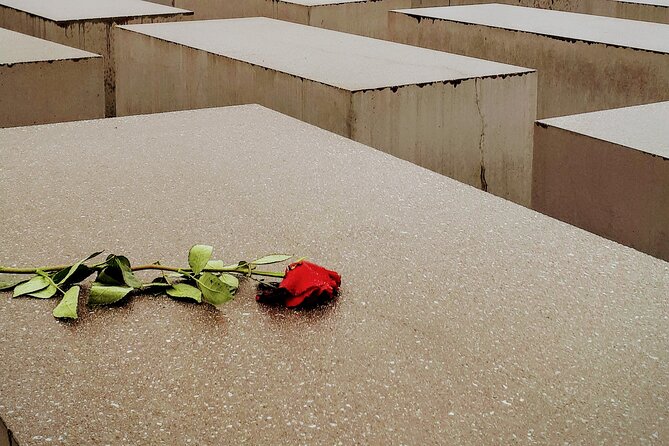
Next comes the Denkmal Rosenstraße. This is the site tied to the women’s protest from Rosenstrasse, when gentile women protested for the release of Jewish husbands.
This stop shifts the emotional register of the tour. It’s not only about Jewish institutions. It’s also about how other people responded, and how solidarity can show up in surprising forms. The guide’s explanation here tends to matter, because the story is easy to misunderstand if you only know it as a headline.
You’ll spend a brief time here, so treat it like a pause to recalibrate. After this, the tour spends more time on everyday life and survival themes, and that change in tone is the point.
Stop 3, Hackesche Höfe: courtyards where immigrant life played out
Hackesche Höfe is where the tour slows down into the texture of daily living. These courtyards are linked to housing for Eastern European Jews who immigrated to Berlin around the turn of the 20th century.
What I like about this stop is how it turns history into lived space. Courtyards are not just architecture. They are where neighbors saw each other, where routines formed, and where the city felt close and human even when larger forces were pushing people around.
Because the stop is short, the guide needs to connect the courtyards to broader migration and community patterns. When it clicks, you start seeing Berlin differently, not as a postcard city but as a place where real households navigated change.
Stop 4, Museum Blindenwerkstatt Otto Weidt: survival through work and courage

Then you head to the Museum Blindenwerkstatt Otto Weidt. The focus here is on Otto Weidt, a German man who risked his life to save his Jewish employees.
This stop is powerful because it reframes survival. It’s not only about what happened to people, it’s also about what choices some individuals made in the face of danger. The museum format means you’ll likely hear stories and explanations that go beyond a simple monument visit.
There’s also a practical upside. Even if you are not a museum person, this kind of museum time usually feels worth it because the content is tied to the walking route’s theme: resilience, responsibility, and the human scale of history.
Short caveat: since this stop is about 20 minutes, you should be ready to absorb a lot quickly. Take notes if you like, but also let the emotion land instead of trying to collect every detail.
Stop 5, Memorial Jewish Cemetery, plus Stop 6, Missing House: where memory gets quiet
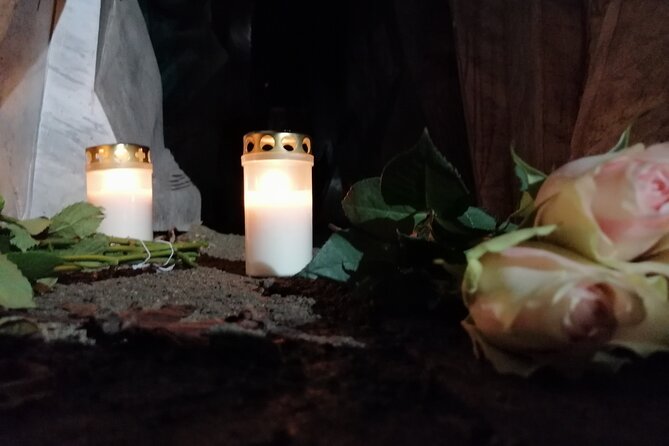
The Memorial Jewish Cemetery is one of the most important stops on the route. It’s the old Jewish cemetery where, among others, Moses Mendelssohn was buried. Even if you only recognize one name from school or books, the guide should connect the burial ground to the idea that this community was rooted, planned, and meaningful.
The tour also includes a brief stop at Missing House, a memorial by the artist Christian Boltanski. This is just a few minutes, but it can hit hard because it’s a different kind of storytelling. Instead of focusing on a single person or a single event, it points at absence and uncertainty, which is part of the historical reality the memorials are trying to hold.
Dress code matters here. Men should wear a head covering during the optional entrance to the cemetery. That instruction is simple, but it can be the difference between participating smoothly and feeling rushed or awkward.
Stop 7, Stiftung Neue Synagoge Berlin-Centrum Judaicum: continuity you can still see
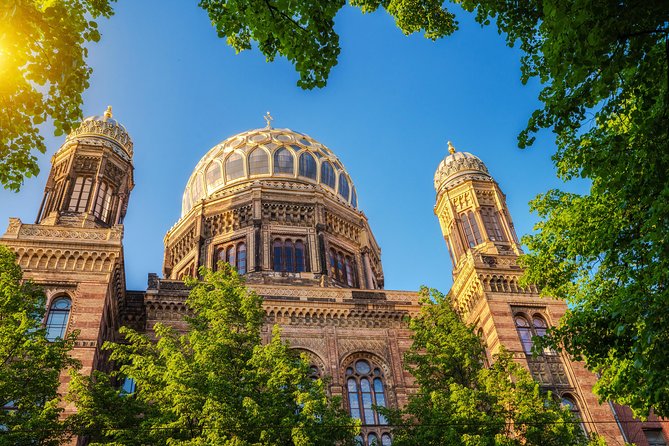
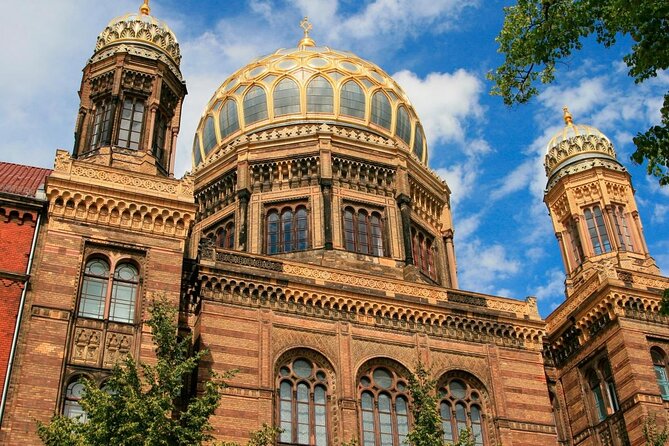
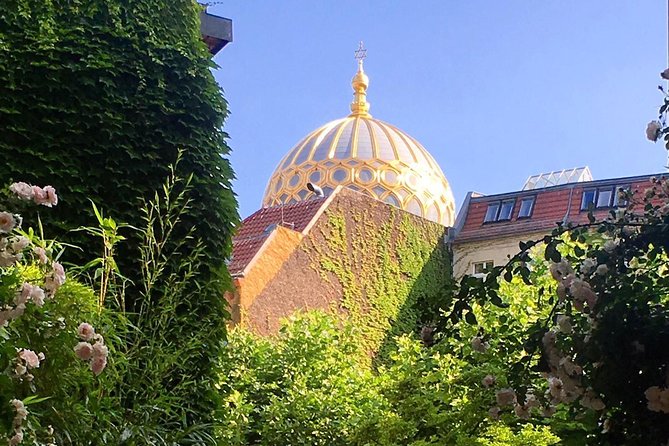
Your last stop brings you to Stiftung Neue Synagoge Berlin-Centrum Judaicum. You’ll see the synagogue and hear about its history.
This final section helps the tour avoid a common problem: ending with tragedy and leaving you stuck there. By finishing with a synagogue tied to later history, you get a sense of continuity, rebuilding, and community presence. Even without going deep into architecture, you can understand that Jewish life in Berlin did not disappear, it changed shape and had to fight for space.
It also gives you a useful closing loop. Earlier stops are about beginnings, protest, immigration, and survival. This one is about how those stories connect to institutions that continued and transformed over time.
The guides: why the delivery style affects the meaning
On this tour, the guide is not just reading facts off a list. In past experiences, guides like Orr and Adi have been praised for presenting history and stories in a thoughtful and human way. Nadav has been noted for using a notebook with historical materials during the walk, which supports the idea that the tour is doing more than a photo-stop circuit.
Sharona and Zvi have also been singled out for strong storytelling, with Sharona taking a chronological approach and Zvi bringing passion for both Berlin history and Jewish history.
What you should take from that: this tour is best when you are open to conversation and reflection. If you want only architecture and quick bullet points, you might feel the stop times are too short for that. If you want story and meaning, it can be exactly right.
What this route teaches you (beyond the stops)
The biggest value here is not any single monument. It’s the way the tour helps you connect three different kinds of evidence:
- Place, what you see in front of you
- People, the individuals and communities tied to those places
- Time, how events and institutions changed across centuries
For example, starting at the Denkmal alte Synagoge Berlin-Mitte sets up the earliest layer of Jewish presence. Rosenstraße shows that Jewish history is not separate from German society around it. Hackesche Höfe and Otto Weidt bring you down to everyday life and moral choices under pressure. Finally, the cemetery and Missing House deal with memory itself, not only events.
If you’ve ever felt Berlin history is too big, this is a smart antidote. You get a tight area, a walkable sequence, and a human guide who can explain what your eyes may miss at first glance.
Who should book this private walk
This tour is a great match if you want:
- A focused, half-day style walk that still covers major themes
- A private format for up to 8 people
- Hotel pickup to cut meeting hassles
- A chronological route that helps first-time visitors follow the timeline
- Meaningful stops that include both memorials and institutions
It’s also a good fit if your group includes people with different levels of familiarity. Some will appreciate the early roots, others will be drawn to survival and protest stories.
If you are someone who dislikes walking or hates stopping for short listening blocks, you might find the structure a bit intense. Still, the total duration is only about 3 hours, so it is manageable for many visitors with moderate fitness.
Should you book this Jewish Berlin Old Jewish Quarter private tour?
If your goal is to understand Berlin’s Jewish story through real places you can walk between, I think this is a smart booking. The private group size keeps the tour flexible for questions, and the hotel pickup reduces friction before you even start.
I’d especially book it if you want the emotional and human side, not just dates. The route includes cemetery memory and Missing House, and it also includes Otto Weidt’s rescue story, so the tour does not leave you at the level of abstract facts.
Book with the head covering in mind if you want to enter the cemetery area, and plan for a moderate walking pace. If you do that, you should finish with a much clearer sense of how Jewish life in Berlin evolved, endured, and left traces you can still read on the streets today.
FAQ
How long is the Jewish Berlin Old Jewish Quarter private walking tour?
The tour is about 3 hours.
How many people are in the private group?
It is a private tour for up to 8 people.
Is hotel pickup included?
Yes. Pickup is from the lobby of your hotel.
Can I choose a departure time in the morning or afternoon?
Yes. You can choose the departure time that works best for you, morning or afternoon.
What languages are available?
The tour is offered in English, and it may also be operated by a multilingual guide. German and Hebrew are mentioned, along with other languages.
Are admission tickets included or required?
The stops listed have admission tickets marked as free, so you should not expect to pay separate entrance fees for these specific sites.
Is there a dress code for the cemetery stop?
Men should wear a head covering during the optional entrance to the cemetery.
Is free cancellation available?
Yes. You can cancel for a full refund up to 24 hours in advance of the experience start time. If you cancel less than 24 hours before, the amount paid is not refunded.
Fresh reviews out of Berlin
- Gastro Tour with Klaus though the Wrangelkiez, Kreuzberg★ 5.0 · 9 reviews
- Wall Tour Berlin – Fates, Heroes & Love Stories★ 4.0 · 9 reviews
- Berlin City Tour with Hotel pick up and Drop off★ 4.0 · 9 reviews
- Berlin Private Street Art Tour – Off The Grid★ 5.0 · 9 reviews
- Romantic Berlin Rickshaw City and Photo Tour – incl. pick-up★ 4.0 · 9 reviews
- Quatsch Comedy Club Berlin: Quatsch Comedy Hot Shot★ 4.8 · 9 reviews
- Berlin Urbex Adventure and History Tour★ 5.0 · 9 reviews
- Stag Party Berlin: Celebration for Your Bachelor Party★ 3.4 · 9 reviews
Walking Tours, compared.

Berlin’s Best: 2 Hour Walking Tour Third Reich and the Cold War
Read our review →
Third Reich Berlin: Hitler and WWII Walking Tour
Read our review →Browse the lists this tour appears in