
Reviewed · WALKING TOURS
In Search of Jewish Berlin Walking Tour
If you want Berlin to make sense, this walk helps. It links landmark sites in the city’s Jewish neighborhoods into one clear story, and it’s guided by a Jewish history scholar. I also like the small-group format, which makes it easy to ask questions and get real answers, not just background noise. One consideration, though, is that the stops include Holocaust memory, so the tone gets heavy fast.
What makes this tour work is the mix of architecture and lived history. You’ll spend time around the Scheunenviertel, often called the Barn Quarter, and then you’ll move into memorial spaces that force you to slow down, think, and pay attention. Guides can include people like Ioana N., Forrest, Lee, Heather, or Isabel Daniel, and you’ll feel that academic attention to detail in how the story is told.
Plan for about 3 hours on foot. The sites on the route are marked as ticket free, and the walk starts at Rosenthaler Str. 40/41, near public transit. Bring comfortable walking shoes, because you’ll cover several blocks and you’ll want to actually look at what you’re passing.
Key things I’d highlight before you go
- Small group, max 10 means the guide can tailor explanations to your questions
- Jewish history scholar-led with a focus on empathy and careful handling of sensitive topics
- Scheunenviertel focus gives you the neighborhood-level story, not just a museum highlight reel
- Five major stops that track from 19th-century community life to Holocaust remembrance
- Ticket-free site access across the listed stops helps keep your trip smooth and predictable
Why Jewish Berlin needs a guided walk, not just a route
Berlin is big. It’s also busy. If you show up with only a map and a phone battery, you’ll see buildings, but you might miss what they were for, who used them, and what changed over time.
This tour is interesting because it connects places you can physically reach in a short walk, then explains how those places fit into Jewish life in Berlin. You get a guided “through-line,” from earlier Jewish community growth, to waves of assimilation and conflict in the 19th and early 20th centuries, and then to the Nazi era and its aftermath.
Two things make this especially worthwhile. First, the guide is not just repeating facts, they’re handling sensitive history with care. Second, the small group size keeps the experience human. You’re not shouting over a crowd. You’re talking.
The emotional reality: you will visit memorials related to deportation and the murder of Europe’s Jews. If you know you get overwhelmed easily, that doesn’t mean you shouldn’t go. It just means you should pace yourself, maybe take a moment to step aside when you need to.
More Walking Tours in Berlin
- Discover Berlin Half-Day Walking Tour
★ 5.0 · 9,624 reviews - Berlin: Third Reich and Cold War 2 Hour Walking Tour
★ 4.9 · 6,830 reviews - Berlin: Discover Berlin Walking Tour
★ 4.9 · 5,998 reviews
Quick practical facts (so you can plan without stress)
This is an English-language group tour run by Insight Cities, and the tour content is led by a Jewish Studies scholar. Expect about 3 hours in total.
Group size is capped at 10 travelers, so you should not treat it like a typical bus-tour situation. It’s closer to a guided walk with a lot of conversation. If you like asking questions, you’ll likely get more of that here.
You’ll also use a mobile ticket, and the starting point is Rosenthaler Str. 40/41 (10178 Berlin). The tour is near public transportation, which matters because central Berlin stops can be quick to reach and easier to plan around.
Food and drinks are not included. This is a walking-based history tour, so bring water if you tend to get thirsty, and plan a meal before or after.
Finally, the route is built around major sites with admission listed as ticket free. That reduces friction and lets you stay focused on the story.
Meeting the New Synagogue and the idea of belonging in 19th-century Berlin
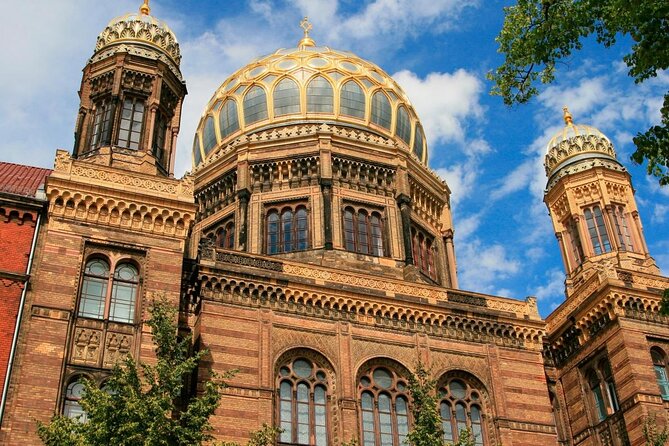
Your first major stop is the Stiftung Neue Synagoge Berlin, also known as Centrum Judaicum. Even if you’ve only seen photos, this is the kind of building that tells a message without saying a word. The grand architecture reflects the 19th-century moment when many Jewish communities were navigating questions of identity, integration, and public visibility.
You’ll hear how the New Synagogue became a symbol of Jewish presence and a form of public celebration. And you’ll also learn how the building fits today, as a place tied to a Jewish community that is active again in Berlin.
Why this stop matters: assimilation stories are often told as either triumph or tragedy. Here, you get the nuance. You can admire the architectural ambition, but you also learn what that ambition meant for people living under shifting political and social pressures.
The drawback, if you’re expecting only quiet museum vibes, is that the building is also a real, lived-in community site today. That can make the history feel less distant, which is a good thing for most people, but it may be more emotional than a purely historical landmark.
Plan on about 20 minutes here, including your time to look closely and absorb the context.
Auguststraße: the school building that connects education, style, and memory
Next you head to Auguststraße, where the neighborhood once held multiple Jewish institutions. A key example is the Jewish Girls’ School, active between 1927 and 1928. Even with that short time window, it helps you see what the community valued: education, structured opportunity, and future-oriented planning.
You’ll stand near the school building at Auguststraße 11-13, a historical monument designed by architect Alexander Beer. The building is described as an example of New Objectivity style, a design approach tied to the modernity of its era.
This stop is practical in a smart way. It helps you understand how history lives in ordinary streets. A school building is not just a symbol. It’s a place where kids would have grown into adulthood with lessons, routines, and community ties.
You’ll also hear that the building is used today, with an exhibit hall and even a coffee shop. That means you’re not only looking at the past. You’re watching the space continue to serve public life.
If you’re the type who loves architecture, give yourself extra seconds to look at details. If you’re more focused on story, ask the guide how education and cultural institutions fit into the broader timeline you’re learning.
Another way to spend a Berlin afternoon:
- Berlin: Reichstag, Dome and Government District Guided Tour
★ 4.7 · 18,288 reviews - Berlin: 1-Hour City Tour by Boat with Guaranteed Seating
★ 4.3 · 16,993 reviews - Berlin: TV Tower Standard Entrance Ticket
★ 4.4 · 15,883 reviews - Berlin: Boat Tour Along the River Spree
★ 4.4 · 11,252 reviews
Hackeschen Höfe and the Scheunenviertel, where the neighborhood becomes the textbook
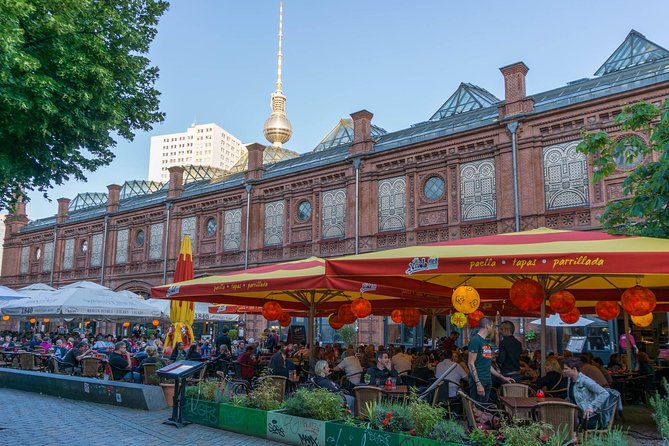
Then you move into the area around Hackescher Markt, with a focus on the Scheunenviertel, often called the Barn Quarter. This is where the tour shifts from single buildings to neighborhood pattern.
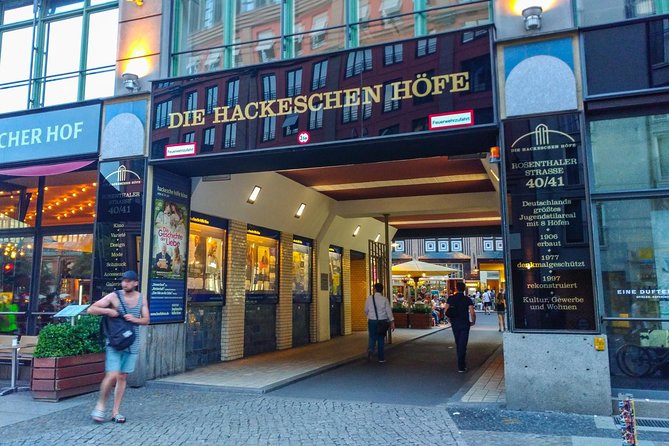
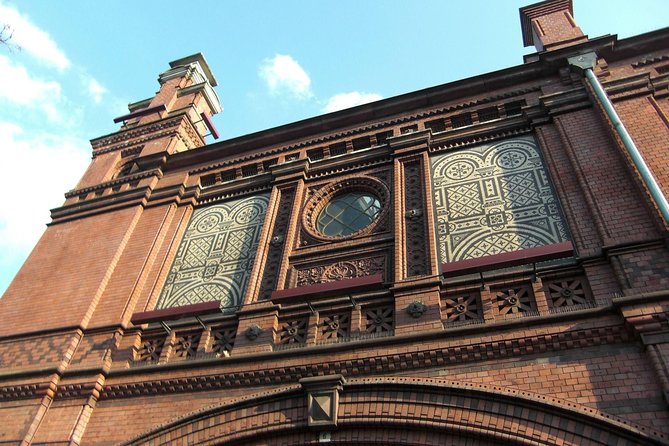
At Die Hackeschen Höfe, you’ll see graceful architecture and hear stories that tie the area to German Jewish life in the Spandauer Vorstadt and the Scheunenviertel district in Berlin-Mitte. The guide’s job here is to help you “read” the street layout. Once you know what the guide is pointing out, you can start connecting the geography to community life.
Why this stop is valuable: neighborhoods are where history becomes personal. You can feel how institutions clustered, where people might have met, and how a community’s day-to-day rhythm shaped what the area looked like.
A small caution: because this is still an active city area, you may hear street noise. For me, that’s part of the point. This isn’t a staged set. It’s Berlin in real time.
Give this segment about 30 minutes. Use that time to look up as well as around, then ask how the Barn Quarter’s role changed over time.
Block der Frauen: the memorial to protest and family resistance
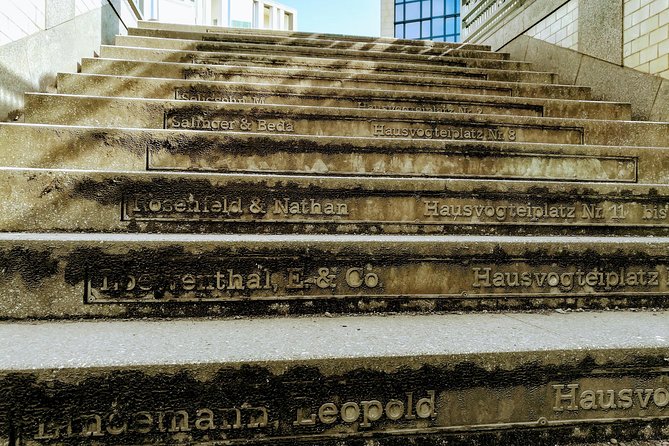
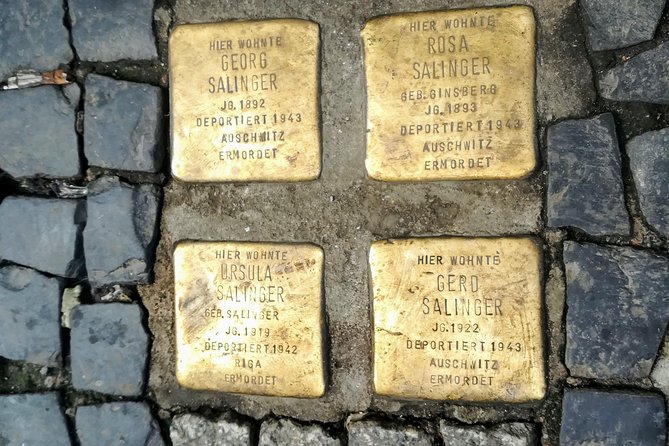
After the neighborhood context, the walk turns toward one of the most moving memorial stops: the Block der Frauen. This memorial is dedicated to protest demonstrations led by non-Jewish wives and relatives of Jewish men who had been arrested by the Nazis and targeted for deportation.
This is not a memorial that only names victims. It also points to the people who tried to resist, even when it was dangerous and deeply unfair. It’s a reminder that the history isn’t only about what was taken away. It’s also about what some people tried to protect.
What makes this stop hit hard is the specific type of protest, not just the general idea of suffering. You’re learning that real humans took real risks, and that courage could show up in unexpected relationships, including families affected by deportation.
Plan for about 20 minutes here. If you want to remember it later, stand still and read carefully. Even short memorial texts can carry a lot of meaning when the guide frames them.
Passing through the Holocaust Memorial labyrinth of 2,711 slabs
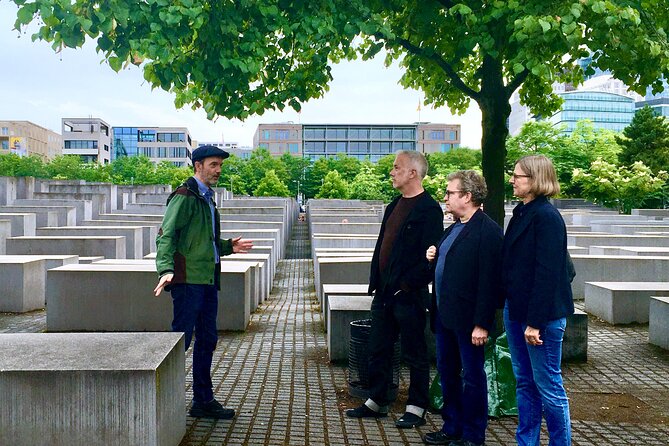
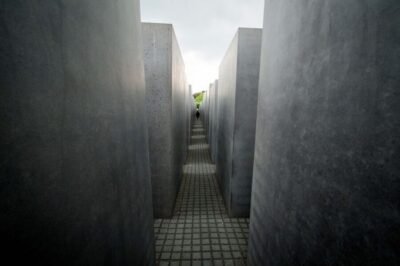
The final major stop is the Holocaust Memorial, formally the Memorial to the Murdered Jews of Europe. The design by architect Peter Eisenman is not meant to be decorative. It’s meant to make you experience discomfort and reflection.
You’ll be guided through the labyrinth-like layout of 2,711 concrete slabs. The purpose is to represent Germany’s acknowledgment of the Holocaust. You’re not just looking at history. You’re moving through a space that changes your sense of direction and scale.
This is the stop where you should let the guide’s pacing do the work. Don’t try to rush to the end to “get it over with.” Give yourself room to feel what you feel. The memorial is powerful partly because it refuses easy closure.
The emotional note here is important. If you have any mobility needs or you feel overwhelmed by confined spaces, mention it early to your guide. The tour is about giving attention, not forcing speed.
This segment is about 20 minutes, and it can feel longer because your brain is busy processing.
What you’ll learn, beyond the postcard facts
A good guide can recite dates. A great guide helps you connect those dates to human decisions and everyday life. That’s what this tour is set up to do.
By the end, you should feel more grounded in three big ideas:
- Jewish Berlin was not one story. It changed with time, politics, and community needs.
- Architecture mattered because buildings were public statements and practical tools.
- Memory is part of the landscape now, and memorial design can affect how you think and move.
You’ll also likely hear how the story reaches back to early Jewish presence in Berlin, stretching across centuries and then concentrating into sharper tragedy in the Nazi era. Having that broad timeline in your head makes the memorial stops more than symbolic stops. They become the logical end of what came before.
How to get the most from a small-group history walk
If you want this to be a top-tier tour, do two simple things.
First, come with one question. Something like, how did Jewish institutions change in Berlin over time, or what does a building’s style tell you about the era. It gives your guide a target.
Second, slow down at each stop for one close look. Read the plaque or notice the architectural details before you listen to the explanation. It makes the story stick.
Also, because the tour includes Holocaust memory and deportation-related remembrance, treat the memorial sites with quiet respect. If you need a moment, step back and take a breath. That’s not rude. It’s the point.
And yes, you can ask for clarification. Guides here can be professors, grad students, or journalists, and they tend to be comfortable with follow-up discussion.
Price and value: is $156.53 fair for 3 hours?
At $156.53 per person for about 3 hours, this tour isn’t cheap. But I think the value is in three places.
One, you’re paying for a scholar-led format. This isn’t a quick script read. It’s meant to explain and interpret, and the guide is there to answer questions.
Two, group size is capped at 10. For history walking tours, that matters. Smaller groups usually mean you get more attention.
Three, the route includes major stops, including memorials that can be hard to understand on your own. Ticket costs are listed as free at the listed sites, so you are not stacking extra fees on top.
If you’re traveling with limited time in Berlin, this is also a good “orientation tour.” It won’t replace museums, but it will help you know what you’re seeing once you’re back on your own.
One more practical note: the tour is often booked well in advance (the average booking window is about 66 days). If you’re traveling in a busy season, book early so you’re not gambling on availability.
Who should book this Jewish Berlin walking tour
I’d point you toward this tour if you:
- want a focused overview of Jewish Berlin that ties multiple locations into one timeline
- prefer a smaller group where you can ask questions
- like architecture and how buildings reflect social change
- are ready for serious subject matter and want it handled carefully
You might skip it if you:
- want only light, casual sightseeing with minimal heavy content
- don’t want to walk several blocks over roughly three hours
In general, most people can participate, and it’s near public transport, which helps.
Should you book it?
Yes, you should book this tour if your goal is real understanding, not just a list of places. The small group size plus a Jewish Studies scholar guide is exactly the combo that makes Berlin history feel coherent. You’ll come away with a clearer sense of how Jewish life in Berlin evolved, and you’ll understand the memorials in a way that a quick self-guided stop rarely achieves.
If you’re emotionally cautious about Holocaust-related sites, go anyway, but plan mentally for weight. Bring water, wear comfy shoes, and let the guide’s care set the pace.
FAQ
How long is the Jewish Berlin walking tour?
The tour runs for about 3 hours.
How many people are in the group?
The tour has a maximum of 10 travelers.
Is the tour offered in English?
Yes, it is offered in English.
What major places will we visit?
You’ll visit the Stiftung Neue Synagoge Berlin – Centrum Judaicum, Auguststraße, Die Hackeschen Höfe, the Block der Frauen memorial, and the Holocaust Memorial (Memorial to the Murdered Jews of Europe).
Are food and drinks included?
No. Food and drinks are not included.
Can I cancel for a full refund?
You can cancel for a full refund if you cancel at least 24 hours in advance of the experience start time. Free cancellation is available.
Fresh reviews out of Berlin
- Gastro Tour with Klaus though the Wrangelkiez, Kreuzberg★ 5.0 · 9 reviews
- Wall Tour Berlin – Fates, Heroes & Love Stories★ 4.0 · 9 reviews
- Berlin City Tour with Hotel pick up and Drop off★ 4.0 · 9 reviews
- Berlin Private Street Art Tour – Off The Grid★ 5.0 · 9 reviews
- Romantic Berlin Rickshaw City and Photo Tour – incl. pick-up★ 4.0 · 9 reviews
- Quatsch Comedy Club Berlin: Quatsch Comedy Hot Shot★ 4.8 · 9 reviews
- Berlin Urbex Adventure and History Tour★ 5.0 · 9 reviews
- Stag Party Berlin: Celebration for Your Bachelor Party★ 3.4 · 9 reviews
Walking Tours, compared.

Berlin’s Best: 2 Hour Walking Tour Third Reich and the Cold War
Read our review →
Third Reich Berlin: Hitler and WWII Walking Tour
Read our review →Browse the lists this tour appears in