
Reviewed · WALKING TOURS
Frankfurt: Private or Shared Walking Tour
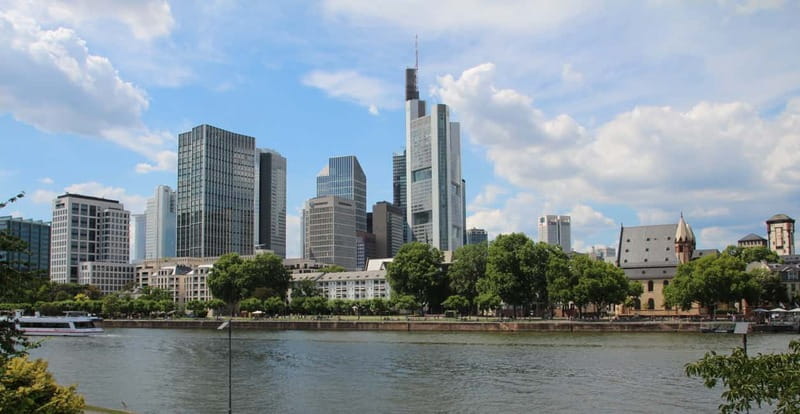
Frankfurt’s old town is interesting because it is not frozen in time. You walk through Altstadt streets and then see how the skyline, buildings, and rebuilding of the last century changed the place.
I love how this tour uses big, specific landmarks to explain Frankfurt’s story fast, especially the walk over the Eiserner Steg. I also like that it connects the famous monuments to real turning points, including the effects of World War II and later renovations. One thing to consider: with only 1.5 hours, you get orientation and key stops, not a slow, inside-your-own-pace museum day.
Key Stops That Make This Walk Worth It
- Justitia-Brunnen (Römerberg) start: you get an easy, iconic meeting point that anchors the whole route
- Eiserner Steg (built 1868): learn why this iron footbridge matters in Frankfurt’s modern street layout
- Altstadt to Neue Altstadt comparison: see how the city preserves the past while building something new
- Römer and Paulskirche: two anchors of the old civic heart you can connect with one walk
- Location of the 1st German national assembly: a history-heavy stop without needing to hunt for it
How Frankfurt’s Old Town and New Skyline Get Explained in One Walk
This is the kind of city walk that helps you see Frankfurt as a living project, not a postcard. The route is short enough to fit into a busy itinerary, yet it still links the original core of the city with the way Frankfurt looks and feels today.
You’ll be guided through the Altstadt and also the city’s newer “old town” plan, the Neue Altstadt. That contrast is the point. Old buildings tell you what Frankfurt valued. New construction and renovation tell you what it chose to keep, rebuild, or redesign.
The best part is that the guide doesn’t treat sights like stand-alone trophies. You’ll compare the historic monuments with the modern-era skyscrapers as you move around the center. That comparison makes the city easier to understand when you later explore on your own.
More Walking Tours in Frankfurt
- Frankfurt Highlights English Walking Tour
★ 5.0 · 1,203 reviews - Frankfurt on Foot Daily Walking Tour in English
★ 4.9 · 323 reviews - Frankfurt: Private Walking Tour with a Local
★ 4.4 · 83 reviews
From Justitia-Brunnen to Eiserner Steg, the Walk Starts With a Map in Your Head
Your tour meets at Justitia-Brunnen in Römerberg. That matters more than people think. When the meeting point is a clear landmark, you start the walk with confidence, not stress.
From there, you head to the first major orientation moment, the Eiserner Steg, the iron footbridge built in 1868. This is one of those spots where you can feel the “how the city works” level of Frankfurt. A footbridge is practical, but guides can also show you why it became important over time.
During this early stretch, the guide sets expectations for what you’re going to learn: what’s old, what was lost, and how the city re-shaped itself. It also helps that the tour length is designed for momentum. After about 10 to 20 minutes of walking, you’re already seeing the kind of contrasts that make Frankfurt feel both historic and modern.
Why Eiserner Steg is a smarter-than-it-looks stop
It is not just a pretty crossing. Once a guide frames it, you start noticing how Frankfurt’s core connects physically and visually. You also get a clean starting point for the next theme: damage, rebuilding, and renovation.
World War II Destruction, Then the 2008-9 Renovation Story
One of the most practical benefits of a guided walk is that you learn what to look for. Here, the guide explains how many grand buildings were destroyed during World War II, which gives the old-town streets a new meaning.
Instead of seeing gaps as empty space, you learn to read them as part of the city’s history. That is exactly what makes walking more powerful than scrolling photos later.
The route also touches on the major renovation work in 2008-9. This is a useful detail because it pulls the story closer to “today.” Frankfurt is not only a city with an old past. It is a city still actively shaping its center, sometimes by reconstructing what used to be there, sometimes by creating a new version of old.
If you like history that connects to real urban planning choices, this section is a highlight. It turns architecture into cause-and-effect, not just decoration.
Another way to spend a Frankfurt afternoon:
- Frankfurt: River Main Sightseeing Cruise with Commentary
★ 4.3 · 5,127 reviews - Frankfurt: Hop-On, Hop-Off Grand or Express Bus Ticket
★ 3.9 · 2,088 reviews - Frankfurt: 1-Hour Panorama Boat Cruise on the river Main
★ 4.4 · 1,822 reviews - From Frankfurt: Rhine Valley Day Trip
★ 4.4 · 1,317 reviews
Römer and Paulskirche: Two Civic Landmarks You Can Actually Place
After the bridge section, you move into the heart of the historic civic center. You’ll see the Römer and then the Paulskirche. These are not random stops. They work like a timeline you can walk through.
The Römer is tied to Frankfurt’s old political and civic life, so it functions as a visual anchor. When you look at it during your walk, you are not just looking at a building. You are looking at the idea of where decisions got made.
Then the route leads you to the Paulskirche, which is the bigger history moment on this walk. You’ll be in the right place to understand why this stop is famous, and why it matters for German national identity.
The value of seeing both in one loop
Civic buildings can feel like separate “must-see” landmarks. A guided walk helps you connect them. You leave knowing which role each place played, rather than collecting a list of sights and moving on.
Paulskirche and the First German National Assembly, Why This Stop Hits
This tour includes a key highlight: the location of the 1st German national assembly, tied to the Paulskirche area.
Even if you know a little German history, hearing it in context helps. Sitting in a museum caption, you can absorb facts, but a walking guide can give you the human framing: what happened there, why it became symbolic, and how that place connects to Frankfurt’s status.
You’ll also get explanations that make the architecture feel relevant instead of distant. That is especially helpful if German history is not your strongest subject. The guide’s job here is to translate significance into something you can actually picture.
And based on the guide feedback, this is where the best tours earn their keep. One review mentioned a guide named Sanel giving a deep, satisfying view of Frankfurt’s history. Another praised how flexible the private guide was with timing, even during rain. That kind of delivery matters when you reach a history-heavy stop like this.
Neue Altstadt: The City’s New-Old Town Project Explained Like a Friend
Frankfurt’s Neue Altstadt is where the walk gets really interesting for modern travelers. You’re no longer only “looking back.” You’re seeing how the city chose to shape its center after destruction, changing needs, and shifting design priorities.
The “new old town” idea sounds like a gimmick until you stand there and connect it to everything you’ve already learned on the walk. That’s what makes the route work. By the time you reach Neue Altstadt, you understand the logic behind rebuilding and redesign.
This stop gives you something practical too. When you later explore the surrounding area on your own, you’ll recognize what feels original, what feels reconstructed, and what was designed for the modern city life that followed.
What you’ll get from the guide here
The guide will provide useful information about attractions along the way, not just the headline points. That means you get context for details you might otherwise ignore, like why certain streets feel the way they do and how the “old town” look serves today’s city.
How the Tour Runs: Shared vs Private, and the 1.5-Hour Pace
The tour runs for 1.5 hours, and you can choose shared or private depending on your option. That choice is more than comfort. It can affect how much the guide can tailor timing and questions to your group.
The guide language is German, so if you do not speak German, you might want to check whether you prefer a private option where you can manage communication more easily. The tour is still a live, human-led walking experience, and that matters for spotting details and getting explanations on the spot.
One thing that stood out in the feedback is guide flexibility. A private-tour review praised a guide named Markus for being flexible with timing, even with weather issues that shortened the evening. Another review described a family group spanning multiple ages, from 8 up to 87, with a guide that handled the group thoughtfully and empathetically.
That tells me the guide style can be adaptable. If you want a short, well-paced walk with someone who can keep it engaging in real time, this format is a good fit.
What 1.5 hours usually means on the ground
You’ll get a “best of” path through major points, plus explanations at each stop. You won’t have time for long detours or extended indoor visits unless you add extra time on your own. Plan this as an orientation tour that also gives you enough context to explore smarter afterward.
Price and Value: Does $17 Really Make Sense for This Walk?
At $17 per person, this tour is priced to be accessible, especially for a guided route that covers multiple landmarks tied to major historical themes.
What you are really paying for is not just movement. You’re paying for:
- A guide who connects historic sites to specific turning points
- A route that links the Altstadt and Neue Altstadt contrast
- Direction that helps you understand where you are in the city, fast
- Live explanations in German, which is part of the value if you can follow along
If you were to do this self-guided, you could still see the buildings. But you’d likely miss how the pieces connect: WWII destruction, later renovations, and the meaning of the civic landmarks. That connection is the whole reason to book a guided walk.
Shared tours can be the best value if you want to meet other people and keep costs low. Private tours can be worth it if your group needs flexibility, wants more back-and-forth questions, or simply prefers a quieter pace. Since the listing offers private group availability, you have the choice.
What to Bring, What to Wear, and Who This Fits Best
This is a walking tour, so dress for walking and for weather. The route includes major outdoor landmarks like bridges and plazas, so comfortable shoes are a must.
If you are visiting Frankfurt for the first time, this tour can help you get oriented quickly. It is also great if you like the “why this matters” angle. The stop at Paulskirche and the theme of rebuilding after World War II are exactly the kind of anchors that turn a city from scenery into story.
It also seems to work across ages. One review described a four-generation family group and said the guide made the history interesting without talking down. If you have a mixed-age group, this guided structure helps everyone stay together.
Who may want a different option:
- If you only want quiet, slow looking without any explanation, you may find a guided pace too structured
- If you need an English guide, you should confirm fit since the guide language is German
Should You Book This Frankfurt Walking Tour?
Yes, if you want a short, focused way to understand Frankfurt’s center. Booking makes sense when you care about how history shaped the city and you like the idea of comparing Altstadt, Neue Altstadt, and modern skyline scale in a single loop.
I’d especially recommend it if:
- You only have about an hour and a half for a guided walk
- You want the story behind Paulskirche and the first German national assembly location
- You like practical, landmark-based explanations that help you explore on your own afterward
One last tip: treat it as your mental map. After the tour, you’ll know what to look for when you wander the Römerberg area and keep walking toward the parts of Frankfurt that feel both rebuilt and still growing.
FAQ
Where is the meeting point for the Frankfurt walking tour?
Meet your guide at the Justitia-Brunnen statue in Römerberg.
How long does the walking tour last?
The duration is 1.5 hours.
Is this tour private or shared?
Both are available. The tour can run as a shared or private group depending on the option selected.
What language is the live tour guide?
The live tour guide speaks German.
How much does the tour cost?
The price is $17 per person.
What will I see during the tour?
You’ll explore Frankfurt’s Altstadt, the Neue Altstadt, the Eiserner Steg iron footbridge, and historic highlights around the Römer and Paulskirche, including the location of the 1st German national assembly.
What is included with the ticket price?
Included is the Frankfurt walking tour and a guide.
Can I cancel and get a full refund?
Yes. You can cancel up to 24 hours in advance for a full refund.
Can I reserve now and pay later?
Yes. You can reserve now and pay later to keep plans flexible.
Fresh reviews out of Frankfurt
- Frankfurt: The Black Death Tour★ 4.3 · 50 reviews
- Eltz Castle Small-Group Tour from Frankfurt with Dinner★ 4.0 · 52 reviews
- Central and Eastern Europe Highlights 7-Day Tour from Frankfurt★ 4.5 · 54 reviews
- Frankfurter Kunstverein: Admission ticket★ 3.7 · 54 reviews
- Frankfurt Self-Guided Historical Walking Tour★ 4.0 · 58 reviews
- Private Tour with Native English speaking Local★ 4.9 · 60 reviews
- Rhine Valley: Half Day Tour from Frankfurt★ 3.7 · 66 reviews
- Frankfurt Impressions Express – Highlights and Hidden Gems★ 5.0 · 70 reviews
Walking Tours, compared.


Berlin’s Best: 2 Hour Walking Tour Third Reich and the Cold War
Read our review →
Third Reich Berlin: Hitler and WWII Walking Tour
Read our review →Browse the lists this tour appears in