
Reviewed · WALKING TOURS
Frankfurt on Foot Daily Walking Tour in English
Frankfurt on Foot Original Tour is interesting because it stitches together medieval Frankfurt, the hard parts of WWII, and Jewish history into one practical city walk. I love the way the tour keeps pointing you toward what to look for, especially at Römerplatz and the Main river views from Eisener Steg. One possible drawback is the pace is steady, and you will cover about 7 km on cobblestones and sidewalk unevenness.
You also get the comfort of an English-speaking guide, with a planned 3-hour route that runs 365 days a year. You will start at 10:00, with the meeting point on the Römerberg area near the Tourist Info, so you are not wandering around guessing where to go.
Key Things You Should Know Before You Go
- English-only guides: This is built for you to understand every stop without switching languages.
- Römerplatz first, then Old Town stories: You get an easy overview fast, before you explore on your own.
- WWII and Jewish remembrance included: You visit key memorials and remembrance sites, not just pretty facades.
- Main river skyline photo break: Eisener Steg gives you a great angle on Frankfurt’s riverfront museums.
- Free entry to all included stops: You are not hit with surprise ticket costs along the way.
- Snacks plus bathroom breaks built in: A snack break and WC stops help keep the walk comfortable.
Stepping Through Frankfurt’s Layers, From Römerplatz to Remembrance Sites
This is the kind of walking tour I like in a big city: you start with the anchor sights, then the story gets more specific and more personal. Frankfurt is a place where different eras sit close together, and this route helps you see that without needing a museum map app.
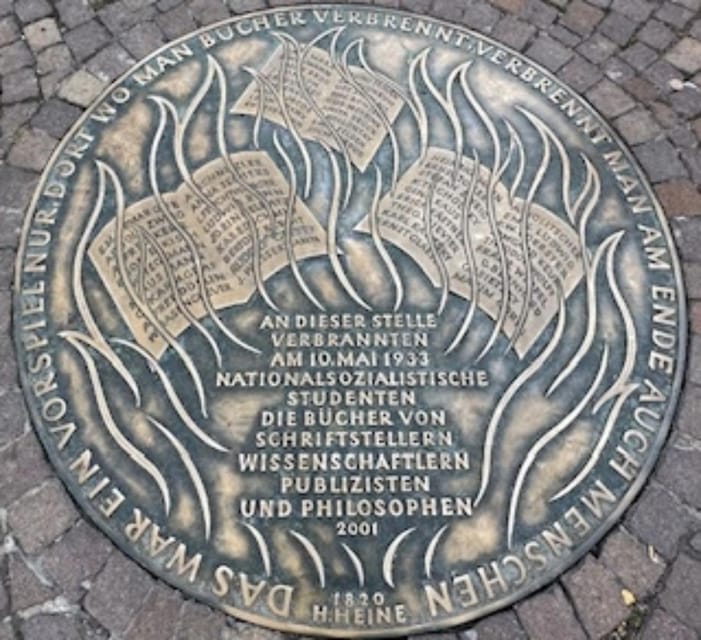
The biggest win is balance. You get classic highlights like the Römer and St. Bartholomew, and you also get to slow down at sites tied to Nazi persecution and Holocaust memory, including the Book Burning Memorial and the Stolper Steine (stumbling stones). If your goal is to understand how Frankfurt became what it is today, the structure helps.
Expect an easy walk style, not a hike. Still, you should plan on steady walking and wear shoes you trust, because cobblestones can turn slippy when it rains.
More Walking Tours in Frankfurt
- Frankfurt Highlights English Walking Tour
★ 5.0 · 1,203 reviews - Frankfurt: Private or Shared Walking Tour
★ 4.5 · 158 reviews - Frankfurt: Private Walking Tour with a Local
★ 4.4 · 83 reviews
Meeting at Römerberg, Finding Your Guide, and Getting Oriented Fast
The meeting point is directly across from the Tourist Info on the Römerberg, in front of the Binding Schirn Pub, on the street. Your guide will have a sign that says Frankfurt on Foot Walking Tours.
The tour starts at 10:00 and runs daily. That matters because you can slot it into almost any day, even if your visit is tight and you do not want to gamble on specific opening hours.
This is also a smart first-day activity. Once you connect the city’s key squares, churches, and memorial areas, you will navigate the rest of Frankfurt with less confusion and more confidence.
Römer and Römerplatz Since 1405: The Old Town Center in Plain Sight
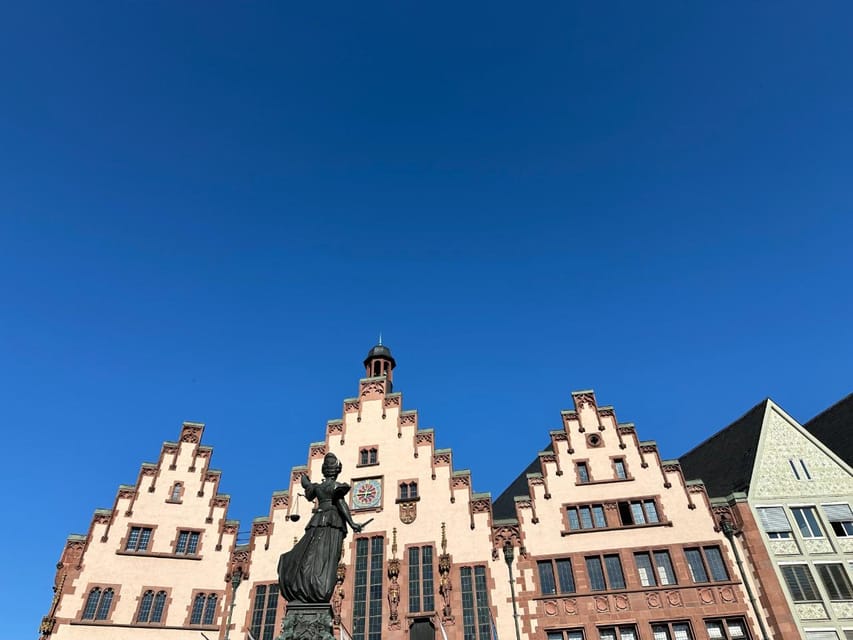
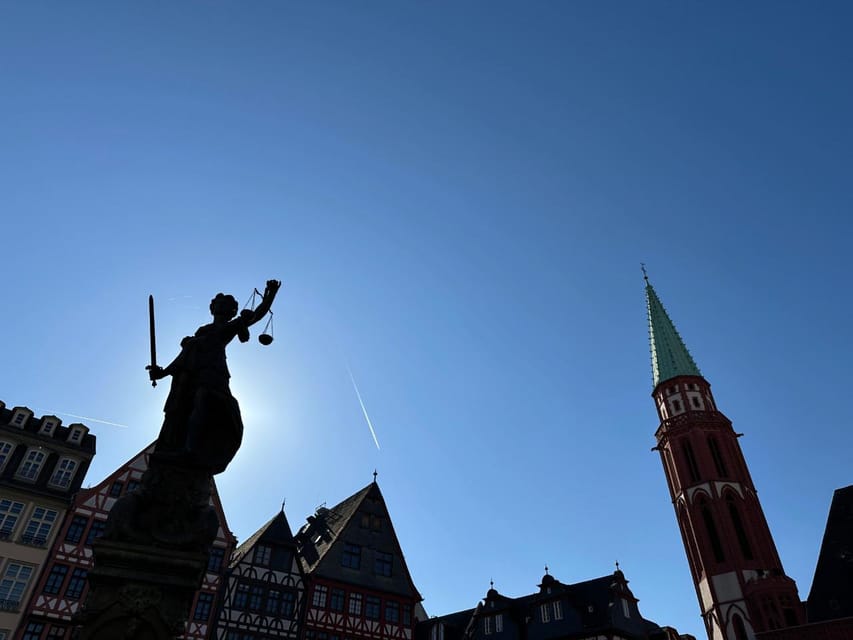
Your tour begins with the Römer and the Römerplatz, the core of Frankfurt’s old town scene. The Römer is the city hall, and it has been in use since 1405, while the Römerplatz is the classic old town square where history plays out in real time.
What I like about starting here is that it gives you a mental centerline. Later stops make more sense because you can picture where power, public life, and major events sat.
Practical note: you will want to look up as well as straight ahead. Medieval and early modern buildings often hide the best details high above street level, especially on church and civic structures.
New Alt Stadt Rebuilt: How Frankfurt Chose to Rebuild After WWII
One of the tour’s most valuable themes is reconstruction, and the New Alt Stadt is your entry point. You will hear how and why it was re-built, and that context changes how you see the streets around you.
Instead of treating the old town like it is frozen in time, the tour frames it as a choice. That helps you appreciate what was recovered, what was altered, and what Frankfurt decided people needed to see.
A drawback to keep in mind: this part can feel less dramatic visually than the more famous landmarks. But if you enjoy understanding why cities look the way they do, you will likely find it satisfying.
Another way to spend a Frankfurt afternoon:
- Frankfurt: River Main Sightseeing Cruise with Commentary
★ 4.3 · 5,127 reviews - Frankfurt: Hop-On, Hop-Off Grand or Express Bus Ticket
★ 3.9 · 2,088 reviews - Frankfurt: 1-Hour Panorama Boat Cruise on the river Main
★ 4.4 · 1,822 reviews - From Frankfurt: Rhine Valley Day Trip
★ 4.4 · 1,317 reviews
Nazi-Era Remembrance in the City Streets: Book Burning Memorial and Stolper Steine
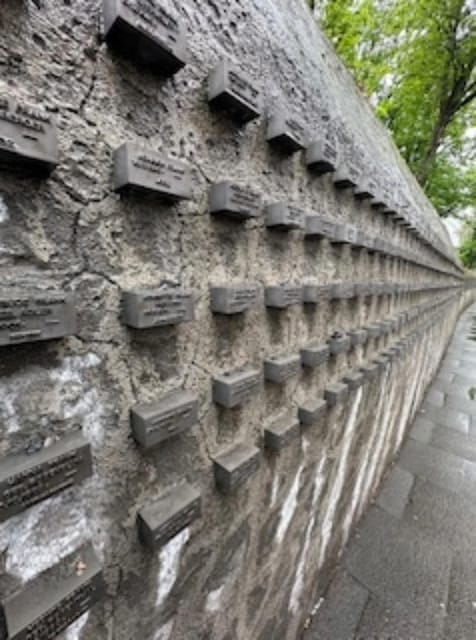
Frankfurt does not hide its WWII scars, and this tour takes you right to them. You will visit the Book Burning Memorial, tied to the Nazi book burnings and located at the site where those acts took place.
Then you move into a very human form of memory with the Stolper Steine, or Stumble Stones. The tour shows you this unique reminder system meant to remember victims of the Nazi regime, placed where people once lived.
This section is powerful, and you should treat it as a slower moment rather than a checklist. If you come in hungry for meaning, you will leave with a clearer picture of how remembrance is built into everyday neighborhoods.
Alt Nikolai Church, House Wertheim, and the Half-Timber Surprise
You will pass the Alt Nikolai Church, a Gothic church built in 1290. The exterior-only visit on Sundays is worth knowing ahead of time, since it affects what you can actually see during your walk.
Next comes House Wertheim, described as the inner city’s only original half-timbered house left at the end of World War II. That single detail tells you a lot about how destruction shaped what survived, and why some buildings became symbols of continuity.
These stops are small compared to big city museums, but that is the point. Walking past them helps you notice how Frankfurt’s past is not locked behind ticket gates, even when the story is heavy.
Eisener Steg and the Main River Skyline: A Photo Stop That Changes the View
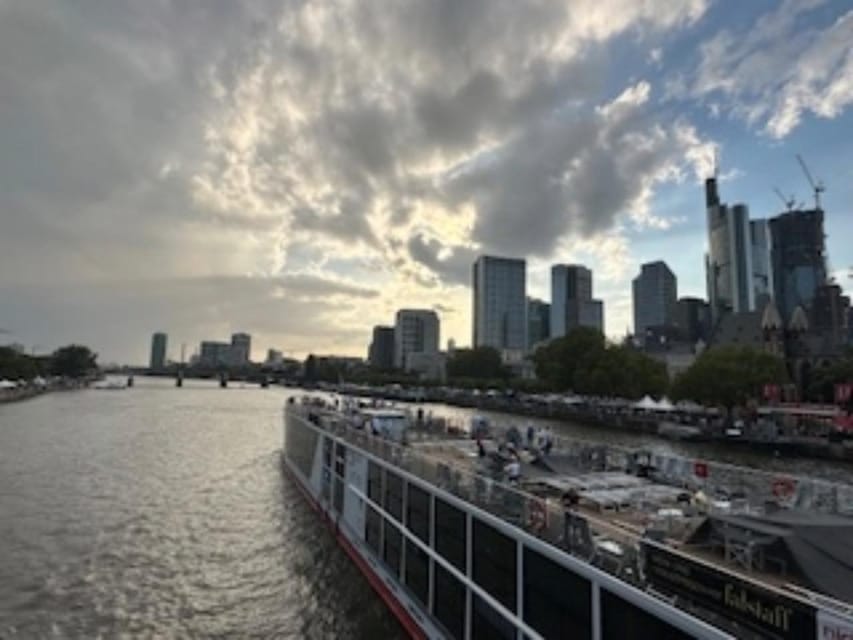
Eisener Steg is a pedestrian bridge over the Main river, and it gives you a great view of the skyline. It also lines you up with the many museums along the riverbanks, so you can understand how the riverfront connects culture, transit, and city branding.
I like this stop because it resets your brain. After memorial and church moments, a river view gives you breathing space, plus a straightforward way to compare modern Frankfurt to the older streets behind you.
If it is rainy, take extra care. Cobblestones and slick surfaces can make the walk feel less easy than it sounds, so bring shoes with grip and consider an umbrella for weather changes.
Kaiserdom (St. Bartholomew): Coronations and Elections, Seen From Outside
You will see St. Bartholomew, better known as the Kaiserdom, the Imperial Church chosen for coronations and elections of the Holy Roman Emperor for centuries. The key word here is centuries, which means the building helped stage political legitimacy, not just religious life.
Just like Alt Nikolai, this visit is exterior-only on Sundays and religious holidays. Still, even from outside, you can recognize why the structure mattered. The architecture is meant to look official and enduring, because that is what it was built to do.
This is also a good moment for questions. Guides often use places like this to explain how Frankfurt sat at crossroads of religion, governance, and trade.
Karmeliter Cloister Wall Paintings: Art North of the Alps from the Early 1500s
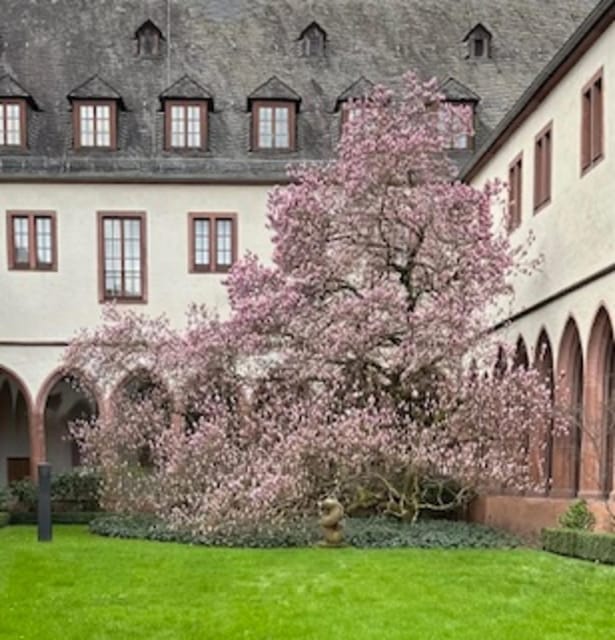
One of the most specific stops is the Jörge Ratgeb wall paintings in the Karmeliter Cloister. You will see that these are the largest religious wall paintings north of the Alps, painted in the early 1500s.
Worth planning around: these wall paintings are not shown on some holidays. If your date falls on a major religious day, you might not see them as the tour usually presents them.
Even with that, the concept is strong. Frankfurt is not just banking and trade. It also has serious art history, and this is a direct way to notice that without getting stuck in a museum.
Jewish Frankfurt: Holocaust Memorial Wall, Ghetto Wall, Cemetery, and the Personal Details
The tour gets very personal when it visits the Jewish Holocaust Memorial Wall. It honors the memory of approximately 12,000 Jewish citizens of Frankfurt who were killed in the Shoa, and it includes Anne, Margot, and Edith Frank on the wall of remembrance.
After that, you will also see the Medieval Jewish Cemetery from the outside. It is one of the oldest and largest Jewish cemeteries in Germany, and looking at it from outside still gives you a strong sense of age and scale.
You will then visit the Jewish Ghetto Wall. It was originally part of city defenses from 1180, and later became one of the walls surrounding the Medieval Jewish ghetto. That timeline is one of the tour’s best “how history changes function” lessons.
This whole cluster of stops works because it moves from specific memorial detail to broader city context. You do not just see markers. You learn how the spaces were shaped by persecution and community life.
Klein Markt Halle Food Hall: Keep Your Energy Up at the Right Moment
A favorite stop on the tour is Klein Markt Halle, a produce hall packed with fruits, vegetables, chocolate, pastries, cheeses, breads, meats, fish, and other delicacies from around the world. The tour notes it is not on Sundays and holidays, so timing matters.
This is also where you make the snack break practical. Since optional snacks and drinks are not included, I recommend treating this as your chance to grab something you actually want. If you eat later in the day, you might still find it worth buying a small bite here and saving room for dinner.
Even if you are not a big shopper, food halls teach you how locals and visitors think about everyday life. It is a nice contrast to the memorial intensity earlier on.
How Much Walking Is It, and How Hard Is the Route?
This is an easy walking tour, and it is designed for an average sightseeing pace. The key detail for families and first-timers is that children 12 and under are free and welcome, as long as they are okay with walking about 7 km.
You should bring comfortable shoes, and if you know you do not love cobblestones, plan for extra care on wet days. The route mixes open squares, church exteriors, and street corners, so you spend a lot of time at viewpoints and stops rather than trudging through long stretches without interest.
The tour also includes WC breaks. That small feature matters more than you might think during three hours of constant walking and talking.
Guides, Pacing, and Why the Tour Feels Like More Than 3 Hours
One reason this tour has so many strong ratings is the guide style. In the experiences shared, guides like Justin, Phillip, Jennifer H., Ann, Jean, Hans, and Hannes are praised for making history clear, answering questions, and keeping the walk moving at a pace that never feels rushed.
I also like that the tour is candid about WWII and the dark past. Some tours try to soften that into gentle background facts. This one treats remembrance sites as part of the city’s real story, while still making the walk understandable.
Pacing comes up again and again in feedback, including the idea that the tour hits each place for about the right amount of time and includes a snack break and restroom break so you stay present.
Price and Value: Why $35 Works for What You Get
At $35 per person for 3 hours, this is priced like a classic highlights walk, but the value comes from what is included. You get all entries free at the stops included on the route, plus photo opportunities and a snack break.
You also do not use transportation, which turns the price into walking time with guidance, not a ticket for riding around. For many cities, that is the most cost-efficient way to learn the basics, and Frankfurt is a place where you really do benefit from walking.
Optional snacks and drinks are not included, so if you want a full meal or bottled drinks, budget a little extra. Still, you should feel prepared because the tour includes a snack break and WC breaks.
Who This Frankfurt On Foot Walk Is Best For
This tour fits best if you want a structured introduction to Frankfurt that does not ignore the tough parts. It works well if you plan to explore on your own after, because the Römer area, churches, and Jewish quarter details give you a mental map you can revisit later.
It is a good pick for:
- First-time visitors who want a city overview without spending all day on trains.
- Travelers who like context, not just photos.
- People who want WWII and Holocaust remembrance included as part of the walking route, not tacked on at the end.
- Families with kids who can handle a solid walking day (about 7 km).
If you are the type who dislikes emotional subject matter, you might find the memorial stops challenging. If you are open to learning respectfully, you are likely to appreciate how the tour connects places and meaning.
Should You Book This Tour?
I think you should book it if you want a guided loop that teaches you how Frankfurt fits together, from old civic power at Römerplatz to memory sites tied to Nazi persecution. The best value is in the combination: free entries, English guidance, built-in breaks, and a route that makes you look at both the pretty sides and the painful ones.
If you hate walking more than a casual stroll, then consider shorter options instead. But if you can handle shoes-on, step-by-step sightseeing for about three hours, this is a smart way to start your visit with clarity.
FAQ
Is the Frankfurt on Foot walking tour easy?
It is described as an easy walking tour. You should wear comfortable shoes and be ready for about 7 km of walking.
Where do I meet the guide?
Meet directly across from the Tourist Info on the Römerberg, in front of the Binding Schirn Pub, on the street. Your guide will have a sign that says Frankfurt on Foot Walking Tours.
What time does the tour start?
The tour starts at 10:00.
Is the tour in English?
Yes. The tour is only in English.
How long is the tour?
The tour duration is 3 hours.
What stops are included?
The tour includes stops such as Römer and Römerplatz, the New Alt Stadt, the Book Burning Memorial, Alt Nikolai Church (exterior only on Sundays), House Wertheim, Eisener Steg, St. Bartholomew or the Kaiserdom (exterior only on Sundays and religious holidays), Jörge Ratgeb Wall Paintings in the Karmeliter Cloister (not on some holidays), Stolper Steine, the Jewish Holocaust Memorial Wall (including Anne, Margot, and Edith Frank), and more, including the Jewish ghetto wall and Medieval Jewish Cemetery (outside) and Klein Markt Halle (not on Sundays and holidays).
Are snacks and drinks included?
A snack break is included. Snacks and drinks beyond that are optional, since optional snacks and drinks are not included.
Fresh reviews out of Frankfurt
- Frankfurt: The Black Death Tour★ 4.3 · 50 reviews
- Eltz Castle Small-Group Tour from Frankfurt with Dinner★ 4.0 · 52 reviews
- Central and Eastern Europe Highlights 7-Day Tour from Frankfurt★ 4.5 · 54 reviews
- Frankfurter Kunstverein: Admission ticket★ 3.7 · 54 reviews
- Frankfurt Self-Guided Historical Walking Tour★ 4.0 · 58 reviews
- Private Tour with Native English speaking Local★ 4.9 · 60 reviews
- Rhine Valley: Half Day Tour from Frankfurt★ 3.7 · 66 reviews
- Frankfurt Impressions Express – Highlights and Hidden Gems★ 5.0 · 70 reviews
Walking Tours, compared.

Berlin’s Best: 2 Hour Walking Tour Third Reich and the Cold War
Read our review →
Third Reich Berlin: Hitler and WWII Walking Tour
Read our review →Browse the lists this tour appears in