
Reviewed · WALKING TOURS
Dresden Small Group Walking Tour
This tour is interesting because it strings Dresden’s big turning points together in a smooth walking loop, from the Reformation to the Baroque era and the scars of World War II. I especially love the street-level access to the city’s most important landmarks, with time to read the details instead of rushing in and out. I also love the small size and the storytelling from guides like Nicolas and Nicola, who kept the group moving with humor and clear connections. The one thing to consider is that it works as a pay-what-you-wish style experience, so you should be mentally ready for the tipping conversation.
You’ll start at Neumarkt near the Martin Luther Statue at 11:00 am, then walk through Dresden’s core for about 2 hours 15 minutes. The pace is steady and the route stays close together, which makes this feel like a great orientation if you’re short on time. Also, it runs in all weather, so bring layers and a rain plan.
Before you go, note that the tour will not enter paid attractions. That matters because Dresden’s biggest hitters often have ticketed interiors, but this walk keeps you focused on the best exteriors and the meaning behind them.
Key highlights you will feel on this walk
- A tight 2h15 loop that links Reformation, Baroque power, and post-war rebuilding without long transfers
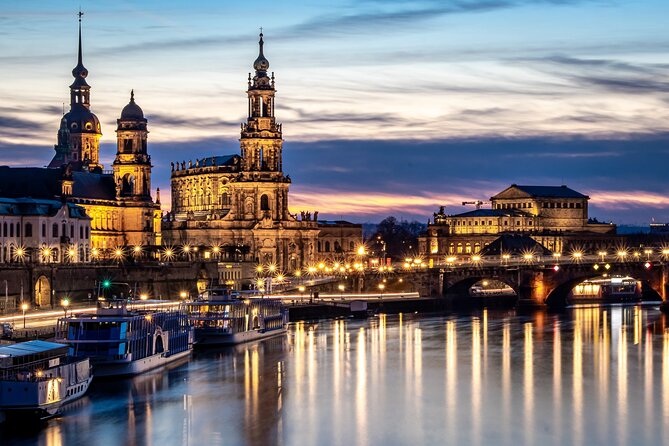
- Iconic skyline stops like Frauenkirche dome views, Hofkirche in the skyline, and the Semperoper area
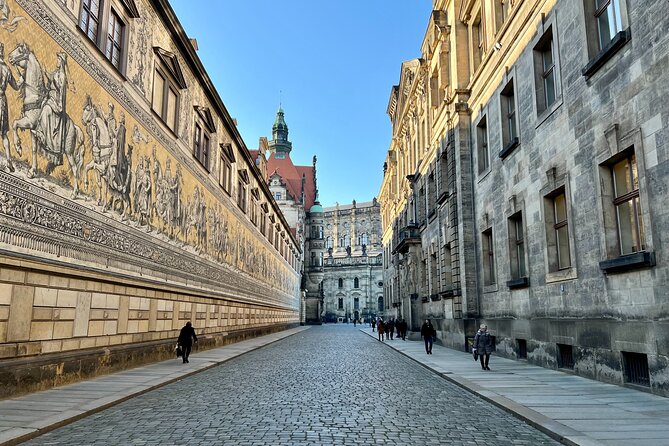
- Fürstenzug porcelain mural explained in plain language, including what you are looking at and why it matters
- Elbe panorama time at Brühlsche Terrasse, often the photo moment people remember
- Small group limit (35), which helps the guide keep context clear and the pace manageable
How this Dresden walk gives you the city’s story fast
Dresden can feel like a place you admire from the outside, then later wish you understood the connections. This tour is built to solve that problem. You get a guided timeline while you are standing in the exact spaces where that timeline played out, so the details click.
I like that the stops are mostly free to view, and the guide doesn’t hide behind museum doors. You also get enough time at each place to notice scale: domes, façades, long murals, and long views across the Elbe. It’s a very practical way to learn Dresden without turning your day into a queue-and-ticket marathon.
The group size also helps. With a cap of 35 people, the experience tends to stay conversational rather than lecture-only. Even if you are traveling solo, you will likely feel like you are following a friend who knows Dresden well.
More Walking Tours in Dresden
- Dresden: City & Semperoper Guided Walking Tour
★ 4.8 · 2,307 reviews - Dresden: Guided City Walk
★ 4.6 · 2,075 reviews - Dresden: Complete Walking Tour with Frauenkirche Visit
★ 4.8 · 700 reviews
Meeting at Neumarkt, then following a 2h15 timeline
You meet at Martin Luther Statue, Neumarkt (01067 Dresden). The tour starts at 11:00 am, and the walk ends near Dresden Zwinger on Sophienstraße (01067 Dresden).
From a planning point of view, this is a smart start time. You still have the rest of the day after the tour for a second visit, a café break, or a deeper dive into the places that grabbed you. It also pairs well with other central Dresden sights because the route stays in the historic core.
Expect moderate walking. The route is spread across key city points, and while the distances are manageable, it is still a continuous stroll with stop-and-go time.
Stop 1: Martin Luther Statue, a quick lesson before the domes
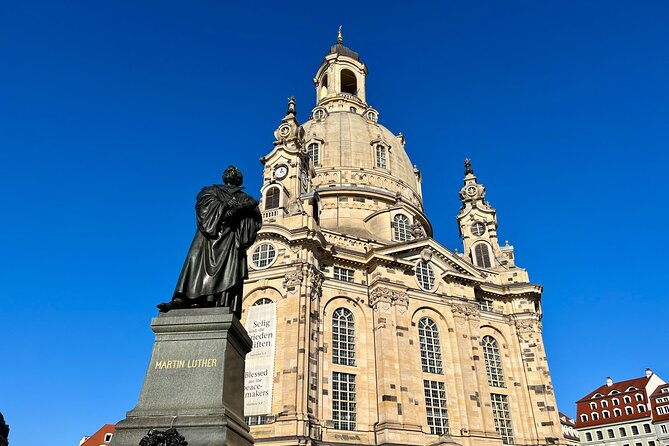
The walk begins at the Martin Luther Statue. This isn’t a generic photo stop. The guide frames Luther’s role in the Protestant Reformation and explains why this matters in Germany’s cultural and religious landscape.
Why this matters for your whole day: Dresden is often described through its art and architecture, but the city is also shaped by religion and power. Starting here gives you a reference point before you hit the more visually dramatic religious buildings later.
Stop 2: Frauenkirche Dresden, Baroque beauty and post-war rebuilding
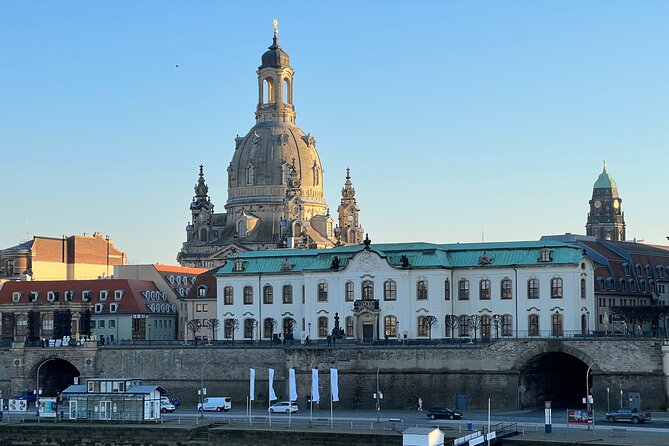
Next up is Frauenkirche Dresden, one of the most recognizable churches in the country. You’ll spend time outside taking in the famous dome and the intricate Baroque character that made it a signature landmark.
What the guide helps you understand is the second life of the church. Frauenkirche was destroyed during World War II, then reconstructed afterward, and that rebuild has become a symbol of resilience and reconciliation for Dresden.
A practical note: this kind of site can draw crowds, but since you’re viewing as part of a guided stop with a set time, you are less likely to drift or get stuck searching for the right angle. Take a slow look at the dome from where you are, because the guide usually points out what to notice.
Another way to spend a Dresden afternoon:
- Dresden: Semperoper Tickets and Guided Tour
★ 4.7 · 12,102 reviews - Dresden: The Original Night Watchman Tour in Lantern Light
★ 4.6 · 6,653 reviews - Dresden: Semperoper and Old Town Tour
★ 4.8 · 5,735 reviews - Dresden: River Sightseeing Boat Cruise
★ 4.3 · 5,323 reviews
Stop 3: Neumarkt, rebuilt streets that still carry the past
You then head to Neumarkt, the historic square that was heavily damaged in the war and later rebuilt. Today, it feels like a living square with restored Baroque buildings, plus shops and cafés around it.
Neumarkt is worth your attention because it shows a particular Dresden idea: the city rebuilt not just buildings, but also the sense of streets and public space. It’s a reminder that reconstruction was about daily life too, not only monuments.
The only drawback here is simple: because it is a public square, it can get busy depending on the day and time. If you want the best photos, you may need to be patient for people to move through, even with a guided stop.
Stop 4: Fürstenzug, the world’s largest porcelain mural
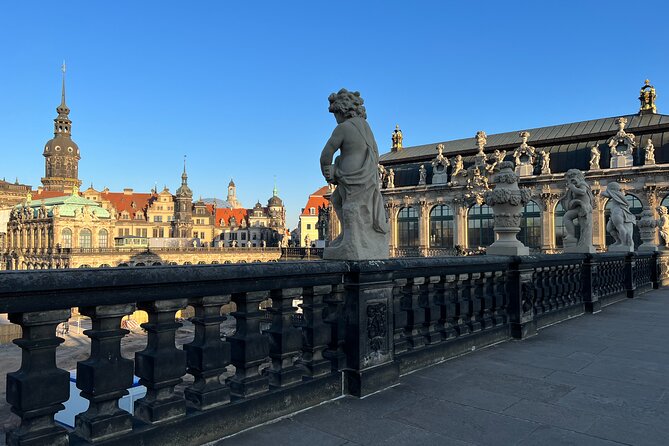
Now you get to one of Dresden’s most unique art stories: the Fürstenzug. This is the largest porcelain mural in the world, stretching over 100 meters, and it depicts a procession of rulers from the House of Wettin.
Why this is a great guided stop: a mural that long can become visual noise unless someone explains what you are looking at. The guide helps you connect the figures to what they represented, and how Dresden’s political identity shows up in art.
If you love details, this is a place to slow down. Don’t just scan for the biggest figures. Look along the length and notice how the scene is staged as a continuous story.
Stop 5: Dresden Castle (Royal Palace), royal power in stone
After the porcelain, the route moves to Dresden Castle, also known as the Royal Palace of Dresden. From the outside, it’s easy to see why it served as the residence of Electors and Kings of Saxony for centuries.
Spend the time here thinking about the role the palace played. This isn’t just a grand façade. It’s the kind of building that tells you who held authority, where the city’s elite power lived, and why Dresden mattered politically.
Because the tour does not enter paid attractions, you’ll focus on the exterior impression and the historical framing. If you want interiors later, you can plan that as a follow-on visit after the walk, using your new context.
Stop 6: Altmarkt (Old Market Square), the city’s daily public stage
You then reach Altmarkt, one of Dresden’s oldest squares. It’s the kind of place that has markets, events, and a steady rhythm to it because it has long been used as a public meeting point.
Altmarkt works well in this tour because it shifts the focus from power and religion to ordinary urban life. The guide’s connections usually help you see why these squares are not empty space. They are where the city’s social history happened.
If you dislike waiting around in open squares, this is where you keep your pacing mindset. You get a set time, then you move on, so it stays efficient.
Stop 7: Brühlsche Terrasse, the balcony views over the Elbe
Then comes one of the most enjoyable stretches: Brühlsche Terrasse, also called the Balcony of Europe. This promenade is the payoff for the walking so far, with panoramic views over the Elbe River and Dresden’s historic skyline.
This stop is not about memorizing names. It’s about seeing how Dresden sits in space, how the river shapes what you can see, and how the city’s architecture is arranged for visibility.
If you want the best photos, watch the light and the crowd flow. The guide will likely point out angles, but you can still adjust your position to reduce glare and background clutter.
Stop 8: Katholische Hofkirche, Baroque church and the Silbermann organ story
Next you visit Katholische Hofkirche (the Hofkirche). It’s a Baroque church that dominates the skyline in a way that makes it impossible to miss.
The tour connects the big architecture with what makes the interior famous, including the Silbermann organ. Even though you won’t be going inside as part of this walk, the guide helps you understand why this church became such a landmark.
This stop can feel extra powerful if you pay attention to the way Baroque churches command attention through shape and detail. Look for symmetry and the theatrical feel of the façade elements.
Stop 9: Semper Opera House (Semperoper), culture you can spot from the street
You continue to the Semper Opera House, or Semperoper. Even if you never plan to catch an opera, the building itself is a major part of Dresden’s identity.
The guide frames the Semperoper as world-famous architecture tied to its namesake architect, Gottfried Semper. The message here is simple: Dresden invested in culture at a scale that matched its political power.
Since you are viewing from the outside, treat this stop as a visual cue. If you later decide you want to hear performances, you’ll have a strong idea of what you are looking at and why it matters.
Stop 10: Dresden Zwinger, Baroque gardens and big collections (from the outside)
The final major stop is The Dresden Zwinger. This Baroque complex is known for its impressive gardens and the art and history collections connected to it.
Because the tour does not enter paid attractions, you are not doing the full Zwinger experience today. Still, the guide’s framing helps you understand what the Zwinger is trying to accomplish architecturally, and why it has become such a signature Dresden destination.
This is also a practical end point. After the walk, you can choose how to continue: linger nearby for photos, grab lunch, or go straight to the area you want to explore in more depth.
Guide style, group energy, and what to watch for
A big reason this tour earns a strong rating is the human factor. Several guides described in the experience notes, including Nicolas and Nicola (and also James and Dominique in different groups), are praised for keeping people engaged with humor and clear storytelling.
One specific detail that pops up in the guidance style is identification. Some guides use visible markers like a yellow umbrella, which helps when you arrive and the meeting spot feels crowded.
There is one note to keep in mind. On at least one occasion, a guide’s comments drifted into current politics in a way that felt uncomfortable for some people. If you prefer your history walking tours to stay focused on the city, you can politely steer the conversation back when you notice it going off track.
Price and value: $35.89 with pay-what-you-wish built in
The price is $35.89 per person, for about 2 hours 15 minutes. For a central city walking tour, that can be a fair deal because you get a local guide plus a structured narrative across multiple major landmarks.
But the real value decision is how you feel about the pay-what-you-wish model. The experience notes say the amount you pay covers the reservation fee and the guide’s payment. That means you should not expect the tour to be totally free, even if the tipping philosophy is part of the setup.
My advice: if you book, go in with a simple plan. Pay the reservation price without resentment, then tip according to how much you enjoyed the guide and the clarity of the experience. If you absolutely hate any suggestion of tipping, choose a tour model with a fixed price and no pay-what-you-wish language.
Who this tour fits best, and who should skip it
This tour is a strong match if you want a guided orientation and you love architecture, public art, and the stories behind famous rebuilt places. The route makes it easy to see big names in a short time, without tickets and without committing to long museum hours.
It is also a good fit if you like context. The tour connects the Reformation, Saxony’s royal identity, Baroque design, and the post-war reconstruction theme so the city feels like a single story instead of disconnected stops.
You might prefer another format if you want deep interior access, because the walk keeps you outside and it does not include entry into paid attractions. If you want only the Zwinger or only the Frauenkirche inside, plan to add separate ticketed visits after this walk.
Should you book this Dresden Small Group Walking Tour?
I think you should book it if you want an organized way to learn Dresden fast, especially if it is your first serious day in town. For $35.89, you get a structured route, a local guide, and time at the landmarks that actually teach you how the city’s identity was rebuilt after 1945.
I would skip it only if you are uncomfortable with the pay-what-you-wish style approach or if you mainly want ticketed interiors today. Otherwise, this is a smart, efficient walk that ends at a perfect springboard point near the Zwinger, so you can keep exploring with confidence.
FAQ
Where do I meet for the Dresden Small Group Walking Tour?
You meet at the Martin Luther Statue in Neumarkt, 01067 Dresden, Germany.
What time does the tour start?
The tour starts at 11:00 am.
How long is the tour?
The duration is about 2 hours 15 minutes.
Is the tour in English, and how big is the group?
The tour is offered in English, and it has a maximum of 35 travelers.
Do we enter paid attractions during the walk?
No. The group will not enter any paid attractions.
Is the tour suitable for children and service animals?
Service animals are allowed, and children must be accompanied by an adult.
What is the cancellation deadline for a full refund?
Free cancellation is available up to 24 hours in advance for a full refund.
Fresh reviews out of Dresden
- Radebeul: Scavenger Hunt Self Guided Tour★ 4.6 · 9 reviews
- Walking Tour of Historic Dresden with a Christmas Touch. Small group tour.★ 4.5 · 9 reviews
- Dresden Group Tour with a Night Watchman★ 4.5 · 10 reviews
- Dresden: Bootstour-Sonnenuntergang im Schlauchboot genießen★ 4.9 · 10 reviews
- Dresden Private Walking Tour With A Professional Guide★ 5.0 · 10 reviews
- Dresden Live-Guided Self-Drive Trabi Safari City XXL Tour 2h15min★ 5.0 · 10 reviews
- Outdoor escape game – the magical portal★ 5.0 · 11 reviews
- City Tour and Guided Tour in the New Green Vault – Program C – The Festive★ 5.0 · 11 reviews
Walking Tours, compared.


Berlin’s Best: 2 Hour Walking Tour Third Reich and the Cold War
Read our review →
Third Reich Berlin: Hitler and WWII Walking Tour
Read our review →Browse the lists this tour appears in