
Reviewed · WALKING TOURS
Dresden Old Town – Guided Walking Tour in English
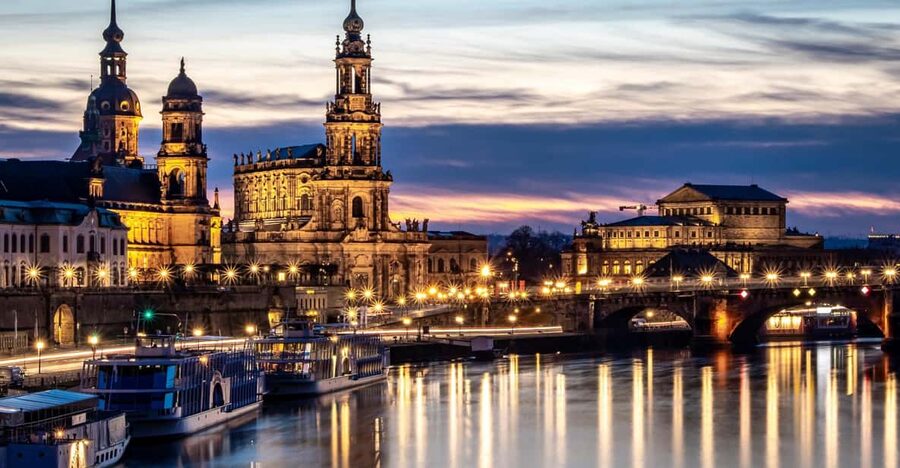
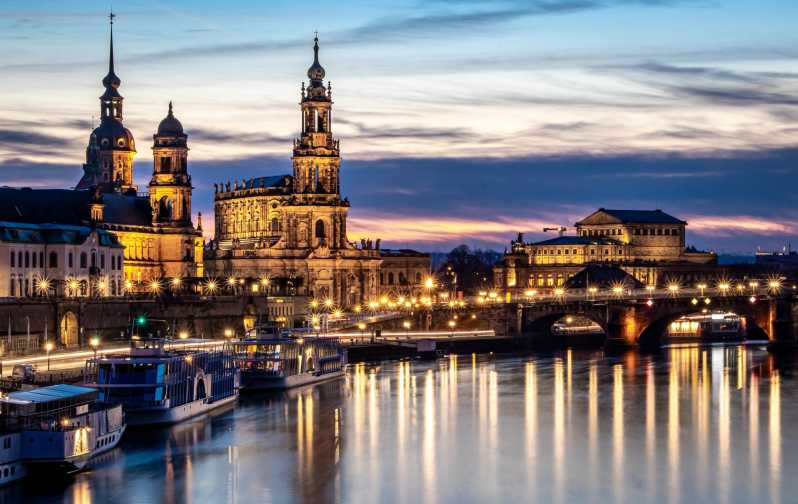
Dresden Old Town works because it feels like a city you can read. Walking along the Elbe, you hear how Slavic roots and Germanic power ended up mixing into one Central European style, and you also see how the city was rebuilt so thoroughly that the “new” is almost invisible.
I especially like the way the guide turns landmarks into a story, not just a photo stop. I also liked the lineup, with Frauenkirche and the Fürstenzug near the start, then a steady march through Dresden’s signature baroque sights.
One consideration: this is a focused walking orientation for about 2.5 hours. If you need frequent breaks, I suggest planning your own bathroom and water stop on your schedule, since the tour itself can feel like one long run of walking and talking.
Key points you should care about
- Martin Luther at Neumarkt sets the historical mood right away
- You get the Elbe as a connector idea, not a divider story
- Fürstenzug gives you Saxony’s rulers in a single, show-stopping visual
- The route threads baroque power buildings with the post-war rebuild story
- Expect clear, lively guiding with humor and context across European history
Why this Dresden Old Town walk feels more meaningful than a sightseeing loop
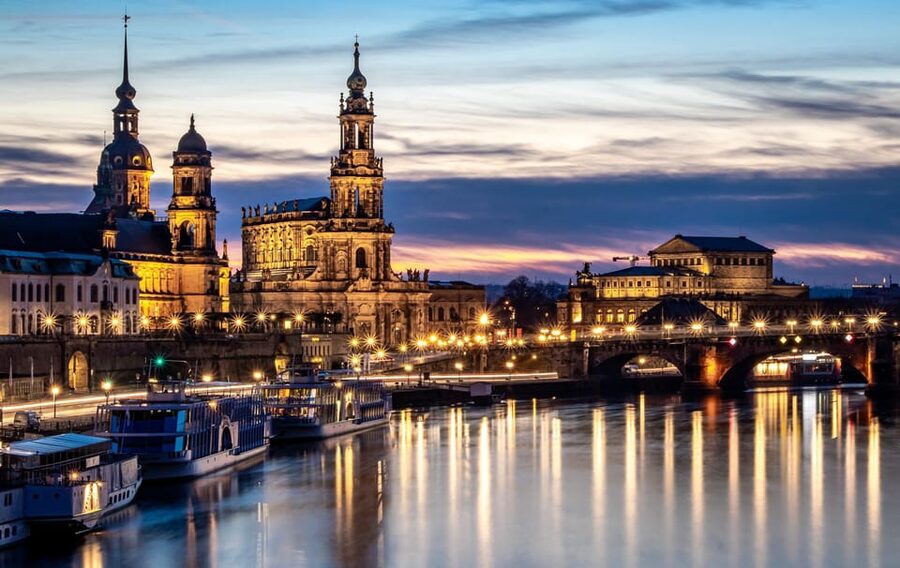
Dresden can fool you in the best way. From certain angles, the cobbles, façades, and restored details look old enough that you might not immediately clock the modern effort behind them. Then your guide puts the 20th century in focus, and suddenly the rebuilt center is not a gimmick. It’s a lesson in what people chose to bring back, and why.
The tour’s big idea is connection. The Elbe is often described like a boundary between Germanic and Slavic worlds, but the way Dresden developed on its banks argues the opposite: these communities interacted, traded, and blended culture over time. If you’ve ever wondered why Dresden feels neither purely German nor purely Slavic, you’ll understand it faster on foot than you will flipping through a guidebook.
You also get a helpful timeline that sticks because it’s tied to buildings. Starting with a small Slavic settlement, Dresden grew around a castle in the 13th century and became a major trading center by the late Middle Ages. Mining from the Rudavy mountains, plus the rise of Saxon power and baroque ambition in the early 1700s, all show up as “why this looks the way it does” along your route.
More Walking Tours in Dresden
- Dresden: City & Semperoper Guided Walking Tour
★ 4.8 · 2,307 reviews - Dresden: Guided City Walk
★ 4.6 · 2,075 reviews - Dresden: Complete Walking Tour with Frauenkirche Visit
★ 4.8 · 700 reviews
Start at Neumarkt: the Martin Luther statue and the Frauenkirche “why it matters” talk
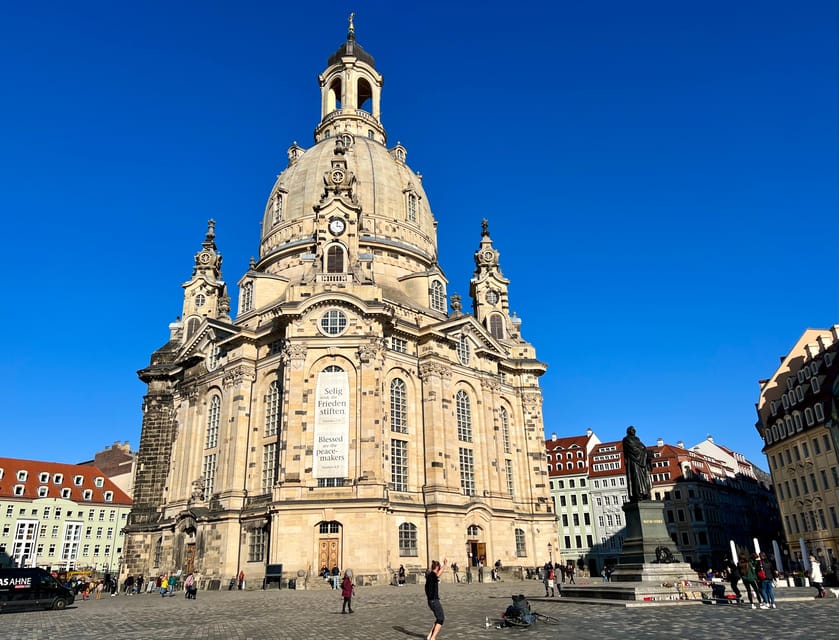
You meet at Neumarkt, right by the Martin Luther statue next to Frauenkirche. Look for the guide with the yellow umbrella, and arrive about 10 minutes early so you don’t slow the group at the start.
This opening spot matters because it anchors two themes at once: shifting power and lasting faith. Dresden’s name is familiar across Czech, Slovak, Polish, and Sorbian languages, which hints at the area’s older Slavic presence. Then, as the story moves into the Holy Roman Empire era and beyond, the architecture you see in this area reads like authority made visible.
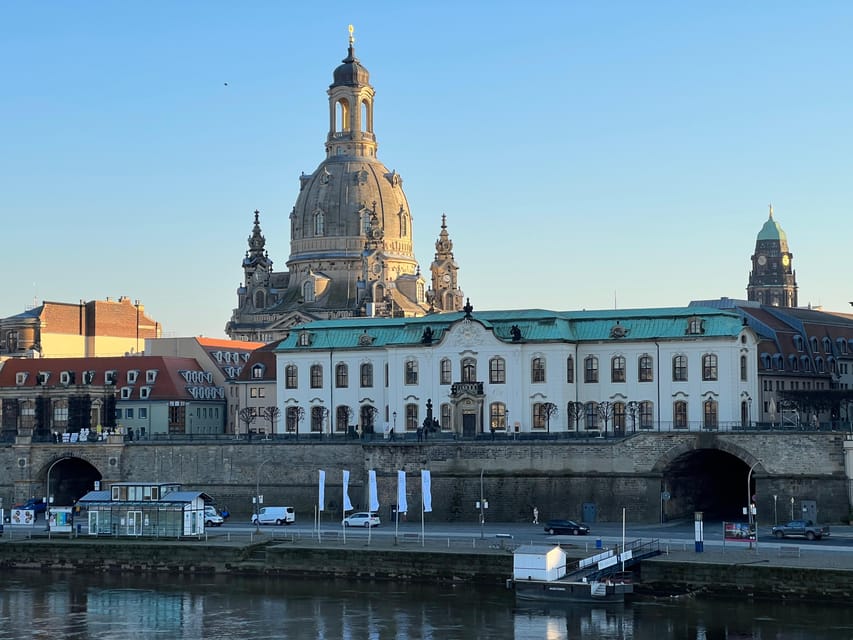
Frauenkirche is the emotional center of many Dresden visits, and here it works as a narrative anchor rather than just a landmark. Your guide’s job is to connect what you see in the square with what happened later, especially the WWII destruction and the careful restoration that followed. That restored feel is part of why people walk these streets and miss the scale of reconstruction until someone explains it.
Practical tip: Neumarkt is a compact starting point, so it’s a good place to orient yourself. If you’re hoping to photograph, take a few minutes at the start before the group flows on, because the best moments are usually early, when you’re not stuck walking through a crowd.
Fürstenzug: Saxony’s prince-electors as a long, visual timeline
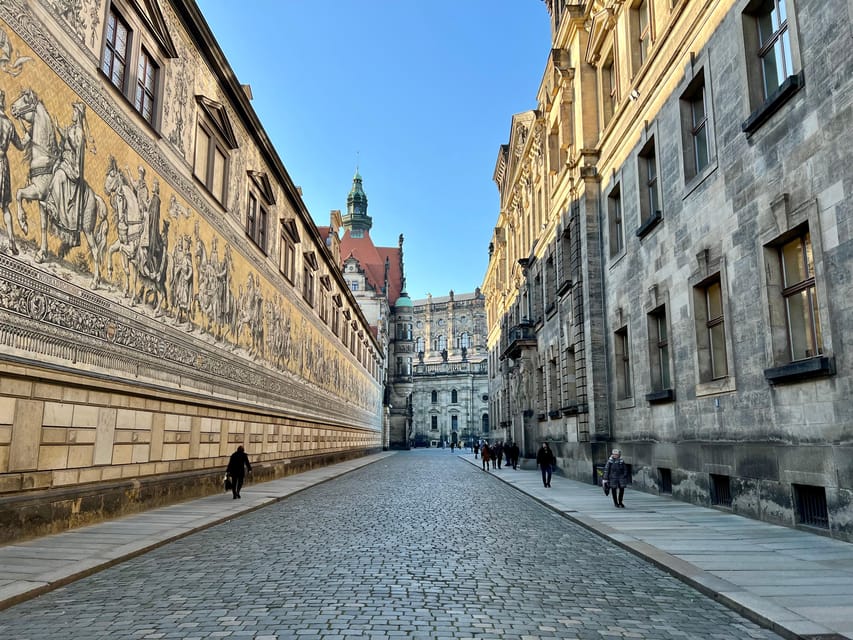
Next comes Fürstenzug, the gallery of Saxony’s prince-electors. This stop is impressive because it turns “history” into something you can actually track with your eyes. Instead of hearing dates as disconnected facts, you see rulers lined up like a story panel.
I like this kind of monument because it’s interactive without being complicated. You can keep walking and still read along. You can also pause and focus on the segments that catch your attention, then pick up the rest when the guide explains how the line of rulers fits Dresden’s rise.
This matters because Dresden’s importance shifts over time. The city moved from a smaller settlement into a castle-centered town, then into a trading power with connections to mining wealth. Later, when Dresden became the seat of prince-electors and the Wettin dynasty’s influence grew, the city’s “look” became part of its political message. Fürstenzug helps you see that message, in one long sweep.
If you want to remember one thing from this tour, it’s this: Dresden’s power was not only about battles and titles. It was also about commissioning art, building status, and creating images that people could walk past every day.
Dresden Castle and Altmarkt: when political centers shape your walking route
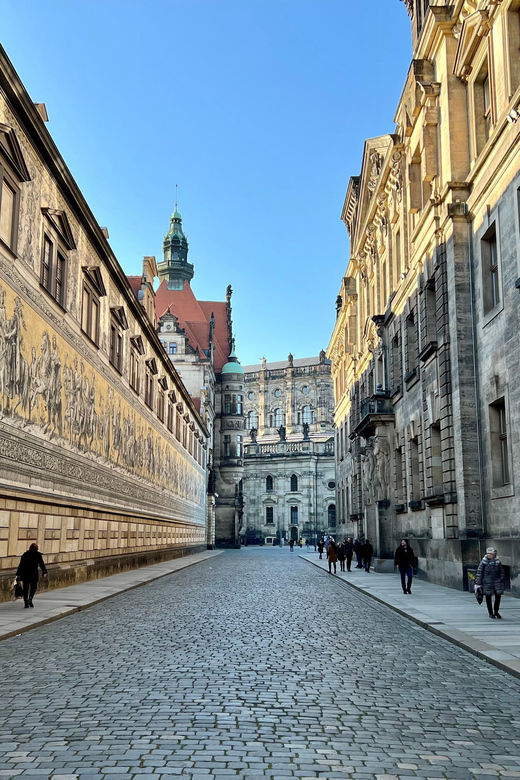
From Fürstenzug, the tour carries you toward Dresden Castle and then toward Altmarkt, along with Kreuzkirche and the palace of culture area. This is where you start to feel how Dresden’s civic and religious centers stitch together.
Dresden Castle is a key pivot point in the story. Earlier in the timeline, the city gained importance through the rise of the Holy Roman Empire’s prince-electors, and later through the early 1700s prestige boost tied to Saxon princes of the Wettin dynasty. Even if you don’t memorize every detail, you’ll feel the “importance layering” as you walk between open squares and grand building lines.
Altmarkt adds a different texture. It’s a place for daily life and a public stage, not just a royal backdrop. Pairing it with Kreuzkirche on this tour helps you understand how the city’s institutions worked together, religion and politics side by side in the same urban fabric.
One helpful move your guide makes on this stretch is context. You’re not just learning the names of places. You’re learning what kind of society produced them. That’s the difference between a route that gives you a checklist and one that gives you a working mental map.
Another way to spend a Dresden afternoon:
- Dresden: Semperoper Tickets and Guided Tour
★ 4.7 · 12,102 reviews - Dresden: The Original Night Watchman Tour in Lantern Light
★ 4.6 · 6,653 reviews - Dresden: Semperoper and Old Town Tour
★ 4.8 · 5,735 reviews - Dresden: River Sightseeing Boat Cruise
★ 4.3 · 5,323 reviews
Brühlsche Terrasse and Hofkirche: the Elbe view and the “there’s a reason this is here” feeling
Then you get Brühlsche Terrasse, which is the kind of stop that pulls your eyes toward the river even if you’re still listening. The terrace is a built vantage point, and that’s not a random design choice. It reflects how the Elbe mattered for trade and how the city turned its river position into status.
Hofkirche follows, and it adds a different architectural and cultural lens. When you compare the feel of these sites along the Elbe and just above it, you start to see Dresden as an integrated system, not a pile of monuments. Your guide’s explanations help you connect the baroque grandeur you’re looking at with the earlier wealth sources and the later rebuilding efforts.
This is also where the tour’s WWII restoration story lands with real force. If you’ve read that Dresden was heavily bombed, it can stay abstract. On the ground, with the restored design elements in front of you, the “past and present” become physical.
A practical note: terrace viewpoints often mean wind and variable weather. Bring a light layer even in mild seasons, and pace yourself, because you’ll likely want a few extra seconds to look and take photos before moving on.
Semperoper and the Zwinger: baroque ambition in two different moods
Semperoper brings the story into the realm of culture and spectacle. An opera house is about more than performances. It’s about civic confidence, about a city willing to invest in arts, and about Dresden’s early 1700s burst of almost imperial grandeur.
I like that the tour doesn’t treat Semperoper as a standalone wow spot. It ties it back to the Wettin-era prestige and the city’s baroque identity. When you see the opera house after walking through the political centers, the art building feels earned, not pasted on.
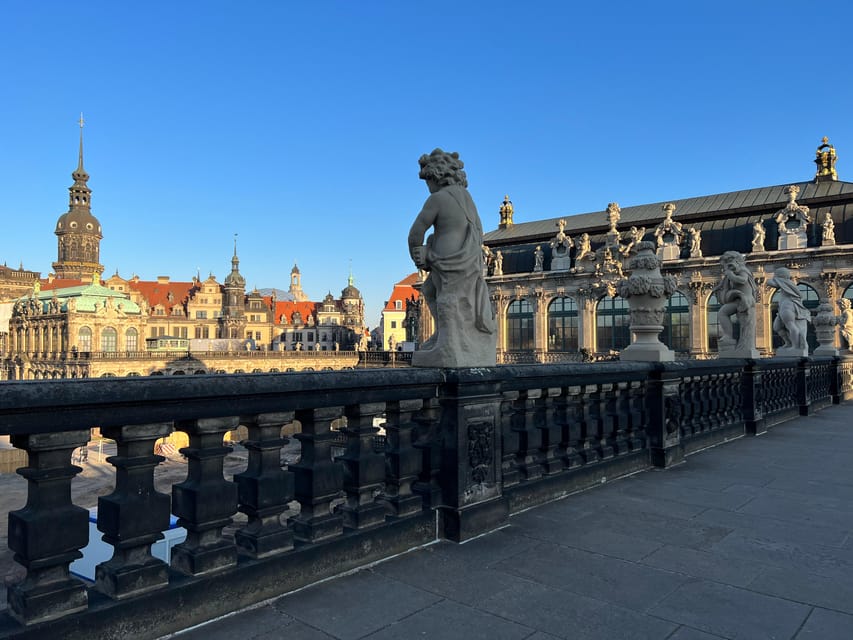
Finally, you reach Zwinger Palace near the Elbe bridge. Zwinger is one of those places that makes you understand why Dresden gets its reputation for baroque structure. It’s not just one building; it’s an entire setting that looks designed to be experienced from multiple angles.
By the time you get here, you’re ready for it. Your guide has already helped you understand why Dresden’s baroque look showed up when it did, and why restoration later had to rebuild not only structures but an entire identity. That means Zwinger feels like a payoff, not just another stop.
If you’re the type who loves to keep exploring after the tour ends, Zwinger is a great last anchor. You’ll already know what you’re looking at, so your next walk feels like you’re continuing a story, not restarting one.
Price and value: what $35 buys in a 2.5-hour guided orientation
At $35 per person for a 2.5-hour English walking tour, you’re paying for something that’s hard to replace on your own: a guide who can connect the dots quickly. Yes, you can walk Dresden without a guide. But the route is packed with meaning, and the value is in learning why each spot matters.
The tour is also a pay as you wish style format, where the amount you pay covers the reservation fee and the guide’s payment. That means your starting payment is not your whole relationship with the guide. If you feel you got real value from the storytelling and pacing, you’ll have a straightforward way to reward that.
In terms of logistics, transportation is not included, so you should treat this as a walking and meeting exercise. The payoff is that the itinerary is built around walking connections between key sites: Neumarkt to Frauenkirche, Fürstenzug, castle and squares, and then toward the Elbe-facing baroque highlights.
One more value point: the reviews praise English delivery that stays lively, plus humor and “fan facts” that keep attention from drifting. I also think the best guides do what this tour seems designed to do: give you context that works across European history, so Dresden doesn’t feel like an isolated bubble.
How to get the most out of the 2.5 hours on foot
This is a walking tour, so wear comfortable shoes and bring a small plan for weather. Dresden can feel pleasant until it doesn’t, and you’ll be outside long enough to notice wind on terrace points and sun in open squares.
Also, arrive on time. You meet at a specific spot next to the Martin Luther statue at Neumarkt, and arriving 10 minutes early helps you start smoothly.
If you care about interiors as much as exteriors, note that the tour route is built around seeing key buildings from the public spaces named in the itinerary. If you want to go inside, keep that as a separate add-on using your own timing.
Finally, bring curiosity. The tour is set up to teach you how a city’s name, language echoes, and political shifts show up in brick and stone. When you lean into that, you’ll leave with a stronger memory than you would from photos alone.
Who should book this Dresden Old Town walking tour
Book it if you want a guided orientation that ties together Dresden’s restoration story and its longer Central European development. It’s a great fit for first-timers because the route hits the most recognizable markers, but it also works if you’ve been before and want the “why” behind what you saw.
You’ll especially enjoy it if you like:
- walking history that’s explained in plain language
- art and architecture that has a clear political or cultural reason
- hearing how the Elbe shaped trade and identity
It may be less ideal if you only want a short sightseeing hit with zero explanation. This tour is designed for narrative, not speed.
Should you book this Dresden Old Town walking tour?
Yes, if you want to understand Dresden instead of just see it. The combination of Neumarkt and Frauenkirche, Fürstenzug, castle and squares, then Brühlsche Terrasse, Hofkirche, Semperoper, and Zwinger gives you both the big visuals and the connecting story.
I’d pass or rethink if you strongly prefer interiors or you need frequent breaks with minimal walking. Also, if 2.5 hours of steady pacing is tough for you, plan your day so you’re not rushing from this tour into the next long stop.
But if you like your sightseeing with context, this one is a strong value. It costs a reasonable amount for an English guide who can keep the tone lively and the history understandable, and it leaves you with a mental map that makes the rest of Dresden feel clearer.
FAQ
Where is the meeting point for the tour?
Meet your Walkative guide next to the Martin Luther Statue at Neumarkt (next to Frauenkirche). Look for the guide with the yellow umbrella, and arrive about 10 minutes early.
How long is the guided walking tour?
The tour lasts about 2.5 hours.
Is the tour available in English?
Yes, the tour is guided in English.
Is transportation included?
No. Transportation is not included, so plan to arrive on your own at the meeting point.
Is this walking tour wheelchair accessible?
Yes, it is listed as wheelchair accessible.
Can I get a refund if my plans change?
You can cancel up to 24 hours in advance for a full refund. The booking also offers a reserve now and pay later option.
Fresh reviews out of Dresden
- Dresden: 2 day ticket for museums of the Dresden State Art Collections★ 4.7 · 54 reviews
- Big Sightseeing Tour in Dresden with Liveguide★ 4.5 · 55 reviews
- Dresden Sightseeing Treasure Hunt★ 5.0 · 57 reviews
- Public guided tour of the old town including a tour of the Frauenkirche★ 5.0 · 59 reviews
- Dresden: Walking Tour with Virtual Reality elements★ 4.5 · 63 reviews
- Dresden: Bootstour im Schlauchboot durch die Altstadt★ 4.9 · 64 reviews
- From Dresden: Bohemian & Saxon Switzerland Day Trip★ 4.8 · 64 reviews
- 1.5 hours Segway Elbe Mini Tour★ 5.0 · 66 reviews
Walking Tours, compared.


Berlin’s Best: 2 Hour Walking Tour Third Reich and the Cold War
Read our review →
Third Reich Berlin: Hitler and WWII Walking Tour
Read our review →Browse the lists this tour appears in