
Reviewed · WALKING TOURS
Berlin: The Time of National Socialism Walking Tour
Berlin’s story in the Nazi years can feel abstract, until you walk it. This 2-hour, guided route stitches together propaganda sites, surviving WWII traces, and the places where terror institutions really operated. The best part is that you’re not looking at history from behind a museum rope, you’re seeing it in the same streets and squares where power was staged and decisions were made.
Two things I really like: first, the route hits major landmarks like the Brandenburg Gate and the Reichstag, but keeps the focus on what those places meant in that moment. Second, the tour is led by a guide who can explain the details in a human way, and you can ask questions in a small group capped at 10.
One drawback to consider: it is a walking tour in all weather for the full 2 hours, so if you hate cold, rain, or icy sidewalks, plan for that.
Key highlights you’ll actually notice on the street
- Brandenburg Gate and Reichstag in one logical flow, so you can connect propaganda to power
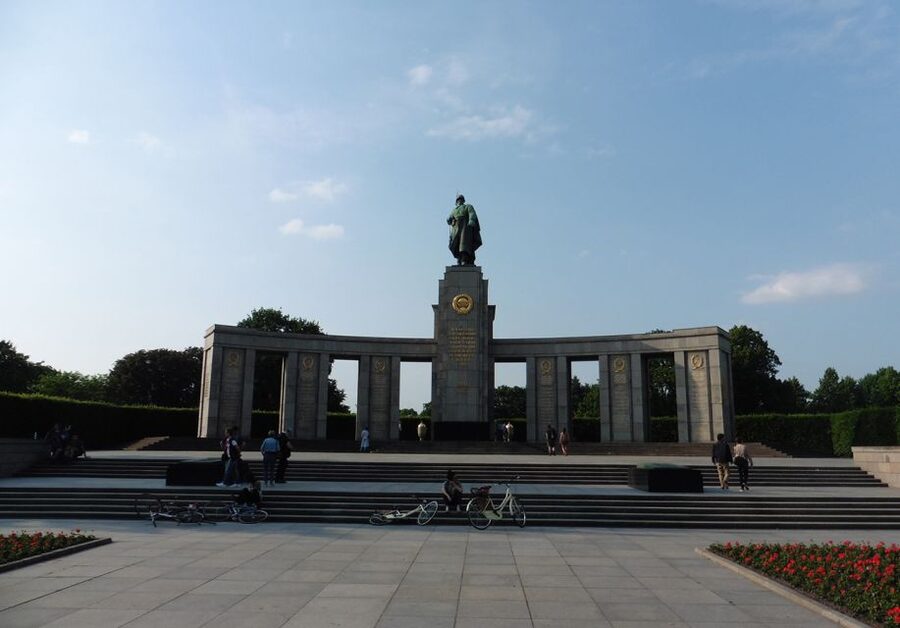
- Tiergarten Soviet War Memorial where WWII history is shown with T-34 tanks and artillery in a city park
- Holocaust Memorial as a space you experience, not just read about
- Johann Georg Elser Memorial as a reminder that resistance existed before and during the dictatorship
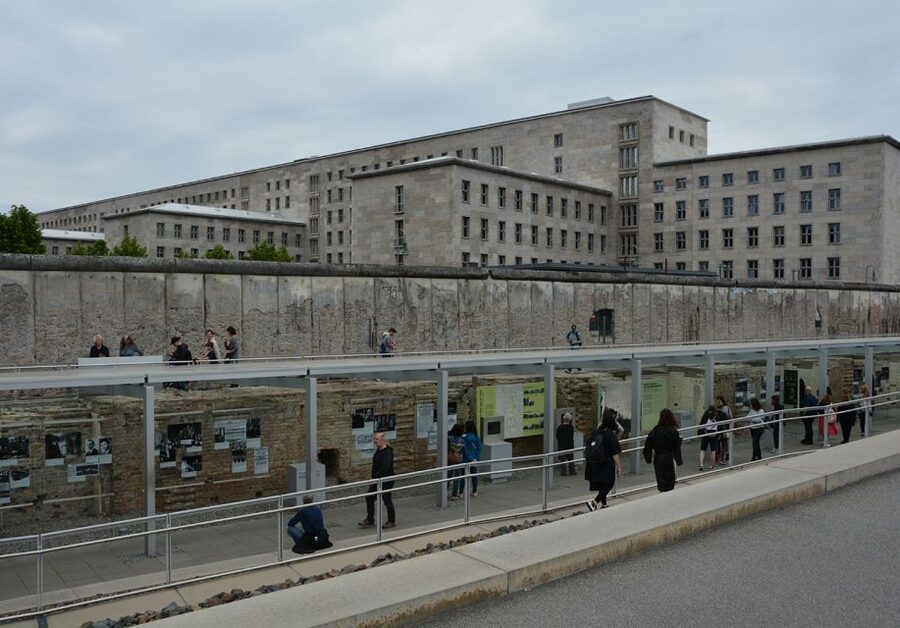
- Topography of Terror focused on the SS, Secret State Police, RSHA, and Reich Aviation Ministry sites
- A guide-led storytelling approach that helps the heavy material make sense on foot
Why This Walk Starts at Brandenburg Gate (and why that matters)
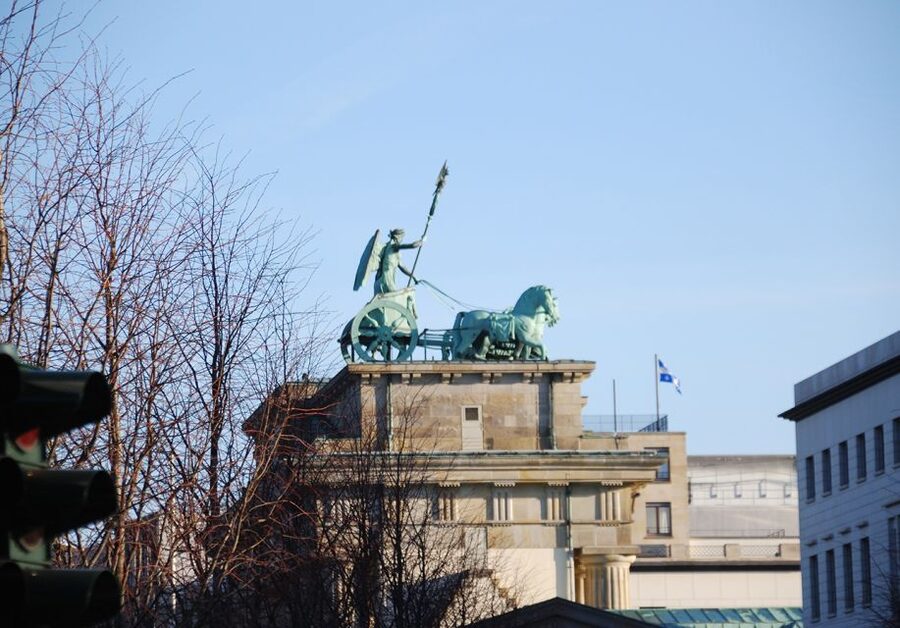
Berlin’s Nazi-era story is built on performance. Big buildings. Big symbols. Big crowds. Starting at the Brandenburg Gate puts you right inside that atmosphere, because this is the famous backdrop used for propaganda marches in the Third Reich period. Even if you’ve seen photos before, standing there with a guide helps you see the difference between a monument and a message.
I like that the tour doesn’t treat the Nazi years like one long blur. The guide keeps steering you toward the specific locations where things happened, and that makes it easier to keep names, dates, and institutions straight. You’ll also get practical attention to how to look, where to stand, and what details to notice as you walk.
The second reason this start works is simple: it sets the pace. You ease into the route with a landmark people recognize, then you move into places that feel less familiar but are crucial to understanding how the dictatorship tightened its grip.
More Walking Tours in Berlin
- Discover Berlin Half-Day Walking Tour
★ 5.0 · 9,624 reviews - Berlin: Third Reich and Cold War 2 Hour Walking Tour
★ 4.9 · 6,830 reviews - Berlin: Discover Berlin Walking Tour
★ 4.9 · 5,998 reviews
Meeting point, walking pace, and what to wear for a 2-hour slog
You meet your guide at the exit of S+U Bhf. Brandenburger Tor, exit B, in the direction of Pariser Platz/Straße des 17. Juni. Look for the GetYourGuide flag with the You In Berlin branding, and plan to arrive a few minutes early so you’re not rushed into the first stop.
This is a 2-hour, fully outdoor walking tour, and it runs in all weather conditions and even on public holidays. The group size is intentionally small, limited to 10 participants, which tends to make the guide more responsive when someone asks a question or needs a moment.
Wear sensible shoes. Bring a warm layer. Even on clear days, central Berlin sidewalks can be slick when temperatures drop. In colder conditions, guides typically keep people moving and help you stay comfortable, but you still want to show up prepared.
Pariser Platz to Brandenburg Gate: the propaganda stage in plain sight
After meeting at Brandenburger Tor, the tour moves through Pariser Platz. This area gives you the built-in “stage set” feeling that dictators loved: grand spacing, wide sightlines, and a sense that crowds naturally belong in the center of the scene.
From there, you move to the Brandenburg Gate itself. The guide explains how the site was used for propaganda marches in the time of National Socialism. The point isn’t just to know it happened, it’s to understand the strategy: public ceremonies, repeatable symbols, and control of the visual story.
What to watch for here is how the guide connects architecture to intent. A building can look like “just a building” until someone points out what it was used to project. That’s when the tour becomes more than a list of stops.
The Reichstag walk: from Nazi takeover to today’s parliament
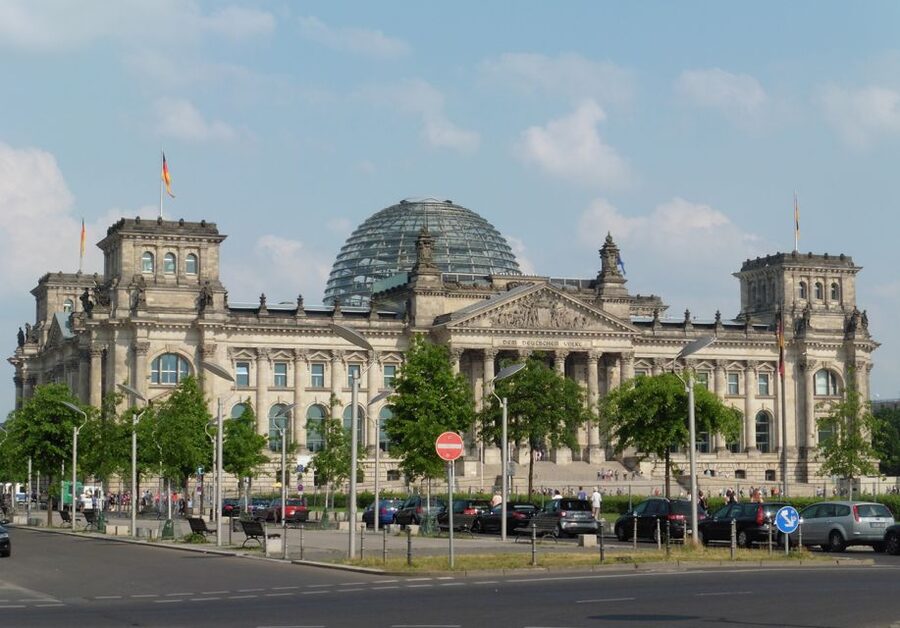
Next you reach the Reichstag, currently the seat of Germany’s parliament. In the Nazi period, this is where the Nazi Party, the NSDAP, and Adolf Hitler came to power in 1933.
This stop is powerful because it forces you to hold two eras at once. You’re standing at a place that once helped legitimize an authoritarian shift, and now it functions as the center of democratic governance. A good guide makes that contrast part of the lesson rather than an awkward afterthought.
Practical note: you might spend most of your time listening and looking rather than taking photos. The route here is tighter and you want to stay with the group. If you’re the type who likes to wander off for a better angle, remind yourself this tour is built for continuity, and it works best when you keep pace.
Another way to spend a Berlin afternoon:
- Berlin: Reichstag, Dome and Government District Guided Tour
★ 4.7 · 18,288 reviews - Berlin: 1-Hour City Tour by Boat with Guaranteed Seating
★ 4.3 · 16,993 reviews - Berlin: TV Tower Standard Entrance Ticket
★ 4.4 · 15,883 reviews - Berlin: Boat Tour Along the River Spree
★ 4.4 · 11,252 reviews
Tiergarten Soviet War Memorial: WWII reminders inside a city park
Walking into Tiergarten, the tone shifts in an important way. Instead of focusing only on Nazi Germany’s machinery of control, you also see the physical reality of WWII’s aftermath.
In the Soviet War Memorial, you’ll see Soviet T-34 tanks and artillery from World War II. It’s a stark contrast to the grand Nazi-era symbolism you’ve just been talking about. The tour uses this stop to widen the frame: Berlin was not just a stage for dictatorship, it was also a battlefield and a city scarred by war.
What I like about including Tiergarten is that it stops you from thinking of WWII as something that only happened “elsewhere.” The city itself absorbed the conflict. You can feel that when a tank sits in a park where people live their everyday lives nearby.
Holocaust Memorial: when you stop and feel the shape of the story
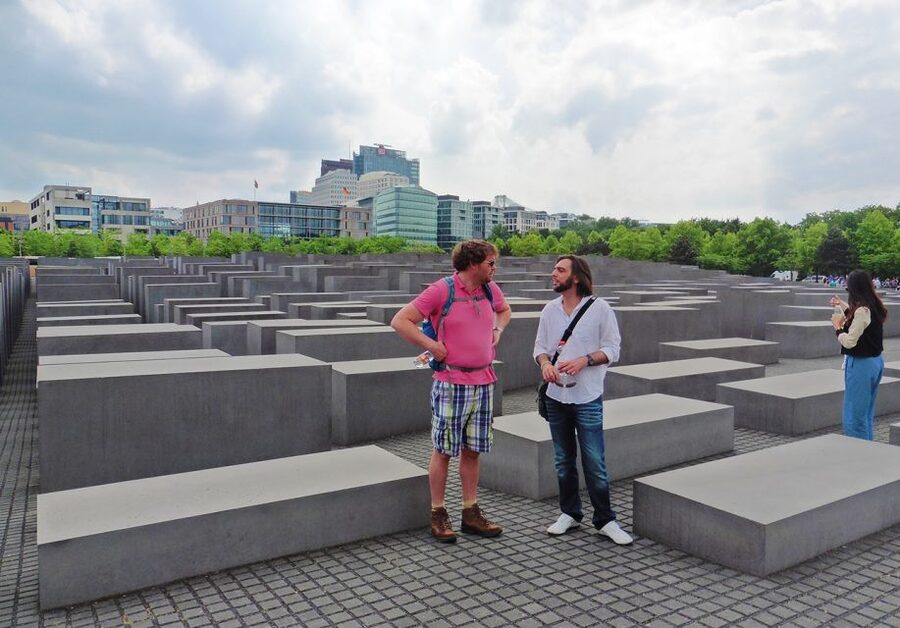
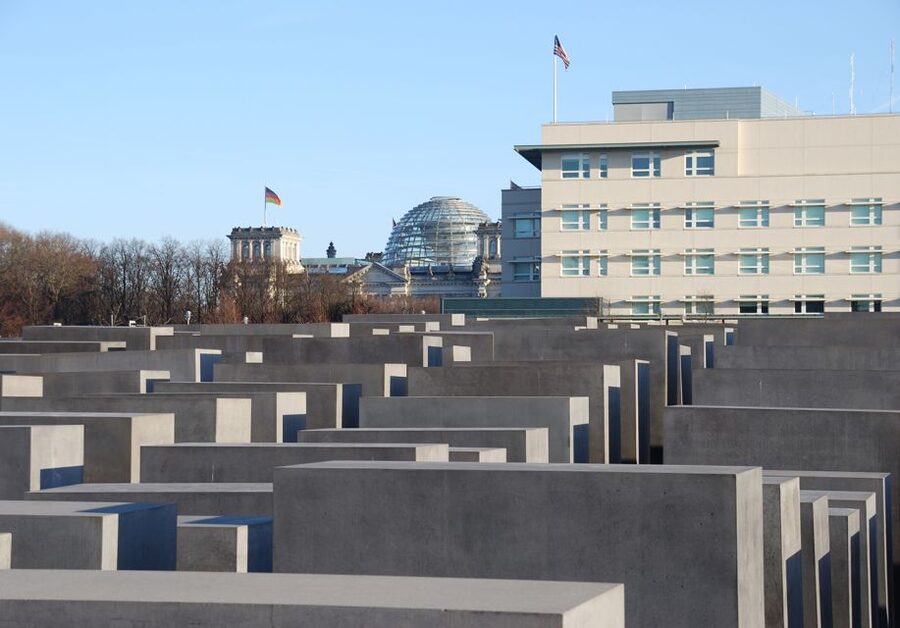
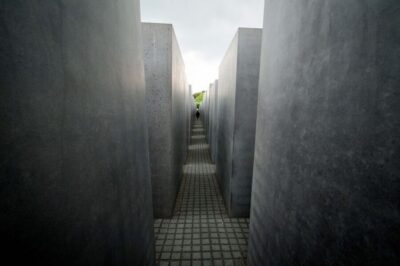
Next comes the Holocaust Memorial, the memorial to the murdered Jews of Europe. This stop is guided, but it also asks you to do something simple: slow down and take in what the space makes you think and feel.
A walking tour can sometimes feel like it’s rushing from one fact to the next. The Holocaust Memorial works because it naturally breaks that rhythm. Instead of cramming another landmark into your mental stack, you get a moment that feels reflective and, frankly, heavy.
If you want to get the most out of this part, keep your camera packed for a minute and listen. The guide’s framing helps you understand why this memorial exists and how its design encourages a personal, unsettled reaction rather than a quick look-and-go.
Johann Georg Elser Memorial: resistance beyond famous names
The tour then includes the Johann Georg Elser Memorial, Berlin. This is a key stop because it keeps the story from turning into only a lecture about the dictatorship’s rise and machinery.
You’ll hear how the guide connects the Nazi era to the German Resistance against the dictatorship. Elser’s name matters because it highlights that resistance was not a single event or a single group. It was a wider reality, with individuals acting under extreme risk.
This stop also helps teenagers and first-time visitors. If you’re bringing youth, this is where the tour can become more than sadness and structure. It adds agency, the idea that people did not simply accept what was happening.
Detlev-Rohwedder-Haus and the government district atmosphere
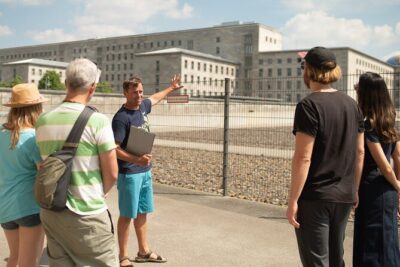
At Detlev-Rohwedder-Haus, you get more of that “how did the city work back then” feeling. The tour moves through the government district of Berlin from that period, so you can understand the geography of power: where decision-making lived, where institutions clustered, and how the state looked when it wanted to feel permanent.
This is the kind of stop where I recommend you listen for connections. The guide will likely link what you saw before, such as propaganda and power seats, to the larger web of offices and control. Even if you don’t recognize the building instantly, the context makes it matter.
A small caution: if you are hoping for only famous, photo-perfect viewpoints, this section may feel less immediately recognizable. But it’s often where the logic of the dictatorship becomes clearest, because government districts tell you how systems run.
Topography of Terror: the institutions behind terror, in one focused finish
The tour culminates at Topography of Terror, a documentation-focused stop that explains what happened where. This is one of the most important parts of the entire route because it names the institutions tied to Nazi terror:
- SS headquarters
- Secret State Police
- Reich Security Main Office
- Reich Aviation Ministry
As you reach this area, you’re no longer walking through “symbols.” You’re at the sites tied to enforcement and administration. The guide also shares stories about German Resistance, keeping the narrative from becoming purely one-directional.
Finish here, and you get a sense of the whole machine. The route you walked earlier, from public propaganda settings to seats of political power, now has its darker counterpart. You can see how the dictatorship didn’t just claim authority, it also built the structures to crush opposition.
What makes the guides work: Carlo’s kind of teaching
A big reason this tour earns strong ratings is the guide approach. Many bookings mention Carlo by name, and the pattern is consistent: he’s described as enthusiastic, well-informed, and attentive, especially when conditions are tough. One review highlights how he kept pace and helped people through extremely cold, icy streets.
That matters for you because this topic is heavy. If the guide rushes, the experience can turn into a checklist. When the guide is patient and answers questions, you walk away with clarity instead of confusion.
You’ll also notice that guides use local context, not just textbook lines. That Berlin-native framing tends to make the city feel real, not like a slide show.
One more practical thing: small group size helps. With a group of up to 10, it’s easier to ask follow-up questions, and the guide can tailor pacing when someone needs a slower moment.
Price and value: why $43 feels fair for what you get
At $43 per person for a 2-hour walking tour, the price is not “cheap,” but it’s also not inflated for the amount of guidance you receive. You’re paying for a professional city tour guide, a structured route through major sites, and an explanation that stays focused on how the Nazi system worked in real places.
The value becomes clearer when you factor in what you’d need to do on your own:
- You’d need to plan stops across central Berlin.
- You’d need to connect sites like Brandenburg Gate, Reichstag, and Topography of Terror in a meaningful order.
- You’d need context to understand institutions, not just look at buildings.
For most people, paying for a guided sequence saves time and reduces the risk of turning into a confusing self-guided history wander. If your goal is understanding, not just sightseeing, this is good value.
Also, the tour offers free cancellation up to 24 hours in advance and a reserve now, pay later option, which makes it easier to commit while your schedule is still in flux. Those small flexibility features matter when you’re planning around weather.
Who this tour is for, and who might want a different format
This tour fits best if you want context and direction. If you like walking through neighborhoods with a guide who can point out what the city hides in plain sight, you’ll enjoy it.
It also makes sense for youth. Reviews specifically suggest it would work well for teens and twens, and the presence of the Elser and Resistance thread gives students a way into the story beyond pure tragedy.
Who might not love it:
- If you struggle with longer outdoor walks in cold or rain, you’ll need to be extra prepared.
- If you prefer museum-only experiences with lots of indoor time, this may feel too outdoor-heavy.
But if you can handle a couple hours on your feet, you’ll leave with a stronger map of Nazi Germany’s Berlin, and you’ll understand why certain corners of the city still carry that memory.
Should you book the Time of National Socialism walking tour?
If you’re visiting Berlin and you want to understand the Nazi era in a way that sticks, I think this is a smart pick. The route is compact, the stops are meaningful, and the focus on real locations helps you connect propaganda, political power, wartime reality, and the institutions behind terror.
Book it if you want guidance that turns landmarks into understanding. Skip it only if you know you can’t handle two hours of walking in variable weather or you’d rather do this subject in a museum setting.
Either way, come ready to listen. This tour is not built for rushing. Give it your attention, and it will give you a clearer, more human picture of one of the darkest chapters of modern European history.
FAQ
Where does the tour start?
You meet your guide at the exit of S+U Bhf. Brandenburger Tor, exit B, toward Pariser Platz/Straße des 17. Juni.
How long is the walking tour?
The tour lasts about 2 hours.
How much does it cost?
The price is $43 per person.
Is the tour in English?
The live tour guide language is German.
How big is the group?
It is a small group limited to 10 participants.
Is the tour wheelchair accessible?
Yes, the tour is listed as wheelchair accessible.
Does the tour run in bad weather?
Yes. The tour takes place in all weather conditions.
What are the main stops on the route?
You’ll visit places including Pariser Platz, Brandenburg Gate, the Reichstag area, the Soviet War Memorial in Tiergarten, the Holocaust Memorial, the Johann Georg Elser Memorial, Detlev-Rohwedder-Haus, and finish at Topography of Terror.
What happens at Topography of Terror during the tour?
You learn about where Nazi terror institutions were located, including SS headquarters, the Secret State Police, the Reich Security Main Office, and the Reich Aviation Ministry, and you hear about German Resistance.
Can I cancel for a refund?
Yes. Free cancellation is available up to 24 hours in advance for a full refund.
Fresh reviews out of Berlin
- Berlin Uncensored: A History of Sex & Freedom★ 5.0 · 50 reviews
- Berlin Food & Cultural Tour: Must-Try German & Berliner Classics★ 5.0 · 51 reviews
- English Comedy Show with Pizza and Shots in Central Berlin★ 4.5 · 51 reviews
- Rude Bastards Tour of Berlin★ 4.8 · 51 reviews
- Private Taxi Tour of Berlin East and West and Neighbourhood approx. 4-6h★ 5.0 · 55 reviews
- Rickshaw Sightseeing City Tours Berlin – Rikscha Tours★ 4.0 · 55 reviews
- Berlin: City Highlights Express & Panorama Roof Terrace★ 4.9 · 55 reviews
- Berlin during Nazism – Tour in Italian★ 5.0 · 56 reviews
Walking Tours, compared.
Berlin’s Best: 2 Hour Walking Tour Third Reich and the Cold War
Read our review →
Third Reich Berlin: Hitler and WWII Walking Tour
Read our review →Browse the lists this tour appears in