
Reviewed · WALKING TOURS
Berlin: 2.5-Hour Walking Tour through Kreuzberg 61
Kreuzberg 61 is interesting because it shows Berlin the way locals experience it, not just the postcard version. I love how the route threads together architecture and everyday life, and I love the calm pauses in Viktoriapark and Riehmers Hofgarten that reset your brain mid-walk. One possible drawback: it is still a steady walking tour, so you will want good shoes and a realistic pace.
What makes this one work is the guide. People praise Tobias Schwabe for bringing stories with a friendly, professional style, plus a serious eye for details that most walkers skip. You get the feel of western Kreuzberg and end in the more social, multicultural zone around Bergmannstraße, where the neighborhood energy actually shows up.
If you like history, sure. But this is just as much for architecture fans and anyone who enjoys spotting the subtle differences between streets, courtyards, and building styles in Berlin’s older districts.
Key things you’ll notice on this Kreuzberg 61 walk
- Viktoriapark waterfall and garden calm break up the city noise
- Schinkel-linked monument views give you a high point over Berlin
- Riehmers Hofgarten courtyards feel like a hidden breath of fresh air
- Bergmannstraße shopping streets land you in the neighborhood’s lived-in vibe
- Chamissoplatz and preserved architecture make the district feel tangible
- Marheineke Markthalle timing gives you a quick, practical pause near the end
Why Kreuzberg 61 feels like real Berlin, not a checklist
This walk is built around the idea that Kreuzberg has layers. You start near a major Berlin landmark zone, then move through a chain of courtyards, parks, monuments, and streets where the city’s past shows up in details you can actually see. The goal is not to cram big-name sights into 2.5 hours. It’s to help you read the neighborhood, and that changes how you look at everything after.
I particularly like that the tour is structured like a narrative stroll. Buildings and spaces are explained in context, so you understand why an area developed the way it did. You also end up near Bergmannstraße, where the multicultural atmosphere feels like it has more texture than the usual stereotypes.
If you go in expecting a fast hit of famous monuments, you might feel slightly under-satisfied. If you go in curious, you will probably feel like you discovered a second Kreuzberg, one that rewards attention.
More Walking Tours in Berlin
- Discover Berlin Half-Day Walking Tour
★ 5.0 · 9,624 reviews - Berlin: Third Reich and Cold War 2 Hour Walking Tour
★ 4.9 · 6,830 reviews - Berlin: Discover Berlin Walking Tour
★ 4.9 · 5,998 reviews
Starting near Platz der Luftbrücke and getting your bearings
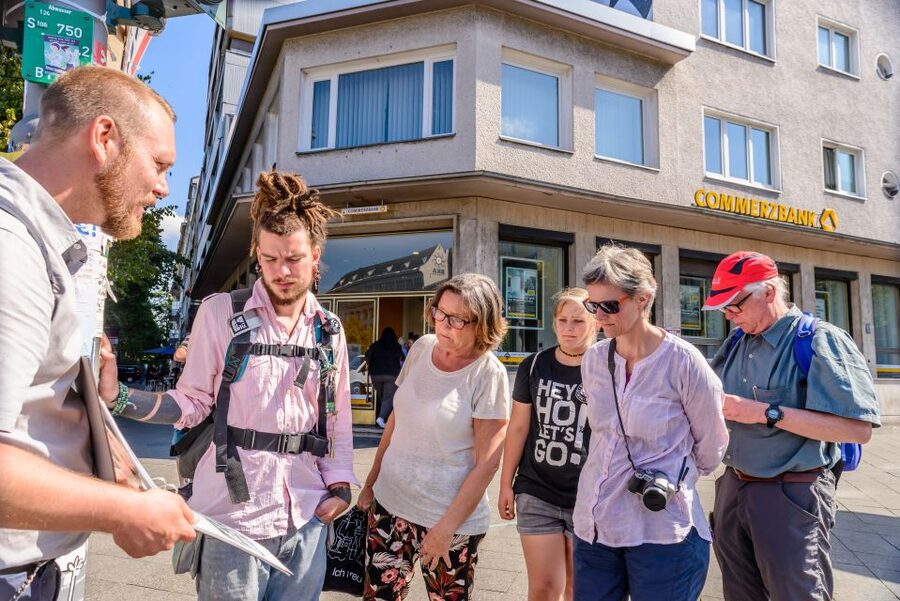
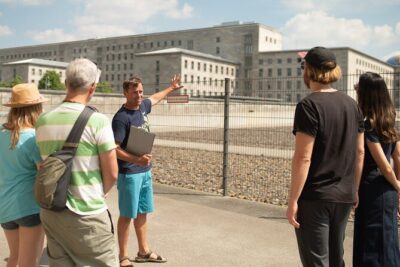
The tour begins around the Platz der Luftbrücke area, with starting options that can include Mehringdamm 129 depending on what you book. Either way, you are not just starting with a random street corner. You are stepping into a point of orientation for the district, where the surrounding 19th-century military and apartment-block history becomes the theme of the walk.
This early stretch matters. It sets the rhythm for the day, and it also primes you to notice how Kreuzberg’s form shaped daily life. As you move from the larger landmark zone into smaller residential pockets, the neighborhood stops feeling like a vague area on a map and starts feeling like connected places with a logic.
Practical tip: bring a light layer. Even on a sunny day, Berlin streets can feel breezy, and a walk this length adds up.
Verband der deutschen Buchdrucker and the power of “ordinary” monuments
One of the stops is the Verband der deutschen Buchdrucker (Denkmal), a monument tied to the printing world. It is the kind of thing you might pass without a second glance if you were walking on your own. With a good guide, it becomes a clue.
Why is that valuable? Because it trains you to see how working life, industry, and civic identity shaped Berlin neighborhoods. You start to understand that the city’s story is not only about wars and borders. It’s also about trades, professions, and communities that organized themselves in real space.
After this, the walk shifts toward smaller architectural moments, which is where the tour gets fun for people who like details. You begin hunting for telltale features, not just reading plaques.
Sixtusgarten and the photo-stop rhythm that keeps the pace sane
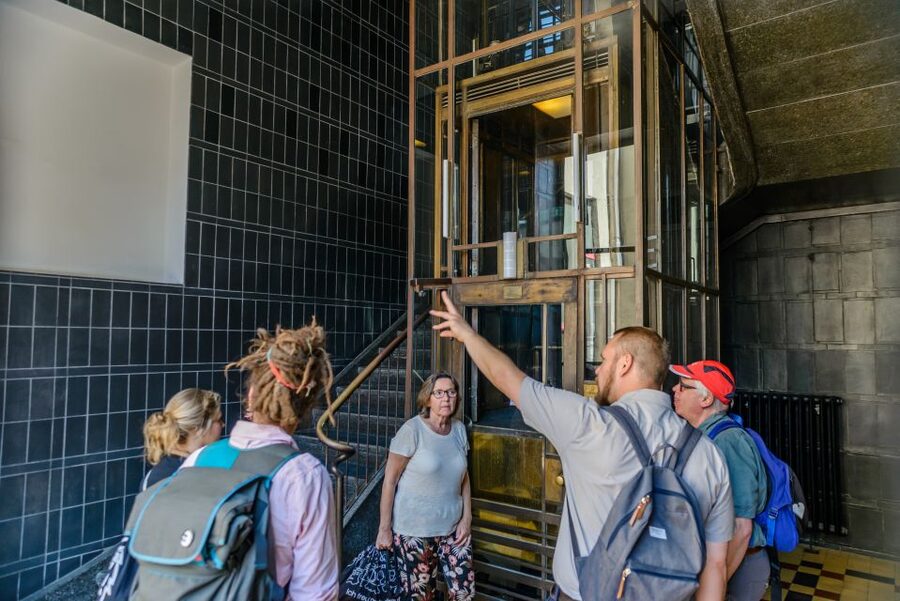
You will have a photo stop around Sixtusgarten, including time to walk up close and actually take in the feel of the place. This is a good moment to recalibrate. By now, your legs are warming up, but you are still early enough in the route that you have energy.
These photo-stop moments are not only for photos. They are built-in “slow down” points. They give the guide a chance to explain what you are seeing while you stand still for a minute or two. That helps the tour feel more like a guided conversation than a march.
If you hate stopping, you might think this sounds like too many breaks. But in practice, the stops are brief enough that you keep moving, and the explanations are what make those minutes count.
Another way to spend a Berlin afternoon:
- Berlin: Reichstag, Dome and Government District Guided Tour
★ 4.7 · 18,288 reviews - Berlin: 1-Hour City Tour by Boat with Guaranteed Seating
★ 4.3 · 16,993 reviews - Berlin: TV Tower Standard Entrance Ticket
★ 4.4 · 15,883 reviews - Berlin: Boat Tour Along the River Spree
★ 4.4 · 11,252 reviews
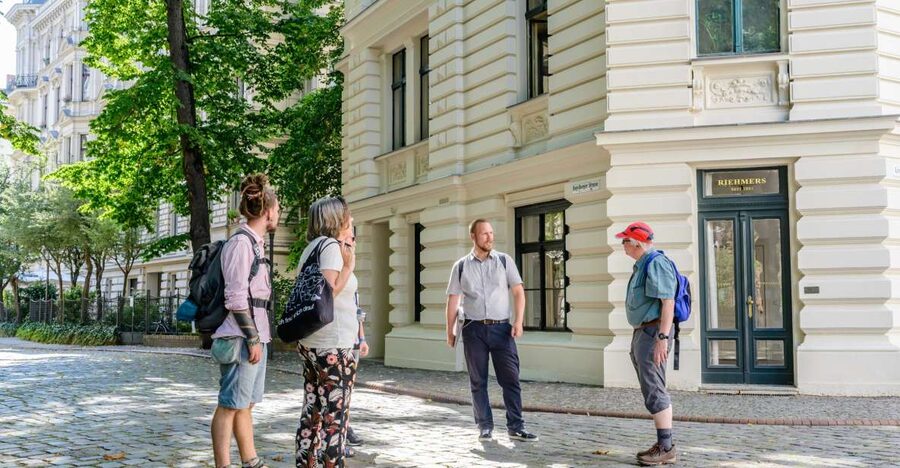
Viktoriapark: calm streets, a waterfall, and Schinkel-linked views nearby
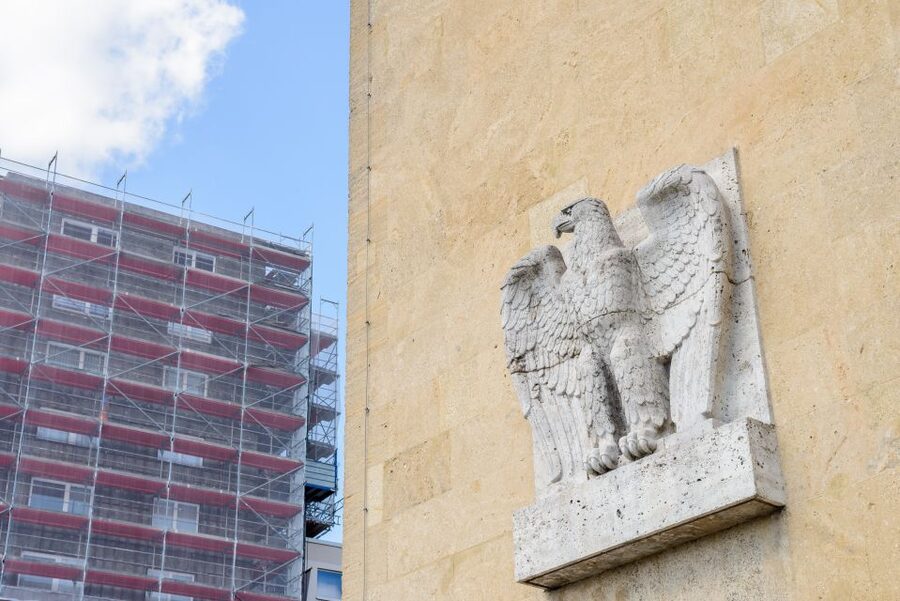
Viktoriapark is one of the best parts of the walk because it breaks the urban spell. You get a scenic shift, plus a waterfall moment you pass along the way. Even if you are not normally a “garden person,” this is a quality pause because it lowers the noise level in your head.
And then there is the monument story. The tour describes Schinkel’s national monument with panoramic city views. Whether you treat that as a “wow” viewpoint or a “good to know” sight, it helps you understand how Kreuzberg sits within Berlin’s larger geography. You can literally connect the district’s streets to the city’s overall layout.
What I like here is balance. The guide connects the beauty of the park and view to historical context, so you are not just staring at greenery. You are learning why these spaces exist and what they represent.
Possible drawback: if it is crowded on a given day, your view might not be perfectly clear. Go with the mindset of soaking up atmosphere, not capturing a perfect angle.
Riehmers Hofgarten: the oasis effect you will remember
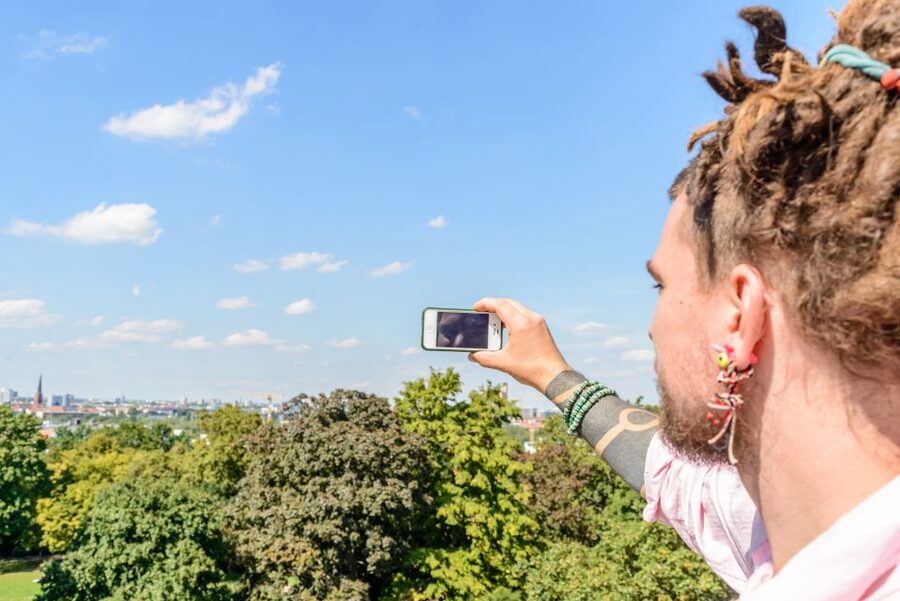
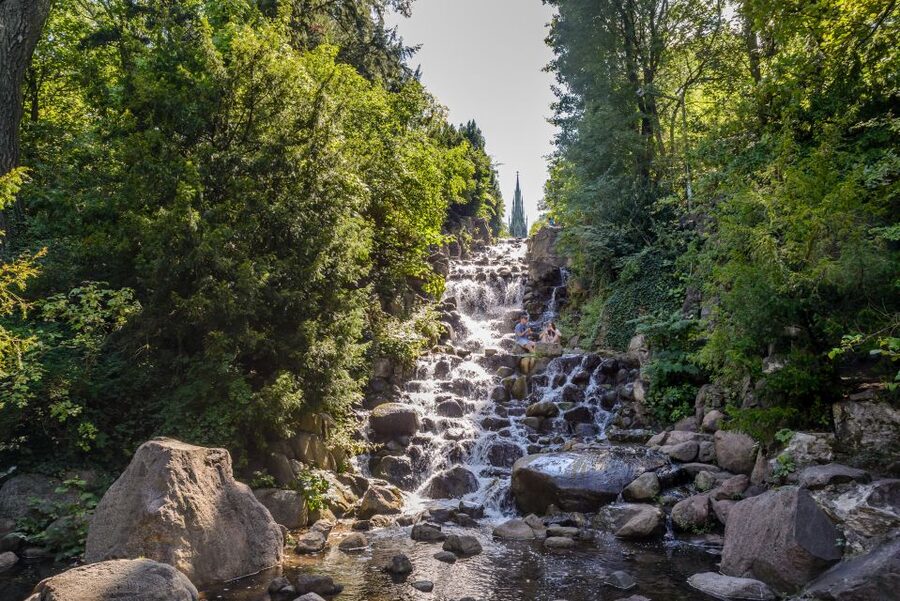
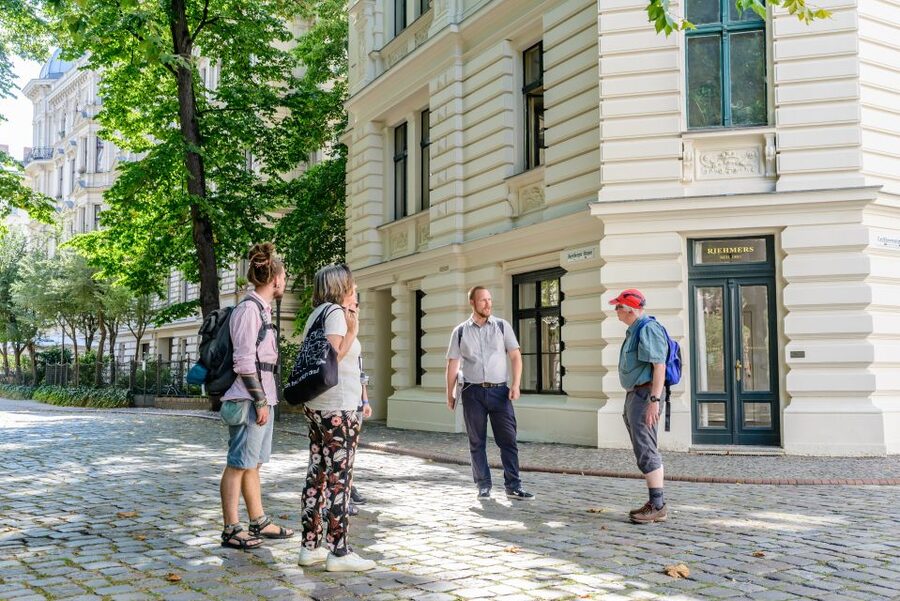
After the park and monument section, the route moves into Riehmers Hofgarten. This stop is another photo stop, and it is often the kind of place that makes you think, how did I miss this the last time I walked Kreuzberg?
Hofgartens in Berlin can feel like the city gave you a secret key. Instead of walking in open street corridors the whole time, you see how Berlin uses courtyards and green pockets to shape daily life. You also get a sense of scale, because these spaces contrast with the denser apartment-block surroundings.
In reviews, people highlight this “oasis of calm” factor. I agree with that general idea. Even brief time in courtyards like this changes how you experience the district.
If you are someone who gets tired of heavy museum mode, this park-and-courtyard rhythm is a strong argument for this tour.
Schmelzwerk in den Sarottihöfen: where industry becomes architecture
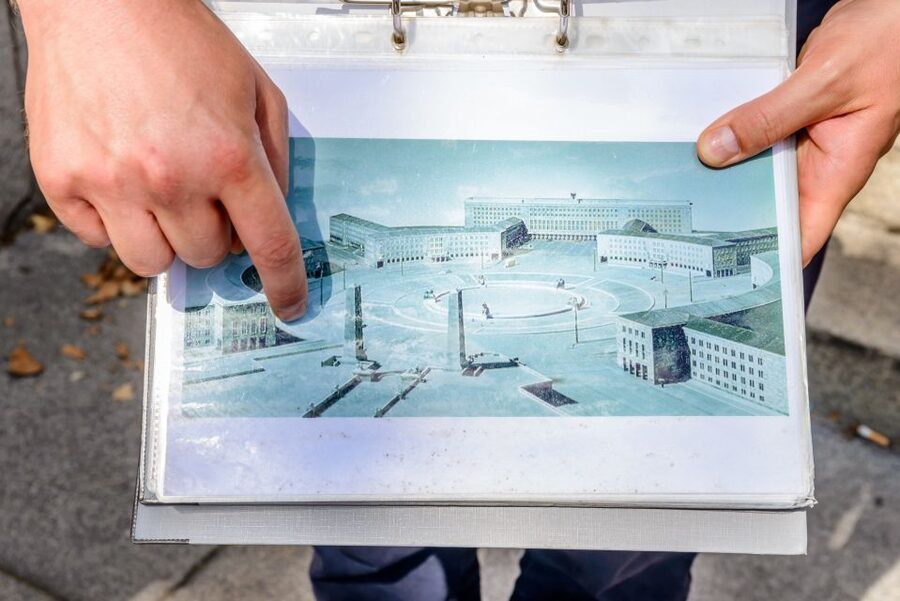
Next up is Schmelzwerk in den Sarottihöfen. This is one of those stops that can surprise you. Berlin has a way of converting industrial identity into architecture you can still read.
You get a pass-by and a photo stop, but the point is not to stare at a single structure. It is to see how former functions shape the look and feel of the buildings around them. You start linking different parts of Kreuzberg into a coherent story: work, housing, movement, and civic space all interlock.
This portion of the walk is also a good fit if you enjoy urban planning and how cities reuse buildings. The tour tends to highlight what you can actually observe: the shapes, the layout, and the street-edge design that gives the district its character.
Bergmannstraße: shopping street energy and the neighborhood ending point
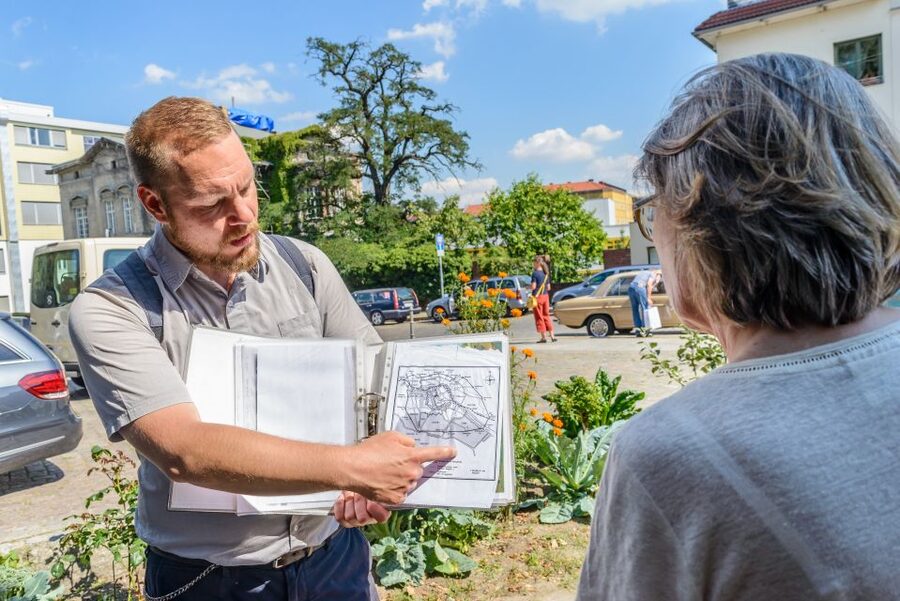
Then the walk hits Bergmannstraße, and this is where the tour becomes more social. You get a guided stretch with shopping and sightseeing, plus enough time to feel the atmosphere without turning the experience into free-for-all browsing.
The ending matters. The tour is designed to land you around the multicultural vibe of the area near Bergmannstraße. That means the walk does not end in a quiet park or at a formal monument. It ends where people live and move.
What to do here if you have the energy: treat Bergmannstraße as a choose-your-own-add-on. You can keep wandering on your own for longer, or you can simply use the area as a comfortable landing zone after 2.5 hours.
Fachwerkhof in Berlin Kreuzberg and Chamissoplatz: preserved details that feel personal
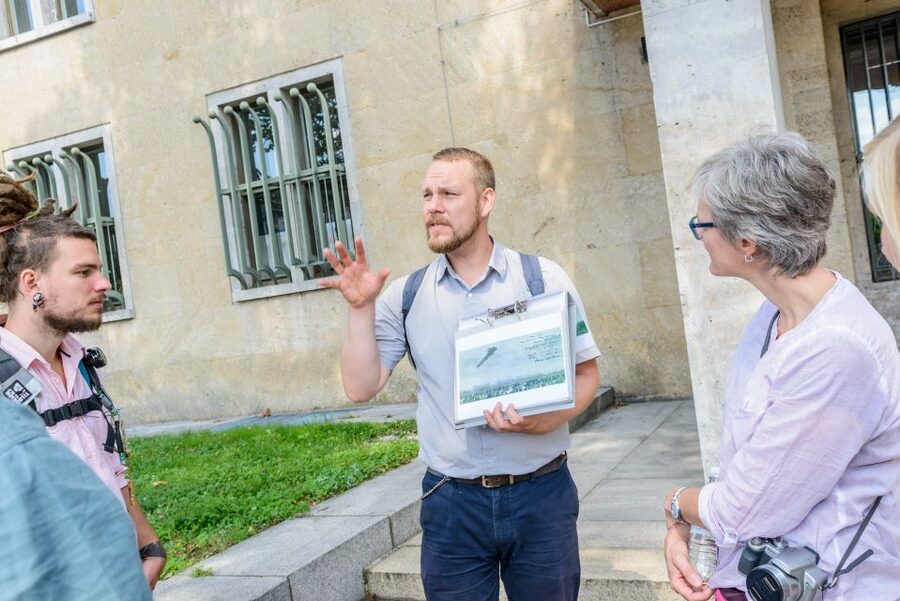
After Bergmannstraße, you hit Der Fachwerkhof in Berlin Kreuzberg for a short photo stop. Fachwerk details are easy to appreciate because they feel close to hand, almost like a recognizable language. Even in a city known for many styles, these preserved details make the district feel more intimate.
Then the walk moves to Chamissoplatz. This stop is described as charming, with well-preserved architecture. Again, if you were walking alone, you might notice it but not understand it. With the guide, you learn what makes it worth a pause.
This is one of the strengths of the tour: it keeps returning you to the idea of contrast. Big views are great, but small preserved corners are what keep Berlin from turning into a collection of faraway facts.
Marheineke Markthalle: a practical break before the tour ends
The last stop includes Marheineke Markthalle, with a break time. The point is practical. You get a chance to reset, look at the place, and decide if you want to grab something later.
You should not plan this as a long food crawl. The break is short, so treat it as a taste of the vibe and a convenient finishing point.
If you want a smarter move, use the market area as a way to extend the experience. The tour helps you learn how to look at Kreuzberg. Then Marheineke Markthalle gives you a place to eat or snack while you keep exploring on your own.
Price and value: why $23 for a 2.5-hour guided walk can make sense
At about $23 per person for a 2.5-hour guided tour, this is priced like a thoughtful neighborhood experience, not a blockbuster sightseeing circuit. The value comes from three things you can feel in the moment:
- A professional guide who spends time explaining what you are actually seeing.
- A route that covers multiple types of spaces: parks, monuments, courtyards, shopping streets, and preserved architecture.
- A pace that gives you stops for photos and context, so the information sticks instead of evaporating while you walk.
It is also strong value if you are traveling with limited time. In 2.5 hours, you can get a sense of western Kreuzberg and the streets around Bergmannstraße, without needing a full day of planning.
If you are the type who hates walking and wants everything close together, you might find the price less compelling. But if you like guided wandering, this is a very reasonable spend for Berlin.
Who this Kreuzberg 61 walk is best for
This tour is a great match if you:
- Love architecture and want to learn to spot details rather than memorize facts
- Enjoy history tied to streets and buildings, not only big monuments
- Want a calmer, human-scale Kreuzberg experience that goes beyond the common stereotypes
- Appreciate a guide who tells stories and invites questions
From the feedback, many people also mention that the guide is friendly and that the tour is well organized. That matters, because a small-group walking tour lives or dies by clarity and pace.
A couple of things to consider before you go
First, wear shoes you trust. You are walking for 2.5 hours, with multiple stops, plus some scenic walking segments.
Second, the route includes parks and outdoor moments. If weather is awful, your comfort will depend on your clothing choices. A good guide can keep things lively, but you still have to walk.
Finally, you should like the idea of walking off the main track. If you want strictly famous sights in quick succession, this one may feel too neighborhood-focused.
Should you book this Kreuzberg 61 walking tour?
Yes, if you want a Berlin tour that teaches you how to read Kreuzberg, not just where to stand for photos. This route earns its reputation through a strong combination: expert guiding by Tobias Schwabe, multiple calming stops like Viktoriapark and Riehmers Hofgarten, and architecture details around places like Chamissoplatz and the Fachwerkhof.
Book it if you like practical learning, street-level storytelling, and a finish near Bergmannstraße where the neighborhood feels alive.
FAQ
How long is the Kreuzberg 61 walking tour?
It runs for 2.5 hours.
How much does the tour cost?
The price is $23 per person.
Where does the tour meet?
The meeting point may vary depending on the option booked. Starting options include Platz der Luftbrücke and Mehringdamm 129.
What languages is the guide available in?
The live tour guide is available in English and German.
Is there a break during the tour?
Yes. There is a break time at Marheineke Markthalle.
Can I cancel for a full refund?
Yes. You can cancel up to 24 hours in advance for a full refund.
Can the meeting point be changed for a group?
Yes. A special meeting point, date, and time of your choice can be arranged for your group upon request.
Fresh reviews out of Berlin
- Berlin Uncensored: A History of Sex & Freedom★ 5.0 · 50 reviews
- Berlin Food & Cultural Tour: Must-Try German & Berliner Classics★ 5.0 · 51 reviews
- English Comedy Show with Pizza and Shots in Central Berlin★ 4.5 · 51 reviews
- Rude Bastards Tour of Berlin★ 4.8 · 51 reviews
- Private Taxi Tour of Berlin East and West and Neighbourhood approx. 4-6h★ 5.0 · 55 reviews
- Rickshaw Sightseeing City Tours Berlin – Rikscha Tours★ 4.0 · 55 reviews
- Berlin: City Highlights Express & Panorama Roof Terrace★ 4.9 · 55 reviews
- Berlin during Nazism – Tour in Italian★ 5.0 · 56 reviews
Walking Tours, compared.

Berlin’s Best: 2 Hour Walking Tour Third Reich and the Cold War
Read our review →
Third Reich Berlin: Hitler and WWII Walking Tour
Read our review →Browse the lists this tour appears in