
Reviewed · WALKING TOURS
Berlin: Guided Walking Tour in English
Berlin gets complicated fast, which is exactly why this guided walking tour works so well. What makes it interesting is the timeline approach, you move through the city’s eras in order, instead of bouncing around and hoping it all clicks later. I love the chronological narrative that ties landmarks together, and I love how the route gives you real breathing room on Museum Island for big open views.
You’ll also get a strong mix of “pretty places” and “this matters” places. Think Gendarmenmarkt’s classic symmetry in one stretch, then the Berlin Wall story and the location of Hitler’s bunker in the next, with a guide explaining the context as you walk.
One possible drawback to plan for: this is a walking tour with no food or drinks included, and one review note says it would be nice to know about restroom and drink breaks ahead of time. If you need frequent stops, you’ll want to pace yourself early and bring what you can.
Key highlights I’d circle on your map
- A chronological route that makes Berlin’s history easier to follow
- Museum Island open-space views with a great cathedral angle
- Gendarmenmarkt for that postcard-pretty square feel
- Checkpoint Charlie and the Berlin Wall story in one coherent segment
- The symbolic end at Brandenburg Gate for a big unity moment
A Chronological Berlin Walk That Actually Helps It Make Sense

Berlin can feel like a choose-your-own-adventure novel. One street says medieval, the next says modern politics, then suddenly you’re staring at Cold War geometry. This tour’s main trick is that it moves in time order, so the landmarks become chapters instead of random stops.
That matters because the city is full of layers, and a regular stroll can turn into a blur of photos. With this format, you’re learning why certain buildings were rebuilt, why some areas look the way they do, and what those places meant at the time.
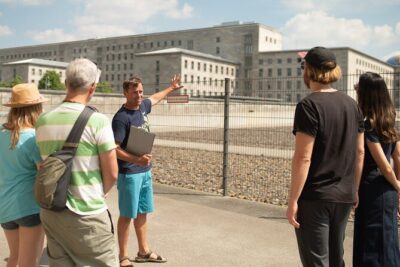
You also get a local guide guiding in English, and you’ll hear stories in a clear walking rhythm, not a lecture you have to sit through. Based on guide feedback I’ve seen for this experience (including names like JR, Jule, Ru, and Will), the guides tend to be engaging and also share practical tips beyond the headlines.
More Walking Tours in Berlin
- Discover Berlin Half-Day Walking Tour
★ 5.0 · 9,624 reviews - Berlin: Third Reich and Cold War 2 Hour Walking Tour
★ 4.9 · 6,830 reviews - Berlin: Discover Berlin Walking Tour
★ 4.9 · 5,998 reviews
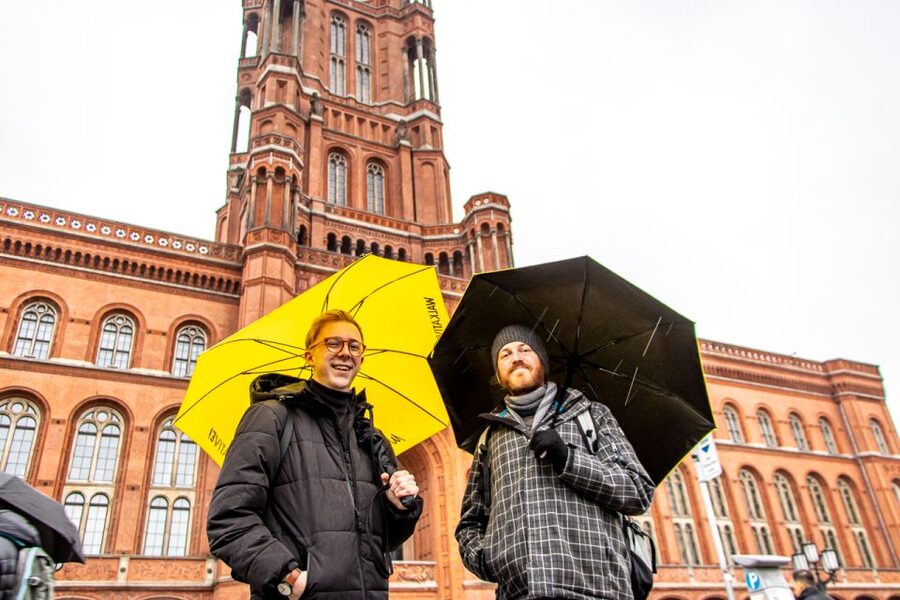
Meeting at Rotes Rathaus: Where You Start Seeing the Center
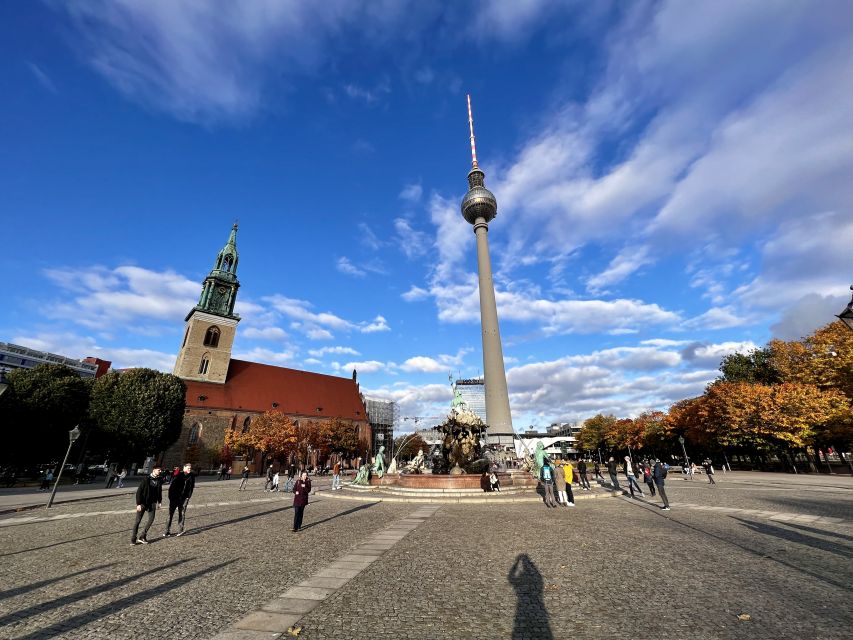
Your tour starts in front of the Rotes Rathaus near the TV Tower area and the Neptune Fountain. This is a smart starting point because it puts you near the center of things right away. If you’re arriving fresh to Berlin, it helps you get your bearings quickly, and you avoid that awkward first-day feeling of, I guess I’ll just wander.
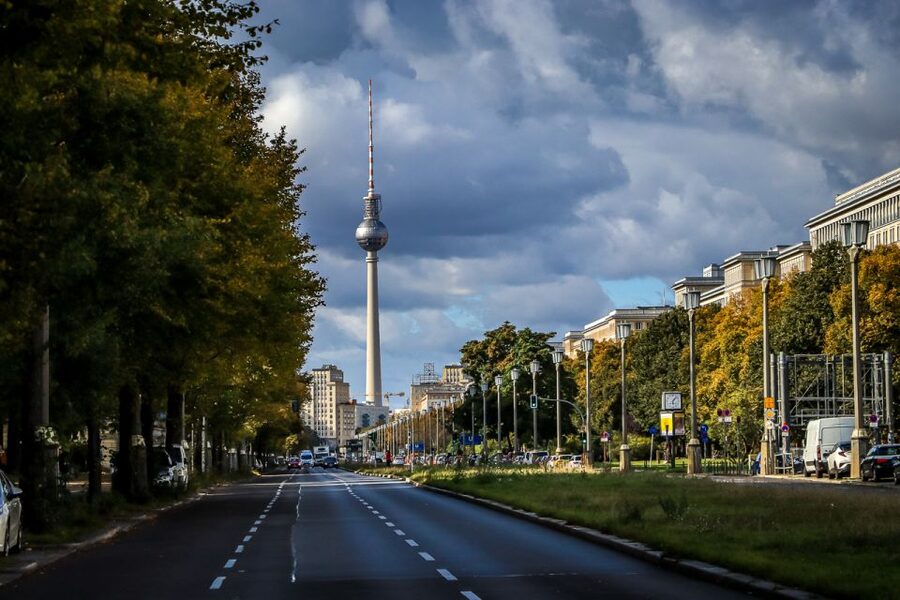
From here, you move toward major “entry-level orientation” sights that don’t require tickets or long waits. You’ll see the TV Tower in the opening stretch, which gives you a visual anchor for the city’s skyline.
And you’ll also catch hints of the older Berlin story. The route includes the original, medieval remnants of the small town Berlin was for much of its history. Even if you only get glimpses, it’s enough to understand why Berlin developed the way it did.
TV Tower to Royal Palace Details: Contrasts You Can Feel While Walking
After the first stretch, you pass by the reconstructed former Royal Palace of the Hohenzollern. This part is controversial in a way you can understand just by standing there and listening. A reconstruction is not the same as an original, and your guide will help you think about why Berlin chose to bring parts of it back.
You’ll also notice how the walking route forces contrasts close together: one minute you’re in a modern-feeling corridor, the next you’re hearing how the city’s rulers and institutions shaped the built environment. That’s one reason I like this itinerary. You don’t just see what Berlin looks like today, you learn what shaped it into today’s shape.
Museum Island: The Open-Space Break That Becomes a Viewpoint
One of the best parts is the time you get around Museum Island, including the open space and the classic view of Berlin Cathedral. This is not just a token photo stop. The open layout means you can actually see and breathe, which helps the history land.
Museum Island is often crowded when you’re there on your own. On a guided walk, the advantage is that you understand what you’re looking at while you’re looking at it. Your guide’s chronological framing keeps you from treating the island like a list of museums.
If you’re someone who enjoys architecture and city planning even a little, this stop is where the tour feels most “Berlin.” You get big-sky views, clean sight lines, and an easy mental snapshot of the area’s importance.
Another way to spend a Berlin afternoon:
- Berlin: Reichstag, Dome and Government District Guided Tour
★ 4.7 · 18,288 reviews - Berlin: 1-Hour City Tour by Boat with Guaranteed Seating
★ 4.3 · 16,993 reviews - Berlin: TV Tower Standard Entrance Ticket
★ 4.4 · 15,883 reviews - Berlin: Boat Tour Along the River Spree
★ 4.4 · 11,252 reviews
Humboldt University to the Central Streets: A Maze That Teaches the City

After Museum Island, you pass the Humboldt University area and then move through central streets. This portion can feel like a “maze,” but it’s a good kind of maze because it shows you how Berlin’s center connects rather than isolating you at landmarks.
As you walk, your guide points out what to notice about the street pattern and the way spaces funnel people. This is the part where you start feeling how Berlin moves at ground level, not just from postcards.
You also get a shift in mood. Instead of the museum-area formality, you’re moving toward some of the prettiest squares in the German capital, and you can feel that in how the streets open up ahead.
Gendarmenmarkt: The Square Stop That Balances All the Hard Stuff
Then comes Gendarmenmarkt, which is widely loved because it looks like it was designed for perfect symmetry. In a city where history can feel heavy, this kind of square is a relief. Not because it’s trivial, but because it gives your eyes a break while your brain is still processing what you just learned.
Your guide uses this stop to keep the timeline moving, and that’s the key. You’re not just standing in front of something pretty and hoping you remember it. You’re connecting it to what the city was building toward at different times.
Practical note: this is a great place to slow down and take photos, but it’s also a place where you might be tempted to linger. Try to stay with the group rhythm so you don’t miss the next historical segment.
Checkpoint Charlie and the Wall Story: Context Without the Sensationalism
Next is Checkpoint Charlie, where you learn the history of the Berlin Wall. This section tends to be the turning point for many first-timers. The Wall is one of those topics where people know the outline but miss the lived reality behind it.
A guided explanation helps you understand why the Wall mattered beyond politics. As you walk past the area, the tour connects the built environment to the human story, and it stays focused on meaning rather than drama.
This is also a good time to remember why the tour is chronological. By now, you’ve seen older structures and political symbols, so the Cold War shift hits harder, but in a clearer way.
The Location of Hitler’s Bunker: A Somber Pause That Needs Good Listening
After the Wall story, you pass by the place where Hitler’s bunker formerly stood. This is not a cheerful stop. Your guide will talk about the country’s dark past, and the value here is the framing.
In cities like Berlin, it’s easy to walk past sites like this like they’re just another address. Guided context forces you to slow down mentally, because you understand what happened and why the location carries weight.
If you’re the type who wants to process quietly, give yourself a moment to absorb it before you start thinking about the final stop.
Brandenburg Gate: Why Ending Here Works
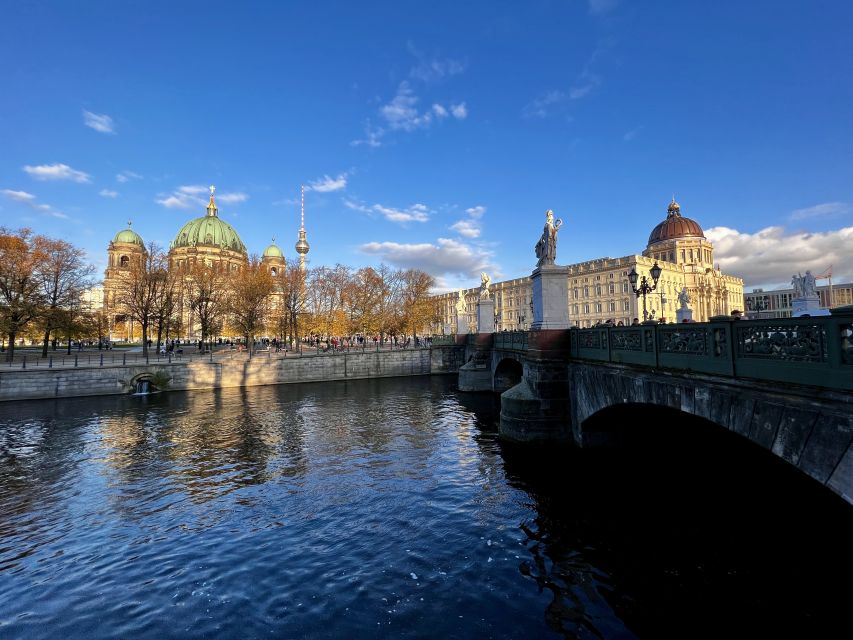
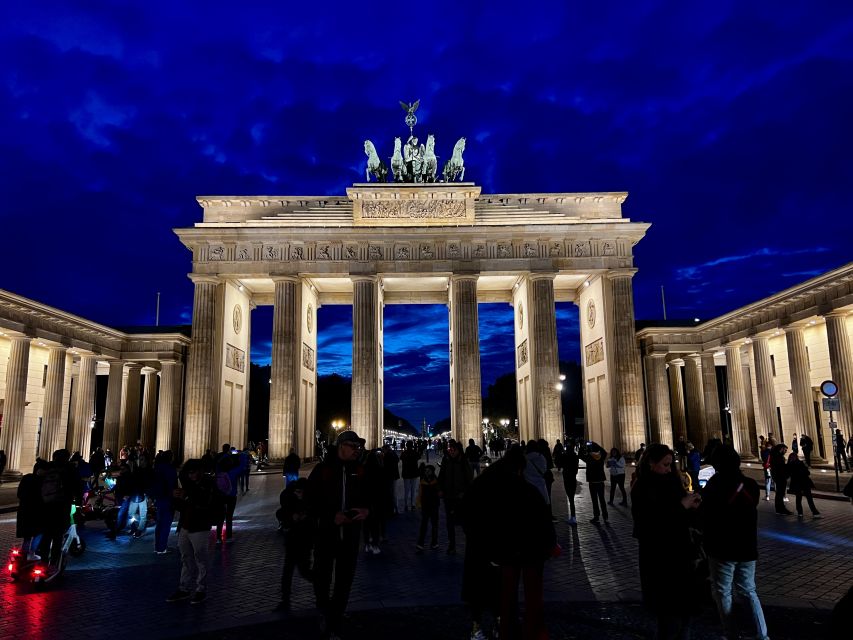
The tour ends at the Brandenburg Gate, a symbol of unity for Germany and Europe. Ending here makes sense because the Gate feels like a summary image, the kind of landmark people recognize even if they don’t know every detail behind it.
Your guide’s storytelling helps you see it as more than a background for selfies. The classical archways feel open and ceremonial, and after the heavier stops earlier, it can feel like a release.
Even if you’ve seen the Gate before, I like finishing at an iconic place like this because it helps you consolidate everything you learned while walking. You leave with one final visual to attach to the timeline in your head.
Price and Value: Why $31 Can Be a Smart First-Timer Move
At $31 per person for a 2.5-hour guided walk, the value comes from two things included: a uniquely designed chronological narrative and an English-speaking local guide.
You’re not paying for a list of stops. You’re paying for the guide’s ability to connect the stops into a story, and that’s what makes Berlin feel easier to understand later. One reason this tour performs well is that it’s built for comprehension, not just sightseeing.
Also, there’s a twist worth knowing: your booking joins a general pay as you wish model. The amount you pay covers the reservation fee and the guide’s payment. In practice, that means you can reward based on what you felt you got, while still having a guided structure that keeps you from wandering aimlessly.
How Long This Takes, and What Your Body Will Think About It
Two and a half hours is a great length for people who want depth without turning the whole day into shoe drama. It’s long enough to cover meaningful distance between major areas, and short enough that you can still do other Berlin plans the same day.
Still, it’s a walking tour. If you’re not used to city walking in cooler weather, bring weather-appropriate clothing and expect you’ll need to stay warm between stops. One review praised a guide named Ru for being mindful of cold weather, which is a good reminder that conditions can change quickly.
If you’re traveling with older folks or anyone who needs frequent breaks, you’ll want to gauge pace early. The tour is listed as wheelchair accessible, but as always, comfort depends on the walking route and how you manage your own needs.
Best Fit: Who This Tour Will Suit
This is a strong choice if:
- You’re visiting Berlin for the first time and want a clean framework for the city’s main eras
- You like walking tours that teach context, not just names and dates
- You want to hit major sights in one go, without committing to a day of multiple tickets
It might not be ideal if:
- You need lots of time sitting down
- You rely on scheduled restroom and drink breaks as part of your plan
- You prefer ultra-specialized focus, like only WWII sites or only architecture. This tour is broad by design.
Should You Book This Berlin Guided Walking Tour?
I’d book it if you want Berlin to feel understandable by the end of a single morning or afternoon. The chronological storytelling, the Museum Island views, and the combination of Gendarmenmarkt with the Berlin Wall area and Brandenburg Gate create a tour arc that most first-timers really appreciate.
If you’re sensitive to weather or you strongly need regular stop-and-go breaks, plan smart, bring what you need, and don’t assume there will be long pause moments for drinks or rest. Do that, and you’ll get a guided walk that turns famous places into a story you can actually remember.
FAQ
Where is the meeting point for the Berlin walking tour?
The meeting point is in front of the Rotes Rathaus, close to the TV Tower and Neptune Fountain.
How long is the tour, and what language is it in?
The tour lasts 2.5 hours and the live guide speaks English.
Is hotel pickup included?
No, hotel pickup is not included.
What is included in the price?
You get a uniquely designed chronological narrative and an expert local English-speaking guide.
What should I bring?
Bring weather-appropriate clothing.
Is the tour wheelchair accessible?
Yes, the tour is wheelchair accessible.
Is there free cancellation, and do I need to pay right away?
Free cancellation is available up to 24 hours in advance for a full refund. You can also reserve now and pay later.
Fresh reviews out of Berlin
- Berlin Uncensored: A History of Sex & Freedom★ 5.0 · 50 reviews
- Berlin Food & Cultural Tour: Must-Try German & Berliner Classics★ 5.0 · 51 reviews
- English Comedy Show with Pizza and Shots in Central Berlin★ 4.5 · 51 reviews
- Rude Bastards Tour of Berlin★ 4.8 · 51 reviews
- Private Taxi Tour of Berlin East and West and Neighbourhood approx. 4-6h★ 5.0 · 55 reviews
- Rickshaw Sightseeing City Tours Berlin – Rikscha Tours★ 4.0 · 55 reviews
- Berlin: City Highlights Express & Panorama Roof Terrace★ 4.9 · 55 reviews
- Berlin during Nazism – Tour in Italian★ 5.0 · 56 reviews
Walking Tours, compared.


Berlin’s Best: 2 Hour Walking Tour Third Reich and the Cold War
Read our review →

Third Reich Berlin: Hitler and WWII Walking Tour
Read our review →Browse the lists this tour appears in