
Reviewed · WALKING TOURS
Berlin: Sightseeing Walking Tour of the Top 20 Attractions
Berlin works best when someone gives you the map in your head, not just a list of stops. This 3 hour Top 20 walking tour packs major landmarks into a route you can actually absorb, with a private guide who explains what you’re seeing while adding that dry Berlin humor.
Two things I really like about it are the way it links the big headline sights to the lived reality of division and reunification, and the fact that you cover more than the usual highlights without feeling like you’re sprinting. The guides can also be personal in a useful way. I’ve seen names like Carlos and Carlo associated with this tour style, and their stories about growing up in Berlin add context that buildings alone can’t teach.
One drawback to consider: it is a history-forward walk with about 6 km on foot. If you want a lighter, mostly photo-based day, this might feel weighty for a half day.
Key things you will notice on this Top 20 Berlin walk
A guide-led route that adapts to your interests, so you can ask questions as you go
Dry Berlin humor used to keep tough topics understandable, not watered down
Nazi and Cold War stops included beyond the usual short circuit
A longer Wall-focused experience that helps you grasp where division showed up in real streets
Major landmarks plus quick orientation so you finish the tour feeling like you know where you are in Berlin
Starting at Paul-Löbe-Haus, then getting your bearings fast
You meet in front of the Paul-Löbe-Haus, opposite the Federal Chancellery, at Konrad-Adenauer-Straße 1. This is a smart starting point because you begin right in the government district zone, where it’s easier to understand how Berlin organizes itself around power, politics, and institutions.
From the first minutes, the tour’s “why” kicks in. Instead of jumping into random photo stops, the guide frames what you’ll see next, so the route becomes a story. You also set the tone early by telling the guide what you care about, whether that’s architecture, modern Berlin life, or the darker turning points.
More Walking Tours in Berlin
- Discover Berlin Half-Day Walking Tour
★ 5.0 · 9,624 reviews - Berlin: Third Reich and Cold War 2 Hour Walking Tour
★ 4.9 · 6,830 reviews - Berlin: Discover Berlin Walking Tour
★ 4.9 · 5,998 reviews
The government district: Chancellery and Reichstag with a clear story thread
The walk moves from the German Chancellery area to the Reichstag, with guided sightseeing at each. This is where you get the sense of Berlin as a working capital, not just a museum city. The guide’s job here is to make the buildings feel like part of the timeline, not just impressive facades.
What I like about this part of the route is how it prepares you for what comes next. When you later reach memorials and Cold War sites, the connection makes sense. You understand how governance, ideology, and daily life intersected, and why streets near the seat of power matter.
If you’re someone who gets impatient with long explanations, this is also where the “private guide” advantage shows. You can pick what to focus on, and you can ask follow-up questions immediately rather than hoping they come up later.
Holocaust Memorial time: reflective minutes built into a moving day
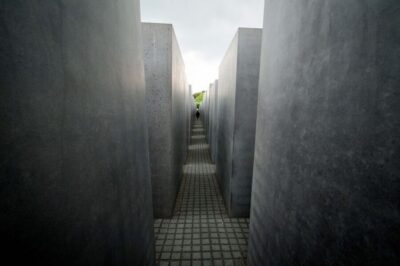
Next comes the Holocaust Memorial. The tour includes guided time here, plus free time. That matters, because a memorial like this is not something you rush through while trying to keep up with a group.
This stop is a reminder that the tour isn’t only about monuments and architecture. It’s about how Berlin remembers, how it teaches, and how it holds space for history’s impact. Even if you’re visiting for the first time, you get a grounding point that changes how you read the rest of the route.
Practical note: wear comfortable shoes. You might stand still for longer than you expect, and it helps if you plan to slow down your pace for a bit.
Potsdamer Platz as a bridge between eras
From the memorial area, you head toward Potsdamer Platz. The guide’s approach here is important, because this stop functions like a bridge. You’re transitioning from memorial reflection toward the Nazi-era and Cold War story lines, and Potsdamer Platz helps you feel how Berlin’s central spaces changed over time.
This is also a good moment to reset your eyes. After heavier history, a major public square area gives you breathing room, even while the guide continues to connect the dots.
If you like taking photos, this is the kind of place where it’s easier to capture wide city views. Just keep your camera accessible, because the tour keeps moving in tight bursts of explanation, then walking.
Another way to spend a Berlin afternoon:
- Berlin: Reichstag, Dome and Government District Guided Tour
★ 4.7 · 18,288 reviews - Berlin: 1-Hour City Tour by Boat with Guaranteed Seating
★ 4.3 · 16,993 reviews - Berlin: TV Tower Standard Entrance Ticket
★ 4.4 · 15,883 reviews - Berlin: Boat Tour Along the River Spree
★ 4.4 · 11,252 reviews
Checkpoint Charlie and Martin-Gropius-Bau: where the Cold War feels close
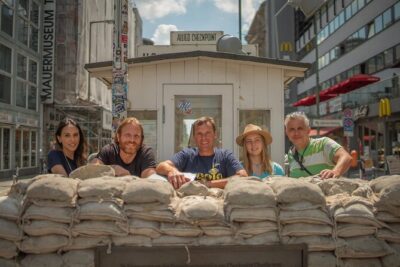
Checkpoint Charlie is one of the tour’s key highlights, with guided storytelling and sightseeing. This stop is where the concept of division becomes immediate. Instead of reading about borders, you’re standing in the area associated with one of Berlin’s most famous Cold War crossings.
The guide also tends to add everyday-life context, not just political facts. That’s a big part of the tour’s style: the past gets explained through what people faced, not just what leaders decided.
After that, you pass the Martin-Gropius-Bau, another named landmark on the route. The value here is less about a single photo and more about continuity. You move through central Berlin landmarks in a way that feels like you’re walking across time layers, guided by a person who can connect what you’re seeing to why it matters.
Topography of Terror: former Gestapo headquarters grounds the story
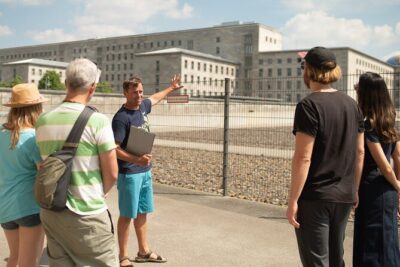
The Topography of Terror stop is on the grounds of the former Gestapo headquarters, and that detail changes the tone of the walk. Here, you get more than a quick highlight. The guide builds a fuller picture of how terror systems worked, and you start to understand why Berlin’s Cold War memory is so specific.
This is also where you’ll appreciate the tour’s “dry humor” approach more than you might expect. Used well, humor can keep you alert and able to process information, without turning serious history into a theme park.
Consideration: this area can feel mentally draining if you pack too many museum visits later. If you have another heavy attraction the same day, it might be better to keep the rest of your schedule lighter.
Gendarmenmarkt and Bebelplatz: culture under pressure
You then reach Gendarmenmarkt, followed by Bebelplatz. The contrast is deliberate. Gendarmenmarkt brings you into one of the city’s well-known architectural squares, while Bebelplatz brings you to a memory connected to book burnings.
That pairing is valuable because it shows how Berlin’s cultural identity was contested. You’re not only learning about tanks and borders. You’re seeing that ideology attacked ideas, and Berlin remembers that.
Also, the tour includes admiration of Berlin Cathedral during this stretch. When cathedral architecture appears in a route about political history, the guide’s job is to help you notice how different kinds of power show up in different buildings.
Unter den Linden, Lustgarten, and Berlin Cathedral: walking the spine of Prussian-era Berlin
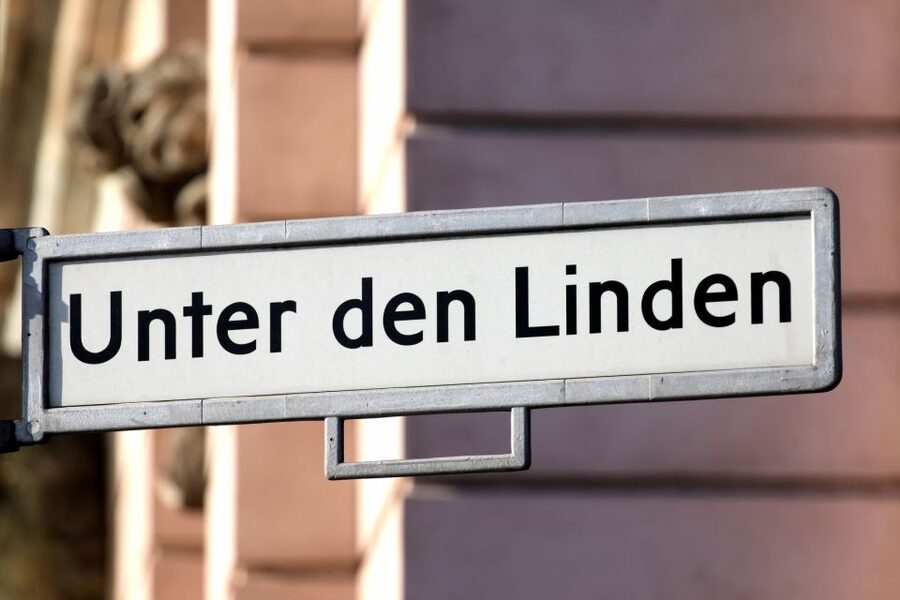
As the walk continues, you get time along Unter den Linden, and the tour frames this as a chance to connect with Prussian history and Berlin’s evolution. Unter den Linden is the kind of boulevard where your sense of direction clicks. You start to feel how the city grew and where grand civic space sits alongside modern life.
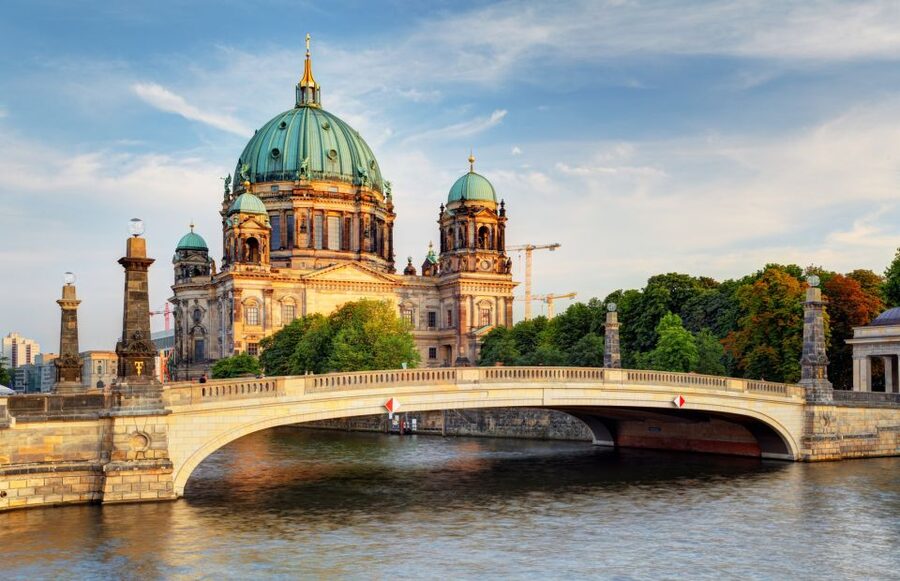
Next you stop around Lustgarten and then at Berlin Cathedral. Even if you’ve only seen images before, this part helps you understand scale. It’s easier to grasp what “capital city” means when you’re walking through the spaces where official life and public life overlap.
Practical tip: this section is ideal for steady pacing. Don’t rush to cover distance at the expense of the guide’s explanation, because the meaning of the route is built in the connections between stops.
Museum Island and Alte Nationalgalerie: major names in one walk
The tour reaches Museum Island, with further stops tied to the museum cluster, including the Alte Nationalgalerie. This is where you get a change in mood again. Instead of border stories, you shift into a place that represents how Berlin collects, preserves, and displays.
The guide’s commentary matters here because the tour isn’t only “look at the building.” It’s about why Berlin’s story keeps getting told through institutions. Museum Island works well as a finale region, because it’s a natural place to absorb how past events shaped what Berlin chooses to protect and highlight.
If you’re a first-time visitor, this is also where you start to think about return visits. The tour gives you orientation, so later you can pick which museum stops are worth extra time for you.
Finishing at Friedrichsbrücke: a useful end point for your next move
The tour ends at Friedrichsbrücke. That’s a good close because it leaves you with momentum, and you can keep exploring without needing to retrace your steps back to the start.
At this point, you should feel oriented, not exhausted. You’ve walked past a concentrated set of Berlin’s most powerful landmarks, and because the guide tells stories at each stop, you likely won’t feel like you just “checked boxes.”
How the 3-hour format stays manageable even with 20 sights
This is a fast, immersive format by design. You’re walking mostly on foot close to the real city, about 6 km in total. Three hours sounds short until you realize that the guide is also stopping you at meaningful moments for explanations and short periods of sightseeing.
The good news is that the tour is built around a private or small group feel. You can ask questions, and the guide can adapt. That’s not a luxury detail. It’s what keeps the pacing from turning into stress.
Weather is also covered. The tour runs in all-weather conditions, so you’ll want a rain layer even if the day looks clear. Bring water, keep your camera handy, and plan for a bit of walking fatigue.
Price and value: is $94 worth 180 minutes and a private guide?
At $94 per person for a 3-hour walking tour, the value depends on what you want out of Berlin. If you’re happy to wander alone and look at landmarks without context, you can usually spend less.
But if your goal is to understand Berlin quickly, this price starts to make sense. You’re paying for a certified local guide, structured storytelling across major Nazi and Cold War sites, and a route that goes beyond the standard shorter highlight circuits. You also get small-group or private flexibility, which often turns into more time for questions and better pacing.
In practice, the tour is also the kind of experience where the guide quality matters. When guides like Carlos and Carlo add personal stories and live-through context about the wall and its fall, it changes how the route lands in your mind. And because some groups can run one-on-one when only a few sign up, the guide can adjust to your group’s interests on the fly.
One more value point: you’re getting an end-of-day orientation boost. Even after the tour ends, you’ll likely know where to head next because the route has given you a mental map.
Who should book this Top 20 Berlin walk, and who might not
This tour is a great fit if you want a lot of the essentials in a short time, especially if it’s your first visit. It also works well for couples, friends, and small teams who want guidance but still want to steer the conversation.
You’ll also enjoy it if you like history that’s connected to streets, not just inside buildings. The guide approach turns politics and everyday life into stories you can remember, and it uses humor to keep you engaged.
Skip it, or think twice, if you strongly prefer lighter sightseeing with minimal heavy topics. Also, if you have very limited walking tolerance, the approximate 6 km could be a deal-breaker even though it’s described as suitable for all ages and fitness levels.
Should you book this Berlin Top 20 walking tour?
I’d book it if you want Berlin’s big landmarks with real context, in a short half-day window. The combination of private or small groups, a certified local guide, and the route that includes both Nazi-era and Cold War sites makes it a smart first-stop experience.
I’d also book it if you like asking questions. The tour is designed so you can tailor the flow, and you finish feeling oriented enough to keep exploring under your own steam.
If you want a mostly relaxing sightseeing stroll with minimal history weight, this probably isn’t your best match.
FAQ
How long is the Berlin Top 20 walking tour?
It lasts about 3 hours.
How much walking is involved?
You should expect around 6 km of walking.
Where do I meet the guide?
Meet in front of the main entrance of the Paul-Löbe Haus, opposite the Federal Chancellery, at Konrad-Adenauer-Straße 1, 10557 Berlin.
What time does the tour start?
Daily start times are offered at 10:00 AM and 2:00 PM.
What languages are available for the live guide?
The tour is offered with live guides in English, Spanish, and German.
Is the tour private or small-group style?
It can be private or in small groups.
Does it run in bad weather?
Yes, the tour runs in all-weather conditions.
Is the tour wheelchair accessible?
It is listed as wheelchair accessible.
Fresh reviews out of Berlin
- Berlin Uncensored: A History of Sex & Freedom★ 5.0 · 50 reviews
- Berlin Food & Cultural Tour: Must-Try German & Berliner Classics★ 5.0 · 51 reviews
- English Comedy Show with Pizza and Shots in Central Berlin★ 4.5 · 51 reviews
- Rude Bastards Tour of Berlin★ 4.8 · 51 reviews
- Private Taxi Tour of Berlin East and West and Neighbourhood approx. 4-6h★ 5.0 · 55 reviews
- Rickshaw Sightseeing City Tours Berlin – Rikscha Tours★ 4.0 · 55 reviews
- Berlin: City Highlights Express & Panorama Roof Terrace★ 4.9 · 55 reviews
- Berlin during Nazism – Tour in Italian★ 5.0 · 56 reviews
Walking Tours, compared.

Berlin’s Best: 2 Hour Walking Tour Third Reich and the Cold War
Read our review →
Third Reich Berlin: Hitler and WWII Walking Tour
Read our review →Browse the lists this tour appears in