
Reviewed · BERLIN WALL & COLD WAR TOURS
Berlin: Private Bike Tour of the Berlin Wall and Third Reich
This is a private bike tour that turns the map of Berlin’s hardest chapters into something you can actually ride through. You’ll link the Berlin Wall to Third Reich-era places in a way that feels practical, not like a classroom lecture.
I love the on-bike pacing here. You cover ground fast, so you do not lose your day to traffic lights and backtracking. I also like how personal it can be, because the guide builds the route around your group’s interests, not a fixed script.
One thing to consider is that it runs in all weather. If rain is in the forecast, you’ll want to dress for getting a little wet and still pedaling for hours.
Key highlights worth knowing before you go
- Private, flexible route built by your guide, using the Free-Berlin concept so your day does not feel like copy-paste sightseeing
- Helmet and bicycle included, which keeps you from worrying about what to rent or how to carry it
- Wall-related stops that show scale and consequence, not just photos and plaques
- Big view points tied to Nazi planning, including talk about Albert Speer and the Great Hall idea
- Holocaust memorial areas handled directly, with multiple stops for different victim groups
- Checkpoint Charlie only on English departures, so language matters for what you will see
Why Berlin’s Wall and Nazi-era sites work better by bike than on foot
Berlin is a city where the distances matter. Even when you stay near major sights, you end up doing a lot of crossing streets, pausing for transport connections, and re-routing around construction. This tour solves that with a simple idea: let the bicycle do the in-between work.
You’re on a private outing, so the guide can slow down when you want more time at a memorial, or speed up when you want to see more ground. That flexibility is useful because Berlin’s story is not neat. Some stops hit with stark emotion. Others are about architecture, power, and how space was planned. A bike keeps the day moving without making the stops feel rushed.
It also helps that this is designed for real-time learning. You are not just pointed at a single object and sent on your way. You move from neighborhood to neighborhood, and the guide connects the dots so the sites start to make sense as parts of one system, not disconnected monuments.
More Bike Tours in Berlin
- Berlin: Sights and Highlights Bike Tour with a Local Guide
★ 4.8 · 2,698 reviews - Berlin Highlights 3-Hour Bike Tour
★ 5.0 · 948 reviews - Berlin City Bike Tour with Beer Garden Stop
★ 5.0 · 917 reviews
Getting set up at Poststraße 11, then rolling with a guide who keeps English clear
The tour starts and ends at Free Berlin Bike Tours & Rental on Poststraße 11 in central Berlin. You’ll come with your group, check in, and get your bike and helmet. There’s also a mobile ticket, which makes the whole thing feel low-friction.
What I’d focus on, practically, is comfort and control. If you’re even a little rusty on biking, tell the guide at the start. With a private group, you should be able to match the pace to your comfort level. That matters because the day includes short stops that can add up, and you still have to pedal between them.
English is offered, and one of the strongest signals from the experience is that the language is handled clearly enough to keep you following the story without guessing. If you want to hear the details and not just the highlights, this is one of the better ways to do it.
Nikolaiviertel and the Jewish civil courage story at Stiftung Neue Synagoge Berlin
Your first stop is Nikolaiviertel, a central choice for starting the day. It’s described as the closest thing Berlin has to a real old town, and it’s a smart setup for what comes next. You get to think about age and loss, especially with the reality of the bombing campaign in the background. It’s not just a pretty opening neighborhood, it’s a prompt: how does a city rebuild, and what survives.
From there, the tour heads to Stiftung Neue Synagoge Berlin – Centrum Judaicum, where the focus shifts from the city’s layers to a specific act of courage. You’re guided through the story of the night of broken glass, including how a police officer is said to have saved the building. That kind of detail matters because it moves the narrative beyond dates and into human decisions.
The main benefit of this pairing, old town to targeted remembrance, is rhythm. You start with context, then you hit a moment where the consequences of state violence show up in one place, one building, one night. If you care about how history can be read at street level, this is exactly the right way to start a ride.
When the Wall is no longer abstract: memorials, Mauerpark, and the idea of an enforced border
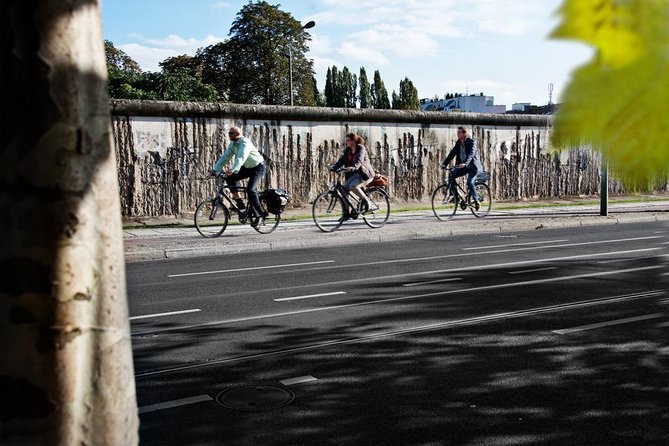
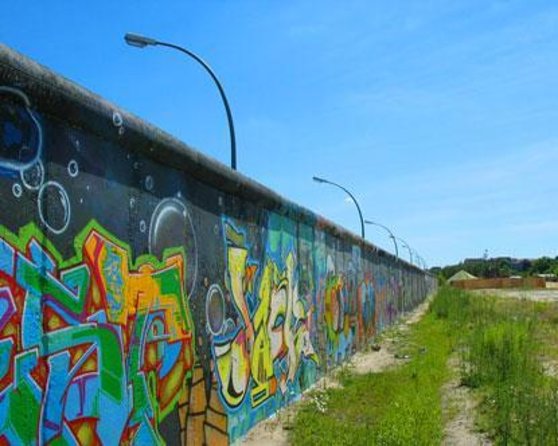
As the tour progresses, Berlin’s divided era becomes more tangible. You reach the Memorial of the Berlin Wall, described as a spot where the Wall is still alive enough to help you understand and experience what it meant. That matters because a lot of Wall history elsewhere turns into interpretation from a distance. Here, the guide pushes you to see scale and consequence, not just symbolism.
Next is Mauerpark, a stop that connects the Wall era to the present-day Berlin you might recognize from weekends. It’s known for the Sunday flea market, but the tour frames it as a place that shows attempts by East Germany’s rulers to establish a perfect border. That contrast is valuable. You look at everyday life, then the guide reframes the same space through the logic of control.
Two additional stops deepen this border theme. You visit Gunter Litfin Memorial, tied to the first person said to have been shot at the Wall. And you also ride to Invalidenfriedhof, a cemetery cut in the middle by the Wall. The tour’s take there is pointed: some of the people memorialized on the burial ground are described as more important to remember than honor. It’s not meant to be comfortable, and that is part of why it lands.
If you want a Wall tour that feels like more than a few photos, the flow here helps. Each stop adds a new layer: the physical barrier, the lived impact, the enforcement, and then the moral complication.
More Third Reich history tours:
- Berlin: Third Reich and Cold War 2 Hour Walking Tour
★ 4.9 · 6,830 reviews - Berlin’s Best: 2 Hour Walking Tour Third Reich and the Cold War
★ 5.0 · 5,486 reviews - Third Reich Berlin: Hitler and WWII Walking Tour
★ 5.0 · 3,301 reviews - Berlin: Third Reich, Hitler, and WWII Walking Tour
★ 4.9 · 1,757 reviews
Flak Tower views and the Nazi-built world, from Humboldthain to Spreebogenpark and the Reichstag exterior
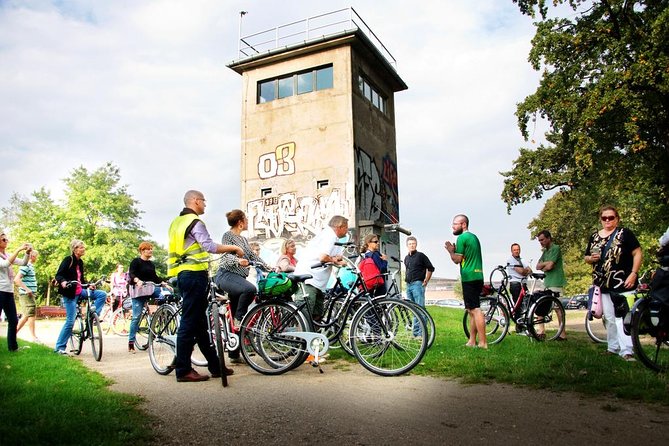
Berlin’s built environment is one of the best parts of this tour, and the stops reflect that. You reach Humboldthain Flak Tower, once described as a giant fortress and air-raid-shelter. The attraction here is twofold: you get a panoramic view, and you get context about Nazi architecture and how structures were designed for survival, control, and public messaging.
From a practical standpoint, a viewpoint stop on a bike tour is a gift. You get a break from the ride, but you still come away with a mental map. The guide also connects what you see in the distance to what people in power planned, which turns the skyline into evidence.
Then you move to Spreebogenpark for another high-impact angle on planning. The tour focuses on an overview of the governing district of Germany, and it also brings up the plans of Hitler’s architect, Albert Speer, including the idea of a Great Hall large enough for 180,000 people. That detail may sound like pure architecture talk, but the point is political scale. When you hear it while looking over the district, you understand how power imagines itself in space.
Finally, you stop at the Reichstag building. You do not go inside, but the outside stop is still useful because the guide uses it to talk about Hitler’s grab of power and Germany’s democratic history. Even without entering, it’s the kind of place where a little framing can change how you read the facade and what it represents.
A fair caution: if you hate short photo stops, this tour may feel like it moves at a steady clip. The trade-off is that you see more ground and more categories of sites in one half-day.
Holocaust memorials and the Fuhrerbunker: how the day lands at the darkest end of the story
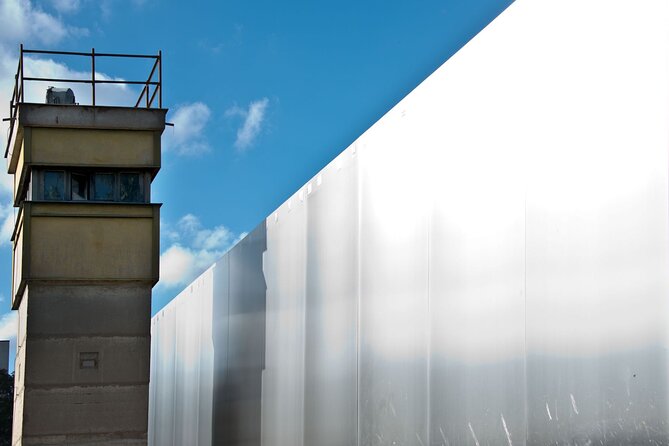
No matter how well you bike through Berlin’s points on a map, the tour’s emotional center comes when you reach the Holocaust memorial areas. You visit the Holocaust Memorial – Memorial to the Murdered Jews of Europe, described as the biggest genocide memorial in the world. The tour also emphasizes the unsettling detail that it was created by those responsible for the killing. Even if you’ve read about this before, hearing it in the place is different, because the scale forces you to slow down mentally.
The route also includes additional memorial stops for the biggest victim groups of the Holocaust, described as part of a set of three memorials. This is one of those choices that adds value. Instead of compressing everything into one stop, you get a sense that the tragedy was not a single, uniform story. The guide’s framing helps you keep track of categories without losing the overall horror.
Then the tour heads to the Fuhrerbunker, explained as the place where Hitler hid during the last weeks of the war and where he eventually committed suicide. The current reality is stark: what you see today is described as a parking lot. That contrast is the point. Berlin refuses to keep the past looking like a museum set.
This is also where you’ll appreciate the private format. If you need a moment to collect yourself at a memorial, you are not stuck waiting for a big group to finish up a photo line. You can control your own pace a little, and the guide can respond.
Checkpoint Charlie on English departures: what you gain, and why language is a real decision
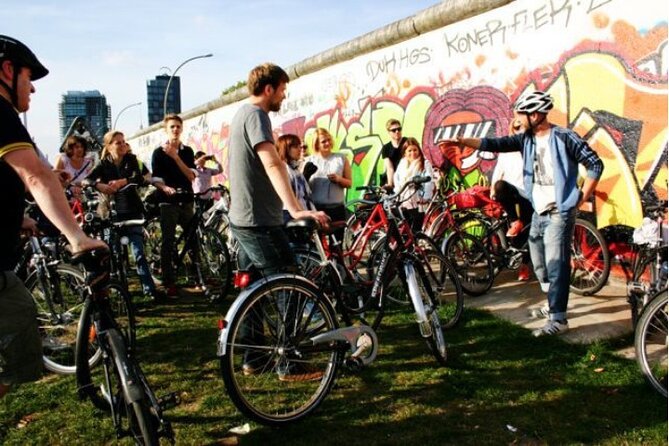
One very practical detail is that Checkpoint Charlie is only included on the English version of the tour. If you book in English, you’ll reach the most famous border station of the Cold War, described as the only shared one between the USA and USSR.
The guide explains why the place felt so dangerous, including the idea that at one point the Third World War nearly started right there in central Berlin. That is intense material, but it fits the bike-tour approach. You can picture how quickly a city could turn from normal streets into a crisis node when two sides are watching each other from arm’s length.
If you are considering the tour and language matters to you, make it part of your decision. For many people, Checkpoint Charlie is either a must-see or a skip. Here, it is a language-dependent inclusion.
Price and value: what you’re paying for in a 3-hour private ride
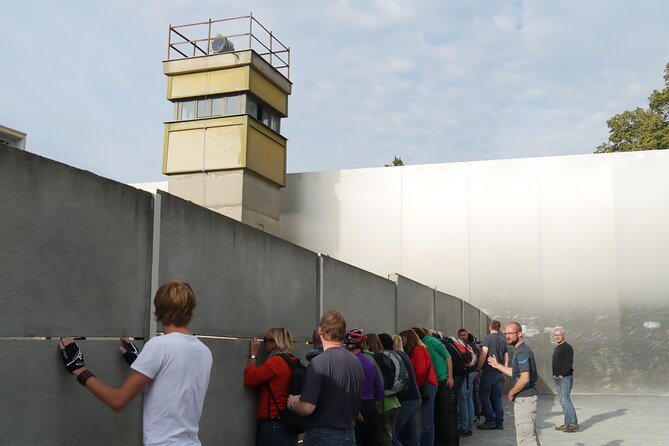
At $107.42 per person for about 3 hours, this is not a budget walk. But it does include the parts that often cost extra on other tours: a professional guide, a bicycle, and a helmet. You also get a private tour, so your group is the only group on the route.
That combination is where the value starts to make sense. If you were to rent bikes on your own, manage your own route, and then try to figure out the right places to stand for the Wall story, you’d spend money and time. Paying for a guide in Berlin’s history-heavy neighborhoods is usually the difference between seeing objects and understanding why those objects matter.
There’s also a “Free-Berlin concept” element: each guide designs their own route, so you are not stuck with the same itinerary as every other group. That helps if you have already seen some Berlin highlights, or if you want the tour to match your interests more closely.
Pacing is the other value lever. One review notes that biking lets you see what would take about twice as long on foot. Even if your own pace is different, the idea is sound. Bike tours reduce the dead time between stops, and Berlin’s story benefits from that.
One more small planning point: this tour often gets booked about 43 days in advance on average. If you’re traveling in peak season or you want a specific departure time, book earlier rather than later.
Who this tour suits best, and who might want to pick something else
This is a strong match for history buffs who want a guided route through Wall-era and Third Reich-era sites, with plenty of stops that connect buildings, borders, and memorials.
It is also a decent choice for families, because it’s listed as family-friendly and says children are welcome, with infant seats available on request. The private format can make it easier to manage kids because the guide can adapt pacing for your group.
If you prefer a slow museum style day, this may not be your favorite format. The tour is structured around a moving route with stops that are brief by necessity. You’ll still spend time at key memorials, but you’re not going to linger for hours inside galleries.
Should you book this Berlin Wall and Third Reich bike tour?
Book it if you want a private, guided ride that ties Berlin’s Wall, Nazi-era architecture, and Holocaust memorials into one coherent route. The included bike and helmet, plus the clear English option, make it a low-stress way to handle a tough topic without getting lost in logistics.
Skip or compare if you need long stop times at memorials and buildings, or if you know biking will be uncomfortable for your group. In rainy weather, you’ll still ride, so plan for that.
If you can match your pace to a 3-hour cycling day and you want the story told stop by stop, this is the kind of tour that makes Berlin’s most difficult history feel legible, not just visible.
FAQ
How long is the Berlin Wall and Third Reich private bike tour?
It runs for approximately 3 hours.
What is the price per person?
The price is $107.42 per person.
Is this tour private or shared?
It is a private tour/activity, so only your group participates.
What’s included in the tour?
The tour includes a professional guide, use of the bicycle, use of a helmet, and the private tour service. It also follows the Free-Berlin concept where each guide designs their own route.
What about food and drinks?
Food and drinks are not included unless specified.
Where do we meet, and does the tour end there too?
You meet at Free Berlin Bike Tours & Rental on Poststraße 11, 10178 Berlin. The tour ends back at the same meeting point.
Does it operate in bad weather?
It operates in all weather conditions, so you should dress appropriately.
What languages are available?
English and German are listed as options, and Dutch, French, and Spanish may be possible on request.
What is the cancellation policy?
Free cancellation is available. You can cancel up to 24 hours in advance for a full refund.
More Berlin Wall and Cold War history
- Berlin: DDR Museum Tickets
★ 4.3 · 3,443 reviews - Skip-the-Line: Berlin Wall Museum at Checkpoint Charlie
★ 4.1 · 2,041 reviews - Berlin: East Side Gallery Spree Cruise in a Solar Catamaran
★ 4.1 · 1,086 reviews - Cold War, Berlin Wall, Spies and the East Side Gallery
★ 5.0 · 1,024 reviews
Fresh reviews out of Berlin
- All-in-One Berlin Highlights on Foot: Private Walking Tour★ 5.0 · 22 reviews
- Sky Walk – 120 Meters above Berlin★ 4.2 · 23 reviews
- Berlin Photography Masterclass – Private Photography Lesson★ 4.5 · 23 reviews
- Berlin Battlefield Tour – Operation Berlin 1945 (Small Group)★ 5.0 · 23 reviews
- Private Tour: Daytime Food Tour Trends & Classics★ 5.0 · 24 reviews
- Potsdam Walking City Tour★ 4.0 · 24 reviews
- Scavenger Hunt through Berlin’s Government District★ 4.7 · 24 reviews
- Small-Group Berlin Sightseeing and Food Tour of Prenzlauer Berg and Mitte★ 5.0 · 25 reviews
Berlin Wall & Cold War Tours, compared.
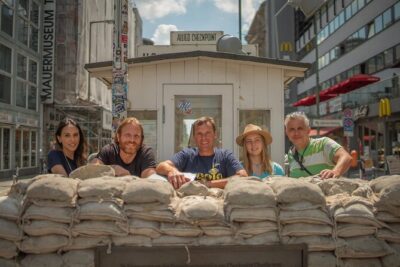
Berlin’s Best: 2 Hour Walking Tour Third Reich and the Cold War
Read our review →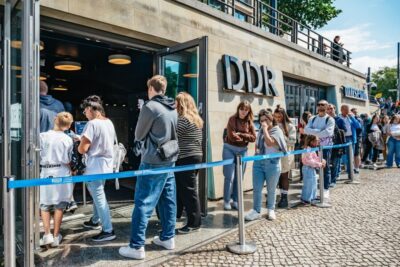
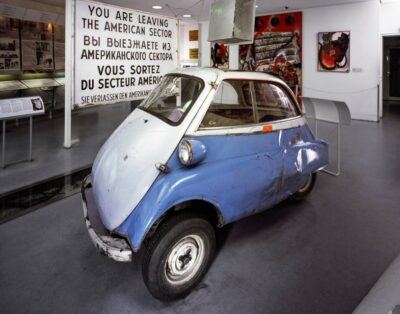
Skip-the-Line: Berlin Wall Museum at Checkpoint Charlie
Read our review →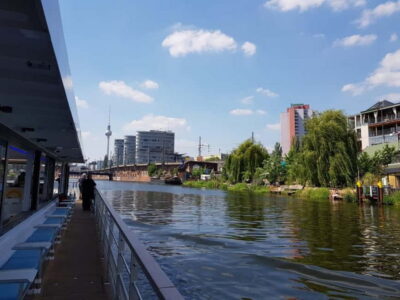
East Side Gallery Spree Cruise in a Solar Catamaran
Read our review →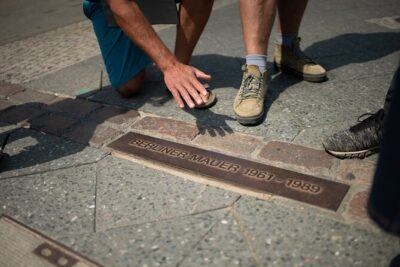
Cold War, Berlin Wall, Spies and the East Side Gallery
Read our review →
Browse the lists this tour appears in