
Reviewed · WALKING TOURS
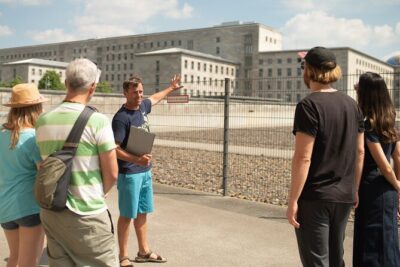
Private 3-Hour Walking Tour of Berlin
Berlin is one of those cities where the buildings still argue with each other. This private, 3-hour walk ties together power, propaganda, division, and reunification, moving from the Reichstag to the Wall relics around Checkpoint Charlie. It is especially interesting if you like your history with clear street-level context, not just names on plaques.
I like the private format, because you get real-time answers and can steer the pace when something catches your eye. I also like the flexibility built into the tour, since it is designed to be customized. One thing to think about: it is a compact 3 hours, so you will see a lot, but you will not linger for long museum time unless you plan to extend your day after.
Key things that make this tour worth your time
- Hotel pickup from your Berlin hotel or private residence makes the start easy.
- Small private group with a guide means more time for questions and less time waiting.
- Wall-era stops concentrated in one walk: Topography of Terror, Potsdamer Platz remnants, and Checkpoint Charlie.
- Architecture on purpose, including the Sony Center area and details around Unter den Linden.
- UNESCO Museum Island is included as a nearby capstone, with a strong recommendation to stay longer on your own.
- Guides who tell the story well, with names like Sven and Thomas showing up in feedback for being prepared and clear.
Private 3-Hour Format: What you get for the money
This is priced per group (up to 6 is stated for pricing), and the experience also lists a maximum of 8 people per booking. Either way, the practical effect is the same: you are not being folded into a big cattle-car walking tour.
At about 3 hours, the route is built for people who want the “Berlin essentials” without spending a full day hopping between districts. You get a professional local guide, and the tour includes the usual taxes and fees. Food and drinks are not included, so bring a water plan. If you are the type who gets hungry while thinking, grab something before you meet up.
One more detail that matters: the tour offers a mobile ticket, and it is available in English. You will also be walking in all weather, so wear shoes you trust. Berlin weather loves to change its mind.
And yes, there is a reason the guide names Sven, Thomas, and Tomas show up in the same conversation. The consistent theme is storytelling that stays organized, with enough context to make the Cold War era actually make sense on the ground.
More Walking Tours in Berlin
- Discover Berlin Half-Day Walking Tour
★ 5.0 · 9,624 reviews - Berlin: Third Reich and Cold War 2 Hour Walking Tour
★ 4.9 · 6,830 reviews - Berlin: Discover Berlin Walking Tour
★ 4.9 · 5,998 reviews
Meeting up with pickup and a guide you can actually question
The tour is private, meaning your group is the only group participating. Pickup is offered from your hotel or private residence in Berlin, which is a huge quality-of-life upgrade if you do not want to play “where is the meeting point?” roulette.
Also, the tour is designed to work with typical travel rhythms. It is near public transportation, confirmation is received at booking, and most travelers can participate. Service animals are allowed as well.
What you should expect during the walk is a guide who paces the group and keeps the story moving. For a 3-hour tour, that is key. Berlin has so much to see that the worst plan is a slow, meandering walk with no thread connecting the stops.
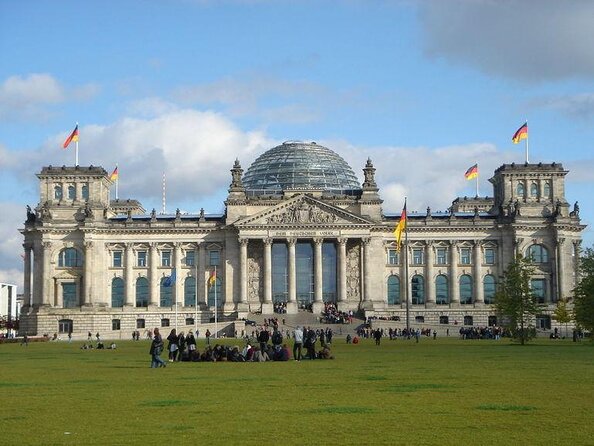
Entering the story at the Reichstag Building
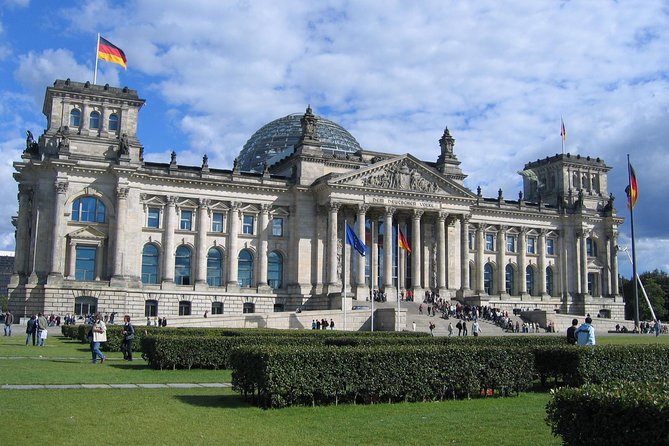
The Reichstag stop is a smart opener because it sets up the big theme of modern Germany: political power shifting through fire, war, and rebuilding.
Here is the arc you will hear in plain terms. The building was constructed in 1894 for the German parliament. After World War I, it became home to the Parliament of the Weimar Republic. Then in 1933, shortly after Hitler’s rise to power, a fire destroyed much of the interior and the building was closed. The guide explains the point that Hitler did not need a parliament in the way democracy requires. The building did not fully return to its political role until after reunification, when the restored German Parliament was ready to move in.
You will likely only spend around 10 minutes here, so you will not get a full museum-style treatment. But as a starting stop, it does something valuable: it gives you a historical backbone before you walk toward the symbols of the Cold War and division.
A potential drawback is also obvious. If you are hoping for a long, slow look at the building or deep interior time, this route is not designed for that. It is designed for seeing, understanding, and then moving on.
Brandenburg Gate and Unter den Linden: Berlin’s big centerline
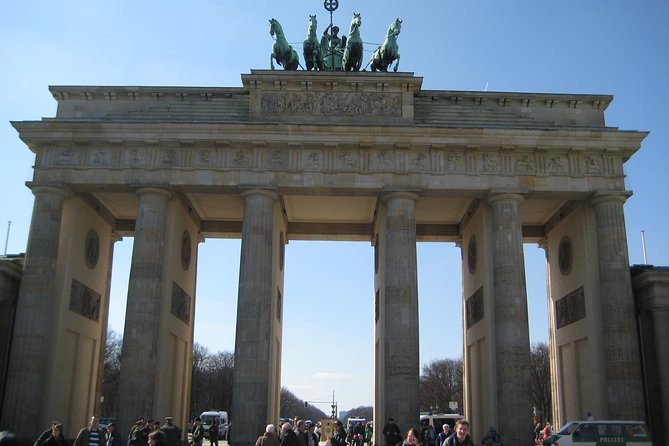
From the Reichstag, the tour heads to the Brandenburg Gate. This is Berlin’s signature landmark, and the guide typically uses it to anchor the idea that monuments are not neutral. They change meaning depending on who controls the story.
From there, you walk the Unter den Linden corridor. This boulevard begins at Hohenzollern Palace and ends at the Brandenburg Gate. Along the way, you see some of Berlin’s older buildings, including the Opera and the Kronprinzenpalais.
Why this section works: it is a visual reset. You go from the political tragedy of 1933 to a grand, formal street that helps you understand how Berlin likes to stage power, culture, and ceremony in stone. Also, the tour pacing through this stretch is short enough that you stay in sync with the rest of the itinerary.
If you like people-watching and classic European boulevards, you will enjoy this part. If you want maximum photography time, manage expectations since the overall tour is only about 3 hours.
Another way to spend a Berlin afternoon:
- Berlin: Reichstag, Dome and Government District Guided Tour
★ 4.7 · 18,288 reviews - Berlin: 1-Hour City Tour by Boat with Guaranteed Seating
★ 4.3 · 16,993 reviews - Berlin: TV Tower Standard Entrance Ticket
★ 4.4 · 15,883 reviews - Berlin: Boat Tour Along the River Spree
★ 4.4 · 11,252 reviews
Potsdamer Platz and the Sony Center: modern design meets old borders
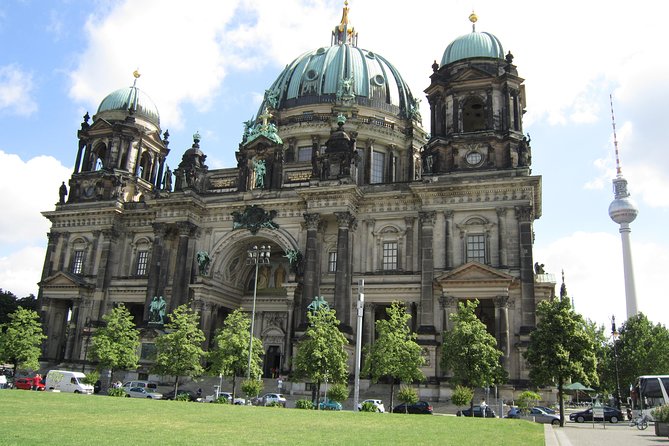
Potsdamer Platz is where Berlin shows you the before and after in the same neighborhood. You will see the Sony Center area and its architecture, including designs by Renzo Piano, Hans Kollhoff, and Helmut Jahn. This is not just a modern skyline moment. The guide ties it to the city’s changing geography after division.
You also get a specific, fun detail: Germany’s oldest traffic light. It is the kind of weird fact that makes the place feel human, not just monumental.
The tour also includes remains of the Berlin Wall here. That is a big deal. Potsdamer Platz is what many people think of as new Berlin, but the walk brings the old border story back into view.
One small consideration: architecture stops can be either great or frustrating depending on your style. If you love details and want explanations, this will likely be a highlight. If you mainly want wide open views and minimal talking, you might wish for slightly longer at each architectural photo spot.
Topography of Terror: reading the past from what remains
The Topography of Terror stop is one of the most serious on the route. The site was where SS and Gestapo headquarters operated. The tour focuses on how the ground itself tells the story.
You will see excavated foundations and a Documentation Center that has been added to interpret what happened here. You will also see remains of the Berlin Wall.
This is the kind of stop where a good guide matters a lot. Berlin has plenty of ways to sensationalize hard history. The best tours keep it clear and respectful, with enough context that you understand what you are looking at without turning it into a spectacle.
What to watch for as you walk: you will be dealing with heavy topics in a small time window. If you prefer a slower pace at emotionally intense sites, ask the guide to adjust. Since this is private, there is more room to steer.
Checkpoint Charlie: the Cold War crossroads without the gimmicks
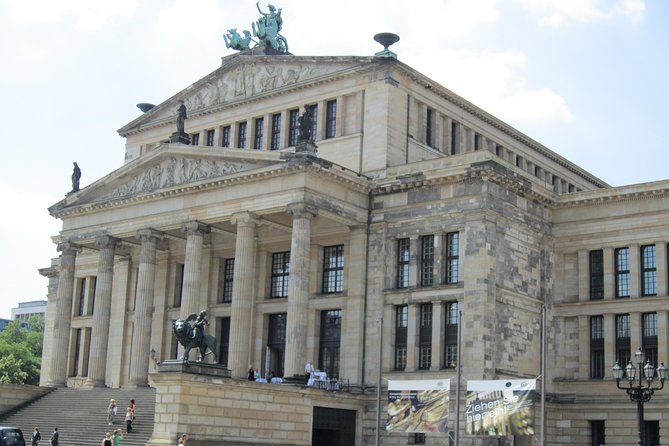
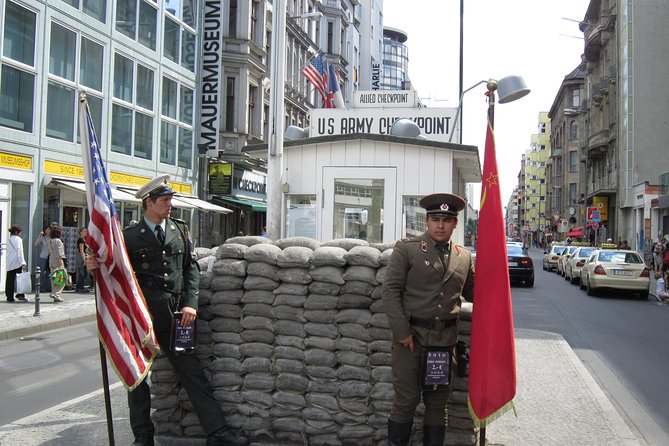
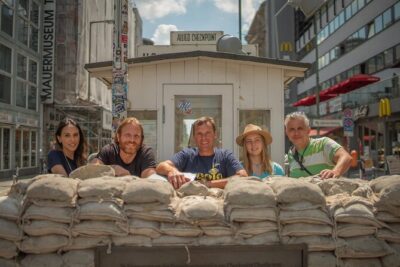
Checkpoint Charlie is the most famous of the Wall checkpoints, and it has a reputation that sometimes turns it into a photo stop. The guide keeps it grounded.
Here is the key context you will hear. This checkpoint was reserved for military personnel and foreign visitors, mostly American, who wanted to enter the Eastern part of the city during the Cold War. The stop works best when you understand the checkpoint as a checkpoint, not just a marker. It was a gate where politics turned into daily rules.
You typically spend about 10 minutes here. That means you will see the key elements, but you will not get a long, multi-layer historical narrative. If you want more time, you will likely need to add on your own exploration afterward. The upside is that this tour keeps you moving efficiently to the next, calmer parts of central Berlin.
Gendarmenmarkt and the dome views you do not want to miss
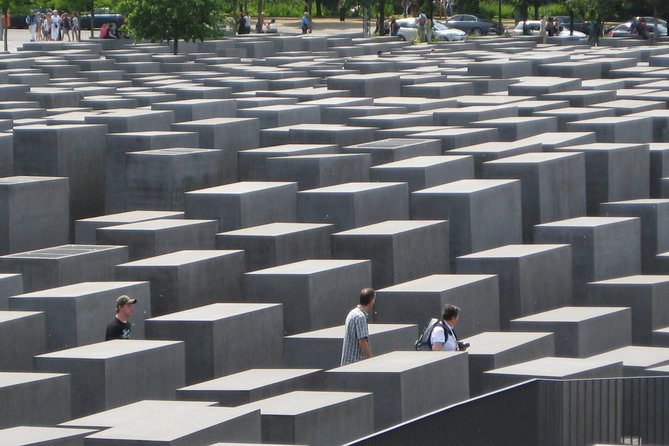
After the heavy stops, the tour turns toward beauty and balance at Gendarmenmarkt. This is often described as Berlin’s most beautiful square, and the architecture supports that idea.
You will see the German Dome on one side and the French Dome on the other, with Schinkel’s Konzerthaus in the center. It feels symmetrical and composed, which makes it a nice contrast after checkpoint and terror-site history.
If you are into architecture, this stop is a breather with real substance. It is not only pretty. It is a chance to see how Berlin expresses culture through design.
There is also a Berlin Dome note on this route. The Berlin Dome is described as Germany’s largest Protestant church, modeled after St. Peter’s. It is tied to the Hohenzollern family, including burials of King Friedrich Wilhelm I and his wife.
In a 3-hour walk, you will not get every angle. But you will get enough to understand why this square is a “must-see” even if you are not chasing museum tickets.
Museum Island: where your walk ends, and your day can continue
The tour finishes with Museum Island as a nearby capstone. The five museums here are recognized as a UNESCO World Heritage Site.
The practical takeaway is this: if your legs still work and you want to go deeper than the street-level tour, this is where you can extend your day. The tour recommends staying after your walk to visit the Pergamon and/or the Neues Museum.
Because the tour itself stays short, you should treat Museum Island as two things:
- A location you should know exists and why it is important.
- A launching pad for the museum time you choose.
If you love museums, plan your next step now. If you are museum-tired after 3 hours, just enjoy the island area, take photos, and move on with your Berlin day.
Practical tips to make the most of a 3-hour Berlin walk
First, wear comfortable shoes. This is a walking route with multiple central stops, and 3 hours can still be a lot on cobblestones and uneven sidewalks.
Second, use the mobile ticket. Have it easy to access so you are not fumbling at a busy corner.
Third, be ready to switch from political story to architectural story. Berlin does that to you. If you go in thinking only about the Berlin Wall, you might miss how often the tour connects power, culture, and design.
Finally, if you are traveling with a friend or family member who cares about different aspects, this private setup helps. You can customize the emphasis, and the guide can shape the path around your interests.
Who this tour is best for
This works best if you want:
- A tight 3-hour orientation to central and Wall-era Berlin
- A private guide so you can ask follow-up questions
- A route that includes both the symbolic sites and the real remnants, from Wall traces to Checkpoint Charlie
It might not fit if you:
- Want a long museum day inside multiple major institutions in one go
- Prefer purely casual sightseeing with minimal explanation
- Need a lot of downtime between stops
If you have only a day or two in Berlin, this is a strong way to get your bearings fast, especially because the stops are clustered around central landmarks and key Cold War sites.
Should you book this private Berlin walking tour?
If you want a guided thread through Berlin’s most important turning points, I would book it. The private format and small group make the pacing feel manageable, and the stop choices link political history to what you can still see today. The guide approach is a major part of the value, with names like Sven, Thomas, and Tomas associated with organized facts and sensitive storytelling.
I would skip it only if you already feel fully confident with the Wall and Cold War details and you mainly want museum time. In that case, you could do Museum Island on your own and add a single targeted Wall-era stop.
For most people, this is a smart, efficient way to see the city’s defining history while still enjoying the architecture and streets that make Berlin feel like Berlin.
Fresh reviews out of Berlin
- Gastro Tour with Klaus though the Wrangelkiez, Kreuzberg★ 5.0 · 9 reviews
- Wall Tour Berlin – Fates, Heroes & Love Stories★ 4.0 · 9 reviews
- Berlin City Tour with Hotel pick up and Drop off★ 4.0 · 9 reviews
- Berlin Private Street Art Tour – Off The Grid★ 5.0 · 9 reviews
- Romantic Berlin Rickshaw City and Photo Tour – incl. pick-up★ 4.0 · 9 reviews
- Quatsch Comedy Club Berlin: Quatsch Comedy Hot Shot★ 4.8 · 9 reviews
- Berlin Urbex Adventure and History Tour★ 5.0 · 9 reviews
- Stag Party Berlin: Celebration for Your Bachelor Party★ 3.4 · 9 reviews
Walking Tours, compared.
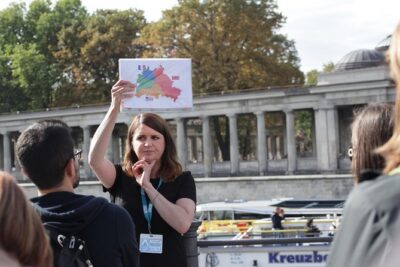

Berlin’s Best: 2 Hour Walking Tour Third Reich and the Cold War
Read our review →
Third Reich Berlin: Hitler and WWII Walking Tour
Read our review →Browse the lists this tour appears in