
Reviewed · WALKING TOURS
Jewish Life in Berlin – Private Walking Tour
Berlin’s Jewish story is not one single thing. It is centuries of community life, sudden erasure, and then a hard-earned return to memory you can actually see street by street. This private walking tour traces that arc through landmark sites, including the WWII-era resistance at Otto Weidt’s workshop and the New Synagogue’s modern role.
I love how the tour mixes big themes with specific places. You get a New Synagogue landmark visit, plus day-to-day neighborhood context around older Jewish quarters. I also like that the guide tailors the pace to your group, which matters a lot when the subject is emotional.
One consideration: this is a lot of walking through uneven feelings and heavy history, and the route is outdoors in real weather. If rain or heat is a deal-breaker for you, plan for it, bring water, and keep expectations flexible.
Key points worth knowing before you go
- Private, up-to-15 group format for questions and slower pacing when the topic gets intense
- Otto Weidt’s Blindenwerkstatt connects resistance, persecution, and real people in a single site
- New Synagogue to Centrum Judaicum gives you a modern context for a landmark that survived
- Old Jewish quarter streets like Scheunenviertel, Sophienstraße, and Auguststraße help the history feel less abstract
- Holocaust-era follow-through includes deportation context tied to specific locations, not just general facts
- Flat walking and weather reality checks based on guide feedback and past group experiences
Where Jewish Berlin really starts, right by Hackescher Markt

The tour kicks off near Hackescher Markt S-Bahn, meeting outside the Starbucks area around Neue Promenade 3. From the start, you are not just “touring monuments.” You are walking into a neighborhood that helps explain how Jewish life became woven into Berlin long before WWII.
I like the way this opener sets expectations. You get a quick orientation, then the route moves into the older city fabric: courtyards, side streets, and the kind of street layout that makes community history easier to visualize. It also helps if you are a first-time visitor to Berlin, since you’re starting in a central, easy-to-reach area.
The first stop is the Hackeschen Höfe area. The guide explains the site’s history and also points you toward a Memorial of the woman protest, so you start thinking about Jewish life not only as faith and culture, but also as public presence and resistance of different kinds.
More Walking Tours in Berlin
- Discover Berlin Half-Day Walking Tour
★ 5.0 · 9,624 reviews - Berlin: Third Reich and Cold War 2 Hour Walking Tour
★ 4.9 · 6,830 reviews - Berlin: Discover Berlin Walking Tour
★ 4.9 · 5,998 reviews
Die Hackeschen Höfe and the power of courtyards
Courtyards like the Hackeschen Höfe have a way of shrinking big history into something human. You are standing in a space where you can imagine how people moved, worked, visited, and lived, even if only parts of the original story remain.
If you are the type who likes context, this is a smart early placement. It gives your brain an anchor before the tour shifts into more direct Holocaust-era content later. You also get a chance to regroup if your arrival day is busy, since the stop is brief and the guide keeps it moving.
Museum Blindenwerkstatt Otto Weidt: resistance you can see, not just read about
One of the biggest reasons to book this tour is Museum Blindenwerkstatt Otto Weidt. You learn about Otto Weidt and how he protected his blind and deaf Jewish workers from persecution during the Holocaust, from within a workshop setting in the 1940s.
This stop is powerful because it is not only about tragedy. It is about courage and practical action. The guide explains the history of Weidt and the resistance against the Nazis, and you can tell from past guide performance that they aim to handle the subject with care. One review specifically praised how a guide handled a sensitive situation well, which is exactly what you want at a site like this.
A practical note for your visit: museum time here feels like part of the walking story, not a full ticketed museum day. So if you need deep museum gallery time, you may want to plan an extra visit on your own after the tour.
Scheunenviertel: the former Jewish quarter you can still feel in the streets
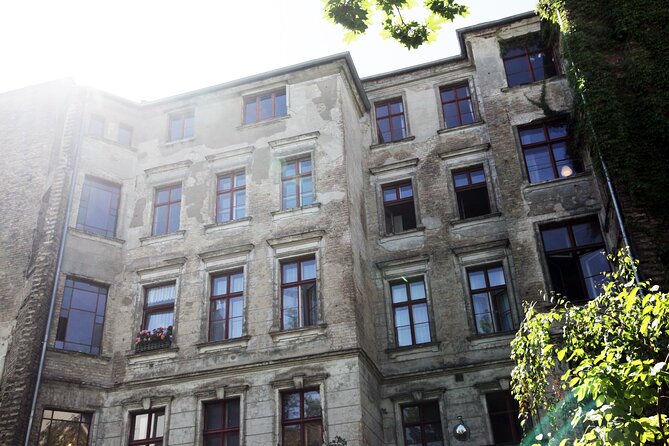
After Otto Weidt’s story, the route shifts into the older neighborhood geography that shaped Jewish community life: Scheunenviertel. Here, the guide explains the history of the former Jewish quarter and the Jewish community in old Berlin.
This is where the tour starts to feel less like a list of famous buildings and more like a map of how people lived. You’ll hear about the neighborhood role in community growth, everyday life, and how those patterns were interrupted by Nazi policy.
I think this part works especially well if you like walking tours that are story-driven. You’re not just stopping for photos. You’re building a mental picture of where community institutions and social life would have clustered, and why Berlin’s Jewish presence had a specific shape in these districts.
Another way to spend a Berlin afternoon:
- Berlin: Reichstag, Dome and Government District Guided Tour
★ 4.7 · 18,288 reviews - Berlin: 1-Hour City Tour by Boat with Guaranteed Seating
★ 4.3 · 16,993 reviews - Berlin: TV Tower Standard Entrance Ticket
★ 4.4 · 15,883 reviews - Berlin: Boat Tour Along the River Spree
★ 4.4 · 11,252 reviews
Sophienstraße: a street history lesson that keeps the tour grounded
The route continues along Sophienstraße, named after Queen Sophie. The guide explains its history, and the stop is quick but useful.
Why include a street like this? Because Jewish life was not only synagogues and schools. It was also transportation routes, daily errands, and the ordinary movement of people through a city. A good guide connects that kind of detail to larger historical events later, which is what helps you avoid the common problem of tours that feel like unrelated points on a route.
Also, this is a nice breather. If you’re traveling with mixed ages, as several reviews hinted through group-question styles, a short street stop can help everyone catch up without losing the thread.
Grosse Hamburger Straße: cemeteries, schools, and the shadow of deportation
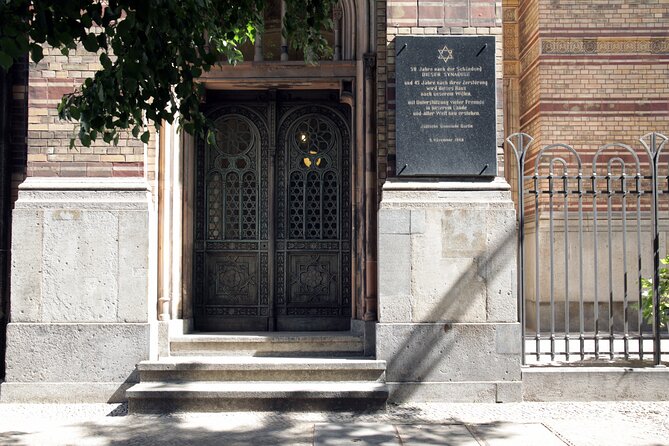
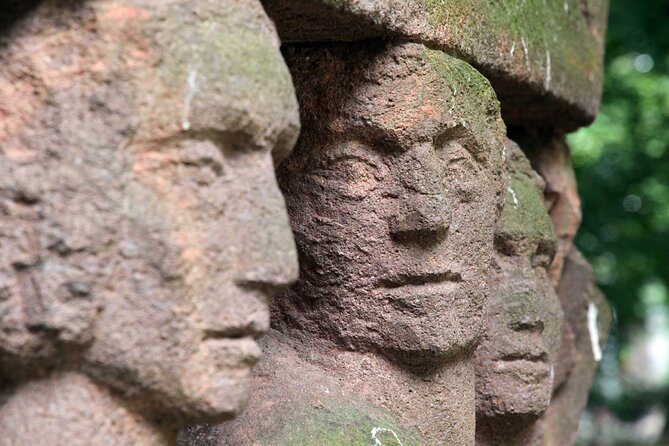
Next comes Grosse Hamburger Straße, where you get direct historical anchors tied to Jewish life and Nazi-era violence. The guide explains the history of the Jewish cemetery and the Jewish school, and connects this to the deportation of Jews in the Nazi era.
This stop is emotionally heavier than the earlier courtyard-and-street parts, and it is also one of the places where the guide’s pacing really matters. Several reviews praised guides for handling questions patiently and explaining history behind memorials, monuments, and buildings. That kind of careful tone matters here, because the subject is not abstract.
If you are sensitive to heavy topics, take it slowly. Stand where the guide suggests, and don’t feel pressure to rush to the next corner. This is also a good time to ask questions if you have them. The best part of a private format is that the pace can flex for your group.
Sophia Church and the Martin Luther King connection
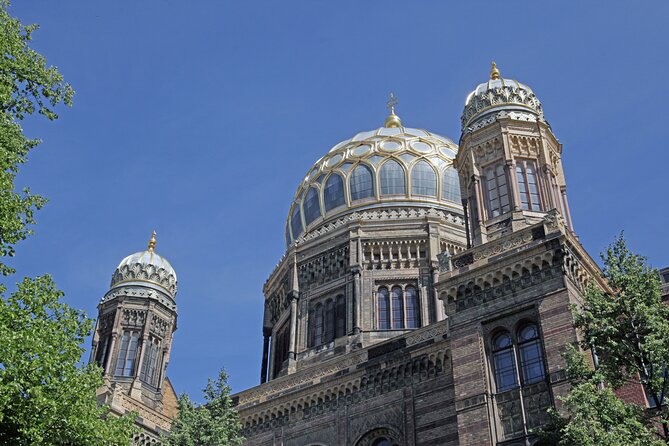
Then the tour moves to Sophia Church. The guide explains the history of the church and what it had to do with Martin Luther King.
Even with limited details provided here, the value of this stop is clear: Berlin’s history intersects with global civil rights history in surprising ways, and this tour uses the city’s landmarks to show those connections. It also breaks up the concentration on Jewish-specific sites, without leaving the overall theme.
Expect this stop to be more interpretive than museum-like. You’ll likely learn how the church’s story connects to people and movements beyond Berlin, which helps you step back and see how Berlin’s story fits into a wider European and world timeline.
Auguststraße: where galleries and old community sites sit side by side
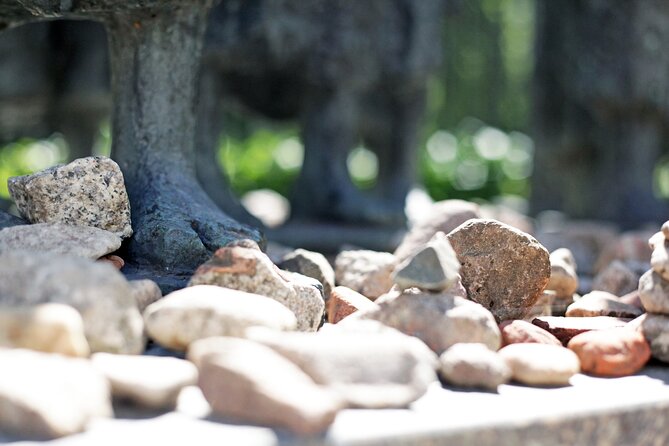
The route continues to Auguststraße, and the guide explains the history of the site known for art galleries and important buildings of the old Jewish community.
This stop is a good reminder that cities do not freeze in time. You can look at contemporary Berlin and still find traces of what came before. Even if you only catch fragments and building remnants, the guide’s job is to help you connect those fragments to what the neighborhood meant in the past.
From a visitor perspective, this is the part where you’ll probably start thinking: what does preservation actually look like in a city that was forcibly changed by war?
New Synagogue Berlin (Centrum Judaicum): memory with a present-tense purpose
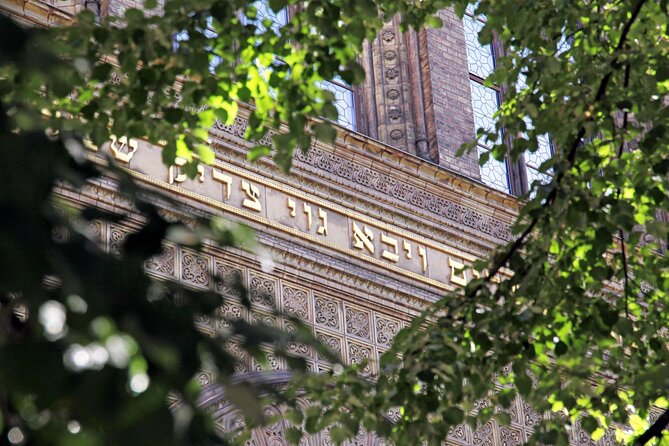
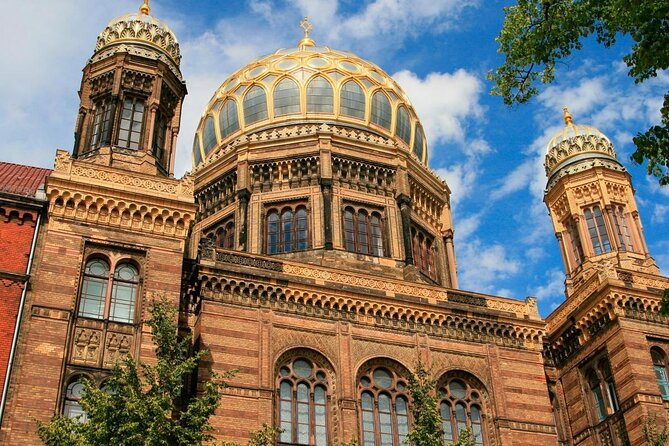
The final major stop is the Stiftung Neue Synagoge Berlin – Centrum Judaicum, the 19th-century New Synagogue. The guide explains the synagogue’s history and the story around the Night of broken glass in 1938, plus those who helped Jewish people.
This is a fitting ending because it turns your focus from neighborhood fragments to a landmark that carried enormous meaning for Berlin’s Jewish community. The tour frames the New Synagogue not as a dead relic, but as a living historical site today, through Centrum Judaicum, which traces the building’s history and life connected to it.
One practical heads-up: a couple reviews suggested expectations for certain well-known stops, like a Holocaust memorial, might not match what you’ll see on this particular route. So if your top priority is a specific memorial stop beyond what’s included here, check the exact route in advance or be comfortable with the fact that the tour focuses heavily on community sites and synagogue history.
Private walking tour dynamics: how guides shape the experience
Because this is private, the guide matters. And the reviews you provided strongly support that point.
Guides named in past experiences include Marriette, Caroline, Carlos, and Finn. Across feedback, the common strengths were:
- keeping the pace thoughtful and organized
- answering questions from mixed ages without making anyone feel rushed
- using appropriate humor while staying respectful
- handling sensitive moments with care
One review highlighted a guide’s focus on facts with poise and candid comments, which is exactly the style that works on topics like Jewish Berlin, where visitors often come with questions they can’t always phrase easily.
The walking itself is described as mostly on the flat in at least one review, which helps. Still, you should be ready for a hot-weather or rain day. Some reviews mention heavy downpours near the end, and heat can add stress. Bring water, wear shoes you trust, and pack a light layer for sudden weather shifts.
Price, timing, and real value for your group
At $355.25 per group (up to 15 people) for about 3 hours, the price is less about buying a “ticket” and more about paying for guided time, route planning, and context.
Here’s the value math in plain terms:
- If you travel as a pair or small group, you may feel the cost more because it is still priced per group, not per person.
- If you travel with friends or family and can fill the group size, you spread the cost. Then it starts looking like a very efficient way to cover multiple important sites that are hard to connect on your own.
This tour also includes a mobile ticket. That’s not just convenient. It keeps you from wasting time at the start or mid-route figuring out paperwork while you’re in a city where every minute matters.
What you get for the 3 hours is a structured narrative, not scattered sightseeing. The stops are close enough to walk, but spaced so the guide can connect the timeline from the 17th century immigrants through Holocaust destruction and then to the present-day center of Jewish memory and community interpretation.
Who should book this, and who might want a different option
This tour is a great fit if you want:
- a private format where you can ask questions
- a walking route that links streets, institutions, and landmarks
- strong emphasis on WWII context through specific Berlin locations, including Otto Weidt’s story
It may not fit perfectly if you want a museum-heavy itinerary. One review suggested they expected the old synagogue museum to be included and found the tour a bit boring for their taste. If you need lots of time inside major museum galleries, plan for a separate museum visit.
It also may not match you if your top goal is a particular “greatest hits” Holocaust memorial stop. This route focuses on Jewish life sites, neighborhood history, and the New Synagogue’s story, so adjust your expectations accordingly.
Should you book Jewish Life in Berlin, Private Walking Tour?
Yes, if you value a coherent story and want a guide who can connect the places. The strongest reasons to book are the combination of Otto Weidt’s resistance story, the New Synagogue ending at Centrum Judaicum, and the route through older Jewish quarter streets that helps Berlin’s Jewish history feel real, not abstract.
I’d say book now if you’re traveling with enough people to make the per-group price feel reasonable, and if you can handle a respectful walk through heavy material. If your ideal tour is mostly indoor museum time, or you need a specific memorial stop, you might want to compare routes first.
FAQ
Where does the tour start and end?
The tour meets at Hackescher Markt S-Bahn outside the Starbucks area, and it ends at the New Synagogue Berlin – Centrum Judaicum on Oranienburger Str. 28-30.
How long is the Jewish Life in Berlin private walking tour?
It’s about 3 hours.
What is the group size for this private tour?
It’s a private tour for your group, with pricing listed per group for up to 15 people.
Which key sites are included on the route?
You’ll see several stops including the Blindenwerkstatt Otto Weidt museum, the Scheunenviertel area, Grosse Hamburger Straße, Sophia Church, and finish at the New Synagogue Berlin – Centrum Judaicum.
Does the tour run in bad weather?
Yes. It operates in all weather conditions, so dress appropriately.
What ticket format is used?
You get a mobile ticket.
Is the tour easy to walk, and can I bring a service animal?
Most travelers can participate, and service animals are allowed. Walking is described as mostly on the flat, but the tour is still outdoors.
What’s the cancellation window for a refund?
You can cancel for a full refund up to 24 hours in advance. If you cancel within 24 hours, the amount paid is not refunded.
Fresh reviews out of Berlin
- Gastro Tour with Klaus though the Wrangelkiez, Kreuzberg★ 5.0 · 9 reviews
- Wall Tour Berlin – Fates, Heroes & Love Stories★ 4.0 · 9 reviews
- Berlin City Tour with Hotel pick up and Drop off★ 4.0 · 9 reviews
- Berlin Private Street Art Tour – Off The Grid★ 5.0 · 9 reviews
- Romantic Berlin Rickshaw City and Photo Tour – incl. pick-up★ 4.0 · 9 reviews
- Quatsch Comedy Club Berlin: Quatsch Comedy Hot Shot★ 4.8 · 9 reviews
- Berlin Urbex Adventure and History Tour★ 5.0 · 9 reviews
- Stag Party Berlin: Celebration for Your Bachelor Party★ 3.4 · 9 reviews
Walking Tours, compared.

Berlin’s Best: 2 Hour Walking Tour Third Reich and the Cold War
Read our review →
Third Reich Berlin: Hitler and WWII Walking Tour
Read our review →Browse the lists this tour appears in