
Reviewed · WALKING TOURS
Jewish Berlin Extended (private Walking tour – 5 Hours)
Jewish Berlin Extended is interesting because it threads together synagogue remains, protest memory, and Holocaust-era deportation memorials in one focused 5-hour walk. Two things I especially like are the private, crowd-free pace and the way the route spotlights places you may not find on your own. One drawback to consider is that it is not a slow museum day, it is a sequence of short stops, so you will want to bring questions and go with a slightly brisk rhythm.
The biggest payoff is the human commentary. If you get a guide like Ariel, you will see how he supports the story with illustrations and does not rush you through what you are seeing. It is also offered in English and timed for a convenient start from the Hackescher Markt area, with hotel pickup available.
Key things you will notice on this walk
- A private group (up to 15) means more back-and-forth and fewer dead ends
- Stop-by-stop memorial focus, from synagogue remains to Gleis 17
- Hotel pickup is available, so you do not have to solve Berlin logistics first
- Every stop is brief but meaningful, including Denkmal Rosenstraße and Missing House
- Museum Blindenwerkstatt Otto Weidt is a standout for stories of rescue and risk
- Gleis 17 Memorial gets the longest time for reflection on deportations and memory culture
Why a private Jewish Berlin walk works so well
Berlin has a lot of history, but not all of it is easy to decode when you are standing in the right place, at the wrong time, with the wrong background. This tour helps you do the hard part quickly: it turns a scattering of sites into a coherent story about community, survival, and how Germany remembers.
The private format is a real value here. You are not squeezed into a crowd, and you are less likely to lose your guide to the group shuffle. I also like that it feels conversation-ready. You can ask questions without the awkward pause while everyone catches up.
The other thing I like is the mix of locations. This is not only about big named museums. You also get smaller, quieter markers that can feel almost easy to miss on your own, like Denkmal alte Synagoge Berlin-Mitte and Missing House. Those are exactly the kinds of sites where a guide makes a difference.
More Walking Tours in Berlin
- Discover Berlin Half-Day Walking Tour
★ 5.0 · 9,624 reviews - Berlin: Third Reich and Cold War 2 Hour Walking Tour
★ 4.9 · 6,830 reviews - Berlin: Discover Berlin Walking Tour
★ 4.9 · 5,998 reviews
Price, group size, and whether it is good value
The price is $624.79 per group, up to 15 people, for about 5 hours. That number sounds high if you are thinking solo. But value changes fast once you think like a small group.
At full capacity, that works out to about $41.65 per person if you have 15 in your group. If you are a duo, it is closer to $312.40 per person, which is a very different decision. The best way to judge it is simple: if you are traveling with friends or family and want one guide to handle the thinking, it can be a strong deal.
What you do get included is solid: all fees and taxes, plus a mobile ticket and an English-speaking guide. Also, the itinerary’s listed admissions are free at each stop, so you are not looking at surprise ticket costs along the way. What you should budget for separately is food and drinks and your public transportation ticket (even though the route is near public transport and pickup helps).
The route rhythm: how 5 hours fits into a meaningful story
This is built as a walk with concentrated stops. Most stops are around 15 minutes, with one longer memory-heavy stretch of 45 minutes at Gleis 17 Memorial. That structure matters. It means you will see a lot without it turning into a marathon, and you will also avoid the problem of staring at one place too long and losing the bigger thread.
You start at Hackescher Markt and end at New Synagogue Berlin – Centrum Judaicum on Oranienburger Str. 28-30. Pickup is available from your hotel lobby, which is a big deal if you are staying outside the core sightseeing area or if you prefer not to map your own first half-hour.
The tour is offered in English, and service animals are allowed. Most travelers can participate, and it runs with daily availability from early morning to evening hours, which makes it easier to slot into your plans.
Stop 1, Denkmal alte Synagoge: the oldest synagogue remains in view
You kick things off at Denkmal alte Synagoge Berlin-Mitte, where you can see the remains of one of Berlin’s oldest synagogues. This is a powerful opener because it sets expectations right away: you are not starting with a neat, intact building. You are starting with evidence, fragments, and the idea that history in Berlin is often present through what remains.
The visit is about 15 minutes, and since admission is listed as free, you are not stuck paying to access the story. This stop is where the guide’s job is most noticeable. Instead of you trying to infer the timeline from a plaque, you get the early beginnings of the Jewish community in Berlin explained in plain language.
A practical consideration: because the site is a remains-type stop, it is easy for photos to trick you into thinking you have “seen the whole thing.” Give yourself the minute or two the guide spends orienting you. That is what turns the visible stones into a readable story.
Another way to spend a Berlin afternoon:
- Berlin: Reichstag, Dome and Government District Guided Tour
★ 4.7 · 18,288 reviews - Berlin: 1-Hour City Tour by Boat with Guaranteed Seating
★ 4.3 · 16,993 reviews - Berlin: TV Tower Standard Entrance Ticket
★ 4.4 · 15,883 reviews - Berlin: Boat Tour Along the River Spree
★ 4.4 · 11,252 reviews
Stop 2, Denkmal Rosenstraße: protest memory you can feel
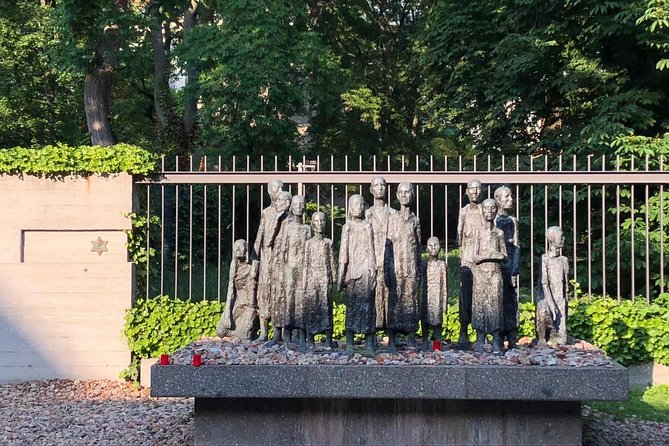
Next is Denkmal Rosenstraße, a memorial to the women’s protest and a story about brave gentile women. The theme here is courage paired with action, specifically the women who protested for the release of their husbands from the transports to the camps.
This is another 15-minute stop, and again the admission is listed as free. What I like about this placement is that it broadens the lens. The story is not only about Jewish victims and survivors. It also spotlights people who stood up while they still had something to lose.
One drawback to plan for: if you prefer strictly chronological history, the tour jumps between community beginnings, protest resistance, and later memorials. The guide helps connect the dots. Without that commentary, this kind of emotional subject can feel scattered. With it, it lands as a clear pattern: resistance can show up in many forms.
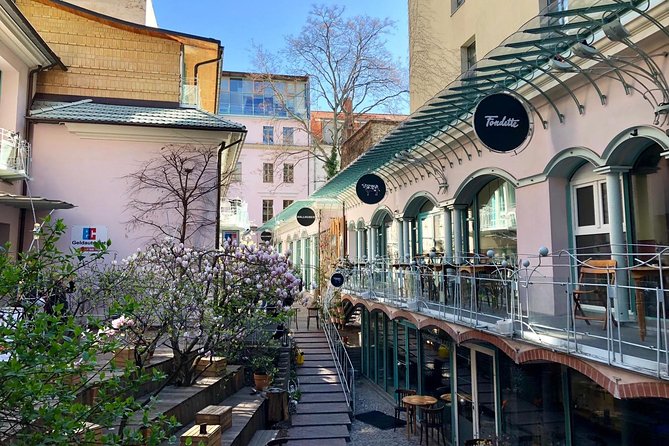
Stop 3, Hackesche Höfe: history in the everyday lanes
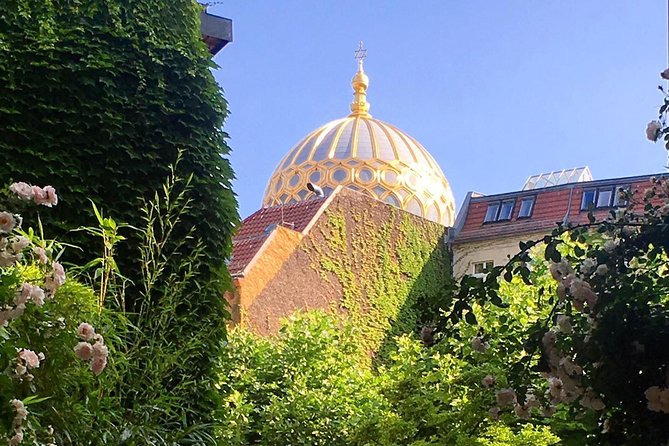
At Hackesche Höfe, you do not get only a solemn memorial moment. You get the site and its history, and it works like a palate cleanser without breaking the overall tone.
This stop is short, about 15 minutes. It is long enough for context, not long enough to overstay. That balance is helpful because the next stops tilt heavily into Holocaust-era memory.
If you are the type who likes to map your own navigation, this is also a good moment. Hackesche Höfe sits in an area that is easy to explore later on your own. Even if you do not linger right then, you will know where to return.
Stop 4, Museum Blindenwerkstatt Otto Weidt: risk, survival, and a man who acted
The walk then moves to Museum Blindenwerkstatt Otto Weidt, with time set for about 20 minutes. Admission is listed as free in the itinerary data, so you are mostly paying with attention and curiosity.
This is where the story includes an individual who risked his life to save his Jewish employees from the death camps. That detail is not filler. It changes how you interpret the rest of the route, because it adds agency and choice to a period that can otherwise feel like pure tragedy with no room for moral courage.
The practical tip here is to let the guide set the emotional temperature. These rescue stories often get told quickly in big-group settings, and that can flatten what matters. A good guide slows down just enough to make you hear the stakes. If you are hoping for that kind of pace, one example from this tour’s history is Ariel, who was noted for not hurrying and for answering questions directly.
Stop 5, Memorial Jewish Cemetery: what the oldest burial ground means
Then you visit the Memorial Jewish Cemetery, described as what remains of the oldest Jewish cemetery in Berlin, plus stories about the people buried there. This is about 15 minutes, and it is another free admission stop in the itinerary.
Cemeteries can be emotionally tricky. You might feel like you should be quiet, or you might feel like you want context before you form opinions. That is exactly why a guide helps. The guide’s role is to translate the names, the layout, and the significance into something you can carry respectfully.
A consideration: because it is remains and memorial-focused, you are not touring a full museum building. Your experience depends on how you engage in that short time. If you arrive already tired, it will be harder to absorb. If you arrive curious, it becomes one of the most personal stops.
Stop 6, Missing House: thinking about absence as a form of evidence
At Missing House, the tour keeps things brief, about 5 minutes. The stop is a monument, and the guide discusses its significance.
This is the kind of site that can look simple at first glance. Missing House forces you to practice a different skill: reading absence. Instead of seeing everything that existed, you think about what was taken away and why that loss still matters.
If you like symbolism, this stop will land for you. If you want more concrete details, ask your guide what to look for, because monuments like this often only make full sense when you understand the intended meaning behind the design.
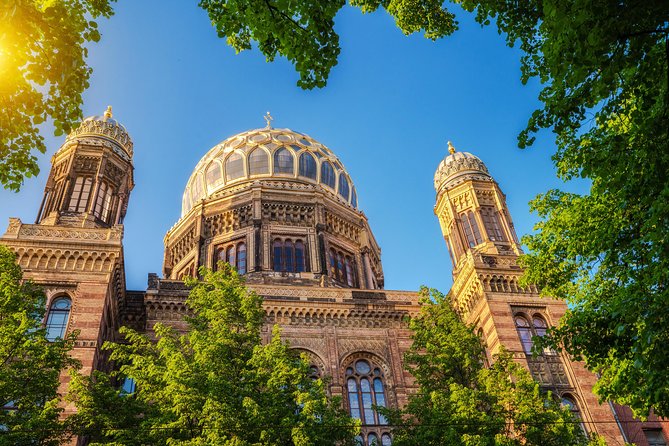
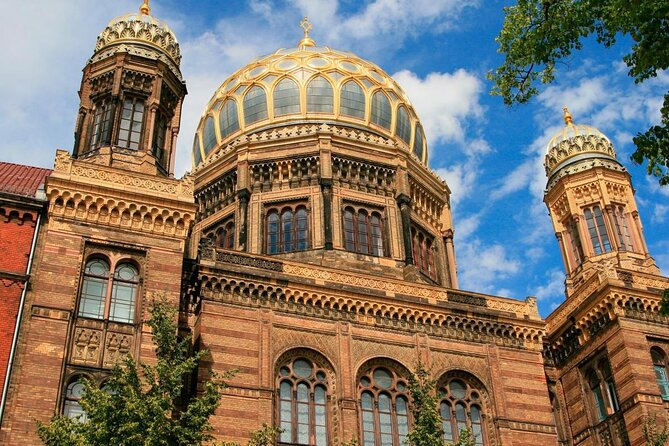
Stop 7, Stiftung Neue Synagoge Berlin – Centrum Judaicum: the facade versus the real world view
Next is Stiftung Neue Synagoge Berlin – Centrum Judaicum. The itinerary lists time at about 15 minutes and focuses on the site’s history.
One useful expectation setting, based on a firsthand tour observation shared by someone who did this route, is that the exterior can look magnificent, while the view beyond the facade may feel more limited. In that account, the area beyond the beautiful front included offices, a yard, and a small chapel on the third floor.
So here is my practical advice: do not plan your expectations like you are walking into a full indoor synagogue experience. Plan for an exterior and site understanding, plus the historical framing your guide gives you so you can interpret what you are actually seeing.
This stop is also valuable because it connects the older roots (early community beginnings) to later institutional presence. Even if the building experience is limited, the meaning is not.
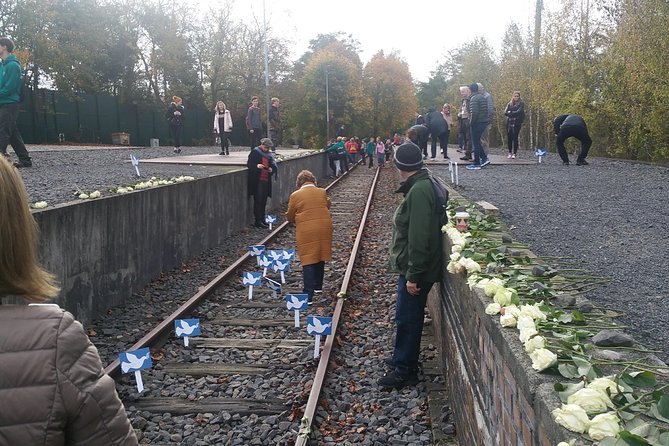
Stop 8, Gleis 17 Memorial: the longest stop and the hardest conversations
The final and longest visit is Gleis 17 Memorial, with about 45 minutes. This section includes four monuments on the site and a discussion of the deportation of Berlin Jews to the camps. It also covers the culture of memory in Germany over the years.
This longer time block is there for a reason. Deportation memorials need more than a glance. You need space for meaning, and you need the guide’s explanation of why these memorials look the way they do and how they have been understood across time.
I also like that the tour does not treat memory as a one-time event. The guide’s focus on how Germany’s memory culture has developed over the years is what makes this stop feel less like a single scene and more like a living set of choices society has made about remembrance.
A real practical tip: if you are sensitive to heavy topics, pace yourself in this final stretch. This is the part where you will benefit most from slowing down, reading the monument language with the guide, and taking a breath before the walk back into regular Berlin life.
What makes the guide matter here, beyond the facts
In a tour like this, the guide is not just a walking encyclopedia. You are dealing with sites that can be confusing, emotionally charged, or visually subtle. The best guides help you see what matters and also help you feel how to stand there.
Ariel, for example, was described as supporting his talk with illustrations, explaining in detail, and answering questions. Even if you get a different guide, the core expectation for you should be the same: you want someone who does not rush your stops and who answers what you actually ask, not what they assume you will ask.
This matters most at the tricky places: remains of synagogues, memorial sites, and the train-related Gleis 17 area. Those are the parts where your own reading may stop short, unless the guide bridges the gap.
Getting the most out of the 5 hours: practical tips for your day
A few things I would do if I were planning this day for myself:
- Come ready with one or two questions. Ask early, because the guide’s answers shape how you understand the later stops.
- Expect short segments. Since most stops are around 15 minutes, you will want to stand where the guide indicates and listen first, photo later.
- Wear comfortable shoes. This is still a walking tour, even with frequent stops.
- Plan food timing. Food and drinks are not included, so you do not want to make this your last stop before a long dinner scramble.
- Use the mobile ticket. It is included, so have it easy to access.
If you want to pair this with your own exploring, the ending at New Synagogue Berlin – Centrum Judaicum is convenient. You will already be close to a lot of central sights.
Who should book Jewish Berlin Extended
This is a good match if you want an organized, respectful walk through Jewish Berlin sites that connect across themes: community origins, protest and resistance, rescue attempts, cemetery memory, and deportation remembrance.
It is also a good choice if you are traveling with people who want structure. The private group format, up to 15 people, gives you room for questions and a pace that feels less chaotic than larger group tours.
If you are only interested in one type of site, like synagogue architecture only, you might feel stretched. This route deliberately mixes topics and emotional tones. But if you want the whole chain of meaning, it is built for that.
Should you book this tour?
Book it if you want a private 5-hour Jewish Berlin experience that connects key sites into a story, and you value interpretation more than just photos. The price can be excellent value for small groups because admissions are listed as free and your guide is included for the full route.
Skip it only if you are looking for a long, slow museum-style outing. This is a walk with short stops, and the emotional weight grows, especially at Gleis 17. If that fits your travel style, you will likely leave with a clearer, more human understanding of Berlin’s Jewish story and how it is remembered.
FAQ
How long is Jewish Berlin Extended?
The tour lasts about 5 hours.
Where does the tour start and end?
It starts at Hackescher Markt, 10178 Berlin, Germany, and ends at New Synagogue Berlin – Centrum Judaicum, Oranienburger Str. 28-30, 10117 Berlin, Germany.
Is pickup included?
Yes. Pickup is offered from the lobby of your hotel.
What language is the tour offered in?
The tour is offered in English.
Is it a private tour?
Yes. It is a private tour/activity, and only your group will participate. The group limit is up to 15.
What is included in the price?
The price includes all fees and taxes, and you receive a mobile ticket. Food and drinks, public transportation ticket, and gratuities are not included.
What is the cancellation policy?
You can cancel for a full refund up to 24 hours before the experience’s start time. If you cancel less than 24 hours before, the amount paid will not be refunded.
Fresh reviews out of Berlin
- Gastro Tour with Klaus though the Wrangelkiez, Kreuzberg★ 5.0 · 9 reviews
- Wall Tour Berlin – Fates, Heroes & Love Stories★ 4.0 · 9 reviews
- Berlin City Tour with Hotel pick up and Drop off★ 4.0 · 9 reviews
- Berlin Private Street Art Tour – Off The Grid★ 5.0 · 9 reviews
- Romantic Berlin Rickshaw City and Photo Tour – incl. pick-up★ 4.0 · 9 reviews
- Quatsch Comedy Club Berlin: Quatsch Comedy Hot Shot★ 4.8 · 9 reviews
- Berlin Urbex Adventure and History Tour★ 5.0 · 9 reviews
- Stag Party Berlin: Celebration for Your Bachelor Party★ 3.4 · 9 reviews
Walking Tours, compared.

Berlin’s Best: 2 Hour Walking Tour Third Reich and the Cold War
Read our review →
Third Reich Berlin: Hitler and WWII Walking Tour
Read our review →Browse the lists this tour appears in