
Reviewed · WALKING TOURS
Görlitz: Old Town Guided Walking Tour
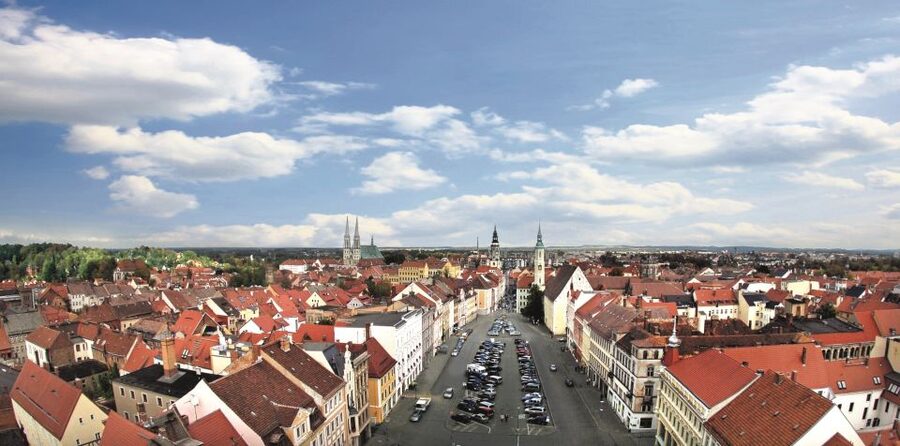
Görlitz is the kind of place that makes old buildings feel human, not museum-like. It sits at Germany’s eastern edge, and that borderland location shows up in the mix of styles you see on foot. I love the way this tour strings together Renaissance and Gothic and Baroque facades in about 90 minutes, and I love the stop at the Whispering Arch for the name-and-sound story. One drawback to plan for: the tour guide speaks German only.
You meet at the tourist office (Görlitz-Information), then walk toward the big central square called Obermarkt. The group moves at a friendly pace, and you get the kind of street-level context that helps you actually look at details instead of just passing them by.
Because you’ll be walking cobblestones and narrow lanes, come with comfortable shoes and dress for the weather. The route is wheelchair accessible, so you can still enjoy the main sights without turning it into an endurance test.
Key highlights that make this walk worth your time
- Germany’s easternmost-city vibe: a compact old town where the past feels close and slightly otherworldly.
- Architecture tour in miniature: you see Renaissance, Gothic, and Baroque elements without needing a full day.
- Obermarkt to Untermarkt, point by point: two key squares that frame what makes Görlitz tick.
- Undermarkt filming connections and the Whispering Arch: you’ll see why this landmark is famous and how it got its name.
- Sandstone biblical scenes at the Biblische Haus: Old and New Testament imagery that’s built into the town fabric.
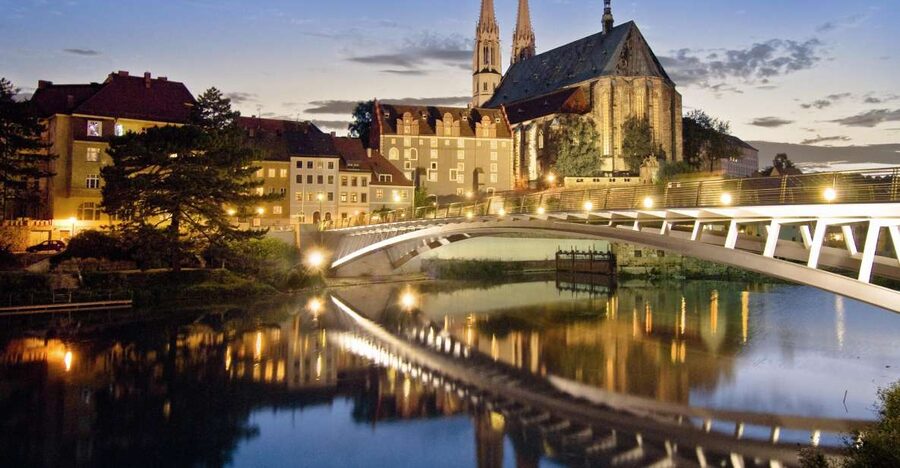
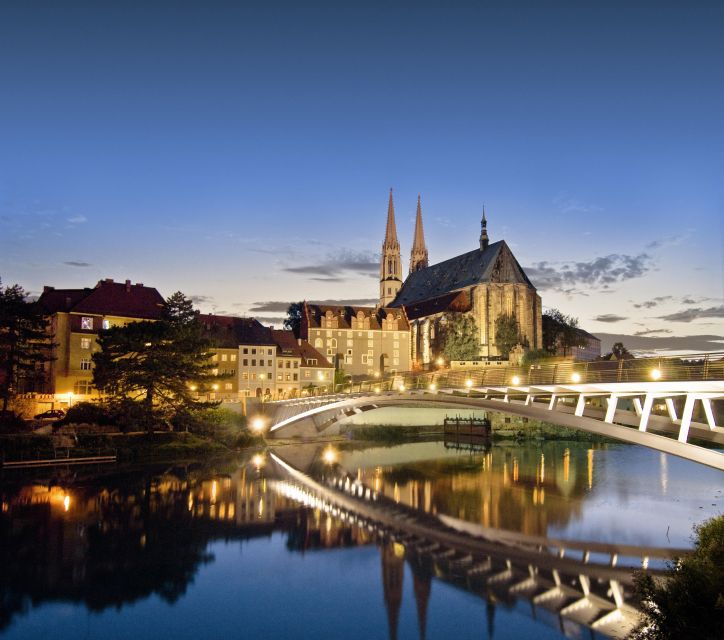
- Peterskirche at the end: dual-tower church views that anchor the whole walk.
Görlitz at street level: why this 1.5-hour tour works
I like tours that do more than show you where things are. This one works because it’s built around a simple idea: in Görlitz, you can learn a lot just by walking the seams of the town.
You start with the big open space of Obermarkt, then you move into tighter lanes toward Untermarkt. That change in scale matters. In a small city, you can feel the story in the geometry. The broad squares help you orient, and the narrow passages push you to notice the stone, windows, doorways, and rooflines.
And Görlitz gives you visual variety fast. In one short outing you’ll be looking at a mix of Gothic, Renaissance, and Baroque details, plus later styles you’ll spot in the facades along the way. The result is a walking “catalog” you don’t have to read off a screen.
More Walking Tours in Gorlitz:
- Görlitz: Ghosts and Spooky Historical Night Walking Tour
★ 4.8 · 197 reviews
Where the tour starts: Görlitz-Information and the square named Obermarkt
Your tour begins at the official tourist information office, Görlitz-Information. This is a practical choice. It’s easy to find, it’s a natural gathering point, and it sets you up for the first big visual payoff.
From there you head toward Obermarkt, one of the largest and most beautiful squares in Görlitz. I love starting in a square like this because it gives you context for what comes next. Before you reach the smaller Untermarkt, you get a feel for town layout and sightlines.
If you’re traveling with a tight schedule, the square start also helps. You’re not guessing where to meet or which direction the old town “really” begins. The guide leads you out immediately into the walk, with the key landmarks already on the horizon.
Obermarkt to the town’s landmark cluster: Trinity Church, Napoleon House, and the clocks
Once you leave the openness of Obermarkt, the walk turns into an architectural guided walk, not a random stroll. Expect key stops where the guide explains what you’re looking at and why it matters.
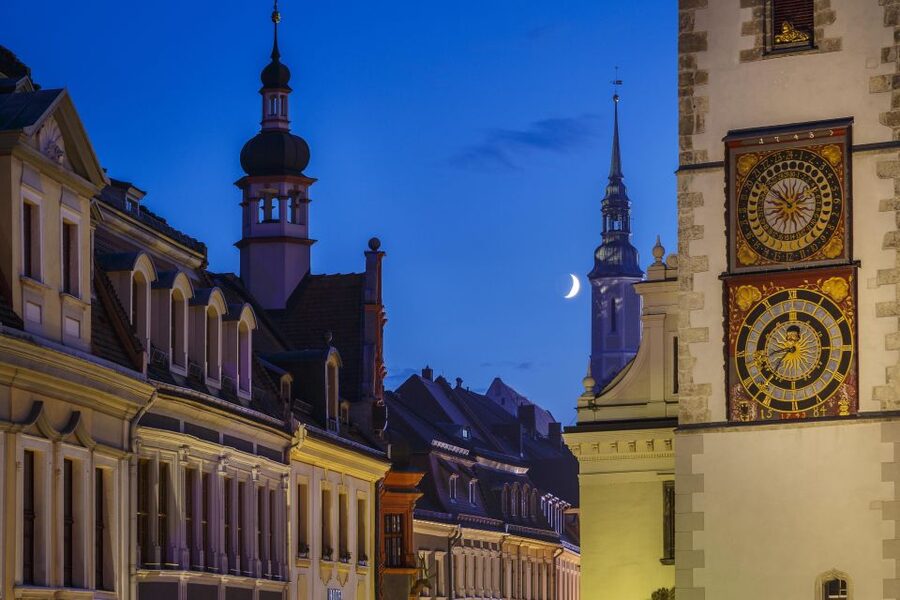
You’ll see the Trinity Church, the Napoleon House, and the Town Hall with its impressive clocks. These aren’t just photo targets. In a place like Görlitz, clocks and facades act like town memory. They show how civic life wanted to look and how power wanted to display itself.
The Napoleon House is the kind of stop that makes you slow down. Even if you only catch fragments of the story from the guide’s German explanation, the building itself gives you clues: the façade style, the prominence of the structure, and how it fits into the square rhythm. It’s the sort of sight that works well even for non-experts, as long as you’re paying attention.
The Town Hall and its clocks are similar. You’ll likely feel the pull to photograph them quickly, then the guide points out what to notice so it becomes more than a picture.
Schönhof, the oldest Renaissance building, and what to look for
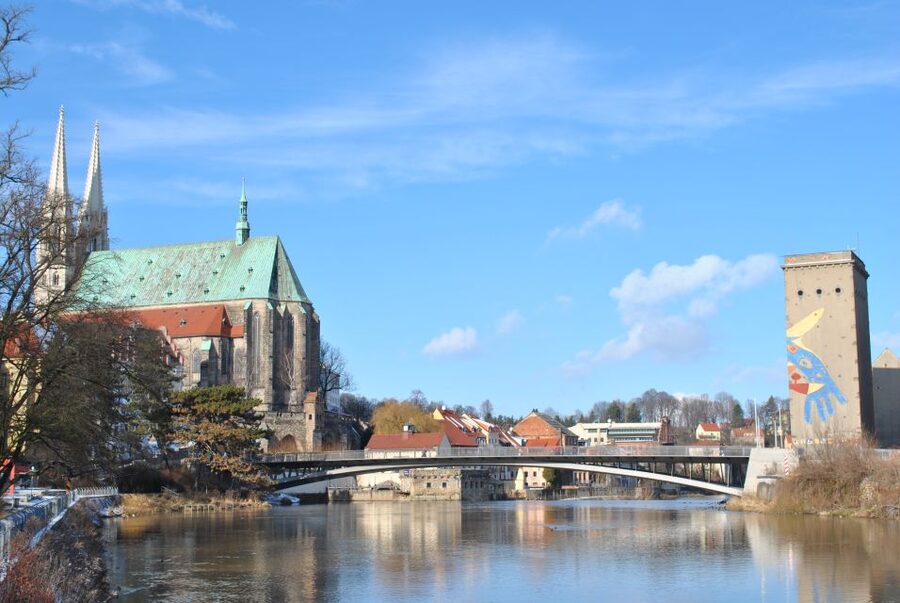
One of the tour’s main anchors is Schönhof, described as the oldest Renaissance building in Görlitz. This is a big deal in a compact walking route, because it gives you a clear “before and after” moment.
Here’s why this stop is valuable for you. Renaissance buildings can look impressive but also confusing if you don’t know what you’re seeing. When a guide points out the elements, you start to recognize patterns. You might find it easier to spot Renaissance traits on neighboring facades later, even after the tour ends.
Also, Schönhof sits in the middle of the town’s visual flow, so you’re not stuck staring at one object. You can compare it mentally with Gothic and Baroque elements you’ll see later in the route. That comparison is what turns architecture into understanding.
Untermarkt: where the filming happens and why the square feels different
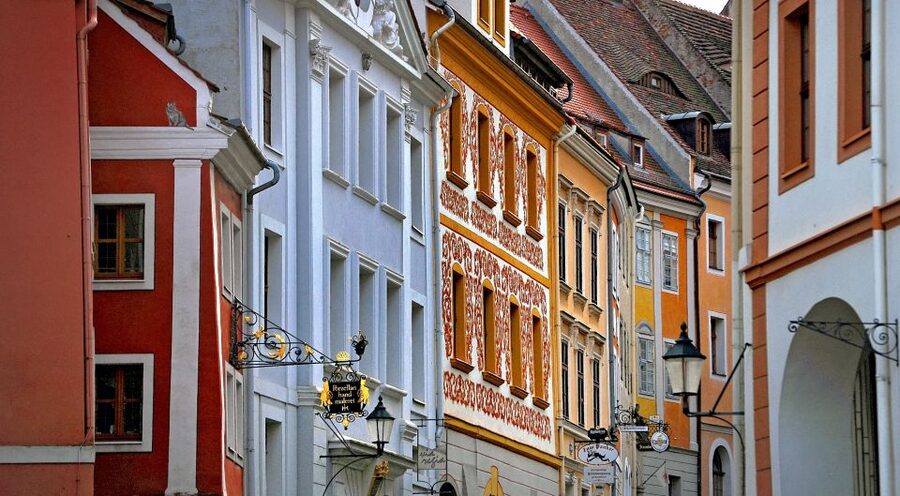
Next comes Untermarkt, a smaller square than Obermarkt, but just as important. This is where Görlitz starts to feel more cinematic, which makes sense once you learn that this area has been used as a filming location in movies and TV shows.
I like that the tour gives Untermarkt a job. It’s not only scenic. It’s a reference point for why the town’s look draws filmmakers. Cobblestones, tight facades, and the way streets converge on the square all help create a “set” feeling, even on a normal day.
Untermarkt is also where you’ll get to the Whispering Arch. That’s one of those stops that breaks the rhythm of “look and learn” and turns it into a small, memorable experience.
Whispering Arch: the name story you’ll actually remember
At the Whispering Arch, you get the chance to whisper and hear why the landmark is famous. The guide also explains where the name comes from, which is the difference between a gimmick and something that sticks in your brain.
This is also a good moment to reset your attention. After you’ve been looking at church towers, town halls, and facades, the Whispering Arch asks you to do something simple with your senses. If the day is busy, you’ll appreciate this break because you can be part of the sight, not just a spectator.
If you’re bringing kids, this stop usually lands well too. It turns the tour into a shared moment without needing extra explanation.
The Biblische Haus: sandstone scenes from the Old and New Testament
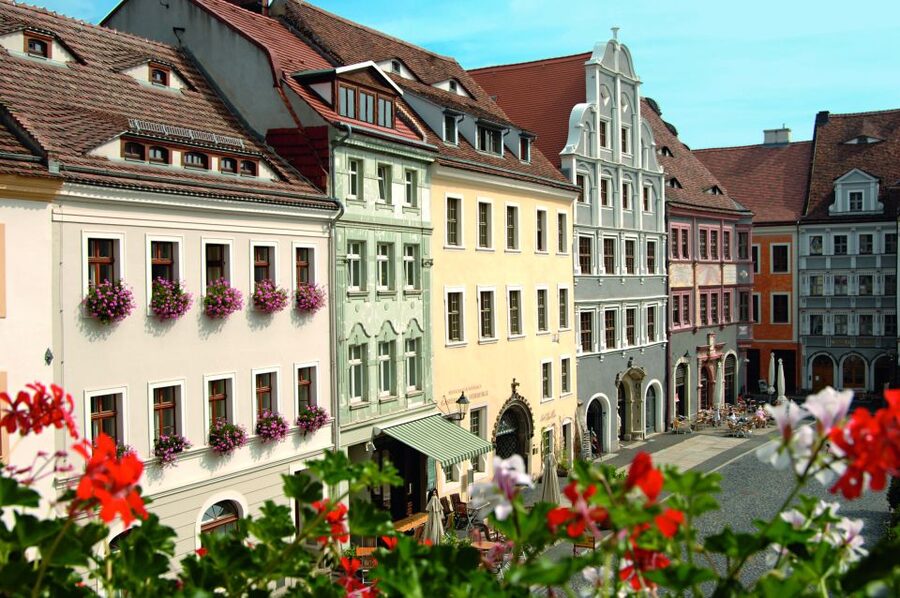
The tour includes a very specific kind of architectural storytelling: you’ll see biblical imagery in sandstone on buildings associated with the Biblische Haus or biblical house.
You’ll look at scenes connected to the Old and New Testament. For me, what makes this worth the time is that you’re seeing religious narrative built into everyday streets. It’s not tucked away behind glass. It’s right there, part of the urban fabric.
This stop also helps you understand Görlitz’s identity as a town where art, faith, and civic life overlap. Even if you’re not religious, you can still read the way the city chose to decorate itself and teach meaning through stone.
Narrow alleys to Peterskirche: finishing with dual-tower views
After Untermarkt and the biblical scenes, the walk shifts into narrower alleyways and cobblestone lanes. That’s where the city can surprise you. The streets feel intimate enough that buildings seem to lean in, and you start noticing windows and masonry in a different way.
The final major landmark is Peterskirche, the city church with dual towers that loom over Görlitz. This ending matters because churches often act like town anchors. When you reach Peterskirche, you can look back and connect the squares and stops you’ve already seen. You get a clearer sense of how the city’s landmarks relate to each other.
If you like a tour that gives you a satisfying visual payoff at the end, this one delivers. Those towers are hard to ignore, and they help you carry the image of Görlitz home.
Price and value: what $9 buys you in a 90-minute walk
At about $9 per person for 1.5 hours, this is one of the more budget-friendly ways to get a guided orientation in a historic town. You’re not paying for a full-day museum session or multiple transport legs. You’re paying for a local guide who can point out what you might miss on your own.
Here’s the practical value math. For the cost, you’re getting:
- a structured route through key squares and streets
- guided explanation in German (important for what you learn)
- specific stops tied to landmarks like Schönhof, the Whispering Arch, and Peterskirche
If you have limited time, this format is smart. A 90-minute guided walk is enough to help you decide what to revisit later on your own. It’s also a good choice if you want to see the old town without tiring yourself out for the rest of the day.
Who should book this tour, and who should think twice
This tour is a strong fit if you:
- want a guided primer to make Görlitz easier to explore independently later
- like architecture and built details, not just broad “big sights”
- enjoy compact walking routes where you see multiple eras in one loop
It’s worth thinking twice if:
- you need a tour in English. This one is German only, so your experience will depend on how comfortable you are following explanations while walking.
- cobblestones bother your feet. Comfortable shoes are a must, and the lanes can feel uneven.
Good news: it’s wheelchair accessible, so at least that part is planned.
Practical tips so you enjoy every stop
Bring comfortable shoes. Görlitz is built for walking, but cobblestones and tight lanes are real. If your footwear is slippery or worn out, you’ll spend the tour thinking about your feet instead of the buildings.
Dress for the weather. Because it’s outdoors the whole time, a drizzle or cold wind can change how enjoyable it feels.
If your German is limited, still go if you like architecture. You can focus on the guide’s pointing and building details. Even without perfect comprehension, the landmarks themselves are strong.
And when you reach the Whispering Arch, do the whisper moment. It’s quick, it adds variety, and it turns a landmark into a memory.
Should you book the Görlitz Old Town Guided Walking Tour?
If you’re in Görlitz for a short stay, I’d book it. For a modest $9 and a 1.5-hour walking pace, you’ll get a guided route that connects the city’s key squares, major landmarks, and a few very specific stops like Schönhof and the Whispering Arch.
I’d only skip it if you need English or if you know you cannot handle cobblestones. Otherwise, this is an efficient way to learn how to look at Görlitz, not just how to walk through it.
FAQ
How long is the Görlitz Old Town Guided Walking Tour?
The tour lasts about 1.5 hours.
Where do I meet the guide?
Meet your guide at Görlitz-Information, the official tourist information office.
How much does the tour cost?
The price is listed at $9 per person.
What language is the tour guide speaking?
The live guide speaks German.
What is included in the tour?
It includes a walking tour of Görlitz and a local tour guide.
Is the tour wheelchair accessible?
Yes, the tour is wheelchair accessible.
What should I bring for the walk?
Wear comfortable shoes and dress for the weather.
Is free cancellation available?
Yes, you can cancel up to 24 hours in advance for a full refund.
Can I reserve and pay later?
Yes, you can reserve now and pay later.
What major sights are included on the walk?
You’ll see places such as Schönhof, Untermarkt, Trinity Church, the Napoleon House, the Town Hall with its clocks, the Biblische Haus (with Old and New Testament sandstone scenes), the Whispering Arch, and Peterskirche.
Fresh reviews out of Gorlitz
- Görlitz: Ghosts and Spooky Historical Night Walking Tour★ 4.8 · 197 reviews
Walking Tours, compared.

Berlin’s Best: 2 Hour Walking Tour Third Reich and the Cold War
Read our review →
Third Reich Berlin: Hitler and WWII Walking Tour
Read our review →Browse the lists this tour appears in