
Reviewed · WALKING TOURS
Würzburg: Private Walking Tour With Professional Guide
A private walking tour in Würzburg is interesting because it connects the city’s dramatic baroque look to the way Franconia became a serious winemaking region. I love how the route makes sense of Würzburg’s wine influence, and I love the visual punch of the Residence palace and the surrounding Baroque details.
One possible drawback: it’s a walking tour in real streets, and it runs rain or shine, so your comfort will depend a lot on shoe choice and weather.
Key things that make this tour work
- Franconian wine context built into the walk, including how Würzburg influenced Germany’s winemaking traditions
- Top Old Town highlights in 2 hours, with the Market Square, Town Hall area, Neumünster, and more
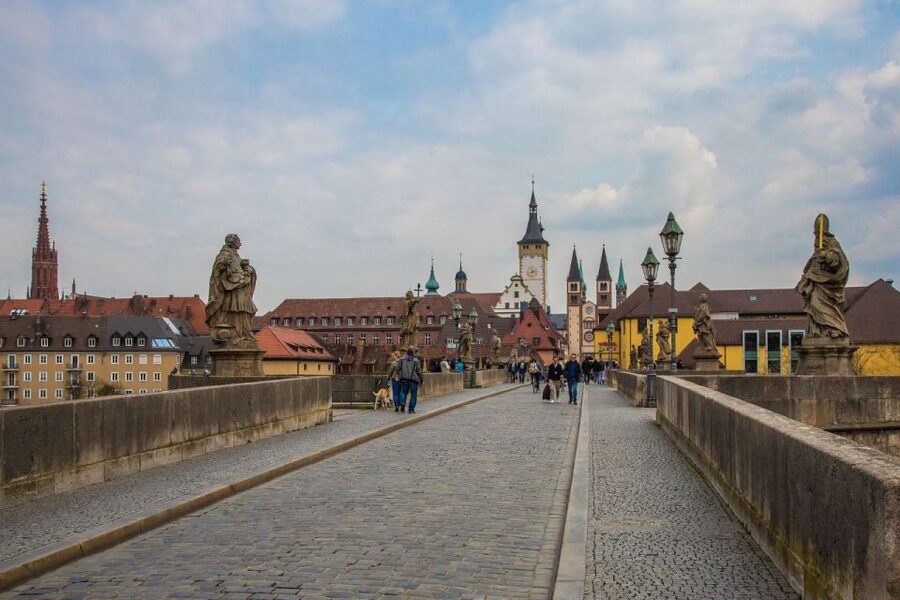
- Big viewpoints with an obvious payoff, especially the Marienberg Fortress look from the Old Main River Bridge
- Architecture across styles, from Rococo facades like the Falkenhaus to gothic and Romanesque church landmarks
- Romanesque storytelling, with fun facts, including the Neumünster church and the Würzburger Cathedral
- A truly private format, and guides can adjust content, with examples like Angelika adding lesser-seen spots and Elisabeth Nickel aiming for comfortable shade in hot weather
Why Würzburg’s wine story feels real on foot
Würzburg sits in Franconia, and it wears its winemaking identity on its streets, not just in tasting rooms. On this tour, you get the explanation tying the city to Germany’s winemaking tradition, including the fact that Würzburg is home to three of Germany’s largest wine producers. That matters because it turns landmarks into clues. Instead of simply taking photos, you understand why the city grew, what industries shaped it, and why the river corridor and surrounding hills mattered.
You also learn about the regional vineyard reputation, including mention of one of the best vineyards in all of Franconia. The guide approach is practical: they point out sights while explaining what made Würzburg influential. If you like history that has consequences, this style of tour fits.
More Walking Tours in Würzburg:
- Würzburg: Guided Walking Tour
★ 4.5 · 466 reviews - Discover Berlin Half-Day Walking Tour
★ 5.0 · 9,624 reviews - Berlin: Third Reich and Cold War 2 Hour Walking Tour
★ 4.9 · 6,830 reviews
Getting started at the Tourist Office, with a pro who can steer
You meet your guide in front of the Tourist Office, then you’re off on a 2-hour walk through the Old Town. This private format is key. With a small group, the guide can slow down for questions, answer as you go, and adjust how much time you spend at certain corners.
Language options are German and English, so you can match your comfort level. In the real world, that affects how much you’ll get out of details like architectural terminology and the names behind the stories. Even the “fun facts” land better when you can ask, clarify, and follow along without guessing.
If you’re the type who wants help right away, look for signs of guides like Frau Zehner, who keeps things organized and answers questions quickly, or Elisabeth Nickel, who is willing to think about shade and comfort during hot conditions. On a short walk, those small decisions can make the difference between seeing everything and just surviving the route.
Market Square and the Neumünster church: more than pretty buildings
Your tour time wisely starts in the Old Town core, including Market Square and the Town Hall area. This is the kind of place where cities show how they operate. A market square is not just scenery, it’s where trade, chatter, and civic life once happened daily. Even if you’re only here briefly, it’s a strong starting point because everything else in the city pulls you toward this center.
From there, you’ll spend time at the Neumünster church, described as nearly a thousand years old, and noted for its Romanesque features. The standout detail is what the church represents culturally: it is the resting place of the famous medieval German minstrel Walther von der Vogelweide. That one name changes how you look at the building. You stop seeing it as old stone and start seeing it as a marker of memory and identity.
A small consideration: the tour also leans into churches as story anchors. If you prefer only architecture and city views, the church focus might feel heavier than you want. The good news is the guide frames it as living context, not a textbook recitation.
Vierröhrenbrunnen and the Falkenhaus: Rococo details you’ll actually notice
Würzburg has Baroque and Rococo flourishes that can look similar at first glance, unless someone points out what you’re seeing. That’s where stops like Vierröhrenbrunnen fountain and the Falkenhaus area help. The fountain is a clear, fun visual landmark, and the Falkenhaus gives you a chance to compare Rococo style choices in the streetscape.
The Vierröhrenbrunnen stop works especially well during a walking tour because it breaks up the heavier monuments. You get a quick reset, then you walk again with better visual awareness. With Rococo, the difference is often in ornament and curve work. When your guide names what you’re looking at, your photos improve without you even trying.
Weigh these Würzburg picks against each other
- Würzburg: City Tour with the Bimmelbahn Train
★ 4.4 · 1,322 reviews - City tour through Würzburg with the Bimmelbahn
★ 4.0 · 85 reviews
Marienberg Fortress: your best view of why this city was built here
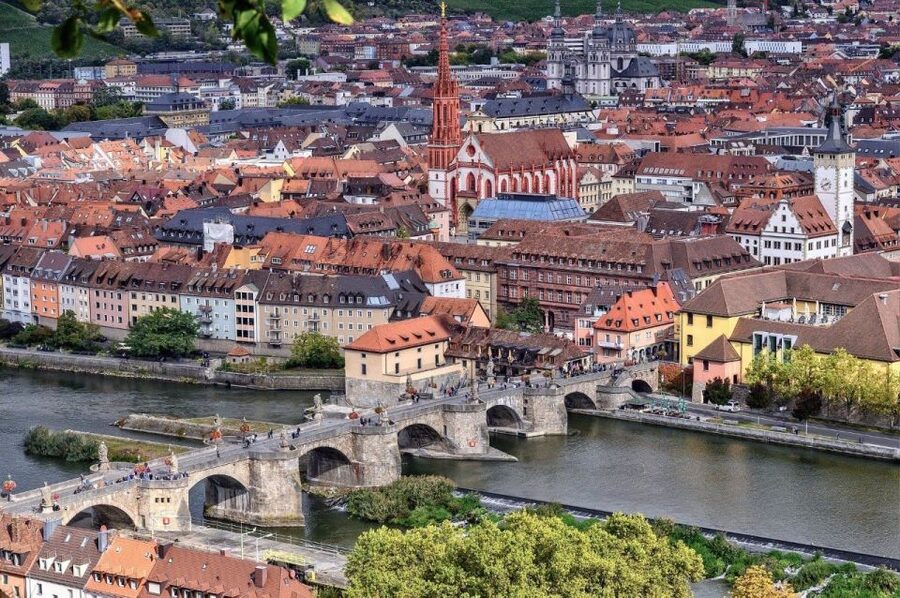
The tour brings you to the Main River area, including the Old Main River Bridge (Alte Mainbrücke). This is one of those moments where the viewpoint does half the teaching. From the bridge, you see the Marienberg Fortress rising above the river valley, and the relationship becomes obvious: the city planned itself around vantage, defense, and the control of routes along the water.
What I like about doing this by foot is that you don’t just arrive at a viewpoint, you walk into the understanding. The guide ties what you see on the river to why the fortress matters. You also get a sense of the city’s geography in a way that’s hard to replicate from inside a building.
Marienberg Fortress is big, and from the bridge it can feel almost theatrical. It’s also a great moment for quick photo breaks, because the composition naturally pulls your eye between bridge and fortress.
Balthasar Neumann’s Residence palace: Baroque architecture with authority
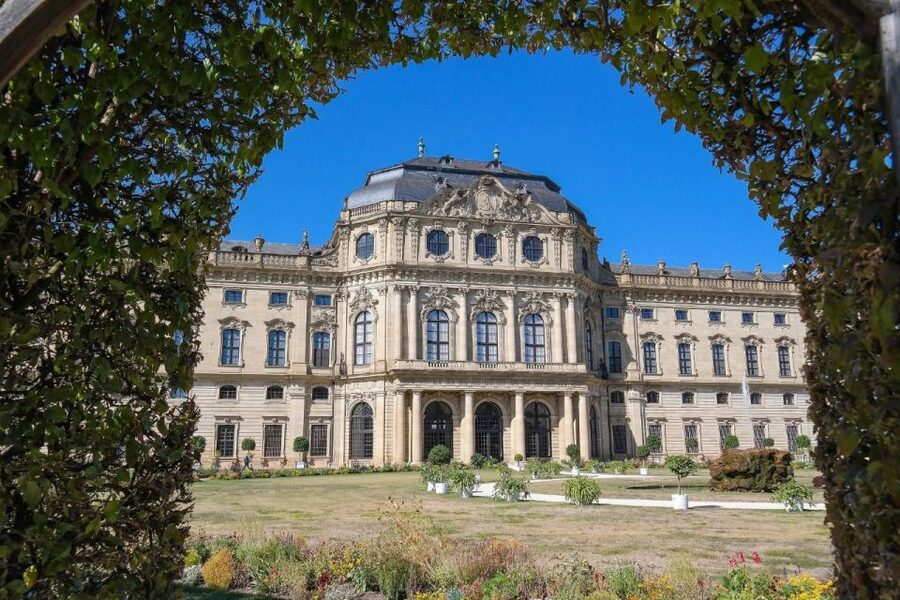
The Residence palace is the heart of the Baroque story in Würzburg, designed by Balthasar Neumann. Even if you don’t pay to go inside, you’ll learn how the building’s style works and why it became such a central symbol of power and taste. Baroque architecture is about drama, movement, and controlled spectacle. Neumann understood those ingredients, and the Residence shows the payoff.
When a guide connects architectural design to the culture that funded it, the Residence stops being just an impressive façade. You start noticing how the city wanted to project itself. That matters if you’re visiting multiple German cities. Würzburg becomes easier to place in the broader Baroque timeline.
Keep in mind that entrance fees are not included, so if you want to go inside specific parts of the Residence, you’ll need to budget separately. Even without entrances, the exterior focus and the surrounding context are still worthwhile in a short tour.
The Würzburger Cathedral and other church landmarks that anchor the story
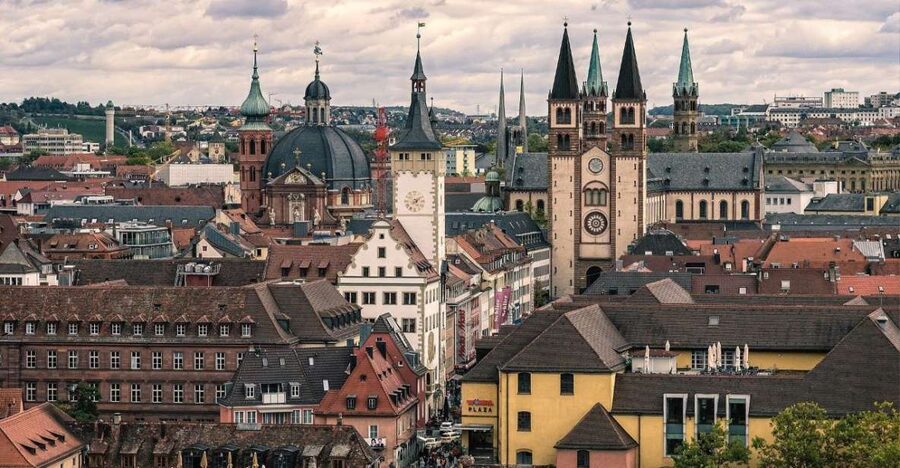
A major theme on this walk is how religion, art, and local identity show up in stone. You’ll see the Würzburger Cathedral, described here as Romanesque, and you’ll also pass or stop near other church-related landmarks such as the Marienkapelle (Chapel of St. Mary), which is noted as gothic.
This mix of styles can be confusing if you only glance. With a guide, it becomes a map of time. Romanesque suggests solidity and early-medieval forms, while gothic points to later shifts in design and ambition. The guide also shares smaller “why it matters” notes that help you keep those styles straight.
If you’re a “teach me what I’m looking at” kind of visitor, this is a highlight. If you dislike church-heavy routes, you might find this tour leans a bit more religious than purely secular sightseeing. Still, the guide typically keeps it moving, so it doesn’t turn into a long sit-and-listen day.
Two hours, rain or shine: how to get the most out of the walking
This tour is 2 hours, and that time limit is both a strength and a constraint. The strength is focus: you hit the best-known landmarks plus a few details that help them connect. The constraint is that you will not have time to do long museum-style visits.
Plan for outdoors time. It runs rain or shine, so bring a practical jacket and think about grip on wet pavement. Comfortable shoes are a must because you’re moving between Old Town areas, the river viewpoints, and major monuments.
At the end, you return to the meeting point. That structure makes it easy to plan the rest of your day. You can do lunch nearby, or if you want interiors and ticketed sights, you’ll know exactly where to aim next.
Price and value: $319 per group up to 15
The price is $319 per group, up to 15 people. On paper, that sounds like a lot, but private tours are priced around group cost, not per-person cost. The value depends on your group size.
- If you fill more of the group, your effective cost per person drops quickly.
- If it’s just you and one or two people, you’re paying more for that privacy and expert guidance.
In terms of value, the biggest thing you’re buying is time-efficient clarity. Two hours can cover a lot in Würzburg when you have a professional guide pointing out architecture, geography, and wine context. Also, entrance fees are not included, which keeps this tour focused on seeing and understanding rather than paying ticket by ticket.
If you want to maximize value, come with a couple of interests in mind, like Baroque architecture, wine history, or river views. A good guide can steer the route toward what you care about, and this tour allows for possible customizing.
Who should book, and who should skip this one
This is a great fit for people who want a first solid orientation to Würzburg: Old Town landmarks, major viewpoints, and a coherent story linking winemaking tradition to the city’s monuments. It also works well for small families and mixed-language groups because you can get explanations in German or English and keep questions in the loop.
If you have mobility limitations or use a wheelchair, this tour is listed as not suitable. Since it’s a walking tour on city streets, you should plan alternative options.
If you enjoy asking “why” questions and want an expert to answer on the move, you’ll likely feel the biggest payoff. In particular, the guide style shown in the experiences shared here includes being friendly, prompt, and willing to adjust content or starting details when needed, which matters in a city where small turns can change the whole feel of your walk.
Should you book this private Würzburg walking tour?
Yes, if you want a tight, high-impact tour that connects Franconian wine culture to real landmarks, with Baroque and Rococo architecture as the visual backbone. It’s also a solid choice if you like viewpoints, especially the Marienberg Fortress look from the Old Main River Bridge, because your guide helps you understand why that view is so important.
Skip it or choose a different format if you hate church-related stops, or if you need a highly accessible route for mobility constraints. And if you’re hoping for lots of interior ticketed time, remember entrance fees are not included and this is designed as a walk-and-learn experience.
If you’re visiting Würzburg for the first time and want to leave with a clearer sense of the city’s identity, this is an easy yes.
FAQ
Where do I meet the guide?
You meet your guide in front of the Tourist Office.
How long is the private walking tour?
The tour lasts 2 hours.
How much does the tour cost?
It costs $319 per group, up to 15 people.
What is included in the price?
A local professional tour guide and the walking tour are included, with possible customizing.
Are entrance fees included?
No, entrance fees are not included.
What languages are available?
The live guide is available in German and English.
Does the tour run in bad weather?
Yes, it runs rain or shine.
Is this tour private?
Yes, it is a private group experience.
Can the tour be customized?
Possible customizing is available.
Is it suitable for wheelchair users or mobility impairments?
No, it is not suitable for people with mobility impairments or wheelchair users.
Fresh reviews out of Würzburg
- Wine rally in Würzburg with tasting★ 5.0 · 27 reviews
- City tour through Würzburg with the Bimmelbahn★ 4.0 · 85 reviews
- Würzburg: Bar & Club Tour with free Shots & VIP entry★ 4.2 · 30 reviews
- Würzburg: Guided Walking Tour★ 4.5 · 466 reviews
- Würzburg: City Tour with the Bimmelbahn Train★ 4.4 · 1,322 reviews
Walking Tours, compared.

Berlin’s Best: 2 Hour Walking Tour Third Reich and the Cold War
Read our review →
Third Reich Berlin: Hitler and WWII Walking Tour
Read our review →Browse the lists this tour appears in