
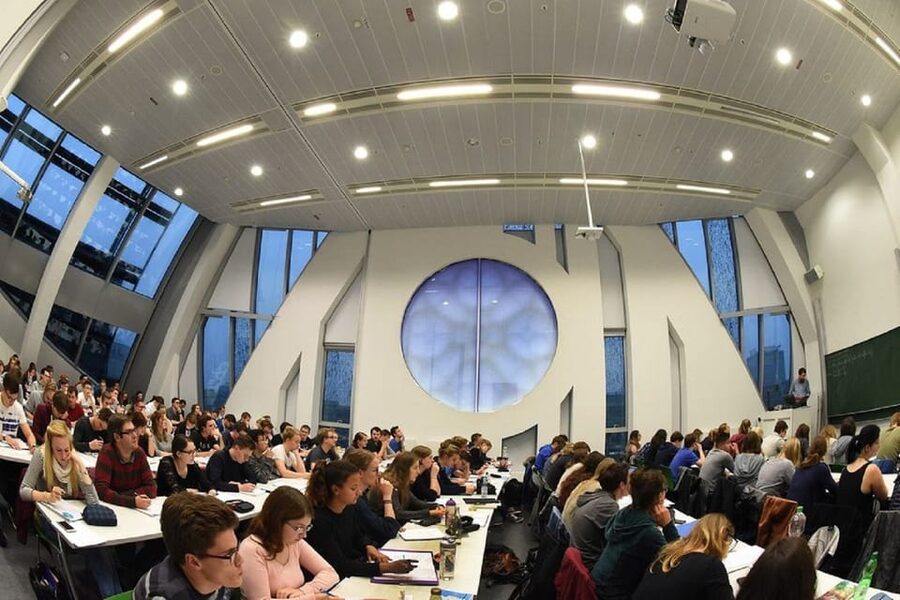
Reviewed · WALKING TOURS
University of Leipzig: Guided Campus Walking Tour
A guided campus walk at Leipzig University is interesting because you get to read the place like a map. You start at Augustusplatz, then move through the newest university buildings while still keeping one foot in the 1409 origin story.
I love how the guide focuses on the planning behind the new campus buildings. You notice the logic in what was built, not just the pretty surfaces. I also like the way the tour connects architecture to people, so Goethe and Friedrich Nietzsche feel tied to exact rooms and corridors rather than just names in a textbook.
One drawback to consider: interior access depends on whether university events are happening. On days when access is restricted, you may spend more time in areas that are already publicly viewable.
Key things you will notice on this Leipzig University tour
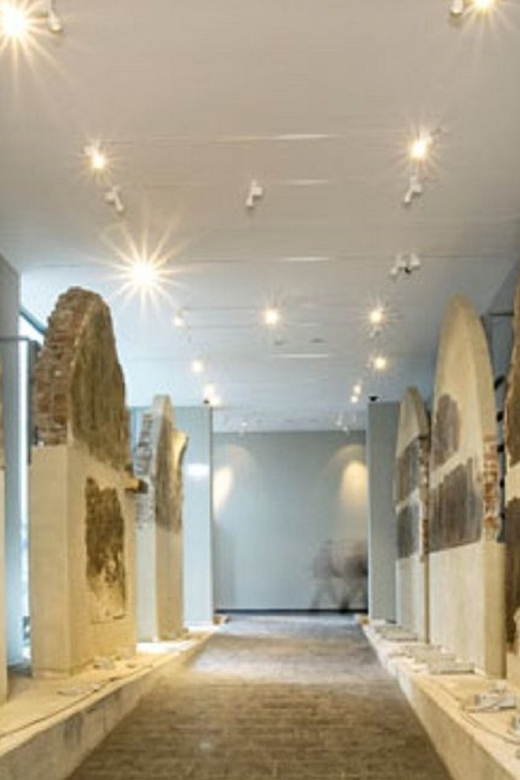
- How the newest buildings were designed, not just what they look like
- New Augusteum and Paulinum highlights in one efficient walking loop
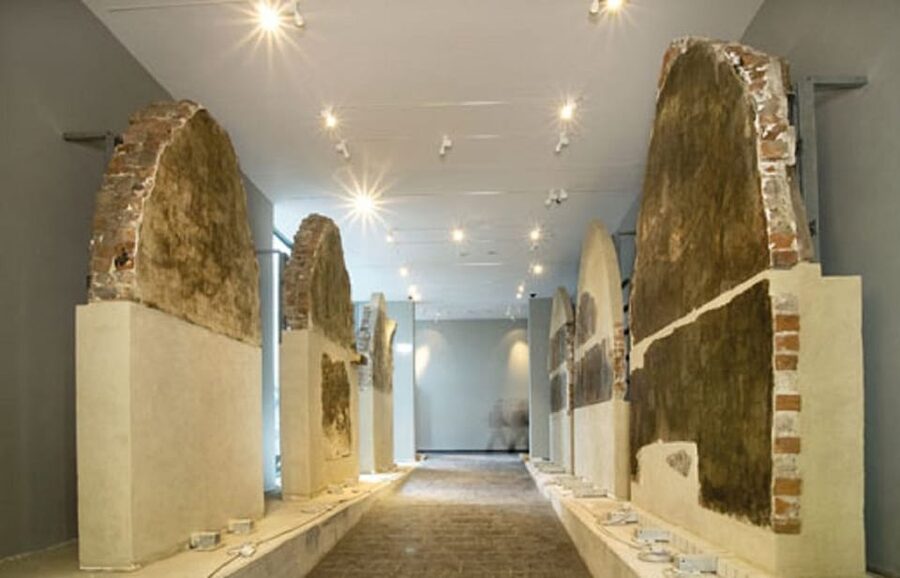
- The university church story (Paulinikirche) and what happened to it over time
- Where major alumni studied, with context you can place on the campus
- Interior access when possible, otherwise a strong public-area tour
- A German live guide that keeps the story moving in 90 minutes
Augustusplatz to the newest university buildings: the whole idea
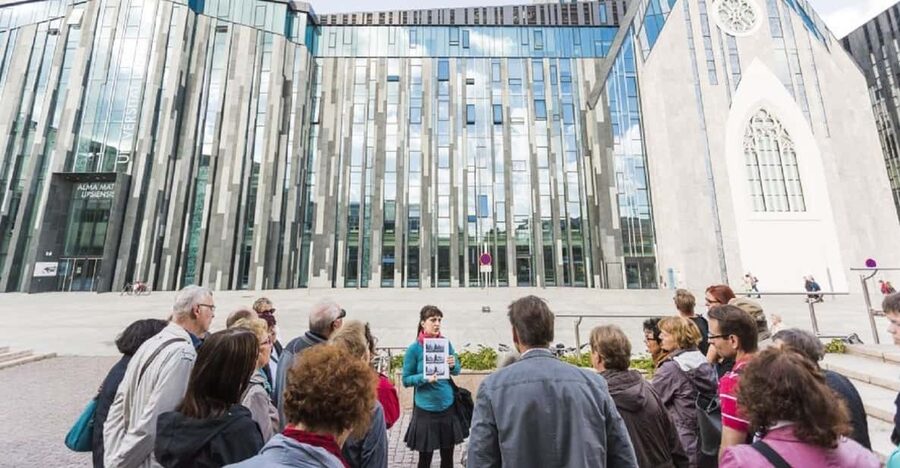
Leipzig University is one of those places where the campus itself feels like part of the curriculum. This guided walk is designed for people who want the big picture fast, without committing to a full museum day. In 1.5 hours, you get a campus overview plus focused stops at the New Augusteum and Paulinum buildings.
The format also makes sense for real travel days. You meet at a clear starting point, then you walk at a pace that lets you actually hear the story. There is time to look up at façades, glance into courtyards, and understand why the new buildings were planned the way they were.
I like that the tour connects design choices to university life. It is not just, here is a building, good luck. The guide points out what the architects and planners were likely trying to solve, then you see those ideas show up as you move through the campus.
More Walking Tours in Leipzig
- Leipzig: 1.5-Hour Historical Walking Tour in German
★ 4.7 · 2,217 reviews - Leipzig: 2-Hour Guided Walking Tour in German
★ 4.8 · 1,612 reviews - 1.5 hour walking tour through beautiful Leipzig
★ 4.6 · 292 reviews
Where you start: the New Augusteum and getting oriented fast
You meet at the information counter on the ground floor of the New Augusteum. That matters because it tells you where to anchor yourself before you start guessing where everything else is.
Once you start moving, the tour usually becomes very practical in your head. You begin to see the campus as zones rather than random landmarks:
- where the newest academic buildings sit in relation to the main square,
- where sightlines and entrances lead,
- and how the university organizes space for daily teaching and student life.
This orientation step is one of the hidden values of a guided walk. Leipzig University can be large, and if you arrive cold, it is easy to focus only on the most photogenic façades. With a guide, you get a framework you can keep even after the walk ends.
New Augusteum: architecture with a reason behind it
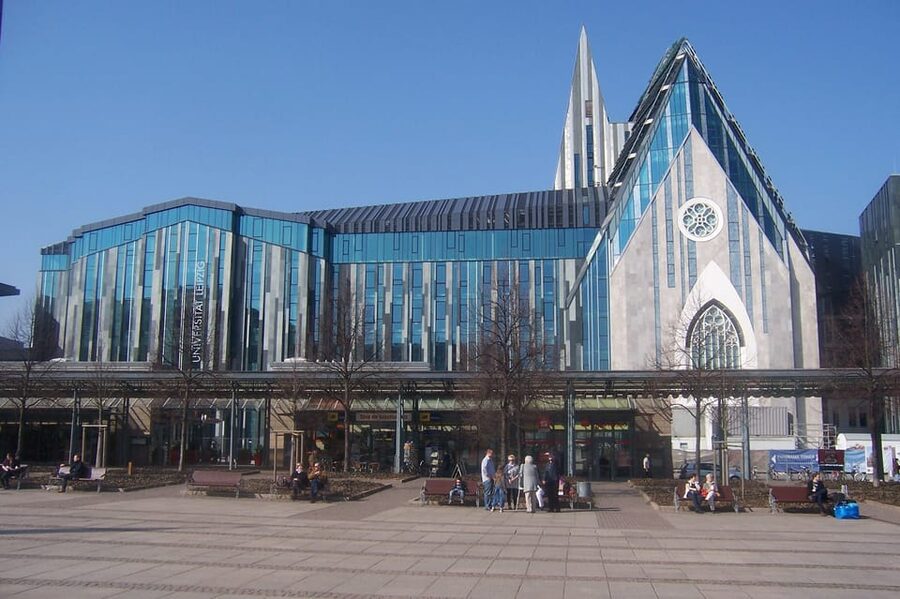
The New Augusteum is a key stop because it is one of the campus buildings that signals the university’s modern direction. You are not only there for photos. The tour highlights the planning behind the building, which helps you understand why it fits into the campus rather than just looking like an isolated landmark.
As you move around and listen, you start noticing the difference between older monumental spaces and newer academic ones. The guide points out the kind of priorities planners often have at a living university:
- circulation that supports student movement,
- spaces that can host different teaching needs,
- and designs that keep the building functioning for decades, not just at opening day.
If you are someone who enjoys “why did they do it that way” details, this part will be a good use of time. If you mainly want to see maximum interior rooms and hidden corners, you might find this section more interpretive than exploratory. Either way, it sets up the next building nicely.
Paulinum: walking, then learning what you are seeing
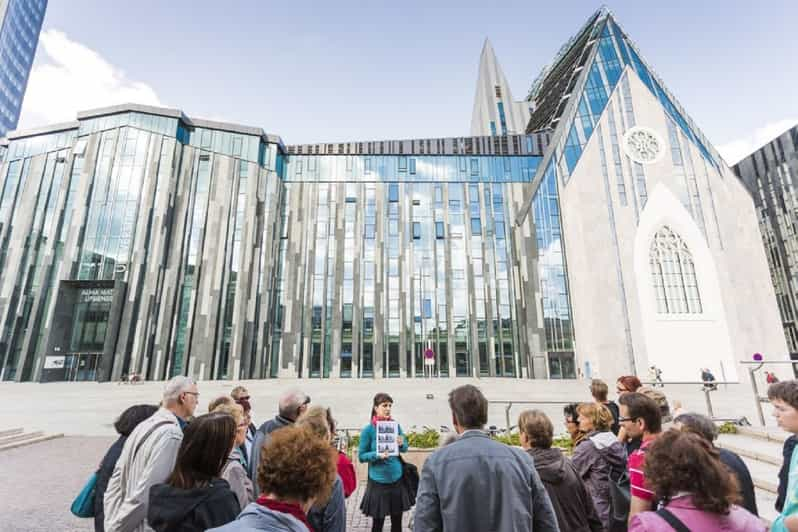
From the New Augusteum, the walk continues to the Paulinum building. This is where the tour tends to feel more grounded in the student and university experience, because the guide links architecture to the university’s evolving campus needs.
A standout promise here is that you can tour the interior when no university events are taking place. That is a big deal. Universities are active places, and access can change day to day. When interior access is open, you see more than architecture from the outside. You see how the building actually supports learning and gatherings.
Even without interior access, the guide’s narration still gives you something useful. You learn what to look for, so the building stops being just “a big university structure” and becomes a readable space. That is also where the tour often brings up the story of university art treasures, so you understand how the campus can hold more than textbooks and lectures.
Another way to spend a Leipzig afternoon:
- Leipzig: City History Canal Sightseeing Tour on a Motorboat
★ 4.7 · 7,671 reviews - Leipzig: 1.5-Hour Public Tour with Night Watchman Bremme
★ 4.6 · 3,116 reviews - Combo Tour in Leipzig: Guided City Tour & City Sightseeing
★ 4.7 · 2,317 reviews - Leipzig: 13-Stop Hop-on/Hop-off Bus Ticket
★ 4.6 · 1,468 reviews
The University church story: Paulinerkirche and what was eliminated
One of the most memorable threads on this tour is the university church story, the Paulinikirche, and the fact that the church has been eliminated. That single phrase does not sound like much until the guide explains why it matters for understanding the university’s identity over centuries.
This is one of those moments where a tour can either feel like a trivia stop or a meaningful connection. Here, the value is that the guide ties the church to the campus itself, so you learn how religious and academic life overlapped historically. Even if you do not plan to visit the church during your trip, the story helps you read the campus more clearly.
I also like that this part of the talk connects to the broader timeline. Leipzig University was founded on December 2, 1409, by Frederick I, Elector of Saxony, and William II, Margrave of Meissen. When you place the church story next to that founding, the university becomes more than a modern institution. It becomes a long-running civic project.
Where alumni studied: Goethe, Nietzsche, and the campus connections
The tour also gives you a concentrated set of famous names tied to Leipzig University. This is not the kind of history where you list names and move on. It is more like you get to anchor famous alumni to places on the campus.
You will hear about alumni such as Goethe and Friedrich Nietzsche, and you may also connect to the wider circle of Leipzig notables, including Leibniz, Leopold von Ranke, Robert Schumann, Richard Wagner, Tycho Brahe, Georgius Agricola, Angela Merkel, and the nine Nobel laureates associated with the university.
Why this matters for you is simple. When you can link a person to a real campus building, you remember the story better. You also walk differently. Instead of thinking, I saw a school, you start thinking, I am standing where ideas were trained and argued for hundreds of years.
And yes, Leipzig’s scale is real. Today, about 30,000 people study at Leipzig University. That helps you understand why a campus tour has to balance history with present-day function. You are seeing both layers at once.
What you actually get in 90 minutes, and why pacing matters
This tour is 1.5 hours, and that length is a sweet spot for most visitors. It is long enough to provide context and connect the dots, but short enough that you still keep your energy for other Leipzig stops.
Still, pacing is where your experience can differ. The tour includes touring interior spaces when university events are not scheduled. If access is limited, the tour can feel more like a guided walkthrough with explanations rather than a true “inside the rooms” experience.
Here is the best practical approach: think of this as a guided campus reading session. You are paying for direction, context, and the ability to identify meaningful features quickly. If you arrive wanting only dramatic interior access, you might feel underwhelmed. If you arrive wanting to understand how Leipzig University evolved, you will get real value.
Price and value at about $15 per person
At $15 per person, this is priced like an efficient, story-focused city experience rather than a premium attraction. For that price, the value comes from three things you get in a short window:
- a live German guide who connects buildings to history,
- time spent on New Augusteum and Paulinum (the core campus landmarks highlighted here),
- and interpretation of a complex past, including the long timeline since 1409.
You are also not wasting time on ticket lines, since this tour includes skipping the ticket line. That sounds small, but it matters when you want to move cleanly through a tight travel schedule.
One more value point: you are learning planning logic behind the new buildings. That kind of explanation is hard to “DIY” unless you already know architectural history. With a guide, you get the meaning in the time it takes to walk between sites.
Group experience: what to expect from the guide style
Because the tour is guided and live, your experience depends on the guide’s teaching style. On the positive side, guides have been praised for delivering historical details clearly and making the walk feel smooth and informative. On the other hand, if you dislike a more classroom-like approach, be aware that some guides may use questions and visual aids more heavily, especially if interior access is limited.
To get the best outcome, I suggest this mindset: treat the guide like a lecturer walking with you, not like a free roaming museum audio tour. Ask clarifying questions in the moment if something feels confusing. You can also decide ahead of time what you want most from the walk, history explanations, architecture planning, or the alumni story, and lean into that focus as you go.
Who should book this walking tour, and who might skip it
This tour fits you if you want:
- a quick, meaningful way to understand Leipzig University’s campus story,
- context for the buildings you will otherwise see from the outside,
- and a concentrated connection between famous alumni and real places.
It is also a good choice if you enjoy structured tours that walk and talk, because 1.5 hours keeps you moving without dragging.
You might want to rethink if:
- you primarily want maximum interior access and lecture hall or library spaces,
- you strongly prefer self-guided exploring with no questions,
- or you do not read German, since the tour guide speaks German.
Should you book this Leipzig University guided campus walk?
I think you should book this tour if you want a structured, time-efficient campus story. The combination of New Augusteum, Paulinum, and the Paulinikirche narrative gives you more than a surface-level walk. With alumni context like Goethe and Nietzsche, you leave with a campus you can remember and point to.
Skip the tour if you are visiting with the expectation of broad interior access every time. Access depends on university scheduling, so interior options can vary. Also, because the guide language is German, you should feel comfortable following a spoken tour.
If you do book, you will get the best experience by keeping your expectations aligned with a guided interpretation tour: you are there to understand what you are seeing, not just to collect room entries.
FAQ
How long is the University of Leipzig guided campus walking tour?
The tour lasts 1.5 hours.
Where do I meet the guide?
Meet at the information counter on the ground floor of the New Augusteum building.
What language is the tour guide?
The live tour guide speaks German.
How much does the tour cost?
The price is listed as $15 per person.
Can I go inside the New Augusteum and Paulinum buildings?
The tour includes interior access if no university events are taking place.
Is the tour wheelchair accessible?
Yes, the tour is wheelchair accessible.
Is there free cancellation?
Yes. You can cancel up to 24 hours in advance for a full refund.
Fresh reviews out of Leipzig
- Private guided tour of the historic south cemetery in Leipzig★ 5.0 · 10 reviews
- Leipzig exclusive : Guided bike tour for a private group★ 5.0 · 11 reviews
- Leipziger Westen originell entdecken auf eigene Faust★ 4.7 · 11 reviews
- Wittenberg Private Walking Tour With A Professional Guide★ 5.0 · 12 reviews
- Leipzig: Private Walking Tour with a Professional Guide★ 4.6 · 12 reviews
- Mulled wine ride in the Leipzig New Zealand★ 4.6 · 12 reviews
- City tour on foot, by S-Bahn and tram★ 4.5 · 12 reviews
- Leipzig: Segway tour, driving fun along sights with headsets★ 5.0 · 13 reviews
Walking Tours, compared.


Berlin’s Best: 2 Hour Walking Tour Third Reich and the Cold War
Read our review →


Third Reich Berlin: Hitler and WWII Walking Tour
Read our review →Browse the lists this tour appears in