
Reviewed · WALKING TOURS
Munich: Walking Tour Old Town and Viktualienmarkt
You get a tight, guided circuit through Munich’s most important sights, but it never feels like a checklist. Starting at Marienplatz and ending around the Odeonsplatz area, you’ll connect the city’s medieval roots to the beer-house legends, then finish with luxury street scenery.
I especially like two parts: the Viktualienmarkt section, where you get the full sights and smells of Munich food culture, and the Old Town walking pace that makes places like Alter Hof, Hofbräuhaus, and the Residenz area feel readable, not random. One drawback to plan for: you need comfortable shoes and you should expect the walk to happen rain or shine, with limited flexibility for very slow mobility.
Key things you’ll notice on this Munich Old Town + Viktualienmarkt walk
- Marienplatz orientation: Neo-Gothic New Town Hall sights set the tone for everything you see next
- Viktualienmarkt atmosphere: bread, cheese, and sausage stalls make food culture part of the sightseeing
- Burgstraße and Alter Hof: Munich’s older power center comes into focus as you walk the lanes
- Hofbräuhaus context: you’re not just looking at the building, you learn why it matters in Munich
- Maximilianstraße contrast: luxury shopping street views after the Old Town streets create a satisfying flip in mood
- Odeonsplatz architecture stops: Feldherrnhalle and Theatinerkirche help you read the city’s style shifts
A 90-minute Old Town loop that actually helps you make sense of Munich
This is the kind of tour I recommend when you arrive in Munich feeling impressed but slightly lost. In about 1.5 hours, you’ll cover the main historic spine of central Munich, with frequent stops and a guide talking through what you’re seeing and why it matters. That means you’re not just walking between famous buildings, you’re learning how the city grew and how locals experience it day to day.
The value is in the grouping too. The tour price is listed as $282 per group up to 30, and that usually means your per-person cost can be surprisingly reasonable at full capacity. Even if you don’t get the biggest group size, you still get a live guide for the full time, plus the route is dense enough that you get more “guided minutes” than you would doing sights alone with a map.
More Walking Tours in Munich
- Munich: Third Reich & WWII Walking Tour
★ 4.6 · 6,181 reviews - Third Reich Walking Tour Munich
★ 4.5 · 4,291 reviews - Munich: Old Town & Viktualienmarkt City Walk in German
★ 4.7 · 2,304 reviews
Start at Marienplatz, with two possible meeting points
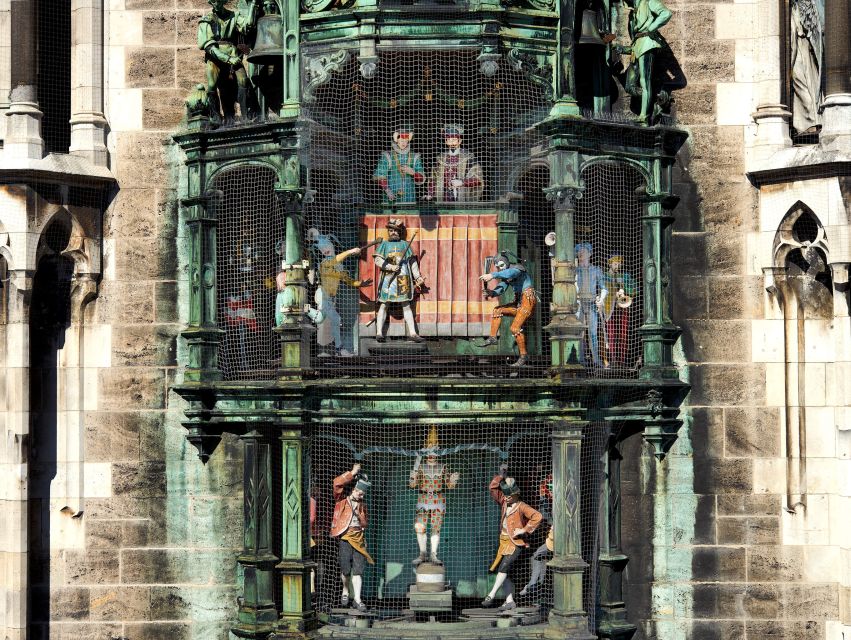
Your start location can vary depending on the option booked. You may meet at Mariensäule or at the Neues Rathaus area. Either way, you’re launching right where Munich’s city life clusters: Marienplatz, framed by the Neo-Gothic New Town Hall and the famous Glockenspiel.
This is a smart choice for first-timers. Marienplatz is not only pretty, it’s practical. From there, every next stop feels like a continuation rather than a detour. If you want an easy win, show up a little early and take two minutes to scan for your guide near the landmark you were told. One very real tip: the Mariensäule area can feel crowded with people and sightseers, so it helps to arrive with a clear view of where you’re supposed to be.
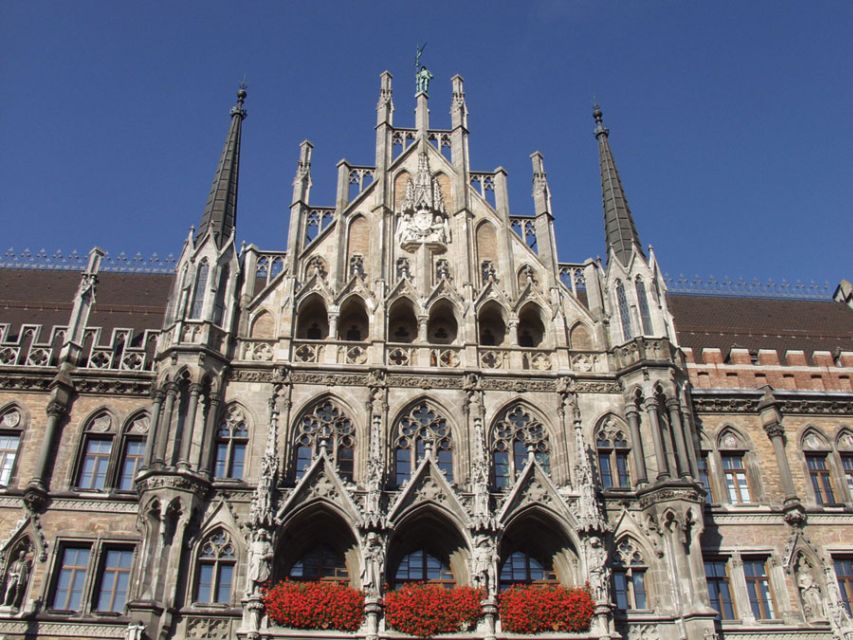
The Neo-Gothic New Town Hall area sets the tone fast
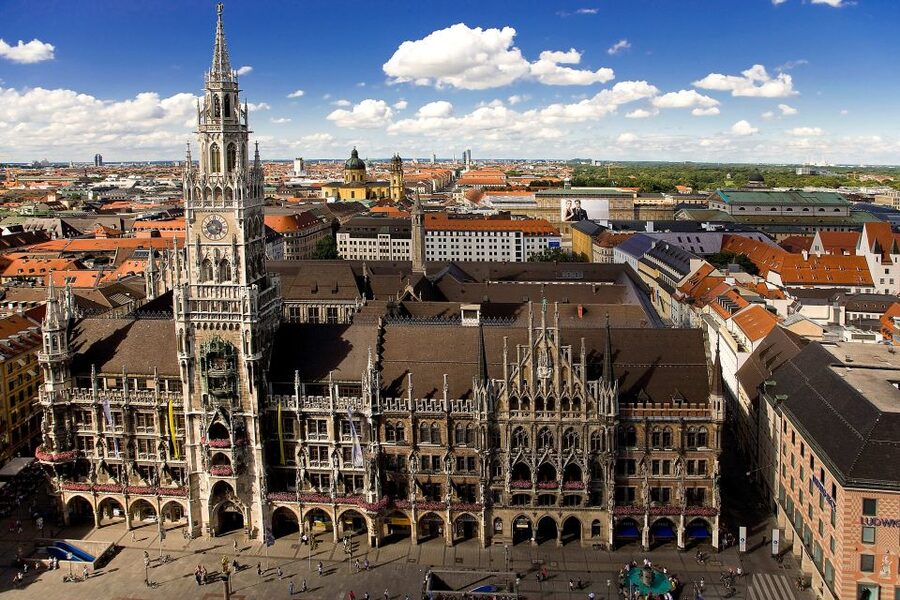
Once you’re oriented at Marienplatz, the tour moves into the heart of the city’s “main stage” landmarks. The guide will point out key features around the New Town Hall and talk through what you’re seeing, so you’re not left guessing at why every angle looks dramatic.
If you enjoy architecture, you’ll like the way this tour uses big, recognizable buildings as anchors. You get a quick visual framework for Munich’s later stops, like the Opera/Residenz area and Odeonsplatz. It’s the difference between seeing a pretty street and understanding the city’s visual logic.
St. Peter’s Church: the old parish church feeling
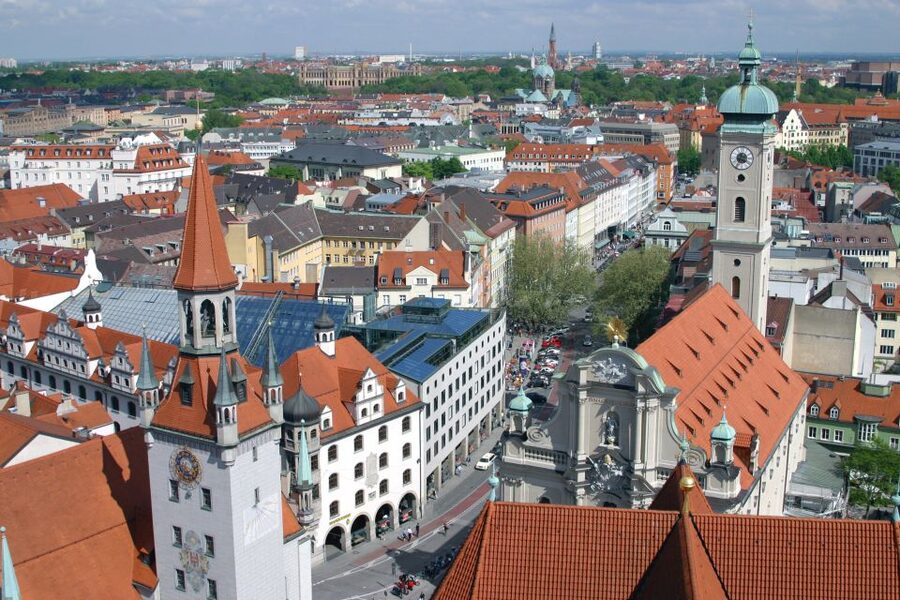
From Marienplatz, you’ll walk to St. Peter’s Church, described as Munich’s oldest parish church. This stop is short in time, but the purpose is big: it gives you a sense of Munich before the city gets flashy.
What I like about this kind of stop is that it balances the modern-feeling squares. You shift from city-center spectacle to something more rooted. The guide’s job here is to help you notice details, not just pass by. Even in a quick 10-minute stop window, you can come away feeling like you learned what this church represents in the city’s timeline.
Another way to spend a Munich afternoon:
- From Munich: Neuschwanstein & Linderhof Castle Full-Day Trip
★ 4.6 · 14,646 reviews - Neuschwanstein & Linderhof Castle-Fairytale Day Tour from Munich
★ 4.5 · 7,275 reviews - Dachau Concentration Camp Memorial Site Tour from Munich by Train
★ 4.5 · 5,637 reviews - Neuschwanstein Castle Tour from Munich
★ 4.5 · 5,117 reviews
Viktualienmarkt: your food-sense sightseeing stop
Then comes the most fun mid-tour reset: Viktualienmarkt, Munich’s largest and most traditional food market. This is where you slow down without it feeling like you’ve lost time. The stalls bring real sensory cues, and that makes the history talk land better, because you’re mixing stories with daily life.
Expect the market to smell like food you actually want to eat. The tour highlights fresh bread, cheeses, and sizzling sausages. That’s not just atmosphere. It’s also how locals and visitors experience Munich’s food culture in a very direct way.
A practical note: meals and drinks are not included, so you should decide ahead of time if you want to buy something. If you want to keep costs controlled, treat it like a tasting round where you might pick one small item. If you want to splurge, you’ll at least know you chose the place that’s built for it.
Alter Hof and Burgstraße: walking through Wittelsbach-era gravity
After Viktualienmarkt, the route heads you into older lanes, including Burgstraße, one of Munich’s oldest streets. This is where the Old Town starts to feel less like a museum and more like a living corridor of long-term city planning.
You’ll also see Alter Hof, the former seat of the Wittelsbach dukes. That name matters because it connects Munich to the power structures that shaped much of what you see around central squares. Even without a long lecture, you’ll understand the basic idea: this is where rulership lived, and that’s why later architecture and civic landmarks follow the same “center of gravity.”
You’ll also pass through the Platzlgassen alley feel, where medieval charm meets modern street life. The guide helps you read the contrast so you don’t just think, I’m in a pretty area, you understand what changed and why.
Hofbräuhaus: not just a beer hall, a Munich stage
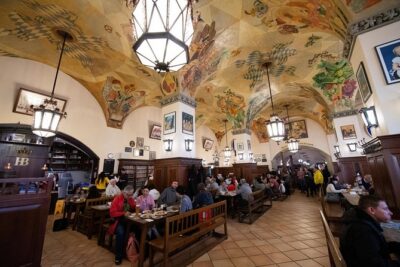
Next up is Hofbräuhaus München, world-famous and historically important as a beer hall that has hosted everyone from locals to royalty. This stop is quick, about 10 minutes, but it’s positioned perfectly. You’re moving from the ducal past to the beer culture that became a defining part of Munich’s identity.
What makes this stop valuable is context. A lot of people walk into Hofbräuhaus as a photo stop. With a guide, you learn what made it a social magnet and why it became part of how Munich brands itself. Even if you don’t go inside during the tour window, you’ll still leave with a stronger sense of what the place stands for.
Maximilianstraße: the luxury street contrast that feels like a time jump
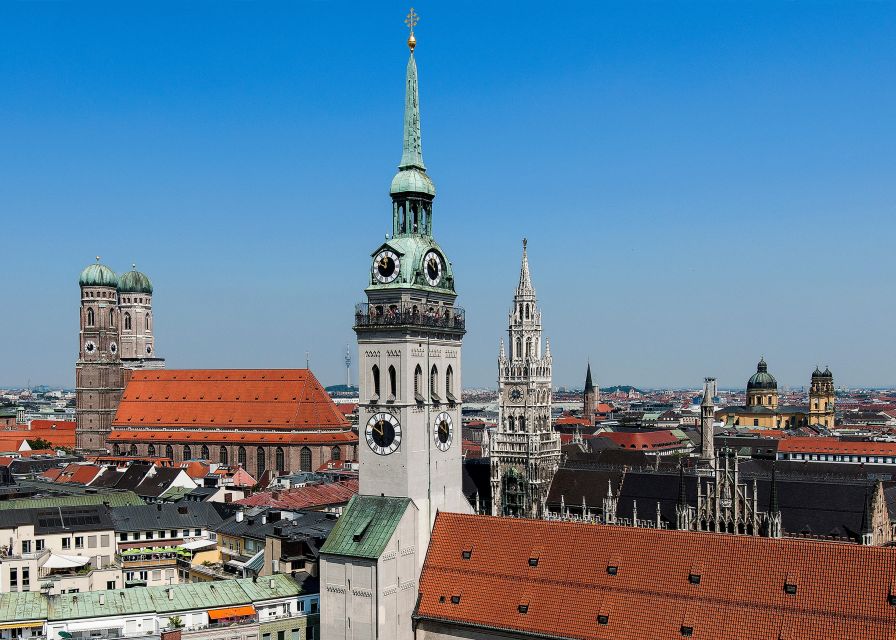
After the Old Town lanes, you’ll cross into Maximilianstraße, described as Germany’s most exclusive shopping street. This is one of my favorite contrasts in the whole route. You go from traditional market stalls and medieval alleys to high-end boutiques, jewelers, and designer showrooms.
It’s a visual palate cleanser. If you like street-level noticing, you’ll enjoy the sheer shift in storefront style and pedestrian rhythm. The guide usually ties it back to the city’s broader story, so it doesn’t feel random, even though it’s a different mood entirely.
And yes, you can treat it like window-shopping theater even if you do not plan to buy. The street is a big part of how Munich shows its modern confidence.
Residenz and Odeonsplatz: Opera, royal residence, and Italian Baroque vibes
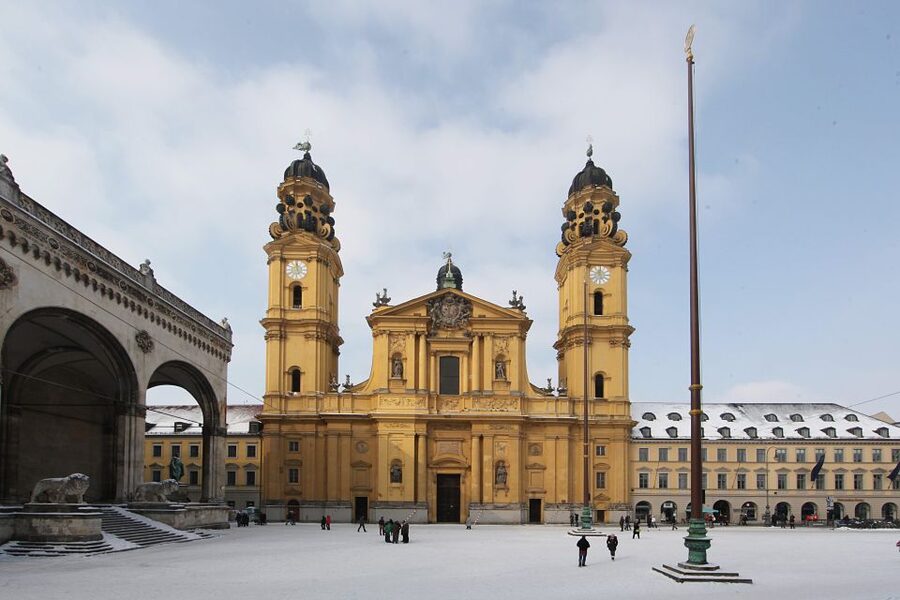
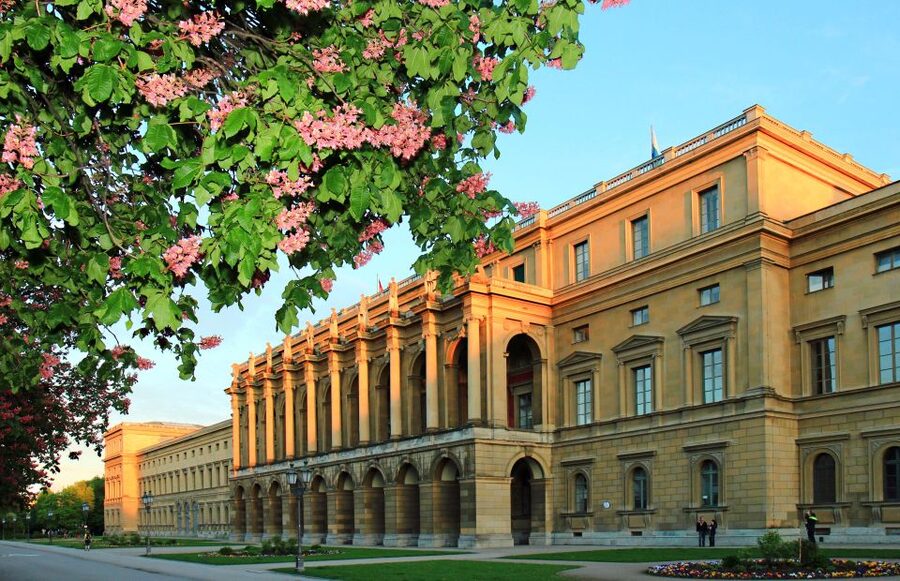
As the tour continues, you’ll pass the Bavarian State Opera, described as a neoclassical masterpiece located beside the Residenz, the former seat of Bavarian royalty. This segment matters because it links power and culture. Munich didn’t just build for rulers, it built for performance, art, and public identity.
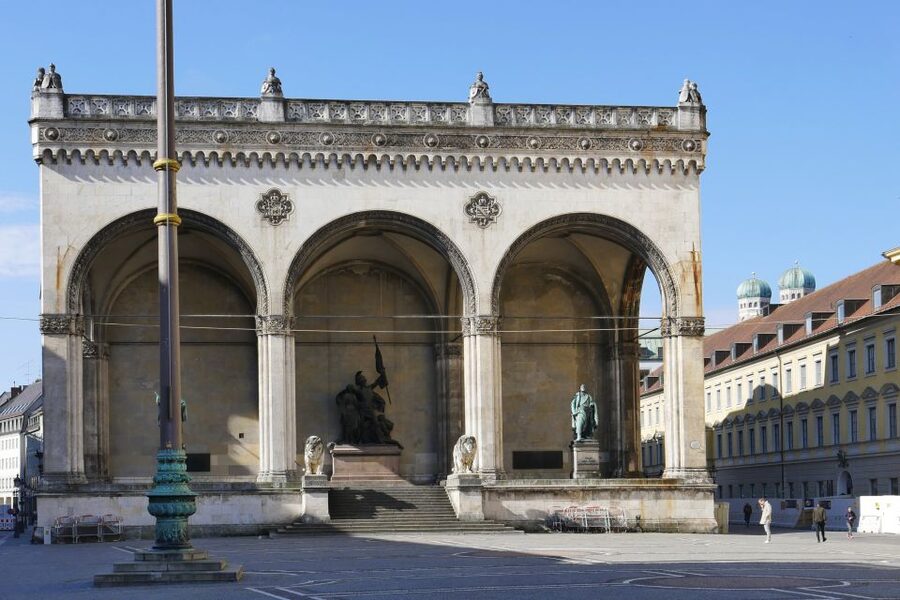
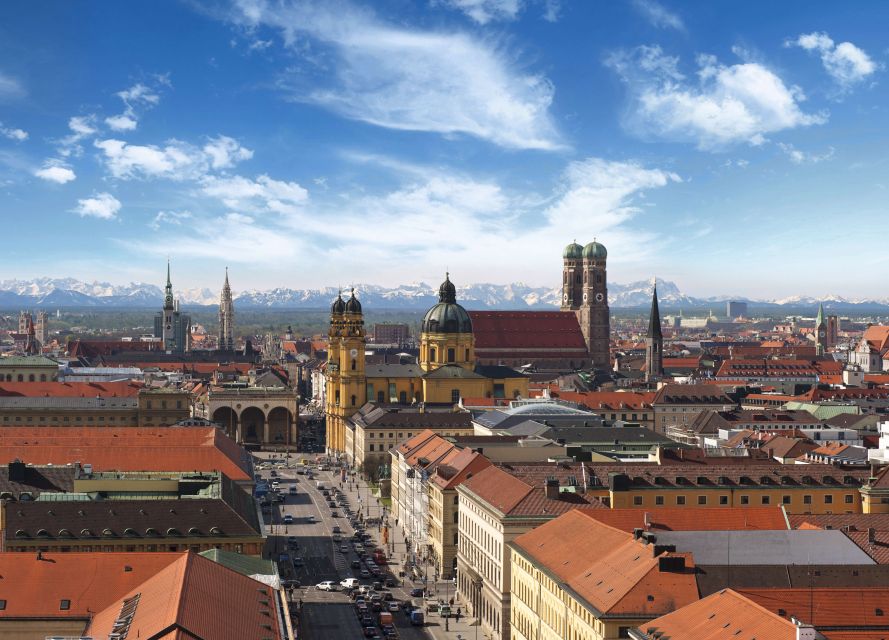
Then you’ll reach Odeonsplatz, a grand square surrounded by impressive buildings, including the imposing Feldherrnhalle. Opposite stands Theatinerkirche, built in striking Italian Baroque style. This is where Munich’s “northernmost city of Italy” nickname starts to make sense.
This stop is less about shopping and more about learning to see style differences. When you look at Theatinerkirche with context from the guide, it stops being a random church façade and becomes proof of how Munich absorbs influences and reshapes them.
The guide is the whole experience: what you’ll likely get from them
The reviews for this tour are loud about one thing: the guide makes it. People consistently mention guides who tell stories well, adjust to what the group wants, and keep the pacing comfortable even with larger crowds.
You’ll see names pop up like Gitti, Gerhard, Karen, Claudia, Tanja, Sabine, Christina, Michael, and Joe. The common theme is that the best moments are when the guide reads the room. I like tours where the guide asks what you care about and then spends their talk time where you’ll actually listen.
You also get evidence that different groups work here. A family with a 10-year-old, a group focused on history, and even a stag-party vibe all sound like they fit because the guide can tailor the tone. For you, that means you’re less likely to feel stuck listening to a lecture you didn’t ask for.
Pacing also matters on a short tour. The route is designed for a 90-minute window, so if the guide is good, you won’t feel rushed through the big sights. Several people highlighted that the tour felt well paced, information-rich, and not frantic.
Price and value: what $282 per group up to 30 really buys
Let’s talk money plainly. The price is listed as $282 per group up to 30 for 1.5 hours and it includes a live guide. Entrance fees and meals and drinks are not included.
If your group is full at 30 people, that math works out to roughly $9.40 per person. If the group is smaller, your per-person cost will be higher, so the “best value” scenario is a fuller departure.
Even when you do not get the theoretical best math, this tour still tends to be good value because it strings together a lot of major stops in a compact area: Marienplatz, St. Peter’s Church, Viktualienmarkt, Alter Hof, Hofbräuhaus, Maximilianstraße, the Residenz/Opera area, and Odeonsplatz. Without guidance, you’d still visit many of these places, but you’d spend a lot more time trying to interpret them on your own.
Also: because entrances are not included, you’re paying for guided orientation and storytelling, not for paid access. That’s fine if you want to keep control of your spending. If you’re hoping to step into several ticketed interiors, you’ll need a separate plan.
Logistics that actually matter: shoes, rain, and where to meet
This walk happens rain or shine, so come ready. Comfortable shoes are the real ticket here. You’ll be on sidewalks and old-street surfaces, and the pace depends on the guide, not on your ability to power through blisters.
On meeting point, keep it simple. Your start could be Mariensäule or Neues Rathaus, and the area around both can have lots of people. Give yourself extra time to locate the guide. Based on common feedback, the most stressful moments come from confusion about exactly where to gather, especially if multiple landmarks look similar at first glance.
One more practical check: the tour is marked as wheelchair accessible, but it’s also marked as not suitable for people with mobility impairments. That contradiction matters. If mobility is a concern for you or someone in your group, I’d contact the operator directly before booking and ask what the walk surface and pacing are like for your specific needs.
Who should book this Munich walk?
This is a strong match if:
- You want a fast, guided orientation to Munich’s Old Town without spending half a day zigzagging around
- You care about beer culture plus food culture, not only buildings
- You like architecture and want help noticing what you’re looking at, especially around Odeonsplatz and Theatinerkirche
- You’re traveling as a couple, group of friends, or family and want a shared experience that stays friendly
It’s also a good pick for first-time visitors who want one guided “spine tour” before branching out on your own.
If you only want one or two attractions, you might find the time compression too intense. But if you enjoy seeing lots of famous places with a human voice guiding you, this route is designed for that.
Bottom line: should you book this Old Town and Viktualienmarkt tour?
Yes, I think you should book it if you want the quickest way to connect Munich’s iconic sights to the stories people actually associate with the city. The biggest strength is the combination: Old Town landmarks + Viktualienmarkt food culture + beer hall context, all in a manageable 1.5-hour format.
Skip it if you dislike guided groups, want only quiet sightseeing, or need an itinerary with lots of optional breaks for mobility or long pauses. Otherwise, pack comfortable shoes, arrive a little early to lock in the meeting point, and let the guide do what good guides do: turn famous buildings into places you understand.
FAQ
How long is the Munich Old Town and Viktualienmarkt walking tour?
The tour lasts 1.5 hours.
Where does the tour start?
The meeting point may vary depending on the option booked, with starting locations listed as Mariensäule and Neues Rathaus.
What is included in the price?
The only included item listed is a tour guide.
Are entrance fees included?
No. Entrance fees are not included.
Are meals or drinks included?
No. Meals and drinks are not included, though you will pass through the Viktualienmarkt market area.
Is the tour offered in bad weather?
Yes. The tour takes place rain or shine.
What languages are available for the guide?
The tour is offered with live guiding in German and English.
Is the tour wheelchair accessible?
The information lists the tour as wheelchair accessible, but it also says it is not suitable for people with mobility impairments. If mobility matters for you, it’s worth checking details before booking.
What should I bring?
Bring comfortable shoes.
Can I book a private group instead of a shared tour?
Yes. Private group available is listed as an option.
Fresh reviews out of Munich
- Munich: Christmas Markets Food & Drink Tour★ 4.6 · 50 reviews
- Munich: Walking tour of the old town with all your senses★ 4.5 · 51 reviews
- Munich: Scavenger Hunt Self-Guided Tour★ 4.1 · 51 reviews
- Hidden Architectural Gems of Munich (Max. 16 guests)★ 4.9 · 52 reviews
- Shared Departure Transfer: Munich Central Station to Munich Airport★ 3.5 · 54 reviews
- Hard Rock Cafe Munich with Set Lunch or Dinner★ 3.5 · 54 reviews
- Quatsch Comedy Club München: Die Live Show★ 4.6 · 56 reviews
- From Munich: Royal Fairytale Tour★ 4.9 · 56 reviews
Walking Tours, compared.

Berlin’s Best: 2 Hour Walking Tour Third Reich and the Cold War
Read our review →
Third Reich Berlin: Hitler and WWII Walking Tour
Read our review →Browse the lists this tour appears in