
Reviewed · THIRD REICH & WWII TOURS
Munich Third Reich and WWII Segway Tour
Munich’s Third Reich and WWII Segway tour is interesting because it mixes big historical topics with a simple, moving way to see the city. One part you cannot replicate on a slow walk is the feeling of rolling through central streets on your own two wheels while your guide threads a clear timeline from early Munich to Nazi power.
I especially like two things: the Segway setup is friendly for first-timers, and your guide tells the story with real, place-based detail, from the Führerbau to Hitler-era apartment sites. A good guide makes the difference, and you might get someone like Josef, Karl, Claudia, or Rawen, who are noted for patience and taking questions.
The main thing to consider is crowding. This tour runs through busy downtown areas, and that can mean tight maneuvering and less space for photos, especially if it’s a popular day or the flow needs to recover from a small scheduling hiccup.
Key Things to Know Before You Go
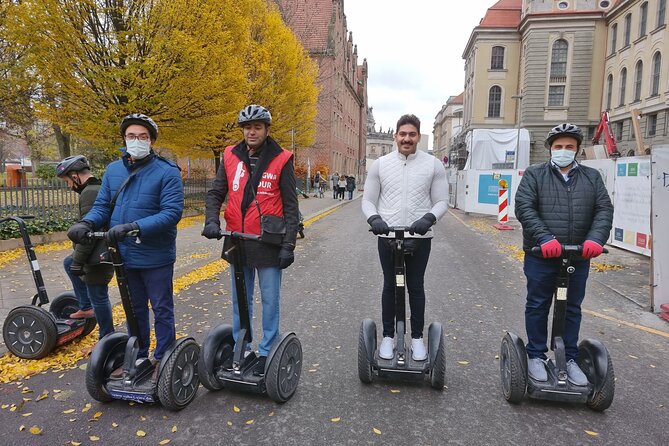
- Car-free-feeling pace: you can go where regular traffic does not, which saves time and keeps things fun
- Segway confidence boost: you get time to learn, and nervous riders get help
- A focused Nazi-era narrative: your route includes stops tied to Nazi power, Hitler’s Munich, and resistance themes
- Ideal for couples and families: the format works well when you want a lot of sights in less time
- Small groups: capped at 20 travelers, so it does not feel like a giant bus crowd
Why a Segway Works So Well for WWII-Style Sights
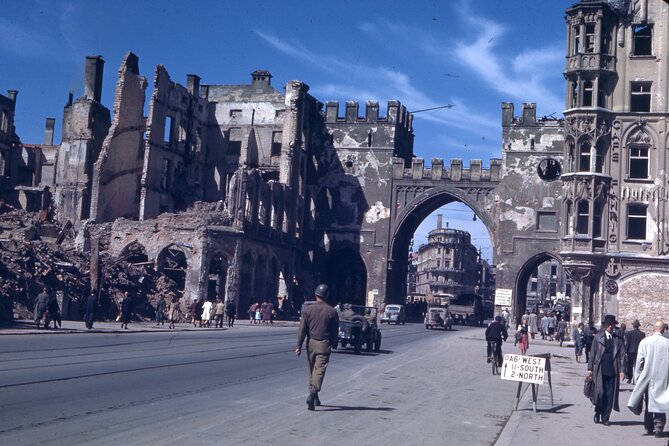
A WWII story can be heavy on the page. On the street, it hits differently. This tour is built for that, because the motion is smooth and the route is practical: you cover ground fast, you stop often enough to process what you’re seeing, and you still get that street-level feeling of being in Munich, not in a museum room.
The big advantage is how the Segway helps you reach the sights. Standard walking tours can feel slow when the route keeps jumping across neighborhoods. Here, you roll past major Munich anchors and then circle back into the same narrative thread, so the whole thing feels like one connected timeline rather than random stops.
And yes, it’s genuinely fun. The best part is when the guide takes the pressure off new riders. People who are nervous usually need one thing: permission to go slowly at the start. The guides on this route are praised for exactly that, including patience and time to get comfortable before you’re asked to keep moving.
More Segway Tours in Munich
- Munich: City Highlights Guided Segway Tour
★ 4.6 · 266 reviews - Munich 3-Hour Segway Tour: Nazi Munich & Royal Architecture
★ 4.9 · 194 reviews - Munich Segway Tour
★ 5.0 · 181 reviews
The WWII Timeline Your Guide Brings to Life (and What You Actually Take Away)
You do not just see buildings. You hear why they mattered and how Munich changed as political power hardened. The storyline starts with an Austrian gentleman arriving in Munich in 1912, then tracks how that dream grew into power over the next decades. You’ll also hear why the Beer Hall Putsch failed, and you’ll cover the idea of people trying to fight the Nazi regime.
That kind of framing is useful for you, because WWII can get messy if you only visit one site at a time. A guided timeline gives you handles to remember the bigger picture: rise, attempts at power, the spread of influence, then the resistance thread. Even if you already know some history, the place-to-story connection tends to stick.
Also, this tour does not pretend Munich is only a Nazi backdrop. It moves through places that still feel like daily Munich, including major civic and cultural landmarks and, later, areas linked with beer halls. That contrast helps the story feel real, because the city itself did not pause.
Start Point, Route Flow, and the “3 Hours, Not a Half-Day” Sweet Spot
The experience runs about 3 hours, starting at 10:00 am at Artur-Kutscher-Platz 2A (80802 München). You end back at the meeting point. That loop matters: you can plan your day without wondering how late you’ll be, and you’re not stuck navigating back alone.
A small group size helps here. With a maximum of 20 travelers, your guide can pause for questions and picture-taking without turning every stop into a traffic jam. Guides also take time to answer questions and they handle the practical realities of Segway touring, like teaching the basic rhythm of starting, stopping, and turning.
One practical note: if you’re going in cooler months, bundle up. Segway riding can feel chilly, and it’s not always obvious until you’re moving. Bring a real layer, especially if you get cold easily.
Alte Synagoge and Königsplatz: Getting Oriented Before the Story Turns
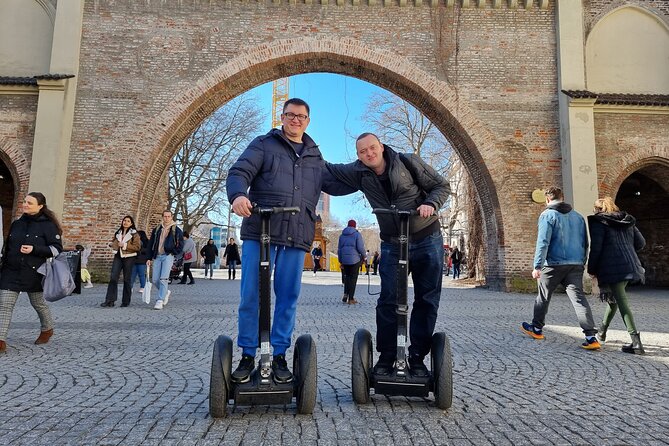
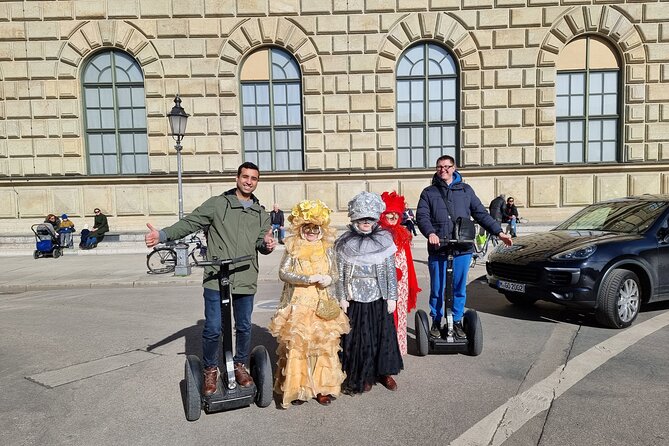
The tour begins with a stop tied to the Alte Synagoge area, then moves into Königsplatz. This is a smart opening. You’re in the city’s central historic zone early, so your bearings lock in fast. Before you hit the harder Nazi-linked locations, you’re already seeing Munich’s layout and public squares at a Segway-friendly pace.
Königsplatz works as an orientation point too. It helps you understand that this story is not only about one event or one building. It’s about how public space can become part of political theater and public life.
If you’re traveling with kids, this opening section tends to keep attention. Squares and monuments are visual and easy to process even when the topic gets serious later.
More Third Reich history tours:
- Munich: Third Reich & WWII Walking Tour
★ 4.6 · 6,181 reviews - Third Reich Walking Tour Munich
★ 4.5 · 4,291 reviews - Munich: Birthplace of the Third Reich Guided Walking Tour
★ 4.6 · 771 reviews - Munich World War II Sites Including Dachau Concentration Camp
★ 4.5 · 570 reviews
Führerbau and Braunes Haus: When the Route Shifts Into Nazi Power
Soon, the tour heads toward the Nazi power sites you came for, including the Führerbau. This is the section where your guide’s timeline really matters. The guided narration helps you connect the dots between rise, attempt at control, and the push to reshape Munich’s political identity.
You’ll also pass Braunes Haus and related sites in the same narrative stretch. The value here is that you’re not just looking at the facades. You’re hearing how the political movement tried to gain legitimacy and influence, and how Munich played into those ambitions.
A Segway makes this part easier emotionally. Walking would force you to keep stopping and starting. On the Segway, you can maintain a calm pace between stops, which makes it easier to listen without feeling rushed.
Schelling-Salon, White Rose, and the Resistance Thread
Mid-route, the story turns toward resistance. The tour includes a stop associated with the White Rose, placed where your guide discusses people who tried to fight the Nazi regime. That timing is key: it stops the narrative from ending at power and propaganda.
This is also where the tour is unusually good for understanding WWII beyond dates. Resistance stories can feel abstract if you only read about them. Placing the conversation in Munich helps you feel that the fight happened on real streets, in a real city.
From here you continue to other major landmarks, including Haus der Kunst and Angel of Peace. Even without turning every stop into a museum lecture, these sites give the narrative a physical stage: culture, public meaning, and the way cities remember what happened.
Hitler’s Apartments and the Idea of Rebuilding Munich
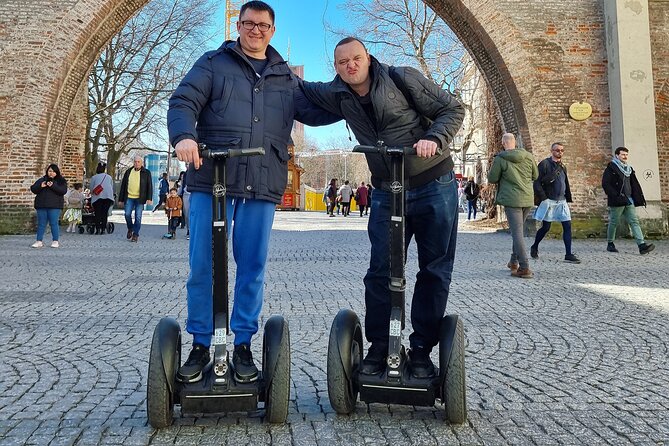
You’ll see sites tied to Hitler’s apartments, including one from 1933 and another from 1920-29, plus additional stops around Maximilianeum and Odeonsplatz. The tour uses these locations to show how an individual’s ambition became a plan for the city.
This section can land differently depending on what you already know. If you’re new to the period, the apartment stops give the story a human scale. If you already know the big events, these stops help you understand the everyday geography of power, where decisions and public messaging were tied to specific places.
Then, you roll past Residenz München. Even though it’s not a Nazi-era building in name, it matters because it shows the broader city context. The guide’s job is to keep the connection between the Nazi timeline and Munich’s ongoing identity, and that contrast tends to stick with people.
Hofbräuhaus, Hofbräukeller, and How the City’s Famous Beer Stops Fit
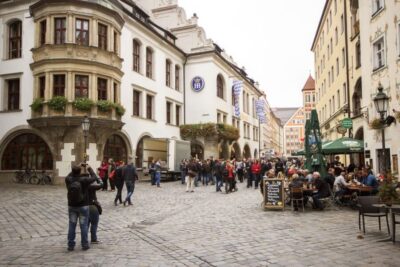
Later, you reach the beer hall zone, including Hofbraukeller and Hofbräuhaus areas. This is where the tour feels most “Munich,” and it can be a little surprising if you expected only grim WWII stops.
But the mix is helpful. You’re learning how the Nazi story played out within a city known for beer, gatherings, and public life. Your guide uses these stops to show that political power was not isolated from normal Munich behavior. It grew inside the culture.
If you want a fun evening afterward, this is where you’ll be glad you did the tour earlier. You’ll know where you are in the center, and you’ll have names and landmarks in your head for when you’re walking later.
Maximilianeum, Maximilianeum Strasse, and Odeonsplatz: Civic Landmarks as Story Anchors
The route includes Maximilianeum and Maximilianeum Strasse, plus Odeonsplatz. These stops work like anchors. They help you build a mental map of central Munich, and they keep your timeline tied to places that still matter today.
For you, this means you’re not just chasing WWII points. You’re also getting a usable sightseeing structure. After the tour, you should be able to look at a map and say, I get where I was and why the guide brought us here.
This part can also be a good family moment. Civic landmarks are easy for kids to point out, and it’s a break from constant historical intensity.
How Much You Really See, and What You Might Still Want to Add
This tour is about efficiency. You’ll hit a broad range of stops tied to the Third Reich and WWII narrative, and you’ll do it in about 3 hours. Segways cover distance quickly, so you get a lot of geography without spending half a day in transit.
But you should still think of it as a guided framework, not a substitute for deeper study. If there’s one aspect you care about most, you might want to follow up with a museum visit or reading time afterward. The tour helps you know what to look for next.
One more consideration: downtown can feel crowded. Even if you move freely, there can be tight spots when many people are out. If your top priority is taking photos with no interruptions, pick a calmer day and be ready to share space.
Price and Value at $82.82, and What You’re Paying For
At $82.82 per person for about 3 hours, this isn’t a budget walking tour price. But you’re also paying for a few things that are hard to replicate cheaply:
- Segway rental and coaching included in the experience feel
- time-saving touring across central Munich, including places where cars do not dominate
- a guided narrative that connects multiple historical sites into one timeline
That “one story across many points” can be the real value. When you’re short on time, it’s often better to spend on a guided Segway tour than to spend the day piecing together locations on your own with no context.
The small group cap of 20 travelers also supports value. You’re not stuck waiting behind a huge pack each time the guide needs to talk.
Who Should Book This Segway WWII Tour (and Who Might Hesitate)
This tour fits best if you want:
- more sights in less time than a pure walking tour
- a clear WWII timeline tied to real Munich locations
- a fun Segway format that still takes the subject seriously
- something that works for families and couples
You might hesitate if:
- you strongly prefer quiet, uncrowded sightseeing and long photo pauses
- you get motion-sick or hate being on a guided, timed route
- you want deep museum-level explanations at every stop
If you’re new to Segways, you’re in good company. The guides are described as helpful for nervous first-time riders, with time to get comfortable. That means you should feel supported, not thrown in at full speed.
Should You Book the Munich Third Reich and WWII Segway Tour?
If your goal is to understand Munich’s WWII-era story in a practical, street-level way, I think this tour is a smart use of time. The combination of Segway mobility, a focused timeline, and guides known for patience makes it a good match for many visitors.
Book it if you like guided structure and you want car-free-feeling access to central sites. Consider another option if you’re sensitive to crowds or you need totally slow, stop-and-stare touring.
FAQ
What is the duration of the Munich Third Reich and WWII Segway Tour?
The tour runs for about 3 hours.
What time does the tour start, and where do I meet?
It starts at 10:00 am at Artur-Kutscher-Platz 2A, 80802 München. The tour ends back at the meeting point.
Is the tour offered in English?
Yes, it is offered in English.
Do I need prior experience riding a Segway?
Most travelers can participate. You should expect help getting used to the Segway, especially if you are nervous as a first-time rider.
How many people are in a group?
This activity has a maximum of 20 travelers.
Is there a mobile ticket?
Yes, the tour includes a mobile ticket.
How much does the tour cost?
The price is $82.82 per person.
What is the cancellation policy?
You can cancel for a full refund up to 24 hours in advance of the start time. If you cancel less than 24 hours before, the amount paid is not refunded.
Fresh reviews out of Munich
- Munich: Bulli Tour★ 5.0 · 9 reviews
- Neuschwanstein Castle Small-Group Guided Day Trip from Munich★ 5.0 · 9 reviews
- Private Day Trip from Munich to Eagle’s Nest and Hallstatt★ 4.5 · 9 reviews
- Munich: Highlights Walking Tour with a Guide★ 4.4 · 9 reviews
- From Munich: Private Guided Tour to Rothenburg ob der Tauber★ 5.0 · 9 reviews
- Private and full rickshaw tour in the English Garden★ 4.5 · 10 reviews
- Exploring Munich by Pedicab: Premium Two Hour Tour★ 5.0 · 10 reviews
- Segway Tour Munich Old Town 3 hours★ 4.5 · 10 reviews
Third Reich & WWII Tours, compared.


Berlin’s Best: 2 Hour Walking Tour Third Reich and the Cold War
Read our review →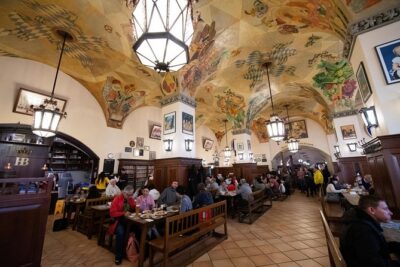
Third Reich Berlin: Hitler and WWII Walking Tour
Read our review →
Walking Tour of Former Nazi Party Rally Grounds
Read our review →
Browse the lists this tour appears in