
Reviewed · WALKING TOURS
Munich Old Town – Guided Walking Tour in English
Munich Old Town is fascinating because every few minutes you go from beer pride and royal power to the parts of history Germany struggles to name out loud. I like how the story connects Marienplatz to Hofbräuhaus in a way that helps it all click fast.
Two things I really love are the stop at Hofbräuhaus for Bavaria’s beer culture, and the walk that ties you to the Wittelsbach era of long-ruling Bavarian kings. Guides I’ve heard singled out, like Alex and Jean, also keep the pace friendly, with humor and plenty of practical tips for what to do next.
One possible drawback: this tour does include serious Nazi-era material, including the Beer Hall Putsch, so it may feel heavy if you prefer lighter sightseeing only.
Quick hits you should know before you go
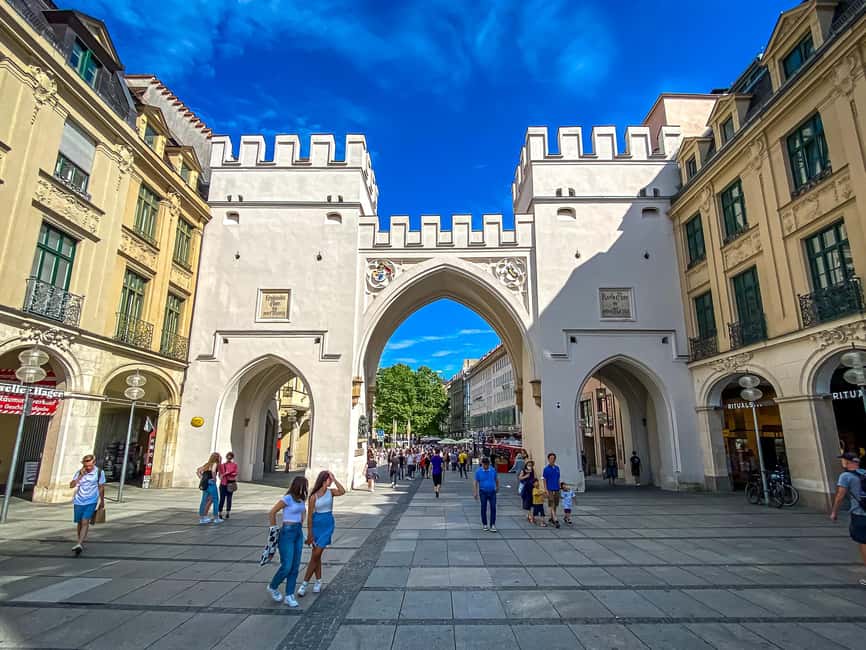
- St. Peter Church meeting point: look for the Walkative guide with the yellow umbrella at the main gate.
- A 150-minute narrative walk: you move through key squares and sights without feeling rushed.
- Hofbräuhaus, beyond the beer stein: you get the stories behind Bavaria’s beer culture.
- Royal Munich in the streets: the route links you to the Bavarian emperors and the kings’ residences area.
- Nazism is not skipped: the walk addresses the Beer Hall Putsch and places tied to its origins.
- The carillon show is low-key optional: the knight-fight clock scene is included, but you’ll hear context for it so it lands properly.
Meeting at St. Peter Church, then getting your bearings fast
The tour starts at the main gate of St. Peter Church. You cannot miss it if you watch for the Walkative guide holding a yellow umbrella. That small detail matters more than you’d think, because Munich is easy to walk around, but it is also easy to drift into the wrong alley with no clue what you are actually seeing.
This is a 150-minute guided walking tour in English (and German is also available), built around a narrative. That means you are not just collecting landmarks. You are learning how Munich grew, who ran it, and why certain places became famous.
Price is listed as $29 per person, and the tour is described as a general pay-as-you-wish walking tour. Practically, that means your payment covers a reservation fee plus the guide’s payment in advance, and you are not expected to pay extra on the spot. If you want a smaller private tour, you can contact the supplier before booking to arrange it.
One quick tip: wear shoes you trust. Old Town streets are uneven in spots, and the tour is long enough that comfort becomes a big deal by minute 60.
More Walking Tours in Munich
- Munich: Third Reich & WWII Walking Tour
★ 4.6 · 6,181 reviews - Third Reich Walking Tour Munich
★ 4.5 · 4,291 reviews - Munich: Old Town & Viktualienmarkt City Walk in German
★ 4.7 · 2,304 reviews
Marienplatz: the New Town Hall, Old Town Hall, and the carillon moment
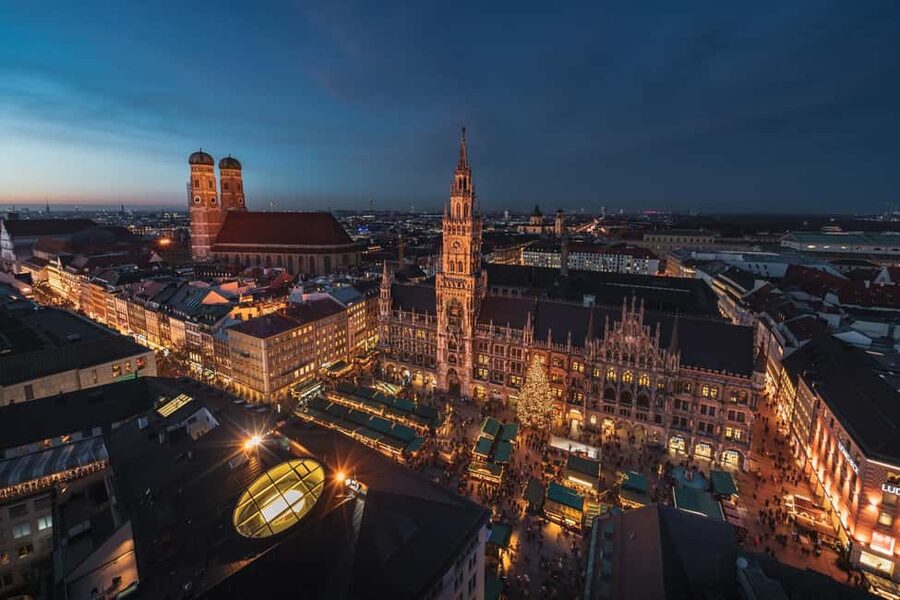
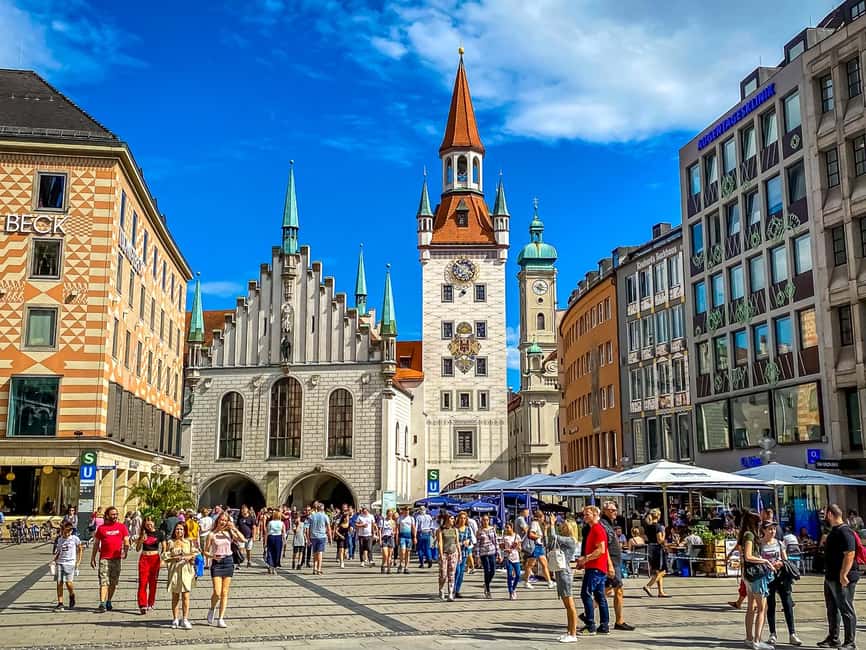
You start making sense of Munich at Marienplatz, the main square that ties daily life to big politics. Your guide points out both the New and Old Town Hall, and what you learn here sets up everything else you see later.
Marienplatz is also where you will run into the carillon clock show with those knightly figures. Some people expect it to be the highlight. I appreciate that the tour does not pretend it is automatically magical. Instead, you get context for what it is, why it became part of the square’s identity, and how to think about it without forcing yourself to find it profound.
Here is the useful part for your own day planning: after this tour, Marienplatz stops feeling like a generic pretty square. It starts feeling like Munich’s public stage. From here, you can choose where to go next based on interest, not guesswork.
If you are the type who likes photos, this is a good place to pause. You will usually have opportunities for pictures around the clock faces and the town hall architecture, but do not let photography slow the group too much. The tour’s value comes from how the story moves from stop to stop.
Hofbräuhaus: Bavaria’s beer culture and the stories behind the mugs
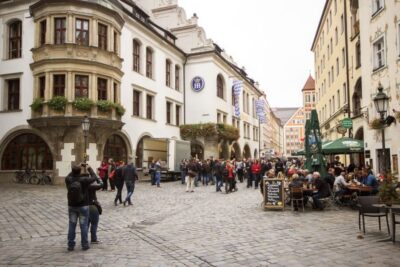
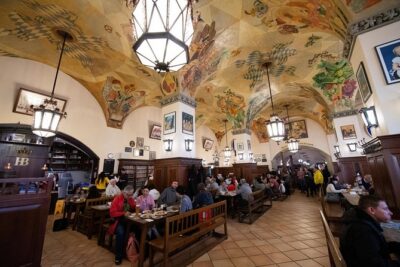
If you want a single stop that explains Bavaria’s identity, it is Hofbräuhaus. This is not only about drinking beer. Your guide connects the building to how beer culture developed and why Munich turned beer into a social language.
You also get the kind of detail that makes a landmark feel human. I’ve heard examples like the story of Aloisius, a figure that shows up in Hofbräuhaus lore. You will also hear about the Munich child image used in local logos, flags, and emblems. Those are the sorts of small cultural threads that explain why the city’s “beer vibe” is not random costume.
For food lovers, you may also get pointers toward classics you can hunt down afterward. One name that comes up is Leberkase, even down to the sandwich form you can find at Viktualienmarkt. Again, the tour is not a meal tour, but the guide’s food hints help you turn your curiosity into actual eating plans once the walking part ends.
Two practical ways to use this stop after the tour:
- If you still want Bavarian atmosphere, Hofbräuhaus is a good anchor, but it helps to know the stories first so you can read the room.
- If you want something less touristy, use the beer-culture context from the tour to decide what kind of beer hall experience fits your mood.
Odeonsplatz and the National Theater area: power, performance, and big-city confidence
From Marienplatz you move toward Odeonsplatz, a square known for its monumental feel. This is where Munich starts looking less like a village with good food and more like a capital that liked to show off.
Your guide brings in the National Theater and State Opera area next. Even if you do not plan to buy tickets, the point is that culture here is not separate from politics. The buildings you see communicate prestige, money, and identity, and the guide helps you understand why that mattered in Bavarian society.
This section tends to be a sweet spot for most people because the pacing feels steady. You walk. You stop. You get a chunk of context. Then you move on. It is also a good place to ask questions if you like clarity. Many guides have been praised for answering on-the-spot curiosity, not brushing it off.
If you are sensitive to heavy topics, consider what comes later in the narrative. The tour handles complex history, including Nazism, and you might want a bathroom break or a short pause for water before the next parts of the story intensify.
Another way to spend a Munich afternoon:
- From Munich: Neuschwanstein & Linderhof Castle Full-Day Trip
★ 4.6 · 14,646 reviews - Neuschwanstein & Linderhof Castle-Fairytale Day Tour from Munich
★ 4.5 · 7,275 reviews - Dachau Concentration Camp Memorial Site Tour from Munich by Train
★ 4.5 · 5,637 reviews - Neuschwanstein Castle Tour from Munich
★ 4.5 · 5,117 reviews
Max Joseph Platz and the kings’ residences: seeing the Wittelsbach era in real space
This tour does a good job of translating time periods into street-level reality. You reach Max Joseph Platz and the area tied to the residence of Bavarian kings, and you start to feel the long stretch of power.
The Wittelsbachs ruled Bavaria for centuries, and the guide explains that timeline so you understand why their influence still shows up in architecture, institutions, and civic pride. This is where the tour’s “light and dark” balance becomes more than a slogan. You see the pageantry of power and you also learn how political systems shape people’s lives.
I love this part because it helps you read Munich like a map of intentions. When you look at grand buildings after hearing the story, you notice how they were meant to signal authority.
One small consideration: because this is a walking tour, you are not going into palaces. The value is interpretation in the open air. If you are hoping for inside access to royal rooms, you might want to pair this tour with a separate ticketed visit later. But as an introduction, it works extremely well.
Munich’s dark footnotes: the Beer Hall Putsch and the Nazi origin points
The most serious section of the tour deals with how Munich connects to the Nazi movement. You learn about the Beer Hall Putsch of 1923, and how Adolf Hitler tried to seize power by force. You also hear the story of how he ended up behind bars and the book Mein Kampf, which became the basis for the ideology that led to World War II.
Your guide also addresses that the birthplace of the NSDAP was in Munich, and that Nazism took power across Germany from there.
This is not light content. Guides have been praised for dealing with difficult and complex events in a sensitive way, including for handling it without turning it into spectacle. That matters, because the places you are standing in are real, and the story can easily go wrong if a guide treats it like trivia.
If you want practical guidance: mentally prepare yourself. Give the tour a clear role in your trip. This is not only “history.” It is how you understand why certain commemorations and lessons exist in the city’s fabric.
Also, if you have family members with you or you are taking a partner who prefers gentle history, you can set expectations beforehand. This tour includes the darker pages of German history, and you should know that up front.
Where Benedict XVI once worked: Joseph Ratzinger in the same streets
The tour does not let the story end in the early 20th century. It also connects to Joseph Ratzinger, who later became Pope Benedict XVI. You learn that he worked while still an archbishop in Munich.
I like this shift because it adds balance. It reminds you Munich did not become important in one era only. Religious, political, and cultural life all overlap in a city where people kept building, teaching, and shaping public identity over generations.
This part helps you make sense of why Munich’s famous Catholic churches and grand civic buildings matter beyond beauty. They represent long traditions of belief and authority, which you can only really appreciate if you see the full timeline.
How the tour’s narrative helps your next steps
By the time you finish, you usually feel like Munich has a spine. That is the real value of a constructed narrative tour: it tells you what to notice after you leave.
You also get practical help that goes beyond facts. Many guides have been described as friendly and patient, and some have shared local recommendations after the tour. That can mean where to eat, what to try, and how to enjoy the city without wandering in circles.
Here is how I suggest you use what you learned the same day:
- Start with the beer culture context at Hofbräuhaus, then pick food stops that match the classics you want, like the kind of Leberkase sandwich mentioned in the tour discussions.
- Use the royal Munich context to choose a viewpoint or nearby walk. Knowing the Wittelsbach story makes your outside wandering more satisfying.
- If you want to revisit something you were unsure about, keep one question for later. The tour includes complicated history, and it is okay to take notes and ask follow-ups afterward.
Also, a small reality check: a walking tour cannot replace museum time. But it can tell you what museum themes will matter most to you.
Price, time, and who this tour fits best
For $29 and 150 minutes, you are paying for two things: an expert local guide and a narrative that stitches together multiple eras. That is strong value if you want a first introduction to Munich Old Town without having to research every landmark yourself.
This tour fits best if you:
- Want a structured overview of the Old Town without feeling lost.
- Like city history told through places you actually walk by.
- Are comfortable with serious content, including Nazi-era history, and prefer sensitive storytelling over skipping it.
It may not be ideal if you:
- Want only beer halls, costumes, and light sightseeing.
- Feel strongly that you do not want wartime history covered during a city walk.
There is also a format consideration. This is a general pay-as-you-wish walking tour, and the guide is compensated in advance through your reservation process. That can be a good thing for value, but it means the guide is working with a group setting rather than offering a custom itinerary tailored to only your interests.
Should you book the Munich Old Town guided walking tour?
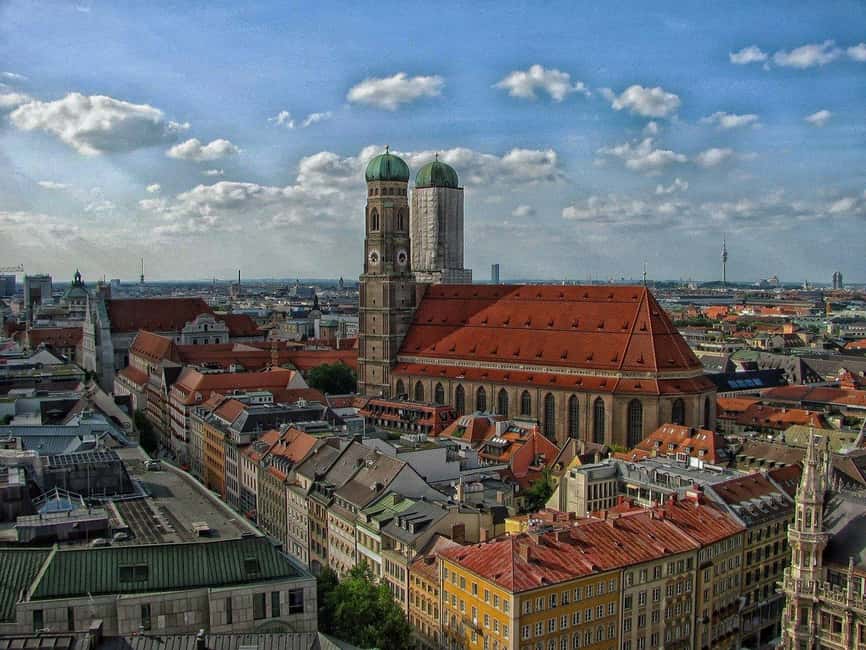
Book it if you want Munich to make sense fast, especially if you care about how beer culture, royal power, and difficult 20th-century history all coexist in one city. The route hits major touchpoints like Marienplatz, Hofbräuhaus, Odeonsplatz, and the kings’ residences area, and the guide’s storytelling is repeatedly described as engaging, paced well, and sensitive with complex topics.
Skip it or consider pairing it with something lighter if you only want upbeat sightseeing. The carillon clock show is included, but the bigger point is learning how to read the city, not forcing yourself to love every sight equally.
If you do book: bring comfortable shoes, show up on time at St. Peter Church main gate, and keep an open mind. Munich rewards that.
FAQ
Where do we meet for the tour?
You meet at the main gate of St. Peter Church. The guide will be waiting with the Walkative yellow umbrella.
How long is the Munich Old Town guided walking tour?
The tour lasts 150 minutes.
What languages is the tour offered in?
The tour is offered with a live guide in English and German.
What is included in the price?
The tour includes an expert local guide and a thoroughly constructed narrative.
Is hotel pickup and drop-off included?
No, hotel pickup and drop-off are not included.
Is there any extra payment required on the day?
For the general pay-as-you-wish format, the amount you pay covers the reservation fee and the guide’s payment in advance, and no more payment is required from you on the spot.
Can I cancel and get a full refund?
Yes. You can cancel up to 24 hours in advance for a full refund.
Fresh reviews out of Munich
- Munich: Christmas Markets Food & Drink Tour★ 4.6 · 50 reviews
- Munich: Walking tour of the old town with all your senses★ 4.5 · 51 reviews
- Munich: Scavenger Hunt Self-Guided Tour★ 4.1 · 51 reviews
- Hidden Architectural Gems of Munich (Max. 16 guests)★ 4.9 · 52 reviews
- Shared Departure Transfer: Munich Central Station to Munich Airport★ 3.5 · 54 reviews
- Hard Rock Cafe Munich with Set Lunch or Dinner★ 3.5 · 54 reviews
- Quatsch Comedy Club München: Die Live Show★ 4.6 · 56 reviews
- From Munich: Royal Fairytale Tour★ 4.9 · 56 reviews
Walking Tours, compared.

Berlin’s Best: 2 Hour Walking Tour Third Reich and the Cold War
Read our review →
Third Reich Berlin: Hitler and WWII Walking Tour
Read our review →Browse the lists this tour appears in