
Reviewed · WALKING TOURS
Munich Macabre Group Walking Tour
Munich can feel polished and orderly from the outside, which is exactly why this tour works. You follow a guide who turns old stone, old myths, and old objects into a living story of sickness, suspicion, and survival in the city. Meet archaeologist and historian Taff Simon, and you learn to read Munich with your hands, not just your eyes.
What I like most is the hands-on archaeology angle. At multiple stops you examine and handle real ancient items and replicas, so the past stops being abstract. I also love the way the tour mixes big topics like the Black Death and witch trials with practical, everyday details, including why beer mattered so much.
One possible drawback: the subject matter can be grim. There are stories tied to plague fears, accusations, and witch trials, and some stops use excavation photos and discussion of burial practices that may be too intense for very young kids.
Key things that make this tour different
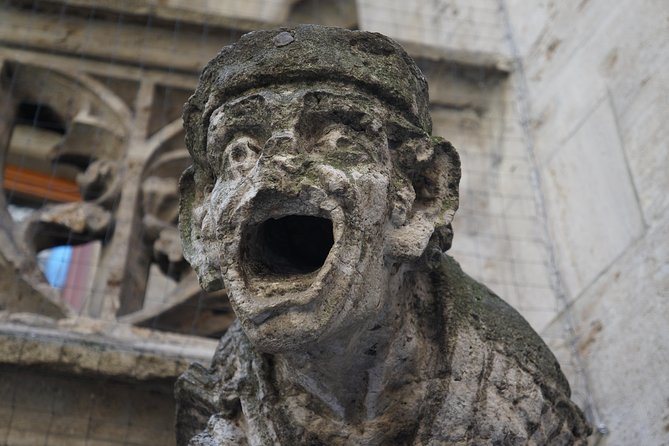
- Archaeologist-led storytelling: Taff Simon brings finds and field experience into each stop, not a memorized lecture.
- You handle artifacts: coins, pottery examples, and replica medieval arms, plus other hands-on materials.
- Medieval beer with context: you sample an authentic medieval brew and learn what could go wrong if brewers cut corners.
- Munich’s “beneath the surface” history: the route connects Marienplatz and major landmarks to the city’s darker chapters.
- Small group feel: the tour maxes at 15 people, so questions can actually get answered.
Meeting Taff Simon at Marienplatz, and learning Munich with your hands
The tour starts in the evening at Fischbrunnen, at Marienplatz. It is a smart time to do this walk because the squares and streets start feeling more human and less rushed. You meet Taff Simon and get a quick grounding on where Munich came from and why key parts of the old center look the way they do.
This is not just a “look at the building” tour. From the start you are being trained to notice symbols, materials, and patterns. That sets you up for the hands-on moments later, when you see why archaeology is all about tiny clues, not dramatic discoveries.
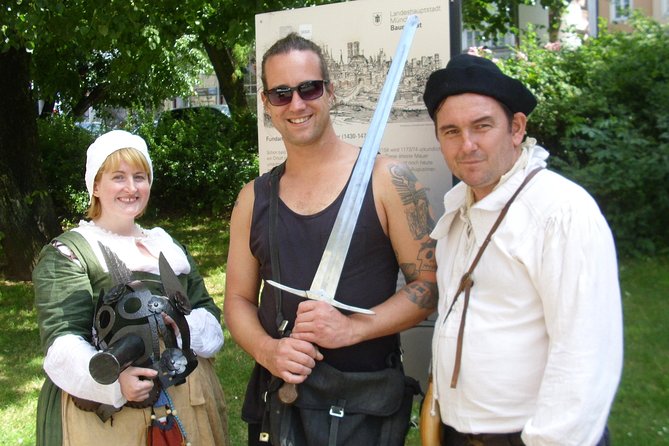
You should also know the guide’s style. Several experiences like this stand or fall on the performer, and here Taff’s work leans into period costume, humor, and interactive explanation. It also helps that the group size stays small, so you are not stuck listening from far away.
If you prefer quiet walking tours with minimal drama, this might feel different. But if you like your history with stories and props, you are in the right place.
More Walking Tours in Munich
- Munich: Third Reich & WWII Walking Tour
★ 4.6 · 6,181 reviews - Third Reich Walking Tour Munich
★ 4.5 · 4,291 reviews - Munich: Old Town & Viktualienmarkt City Walk in German
★ 4.7 · 2,304 reviews
Landschaftstraße and the Medieval Jewish Quarter, with anti-Semitic myths explained
Next you move along Landschaftstraße, an area that ran alongside what used to be the medieval Jewish quarter. Today it looks fairly ordinary, which is exactly the point. The guide uses the contrast to show how a neighborhood can be erased from memory while leaving traces underground.
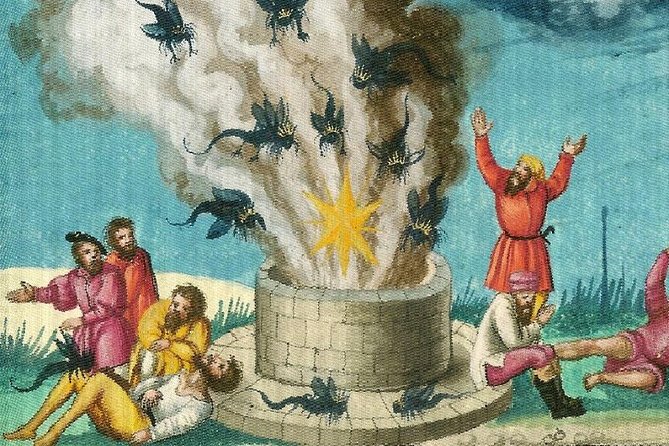
The central theme here is how a community contributed to the city’s economic and cultural life, and then how it was targeted by baseless accusations. You cover claims like “blood libel,” the idea that Jewish people spread the Black Death, and other accusations used to justify harm. This part matters because it explains how fear turns into policy, and rumor becomes violence.
A key modern layer is archaeological evidence. The guide ties what he teaches to recent excavations connected to a new U-Bahn project, which helps you understand how city building can also revise what we know about the past.
This stop also gives you something practical for your Munich trip. Once you learn how rumor and scapegoating shaped history, you will notice how often modern plaques, street names, and memorials are only the surface layer of what really happened.
St. Peter’s Church: reading gravestones, learning burial rites, and handling coins
At St. Peter’s Church, you zoom in on what people left behind when they died, and how later generations tried to interpret that. The church is the oldest in Munich, so the tour uses it as a gateway to “start at the beginning” history: early Bavarian burial practices and how they changed.
You also learn a very useful skill, how to decipher symbols on gravestones. Instead of treating grave markers as decoration, you learn to read them like documents. That includes discussing how the phrase rest in peace could sometimes mean rest in pieces, which sets up a conversation about shifting burial customs over time.
Then comes one of the tour’s standout hands-on moments: you get to handle original ancient coins that would have been given as alms. It is a small object, but it instantly connects religion, charity, and daily life in a way a photo never can.
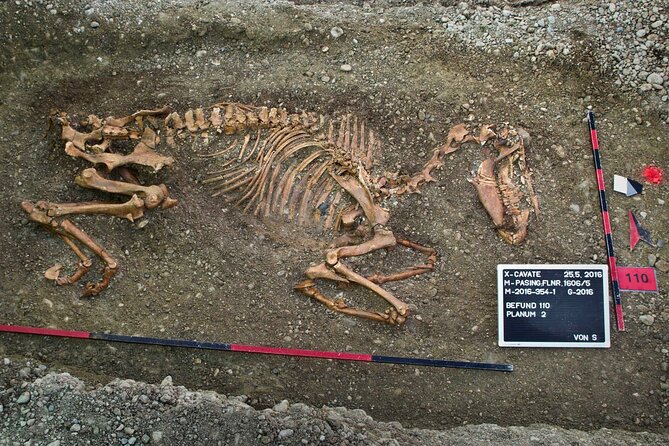
The tour also uses examples from Dark Age and early medieval burial rites from excavation photos that the guide has been involved with, often from construction sites. It is presented as educational, but it is still sensitive content. So if you are bringing kids, decide based on your family. The tour explicitly notes that it can be hard for particularly young children and that the descriptive intensity may need tempering.
If you are the kind of traveler who likes symbolism, material culture, and “how do we know this,” this stop will likely be your favorite.
Viktualienmarkt: pretzels, penalties for bad beer, and a medieval brew sample
Viktualienmarkt is the shift in tone you need. Today it is a lively market area where locals grab pretzels and cheese and then head to beer gardens. On this tour, you get the medieval context, and it comes with an uncomfortable truth: this spot was not always a friendly place for everyone, and the guide sets up the idea that an outcast could end up here.
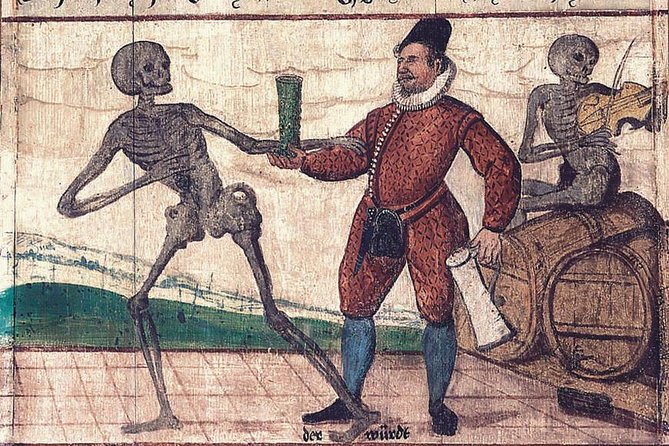
The main practical hook is beer. You learn why beer was so important in the past, not as a casual drink but as part of daily survival and local identity. The tour also connects brewing to strict standards, including the terrible penalties for making bad beer and pretzels.
Then you taste. You are offered authentic medieval beer samples, not full pours, so think of it as a structured introduction rather than a pub crawl. Still, the sample is part of the education, because the guide explains what you are tasting and why it likely differed from modern beer.
One thing to keep in mind: beer samples plus walking can build up fast in the evening. If you are planning to eat after, this is a good reason to grab dinner nearby without expecting the tour to fully replace a meal.
Another way to spend a Munich afternoon:
- From Munich: Neuschwanstein & Linderhof Castle Full-Day Trip
★ 4.6 · 14,646 reviews - Neuschwanstein & Linderhof Castle-Fairytale Day Tour from Munich
★ 4.5 · 7,275 reviews - Dachau Concentration Camp Memorial Site Tour from Munich by Train
★ 4.5 · 5,637 reviews - Neuschwanstein Castle Tour from Munich
★ 4.5 · 5,117 reviews
Alter Hof: Wittelsbacher power, medieval combat theories, and pottery from a wartime find
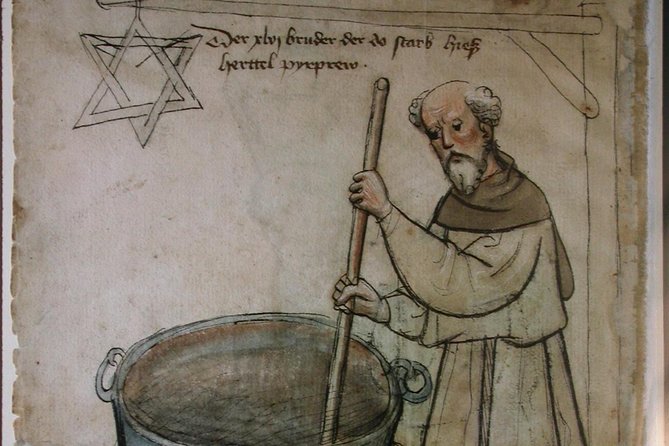
Alter Hof is where the tour widens into power and violence. This was originally a castle for the Wittelsbacher, the Bavarian royal family. The guide uses that setting to tell a murder story that shocked medieval Europe, then follows how the consequences ripple across generations of Munich residents.
You also move into medieval combat, using the theories of Hans Talhoffer, one of the late medieval sword masters. This section is where the tour becomes really interactive. You get to handle replica swords, and you may even get examples of armor. Even if you are not into martial history, this helps you understand what combat training looked like, and why weapons were both practical and symbolic.
And then you get a real archaeology twist tied to 1944. Time permitting, the guide covers an archaeological discovery at Alter Hof when an Allied bomb inadvertently unearthed ancient artifacts. You get to handle and compare different types of ancient pottery and other artifacts, which turns a wartime event into a lesson about how accidental events can change the archaeological record.
The reason this stop works so well is that it links three layers: royal power, physical danger, and the material leftovers that still sit under the city. It is not random trivia. It helps you see Munich as a place where multiple time periods overlap.
Old Town Hall: Munich’s witch trial story, and how evidence was made
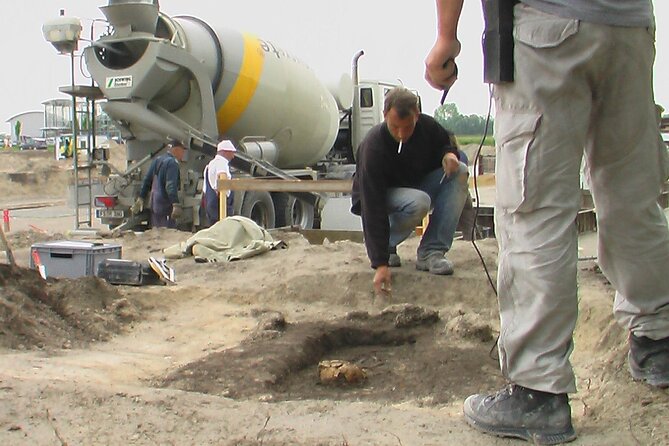
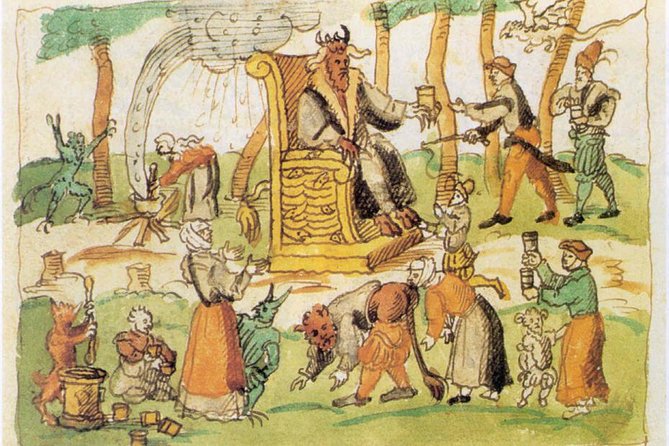
The Old Town Hall stop focuses on the most vicious witch trial in German history, held in central Munich. The guide lays out background to the case, the charges, and the methods used to gather so-called evidence, then explains what happened to the Pappenheimers.
If you are used to reading witch trials as pure superstition, this is a sobering reminder that accusations were processed like a system. It also connects the story outward, noting far-reaching consequences felt far beyond Munich, reaching as far as a small town in colonial Massachusetts.
This stop can feel heavy. The tour does not treat these events like horror theater. It frames them as a mix of fear, politics, and legal mechanisms that turned rumor into punishment.
If you want a calmer evening, this is the part you might mentally brace for. But if you want to understand the full human cost behind medieval and early modern myths, it is one of the most important stops on the route.
How the route works, what you’ll actually do, and what to wear
The total walk runs about 2 hours 30 minutes to 2 hours 45 minutes. It keeps moving through central old Munich, with short stays at each main stop. The tour has a mobile ticket and is offered in English only.
You also need to plan for the physical reality of a historic city. There are some uneven surfaces, so wear shoes that can handle cobbles and street irregularities. Bring clothing for local conditions, and if the weather is poor or local events block the regular route, the guide may adjust the path while still hitting the advertised themes.
Seating is mixed by stop. Some areas may have seats, and others may not, so if you need seating, tell the operator at booking and they will try to adjust the route.
Most travelers can participate, but the tour also flags that some content may not be suitable for particularly young children. If your kid asks lots of detailed questions, the guide may answer, but you should judge your family’s comfort level with plague-era fear, accusations, and burial discussions using excavation visuals.
One practical tip: this is a small group experience with a maximum of 15 people, so bring curiosity. The guide responds well to questions, and the hands-on artifacts make it easier to ask specific things like what a coin’s wear patterns can tell you, or what a burial symbol might mean.
Price and value: why $42.24 feels fair for this kind of tour
At $42.24 per person, this tour is not a “cheap and cheerful” add-on. It is priced like a specialized experience, and you are paying for three things.
First, you are paying for an expert guide who is an archaeologist and historian, not someone reading facts off a card. The value is in the way the story changes depending on what you ask, and the way the guide uses real objects to support the points.
Second, the tour includes alcoholic beverages. You get medieval beer samples as part of the experience, plus context on brewing in Munich and what strict standards used to mean.
Third, you get hands-on time with artifacts. Access to original ancient coins and excavation-derived materials is rare for walking tours. Even if you are only curious, being able to hold objects changes how you understand the city.
For me, the best sign of value is that the tour feels like more than “sightseeing with a story.” You come away with new ways to notice symbols, understand how fear shaped communities, and connect beer culture to survival and local identity.
Who this tour suits best, and who should skip it
This is ideal for you if you like history with edges. You enjoy darker topics, but you still want clear context instead of cheap shock.
It is also a strong fit for teens. The reviews include families with teenagers who found the format engaging and interactive, especially because the guide uses props and invites questions.
If you are the type who dislikes any discussion of death, witch trials, plague fears, or sensitive burial imagery, you might want to choose a lighter historical tour instead. The tour itself warns it is not for people with an over vivid imagination.
Finally, if you want a quick overview of Munich for your first day, this works better as a mid-trip or late-day plan. It is paced like a narrative walk, not a checklist.
Should you book the Munich Macabre Group Walking Tour?
I think you should book this if you want an evening in Munich that feels off the tourist track but still stays grounded in real objects and real archaeology. The hands-on component with Taff Simon is the main draw, and the medieval beer sample is the kind of inclusion that makes the whole story feel practical, not staged.
I would hesitate only if you are sensitive to grim historical topics, or if you are traveling with very young kids who may struggle with plague and burial discussions. For adults, older kids, and families who can handle dark history with context, this is a high-value use of 2.5 hours in the center of Munich.
FAQ
What time does the tour start?
It starts at 6:00 pm.
Where do I meet the guide?
The meeting point is Fischbrunnen, Marienplatz 8, 80331 München, Germany.
How long is the Munich Macabre tour?
It runs about 2 hours 30 minutes to 2 hours 45 minutes.
Is the tour offered in English?
Yes, the tour is only offered in English.
Does the tour include a beverage?
Yes. You get alcoholic beverage samples, including authentic medieval beer.
What should I wear?
Some surfaces are uneven, so you should wear suitable footwear and dress for local weather.
Is it limited in group size?
Yes. The tour has a maximum of 15 travelers.
FAQ
Are service animals allowed?
Yes, service animals are allowed.
Is the content suitable for young children?
Some content is not really suitable for particularly young children. The tour notes that if you bring children, the guide will try to temper more descriptive elements.
Is good weather required?
Yes, the experience requires good weather. If it is canceled due to poor weather, you will be offered a different date or a full refund.
Can the route change?
Yes. In bad weather or due to other events that bar the regular route, the guide may change the route while still discussing the advertised themes.
What kind of ticket do I receive?
It uses a mobile ticket.
Is public transportation nearby?
Yes, it is near public transportation.
How do confirmations work after booking?
Confirmation is received within 48 hours of booking, subject to availability.
Fresh reviews out of Munich
- Munich: Christmas Markets Food & Drink Tour★ 4.6 · 50 reviews
- Munich: Walking tour of the old town with all your senses★ 4.5 · 51 reviews
- Munich: Scavenger Hunt Self-Guided Tour★ 4.1 · 51 reviews
- Hidden Architectural Gems of Munich (Max. 16 guests)★ 4.9 · 52 reviews
- Shared Departure Transfer: Munich Central Station to Munich Airport★ 3.5 · 54 reviews
- Hard Rock Cafe Munich with Set Lunch or Dinner★ 3.5 · 54 reviews
- Quatsch Comedy Club München: Die Live Show★ 4.6 · 56 reviews
- From Munich: Royal Fairytale Tour★ 4.9 · 56 reviews
Walking Tours, compared.

Berlin’s Best: 2 Hour Walking Tour Third Reich and the Cold War
Read our review →
Third Reich Berlin: Hitler and WWII Walking Tour
Read our review →Browse the lists this tour appears in