
Reviewed · WALKING TOURS
Fall in Love with Munich in a Private Old Town Walking Tour
This private old town walking tour is interesting because it treats Munich like a story you can walk through, starting at medieval fortifications and ending at the city’s loudest landmarks on Marienplatz. I especially love how Victoria blends big events with small details, and how her iPad visuals, photos, and maps make the scenes click instead of just sounding like facts. The second thing I like is the tight focus, you hit major sights and a handful of lesser-known stops in about two hours without feeling frantic.
One possible drawback to keep in mind: this is a history and sights-first walk. If you want long museum-style time at every location, you may feel you are moving on too soon, and food and drinks are not part of the tour.
Key things that make this Munich walk worth your time
- Private group up to 6 means your questions do not get swallowed by a crowd
- Entrance fees are included, so you do not have to manage tickets on the fly
- Victoria’s iPad visuals (maps, photos, and videos) help you place what you are seeing
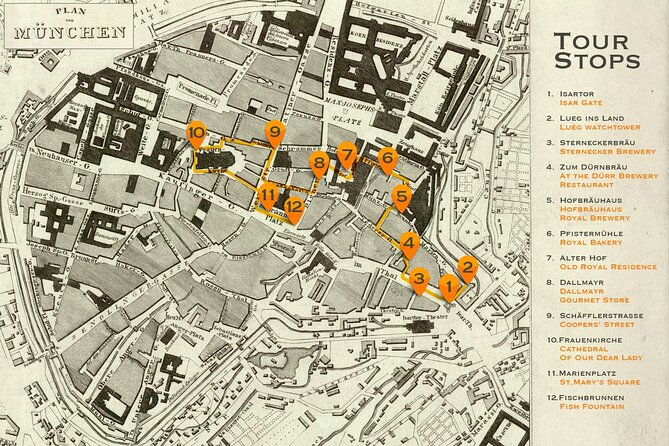
- A planned route from Isar Gate to Marienplatz gives you an easy finish point for the rest of your day
- Insider restaurant and shopping tips are built into the experience, not tacked on at the end
- Comfortable pacing for mixed ages has worked well for groups ranging from young kids to grandparents
Why Munich starts to make sense during a private old town walk
Munich can feel polished and modern on the surface, but the older streets hold the real logic of how the city grew. This tour works because it follows that logic in a straight line, medieval walls to royal power to beer culture and civic life. You do not just look at buildings, you get the “why” behind them, including legends and traditions that locals still talk about.
I also like the energy level. It is not a sleepy history class. Victoria keeps things moving, and the story changes tempo as you go from fortifications to beer halls to the Frauenkirche. Even if you are tired after travel, the format helps you stay engaged without constantly searching for context yourself.
More Walking Tours in Munich
- Munich: Third Reich & WWII Walking Tour
★ 4.6 · 6,181 reviews - Third Reich Walking Tour Munich
★ 4.5 · 4,291 reviews - Munich: Old Town & Viktualienmarkt City Walk in German
★ 4.7 · 2,304 reviews
Price and what you really get for $157.28 per group
The price is $157.28 per group, up to 6 people. That pricing model is great value if you travel with family or friends, because you get a true private guide rather than paying a higher per-person rate for a small group.
The other value booster is that entrance tickets are included. Several stops on the route involve sites you would normally need to pay to enter, so you avoid the annoying scramble of figuring out ticket options mid-walk. Add in the digital map, the English-guided storytelling, and the tailored recommendations, and you are not just buying walking time. You are buying orientation, context, and practical help for the rest of your Munich days.
Also, this tour tends to get booked early. On average, it is reserved about 71 days in advance, so if you have fixed dates, it is smart to lock it in sooner rather than later.
How the route flows, starting at Isar Gate and ending at Marienplatz
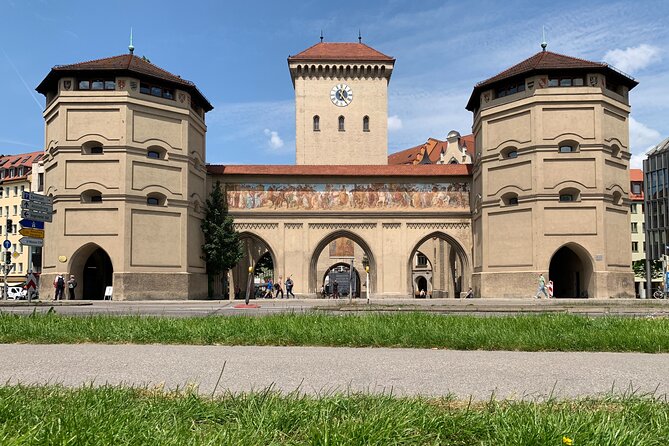
You meet at Isar Gate, under the central arch, at Tal 50. That is a good start point because it launches you into medieval Munich immediately, before your brain has time to wander into modern shopping mode.
The tour ends at Marienplatz, the central square of the old town. That is a smart finish because Marienplatz is the natural launch pad for everything else, whether you want another historic stroll, a café break, or a beer that turns into dinner plans.
Most stops are short, some around 5 to 15 minutes and a few longer ones around 20 minutes. That pacing is part of the design. You see a lot, but Victoria keeps the story tight so you do not get lost in details you do not need yet.
Stop-by-stop: from Isartor to the Glockenspiel in about 2 hours
Another way to spend a Munich afternoon:
- From Munich: Neuschwanstein & Linderhof Castle Full-Day Trip
★ 4.6 · 14,646 reviews - Neuschwanstein & Linderhof Castle-Fairytale Day Tour from Munich
★ 4.5 · 7,275 reviews - Dachau Concentration Camp Memorial Site Tour from Munich by Train
★ 4.5 · 5,637 reviews - Neuschwanstein Castle Tour from Munich
★ 4.5 · 5,117 reviews
Stop 1: Isar Gate (Isartor), medieval walls and odd Munich legends
You start with the Isar Gate and the story of Munich’s medieval fortifications. You will notice the disguised remains of the main medieval city wall, and Victoria explains how the city’s early foundation legends connect to why Munich became a real power center.
One of the more memorable parts here is the angle on economic growth. You hear how trading one specific product helped generate the rise of a metropolis. That small cause-and-effect framing is useful later, when you understand why Munich’s later identity, including royal and beer culture, has such deep roots.
If you enjoy local lore, this stop also brings in the legend of time in Bavaria running backwards, plus a nod to Munich’s most beloved comedian and the museum hosted by the towers of the gate. It sets a tone for the rest of the walk: history plus story, with humor.
Stop 2: Sterneckerbräu, a dark chapter you cannot skip
At Sterneckerbräu, the guide points out the place where Adolf Hitler held his first public speech, which led to his joining the German Workers’ Party. Victoria also connects the building to how it developed into a key Nazi Party location.
This is the heavy stop on the route, so I suggest you mentally prepare for it. If your travel style prefers only upbeat cultural stops, this may feel uncomfortable. But if you want a fuller picture of Germany in the 20th century, you need moments like this to prevent Munich’s story from becoming only beer steins and pretty facades.
Stop 3: Dürnbräugasse, the oldest tavern story that lasts for centuries
Next is Dürnbräugasse, where you pass by the oldest tavern in town. Victoria focuses on why it survived, and how it preserved its status as the oldest tavern in Munich for more than half a millennium.
Even if you are not a beer person, this stop helps you understand local continuity. A city that can keep a tavern going for centuries is not just changing buildings, it is keeping habits, community, and identity alive through generations.
Stop 4: Hofbräuhaus München, beer hall interiors, beer purity, and the Oktoberfest link
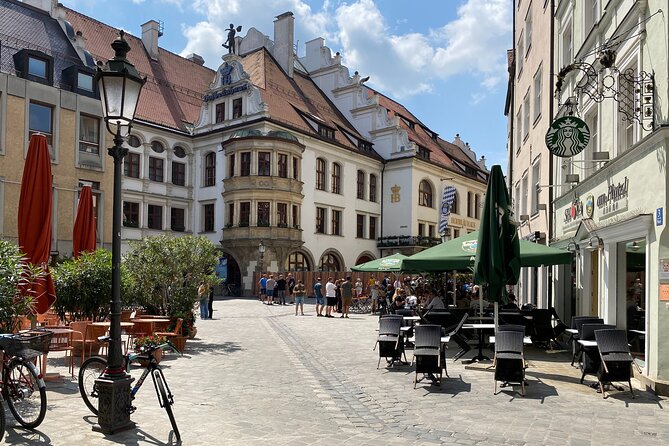
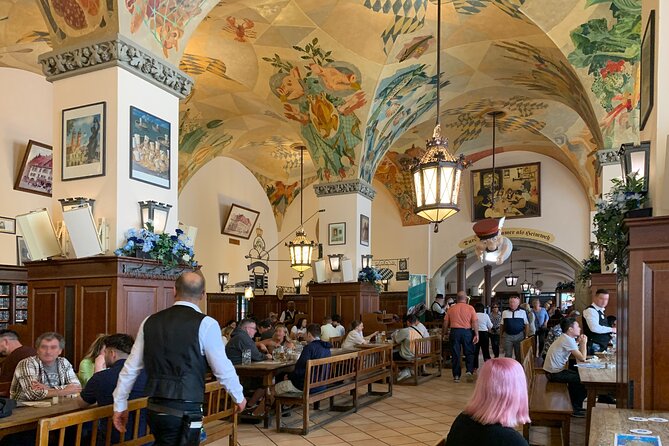
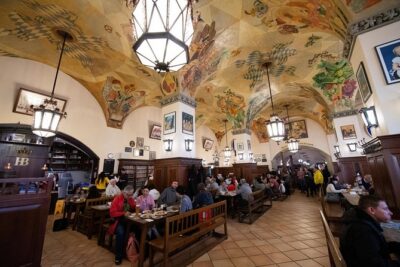
The Hofbräuhaus München stop is a highlight, and it is built for first-timers. You visit the former royal brewery and what is widely considered the most famous beer hall, then go inside the main hall to take in the interiors.
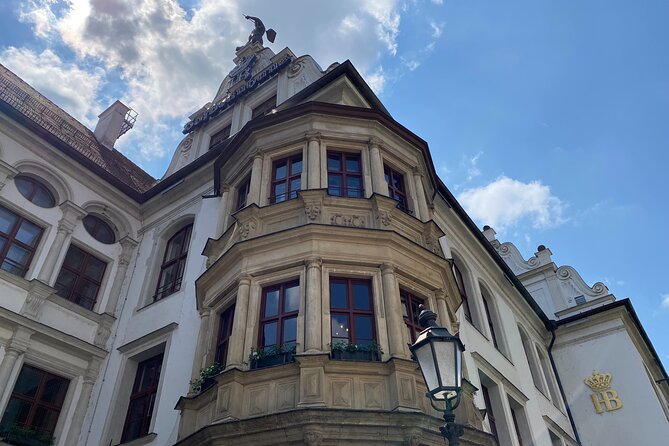
Victoria points out details you would miss on your own, like the beer hall’s famous beer angel, the way the regular tables work, and the stored mugs in special cells. You also connect that atmosphere to the beer purity law, Bavarian brewing traditions, and how Oktoberfest fits into the larger brewing story.
If you are planning to attend Oktoberfest later, this stop gives context that makes the festival feel less random. And if you are not, it still helps you understand why beer culture is not a side hobby here, it is a core social system.
Stop 5: Restaurant Pfistermühle, royal bakery history and the pretzel legend
At Pfistermühle, you sight a former royal bakery and hear the legend of the pretzel, including how it links symbolically to Munich. This is a shorter stop, but the point is bigger than bread.
Food legends are a shortcut into local thinking. They show what people celebrated, what they served, and how symbols get repeated until they become part of a city’s personality.
Stop 6: Alter Hof, Wittelsbach power, Royal Zoo lore, and the flag colors
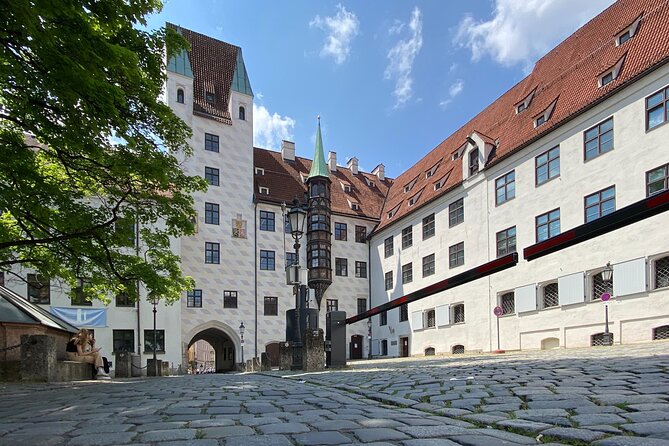
Then it is Alter Hof, the inner courtyard connected to the first residence of the Wittelsbach royal family. Victoria explains the legend of the Royal Zoo and how it unexpectedly connects to Holy Roman Emperor Louis IV.
This stop also covers something practical you can carry with you: how Munich’s flag got its colors. It is the kind of small-but-meaningful detail that makes later sightseeing feel more personal.
Stop 7: Dallmayr Delikatessenhaus, a royal-tradition gourmet store for coffee and food lovers
Next you walk past Dallmayr Delikatessenhaus, a historical gourmet store tied to royal tradition. Today it is one of the largest delicatessen companies in Europe, but Victoria keeps it grounded with what to notice and how to approach it if you love coffee and specialty foods.
If you are the type who buys something small but memorable, this stop helps you pick what fits your taste. You also get insider tips for food and shopping, so you are not just window shopping out of curiosity.
Stop 8: Schäfflerstraße, Cooper’s Street and the pest containment dance legend
At Schäfflerstraße, Victoria guides you across Cooper’s Street and shares Munich’s famous legend about a 16th-century pest containment celebration. The story includes a traditional dance performed in the city until today.
This is where the tour shines for people who like culture beyond museums. The city keeps remembering through performance, even when the original event is centuries old. That is a very Munich way of preserving memory.
Stop 9: Frauenkirche, cathedral legends, the Devil’s footprint, and the wind story
You visit the Frauenkirche cathedral and learn legends tied to its construction and how those stories relate to what you see inside. Victoria also points out the Devil’s footprint and explains a wind-related secret that, according to the tradition, surrounds the cathedral all year long.
Cathedrals can become background noise when you are rushing. Here, the guide keeps your attention on specific details so you have something to actually look for while you are there.
Stop 10: Marienplatz, Fischbrunnen, sausage invention lore, and the Glockenspiel
Marienplatz is where the tour locks into the classic Munich energy. Victoria shows you the Fischbrunnen and shares local traditions tied to it, including wallet washing and butchers jump. You also hear the story about the spot where Munich white sausage was invented.
Then you shift into civic grandeur. Victoria explains St. Mary’s Square, the buildings of the New and Old Town Halls, and the Glockenspiel, the mechanical clock that reenacts two momentous scenes with carillon tunes.
This stop is a natural payoff. After learning the city’s layers, you get to experience its showpiece. If you time it right, the Glockenspiel becomes a visual summary of everything you have just learned.
What makes Victoria’s guiding style different, especially on a busy day
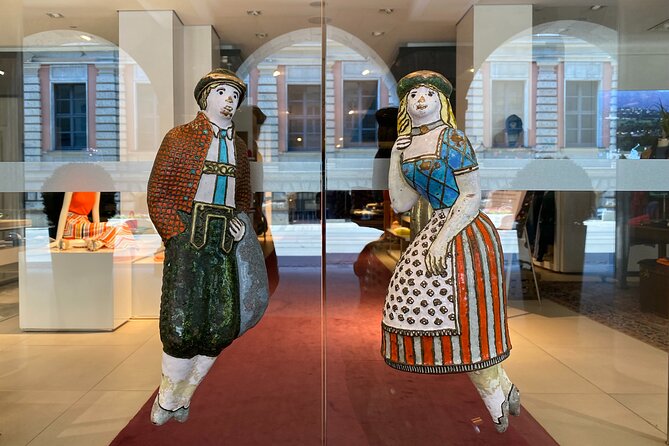
The most praised part of the experience is Victoria’s ability to make history feel like a live story. She is friendly, fluent in English, and keeps people engaged, including when groups are varied in age and energy.
A standout detail is the way she uses photos, maps, and visuals on her iPad. That matters because it helps you understand layout and time period while you are standing in the real street. If you like seeing how the pieces connect, you will appreciate this approach.
Victoria also works for comfort and pacing. She has experience keeping the route manageable for groups that include a young baby and grandparents, and she builds in a bathroom stop mid-tour. That small planning choice can make the difference between a great walk and an endurance test.
Finally, she is generous with practical help. You get recommendations for restaurants, shopping, and further sights, which is especially useful if this is your first day in Munich and you want a plan for later.
Using Marienplatz as your launch pad after the tour
Ending at Marienplatz is more than convenience. It is strategy. Once you finish, you are in the right place to grab a snack, follow up on a museum idea, or simply keep walking the old town lanes with clearer eyes.
Take advantage of Victoria’s tips while they are fresh. If she suggests places nearby, they usually work best when you do them the same day or the next morning, not weeks later when details fade. Marienplatz is also the easiest place to regroup with your group, find transport, and recalibrate if weather changes your plans.
Who should book this tour, and who might want a different style
This tour fits best if you want a guided start that makes Munich click fast. It is ideal for first-timers who feel overwhelmed by the number of sights, beer lovers who want the brewing and beer hall story explained, and anyone headed to Oktoberfest who wants background before the festival crowds.
It also works for families and mixed-age groups because Victoria keeps pacing flexible and communication clear. If you are traveling with someone who needs structure, the route and planned stops give that without feeling rigid.
You might want a different option if your top priority is slow wandering, long museum time, or food-centric touring. Food and drinks are not part of this experience, so you will need to plan meals separately.
Should you book this Munich Old Town walk with Victoria?
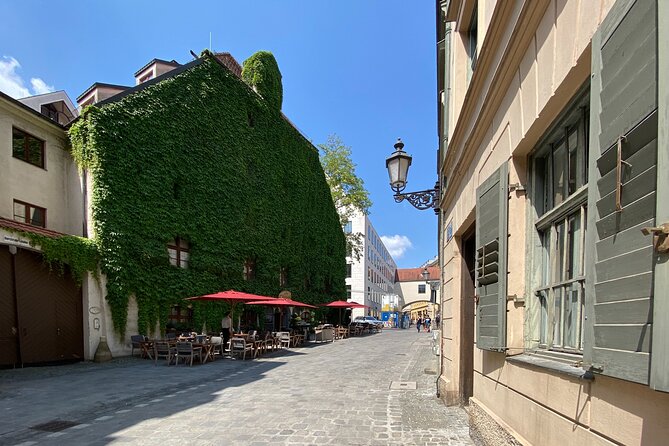
If you are choosing between a quick self-guided stroll and a guided walk, this one is a smart pick. You get a private guide, entrance fees handled for key stops, and story-driven context that helps you recognize patterns across medieval walls, royal power, and beer traditions.
I would book it if you like learning while you walk, and if you value a guide who answers questions and gives practical suggestions after the tour. It is also a solid value because the price is per group, not per person.
Skip it if you want the tour to function like an all-day outing with meals included and long indoor stays. For a two-hour orientation and history lens, though, it is a very strong way to fall in love with Munich.
FAQ
Where does the tour start and end?
The tour starts under the central arch of the Isar Gate at Tal 50, 80331 München. It ends at Marienplatz, in the heart of the old town.
How long is the private old town walking tour?
The tour lasts about 2 hours.
What is the price and how many people are in a group?
The price is $157.28 per group, with a group size of up to 6 people.
What is included, and is food part of it?
The tour includes a digital map of the itinerary, a guide fluent in English, and a 2-hour private walking tour with insider tips. Entrance fees are included. Food and drinks are not included.
Is the tour offered in English, and do I get a mobile ticket?
Yes, the tour is offered in English, and you receive a mobile ticket.
Is it a private tour?
Yes. It is a private tour/activity, and only your group participates.
What is the cancellation policy?
You can cancel for a full refund up to 24 hours in advance of the experience start time. If you cancel less than 24 hours before, the amount paid is not refunded.
Fresh reviews out of Munich
- Munich: Christmas Markets Food & Drink Tour★ 4.6 · 50 reviews
- Munich: Walking tour of the old town with all your senses★ 4.5 · 51 reviews
- Munich: Scavenger Hunt Self-Guided Tour★ 4.1 · 51 reviews
- Hidden Architectural Gems of Munich (Max. 16 guests)★ 4.9 · 52 reviews
- Shared Departure Transfer: Munich Central Station to Munich Airport★ 3.5 · 54 reviews
- Hard Rock Cafe Munich with Set Lunch or Dinner★ 3.5 · 54 reviews
- Quatsch Comedy Club München: Die Live Show★ 4.6 · 56 reviews
- From Munich: Royal Fairytale Tour★ 4.9 · 56 reviews
Walking Tours, compared.

Berlin’s Best: 2 Hour Walking Tour Third Reich and the Cold War
Read our review →
Third Reich Berlin: Hitler and WWII Walking Tour
Read our review →Browse the lists this tour appears in