
Reviewed · MUSEUMS
Deutsches Museum Nürnberg – das Zukunftsmuseum
Deutsches Museum Nürnberg is interesting because it treats the future like a hands-on topic, not a sci-fi story. I like that it is future-focused technology presented through real systems and real tradeoffs, starting with the Work and Daily Life exhibition.
My second big reason to love it: the museum pulls together Body and Mind style science with the bigger questions of society and ethics, then sends you outward to urban planning and space. One drawback to plan for, though, is simple: in one day you can only do a thorough pass on some themes, so you will want to pick your priorities.
Key things I’d circle before you go
- Work and Daily Life makes automation and AI feel practical, not abstract
- Body and Mind connects health, biology, and ethics in the same breath
- Urban Systems shows how cities get measured, managed, and improved
- Earth Systems turns climate goals into tools and interactive learning moments
- Space and Time scratches the same curiosity that drives space exploration
- Interactive workshops help you learn by touching, not just reading
A future museum in Nuremberg, built for real questions
Deutsches Museum Nürnberg, also called das Zukunftsmuseum, is a branch of the world-famous Deutsches Museum Munich. Instead of focusing mainly on older engineering milestones, this location aims at what comes next, and why it matters to your life, your work, and your city.
Think of it as five big theme rooms that overlap. You start with how technology changes jobs and daily routines. Then you move into health and the body as a system. After that, it shifts outward to cities, the planet, and finally the cosmos.
This kind of museum is great if you like your learning to have opinions, because it does. Future tech is never only technical. It also raises questions about fairness, risks, and who benefits.
More Museums in Nuremberg:
- Stein: Public guided tour of the “Old Mine” museum
★ 4.5 · 18 reviews - Berlin: Jewish Museum Berlin Entrance Ticket
★ 4.5 · 8,393 reviews - Berlin: DDR Museum Tickets
★ 4.3 · 3,443 reviews
Price and value: what you get for about 7 dollars
At around $7 per person for a full day, the value is strong if you use the museum the way it is meant to be used. You get entry to all the exhibitions, plus access to interactive workshops. That matters because future topics can easily turn into lectures and wall panels. Here, you are paying for a hands-on format.
You also have the benefit of skipping the ticket line, which is not flashy but it helps a lot when you are trying to get value from a one-day visit. If you are traveling with kids, $7 is the kind of price that makes experimentation feel reasonable, not like a gamble.
The only “cost” is your attention. With so many themes, you may find yourself sprinting if you try to see everything equally. The trick is to choose what you will treat as a deep focus, and what you will do as a quick scan.
Your best approach for a one-day visit
This is a one-day museum, and it is easy to over-plan. The smart move is to start with your favorite topic and then let the rest of the galleries support it.
I’d use this simple method:
- Pick one theme you care about most, for example AI at work, health and biology, smart cities, climate solutions, or space.
- Give that theme your first real time block.
- Use the remaining time to bounce between the other sections in shorter passes.
The museum is designed for visitors of different ages and interests, so you can absolutely go at a family-friendly pace. If you are a student or simply love science and technology, you will also find enough detail to keep you engaged.
One more practical tip: plan to spend extra time at the hands-on stations rather than trying to read every label. The museum rewards interaction, and you will learn faster that way.
Work and Daily Life: where AI meets your paycheck and your schedule
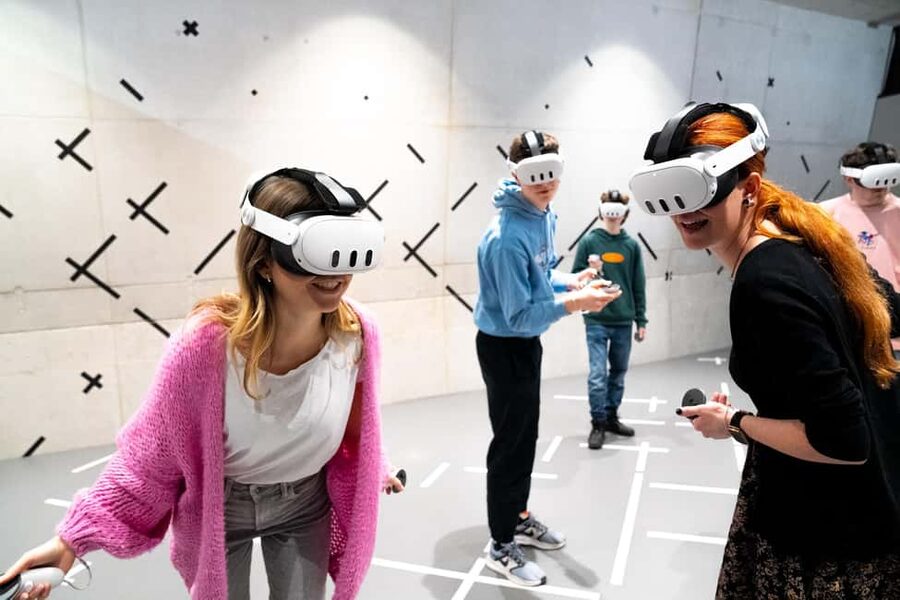
The Work and Daily Life exhibition is your entry point into the future, and it makes a strong first impression. It tackles automation and AI by showing scenarios where technology changes how people do tasks, collaborate, and make decisions.
What I like here is the tone. It is not just, “AI will replace jobs.” It is more like, “AI will reshape roles,” and you get to see what that means in daily settings. You get to think about how new tools affect productivity, job satisfaction, and what skills might matter more than they used to.
A good way to enjoy this section is to watch for the “workflows” concept. Instead of thinking about one gadget, think about a whole chain: input, decision, action, and feedback. When you do that, the rest of the museum falls into place, because the same systems thinking shows up in health, cities, and the planet.
If you are into AI specifically, you may find an AI-focused area that visitors often treat as a highlight. Even if you do not go hunting for AI content, this section already does the job.
Weigh these Nuremberg picks against each other
- Nuremberg: City Tour with the Bimmelbahn Train
★ 4.4 · 2,475 reviews - Nuremberg: Old Town Guided Walking Tour
★ 4.6 · 2,416 reviews - Nuremberg: Tunnels and Secret Passages in the City Wall Tour
★ 4.8 · 2,334 reviews - Nuremberg: Medieval Dungeons Guided Tour
★ 4.8 · 2,214 reviews
Body and Mind: personalized health, neuro-enhancement, and ethics
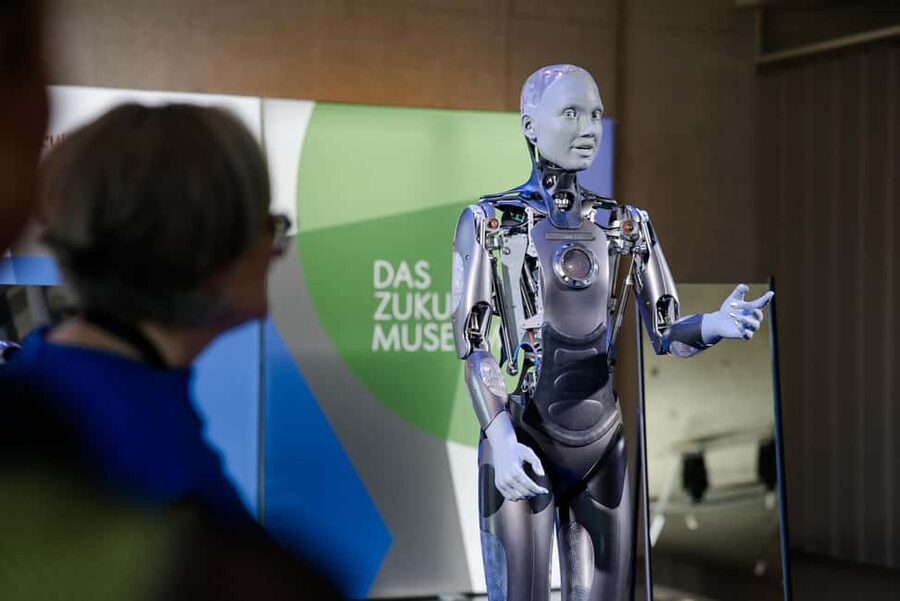
Body and Mind is the exhibition that makes the museum feel both personal and serious. It connects healthcare innovations and biology, including ideas around personalized medicine and neuro-enhancements, and it also brings ethics into the conversation.
The core value is that you are not just learning biology facts. You are learning how science turns into choices. Personalized medicine raises questions about data, consent, and who gets access. Neuro-enhancements raise questions about identity, fairness, and long-term risks.
I also appreciate the way this section invites reflection without feeling heavy-handed. You can move through it like an educational experience, then stop and think, “Okay, but what would I want if this were available for me or my family?”
If you are short on time, here is what to do: slow down for the parts that connect biology to real decisions. That is where the museum’s “future” theme becomes most meaningful, because medicine is one of the most practical future technologies in everyday life.
Urban Systems: smart cities, congestion, and sustainability tradeoffs
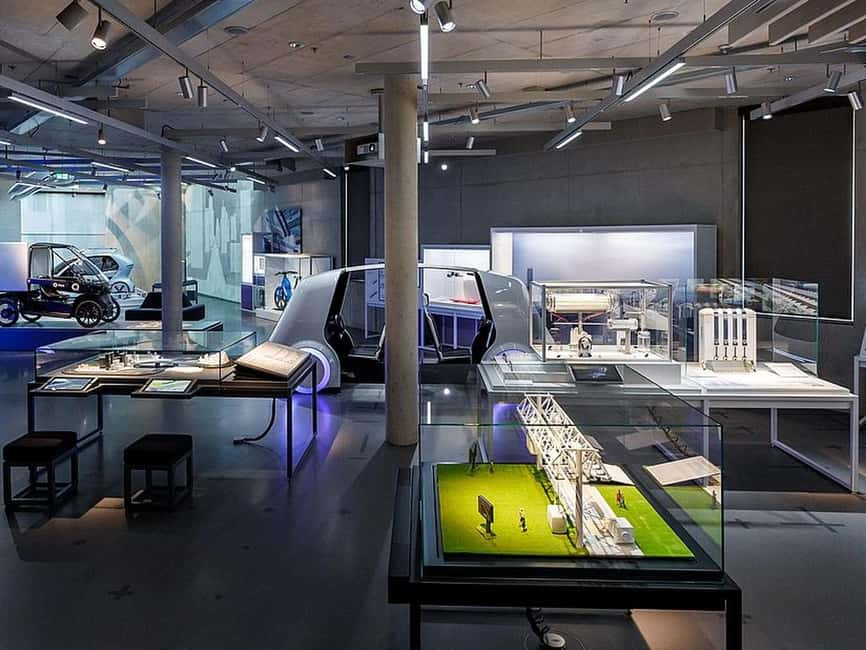
In Urban Systems, the museum turns from individual life to city life. This section focuses on smart city initiatives and urban planning, especially the practical problems cities face like congestion and environmental impact.
What you get, in plain terms, is a view of cities as systems you can measure and manage. Smart city thinking can sound like futuristic buzzwords, but here it is treated like infrastructure, data, and policy working together.
I like this because it connects everyday frustrations to possible technical and planning responses. If you have ever wondered why one street feels smoother than another, or why one area improves while another stays stuck, this is the kind of place that helps you understand the “why.”
Drawback to consider: if you already know a lot about urban planning, you might find the concepts more of a structured overview than a deep technical course. Still, it is a great way to get your bearings on what smart city projects tend to target and why.
Earth Systems: climate tech and biodiversity, made interactive
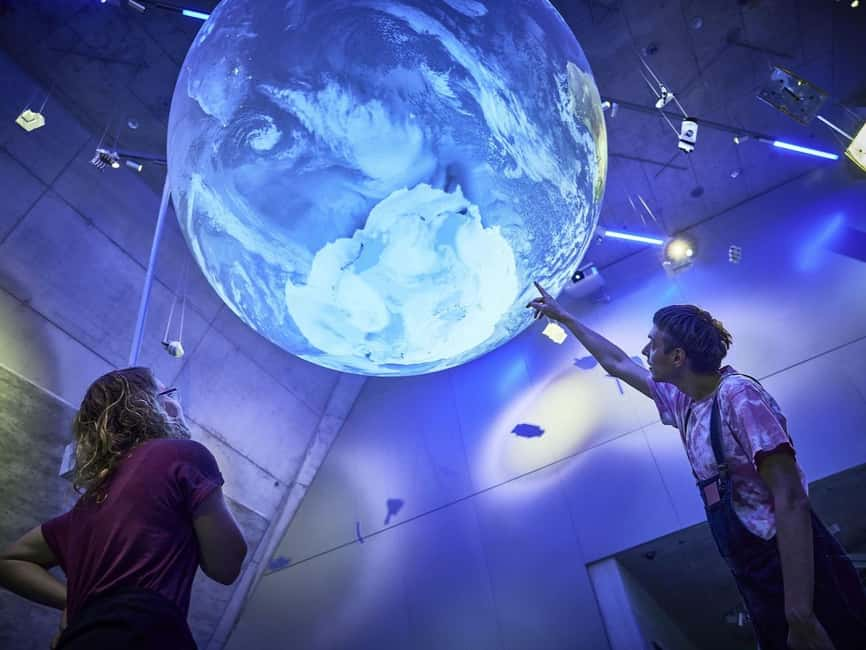
Earth Systems is where the museum shifts from city problems to planet-scale challenges. It focuses on technologies aimed at combating climate change and preserving biodiversity, and it uses interactive displays to show how human activity can be aligned with the planet’s well-being.
This section is valuable because it helps you see climate efforts as a set of tools and decisions, not as one magic fix. The museum pushes the idea that “sustainability” needs planning and action that can be tested, adjusted, and improved.
You might also notice hands-on learning that touches plants and even food topics connected to different countries and cultures. That kind of mixing matters because it reminds you that climate and biology are not just lab themes. They show up in what we grow, what we eat, and how different cultures solve everyday needs.
If you are worried the museum could become too abstract, Earth Systems is a good counterbalance. The interactive elements make it easier to convert big ideas into something you can picture.
Space and Time: space travel, the cosmos, and the search for meaning
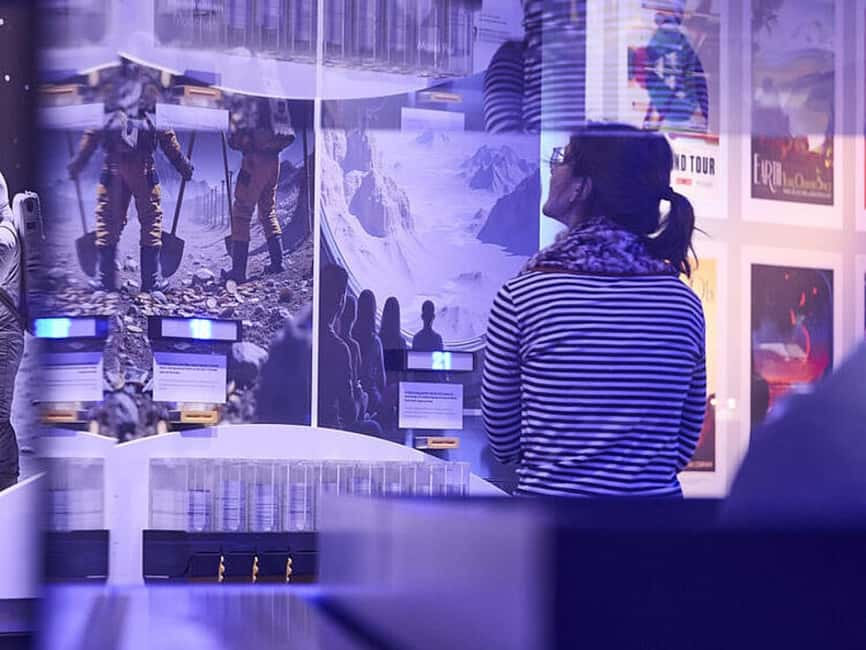
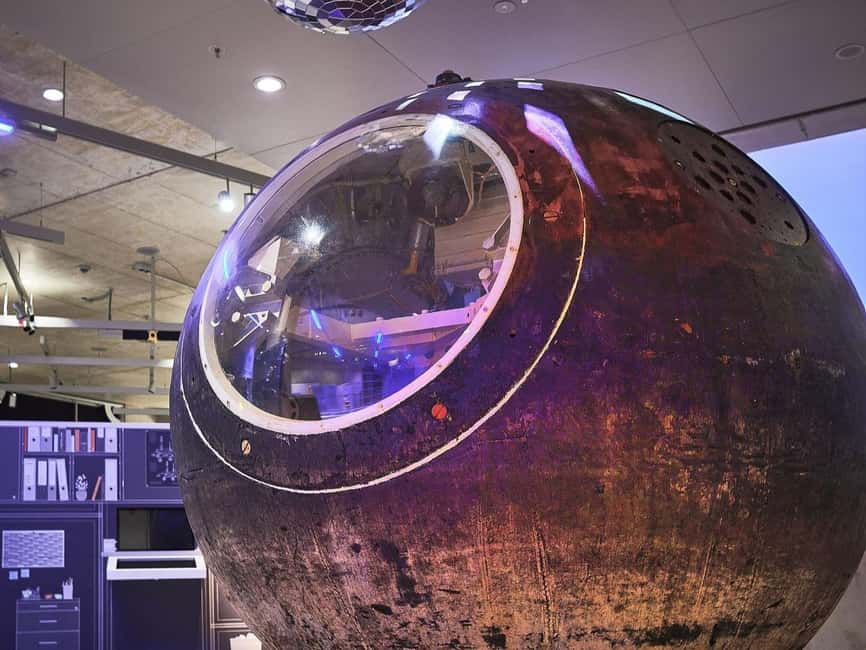
The Space and Time exhibition is the museum’s big outward glance. It invites you to ponder humanity’s quest to explore the cosmos, featuring advancements in space travel and the search for extraterrestrial life.
I enjoy this section because it gives the future a sense of scale. When you have spent time thinking about AI at work, health choices, and city systems, space can feel like a left turn. But it is not. It is the same human pattern of building tools, exploring limits, and asking what comes next.
This part also works well for families because wonder is a valid learning engine. You do not need a science background to feel engaged, and the exhibition theme makes curiosity feel welcome.
One small consideration: if you are only doing one day and you already care more about Earth and society than space, you might want to treat Space and Time as a “one good pass” section. You can always come back later for a deeper look.
Interactive workshops: how to get more out of the day
Interactive workshops are included, and this is where the museum becomes more than a set of galleries. Hands-on learning helps you understand future topics by forcing you to make choices and see outcomes.
You do not need to be a “science person” to benefit. The format is designed so you can learn through doing, which is especially useful if you are with kids or if your brain gets tired from reading too many labels.
The best way to use workshops is to approach them with one question in mind. For example, ask yourself: What problem is this tool trying to solve? What might go wrong? Who benefits? When you do that, the workshops connect back to the exhibitions you just saw.
The museum shop: practical souvenirs you will actually use
At the end, stop by the museum shop. You can pick up books, games, and themed gifts that fit the museum’s future and science topics. These are the kind of souvenirs that do not collect dust as fast because they often become learning material.
If you are traveling and want to bring something back for a student or a curious friend, a book or a science game from a future-focused place tends to land better than generic magnets.
Who this works best for
This is a good fit for:
- Families who want a structured day of science themes with hands-on interaction
- Technology and science lovers who like societal questions, not just gadgets
- Students and school groups who need a future-focused learning experience
- Anyone who likes thinking about what comes next, from healthcare to cities to space
If you are the type who prefers museums with one specific deep subject, you may need to prioritize. This is broad by design, so pick your “must-see” theme first.
Quick verdict: should you book Deutsches Museum Nürnberg?
Yes, you should book it if you want a day of hands-on future thinking that connects technology to real life. At about $7 with access to all exhibitions and interactive workshops, the value is hard to ignore.
I’d say skip or at least shorten expectations if you want a technical, expert-level course in one narrow area. This museum is more about systems, questions, and accessible learning than about heavy engineering math.
If you only have one day in Nuremberg and you want something smarter than the usual sightseeing circuit, das Zukunftsmuseum is a strong choice. Go in with one theme you care about, let the rest support it, and you will leave with ideas you can actually use.
FAQ
How much does Deutsches Museum Nürnberg das Zukunftsmuseum cost?
The price is listed as $7 per person.
How long should I plan for the visit?
Plan for about 1 day.
What is included in the ticket?
Your ticket includes entry, access to all exhibitions, and interactive workshops. Ticket line skip is also included.
What is not included with my visit?
Meals and beverages, a personal tour guide, and souvenir purchases are not included.
Is it wheelchair accessible?
Yes, the museum is wheelchair accessible.
Are the exhibitions available in multiple languages?
The information provided says the languages are available, but it does not list which languages.
Can I cancel if my plans change?
Yes. You can cancel up to 24 hours in advance for a full refund.
Can I reserve now and pay later?
Yes. You can reserve now and pay later.
Are there age rules for children?
Yes. Children under age 12 must be accompanied by an adult.
Is there discounted admission for students and children?
Discounted admission is available for youth categories (pupils, trainees, and full time students, and severely disabled adults with an accompanying person free of charge). Child categories apply for severely disabled children and young people from 6 to 17, and there are also rules about accompaniment.
Fresh reviews out of Nuremberg
- Nuremberg: Private Guided Walking Tour★ 4.5 · 9 reviews
- Nuremberg: Old Town and Christmas Market 1.5-Hour Tour★ 4.6 · 9 reviews
- Das ehemalige Reichsparteitagsgelände – Geländebegehung★ 5.0 · 9 reviews
- Nazi Party Rally Grounds & Old Town Private Walking Tour★ 4.5 · 10 reviews
- Fünf Seidla Steig ® Beer Hike Food Experience Private Tour (departs Nuremberg)★ 5.0 · 10 reviews
- Private Scenic Transfer from Nuremberg to Munich with 4h of Sightseeing★ 5.0 · 10 reviews
- Christmas City Nuremberg – Culinary and Tradition★ 4.5 · 10 reviews
- Nuremberg Scavenger Hunt and Sights Self-Guided Tour★ 4.5 · 10 reviews
Museums, compared.



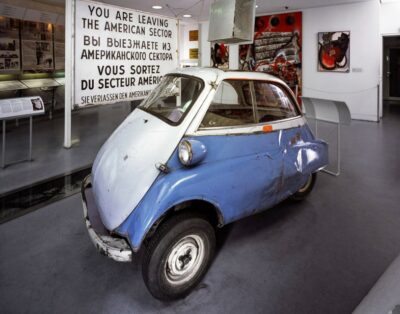
Skip-the-Line: Berlin Wall Museum at Checkpoint Charlie
Read our review →Browse the lists this tour appears in