
Reviewed · HISTORICAL TOURS
Berlin Private Complete History All Day Walking Tour
This Berlin private history walk is interesting because it turns the city’s biggest World War II and Cold War sights into one continuous story, not a list of stops. What I like most is the private format, which means you can ask questions and actually keep your pace. Another big plus is how the route strings together places like Brandenburg Gate and Checkpoint Charlie so the meaning stays with you as you move.
Two things I especially love are the chance to pause at iconic photo moments, and the way the guide links each site to what came before and after, including the Cold War hangover. The only real drawback to think about is the day is long and full of heavy topics, so it is not a casual sightseeing stroll. If you want a lighter day or minimal walking, this may feel like too much.
Quick hits before you go
- Private, all-on-foot format means no waiting for vehicles and no splitting your attention across a big group
- A photo-friendly, story-first guide helps you understand what you are looking at before you move on
- WWII and Cold War landmarks back-to-back so you can connect causes, dates, and consequences
- Major stops with free admission are built into the route, which helps value for your day
- Flexible pacing is a common theme in how guides run the tour, including when someone needs a quick break
- Ends at Alexanderplatz so you finish in a transit hub rather than backtracking
How a 6-Hour Private Walk Builds a Real Berlin Story
This tour is designed for one main goal: you get a fast, grounded understanding of Berlin’s modern history without bouncing between disconnected sites. It runs about 6 hours on foot, with no private transportation. You are basically doing one long corridor walk from Mitte into the heart of the city’s historical layer cake.
The logistics are straightforward. You meet at Ebertstraße 24, 10117 Berlin, then walk with your guide all day, finishing at Alexanderplatz (10178). Pickups are on foot with the tour guide, and the meeting area is near public transportation. You also get a mobile ticket, which keeps things simple on the day.
In a private format, your guide can slow down for questions, match the pace to your group, and adjust what you spend time on. That matters in Berlin, because many landmarks look obvious from the outside, but the real payoff is the context: what happened here, who controlled it, and why the memory still matters.
What to watch for
The day is history-heavy. You should be ready for emotional sites and uncomfortable subject matter, not just “cool buildings.” Also, you will walk at the group pace for a full morning into afternoon, so plan comfortable footwear and a mindset for a steady rhythm.
More Historical Tours in Berlin
- Berlin: Natural History Museum Entrance Ticket
★ 4.6 · 3,382 reviews - Berlin: 3-Hour World Heritage Cruise to Potsdam
★ 4.5 · 1,569 reviews - Berlin: History of the Third Reich Guided Walking Tour
★ 4.7 · 791 reviews
Price and Value: Is $253.95 Worth It for One Day?
At $253.95 per person, this is not cheap, but it can still feel fair if you value (1) private time and (2) a tightly connected itinerary.
Here is why the cost can make sense. First, you are paying for an expert guide who stays with you for the whole route, not a short stop-by-stop explanation. Second, the schedule is packed with major landmarks, including some of Berlin’s most famous World War II and Cold War locations. Third, many of the listed stops note free admission, so you are not constantly adding ticket costs to the day.
The tradeoff is that food and drinks are not included. If you hate spending your travel day thinking about meals, budget for lunch breaks on your own time.
Also, because it is private, you will feel the value most if your group wants real context. If you prefer to read plaques on your own, a self-guided plan could be cheaper. But if you want the story explained in a way you can actually remember, this kind of guided route often proves worth it.
Brandenburg Gate, Reichstag, and the Cold War Stage Set
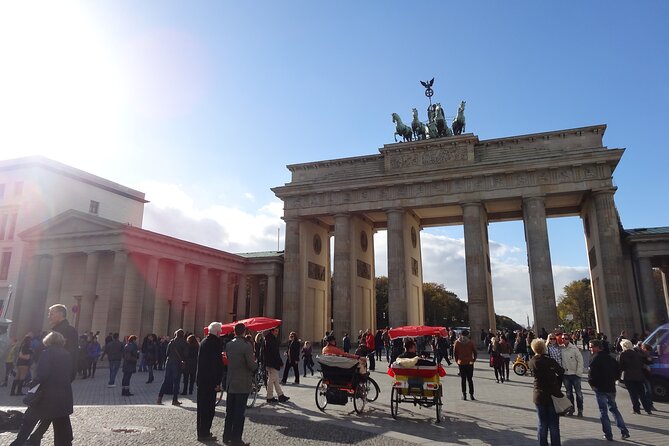
The tour starts with Berlin’s iconic symbolism, and it does not waste time. Your first major stop is the Brandenburg Gate, one of Europe’s best-known monuments. The guide focuses on why it was built and how it became a focal point for Berlin and Germany through the political eras that rose and fell around it. During the Cold War, it also became a symbol of divided Berlin, which changes how you see the gate when you understand the role it played.
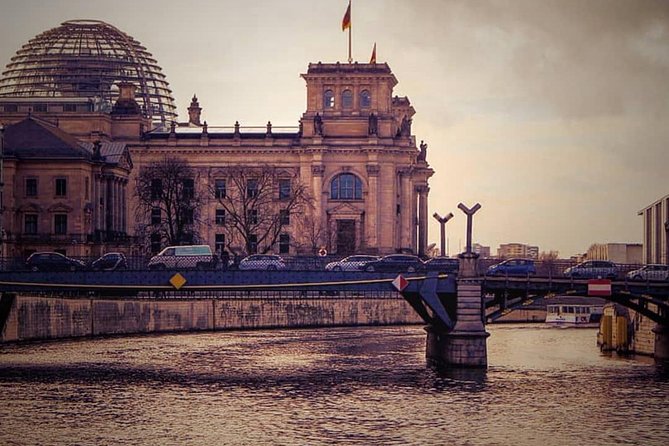
Next comes the Reichstag Building. From the outside, it is unmistakable. The guide’s angle here is about power and violence in the early Nazi era, then the brutal fighting that shaped the end of the war, and what changed after reunification. This stop is short on paper, but it is the kind of place where a good guide makes a quick visit feel “complete,” because you leave with a clear timeline in your head.
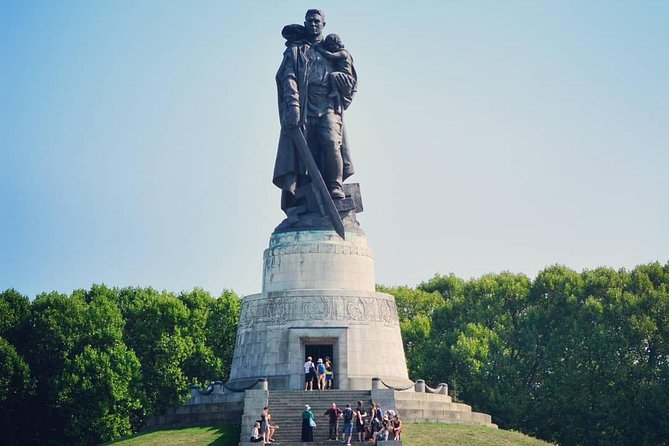
Then you move into the Tiergarten area, including the Soviet Memorial in West Berlin. That location alone is interesting because it highlights how the city’s geography and ideology overlapped in surprising ways. You also get context on how the Tiergarten developed over time and how major events affected the park itself, plus a look at the Victory Column from a distance, with stories about when it was constructed and where it used to be.
If you like asking questions, this opening stretch is where your guide can really set you up for the rest of the day. And it is very practical for photos. Even if you are not a serious photographer, you will have several clear viewpoints early on.
Holocaust Memorial and the Fuhrerbunker Site, When the Day Turns Heavy
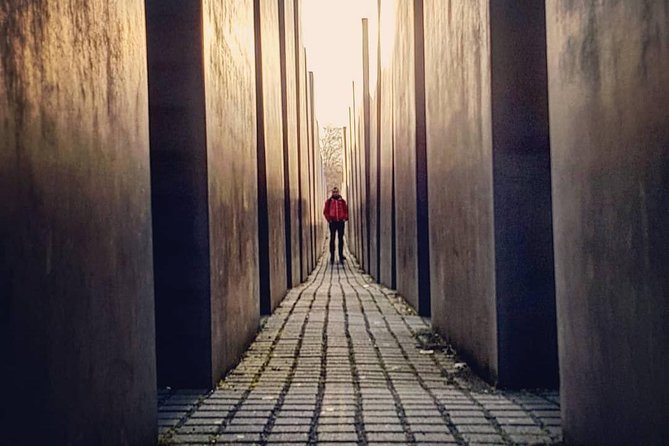
This section is the emotional heart of the tour, and it comes with a clear purpose: you are not touring tragedy like a museum exhibit. You are learning how Berlin remembers, and how memory is carried through architecture and memorial design.
The Memorial to the Murdered Jews of Europe is one of the most significant memorials in Berlin, and the guide’s job is to help you understand why it was designed the way it is, and what it is meant to make you feel and consider. This is not a place to rush. If your group tends to move quickly, I would remind you to slow down here anyway.
After that, you visit the Fuhrerbunker area. The guide talks about its role as the final-day location associated with the Nazi regime and frames it as part of the larger endgame of the war in Berlin. Even if you already know the basic facts, the guided context helps you understand how close you are to a site that carried immense historical weight.
Then you get a more human-scale story with the Johann Georg Elser Sculpture, focusing on a man who came close to changing world history. It is a different emotional flavor than a mass memorial, and that balance helps keep the day from becoming one long flat wall of despair.
More Walking Tours in Berlin
- Discover Berlin Half-Day Walking Tour
★ 5.0 · 9,624 reviews - Berlin: Third Reich and Cold War 2 Hour Walking Tour
★ 4.9 · 6,830 reviews - Berlin: Discover Berlin Walking Tour
★ 4.9 · 5,998 reviews - Berlin’s Best: 2 Hour Walking Tour Third Reich and the Cold War
★ 5.0 · 5,486 reviews
Topography of Terror, the Berlin Wall, and Checkpoint Charlie’s Real Weight
As the tour moves toward the Cold War core, it shifts from Germany’s wartime destruction to the systems of surveillance, control, and division that followed.
You enter the Topography of Terror site, tied to the former SS, Gestapo, and SD headquarters in Berlin. The guide explains it as one of the physical points of evil in Nazi Berlin, then connects how the site was treated after the war. This is where you start seeing Berlin as more than buildings. You start seeing it as how institutions shaped everyday fear.
Next is the Memorial of the Berlin Wall, including a section of the wall and stories about construction and the escape attempts and deaths connected to it. Even though your stops are time-limited, the guide’s job is to make sure the wall is not treated like a random photo stop.
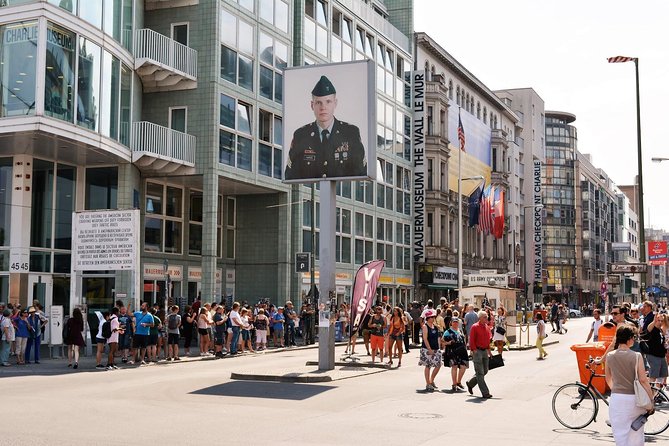
Then you arrive at Checkpoint Charlie, arguably the most famous Cold War crossing in the city. The guide gives you the framing that makes it matter, so it does not feel like just a recreated set-piece. This is a good moment to ask your own question too, because your guide can connect checkpoint life to what you have already learned about division and control.
Friedrichstraße, Gendarmenmarkt, and the Beauty That Survived
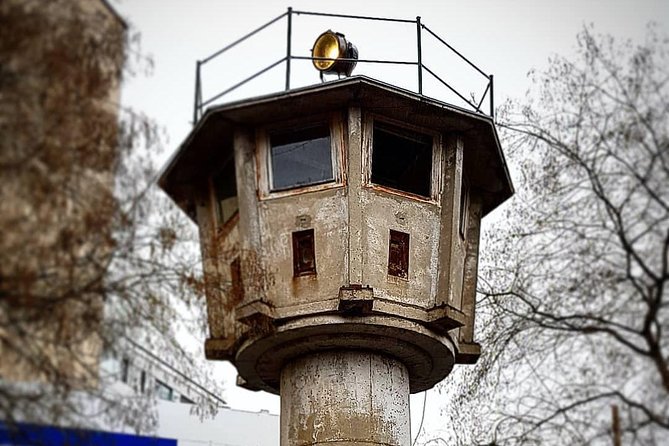
After so many heavy sites, it helps that the route also includes places where Berlin shows its cultural polish and architectural balance.
On Friedrichstraße, you stroll down a street once linked with the famous Cabaret Mile vibe. The guide’s perspective helps you see why entertainment, nightlife, and public spaces mattered, even in eras of tension.
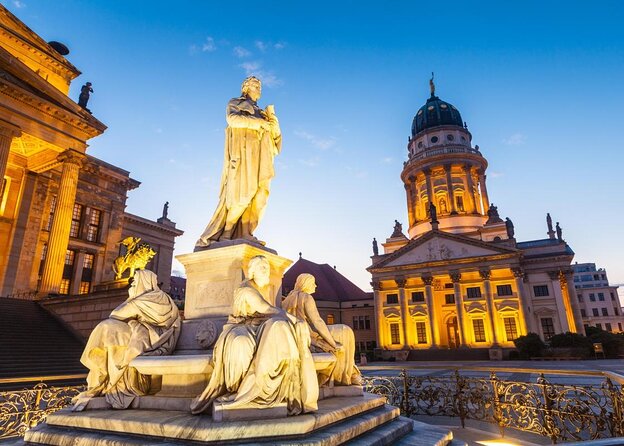
Then you reach Gendarmenmarkt, a square many people consider one of Berlin’s prettiest. The emphasis here is on origins and architectural development. This is one of those stops where you can simply look around and let the place reset your brain after the day’s darker chapters.
You also pass through Bebelplatz, an area anchored by 18th-century surroundings and including key educational and cultural landmarks. The guide addresses the Nazi book burnings and points out the thought-provoking memorial in the square. This is one of the best stops for a reality check: you see how attacks on culture were a core part of the regime, not a side detail.
Humboldt University, Neue Wache, Museum Island, and the City’s Memory Machine
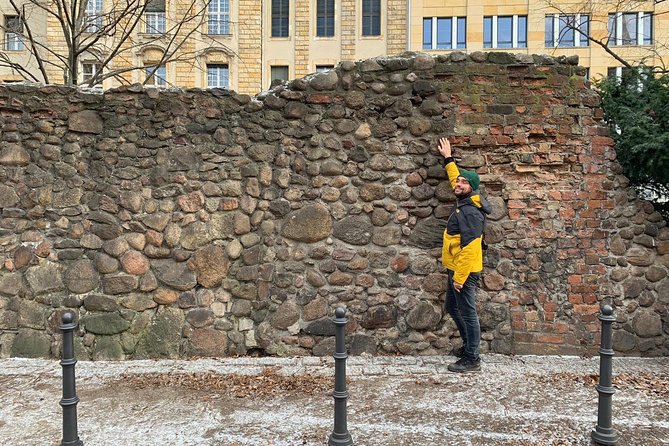
This middle-to-late portion is where Berlin’s identity as a learning city and memorial city really comes into focus.
At Humboldt University, the guide covers the institution and the people behind it, giving you a sense of how education was used to shape modern Germany. Next comes Neue Wache, a major building on Unter den Linden. The guide frames it as a political “weathervane” and also as a moving memorial in its current form, which is a useful way to understand why Berlin can feel like it is constantly renegotiating its own past.
You also get an outside look at the Deutsches Historisches Museum and the history tied to the oldest surviving building on Unter den Linden, then you move to Museum Island, a UNESCO World Heritage cluster. Your guide explains how the island developed and highlights the museums and architects involved, plus the cathedral and designed spaces that make the whole area feel intentional rather than random.
Finally, you visit the Humboldt Forum and learn its complicated, surprisingly recent history. This is important because it shows how Berlin does not just preserve the past. It debates and rebuilds it.
If you want a quick takeaway from this section, it is that Berlin keeps converting history into spaces you can walk through, read, and question.
St. Mary’s Church and Alexanderplatz as the Finish Line
The tour ends with places that feel like continuity, not just memory.
At St. Mary’s Church, you visit and, if possible, go inside Berlin’s oldest church in continuous use. The guide frames it as an architectural survivor, which is a nice counterpoint to the sites of destruction you saw earlier.
Then you finish at Alexanderplatz, rebuilt after the war and tied to its role as the capital of the DDR. Ending here makes practical sense too. Alexanderplatz is a transit hub, so you can easily continue exploring, grab food, or connect to day trips without undoing your whole route.
This final stretch works well because you end in a lively, modern-feeling center while still carrying the context the guide built during the walk. It is the kind of ending that helps you understand why Berlin can feel both fractured and functional.
Guides Who Make It Work, and Tips to Get More From Your Day
One reason people rate this tour so highly is that your guide can keep the story understandable and human, not just dates and locations. Names that come up often include Rhys, Ciaran, Eugen, Paul, Darren, Beth, Julian, Kieran, Francisco, and Ken. While you cannot choose the guide in advance based on the details given, the consistent theme is that the guide meets your group where you are.
I also like the way the tour can adapt. You might see guides adjusting pace for a younger member of the group or giving you more time at a stop if the group wants it. That flexibility is not a small perk in Berlin, where many monuments can take longer to process than you expect.
To get more from the day, here is what I would do:
- Wear comfortable shoes. Six hours on foot adds up.
- Bring your curiosity. Ask why something was built, then ask what changed after 1933, after WWII, and after reunification.
- If a site hits hard for your group, lean into the pause. This is not the kind of tour where you should sprint past the emotion.
Should You Book This Berlin Private Complete History Walking Tour?
Book it if you want the fastest way to understand how Berlin got from World War II to Cold War division and into reunification, with real stops you can point to on a map. The private format is especially worth it if you like asking questions or your group includes mixed ages and attention spans, because a good guide can pace the day for you.
Skip it if you want a relaxed, casual day or you are not into heavy historical topics. Also, if walking 6 hours feels like a stretch, you might find this too long.
For first timers, or anyone who feels like Berlin history is overwhelming in self-guided form, this is a strong choice because it helps the pieces click together in the order they actually happened.
FAQ
How long is the Berlin Private Complete History All Day Walking Tour?
It lasts about 6 hours.
Is this tour private?
Yes. It is a private tour/activity, meaning only your group participates.
What language is the tour offered in?
The tour is offered in English.
Where does the tour start and end?
It starts at 10117, Ebertstraße 24, 10117 Berlin and ends at Alexanderplatz 10178 Berlin.
Is food included?
No. Food and drinks are not included.
Do you use vehicles during the tour?
No. It is a walking tour and there is no private transportation. Pickups, if offered, are on foot with the guide.
Are admissions required at the stops?
The stops listed in the itinerary show Admission Ticket Free for each stop.
Can I bring a service animal or pets?
Yes. Service animals are allowed, and animals or pets are allowed.
How far in advance should I book?
On average, this tour is booked 74 days in advance.
What is the cancellation policy?
You can cancel for a full refund if you cancel at least 24 hours in advance. If you cancel less than 24 hours before the start time, the amount you paid is not refunded.
Fresh reviews out of Berlin
- Berlin Uncensored: A History of Sex & Freedom★ 5.0 · 50 reviews
- Berlin Food & Cultural Tour: Must-Try German & Berliner Classics★ 5.0 · 51 reviews
- English Comedy Show with Pizza and Shots in Central Berlin★ 4.5 · 51 reviews
- Rude Bastards Tour of Berlin★ 4.8 · 51 reviews
- Private Taxi Tour of Berlin East and West and Neighbourhood approx. 4-6h★ 5.0 · 55 reviews
- Rickshaw Sightseeing City Tours Berlin – Rikscha Tours★ 4.0 · 55 reviews
- Berlin: City Highlights Express & Panorama Roof Terrace★ 4.9 · 55 reviews
- Berlin during Nazism – Tour in Italian★ 5.0 · 56 reviews
Historical Tours, compared.
City History Canal Sightseeing Tour on a Motorboat
Read our review →
Night Watchman Historic Adventure Tour
Read our review →
Browse the lists this tour appears in