
Reviewed · HISTORICAL TOURS
Berlin: Historic Jewish walking tour through the city center
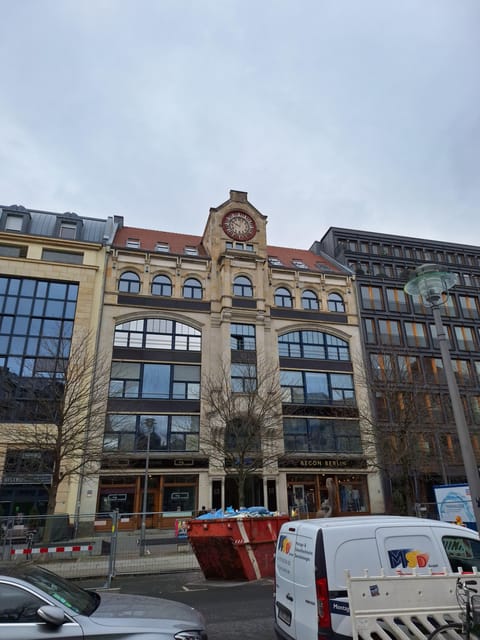
Berlin’s Jewish center district story is interesting because it links everyday work, clothing, and street life to big political shocks. I like that this walk focuses on Konfektion, the tailoring and fashion industry that helped drive Berlin’s economy, not just vague dates. I also like the tight timeline, from the Prussian Empire and the Roaring Twenties to what changed after the wall fell. One thing to consider: this is a serious subject, and the tour leans into how political extremism can destroy livelihoods.
You start in the city center and keep your feet moving while the guide turns the streets into a timeline. Expect a clear, practical route, short stops for photos and context, and time to understand why certain places matter. The walking pace is gentle enough that the tour is listed as wheelchair accessible, but it is not suitable for kids under 6.
If you want Berlin’s history without sitting in a museum for hours, this is a good fit. The story is grounded in real industry and real people, including how the Jewish population developed, thrived, and in some cases survived, before being pushed through darker times.
Key things you should notice on this walking tour
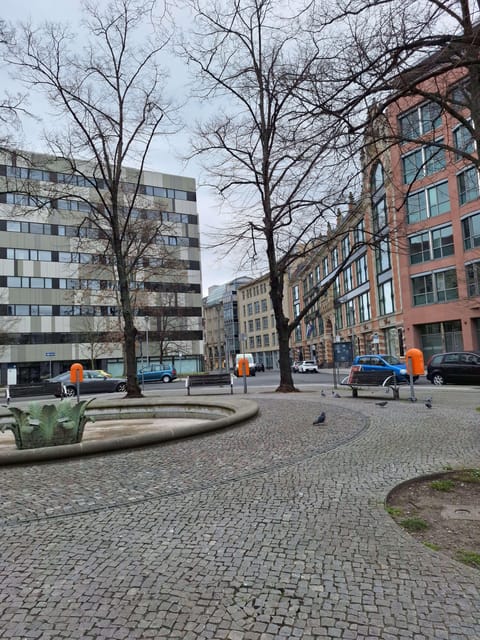
- Hausvogteiplatz orientation: You begin near the water fountain by the U2 station, so you can get your bearings fast.
- Konfektion industry focus: You learn how Berlin’s tailoring and fashion economy shaped the city before World War II.
- Short, efficient street stops: Werderscher Markt and Jägerstraße are built in, so you cover the core ideas without rushing.
- Big eras, small streets: The guide connects the Prussian Empire, the Roaring Twenties, and the wall fall to what you see outside.
- A map plus a stop list: You are given a map and an activity list to keep the route and themes straight.
- English live guide: A real person at walking speed, not an app.
Why Berlin’s Jewish fashion and tailoring story is such a strong entry point
Berlin can feel like a city of layers, and this tour uses that layering in a smart way. The heart of the walk is the former Jewish center district and its economic power, especially the Konfektion industry. That is the tailoring and clothing world that helped run Berlin’s commercial life, so you get a grounded sense of how neighborhoods worked.
What I like about this approach is that it connects policy and propaganda to real output: jobs, design, production, and the street-level economy that comes with fashion. Political extremism did not just change government buildings. It reshaped industries and livelihoods, and this tour explicitly frames that link.
You also get a long view. The walk takes you through major periods, starting with the Prussian Empire, moving into the Roaring Twenties, then arriving at the present after the wall fell. You will learn how Berlin changed, but also what stayed legible in the streets.
More City Tours in Berlin
- Berlin: 1-Hour City Tour by Boat with Guaranteed Seating
★ 4.3 · 16,993 reviews - Berlin: City Sightseeing Hop-On Hop-Off Bus Tour
★ 4.1 · 4,233 reviews - Berlin: 1-Hour City Sightseeing Cruise
★ 4.4 · 2,210 reviews
Getting there: Hausvogteiplatz meeting point near U2 and the route logic
Your walk begins at Hausvogteiplatz, meeting the guide in the square near the water fountain. The guide will carry a white side bag, which makes it easier to spot the right person on arrival.
This matters because you are starting in a public, recognizable hub. Being near the U2 means you can plan around transit instead of hunting for a hard-to-find address. And because the total duration is about 1 hour, getting the first 5 to 10 minutes right helps you actually enjoy the content.
The first stop at Hausvogteiplatz runs for about 30 minutes. That is a good chunk for orientation. It also means you can expect the guide to set the story clearly before you move on to other streets.
Stop 1 at Hausvogteiplatz: where the guide sets the timeline
The biggest payoff at the beginning is that you do not just start walking. You start learning. The Hausvogteiplatz section is where the guide likely places you in the broader picture: the city center as a former economic powerhouse and the Jewish community as a key part of how Berlin functioned.
This is the kind of opening that helps you enjoy the rest of the walk. When you understand the themes early, Werderscher Markt and Jägerstraße make more sense as you reach them. You are not collecting random street facts, you are building a narrative.
Practical tip for this first segment: arrive a few minutes early. The guide also uses a verification step for bookings, so it is worth being organized and ready when you show up. If you have any questions before you go, the operator notes that you can reach out by email or phone, including WhatsApp, for confirmation.
Werderscher Markt: a short stop that helps you read the city center
Next you head to Werderscher Markt, with about 15 minutes on site. This is a quick visit, so it is not about long sightseeing. It is about interpretation: what the place meant in the past, and how you can spot the story in what you see today.
Even without getting overly technical, a market area is useful for this kind of history. Markets are where commerce becomes visible. When the tour focuses on the tailoring and fashion economy, the city’s commercial geography matters.
The short time at Werderscher Markt also suits travelers who want a focused tour. You get a clear stop, a set of key ideas, and then you move on. If you prefer long museum-style pacing, this might feel brisk, but it is also what keeps the full experience to about an hour.
More Historical Tours in Berlin
- Berlin: Natural History Museum Entrance Ticket
★ 4.6 · 3,382 reviews - Berlin: 3-Hour World Heritage Cruise to Potsdam
★ 4.5 · 1,569 reviews - Berlin: History of the Third Reich Guided Walking Tour
★ 4.7 · 791 reviews - Berlin Historical Highlights Walking Tour
★ 4.9 · 657 reviews
Jägerstraße: where the story turns from industry to the street you can still picture
You then visit Jägerstraße for another 15 minutes before returning to Hausvogteiplatz. This street stop is ideal for the tour’s theme because tailoring and fashion are not abstract concepts. They are tied to storefronts, workshops, and the day-to-day flow of customers and workers.
This is also where the timeline feels more real. The tour’s promise is not only to show historic areas, but to show how Berlin progressed after the wall fall. A street like Jägerstraße is the kind of place where you can look around and think about continuity and change at the same time.
Because this is the final thematic stop, it helps to keep your attention during the walk back. You will likely connect the dots between what you learned at the beginning and what you see in the center streets at the end.
How the guide ties together the Prussian Empire, the Roaring Twenties, and post wall Berlin
One of the most valuable parts is the way the tour jumps across eras while staying focused on the same theme. You do not just hear a history lecture. You see Berlin’s former economic Jewish center district as it evolved.
The Prussian Empire period sets up the idea that this was a functioning economic hub, not a footnote. The Roaring Twenties bring the feel of modern momentum, the kind of time when fashion and industry can thrive. And then the wall fall era shifts the lens to transformation, how Berlin rebuilt and redefined itself, and what that means for the memory of the Jewish community and its role in the city.
The tour also makes an important point: political extremism can completely transform an industry. In other words, you do not only learn what happened, you learn how quickly a stable commercial world can be broken.
That framing is practical for you as a traveler. It is easier to remember a few strong causal ideas than a long list of dates.
The human story: Jewish development, thriving, and survival, not just tragic headlines
The emotional weight of the tour is handled through stories of the Jewish population’s development, thriving, and, in some lucky cases, survival. You learn about how a community shaped the city, especially through the tailoring industry.
That matters because too many tours treat Jewish history as only one chapter. This one aims to show more. It includes progress and success before the darker turn, so the history feels complete instead of one-note.
The tour also describes how the lost tailoring industry connects to the larger story of regimes and their brutal impact on Berlin’s economic history. Even if you know some facts already, the emphasis on industry gives the narrative a different angle.
If you prefer history that explains how people lived and worked, this style will land better than a tour that only focuses on monuments.
What you actually get during the 60 minutes on your feet
The tour is listed as a walking tour around the city center, with mentions of historic buildings and areas in Berlin. You are not just hearing about the past, you are walking through it, in the sense that the guide uses the streets as your visual cues.
You also get a map and a list of activities in order. That is a small thing, but it helps you follow along. After the tour, it also makes it easier to keep exploring the area on your own, because you can remember where the guide took you.
Language is English, and the guide is a live person. That matters on a short tour. You can ask for clarification and the guide can adjust the story to your interests in real time.
Finally, the tour ends back at Hausvogteiplatz, so you do not have to plan an awkward pickup. It is a clean loop that fits well into a day already packed with Berlin sights.
Price and value: $1.70 for an hour that focuses on a specific, important theme
The listed price is $1.70 per person, and for a 1 hour live guided walk that focuses on a detailed local theme, that is striking value. Even if the focus is narrow, it is a smart kind of narrow. Instead of covering every famous building, you get one coherent storyline tied to the economy and the Jewish community in Berlin’s center.
You also have flexible booking options described as reserve now and pay later. That means you can lock in your spot without immediately spending, which is useful if your Berlin schedule might shift.
The tour is also offered on a donation basis if you reach out. If you prefer a donation model, this gives you a straightforward path to participate.
Bottom line for value: you are paying for interpretation and pacing. You are not paying for a bus ride or long museum time. For many travelers, that is exactly what they want: a human-guided hour that makes the city make sense.
Who should book, and who might not love it
This tour is a good match if you like history that is tied to everyday life and work. You will probably enjoy it if you care about how cities function economically, not just how they look.
It is also a strong fit if you want a focused walk rather than a full-day program. With three short segments after the initial stop, you can keep your energy and still get meaningful context.
One clear mismatch: it is not suitable for children under 6. If you are traveling with younger kids, you will need a different option.
The tour is listed as wheelchair accessible, which is great news for travelers who want this kind of guided interpretation without stairs and long transfers.
Because it is a live English guide, it also tends to work well for travelers who want to ask questions as they go.
Should you book this Berlin Historic Jewish walking tour?
If you want to understand Berlin’s center through the lens of the Jewish tailoring and fashion economy, I think this tour is worth booking. The theme is specific, the structure is efficient, and the guide’s framing ties together major eras so you leave with a clearer cause-and-effect story.
I would book it if you like walking tours that stay focused on one strong thread, and you prefer short stops over long lectures. Skip it only if you are looking for a light, purely sightseeing experience, because the tour addresses how political extremism damaged industries and lives.
If your goal is to see Berlin as a place where work, commerce, and community mattered, this is a practical way to do it in about an hour, right in the city center.
FAQ
What is the meeting point for the tour?
Meet the guide in Hausvogteiplatz square near the water fountain, close to the U2 train station. The guide will have a white side bag.
How long is the walking tour?
The tour lasts about 1 hour.
Is the tour wheelchair accessible?
Yes, the tour is listed as wheelchair accessible.
What language is the tour guide?
The live tour guide speaks English.
Is the tour suitable for children?
No, it is not suitable for children under 6 years old.
Is it possible to cancel for a refund?
Yes, free cancellation is offered up to 24 hours in advance for a full refund.
Can I book without paying right away?
Yes, you can reserve now and pay later, so you do not have to pay nothing today.
More Walking Tours in Berlin
- Discover Berlin Half-Day Walking Tour
★ 5.0 · 9,624 reviews - Berlin: Third Reich and Cold War 2 Hour Walking Tour
★ 4.9 · 6,830 reviews - Berlin: Discover Berlin Walking Tour
★ 4.9 · 5,998 reviews - Berlin’s Best: 2 Hour Walking Tour Third Reich and the Cold War
★ 5.0 · 5,486 reviews
Fresh reviews out of Berlin
- Berlin Uncensored: A History of Sex & Freedom★ 5.0 · 50 reviews
- Berlin Food & Cultural Tour: Must-Try German & Berliner Classics★ 5.0 · 51 reviews
- English Comedy Show with Pizza and Shots in Central Berlin★ 4.5 · 51 reviews
- Rude Bastards Tour of Berlin★ 4.8 · 51 reviews
- Private Taxi Tour of Berlin East and West and Neighbourhood approx. 4-6h★ 5.0 · 55 reviews
- Rickshaw Sightseeing City Tours Berlin – Rikscha Tours★ 4.0 · 55 reviews
- Berlin: City Highlights Express & Panorama Roof Terrace★ 4.9 · 55 reviews
- Berlin during Nazism – Tour in Italian★ 5.0 · 56 reviews
Historical Tours, compared.
City History Canal Sightseeing Tour on a Motorboat
Read our review →
Night Watchman Historic Adventure Tour
Read our review →
Browse the lists this tour appears in