
Reviewed · WALKING TOURS
Beelitz-Heilstätten: Baum&Zeit Tree Top Walk Entry Ticket
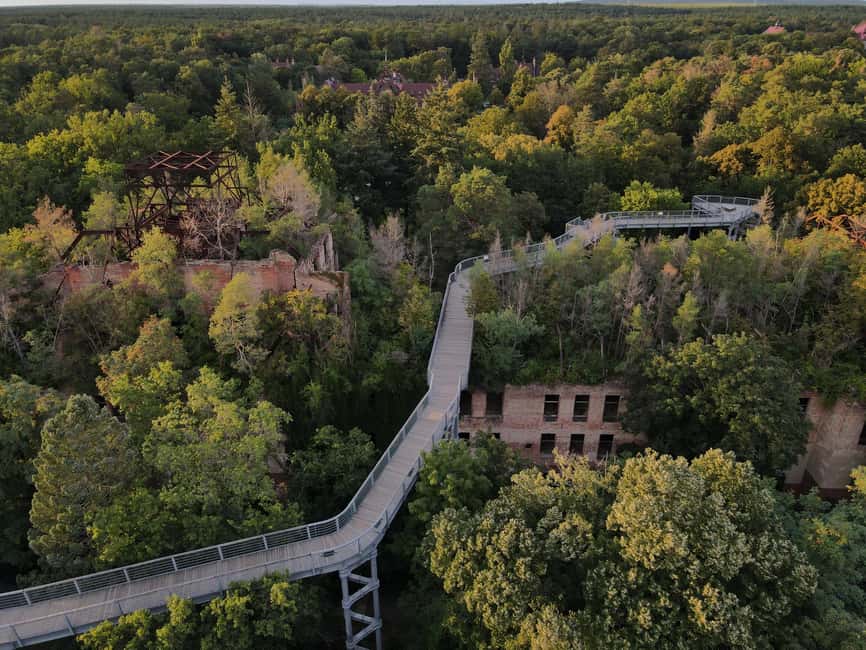
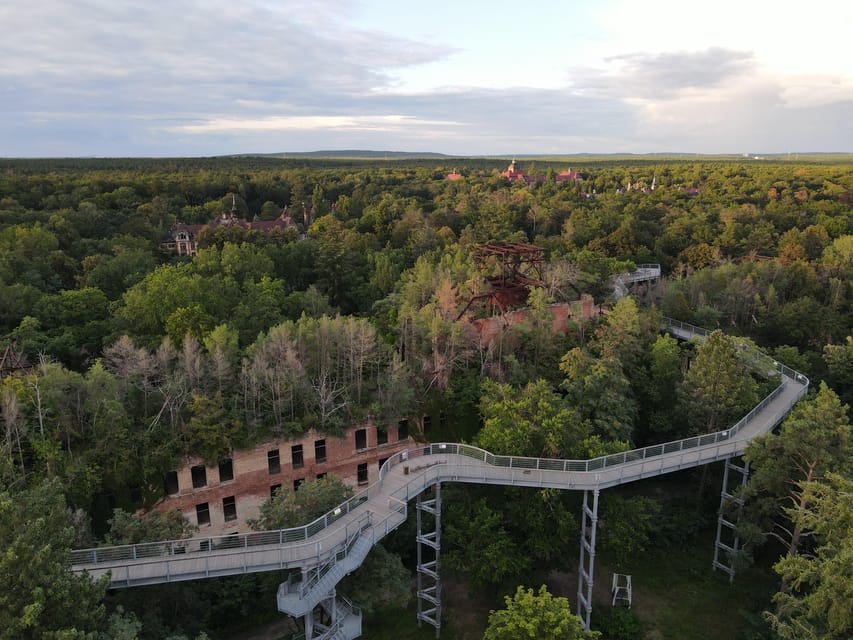
What makes the Baum & Zeit experience interesting is the mix of two worlds: a barrier-free treetop walk and a living reminder of Beelitz-Heilstätten’s past. You get wide views over the forest park, then your path crosses roof ruins where nature has taken over. That combo feels unusual in a good way.
I really like the 40-meter observation tower because it turns this into more than a stroll, it is a proper viewpoint moment. I also like how the park is designed for all seasons, with lots of tree and shrub variety so the forest doesn’t look the same twice.
One consideration: the entry ticket covers the treetop walk and park area, but access to the buildings requires a separate guided tour ticket. If you come mainly for the interiors, you’ll want to plan that in advance, so you do not end up outside looking in.
Key things I’d circle before you go
- 700 m treetop and time travel trail at walkway height, with barrier-free access
- 40 m observation tower with views that can reach as far as the Berlin TV tower in good weather
- WWII Alpenhaus ruins and canopy forest grown since 1945
- About 65 species of trees and shrubs in the preserved forest park
- Easy photo stops where the ruins and treetops share the same frame
- Optional guided tours if you want the deeper building stories
Baum & Zeit at Beelitz-Heilstätten, what it really is
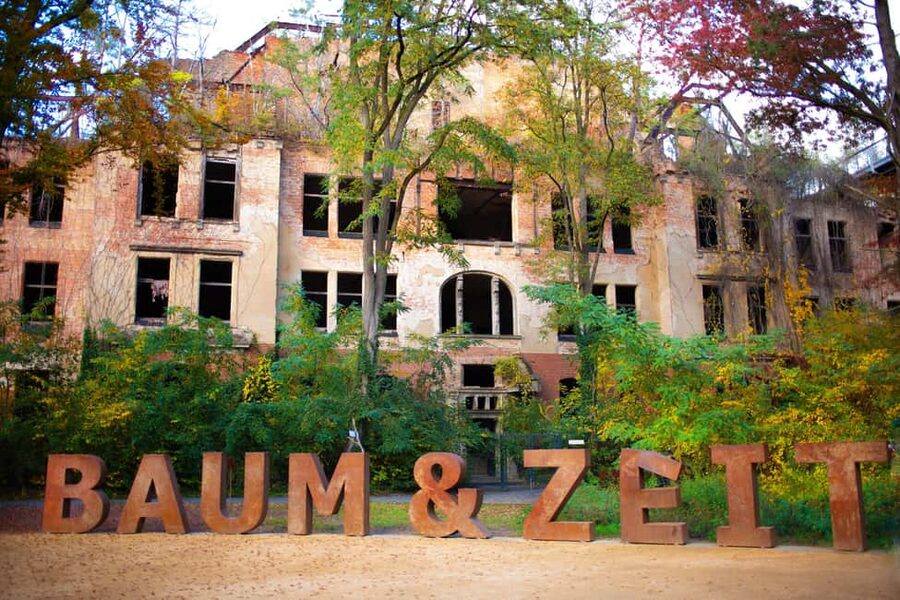
Beelitz-Heilstätten is the kind of place where Germany’s layered history gets physical. Long ago, nearby Berlin workers were sent here to recover from tuberculosis, and the grounds were built with high-quality architecture and spacious forest parks. Today, you still feel that plan in the way the site is laid out, but the forest has reclaimed a lot of the space.
The Baum & Zeit entry ticket focuses on the outdoor part of that story. You do not start in a museum room. You start at treetop height, walking a 700-meter path that is built to be barrier-free. Along the way, you’ll get a “time travel trail” feel, where the scenery keeps switching from natural forest views to dramatic roofline remnants.
The big payoff is perspective. At ground level, old buildings and ruins can feel separate from the trees. Up in the treetops, they overlap. Your eyes keep moving between forest layers and the built environment below.
Your treetop route, the 700-meter walk and what to notice
The treetop path is designed as a barrier-free route, which matters more than you might think. It makes the visit feel like a real outing, not a fitness test. You can set your pace, stop for photos, and take in the details without racing to “keep up.”
Expect a steady walk with viewpoints and built-in chances to look down at the site. The path is long enough to feel like an activity, but not so long that you’ll be exhausted by lunch if you move at a normal speed.
Here is what I’d pay attention to while you walk:
- Tree silhouettes change as you pass different sections, so the forest looks structured rather than random.
- Bloom and foliage timing can shift the mood. In spring you’ll notice flowering shrubs, and in autumn the same areas can feel warmer and more dramatic.
- The ruins stop being background once the path brings you near the Alpenhaus roof area.
If you want the full “wow,” slow down slightly near the transition areas where nature and the architecture connect visually. The best views tend to be the moments when you can see both at the same time.
The 40-meter observation tower, how the view helps you read the site
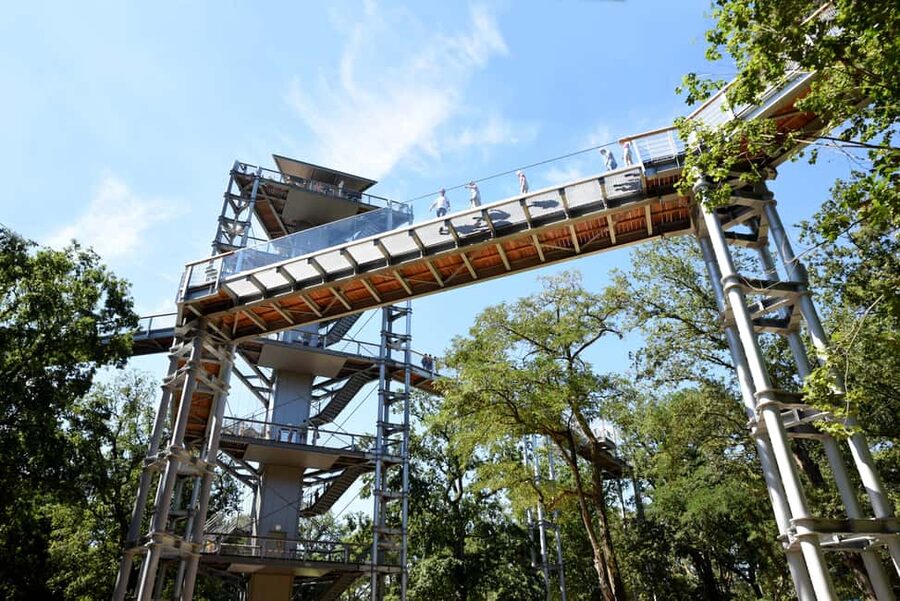
At some point, you’ll go up into the 40-meter observation tower for sweeping views. This is the part that turns your walk into a map-making experience.
From up high, you can understand the property layout in a way you cannot at ground level. You also get a wider sense of how far the forest park stretches, and how the treetop path connects to older parts of the site. On good-weather days, the views can reach as far as the Berlin television tower.
Practical tip: climb up, then do a second look around from a different angle. Your first glance is usually “wow, far away.” The second glance is when you start spotting the geometry of the site.
Also, if the weather is partly cloudy, do not assume it is useless. Soft light can make the treetops look more textured, and the ruins can show clearer shapes against the sky.
Alpenhaus ruins and the canopy forest grown since 1945
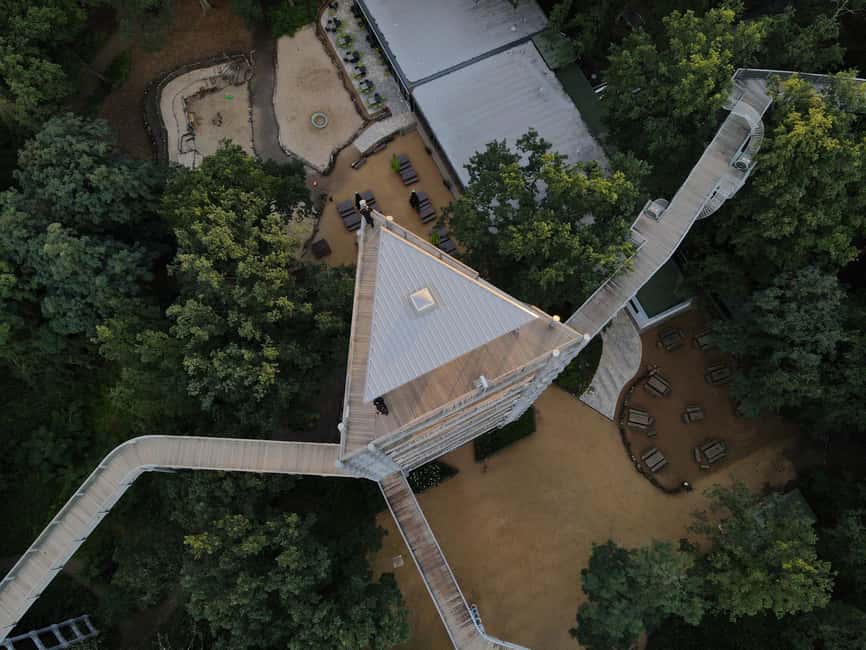
One of the most striking parts of this experience is that the treetop trail crosses the war ruins of the Alpenhaus. The roof has grown a canopy forest since 1945, and that detail changes how you see the ruin.
At the right moment, the Alpenhaus roofline reads like a strange platform high above the forest. You are literally walking past what used to be a wartime structure, now turned into something green and alive.
This is where history stops being abstract. You’re not only looking at a building shell. You’re seeing how time worked on the site. Nature has filled the gaps, and the ruins have become habitat.
If you’re traveling with kids or people who usually get bored by history, this is the easiest hook. They can point out leaves, branches, and how “a roof became a forest.” It is memorable in a way that captions do not always manage.
Forest park seasons, 65 species, and why spring and autumn matter
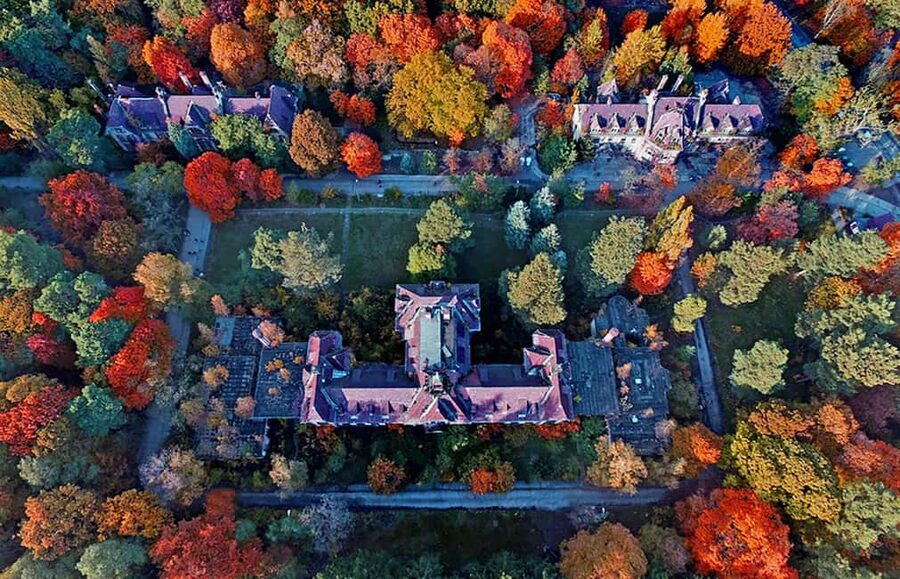
The park is not just “nice trees.” Around 65 different species of trees and shrubs create color changes across the year. Most of the original forest remains, with deciduous trees and flowering shrubs doing a lot of the work, plus exotic conifers replanted to build an attractive forest park landscape.
This is why the visit can feel different depending on the season:
- Spring often brings the feeling of new growth, especially with flowering shrubs.
- Autumn tends to add strong color variety, when leaf tones shift and the canopy looks layered.
- Off-season visits can still be worth it, because structure remains. Branch shapes and the contrast between trunks and ruins can look dramatic.
I like this kind of outdoor sightseeing because it rewards repeat visits. You could come once and feel the big picture, then come back later and notice a new set of details.
Buildings and guided tours, what your ticket does and does not cover
The entry ticket you buy is for the treetop walk and the Baum & Zeit park area. If you want to go inside buildings, you’ll need a separate guided tour booking for building access.
That matters for your planning. Do not schedule your day like it is a straight self-guided tour of everything. Instead, decide what you want most:
- If you care most about views, forest, and the ruins at roof height, the treetop route may be your main event.
- If you want the castle-like old sanatorium buildings in more detail, you should pair your visit with a guided tour ticket.
The good news is that the site offers multiple guided tours of the buildings and the forest park, and the tours are meant to bring stories to life and share interesting facts about the entire area. That is where the experience becomes less visual and more narrative.
If you like “explain as we walk” experiences, plan your time so you do not feel rushed after the tower. If you mainly care about photography and slow walking, you can keep the day simple and just focus on the treetop path, then add a guide only if the timing fits.
Price and value, is $20 per person fair?
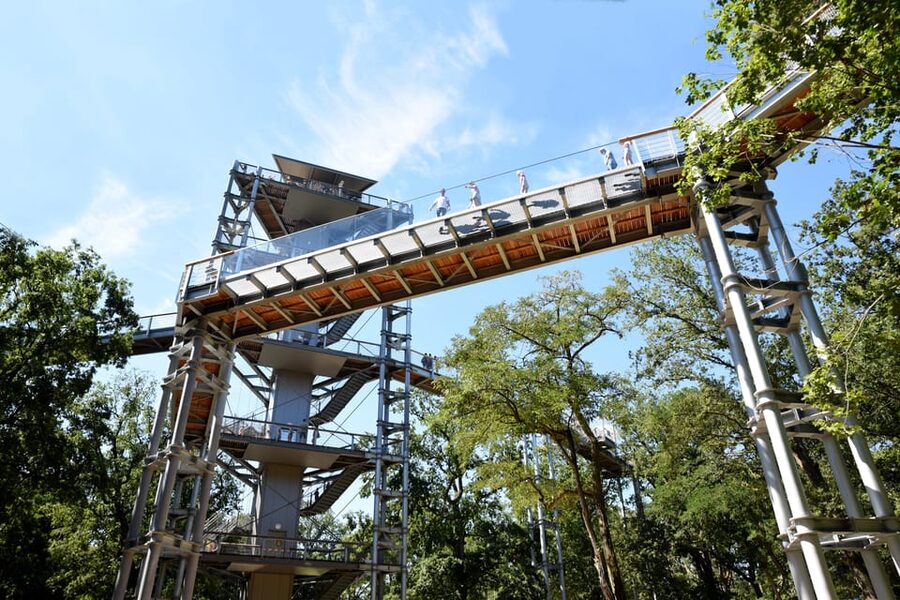
At about $20 per person, this ticket sits in the sweet spot for a day outing that includes infrastructure, not just access. You’re paying for a designed treetop route, the 40-meter tower viewpoint, and the park area connected to the historical site.
Here’s how I think about value:
- You are getting a long enough walk (700 meters) to feel like an activity, not a short photo stop.
- You are getting a real vantage point from the tower, which many “viewpoint” experiences skip.
- You are seeing WWII-era ruins connected to a living canopy forest, so the history has an outdoor, understandable form.
The value dips a bit only if your expectation is full building access with a single ticket. Since interiors require guided tours, budget a bit more if you know you’ll want the buildings.
Overall, for an experience that blends nature, structure, and history into one loop, the price feels reasonable.
How long it takes, timing, and the last admission rule
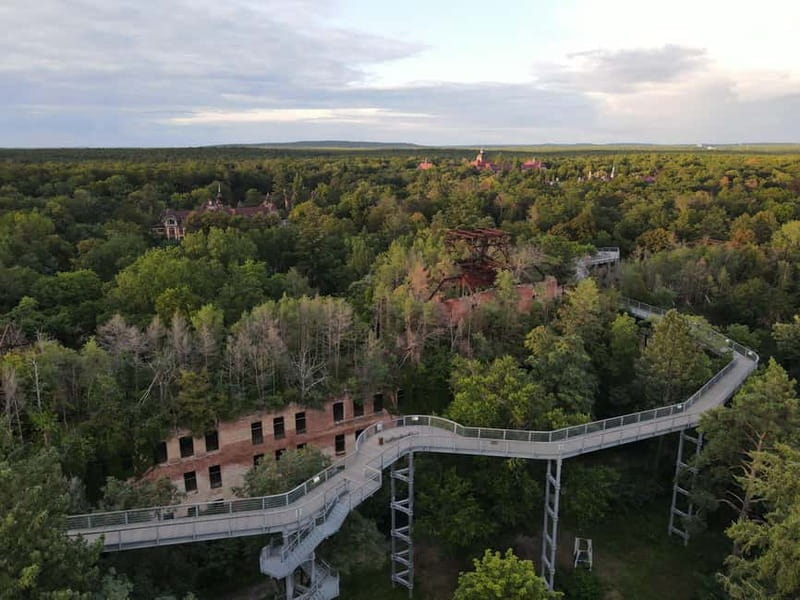
The ticket is valid for one day and covers single admission to the park grounds with the treetop path. You’ll want to plan around opening hours.
One key timing point: the last admission is one hour before closing. That means if you arrive late, you might not get the full experience even if the grounds still look open. If you want time for the tower, plus a slow wander near the ruin sections, aim to arrive with breathing room.
I usually suggest giving yourself a few hours. You’ll likely move at a relaxed pace, then spend extra time up in the tower, where it is all about looking carefully.
Getting there from Berlin area, by train or car
Beelitz-Heilstätten is easy enough to reach from Berlin, and the trip works well for a half-day or full-day visit.
By train
Take the regional train line 7 on the Berlin to Dessau route. Get off at Beelitz-Heilstätten station, then follow signs for the treetop walk. The entrance is about a 5-minute walk.
By car
You can reach the destination via A9 Berlin to Nuremberg exit 2, or take state road 88. Once you’re near the site, follow signs to the treetop walk entrance.
Practical note: if you are visiting for the views, plan your arrival time for daylight. Dull weather can still work, but late-day light helps make the forest and ruins look more dimensional.
Who should book, and who might want a different plan
This experience suits a lot of styles because it has two engines: nature and history.
Book it if you:
- Want outdoor sightseeing with a strong viewpoint payoff from the tower
- Like places where history and landscape overlap in a visible way
- Need an option that feels friendly for different ages because the path is barrier-free
- Want a manageable day trip, not a long museum marathon
You might reconsider if you:
- Want mostly interior tours of buildings, without planning a guided tour ticket
- Expect a fast, stop-and-go photo session. This is better when you slow down and actually look
The best part is that you can customize your visit. You can keep it simple with the treetop walk, then decide on a guided tour if your day rhythm allows.
Should you book the Baum & Zeit treetop walk ticket?
I’d book it if you want a day in the open air where the history has real physical weight, but you’re not stuck inside all day. The combination of the 700-meter treetop path, the 40-meter tower, and the Alpenhaus canopy forest grown since 1945 is a standout mix. It is fun in a hands-on way, and it gives you lots to learn just by looking closely.
Before you hit confirm, check two things:
- Are you okay with the fact that building access needs a guided tour separate from this ticket?
- Can you arrive early enough so you’re not racing against the last admission one hour before closing?
If your answers are yes, this is a smart value pick for a different kind of Beelitz Heilstätten visit, one where the forest is part of the story, not just a backdrop.
FAQ
What is included in the Baum & Zeit treetop walk ticket?
The ticket includes one-off admission for the treetop walk and access to the Baum & Zeit park area.
Do I get access to the buildings with this ticket?
Access to the buildings is only available in conjunction with a booked guided tour ticket.
How long is the experience?
The activity is listed as lasting 1 day. The ticket is valid for single admission on the day you booked.
Is the treetop walk wheelchair accessible?
Yes. The treetop walk and the observation tower are wheelchair accessible.
Where is the meeting point if I come by train?
Take regional train line 7 on the Berlin to Dessau route to Beelitz-Heilstätten station, then follow signs for the treetop walk. It is about a 5-minute walk.
Where do I park if I’m driving?
You can reach Beelitz-Heilstätten via A9 Berlin to Nuremberg exit 2, or state road 88. Follow signs to the treetop walk entrance.
What should I bring?
You should wear comfortable clothes.
Are pets or drones allowed?
No. Pets and drones are not allowed.
What is the latest time I can enter?
The last admission is one hour before closing.
More Walking Tours in Beelitz
- Discover Berlin Half-Day Walking Tour
★ 5.0 · 9,624 reviews - Berlin: Third Reich and Cold War 2 Hour Walking Tour
★ 4.9 · 6,830 reviews - Munich: Third Reich & WWII Walking Tour
★ 4.6 · 6,181 reviews - Berlin: Discover Berlin Walking Tour
★ 4.9 · 5,998 reviews
Walking Tours, compared.


Berlin’s Best: 2 Hour Walking Tour Third Reich and the Cold War
Read our review →

Third Reich Berlin: Hitler and WWII Walking Tour
Read our review →Browse the lists this tour appears in