
Reviewed · HISTORICAL TOURS
Explore Berlin History and Highlights Sightseeing Walking Tour
Berlin History and Highlights Sightseeing Walking Tour is the kind of trip that turns a scatter of famous sights into one clear story. You start at the Brandenburg Gate and end at Museum Island, moving through imperial Berlin, Nazi Germany, Cold War Berlin, and reunified today, step by step. I especially love how the route keeps the big moments in the right order, and how the guide storytelling makes each place feel connected to real decisions and consequences. One thing to consider, it is a walking tour, so plan for a solid amount of on-your-feet time.
The best part is the format. With a cap of 15 people, you get real conversation, not just a lecture from the front. This tour costs $32.58, and the sites along the way are treated as “stop and learn” moments, with no paid entry required at the listed stops.
Key Highlights Worth Your Time
- Small group size (up to 15), so you can ask questions and keep pace with the guide
- Big landmark sequence, from Brandenburg Gate through Museum Island without backtracking chaos
- No entrance-ticket hassle at the listed stops, since each site is described and handled onsite
- Cold War to modern Berlin in one route, including Checkpoint Charlie and the areas tied to SS, Gestapo, and SD
- Multiple guides with proven style, including names like Aurel, Eugen, Rhys, and Cairan who are repeatedly praised for engaging delivery
A 3.5-Hour Route Through Berlin’s Turning Points
This is a “get your bearings fast” kind of Berlin tour. Berlin can feel like two or three cities stacked on top of each other, and that is exactly what this walk helps you sort out. You do not just see monuments. You learn why they matter in the order history unfolded.
The total time is about 3 hours 30 minutes, with short stops that keep energy up while still giving you context. The schedule is built around landmarks that anchor major chapters: state power in the Kaiser era, catastrophe under Hitler, then the Cold War and the long shadow of division.
You will walk through several of Berlin’s most emotional sites. That is the tradeoff for a route this efficient. If you want a laid back photo walk, this may feel like a lot. But if you want meaning behind the famous buildings, the pacing works.
More Historical Tours in Berlin
- Berlin: Natural History Museum Entrance Ticket
★ 4.6 · 3,382 reviews - Berlin: 3-Hour World Heritage Cruise to Potsdam
★ 4.5 · 1,569 reviews - Berlin: History of the Third Reich Guided Walking Tour
★ 4.7 · 791 reviews
Where You Start and Where You End, Brandenburger Tor to Museum Island
The meeting point is Wurst 🙂 at Brandenburger Tor on Ebertstraße Ecke Scheidemannstraße, 10117 Berlin. Tours begin at 10:00 am, and they finish at Museum Island (listed as 10 Berlin).
That start and finish pair matters. Starting by the Gate places you at the visual and historical center of modern Berlin identity. Finishing at Museum Island sets you up for the next easy move, you can keep exploring right away while your brain is already organized by time periods.
Because it is near public transportation, you can also plan a simple day around it. If you are arriving the morning of the tour, you can still get there without a complicated taxi plan.
Stop 1: Brandenburg Gate, the World’s Most Overused Landmark (and Why It Still Matters)
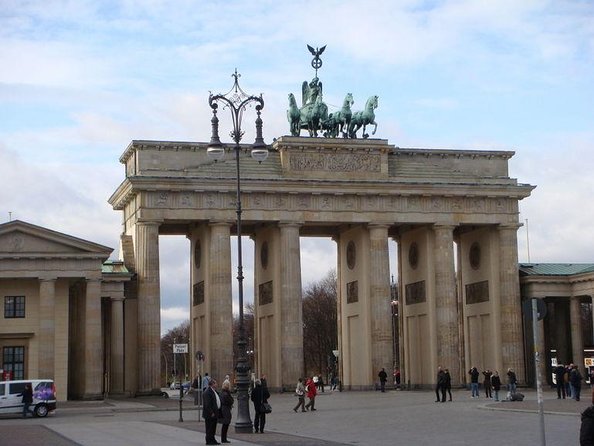
You begin at the Brandenburg Gate, one of the most iconic gates on earth. On paper, it is a photo stop. In practice, it is a history stop.
The guide’s job here is to show you the Gate as a witness. You hear how it connects to major events that shaped Berlin and Germany, and how its meaning changed as regimes changed. That is the point of starting here. The Gate is basically Berlin’s scoreboard, it reflects power and symbolism more than architecture alone.
Practical note: if you care about photos with fewer crowds, going early or later in the day tends to help. This is a place where time of day can make a big difference in how comfortable you feel taking pictures.
Stop 2: Reichstag Building, Power, Fire, and Political Targeting
Next comes the Reichstag Building, the Parliament building tied to Germany’s imperial era, and later to the events surrounding Hitler’s rise to power. This is also a site associated with a notorious fire that took on huge historical significance shortly after he became Chancellor.
From there, the story widens. You also learn how the Reichstag became a key target when the Soviets took Berlin at the end of World War II. The building becomes a physical record of how each side understood politics and propaganda, and how that thinking played out in real attacks.
What makes this stop valuable is that you learn the building’s story as political strategy, not just a name on a landmark list.
More Walking Tours in Berlin
- Discover Berlin Half-Day Walking Tour
★ 5.0 · 9,624 reviews - Berlin: Third Reich and Cold War 2 Hour Walking Tour
★ 4.9 · 6,830 reviews - Berlin: Discover Berlin Walking Tour
★ 4.9 · 5,998 reviews - Berlin’s Best: 2 Hour Walking Tour Third Reich and the Cold War
★ 5.0 · 5,486 reviews
Stop 3: Holocaust Memorial, Memory Made Visible
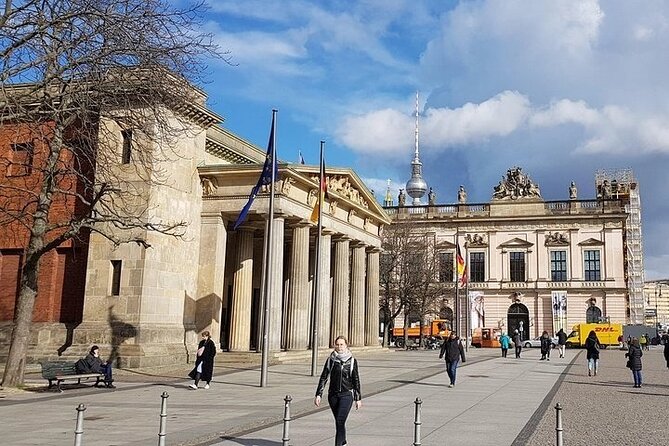
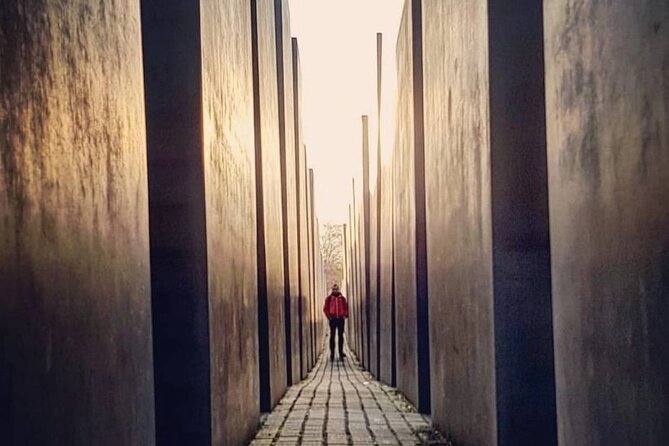
At the Memorial to the Murdered Jews of Europe, you see the largest memorial in central Berlin. But the value is not only what you see. It is the history around why this memorial exists, and what crimes made that memorialization possible.
This is one of those places where the guide’s framing matters. Without context, it can feel like a striking field. With context, it becomes a landscape of remembrance built from the weight of what happened.
Plan a little patience here. If you are the type who reads signs slowly, you will want a calm moment, and the tour timing allows for that.
Stop 4: Fuhrerbunker, the Bizarre Afterlife of a Hidden Car Park
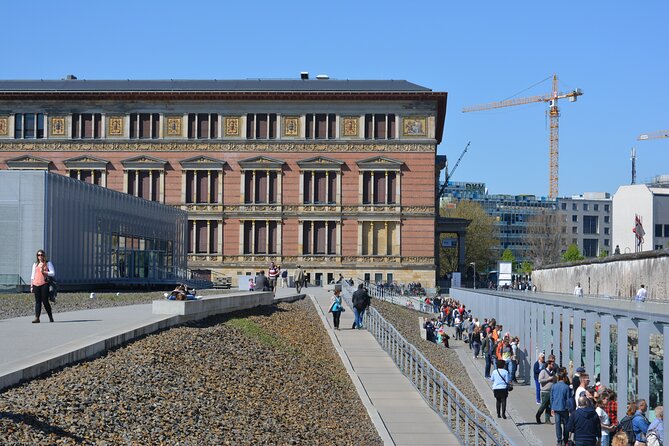
Then you hit Fuhrerbunker, described as the most infamous car-park in the world. That detail is funny in a dark way, but it is also useful. It tells you that the site is not just a historical myth, it is a place that got built over and repurposed.
You learn that this was the area tied to Hitler’s bunker, located within what were the gardens of the New Reich’s Chancellery Building. The stop focuses on the end of his reign, but it also circles back to how the city itself physically changed after the war.
This is a stop that can surprise people. If your mental image of Nazi history is mostly documents and photos, this brings it back to real streets and real ground.
Stop 5: Bundesministerium der Finanzen, From Luftwaffe HQ to Finance Ministry
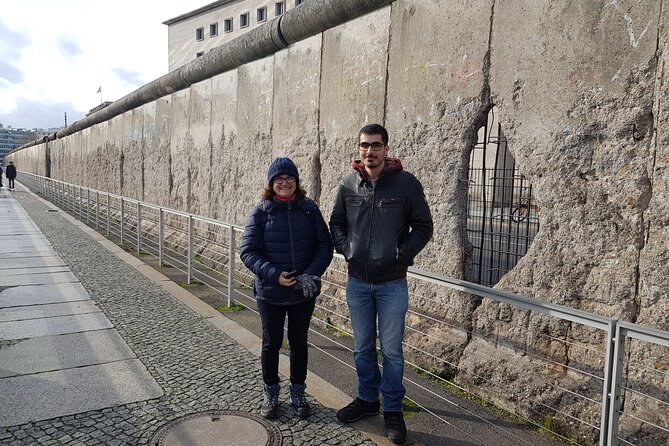
Next is Bundesministerium der Finanzen, the Finance Ministry building today, but formerly the HQ building of the Luftwaffe. Even if you are not a military history buff, this stop is about the reuse of power.
The guide explains the construction and its uses, then ties it into important Cold War history. Berlin is full of buildings that changed owners, changed roles, and stayed standing long enough to carry new meanings. This stop is a clear example.
Stop 6: Topography of Terror, Where SS, Gestapo, and SD Operated
At Topography of Terror, you step into the site of former headquarters of the SS, Gestapo, and SD. This is heavy material. The tour handles it with a focus on both Nazi-era use and post-war memorialization efforts.
If you want to understand how terror systems became everyday infrastructure, this stop helps. It is not only about what happened. It is about where the machinery of oppression operated.
Time here is about balance. You get enough for understanding, without turning the stop into a long lecture that makes it harder to absorb.
Stop 7: Checkpoint Charlie, Cold War Drama at Street Level
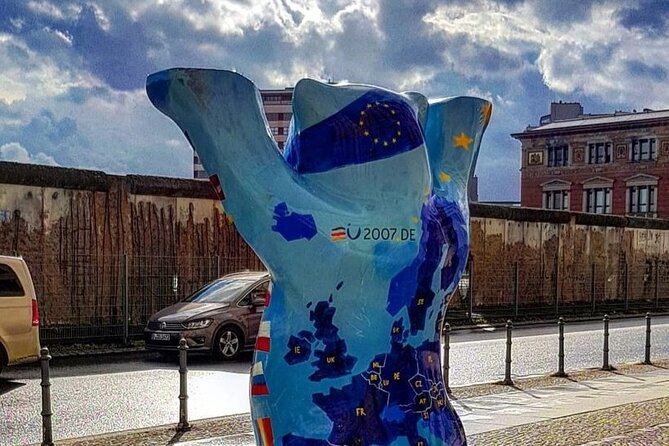
Then you reach Checkpoint Charlie, one of the most iconic Cold War crossing points. This stop is about how Berlin looked and felt when it was physically divided.
The tour frames it as more than a photo spot. You learn the kinds of tensions and routines that defined border life in the Cold War era, and why this location became internationally symbolic.
This is a good moment to ask your guide questions, because Berlin border history connects to almost everything you have already seen. The Gate, the Reichstag, and the memorial sites all gain extra meaning when you understand the later division.
Stop 8: Gendarmenmarkt, 18th and 19th Century Architecture With a Story
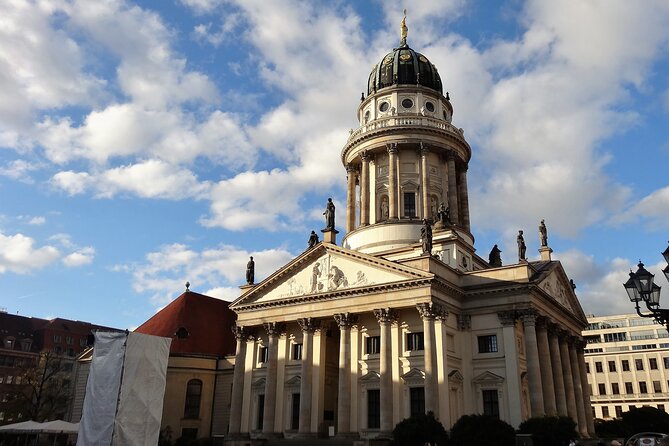
From Cold War tension to Gendarmenmarkt, with its famous 18th and 19th century architecture. This is where the tour adds texture. Berlin is not only war and politics. It also has a long cultural and civic side that shaped what the city wanted to become.
You hear about the foundation and development of the square. It is a reminder that the city’s identity was not made only by governments. It was also shaped by urban design and public space.
If you like your history stops to include beauty and scale, you will appreciate this one.
Stop 9: Bebelplatz and the 1933 Nazi Book Burning
Next is Bebelplatz, surrounded by the grandeur of Frederick the Great’s Prussian capital. The stop connects architecture with ideology, and then with one of the most chilling events of 20th century Germany: the 1933 Nazi Book Burning.
This is not just about what happened. It is about why a public square was chosen and why books became a target. The tour also points out a memorial tied to the square’s darkest chapter.
This stop tends to land hard, but it also helps you understand the cultural side of dictatorship. When ideas are controlled, buildings and institutions often follow.
Stop 10: Unter den Linden, Humboldt University, and the German History Museum Area
Then the tour moves along Unter den Linden, heading toward the east end. This stretch is famous for its grand boulevard feel, but the guide adds substance.
You visit and learn about areas including Humboldt University, the Memorial to Victims of War and Tyranny, and the German History Museum. Even if you do not go inside any museums during this tour, the tour helps you understand what these places represent.
This is also a good stretch for your brain. After a heavy run of stops, you get a more “Berlin as an institution” view, how universities and museums act as memory engines and public forums.
Stop 11: Museum Island, Berlin Cathedral, and the Five Museum Cluster
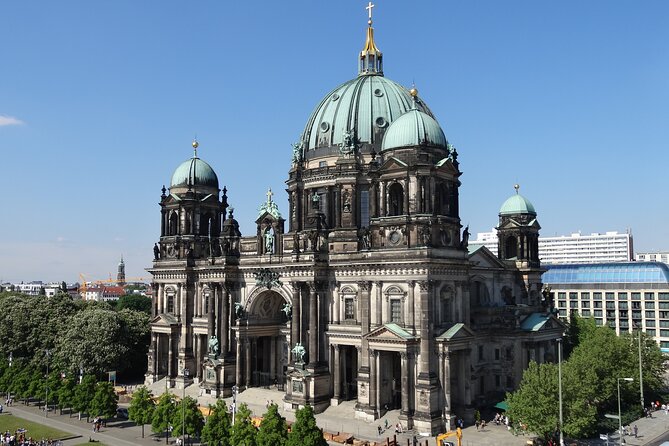
The final stop is Museum Island, where the tour crosses into medieval Berlin. You learn about the Stadt Schloss (City Palace) from the 15th century, and you also see the Berlin Cathedral area. The island is now home to five world-class museums, which means you can continue your day right after the tour ends.
From the Eastern side of Museum Island, the guide discusses Alexanderplatz as the center of post-war East Berlin. That is a smart finishing touch. It ties your ending back to the division you spent the morning tracing.
This stop is where you get ready for what comes next. If you want to add museum time after the walk, you are positioned well to do it.
Why the Small Group Format Changes Everything
The tour caps at 15 travelers, and that matters more than most people expect. In Berlin, you will often stand still while everyone tries to read signs at once. Here, the guide controls the pace, and the small group makes it easier to ask follow-up questions.
This is also where guide style shows up. I like that this tour can be led by different experts, and those experts have distinct ways of keeping people engaged. Names you might run into include Aurel, Eugen, Rhys, and Cairan, who are repeatedly praised for making the stories feel connected, not distant. Some guides also use visuals on tablets, so you can match what you are hearing to what you are seeing.
If you are the type who asks questions mid-walk, this format respects that. If you are quiet and just want to listen, it still works because the pace stays human.
Value Math: What $32.58 Buys You in Real Terms
At $32.58 per person for about 3.5 hours, you are buying two things: expert guiding and an efficient route that prevents wasted time. The stops listed are all marked as admission ticket free, which means you are not stacking extra costs on top of the price.
You also get a mobile ticket, plus an easy morning schedule with a clear start time and meeting point. For a first visit to Berlin, that reduces the “planning tax” that can drain a day.
If you have limited time and want a coherent timeline, the value is strong. If you already know Berlin history well and only want modern photos, you might feel like you are paying for explanations you could get from a guidebook or audio app. But for most first-time visitors, this strikes a practical balance.
Practical Notes So You Enjoy Every Step
This tour is a walking tour, so wear comfortable shoes. The stops are spread out enough that you will notice your legs by the end, especially if you plan to keep exploring after.
Bring a small snack and water, just so you do not feel rushed when you get hungry. People often underestimate the mental load of historical sites, and a quick energy boost helps you stay present.
For photos, remember that the Brandenburg Gate is a top spot. If you want cleaner shots, plan for crowd patterns. Going earlier or later can help, and this tour starts at 10:00 am, so you may want to embrace that morning energy.
Also, if you need to pause, do it. The tour is built around short stop durations, and you will likely feel better if you take micro breaks instead of powering through until you hit frustration.
Who Should Book This Tour (and Who Might Want a Different Option)
You should book if you want a guided path through Berlin’s major turning points, with clear connections between sites rather than a list of photos. This works well for first-timers, and it is also useful if you have visited parts of Berlin before but want the timeline tightened up.
It is especially good if you care about understanding how different regimes used buildings, squares, and institutions as tools. The stops here are chosen to show that story: government power, terror infrastructure, border symbolism, and memory.
You might want to think twice if walking long stretches is difficult for you. The tour fits “most travelers,” but it still involves a real walking commitment.
Should You Book Birchys Berlin Tours for This History Walk?
If you want a morning that gives you structure, start here. For $32.58, you get a small-group route, strong landmark coverage, and clear context at each stop, without piling on entrance fees.
My call: book it if you want history you can picture, and you like guides who keep the pace lively and the details organized. Skip it only if you need a low-walking, low-cognitive-load day, or if you already have a Berlin timeline locked in and only want a casual stroll.
FAQ
How long is the tour?
It runs for about 3 hours 30 minutes (approx.).
What does the tour cost?
The price is $32.58 per person.
Is the tour offered in English?
Yes, it is offered in English.
Is this a walking tour?
Yes. It is a walking tour.
What is the group size limit?
The tour has a maximum of 15 travelers.
Where do you meet and where does it end?
You start at Wurst 🙂 am Brandenburger Tor on Ebertstraße Ecke Scheidemannstraße, 10117 Berlin. It ends at Museum Island, 10 Berlin.
What time does the tour start?
The start time is 10:00 am.
Are admission tickets required for the listed stops?
The stops listed are marked as admission ticket free, so you do not need to buy separate entry tickets for those sites during the tour.
Is there free cancellation?
Yes, you can cancel for a full refund up to 24 hours in advance of the experience start time.
Are service animals allowed?
Yes, service animals are allowed.
Fresh reviews out of Berlin
- Berlin Uncensored: A History of Sex & Freedom★ 5.0 · 50 reviews
- Berlin Food & Cultural Tour: Must-Try German & Berliner Classics★ 5.0 · 51 reviews
- English Comedy Show with Pizza and Shots in Central Berlin★ 4.5 · 51 reviews
- Rude Bastards Tour of Berlin★ 4.8 · 51 reviews
- Private Taxi Tour of Berlin East and West and Neighbourhood approx. 4-6h★ 5.0 · 55 reviews
- Rickshaw Sightseeing City Tours Berlin – Rikscha Tours★ 4.0 · 55 reviews
- Berlin: City Highlights Express & Panorama Roof Terrace★ 4.9 · 55 reviews
- Berlin during Nazism – Tour in Italian★ 5.0 · 56 reviews
Historical Tours, compared.
City History Canal Sightseeing Tour on a Motorboat
Read our review →
Night Watchman Historic Adventure Tour
Read our review →
Browse the lists this tour appears in